How to explore ethical non-monogamy

How to explore ethical non-monogamy | Psyche

GUIDE

Before enjoying the freedoms of a more open relationship, get a handle on the practical and emotional complexities ahead

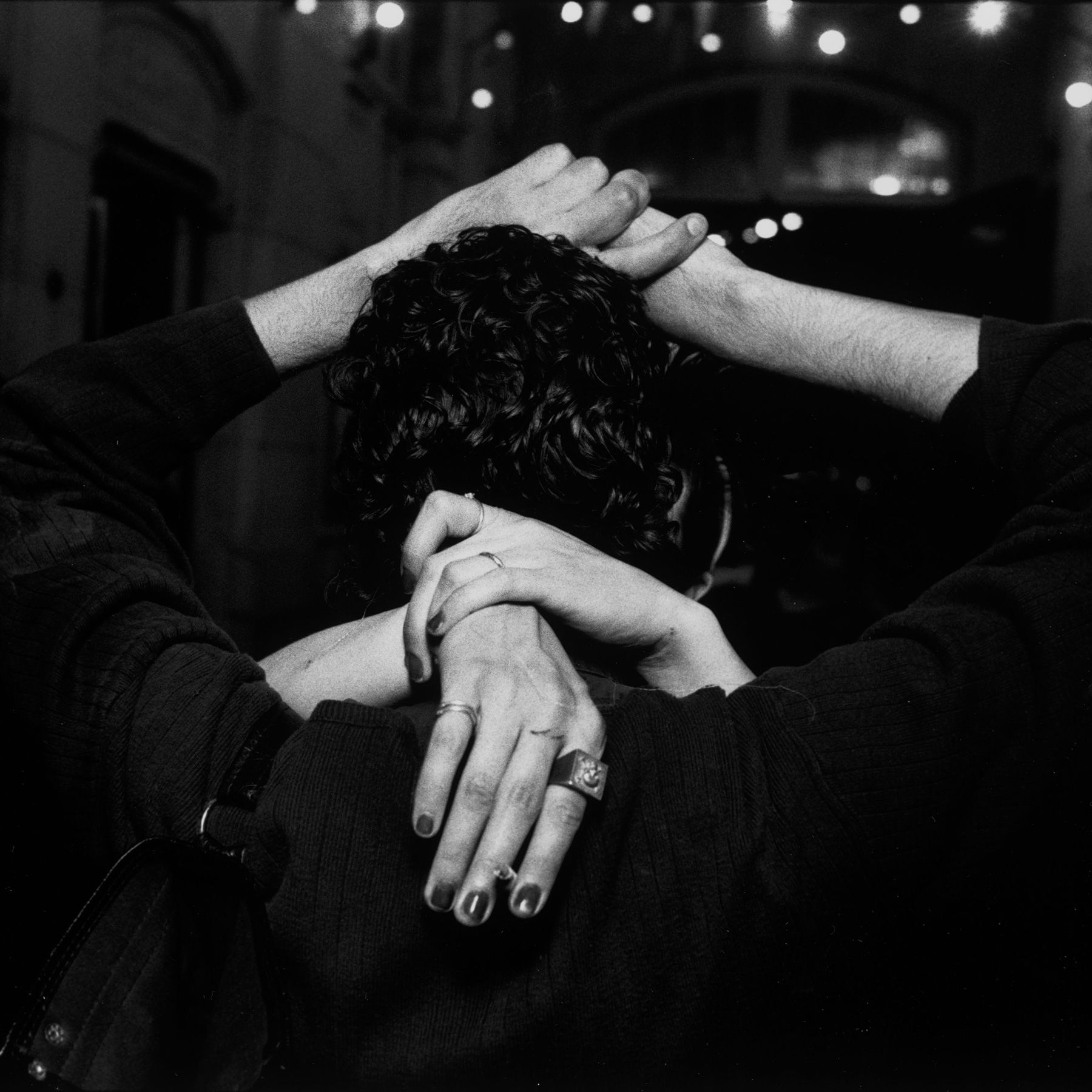
by Meg Wilson Photo by Richard Kalvar/Magnum

Meg Wilsonis a registered clinical counsellor and art therapist working with individuals and relationships at Unison Counselling in Melbourne, in Australia. She hosts talks, workshops and group therapy sessions on non-monogamy through her private practice. 

Edited by Matt Huston

16 February 2022 (psyche.co)

Need to know

Not many people stop to think about the blueprint they use for romantic relationships. Chances are that, while growing up, you were given an implicit step-by-step guide on how to love romantically, as well as information about what’s acceptable and unacceptable in this pursuit. If you are anything other than heterosexual, then you might have learned pretty early on that the blueprint you were given doesn’t work for the ‘who you choose’ bit. But what if it wasn’t who you choose but how many people you choose that goes against the blueprint?

Non-monogamous is the term most widely used these days for people who form multiple significant romantic and/or sexual relationships. Non-monogamy is more common than it might seem: one study in the United States, for example, found that around 21 per cent of people surveyed in 2017 had engaged in some sort of consensual non-monogamy in their lifetime. People in this situation often see themselves as different in a way that requires secrecy, out of fear that their families and wider community will label them as immoral, promiscuous, narcissistic or noncommittal. I’ve written this Guide as an attempt to lay down a path for those very people who see themselves as being outside of monogamy and who might like to explore a different relationship blueprint.

You might find yourself reading this because at some point you encountered non-monogamy in passing and would like to learn a bit more before you take action. In my work as a therapist, I have encountered all sorts of unique individuals and people in relationships who come with their own valid reasons for wanting to try a different style of relationship. Perhaps you grew up in a conservative (perhaps religious) household in which the scope of acceptable behaviour and lifestyle was relatively narrow. Or maybe you entered a committed relationship when you were very young and, while you would still like to maintain this loving relationship, you also feel a sense that there is more you could explore with others – in a physical or a romantic way. You also might be aware of a sexual desire that your current partner does not align with and that you would like the opportunity to explore outside of the relationship in an ethical way. Regardless of the romantic or sexual desires you have, it’s my aim to help you feel more secure in your decision-making.

Those who approach non-monogamy with consideration, accountability and honesty are called ethically non-monogamous (ENM) or consensually non-monogamous (CNM). These labels form an umbrella that covers concepts such as polyamoryswingingrelationship anarchists and other items in the ever-evolving list of non-monogamous approaches to relating. (I will expand more on these later.) It’s important to know that the label you use for yourself is completely up to you and might change over the course of your life. For the purposes of this article, I’ll be using the acronym ENM to broadly describe any and all of these approaches to relationships.

Carrie is a client of my therapy practice, where I work specifically with people practising ENM. Carrie and her partner Doug (I’ve changed their names for confidentiality) have been a couple since they were in high school. Their relationship developed quickly into something significant, and they started out by following the monogamous blueprint, committing only to each other. Carrie said she had long felt comfortable being open with Doug about her bisexuality, and that it even fuelled some level of sexual excitement for them. She was years into the relationship when a television show mentioned polyamory, the practice of openly having more than one romantic relationship. ‘I felt right away that it was something that fit me and that I wanted to explore more,’ Carrie said. Over time, the two began reading and attending public speaking events in order to learn more about the lifestyle directly from the people who were living it.

Once they were ready to take the first steps, they quickly realised that there were unexpected challenges that come with the transition to ENM. Carrie naturally moved towards other relationships and connections at a quicker speed than Doug, who preferred to move at a slower, more considered pace. This difference became their first major challenge as they processed new insights about themselves and the impact on their relationship. Ultimately, they found a way to accommodate the difference in pace that each of them took towards others by communicating regularly and making small adjustments as they went.

‘Five years in,’ Carrie says, ‘and now we each have different kinds of relationships and also relationships that have morphed into friendships, which has been nice.’ But she is quick to point out that the ENM lifestyle comes with a considerable amount of emotional labour and that it takes a significant amount of time to get used to the new way of relating.

For people who begin to go down the non-monogamous route, they soon see the world with a perspective that can be quite frustrating and lonely at times. Western society is generally mononormative, meaning that monogamy is considered normal (and other ways of relating are not). The assumptions made by our loved ones, or by our neighbours, co-workers, grocery store check-out clerks, parents of other children at school, etc, mostly come from a mononormative worldview. One might encounter a range of reactions in other people, from gentle curiosity to full-on judgment. Popular culture is a painfully obvious source of mononormativity: the default is the pursuit of the ‘one true love’, and sex plays a pivotal role in ownership and commitment. This preoccupation with singular love begins with children’s television and goes all the way to Hollywood blockbusters.

To be clear, there is absolutely nothing wrong with romantically loving just one person. It would be hard to find an openly non-monogamous person who sees fault in that, and the belief that the ENM community is out to prove monogamy wrong is incorrect. The issue that ENM people face is the denial that they have the capacity to love more than one person. It is just not true that humans are able to sustain romantic desire only for one person at a time. The countless books and TV shows in which non-monogamy is pursued in secret dramatise the painful dilemma of people who get drawn towards more than one person.

For ENM people, however, the sharing of affection and love with more than one person is the accepted norm. For Carrie and Doug, the expression of affection is a fluid part of relating, and indicates nothing more than a degree of comfort and safety with their friends and partners. Physical affection is seen as a spontaneous display of excitement, generosity or sexuality, and it lives just within the moment – unless one specifies otherwise. There can also be significant ENM relationships that do not include any sexual intimacy but nonetheless play an important role in the lives of the people involved, including romantic ones. ENM naturally leans towards personal freedom so there is less need for the labels that typically help to identify what a relationship is. The question of whether someone is a friend or a lover or a partner or chosen family is asked a bit less often. This idea might feel a bit uncomfortable to someone new to ENM, but ultimately what matters is that you know who matters to you.

What to do

Decide if it’s the right path for you

It is possible to see yourself as an ENM-oriented person while also taking into account the capacity you have in your life for additional connections or relationships. Love is not a limited resource but we might have limited time or emotional bandwidth, and it is very important to know the difference. By emotional bandwidth, I mean the amount of room you feel you have in your own life for emotional attachments – and not just romantic attachments, but also those with family and friends. Some people have emotional bandwidth for relatively few individuals, and those relationships are often quite meaningful, while other people will comfortably have many emotional attachments, including multiple romantic attachments. You learn about your emotional bandwidth through your life experiences and, while this bandwidth can change over the course of your life, it is valuable to pay attention to what it is at any given point and adjust your levels of relational activity accordingly.

Even for monogamous people, there are times when one might do better to focus on oneself for all sorts of good reasons (mental health, physical health, life goals, etc). Then there are times when space is available for meeting people, dating, having sex, and building a new relationship. The same is also true for ENM. Someone who identifies as ethically non-monogamous might know that they relate easily or deeply with others and could see this as a trait rather than a lifestyle. Much like your sexuality, you do not have to take action in order to know something is true about yourself.

How do you know if you’re in the right place to start your ENM journey? Your answer will likely be an intuitive one. However, periods of time that are not already filled up by major obligations or commitments are most likely where you’ll find the opportunity to start making new connections.

If you’re in a relationship, proceed with care

If you are currently in a monogamous relationship and you are considering a transition to an ENM lifestyle, there are a few things that are useful to consider.

Does the desire to be ENM come primarily from one person in the relationship or do you both share it? If the desire does come largely from one person, then it’s all the more important to approach the topic gently. It can be quite a vulnerable experience for both people to share their desires and fears. Most often, the best communication happens when everyone involved feels that they are being heard with as little judgment as possible.

Do you both have well-practised communication skills that can help you adapt to unexpected challenges in an ENM transition? Basic validation and active listening skills are essential to an effective emotional conversation, regardless of the style of relationship. And sharing how you feel in a way that gives the other person clarity without sparking their defences is an art. In the context of starting a discussion about an interest in ENM, this might sound like: ‘I’ve been feeling curious lately about whether or not a non-monogamous approach might be a good fit for us. It would mean a lot to me if we could talk a bit about it.’

Are you both willing to consent to the process or does someone feel like they are being ‘dragged along’ (or doing the dragging)? In a relationship, everyone’s needs deserve to be met to the extent possible, and while we cannot always meet both our own needs and someone else’s all the time, it is important to negotiate a place in the middle. Some people experience a heightened level of excitement at the prospect of connecting in this new and meaningful way with others, and this fuels an ‘all in’ approach akin to the experience of going to Disney World. Other people approach ENM with cautious curiosity. Neither approach is wrong. But when each person in a relationship naturally leans toward a different approach, they might have to negotiate their needs with more care.

Do you both feel safe and comfortable speaking up, seeking support and being open about where your boundaries lie? It can be difficult to say ‘no’, and for some people it feels impossible. This sort of issue can arise if your partner shares their attraction to someone and you don’t feel quite ready yet to take further steps toward making your relationship non-monogamous. You might feel pressure both internally and externally to open up your relationship quicker than you are actually ready. If that’s the case, take advantage of a relaxed moment with your partner to talk about how decisions can best be made together and about the difficulty you might have in saying ‘no’.

It might also help to speak to an ENM-friendly therapist about the transition and to consider ways to strengthen your existing relationship. While there are not many therapists who understand ENM relationships in depth, there are directories that list inclusive and knowledgeable therapists for various regions and countries (see the end of this Guide for links). Therapists are usually happy to answer potential clients’ queries about their area of knowledge or their familiarity with the ENM lifestyle. Meetups for the ENM community will often invite along ENM-friendly therapists for guidance and to give people the opportunity to decide if seeing a therapist is right for them.

Connect with the ENM community

Since ENM relationships aren’t quite the norm, most people find comfort in seeking out the like-minded to share information about their experiences and validate each other. Joining a community that normalises non-monogamous relationships can help with the feelings of shame that might arise from the conditioning of a mononormative society.

In most major cities, people in the ENM community will meet up for discussion groups, information sessions and more casual evening events where the point is to just socialise and get to know each other (and, yes, flirt). In these spaces, there is often a very wide variety of ways that individuals and people in relationships have approached ENM, and with that comes wisdom that can be gained only from experience. This is the kind of wisdom that the monogamy culture has in abundance.

Use these spaces to practise your skills at communicating about ENM. Almost everyone has their own style of ENM, so this is an opportunity to learn. Some more common examples of ENM include ‘socially sexual’ people (or swingers) who actively engage in group sex or casual sex with their friends, lovers or strangers in a way that’s, for the most part, about physical affection and satisfaction. On the more romantic side of relating, there is the polyamorous community, in which there is typically a greater level of emotional bonding between the individuals involved. A related community of people who identify as relationship anarchists see themselves as more autonomous and without limitations on their expression of love, whereas the polyamorous community tends to commit at a deeper level with partners. Cohabiting, sharing finances and having children together will more often take place among the polyamorous, and not necessarily with just one primary partner. A polyamorous person might have a child with one current partner and live with another, for example.

The term ‘open relationship’ is the most general way to describe a non-monogamous lifestyle and tends to give the most freedom of interpretation for those involved. For this reason, it is often the term that people use when they are early in their ENM journey. The monogamous community is usually quite clear about what its general steps and expectations are, while people making the transition to ENM often find that they are having these conversations for the first time. As such, it is best to expect to stumble at times.

If you’re not quite ready for the in-person experience, another way to engage with the community is by listening to podcasts where the topic of ENM is featured (see links below). Here, you will almost certainly find a wealth of conversations and stories that expand your understanding of the ENM lifestyle. A podcast can also be a great way to introduce the topic to your current partner if you are seeking to begin a conversation about ENM.

Despite my earlier point about mononormative popular culture, television has recently begun to tell stories about ENM relationships that don’t result in violence or heartbreak. The Netflix series Sense8 (2015-18) uses fantasy to create romantic and deeply significant relationships through telepathy. The show illustrates how important relationships can exist well outside the typical relationship framework and do not even necessarily need a label of any kind in order to function. Many ENM people tend to agree that the removal of relationship labels creates the opportunity to author your own experiences with others. Other TV shows you might want to see are She’s Gotta Have It (2017-19), Wanderlust (2018), You Me Her (2016-20) and Siren (2018-20). These shows give me hope for the expansion of the ENM story in modern television and, with that, hopefully a greater acceptance of this lifestyle in society.

Understand jealousy well

It’s true that non-monogamous people get jealous, just like monogamous people do. It is not necessarily an indication that ENM isn’t right for you or that you’re doing it wrong, but it does suggest that something needs your attention.

Jealousy can be useful because it gives you a chance to learn about your own sense of self-worth as well as what you need to feel secure. In ENM, jealousy is an experience that generally arises out of a fear of loss, abandonment, feeling ‘less than’, or having unmet needs. Perhaps one person feels less attractive, less intelligent or not as charismatic as someone else in their partner’s life, and this feeling feeds into a sense of insecurity. In an ideal situation, jealousy will be met with validation and bring to light things that might have gone unaddressed (such as worries about being less desirable than someone else), and the person experiencing jealousy will feel heard and understood. This of course won’t always be the case, but the pursuit of a healthy conversation about jealousy is worthwhile, even if it isn’t perfect.

Healthy jealousy can feel like the urgency that rises up when you see a partner in their element, as the centre of attention, doing what they feel most confident doing while others are impressed by and maybe attracted to their energy. While desire is fuelled by this kind of mystery, jealousy is fuelled by wanting to remain within your partner’s field of vision – and to be clear, that is OK. Of course you want your partner to be in their element and to also be thinking of you. In ENM, there tend to be more opportunities to see your partner from a distance, and this in turn can fuel a greater degree of desire and eroticism.

The therapist Esther Perel talks about how love urges us to be fully connected and to know everything about someone, while desire requires mystery and intrigue. People tend to want to take in everything and simultaneously also need the pull of curiosity to create an erotic connection. Healthy jealousy might have a role to play in how we keep eroticism alive in long-term relationships, including in ENM.

Plan for the practicalities of non-monogamy

Not only is an ENM lifestyle a change in relating, but it’s also full of practical and logistical changes, which can spark excitement but also insecurity or discomfort.

A good rule of thumb is to have a discussion about desires and expectations every time a new opportunity for connection arises. For a sexual environment (eg, dates where sexual activity might take place, swinging parties) there will need to be discussions around risk prevention and the degree to which connection and communication should be maintained if you are attending with someone. Planning for this might entail deciding to go home together from the event, and agreeing to use condoms and/or engage only in non-penetrative sexual activity.

For the person interested in a solo approach to ENM (where you live and relate as a single individual) the communication you have with others might revolve primarily around the agreements between you and them, and not necessarily how they might impact a wider circle of people. Nevertheless, honest and open communication will help to ensure that the expected level of autonomy is clear. A solo ENM person might not necessarily want to commit a specific amount of time or emotional support to someone they are currently with – despite the connection itself having meaning and value – and so autonomy in this sense is about establishing expectations.

In the logistics of ENM dating, worthwhile conversations might focus on fairly practical matters such as: the use of rooms or beds in a shared home; what time someone might ideally get home from a date; if there are boundaries around seeing friends or co-workers in a romantic way; and how deeply any new relationships become a part of your everyday life. If you are negotiating an ENM lifestyle with a current partner, then you might not be aware that certain aspects of the relationship related to your shared space or your time together really matter to them. They could see the bed you share as a sacred space, or a specific day of the week as really special. These things might not become obvious until someone feels a bit (or a lot) of discomfort. There is a degree of trial and error that most certainly comes with ENM, especially in the beginning. Expect to feel discomfort over something that surprises you, and also to feel fine about something that you thought you wouldn’t. What really matters is that you communicate both of these to your partner(s).

Clients I’ve worked with have come up with all sorts of logistical solutions for everyday ENM, such as building a tiny house on their property for other partners to stay in, having a house with two master bedrooms so each person has their own personal space, using business trips and other times away as the specified opportunities for seeing other people, or choosing to live alone – while still remaining committed to a primary relationship – in order to maintain greater autonomy. There is no one ‘right’ way for ENM to work for individuals or relationships; this can be both freeing and bewildering, coming from the monogamous approach, with its more standard steps and expectations.

A new rhythm takes time to develop and so taking small steps means that you and your relationships can adjust more easily. Many people find it helpful to have a scheduled weekly time for a relationship ‘check-in’, where feelings and emotions are shared and logistical agreements are adjusted to better suit everyone and ensure that the basis of security remains strong.

Key points – How to explore ethical non-monogamy

  1. Humans are capable of loving more than one person at a time. There is nothing wrong with committing to one partner, but non-monogamous people show that other lifestyles are possible, too.
  2. Non-monogamy is a valid alternative to monogamy. Ethically non-monogamous (ENM) people live non-monogamous lives with consideration, accountability and honesty.
  3. Decide if it’s the right path for you. You can feel an inclination toward ENM without necessarily having to act on it. If you have the time and emotional bandwidth to explore more than one relationship, a journey into ENM might be for you.
  4. If you’re already in a relationship, proceed with care. Consider whether the interest in ENM is equally shared, and whether you have the communication skills to weather turbulence in a transition to ENM. Considerate, non-judgmental sharing and listening are key.
  5. Connect with the ENM community. Meeting up with other ENM people can provide the validation and wisdom you need. So can ENM-relevant podcasts, films and other media.
  6. Understand jealousy well. Jealousy can draw our attention to fears, feelings of insecurity, or unmet needs – all of which can be addressed through listening and validation. A measure of healthy jealousy might even provide fuel for desire.
  7. Plan for the practicalities of non-monogamy. Whatever the nature and number of your relationships, it’s essential to talk about boundaries and expectations – including those related to shared space, the allocation of time, and acceptable behaviour.

Learn more

Should I tell my friends and family?

A potentially daunting part of ENM is letting other people know, in a direct way, what’s going on. Yes, there is always the option of just going about your ENM life as you see fit and allowing others to put the pieces together for themselves. Or, if you’d find it easy to shrug it off that your neighbour might think there’s an affair going on, or that your dad might find it odd that your best friend is moving in with you and your partner, then you might not care to reveal the details. Generally speaking, it’s probably a healthy move to practise letting go of how others might think about you and your relationships. That being said, if a relationship you develop as part of an ENM lifestyle becomes meaningful to such a degree that you think it would be appropriate for your friends and family to know, you might find yourself wondering how to tell them.

There’s a possibility that you are imagining the look on your family member’s face when you first mention that you’re considering or have embraced an ENM lifestyle. They obviously care for you and want you to be happy, but their expressions of concern might seem more like judgment. This is almost never about you or your choices, and usually more about them, their assumptions and their fears (or envy?). Educating the people who care about you is the easiest and quickest way to help them get past their concern. Film and television can be a casual path toward the conversation, or you might share an article or social media post about ENM to make your interest known.

To be fair, almost every major life change can bring on some amount of concern. Moving to a new town, having a baby or changing careers all come with risks and potential benefits. To get the support you deserve following any of the decisions you make, the best thing is to just ask for it, eg: ‘I know this might not seem to make sense to you, but I’ve put a lot of thought into my choice and, no matter how it goes, I’d value your support.’

If we lived in a world that normalised non-monogamous relationships, then you most likely wouldn’t need to have such a conversation, any more than a monogamous person would with their friends and family. Remember that cultures these days can change fast and, as such change unfolds, people can become more accustomed to new ideas.

Is there no going back?

Gaining knowledge about and exploring ENM does not mean that you can never return to a monogamous lifestyle. One difficulty that can arise during this process is that one partner in a relationship wishes to return to mutual monogamy while another person wishes to remain ENM. These differences can and do sometimes mean that the relationship needs to come to an end. (This is a risk that comes with other kinds of differences too, such as disagreements over having children, the management of finances, or the choice of where and how to live.)

When I work with clients who are at this kind of turning point, I tend to encourage what I call ‘compassionate honesty’, which involves both seeing yourself truthfully and communicating with those who matter to you, in a way that takes into account what’s important. Important things might include existing commitments you’ve made to partners, shared goals, risks relating to sexual health and other physical needs, and also (perhaps most importantly) compassion for yourself and the need to be seen and understood for who you are.

Simone de Beauvoir suggested that bodies are more like situations than things. We are always changing and evolving, and so our relationship styles and sexuality can evolve as well. The challenge isn’t so much in accepting that this is true, but more in being gentle with yourself when the change happens.

Links & books

The journalist Dan Savage does a great job at exploring ENM in his podcast Savage Lovecast. It’s an honest look at the variety of lifestyles, sexualities and relationships that people experience through interviews and in-depth analysis, with a pleasant dose of humour.

Another podcast to watch out for is Normalizing Non-Monogamy. Hosted by Emma and Fin, who have been together since college and are themselves non-monogamous, it addresses all things non-monogamy in interviews with guests from all over the relationships spectrum.

The book Polysecure: Attachment, Trauma and Consensual Nonmonogamy (2020) by the polyamorous psychotherapist Jessica Fern examines non-monogamy through the lens of attachment theory. This is a useful read, no matter what relationship style you engage in as Fern explores all the ways that people relate to one another and how to compose safe and secure attachments.

The Poly-Friendly Professionals directory offers a list of professionals around the world – including psychotherapists – who are ‘sensitive to the unique needs of polyamorous clientele’.

In some regions, there are also local directories of therapists who have experience working with non-monogamous people. For example, for the state of Victoria in Australia, Victorian Inclusive Practitioners keeps a list that includes such therapists.

Heath Schechinger is a counselling psychologist at the University of California, Berkeley who maintains a collection of resources, including academic papers and helpful links, for anyone looking to gain support and additional information regarding the ENM lifestyle.

The book Nonviolent Communication (3rd ed, 2015) by the late psychologist Marshall Rosenburg is a wonderful resource, providing techniques for sharing your thoughts and feelings with compassion and reducing the likelihood of sparking defensiveness in another person.
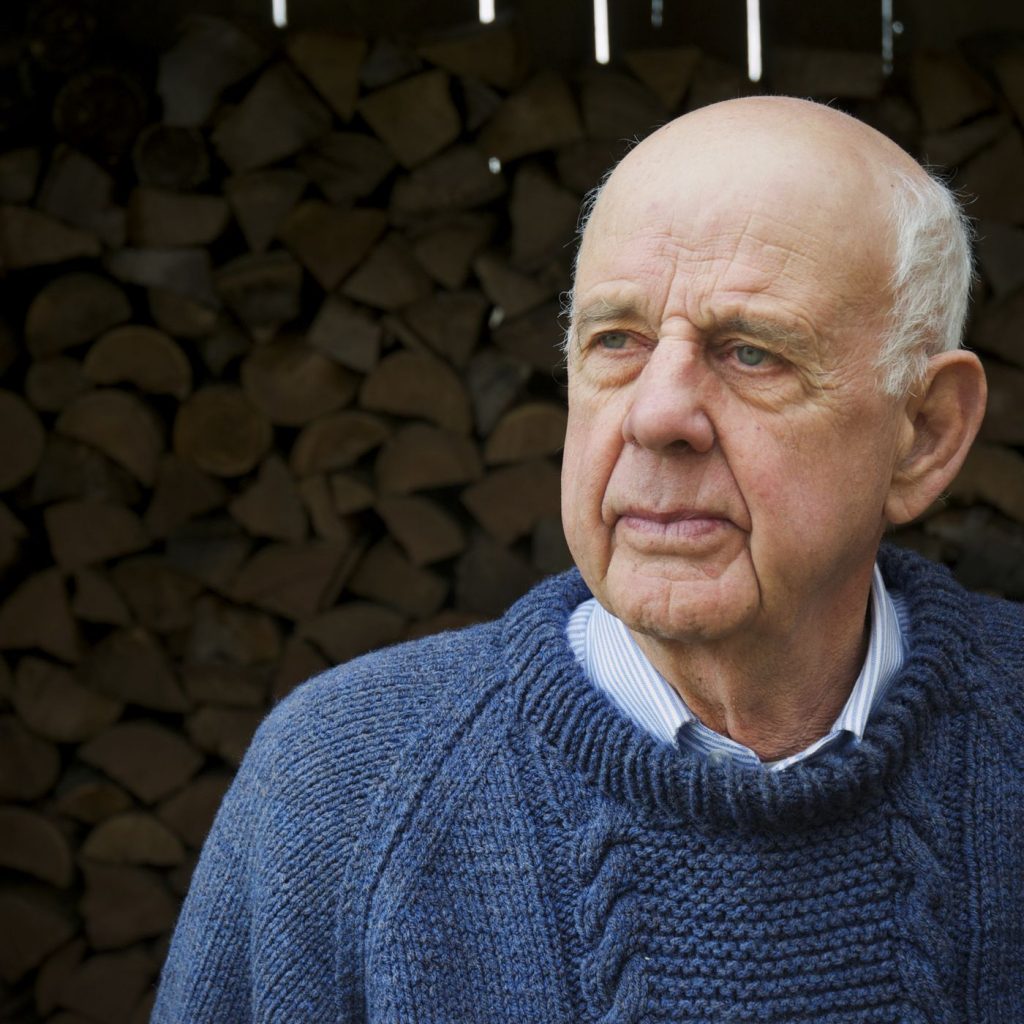
Wendell Berry on coming to the end of the road

It may be that when we no longer know what to do
we have come to our real work, and that when we no longer know which way to go we have come to our real journey.

—Wendell Berry

Wendell Erdman Berry (born August 5, 1934) is an American novelist, poet, essayist, environmental activist, cultural critic, and farmer. He is an elected member of the Fellowship of Southern Writers, a recipient of The National Humanities Medal, and the Jefferson Lecturer for 2012. Wikipedia

Free Will Astrology: Week of February 17, 2022

FEBRUARY 15, 2022  BY ROB BREZSNY (newcity.com)

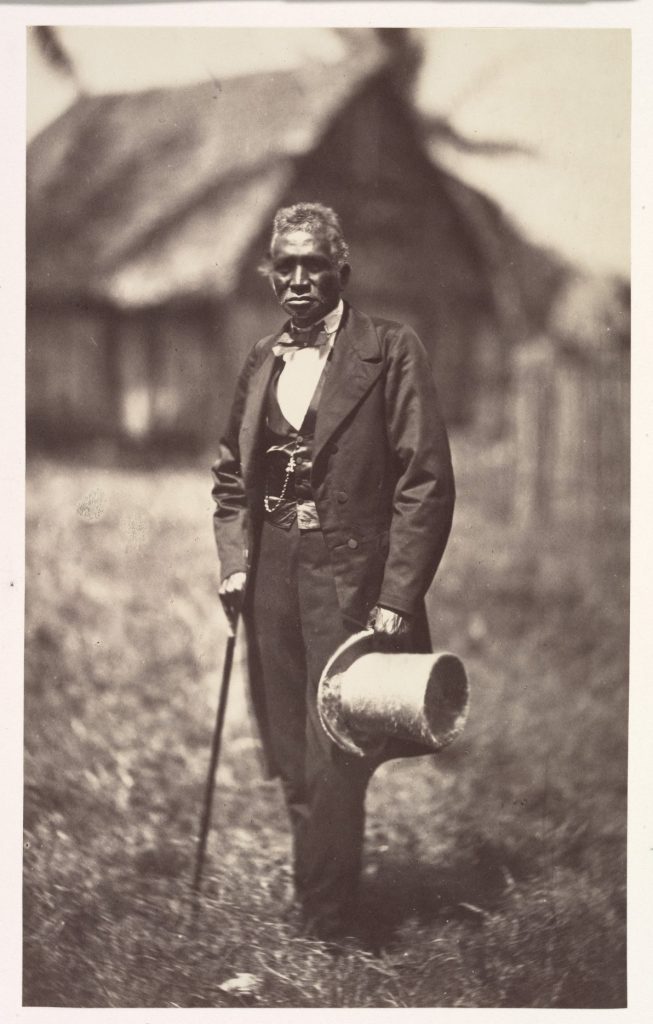
Désiré Charnay, “Raharla, Minister to the Queen,” 1863. Albumen silver print from glass negative; image: 19.4 × 12 cm/courtesy The Metropolitan Museum of Art, New York, Gilman Collection

ARIES (March 21-April 19): You’re slipping into a phase when stuff that has been invisible will become visible, at least to you. You will have extra power to peer beneath the surfaces and discern the hidden agendas and study the deeper workings. Your interest in trivia and distractions will dissipate, and you’ll feel intensified yearnings to home in on core truths. Here’s your guiding principle during this time: Favor the interests of the soul over those of the ego. And for inspiration, have fun with this quote by religious scholar Huston Smith: “The Transcendent was my morning meal, we had the Eternal at lunch, and I ate a slice of the Infinite at dinner.”

TAURUS (April 20-May 20): “You cannot have fun with anything that you don’t love or admire or respect,” declared comedian Mel Brooks. I agree! The joyous release that comes through playful amusement is most likely to unfold when you’re in the presence of influences you are fond of. The good news, Taurus, is that in the coming weeks, you will have a special inclination and knack for hanging around people and influences like that. Therefore, you will have an enhanced capacity for mirth and delight and pleasure. Take full advantage, please! As much as possible, gravitate toward what you love and admire and respect.

GEMINI (May 21-June 20): “The thing about inspiration is that it takes your mind off everything else,” says Gemini author Vikram Seth. I bring this truth to your attention because I believe you will soon be the beneficiary of steady, strong waves of inspiration. I also predict that these waves will transport you away from minor irritations that are best left alone for now. Be alert and ever-ready to spring into action, my dear, so that as the inspirational surges flow, you will harvest the maximum rewards from their gifts.

CANCER (June 21-July 22): The advice that Reb Nachman of Breslov offered two centuries ago is just right for you now: “Never ask directions from someone who knows the way, or you will never be able to get lost.” In the coming weeks, you will attract tricky but palpable blessings from meandering around without knowing exactly where you are. It’s time for you to find out what you don’t even realize you need to know; to stumble upon quiet little wonders and marvels that will ultimately prove to be guideposts for your holy quests in the future. Yes, I understand that being in unknown territory without a reliable map isn’t usually a pleasure, but I believe it will be for you. PS: Our fellow Cancerian, author Rebecca Solnit, wrote a book entitled “A Field Guide to Getting Lost.” It might be helpful during your wanderings. Read a summary of it here: tinyurl.com/GuideToGettingLost

LEO (July 23-Aug. 22): “You face your greatest opposition when you’re closest to your biggest miracle,” wrote author and filmmaker T. D. Jakes. According to my analysis of upcoming astrological omens, that’s good advice for you. I suspect that the problems you encounter will be among your best and most useful ever. With the right attitude, you will harness the challenges to generate magnificent breakthroughs. And what’s the right attitude? Proceed with the hypothesis that life is now conspiring to bring your soul exactly what your soul needs to express its ripest beauty.

VIRGO (Aug. 23-Sept. 22): “Always remember this,” said actor Hattie McDaniel (1893–1952). “There are only eighteen inches between a pat on the back and a kick in the rump.” Metaphorically speaking, I believe her advice will be useful for you in the coming days. Lately, you’ve had to deal with too many experiences and influences akin to kicks in the rump. But now that will change. Soon there’ll be a surge of experiences and influences that resemble pats on the back. In my estimation, you have finished paying your dues and making course corrections. Now it’s time for you to receive meaningful appreciation and constructive approval.

LIBRA (Sept. 23-Oct. 22): Author Gayle Forman offers a set of truths that I suspect will be useful for you in the coming weeks. They may even be inspirational and motivational. Forman writes, “Sometimes fate or life or whatever you want to call it, leaves a door a little open, and you walk through it. But sometimes it locks the door and you have to find the key, or pick the lock, or knock the damn thing down. And sometimes, it doesn’t even show you the door, and you have to build it yourself.” Are you ready for the challenge, Libra? I think you are. Do whatever you must do to go through the doorways you want and need to go through.

SCORPIO (Oct. 23-Nov. 21): Singer-songwriter Rosanne Cash described her process. “I dream of songs,” she began. “I dream they fall down through the centuries, from my distant ancestors, and come to me. I dream of lullabies and sea shanties and keening cries and rhythms and stories and backbeats.” Scorpio, I would love for you to explore comparable approaches to getting the creative ideas you need to live your best life possible. I would love for you to draw freely from sources beyond your conscious ego—including your ancestors, the people you were in previous incarnations, gods and spirits, heroes and allies, the intelligence of animals, and the wisdom of nature. The coming months will be a favorable time to expand your access. Start boosting the signals now!

SAGITTARIUS (Nov. 22-Dec. 21): Author Madeleine Thien has lived in Vancouver, Montreal, and Iowa City, and has taught at schools in Hong Kong and Brooklyn. Her father was born and raised in Malaysia and her mother in Hong Kong. She has a rich array of different roots. Not surprisingly, then, she has said, “I like to think of home as a verb, something we keep recreating.” That’s an excellent meditation for you right now, Sagittarius. And it will continue to be worthy of your ruminations for another four months. What’s the next step you could take to feel comfortable and secure and at peace?

CAPRICORN (Dec. 22-Jan. 19): The fastest animal on earth is the peregrine falcon, which can reach speeds of 200 miles per hour when it dives from a great height. The seventh-fastest creature is the humble pigeon. Having been clocked at 92.5 miles per hour, the bird outpaces the cheetah, which is the fastest land animal. I propose we make the pigeon your spirit creature for the coming weeks. On the one hand, you may seem mild and modest to casual observers. On the other hand, you will in fact be sleek, quick and agile. Like the pigeon, you will also be highly adaptable, able to thrive in a variety of situations.

AQUARIUS (Jan. 20-Feb. 18): “Self-control might be as passionate and as active as the surrender to passion,” wrote Aquarian author W. Somerset Maugham. Yes! I agree! And that’s the perfect message for you to hear right now. If you choose to take advantage of the potentials that life is offering you, you will explore and experiment with the mysteries of self-discipline and self-command. You’ll be a trailblazer of discernment and poise. You will indulge in and enjoy the pleasures of self-regulation.

PISCES (Feb. 19-March 20): In 1961, Piscean cosmonaut Yuri Gagarin was the first human to orbit the Earth in a spacecraft. As his feat neared its end, Gagarin left the capsule at 20,000 feet above the ground and parachuted the rest of the way. He arrived in a turnip field where a girl and her grandmother were working. They provided him with a horse and cart so he could travel to the nearest telephone and make a call to get picked up and brought back to headquarters. I foresee a metaphorically comparable series of events transpiring in your life, Pisces. Be flexible and adaptable as you adjust to changing conditions with changing strategies. Your exceptional and illustrious activities may require the assistance of humble influences.

Homework: Name the three things most worthy of celebrating right now. Then celebrate them! Newsletter.FreeWillAstrology.com

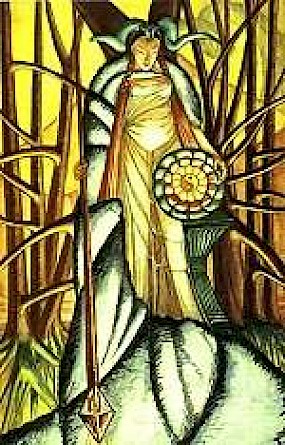
Tarot Card for February 17: The Princess of Disks

The Princess of Disks

A young woman indicated by the Princess of Disks would be a quiet, reserved person – sometimes shy. She will be practical and capable, though rarely seeking the limelight. I used to know a stage manager who always came up as a Princess of Disks – she loved the glitz of the theatre as long as she could stay behind the scenes – having, of course, created them first!

She’s a gentle person who, like the Queen of Disks, is much concerned with domestic matters, and with Nature and growth. As a result, sometimes when this card comes up we may be looking at somebody who is expecting a child. The Princess of Cups often represents conception, the Princess of Disks shows the pregnancy and the Ace of Wands will then indicate the birth.

The Princess of Disks woman is a reliable and diligent person, trustworthy and hard-working. She is faithful by nature, and deals badly with conflict. She likes life to unfolds in an ordered fashion. In fact, she contemplates life very thoroughly, being sensitive to the needs of others, and sympathetic to their feelings.

Despite her quiet exterior, she has a huge resource of strength and support to offer to those who need it. She is also an excellent practical manager with marked proficiency in dealing with money and accounting. This will, however, generally be expressed in the home environment where she is at her most content.

When the card comes up to indicate a period in somebody’s life, rather than the person herself, we will be looking at a young woman on the threshold – of life, marriage, motherhood, though rarely on the threshold of some major career ambition. That step would be more readily indicated by the Princess of Wands.

The Princess of Disks

(via angelpaths.com and Alan Blackman)

Thousands Of Priest’s Baptisms Rendered Invalid For Using Wrong Word

Yesterday 4:11PM (theonion.com)

A priest resigned earlier this month after his diocese discovered the baptisms he held over two decades were invalid because he had changed a single word while performing the sacrament. What do you think?

“I thought it was weird that he kept referring to Jebus.”

–JAMES TORRES, DESERT GUIDE

“That’s alright. I was going to sin anyway.”

–EUGENIA DESROCHER, AUTOGRAPH STYLIST

“And not a single baby spoke up to correct him?”

–COLIN ZEISLER, SYSTEMS ANALYST

“Conversations with Calvin” on February 27

The Prosperos Sunday Meeting is offering another chance to gain insights that happen through interviews with interesting and provocative people in the podcasts called “Conversations With Calvin.” This meetup features a conversation between Nicholas Snow, and your host Calvin Harris H.W., M.

You won’t want to miss Calvin’s Conversation with Nicholas Snow.

This conversation will introduce one man’s unique  Insight into Maximizing a Life.

The Interview will cover some of Nicholas Snow’s Major Turning Points in life and career

His struggle to overcome obstacles of the personality.

And his pursuit of living an Authentic Life.

Nicholas Snow has to his credit been an Activist for many causes

He has worked in Movie and TV production,  Website and Print content development, he is an Actor and Published Writer, a Public Speaker, and an Entertainment Personality.

The event is free, one hour beginning at 11:00 a.m. Pacific time- Sunday 27th, February 2022. 

Sunday, February 27, 2022, 11:00 am Pacific Time
Go to The Prosperos Sunday Meeting on Zoom:

https://us02web.zoom.us/j/332275676

Interesting people + Fun Conversation + Important Insights

Sunday Meeting with William Fennie

SUNDAY MEETING 2/20/2022

Building a New World

William Fennie, H.W., M.

The challenges of our time require changes in the way we approach solving problems. We are equipped with a hidden skill set that is capable of meeting the needs of the moment. 

Zoom link: https://us02web.zoom.us/j/332275676  

Join us this Sunday for this talk by William Fennie, H.W., M.

11:00 am Pacific/Noon Mountain/1:00 Central/2:00 Eastern

These talks are presented by contribution. Everyone from fundamentalists to atheists are welcome!

One tap mobile
+16699006833,,579891643 # US (San Jose)
+13462487799,,579891643# US (Houston)

Dial by your location       
+1 669 900 6833 US (San Jose)       
+1 346 248 7799 US (Houston)       
+1 301 715 8592 US       
+1 312 626 6799 US (Chicago)       
+1 929 205 6099 US (New York)       
+1 253 215 8782 US

Meeting ID: 579 891 643
Find your local number: https://zoom.us/u/abtcyLDACK

The Zealot Gene

Half of us are in the apple
Half of us are in the pie
All of us are in the pudding
When the last bus has gone by
Someone has to take the high road
Someone has to make the bed
No-one has the right to tell you
To lie down when all is said

The black and white, the stereotype
The polarising pitch at play
While some of us sit in between
Interminable shades of grey
No need to walk the tightrope
Set out on that great divide
The balance scales may tremble
But the featherweights are on our side

Carrying the Zealot gene
Right or left, no in between
Beware, beware the Zealot gene
Naked flame near gasoline

The populist with dark appeal
The pandering to hate
Which xenophobic scaremongers
Deliver on a plate
To tame the pangs of hunger
And satisfy the lust
Slave to ideology
Moderation bites the dust

Bee buzzing in your bonnet
And a wasp right up the bum
A V-8 under hood
A cocked hammer under thumb
Ear-splitting twitter thunder
And a screaming banshee wail
You got too many opinions
And a tom cat by the tail

Carrying the Zealot gene
Right or left, no in between
Beware, beware the Zealot gene
Naked flame near gasoline

Carrying the Zealot gene
Right or left, no in between
Beware, beware the Zealot gene
Naked flame near gasoline

Half of us are in the apple
Half of us are in the pie
All of us are in the pudding
When the last bus has gone by
Someone has to take the high road
Someone has to make the bed
No-one has the right to tell you
To lie down when all is said

The black and white, the stereotype
The polarising pitch at play
While some of us sit in between
Interminable shades of grey
No need to walk the tightrope
Set out on that great divide
The balance scales may tremble
But the featherweights are on our side

Carrying the Zealot gene
Right or left, no in between
Beware, beware the Zealot gene
Naked flame near gasoline


“The title track offers many allusions to the radical, politically-charged world of populism in leadership,” explained Ian Anderson the meaning of “The Zealot Gene”. “As a song lyric, it sums up, for me, the divisive nature of societal relationships and the extreme views which fuel the fires of hate and prejudice, more so today perhaps, than at any time in history. Perhaps you think you know who I might have been thinking about here but, in reality, there are probably right now at least five prominent, dictatorial national figures who could fit the bill.”

Ancient Indian texts reveal the liberating power of metaphysics

Ancient Indian texts reveal the liberating power of metaphysics | Psyche

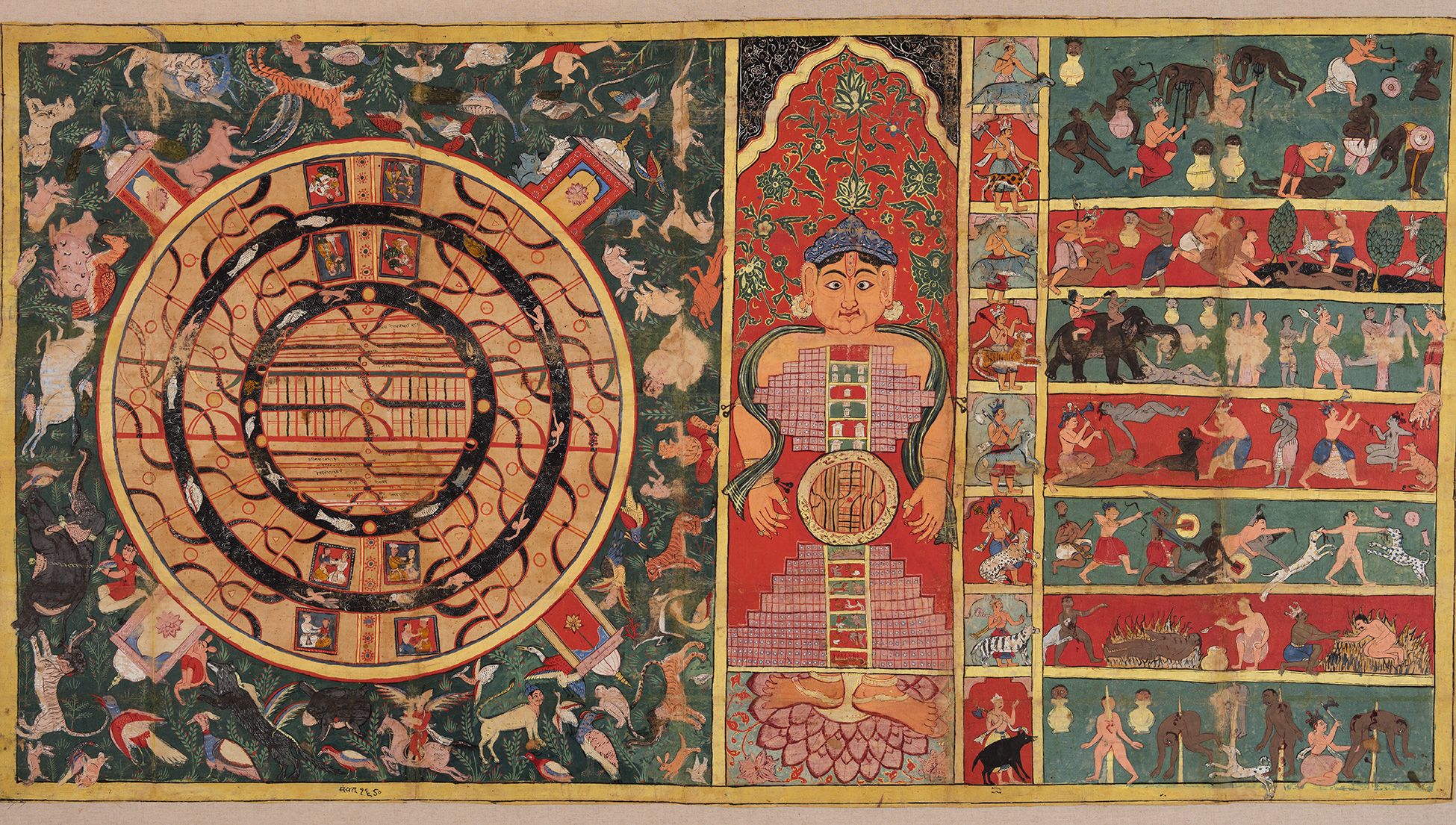
Diagrams of the Universe: The Two-and-a-Half Continents, the Universe in the Shape of a Person, and the Seven Levels of Hell Gujarat, India 1613. Courtesy the Cleveland Museum of Art

Jessica Frazieris a lecturer in theology and a fellow of the Oxford Centre for Hindu Studies. She is the founding and managing editor of Oxford’s Journal of Hindu Studies. Her books include the edited collection Categorisation in Indian Philosophy: Thinking Inside the Box (2014) and Hindu Worldviews: Theories of Self, Ritual and Reality (2017).

Edited by Nigel Warburton

15 February 2022 (psyche.co)

Some of the world’s earliest writings suggest an unexpected goal for ambitious minds. Nearly 3,000 years ago, the ancient Indian authors of certain Upanishads (‘special teachings’) exhorted readers to find a fabled knowledge. When one knows that which is ‘woven upon the Whole – he becomes the Whole’. He ‘thinks of what has not been thought of before, and perceives what has not been perceived before’. Thus, comprehending the widest reaches, he is able to ‘conquer the whole universe’.

To modern ears, these promises sound like esoteric mysticism, and it is true that the Sanskrit writings that have reached us from India in the 1st millennium BCE were full of rituals to harness the universe, hymns to ‘the whole’, and praises of the divine as ‘all of this’. The cosmos was an object of wonder that fascinated Indian thinkers.

But one group of thinkers took a uniquely rational approach, focusing on knowledge of the whole and how it affects us psychologically. Far from being supernatural, this knowledge came from rigorous extrapolation to universal features of the cosmos using rational generalisation based on patterns in the visible world. In short, philosophy – metaphysical truths based on inference – was the key to humanity’s highest possibility and its greatest happiness.

Why this high opinion of metaphysics – surely one of civilisation’s most impractical pursuits?

Early Indians had pleaded with the gods for rain and cattle, sons and warriors, health and wealth; we still have their words in the Vedas, some of the world’s oldest texts. Theirs were precisely the prayers we would expect of any early community struggling to survive. But by around 600 BCE, the ability to perform rituals was no longer enough to win favour at the royal courts of the Gangetic Plain. Atheists, gnostics and sceptics were increasingly vocal in the kingdoms further east. Experts in the old Vedic ritual boasted skills in linguistics, geometry, anatomy, astronomy and poetry, and they had been observing the forces of nature for centuries – but to what end? How could they earn their keep in the new climate?

The answer lay in the public’s growing worry about existential problems. Mortal life seemed little more than a flame struck over the open ocean at night; our minds shine but a brief, faint spotlight on the immensity of the world before sputtering into darkness again.

As their frustration grew, India’s ancient inhabitants became obsessed with a new goal: changing our minds so as to alter the very nature of life and improve it from the bottom up. Mental disciplines became all the rage: outsider ascetics developed an arduous new concentration meant to purify the mind into a single, undistracted stream of consciousness… and yoga was born. A young prince named Siddhartha Gautama gave up his inheritance and taught a way to deconstruct the ego and its desires, becoming the Buddha.

Places like Athens and Alexandria, and the Silk Road cities of India and China, were idea-markets peddling possible ways to transform oneself

Even the world of ideas is mostly a mystery: most of life’s potential experiences, stories and ideas pass us by. Ancient Indians were just getting a glimpse of this as they discovered new ways of thinking along the trade routes west to Persia and Greece, or northeast over the Himalayas into China. Perhaps this hunger to know what we will never see with our own eyes is what drives the modern fascination with period dramas and science fiction. Our vast imaginations pull in the opposite direction from our small, frail bodies.

This creates a tension at the heart of humanity. Mostly, we bury our minds in urgent tasks and expend our excess energy in entertainment. Craving more, we create ever-new stories, envisioning experiences we might have had. But could not all perspectives be gathered into an overarching truth? And could we not realign ourselves with the global not the local, the eternal things not the mortal ones? These ancient Indian authors encouraged us to lead life on a larger scale.

Breaking out of our mortal cage was a passion for many philosophers of the ‘axial age’ (c800-200 BCE). They lived in an era of expanded travel and crosscultural encounter, and had just begun to realise how wide a world was really out there. Places like Athens and Alexandria, and the Silk Road cities of India and China, were idea-markets peddling possible ways to transform oneself. Techniques for becoming immortal were in high demand. On the slopes of the Himalayas, Taoist alchemists offered to transmute mortal men into divine beings, while in the temples of Alexandria followers of Isis hoped her mysteries would help them cheat death – at least for a while. If immortality was popular, magic was a close competitor: who would not want to fly with the gods, like the mysterious Késins of ancient India and the Bodhisattvas of Tibet? Or control minds (a useful skill, mastered by Tantric wizards of South and Southeast Asia), or simply make handsome young men fall in love with you – like the wise and witty Socrates?

Other techniques were less spectacular, but more psychologically astute. Both the Buddhists and the Stoics could teach you to curb your instincts and meet life with exquisite equanimity, untouched by the vicissitudes of tragedy or joy. Or if those options didn’t appeal, one could become a god, slip through the door of the sun, or snuff oneself out of existence – a particularly extravagant form of existential suicide favoured by certain Buddhists. These and many more ‘technologies of the self’, as the philosopher-historian Michel Foucault put it in 1982, offered a panacea for life’s fundamental smallness.

They believed that reasoned speculation on the fabric of the world has the power to change our lives

But in the ancient Indian Upanishads, we see one of history’s first distinctly philosophical attempts to solve the problem of human finitude. Vedanta’s metaphysical speculations worked as a kind of therapy, because they tried to position human life in fruitful relation to the whole of things. As individuals, our days are dogged by suffering, frustrated desire and death, and all we love is lost in the end. But just as Ecclesiastes observed ‘generations come and generations go, but the earth remains forever’, so the Indian philosophers tried to realign themselves with reality itself. What if life didn’t have to be so small? What if we could expand the small flame of consciousness into a bonfire, and that fire into a sun with rays that reach across the universe and down to its foundations?

The oldest prayers of Hindu culture included questions of a uniquely philosophical nature. One poem from around 800 BCE lamented: ‘What thing I am, I know not clearly,’ and another demanded to know:

Why were we born? By what do we live? On what are we established? Governed by what… do we live…?

The rise of systematic philosophy offered a solution. Those who used induction (the process of generalising new information and abstract principles from the visible world) and deduction (discovering unseen truths hidden within our existing knowledge) came to be seen as rishis or seers, with a unique power to look into the heart of reality. The Mundaka Upanishad tells us that the mind is an arrow able to send thought deep into the imperishable nature of reality – ‘Strike it!’ the author says.

But this was not mysticism per se: they believed that reasoned speculation on the fabric of the world has the power to change our lives. So instead of calling for the gods, one Vedic seer asked:

What was the forest, what was that wood from which heaven and earth were formed? Let the wise seek with their intelligence that place in which all beings are carried.

The wise did just that. One story tells of how the learned man Uddalaka Aruni advised his son to look behind the ‘names and forms’ of the empirical world, ignoring the misleading ‘word handles’ we give individual things. If we can identify the features they all share, then we start to see the underlying fabrics and forces that span time and space. This power to speculate eventually earned a name: the Samkhya Karaka, a philosophical text composed c350 CE, called it anumana or ‘inference’. Learning to see the world with anumana meant always seeing the unchanging substrate of reality behind its changing identities, and noticing the way that our own existence is taking ever new forms, even as we experience it. The Samkhya Karaka’s particularly daring ‘Satkarya’ theory of causation taught that all things, past and present, always exist in a subtle potential form as a power of the material that constitutes it. The present moment is just a spotlight that shines on one small corner at a time – but metaphysics reveals all of reality in its richness.

Humans didn’t need a greater quantity of life. What we really crave is elevation to a higher quality of existence

More than that, it was believed that whatever fills our minds – large ideas or small – that is what we are. This meant that philosophy was also a way of curating one’s own mind. So one Upanishad assures us that: ‘Whatever world a man ponders with his mind … that very world he wins.’ When we understand the whole world, it becomes part of us, so that we are no longer isolated.

Heroes enjoying this exalted state turn up from time to time in Indian literature. The tale of the liberated sage Shuka is told in the Mahabharata. Born enlightened, once he has completed his education, he flies through the cosmos exploring the reaches of time and space. He might put one in mind of those European Renaissance antiheroes of knowledge: Faust and Prospero. But, unlike them, Shuka is unimpeded by the assumption that too much knowledge is a dangerous thing. The idea of a mind stretched to the widest reaches of reality may also remind philosophers of Baruch Spinoza’s concept of an ‘intellectual love’ of the cosmos, unique to sentient beings, in which the universe itself achieves a kind of completion.

In India, the idea of a world-spanning mind was forged in the fire of competition from some of the world’s most radical sceptics, early Buddhists. Their no-self doctrine said that we are here today and gone tomorrow; in fact, we are not even really here today – we are just a cluster of changing elements. But the Hindu schools disagreed, pointing to the mind’s extraordinary capacity to outreach the spatiotemporal bubble in which each person resides. I might live in 2022 in Oxford, but I can share the experiences of persons in Thailand or the US, and imagine different lives I might have lived. With the help of scientists and philosophers, I understand levels of the cosmos that lie beyond the senses, and can access realities, values or ideas that cannot be destroyed with any mere physical body.

In the modern world, we are liable to forget all this. Bodies are real and minds are insubstantial. Ideas seem trivial – barely there. But if, as physics tells us, reality is made as much of waves, patterns and clusters, energy, emergent systems and movement, as of blank blocks of matter, then there is no reason to see ideas as ‘less real’ than physical things. The basic stuff of reality generates atoms, cells, life systems. From these come consciousness, sensations, perceptions, analyses and responses. And from these emerge emotions, concepts, projects, goals, ideals, stories and meaning in all that the word implies. The ‘higher’ levels of reality are not less real – they are just emergent.

What is interesting is where this leaves humans, we curious confections of matter-constrained consciousness. We can do something extraordinary: our mental parts can climb out of the window of the body, and up into the higher levels of reality. There we have access to an unconstrained realm of ideas, meanings and values (as Plato agreed). But even more than that, each of us is an undepleting fount of higher realities for as long as we live. Thus, becoming the world means living from the perspective of reality and knowingly contributing to it in all we do. In the phrase of the existentialist Martin Heidegger, we become the ‘Shepherds of Being’.

This is not a goal that promises pleasure or an escape from death. The Indians and the Greeks both believed in reincarnation, so for them humans didn’t need a greater quantity of life. What we really crave is elevation to a higher quality of existence. ‘Becoming the world’ is a kind of immortality that every philosopher, every astrophysicist, and every daydreamer shares in some measure. Not unlike Plato’s path into the timeless world of pure concepts, the ancient Indian discovery of metaphysics charted a way for aspiring minds to spring the lock of space and time – and fly free.

8-And-A-Half-Month-Old Fetus Could Really Get Used To This

Monday 7:00AM (theonion.com)

FLAGSTAFF, AZ—Expressing his enjoyment at getting to just kick back and relax, a local 8-and-a-half-month-old fetus confirmed Monday that he could really get used to this. “Man, I gotta tell you, this is the life,” said the 37-week fetus, adding that between the warm and cozy environment, a perfect resting place on the cervix, and a steady supply of amniotic fluid, there was nowhere else he would rather be. “I’m snug as a bug in a rug here, but I’ve still got enough room to turn a full 180 degrees. Plus there’s this super fun umbilical cord I can play with or wear as a necklace. I honestly might just hang out here forever.” At press time, the fetus admitted things had been a little less exciting since he finished absorbing his twin.