He is the most famous Chinese dissident and one of the best-known contemporary artists in the world. Ai Weiwei was harassed by the Chinese authorities, who bulldozed his Shanghai studio, sent him to jail without charge and drove him out of his country. After the February 2 publication of the French translation of his memoir, “1000 Years of Joys and Sorrows”, the artist sat with Eve Jackson to talk about the moment in a Chinese prison when he decided to write his life’s story for his son and what he learned growing up in a labour camp with his persecuted father, the poet Ai Qing.
They also discussed his loneliness living in New York and his constant search for freedom and truth.
Asked about the Western diplomatic boycott of the Beijing Winter Olympics, Ai Weiwei described the move as “hypocritical” and “a joke”.
Apoorva Mandavilli, New York Times Feb. 15, 2022 (SFGate.com)
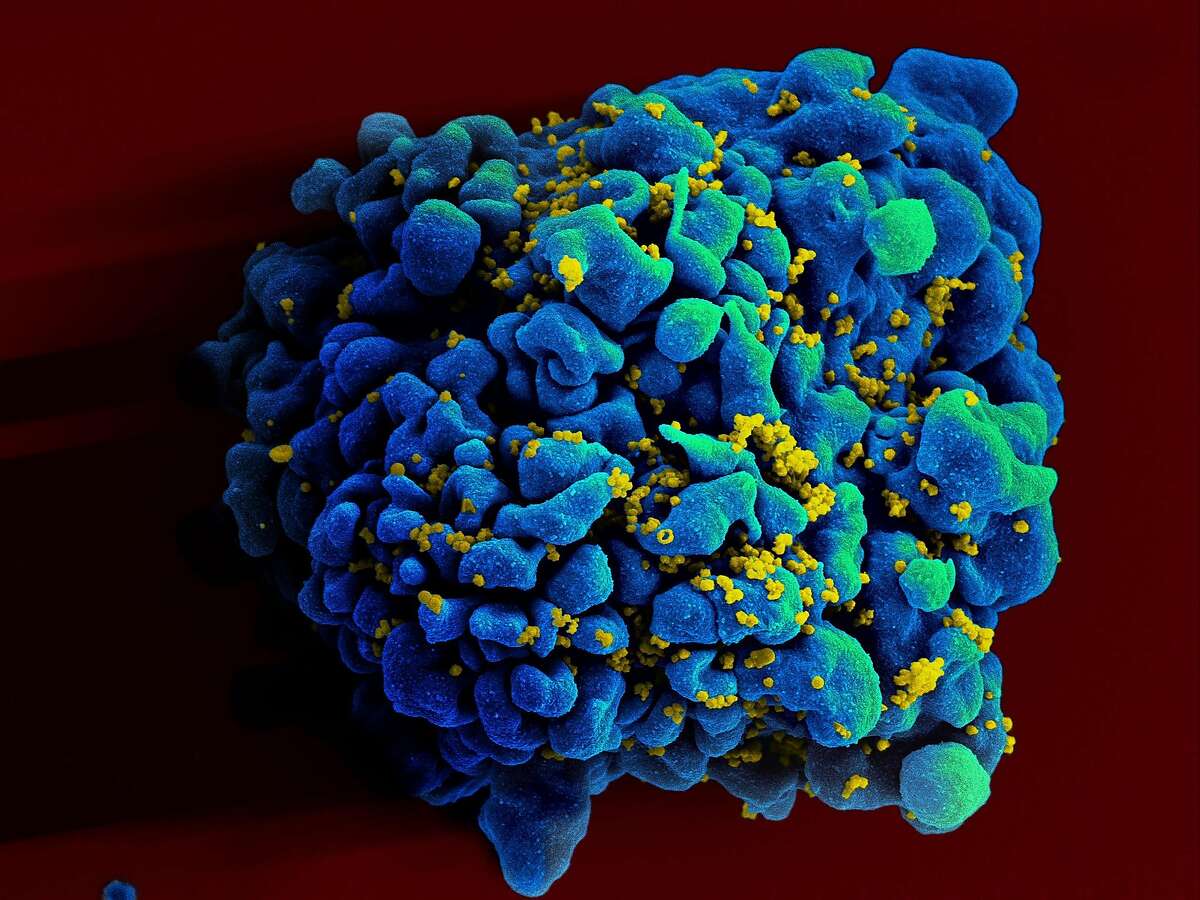
In a photo provided by NIAID, a colored scanning electron micrograph of a human T-cell, blue and green, infected with H.I.V., yellow. (NIAID via The New York Times) Niaid/NYT
A woman of mixed race appears to be the third person ever to be cured of HIV, using a new transplant method involving umbilical cord blood that opens up the possibility of curing more people of diverse racial backgrounds than was previously possible, scientists announced on Tuesday.
Cord blood is more widely available than the adult stem cells typically used in bone marrow transplants, and does not need to be matched as closely to the recipient. Most donors in registries are of Caucasian origin, so allowing for only a partial match has the potential to cure dozens of Americans who have both HIV and cancer each year, scientists said.
The woman, who also had leukemia, received cord blood to treat her cancer. It came from a partially matched donor, instead of the typical practice of finding a bone marrow donor of similar race and ethnicity to the patient’s. She also received blood from a close relative to give her body temporary immune defenses while the transplant took.
The sex and racial background of the new case mark a significant step forward in developing a cure for HIV, the researchers said.
“The fact that she’s mixed race, and that she’s a woman, that is really important scientifically and really important in terms of the community impact,” said Dr. Steven Deeks, an AIDS expert at the University of California, San Francisco who was not involved in the work.
Infection with HIV is thought to progress differently in women than in men, but while women account for more than half of HIV cases in the world, they make up only 11% of participants in cure trials.
But Deeks said he did not see the new approach becoming commonplace. “These are stories of providing inspiration to the field and perhaps the road map,” he said.
Powerful antiretroviral drugs can control HIV, but a cure is key to ending the decades-old pandemic. Worldwide, nearly 38 million people are living with HIV, and about 73% of them are receiving treatment.
A bone marrow transplant is not a realistic option for most patients. Such transplants are highly invasive and risky, so they are generally offered only to people with cancer who have exhausted all other options.
There have only been two known cases of an HIV cure so far. Referred to as “The Berlin Patient,” Timothy Ray Brown stayed virus-free for 12 years, until he died in 2020 of cancer. In 2019, another patient, later identified as Adam Castillejo, was reported to be cured of HIV, confirming that Brown’s case was not a fluke.
Both men received bone marrow transplants from donors who carried a mutation that blocks HIV infection. The mutation has been identified in only about 20,000 donors, most of whom are of Northern European descent.
In the previous cases, as the bone marrow transplants replaced all of their immune systems, both men suffered punishing side effects, including graft versus host disease, a condition in which the donor’s cells attack the recipient’s body. Brown nearly died after his transplant. Castillejo’s treatment was less intense, but in the year after his transplant, he lost nearly 70 pounds, developed a hearing loss and survived multiple infections, according to his doctors.
By contrast, the woman in the latest case left the hospital by day 17 after her transplant and did not develop graft versus host disease, said Dr. JingMei Hsu, the patient’s physician at Weill Cornell Medicine. The combination of cord blood and her relative’s cells might have spared her much of the brutal side effects of a typical bone marrow transplant, Hsu said.
“It was previously thought that graft versus host disease might be an important reason for an HIV cure in the prior cases,” said Dr. Sharon Lewin, president-elect of the International AIDS Society, who was not involved in the work. The new results dispel that idea, Lewin said.
The woman, who is now past middle age (she did not want to disclose her exact age because of privacy concerns), was diagnosed with HIV in June 2013. Antiretroviral drugs kept her virus levels low. In March 2017, she was diagnosed with acute myelogenous leukemia.
In August of that year, she received cord blood from a donor with the mutation that blocks HIV’s entry into cells. But it can take about six weeks for cord blood cells to engraft, so she was also given partially matched blood stem cells from a first-degree relative.
The half-matched “haplo” cells from her relative propped up her immune system until the cord blood cells became dominant, making the transplant much less dangerous, said Dr. Marshall Glesby, an infectious diseases expert at Weill Cornell Medicine of New York and part of the research team.
“The transplant from the relative is like a bridge that got her through to the point of the cord blood being able to take over,” he said.
The patient opted to discontinue antiretroviral therapy 37 months after the transplant. More than 14 months later, she now shows no signs of HIV in blood tests, and she does not seem to have detectable antibodies to the virus.
It’s unclear exactly why stem cells from cord blood seem to work so well, experts said. One possibility is that they are more capable of adapting to a new environment, said Dr. Koen Van Besien, director of the transplant service at Weill Cornell. “These are newborns, they are more adaptable,” he said.
Cord blood may also contain elements beyond the stem cells that aid in the transplant.
“Umbilical stem cells are attractive,” Deeks said. “There’s something magical about these cells and something magical perhaps about the cord blood in general that provides an extra benefit.”
The Emperor is numbered four and is the Empress’s other half. Here is a man in the prime of life – successful, confident, secure and well-established. Where the Empress is allied with the Moon, the Emperor is aligned with the Sun.
The Emperor is quick and energetic, exerting dynamic control over his life. He feels born to rule and at his best is a thoughtful and sensitive leader. He listens to others but always the final decision is his own.
This is a man who has proved himself worthy. He has won most of his battles and now is the time to rule over a rich and bountiful land. He is the King Arthur type. He also represents fatherhood – fertile man, protector and providor.
When we are the Emperor, we are taking hold of our power. We are prepared to protect and defend the vulnerable, as well as to shed the lazy and weak. Finally, we are willing and ready to pass on what we have discovered to others who are ready to learn.
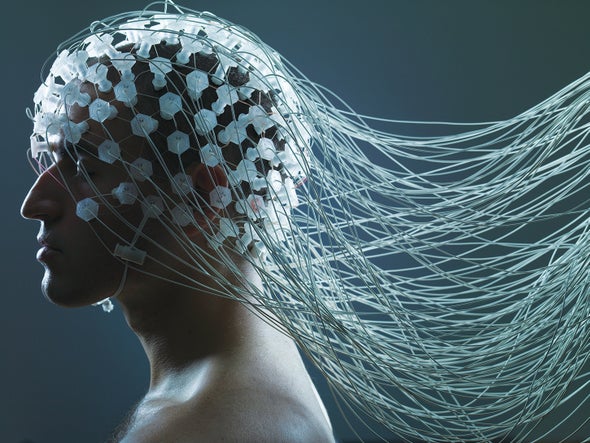
Electrodes attached to the scalp detect electrical activity among brain cells – a vital tool for investigating the mind. Credit: Bill Diodato Getty Images
In 2003 a patient known as TN lost his sight after suffering two successive strokes; the visual cortex in his brain was damaged and his vision was totally gone, although the eyes themselves were still healthy. During one examination years after he lost his sight, researchers were flabbergasted to see TN carefully navigate a hallway full of overturned chairs, scattered boxes and other obstacles without colliding with a single thing. How was this possible for a person who was completely blind?
The human mind is capable of many remarkable feats. In this issue, scientists reveal what the latest research says about cognition and how we can improve our mental health. Plus, read up on some of the cutting-edge findings in neuroscience.
In the case of TN, his doctors and other researchers characterized his condition as “blindsight” and discovered that the brain can act on signals received by the retina even if the person is not aware of what he or she is seeing. Indeed, the mind perceives and processes information with or without our awareness. Readings from functional MRI scans show that the brain makes decisions even before we are aware we have made them. Consciousness can exist, but it can evade detection in vegetative patients. New research reveals that a small percentage of comatose patients are in fact fully aware.
How can we boost brain health? Three types of meditation help to achieve focus with less effort, reduce anxiety and improve sleep. An active social life and the Mediterranean diet are two of a handful of tactics that may help ward off Alzheimer’s disease. Some brain-training programs could also prevent dementia. We all know there is nothing like a good night’s sleep—sack time enhances mood, memory, immune function and hormonal balance—and yet the scientific underpinnings for sleep continue to be a mystery.
As Rafael Yuste and George M. Church note, a century of research on the brain has only inched us toward complete understanding of this most crucial human organ. New technologies using DNA and optogenetics are certainly pushing us closer, but the enigmatic human mind may remain biology’s final frontier for years to come.
This article was originally published with the title “Your Marvelous Mind” in SA Special Editions 26, 3s, 1 (July 2017)
The Astrology Podcast Our annual year ahead astrology forecast for 2022, where we look at the major astrological alignments coming up over the next 12 months and make some predictions, with astrologers Chris Brennan, Austin Coppock, and Leisa Schaim. We spend the first 40 minutes of this episode giving an overview of some of the major transits in 2022, including the ongoing Saturn-Uranus square, Jupiter’s transit through Pisces and Aries, the Jupiter-Neptune conjunction, Venus retrograde in Capricorn, Mars retrograde in Gemini, the Pluto return of the United States, and eclipses in Taurus and Scorpio. After that initial overview we then go into a more detailed breakdown of the next twelve months, breaking the year up into four quarters, and spending about 40 minutes on each quarter. This is episode 332 of The Astrology Podcast: https://theastrologypodcast.com/2021/… More About Chris, Austin, and Leisa https://chrisbrennanastrologer.comhttps://austincoppock.comhttp://leisaschaim.com Honeycomb Collective Personal Almanacs and Calendars https://www.honeycomb.co Northwest Astrological Conference https://norwac.net International Society for Astrological Research conference https://isar2022.org 2022 Astrology Podcast Calendars & Podcast Merch https://theastrologypodcast.com/merch/ Monthly Electional Astrology Podcast https://theastrologypodcast.com/auspi… 2022 Year Ahead Electional Astrology Report https://courses.theastrologyschool.co… Please be sure to like and subscribe! #TheAstrologyPodcast#2022astrology Timestamps 00:00:00 Intro 00:01:00 2022 astrology graphics 00:01:30 Overview of major astrological alignments in 2022 00:02:36 Saturn square Uranus 00:15:15 Money, cryptocurrency, and foreign digital currencies 00:17:35 Vegan alternatives and lab-grown meat 00:20:00 Jupiter in Pisces 00:20:40 Jupiter Neptune conjunction 00:26:30 The last time Jupiter was conjunct Neptune in Pisces 00:28:05 Avatar movie 00:31:59 Dreams and aspirations 00:33:40 More on Jupiter-Neptune 00:41:10 Mars-Saturn conjunction 00:47:20 Phrases for 2022 00:48:41 First quarter of 2022 00:49:40 Venus retrograde in Capricorn conjunct Pluto 01:00:29 Mercury retrograde 01:06:03 Mars in Capricorn 01:07:00 Venus conjunct Mars 01:14:09 Mercury-Pluto conjunction 01:15:55 Pluto return of the USA 01:32:47 Electional chart for January 01:37:20 February and March 01:38:23 Venus enclosed by Mars and Saturn in March 01:44:12 Honeycomb Almanac for 2022 01:47:43 Second quarter of 2022 01:49:07 April 01:50:27 Venus in Pisces 01:55:09 Solar Eclipse in Taurus 01:55:28 Venus-Jupiter conjunction in Pisces 01:55:44 Jupiter in Aries 01:58:24 Mars-Jupiter conjunction in Aries 02:03:22 May 02:03:45 Lunar eclipse in Scorpio 02:11:18 June 02:11:40 Mercury station in Taurus square Saturn 02:14:30 Saturn station in Aquarius 02:15:15 Venus in Taurus square Saturn 02:15:53 Mercury enters Gemini 02:16:59 NORWAC 2022 02:22:02 ISAR 2022 02:25:49 Third quarter of 2022 02:27:10 Mars in Taurus 02:31:14 Mars conjunct Uranus and North Node 02:34:55 The Sun under stress 02:35:41 Second exact Pluto return 02:35:55 Saturn-Uranus square 02:37:45 Saturn return of the internet 02:39:35 Keywords for Mars conjunct Uranus and North Node 02:42:38 Mars square Saturn 02:46:21 Jupiter stations retrograde 02:48:19 Uranus stations retrograde 02:51:00 Mars in Gemini 03:07:47 Mercury retrograde 03:10:07 2022 Astrology calendar posters 03:11:44 Fourth quarter of 2022 03:12:54 October 03:15:36 Jupiter back into Pisces 03:19:00 Lunar Eclipse in Taurus with Uranus and North Node 03:25:54 More on the Pluto return in the USA 03:30:47 The space race 03:32:15 Jupiter Neptune 03:35:11 Jupiter enters Aries 03:36:18 Final Pluto return 03:40:48 Preview of 2023 03:49:28 Austin’s upcoming work and book 03:51:43 Leisa’s upcoming work 03:53:18 Chris’ upcoming work 03:55:52 Concluding remarks and sponsors
Sick to Fit Stephen Porges’ body of work has informed my coaching as much as anything else. My exploration and use of Polyvagal Theory to help clients shift undesirable behavior patterns feels like a superpower. I wish more coaches – especially, but not limited to, health coaches – knew about his work, and understood how to apply it. I hope this video is a step in that direction. http://plantyourself.com/340 for the show notes.
“I took a deep breath and recited my vulnerability prayer as I waited my turn: Give me the courage to show up and let myself be seen.
Then, seconds before I was introduced, I thought about a paperweight on my desk that reads, “What would you attempt to do if you knew you could not fail?”
I pushed that question out of my head to make room for a new question. As I walked up to the stage, I literally whispered aloud, “What’s worth doing even if I fail?”
Brene Brown
On Wednesday, February 16th, 2022 we have a Full Moon at 27° Leo.
Apart from a quincunx with Pluto, the Full Moon in Leo is almost unaspected. When a planet or a lunation doesn’t make aspects with other planets, it expresses the planetary archetype in its purest form. This Full Moon is as Leo as it could possibly be.
Yes, the Pluto quincunx will add a touch of drama and conflict. It may feel that the whole world is against us. But a quincunx, even if awkward, is solution-oriented. A quincunx is a 150° aspect, so it’s made of a square (90°) and a sextile (60°).
At first, we deal with the tension of the square. But once the tension is recognized, the opportunity (the sextile) comes.
A quincunx is our chance to make things different, to have a different outcome, but only IF we’re willing to deal with the tension of the square, and only IF we keep our eyes open to seize the opportunities before us.
If all we do is seek the next best thing without dealing with the root cause of our dissatisfaction, the next best thing becomes our next big disappointment. But when we’re willing to recognize and sit with the discomfort, the right opportunity arises.
Full Moon In Leo – Me Against Them
Let’s look at the visual of this Full Moon.
All the other planets (apart from the Moon) are distributed on one side of the zodiac wheel. The South Node is in Scorpio, Venus, Mars and Pluto in Capricorn, Mercury, Sun and Saturn in Aquarius, Jupiter and Neptune in Pisces, Chiron in Aries, and Uranus and North Node in Taurus.
The Moon in Leo takes a theatrical stand, opposing not only the Sun, but all the other planets in a “me against them” pose.
This is the artist who performs their number in front of a new audience. They don’t know what to expect: applause or rotten tomatoes.
This is the individual who openly shares their opinion even if it goes against the mainstream, taking the risk of being ‘canceled’, still choosing to stand with their integrity.
There’s one thing that makes Leo, Leo, and that’s not a desire to be the center of attention. Leo just wants to BE, to express themselves as they are. Just like the Sun rises and sets, radiating warmth and light, Leo people want to be seen for who they are.
Authenticity is very attractive. Deep inside, we all want to be who we truly are. Not what we were told we should be, not what society wants us to be.
People who are authentic, who are in touch with their heart energy automatically become role models and leaders, and that’s because we all resonate with what comes from the heart.
Full Moon In Leo – Authentic Self-Expression
When we fail to integrate our Leo energy, we project it as a shadow: we are either repulsed by it, or we find it very attractive and aspirational.
When we’re repulsed by it, that’s perhaps because it’s us who struggle with authentic self-expression. When we see someone who’s authentic, we find it disturbing because it triggers our own people-pleasing, society-pleasing mask we’re so used to wearing.
OR we may secretly admire Leo’s bravery and boldness. Have you ever ‘liked’ someone even when they had opinions or values that go against your own? Have you ever agreed with someone’s actions even if they were lawless or morally wrong?
We all do that from time to time – because we can’t help ourselves but resonate with the energy that comes from the heart. There’s something extremely attractive about being one’s self – when we recognize it in others, this gives us the permission to shine our own light.
Of course, it’s not easy to be ourselves in groups – society has certain rules and norms. Aquarius represents society, with its unspoken rules (the sign before, Capricorn represents society with its spoken rules).
We are social animals. We behave in certain ways because everyone else does also. We want to fit it – we don’t want to create trouble, to draw attention to ourselves, to be “drama queens”.
Full Moon In Leo – When The Lion Roars
But the more we try to fit it, the more we forget about our heart – about who we are, as unique individuals.
A balance is needed.
And that’s where the Full Moon in Leo comes in.
When the lion roars, everyone listens.
When we speak from the heart, we draw other people’s attention to us. And this may make us feel uncomfortable. This may trigger our Leo wound – “Who am I to be seen?” “Who am I to be listened to?”.
We can continue doing what we’ve always done. We can go along with what everyone else is doing.
But with every day that passes, we slowly disconnect from this incredible source of truth and aliveness – our heart energy.
Listening to our hearts can feel very scary. But what’s the price of not doing it?
A Valentine’s Day Reflection on Ovid, Freud, and #WestElmCaleb
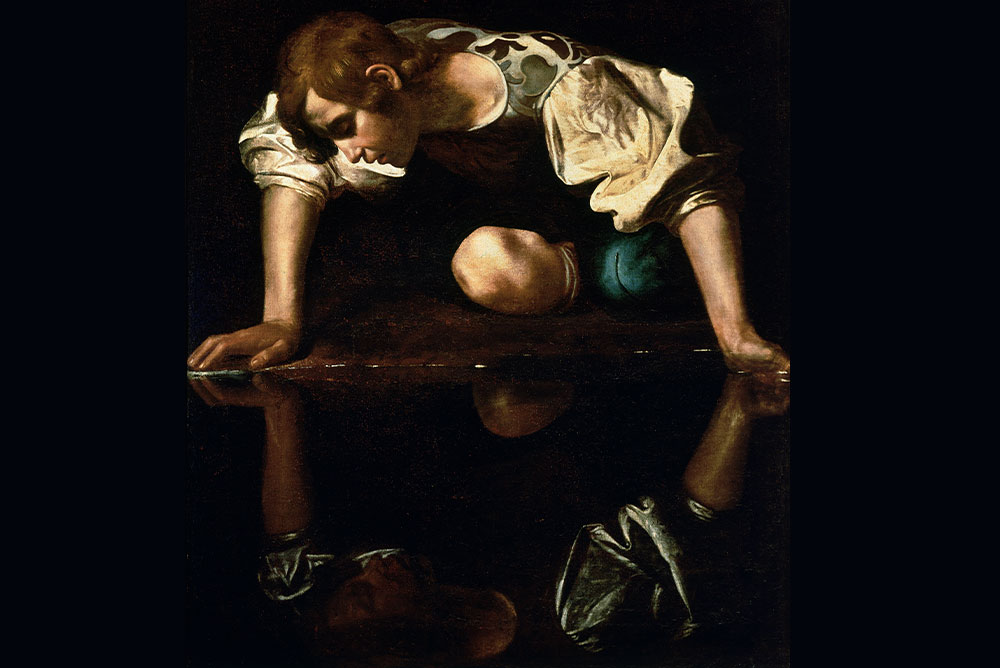
Narcissus by Caravaggio, painted circa 1597–1599. Courtesy of Wikimedia Commons.
by JACKIE MANSKY | FEBRUARY 11, 2022 (zocalopublicsquare.org)
Tens of millions of people, myself included, watched last month as multiple strangers pieced together in real time the fact that they’d all been led on and ghosted by the same tall, 20-something guy in New York City.
The saga, which involved effusive wooing, a curated Spotify playlist, and of course, the cold exit (not to mention at least one allegation of an unsolicited explicit pic), proved to be just the kind of catnip that can scorch-earth its way through social media.
By the time #WestElmCaleb—so named for the place of work listed on his dating profile— played out on TikTok, no one came out unscathed. The original West Elm Caleb’s identity was repeatedly doxxed. Localized efforts to name and shame the West Elm Calebs of other zip codes took off. And brands, from Ruggable to Matel, jumped into the fray like vultures to a carcass to pick at what was left.
Dubbed “2022’s most embarrassing witch hunt,” the level of engagement around West Elm Caleb was perhaps its most puzzling dimension. Did everyone just hear about dating in the year 2022?
But from Caleb’s original sin, love bombing—one person showering another with grand romantic gestures just out of the gate in order to manipulate them—to the TikTok mob that emerged, narcissism offers a through line. As a well-timed New York Times explainer noted, the phenomenon of love bombing is a red flag that you’re dating a narcissist. (And if you’re gleefully filming front-facing videos in full makeup as part of a vicious pile on, that’s maybe also an indicator.)
Studies have shown that less than 5.3 percent of the general population actually has narcissistic personality disorder—which itself continues to be a controversial diagnosis. At one point, the American Psychiatric Association considered dropping it from the Diagnostic and Statistical Manual of Mental Disorders entirely. Yet the term “narcissism” continues to be a buzzword of our times.
Coronated into popular culture in the 1970s by social critics like Christopher Lasch, who latched onto it as a sign of national decay, narcissism has captured the American imagination like no other over the last half century. The word has continued to be melted down and repurposed into a catch-all insult about self-absorption and vanity. In our social media age, that often takes the form of a hand-wavey article every few months or so proclaiming that this latest generation is the most narcissistic yet (not true), or that the internet has made narcissists of us all (well, maybe).Coronated into popular culture in the 1970s by social critics like Christopher Lasch, who latched onto it as a sign of national decay, narcissism has captured the American imagination like no other over the last half century.
Narcissism, of course, dates back all the way to its foundational myth, famously immortalized by the Roman poet Ovid. Ovid spun the tale of a handsome young hunter, Narcissus, who is prophesized to live a long life, so long as he never recognizes himself. When Narcissus spurns the affections of a nymph named Echo, she becomes overcome by grief, fading away until just her voice is left. Watching this, Nemesis, the goddess of revenge, decides to punish Narcissus and lures him to a pool where he fatefully peers upon his reflection for the first time. Transfixed by his beauty, Narcissus falls in love with his own self-image. Ovid’s version, published in Metamorphoses in 8 CE, ends in heartbreak: Narcissus realizes he can never be with his own reflection and like Echo, he too withers away, ultimately transforming into the Narcissus flower.
But that narrative isn’t the earliest known telling of the myth. Only a few years ago, that version—a darker story that ends in suicide—was found in the Oxyrhynchus papyri trove, the largest collection of ancient writings in the world, so named for the location in Egypt where they were discovered a little over 100 years ago.
Oxford classicist Benjamin Henry, who transcribed and translated the fragment, believes it was written down in the mid-1st century BCE by Parthenius of Nicaea, who was known for recording obscure stories of love. Parthenius’s Narcissus doesn’t involve Echo, but rather male suitors, whose affections Narcissus also spurns in favor of his own reflection.
The myth wasn’t intended as a cautionary tale around vanity. Rather the narrative, which likely originated in the Hellenistic age, as early as the 3rd century BCE, was probably used to explain why a particular god was worshiped in a particular place—in this case to encourage the local population to honor Vera, the god of love, more reverently. “Whether it was supposed to shed any light on psychology or any such thing is rather unclear,” Henry told me.
Had Ovid not revamped the tale, Narcissus may have ended up just an obscure local story. “It’s really Ovid’s retelling and ingenious rhetorical speeches that he gives to Narcissus and Echo that made the myth popular,” Henry explained.
It’s worth remembering that there are actually several early versions of the Narcissus story out there. Another version, by an unknown author, even creates a backstory where Narcissus is in love with a sister, who dies at a young age. In this telling, Narcissus consoles himself with his watery visage, which resembles hers—casting his self-absorption in a more sympathetic light.
This more nuanced interpretation of Narcissus is more in keeping with the way the psychological condition was first characterized by Freud in his influential 1914 paper “On Narcissism.” Freud borrowed the term from Havelock Ellis, the founder of modern sexology (and a eugenicist) and German psychiatrist Paul Näcke. Ellis first linked the idea of excessive self-love to the Greek myth by using the phrase “Narcissus-like” in 1898, and Näcke added on an -ism to it the following year, to characterize self-absorption around sexual emotion. Freud took this and established the concept of narcissism as we understand it today.
Notably, Freud’s paper breaks narcissism into two parts. Primary narcissism, he argued, is a part of everyone’s psychological makeup. “Loving oneself,” he wrote, is the “libidinal complement to the egoism of the instinct of self-preservation.” He linked secondary narcissism, by contrast, to megalomania, a form of delusional grandiosity.
Today, there’s been something of a renaissance of scholarship around narcissism that adds even more dimension to the concept. “Two Faces of Narcissism,” a classic paper published over three decades ago, breaks narcissism into two subcategories—grandiose and vulnerable—the former characterized by “extraversion, aggressiveness, self-assuredness, and the need to be admired by others,” and the latter by “introversion, hypersensitivity, defensiveness, anxiety, and vulnerability.” Today it’s well established that narcissism lies across a spectrum—and that healthy narcissism can be a natural state for everyone.
One of the clinical psychologists leading this charge is Craig Malkin, whose 2015 book Rethinking Narcissism begins with an anecdote about his own mother, crediting her “warmth, optimism, and activism” to the conviction that she was special, and therefore could affect change in the world. Narcissistic behavior, Malkin posits, isn’t just for “arrogant jerks or sociopaths.”
So this Valentine’s Day, perhaps we should get comfortable with the idea that there’s a narcissist in us all. That said, should anyone send you a customized Spotify playlist featuring LCD Soundsystem and Angel Olsen, you have my permission to unmatch.
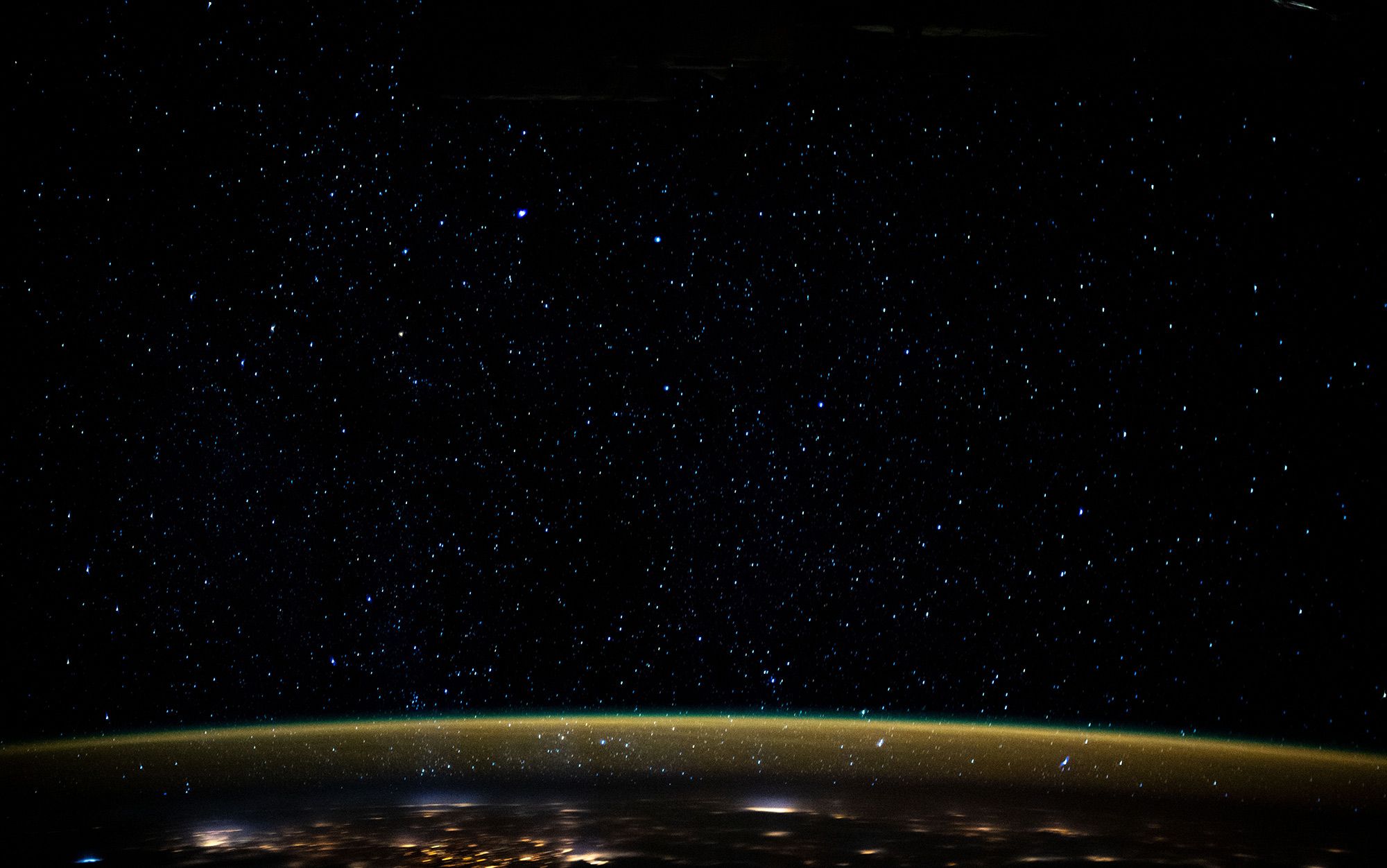
Our planet is a tiny porthole, looking over a cosmic sea. Can we learn what lies beyond our own horizons of perception?Viewed from the International Space Station, stars glitter in the night sky above the Earth’s atmospheric glow. Photo courtesy Nasa
Space, as they say, is big. In TheHitchhiker’s Guide to the Galaxy (1979), Douglas Adams elaborates: ‘You may think it’s a long way down the road to the chemist, but that’s just peanuts to space.’ It’s hard to convey in everyday terms the enormity of the cosmos when most of us have trouble even visualising the size of the Earth, much less the galaxy, or the vast expanses of intergalactic space. We often talk in terms of light-years – the distance light can travel in a year – as though the speed of light is somehow more intuitive than a number written in the trillions of kilometres. We give benchmarks in the same terms (it takes light 1.3 seconds to travel between the Earth and the Moon) but, in our everyday experience, light is instantaneous. We might as well talk about the height of a building in terms of stacking up atoms.
Maybe, if we’re feeling more adventurous, we use analogies based on personal experience. The distance to the Moon is 32 million school buses! If you could drive there in one of those school buses, going at 60 miles per hour, it would take you 166 days! I’m not sure that helps.
I wish I could say that astronomers have a better intuitive grasp of all this. We don’t. Brains don’t really work that way. So we cheat with numbers. We use longer yardsticks to talk about bigger spaces: kilometres, light-years, parsecs, kiloparsecs, megaparsecs, gigaparsecs. We get comfortable with exponents (1,000 is 103; 1 trillion is 1012) and think in logarithmic intervals, where each successive step is a new power of 10. At some point, distance stops being a straightforward concept entirely. Here in the Solar System, space and time are both more or less well-behaved, but when you have to deal with the cosmos as a whole, you have to factor in the fact that it refuses to sit still for its fitting.
Space is expanding. It has been since the Big Bang, and it’s not stopping any time soon. If you look at a galaxy far, far away, not only do you have to factor in that the image you’re looking at is old, you have to account for the fact that it’s no longer where it was when you saw it. Let’s say you see a supernova go off, in a galaxy a billion light-years away. Did the supernova just go off, or did it go off a billion years ago? You can say the latter, because the light has been travelling to us for a billion years, but since there was no way to observe it back then, what does saying that it went off in the past even mean? And that billion-light-year-distant galaxy – how far away is it, really? Maybe a billion years ago it was a billion light-years away, but the Universe has been expanding all that time, so now it must be much farther. Which distance do we use?
Even time is distorted by the stretching of space. We can watch the brightening and dimming of that exploding star, as the shockwave tears through it, and say it took about 100 days to fade away. But if we compare it with a supernova nearby, on average, we’ll see that the distant one takes a few days longer. From our perspective, it’s exploding in slow motion.
Even with the limitations of definition, we do our best to measure our space and quantify its farthest reaches. We have catalogued countless galaxies, some so distant that their light has taken almost the entire lifetime of the cosmos to reach us. We have searched our maps of the cosmos for some indication of an edge, or a centre, and found none. We have no reason to believe the cosmos doesn’t just go on forever, in every direction, without any significant change in content or structure. Our galaxy is a single grain of sand in a vast unbroken desert; zoom out far enough, and everything looks more or less the same.
There is a limit, though. However powerful our telescopes, and however long we stare, we will never see anything farther away than the edge of the cosmic bubble we call our ‘observable universe’. This is an imaginary sphere, centred on us, and defined by the speed of light and the age of the cosmos. The radius of this bubble is the distance that a beam of light could cover if it travelled for the entire age of the Universe.
If every time we look out into the cosmos, we’re looking into the past, it stands to reason that looking far enough away could mean looking at the time so far into the past, it’s the moment when the Universe first formed. That’s what defines our cosmic horizon. Put another way, anything beyond our cosmic horizon is so far away that even if a light beam left it at the very moment the Universe started, 13.8 billion years ago, the distance is so vast that the light beam hasn’t had time to reach us yet. There hasn’t been enough time.
When we look at the edge of the observable universe, we see a cosmos that is still on fire
We have good reason to believe that in this apparently boundless universe, there are galaxies beyond the horizon, just as, when you stand on the ocean shore and see nothing but water, you have reason to believe there’s land out there eventually, beyond what you can see. If you jumped in a ship and sailed away, your horizon would move with you, and you would eventually see that land. Similarly, if you could take off in an interstellar rocket ship to another part of the cosmos, your horizon would still be centred on you, wherever you were. Unfortunately, limited as we are by the laws of physics and the constraints of our modes of travel, getting far enough from home to significantly change our field of view isn’t practical. But we can still make inferences about what might lie beyond it. And despite the cosmic horizon being as subjective a boundary as a horizon is on Earth, it has one very important difference.
When we look out to the edge of the observable universe, what we see is something truly astounding. The most distant light is also the oldest; it’s the light from the Big Bang itself. The early universe, right after the first moments of creation, was hot and dense, everywhere, humming with vibrating plasma; right at the edge of our vision, we’re looking into the past so far that we literally see that glowing plasma. The inferno persisted for around 380,000 years before space expanded and cooled enough that light and particles could travel freely through it. When we look at the edge of the observable universe, we see the last smouldering embers of that hot dense phase. We see a cosmos that is still on fire.
The cosmic microwave background (or CMB) as seen by the ESA’s Planck space-based observatory. The CMB fills the entire Universe and is leftover radiation from the Big Bang. Courtesy ESA/Planck.
The distance to our cosmic horizon is not, as you might expect, 13.8 billion light-years. As we discussed above, distances are weird in an expanding universe. Something that was 13.8 billion light-years away when its light started the journey toward us is much farther away now. If you factor all that in, that glowing plasma we see at the very edge of the observable universe is actually somewhere around 45 billion light-years away now.
Just because we can’t see things beyond our fiery horizon, it doesn’t mean that there’s nothing there. The evidence we have, studying the same-ness of galaxies in every part of the cosmos we’ve mapped, points to the notion that space continues far beyond our horizon, in every direction; the limits to our vision are circumstantial. If we happened to live in a galaxy that lies just outside our current horizon, everything we know of the cosmos suggests that our view from there would look pretty similar to the view we have from here. Very distant reaches of the cosmos could, in principle, be totally different, of course – we can’t know for sure without being able to see them. In fact, regions far enough beyond our horizon can even be considered to be separate, isolated universes of their own, for all practical purposes, since they can’t interact with ours.
But what if the universe isn’t just bigger than we perceive, circumstantially, but bigger than we even can perceive? What if it extends in every direction, and then some?
Our everyday experience tells us that space has three dimensions. Front/back, left/right, up/down. In physics, we describe time as a fourth dimension, and wrap the whole thing up as spacetime – a kind of bendy 4D cosmic grid. The malleability of spacetime, a basic tenet of Albert Einstein’s relativity, allows that grid to warp and stretch in response to the motion and mass of everything in it. It’s why space can expand and distort the passage of time, and why time moves more slowly if you’re in a fast rocket or hanging out near a black hole.
However, physicists have been wondering for years whether the three dimensions of space we experience might be only part of the picture. If there are more spatial dimensions, extending out in new directions we can’t perceive, that could help to explain some puzzling aspects of theoretical physics and the behaviour of gravity. Add an extra dimension of space to the Universe, and you find that gravity can ‘leak’ out into it, making the force seem weaker than it really is, and potentially explaining why its strength is so minuscule compared with the forces governing particle physics.
What if an extra dimension can hide an entire universe?
Higher dimensions of space are also a requirement for string theory, which postulates that what we see as elementary particles are actually strings of energy vibrating in several more dimensions than we can see. In those theories, the extra dimensions are ‘compactified’ – curled up on themselves – so that if you did manage to find one of those new directions and set out on a journey, you wouldn’t be able to go very far before you ended up right back where you started.
But what if an extra dimension can hide an entire universe?
One hypothesis for the structure of our cosmos, developed in the early 2000s, suggests that we might live in a three-dimensional ‘brane’ (think: membrane) on the edge of a larger space with four spatial dimensions (plus time). Inside that higher-dimensional ‘bulk’ there could be another 3D brane, containing another universe, that might, from time to time, come crashing into our own. This theory’s originators called it the ‘ekpyrotic’ model of the cosmos, after a Greek term for conflagration – a nod to the fact that each cosmic collision would result in the fiery conditions of the Big Bang, and could explain the origin and eventual fate of our universe. In this model, the branes alternately move toward each other, collide and then move apart again, in an endless cycle, going from Big Bang, to expansion, to Big Crunch, and back to Big Bang. The patterns of structure we see in the cosmos today (distributions of galaxies and clusters) are, in this model, seeded by the interaction between the two branes in the slow collapse phase before the Bang.
While it might seem extravagant at first glance to postulate higher dimensions and new universes just to explain the Big Bang, there are good reasons why physicists take these ideas seriously. The standard picture of the early universe is probably more complicated than you’ve been led to believe. When you think of the Big Bang, the first thing to come to mind is likely to be a singularity – an infinitesimal point of infinite density containing all of space and time that suddenly explodes out to create the entire cosmos. That idea became popular because Einstein’s equations of gravity can describe a cosmos that begins that way (and perhaps wraps itself up with a Big Crunch singularity at the end), but it doesn’t work with what we see in our observations. That background light we see right at the cosmic horizon, that afterglow of the Big Bang, tells us that a simple evolution from a singularity to the big beautiful universe we enjoy now just doesn’t make sense.
The problem is that the Big Bang’s afterglow, what we refer to as the cosmic microwave background, is too perfect. To an absurd degree of precision (one part in 100,000), it looks the same, in every direction. Same colour (or, rather, frequency, since it’s microwave light), same spectrum, same intensity. The reason that’s a problem is because there’s no reason why two regions on opposite sides of the sky should match in that way. Even if everything started together, wrapped up in a singularity, the way it expanded outward should have introduced extreme differences in different parts of the early cosmos. Regions that are now far apart from each other in the expanding fireball stage of cosmic evolution never had a chance to come to an agreement on what temperature to be. The cosmic microwave background should be drastically different on one side of the sky than it is on the other.
The explanation that physicists settled on in the 1980s inserted a new chapter into our cosmic story. What if, they said, in the very early cosmos, before the hot fireball stage, there was a period of extremely rapid expansion? Maybe right after the singularity (assuming there was one), the early cosmos really was a patchy mess – much hotter in some places, and cooler in others. But then the cosmos expanded so rapidly that one tiny patch, too small to have much variation, stretched out until it was large enough to make up our entire observable universe. Then, the physicists hypothesised, whatever weird new component of the Universe caused that super-stretching (we call it ‘cosmic inflation’) suddenly decayed everywhere into radiation and ignited the expanding-fireball-cosmos visible in the background light we detect today.
From what we’ve seen so far, inflation seems to work well with our current paradigm, and even nicely explains the little one-part-in-100,000 fluctuations observed in the cosmic microwave background light. But we don’t have what anyone would call solid proof that it happened, nor can we say how or why it started, or what drove it.
And, by the way, even in the paradigm of inflation, the possibility of getting smacked by another universe is not entirely out of the question.
Two bubble universes might at some point collide, leaving imprints like bruises on each other’s background light
If inflation did happen, the sequence of events that created our observable universe could have occurred time and time again in different parts of a much larger space, in a process called ‘eternal inflation’. The idea is that the larger background space is always inflating but, once in a while, in a small part of it, inflation stops; that bit of universe heats up, and normal cosmic expansion takes over. This would create a kind of multiverse, as little bubble universes, defined by those separate post-inflation regions, continually drop out of the inflating background. Each bubble universe would be separated from the others by that constantly expanding space, and would be incapable of interacting with each other. For the most part.
Once in a while, two bubble universes might appear close together. If they do, and if each continues to expand, they might at some point collide, leaving bubble-shaped imprints like bruises on each other’s background light.
Astronomers have looked for those bruises. None have appeared so far, but we’ll keep searching. And meanwhile, some of us will continue to look askance at the inflation picture, with its unknown engine and its infinite multiverses, and try to find some more palatable alternative.
As for the ekpyrotic model, it’s undergone a number of revisions over the years, and the current version doesn’t involve higher dimensions or cosmic collisions at all. In some ways, it looks more like inflation: driven not by the motion of branes but by the evolution of a scalar field, a species of space-filling energy field similar to what most physicists think fuelled cosmic inflation. (And some new models of inflation involve brane worlds too, just to keep things interesting.) Despite no longer requiring grand cosmic collisions, the ekpyrotic model still includes a transition between a collapsing universe and a Big Bang. In the new version, though, the collapse might be a relatively modest one, resulting in a little bit of compression before the sparking of the conflagration that starts the new cycle. If it cycles on and on forever that way, rather than endless pocket universes, our larger space would be one giant, ever-growing cosmos: expanding, taking a breath, and expanding again, over and over.
The cosmic horizon defining our observable universe is a hard limit. We can’t see beyond it, and unless our understanding of the structure of reality changes drastically, we can be confident we never will. The expansion of the cosmos is speeding up; anything beyond our horizon now will be carried away from us faster and faster, and its light will never be able to catch up. While we might never be able to say with certainty what lies beyond that border, what all the theories have in common is that our observable universe is part of a much, much larger space.
Whether that space contains a multiverse of bubbles, each with different physical laws; whether it’s part of an ever-growing cosmos of which we are only one part, in one cycle; or whether space extends outward in directions we can’t conceive, we currently just don’t know. But we’re seeking clues.
The patterns in the cosmic microwave background light, the distribution of galaxies, and even experiments testing gravity and the behaviour of particle physics are giving us insight into the fundamental structure of the Universe, and into its evolution in its earliest moments. We are getting closer and closer to being able to tell our whole cosmic story. We can already see, directly, the fire in which our universe was forged, the moments just after its beginning. With the clues we are gathering now, we might, someday, follow the story all the way to its end.
This Essay was made possible through the support of a grant to Aeon from the John Templeton Foundation. The opinions expressed in this publication are those of the author and do not necessarily reflect the views of the Foundation. Funders to Aeon Magazine are not involved in editorial decision-making.