Free Will Astrology: Week of December 2, 2021

NOVEMBER 30, 2021 AT 7:00 AM BY ROB BREZSNY


“View over Hallingdal,” Johan Christian Dahl 1844/ courtesy The Metropolitan Museum of Art

ARIES (March 21-April 19): It’s a favorable time to get excited about your long-range future—and to entertain possibilities that have previously been on the edges of your awareness. I’d love to see you open your heart to the sweet dark feelings you’ve been sensing, and open your mind to the disruptive but nourishing ideas you need, and open your gut to the rumbling hunches that are available. Be brave, Aries! Strike up conversations with the unexpected, the unknown and the undiscovered.

TAURUS (April 20-May 20): A Tumblr blogger named Evan (lotad.tumblr.com) addressed a potential love interest. “Do you like sleeping, because so do I,” he wrote. “We should do it together sometime.” You might want to extend a similar invitation, Taurus. Now is a ripe time for you to interweave your subconscious mind with the subconscious mind of an ally you trust. The two of you could generate extraordinary healing energy for each other as you lie together, dozing in the darkness. Other recommended activities: meditating together; fantasizing together; singing together; making spiritual love together. (PS: If you have no such human ally, sleep and meditate with a beloved animal or imaginary friend.)

GEMINI (May 21-June 20): Gemini author Chuck Klosterman writes, “It’s far easier to write why something is terrible than why it’s good.” That seems to be true for many writers. However, my life’s work is in part a rebellion against doing what’s easy. I don’t want to chronically focus on what’s bad and sick and desolate. Instead, I aspire to devote more of my energy to doing what Klosterman implies is hard, which is to write sincerely (but not naively) about the many things that are good and redemptive and uplifting. In light of your current astrological omens, Gemini, I urge you to adopt my perspective for your own use in the next three weeks. Keep in mind what philosopher Robert Anton Wilson said: “An optimistic mindset finds dozens of possible solutions for every problem that the pessimist regards as incurable.”

CANCER (June 21-July 22): An organization in Turkey decided to construct a new building to house its workers. The Saruhanbey Knowledge, Culture and Education Foundation chose a plot in the city of Manisa. But there was a problem. A three-centuries-old pine tree stood on the land. Local authorities would not permit it to be cut down. So architects designed a building with spaces and holes that fully accommodated the tree. I recommend you regard this marvel as a source of personal inspiration in the coming weeks and months. How could you work gracefully with nature as you craft your future masterpiece or labor of love? How might you work around limitations to create useful, unusual beauty?

LEO (July 23-Aug. 22): Author Melissa Broder wrote a preposterous essay in which she ruminated, “Is fake love better than real love? Real love is responsibility, compromise, selflessness, being present, and all that shit. Fake love is magic, excitement, false hope, infatuation, and getting high off the potential that another person is going to save you from yourself.” I will propose, Leo, that you bypass such ridiculous thinking about love in the coming weeks and months. Here’s why: There’s a strong chance that the real love at play in your life will feature magic and excitement, even as it requires responsibility, compromise, selflessness, and being present.

VIRGO (Aug. 23-Sept. 22): Virgo author Andre Dubus III describes times when “I feel stupid, insensitive, mediocre, talentless and vulnerable—like I’m about to cry any second—and wrong.” That sounds dreadful, right? But it’s not dreadful for him. Just the opposite. “I’ve found that when that happens,” he concludes, “it usually means I’m writing pretty well, pretty deeply, pretty rawly.” I trust you will entertain a comparable state sometime soon, Virgo. Even if you’re not a writer, the bounty and fertility that emerge from this immersion in vulnerability will invigorate you beyond what you can imagine.

LIBRA (Sept. 23-Oct. 22): “The problem with putting two and two together is that sometimes you get four, and sometimes you get twenty-two.” Author Dashiell Hammett said that, and now I’m passing it on to you—just in time for a phase of your cycle when putting two and two together will probably not bring four, but rather twenty-two or some other irregularity. I’m hoping that since I’ve given you a heads-up, it won’t be a problem. On the contrary. You will be prepared and will adjust faster than anyone else—thereby generating a dose of exotic good fortune.

SCORPIO (Oct. 23-Nov. 21): In her poem “Is/Not,” Scorpio poet Margaret Atwood tells a lover, “You are not my doctor, you are not my cure, nobody has that power, you are merely a fellow traveler.” I applaud her for stating an axiom I’m fond of, which is that no one, not even the person who loves you best, can ever be totally responsible for fixing everything wrong in your life. However, I do think Atwood goes too far. On some occasions, certain people can indeed provide us with a measure of healing. And we must be receptive to that possibility. We shouldn’t be so pathologically self-sufficient that we close ourselves off from tender help. One more thing: Just because that help may be imperfect doesn’t mean it’s useless and should be rejected.

SAGITTARIUS (Nov. 22-Dec. 21): “All my days I have longed equally to travel the right road and to take my own errant path,” wrote Norwegian-Danish novelist Sigrid Undset. I think she succeeded in doing both. She won a Nobel Prize for Literature. Her trilogy about a fourteenth-century Norwegian woman was translated into eighty languages. I conclude that for her—as well as for you in the coming weeks and months—traveling the right road and taking your own errant path will be the same thing.

CAPRICORN (Dec. 22-Jan. 19): Capricorn author Susan Sontag unleashed a bizarre boast, writing, “One of the healthiest things about me—my capacity to survive, to bounce back, to prosper—is intimately connected with my biggest neurotic liability: my facility in disconnecting from my feelings.” Everything about her statement makes me scream NO! I mean, I believe this coping mechanism worked for her; I don’t begrudge her that. But as a student of psychology and spirituality, I know that disconnecting from feelings is, for most of us, the worst possible strategy if we want to be healthy and sane. And I will advise you to do the opposite of Sontag in the coming weeks. December is Stay Intimately Connected with Your Feelings Month.

AQUARIUS (Jan. 20-Feb. 18): In some small towns in the Philippines, people can be punished and fined for gossiping. Some locals have become reluctant to exchange tales about the sneaky, sexy, highly entertaining things their neighbors are doing. They complain that their freedom of speech has been curtailed. If you lived in one of those towns, I’d advise you to break the law in the coming weeks. In my astrological opinion, dynamic gossip should be one of your assets. Staying well-informed about the human comedy will be key for your ability to thrive.

PISCES (Feb. 19-March 20): “Originality consists in thinking for yourself, and not in thinking unlike other people,” wrote Piscean author James Fitzjames Stephen (1829–1894). Another way to say it: Being rebellious is not inherently creative. If you primarily define yourself by rejecting and reacting against someone’s ideas, you are being controlled by those ideas. Please keep this in mind, dear Pisces. I want you to take full advantage of your astrological potential during the next twelve months, which is to be absolutely original. Your perceptions and insights will be unusually lucid if you protect yourself from both groupthink and a compulsive repudiation of groupthink.

Homework: I invite you to send me your holiday wish list. What do you want? What do you need? Newsletter.FreeWillAstrology.com

A Lifeline for the Hour of Despair: James Baldwin on 4AM, the Fulcrum of Love, and Staying Alive as a Moral Obligation to the Universe

By Maria Popova (brainpickings.org)

“Yesterday has already vanished among the shadows of the past; to-morrow has not yet emerged from the future. You have found an intermediate space,” Nathaniel Hawthorne wrote of life’s most haunting hour. But what we find in that intermediate space between past and future, between the costumed simulacrum of reality we so painstakingly construct with our waking lives and reality laid bare in the naked nocturnal mind, is not always a resting place of ease — for there dwells the self at its most elemental, which means the self most lucidly awake to its foibles and its finitude.

The disquietude this haunted hour can bring, and does bring, is what another titanic writer and rare seer into the depths of the human spirit — James Baldwin (August 2, 1924–December 1, 1987) — explored 130 years after Hawthorne in one of his least known, most insightful, and most personal essays.

Richard Avedon and James Baldwin. (Photograph courtesy of Taschen.)

In 1964, as the Harlem riots were shaking the foundation of society and selfhood, Baldwin joined talent-forces with the great photographer Richard Avedon — an old high school friend of his — to hold up an uncommonly revelatory cultural mirror with the book Nothing Personal (public library). Punctuating Avedon’s signature black-and-white portraits — of Nobel laureates and Hollywood celebrities, of the age- and ache-etched face of an elder born under slavery and the idealism-lit young faces of the Student Nonviolent Coordinating Committee in Georgia, of the mentally ill perishing in asylums and the newlyweds at City Hall ablaze with hope — are four stirring essays by Baldwin, the first of which gave us his famous sobering observation that “it has always been much easier (because it has always seemed much safer) to give a name to the evil without than to locate the terror within.”

At no time does the terror within, Baldwin argues in the third essay, bubble to the surface of our being more ferociously than in that haunting hour between past and future, between our illusions of permanence and perfection, and the glaring fact of our finitude and our fallibility, between being and non-being. He writes:

Four AM can be a devastating hour. The day, no matter what kind of day it was is indisputably over; almost instantaneously, a new day begins: and how will one bear it? Probably no better than one bore the day that is ending, possibly not as well. Moreover, a day is coming one will not recall, the last day of one’s life, and on that day one will oneself become as irrecoverable as all the days that have passed.

It is a fearful speculation — or, rather, a fearful knowledge — that, one day one’s eyes will no longer look out on the world. One will no longer be present at the universal morning roll call. The light will rise for others, but not for you.

Half a century before the physicist Brian Greene examined how this very awareness is the wellspring of meaning to our ephemeral lives and a century after Tchaikovsky found beauty amid the wreckage of the soul at 4AM, Baldwin adds:

Sometimes, at four AM, this knowledge is almost enough to force a reconciliation between oneself and all one’s pain and error. Since, anyway, it will end one day, why not try it — life — one more time?

Art from Trees at Night by Art Young, 1926. Available as a print

After singing some beautiful and heartbreaking Bessie Smith lyrics into his essay — lyrics from “Long Road,” a song about reconciling the knowledge that one is ultimately alone with the irrepressible impulse to reach out for love, “to grasp again, with fearful hope, the unwilling, unloving human hand” — Baldwin continues:

I think all of our voyages drive us there; for I have always felt that a human being could only be saved by another human being. I am aware that we do not save each other very often. But I am also aware that we save each other some of the time.

That alone, Baldwin insists, is reason enough to be, as Nietzsche put it, a “yea-sayer” to life — to face the uncertainty of our lives with courage, to face the fact of our mortality with courage, and to fill this blink of existence bookended by nothingness with the courage of a bellowing aliveness.

In a passage that calls to mind Galway Kinnell’s lifeline of a poem “Wait,” composed for a young friend on the brink of suicide, Baldwin writes:

For, perhaps — perhaps — between now and the last day, something wonderful will happen, a miracle, a miracle of coherence and release. And the miracle on which one’s unsteady attention is focused is always the same, however it may be stated, or however it may remain unstated. It is the miracle of love, love strong enough to guide or drive one into the great estate of maturity, or, to put it another way, into the apprehension and acceptance of one’s own identity. For some deep and ineradicable instinct — I believe — causes us to know that it is only this passionate achievement which can outlast death, which can cause life to spring from death.

Art by Margaret C. Cook from a rare 1913 English edition of Leaves of Grass by Walt Whitman. Available as a print.

And yet, so often, we lose faith in this miracle, lose the perspective we call faith — so often it slips between the fingers fanned with despair or squeezes through the fist clenched with rage. We lose perspective most often, Baldwin argues, at four AM:

At four AM, when one feels that one has probably become simply incapable of supporting this miracle, with all one’s wounds awake and throbbing, and all one’s ghastly inadequacy staring and shouting from the walls and the floor — the entire universe having shrunk to the prison of the self — death glows like the only light on a high, dark, mountain road, where one has, forever and forever! lost one’s way. — And many of us perish then.

What then? A generation after Little Prince author Antoine de Saint-Exupéry composed his beautiful manifesto for night as an existential clarifying force for the deepest truths of the heart, Baldwin offers:

But if one can reach back, reach down — into oneself, into one’s life — and find there some witness, however unexpected or ambivalent, to one’s reality, one will be enabled, though perhaps not very spiritedly, to face another day… What one must be enabled to recognize, at four o’clock in the morning, is that one has no right, at least not for reasons of private anguish, to take one’s life. All lives are connected to other lives and when one man goes, much more goes than the man goes with him. One has to look on oneself as the custodian of a quantity and a quality — oneself — which is absolutely unique in the world because it has never been here before and will never be here again.

Baldwin — whom U.S. Poet Laureate Gwendolyn Brooks described as “love personified” in introducing his last public appearance before his death — wedges into this foundational structure of soul-survival the fact that in a culture of habitual separation and institutionalized otherness, such self-regard is immensely difficult. And yet, he insists with the passion of one who has proven the truth of his words with his own life, we must try — we must reach across the divides within and without, across the abysses of terror and suspicion, with a generous and largehearted trust in one another, which is at bottom trust in ourselves.

Art by from Little Man, Little Man — James Baldwin’s only children’s book, written to foment his own young nephew’s self-regard.

Echoing his contemporary and kindred visionary Leonard Bernstein’s insistence that “we must believe, without fear, in people,” Baldwin adds what has become, or must become, the most sonorous psychosocial refrain bridging his time and ours:

Where all human connections are distrusted, the human being is very quickly lost.

More than half a century later, Nothing Personal remains a masterwork of rare insight into and consolation for the most elemental aches of the human spirit. For a counterpoint to this nocturnal fragment, savor the great nature writer Henry Beston, writing a generation before Baldwin, on how the beauty of night nourishes the human spirit, then revisit Baldwin on resisting the mindless of majorityhow he learned to truly seethe writer’s responsibility in a divided society, his advice on writing, his historic conversation with Margaret Mead about forgiveness and responsibility, and his only children’s book.

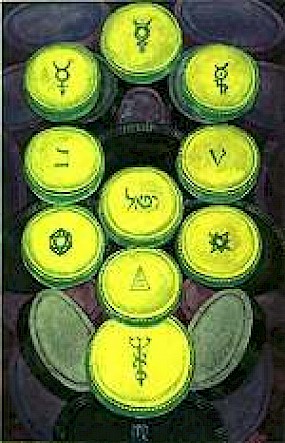
Tarot Card for December 2: The Ten of Disks


The Ten of Disks

The Lord of Wealth talks not only about material wealth and its appropriate use, but about the inner wealth and resources that we all have. This is a card that teaches us that the harvest we gather in our lives is the end result of all that we have put into living – and more importantly, how we have used the riches at our disposal.

We make our own realities with every thought, every deed, every wish. And when we direct our energies positively we shall arrive – as a perfectly natural consequence – at the Ten of Disks. Of course, if we direct our energies negatively we’ll find ourselves with the Ten of Wands, or the Ten of Swords – neither of which are happy cards!

There is a warning connected to this card though. When we have created sufficient wealth to make ourselves comfortable and contented, if we have a surplus, then we must make that surplus work. We cannot expect energy to flow freely in our lives if we hoard it, and try to hang on to it. This is as pointless as trying to save up the breeze so that it will blow on a stuffy day! There are some things in life you cannot clutch tight in the hand without crushing their value out of them.

If this card comes up in an everyday reading, it re-assures that financial and material matters are proceeding well, and that there is no cause for concern.

If it comes up in a more spiritually based reading, then we need to be applying the underlying principles to our lives – so in this case, we need to be letting our inner wealth show, in order to manifest that into our lives.

The Ten of Disks

(via angelpaths.com and Alan Blackman)

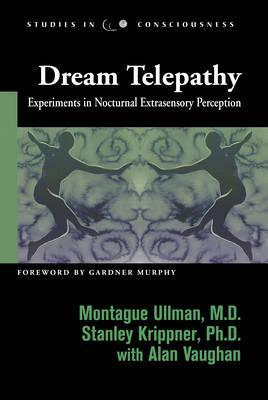
Book: “Dream Telepathy: Experiments in Nocturnal Extrasensory Perception”

Dream Telepathy: Experiments in Nocturnal Extrasensory Perception

Dream Telepathy: Experiments in Nocturnal Extrasensory Perception

by Montague UllmanStanley Krippner 

Interest in dreams is as old as humankind. Interest in dream telepathy — the idea that we can influence others’ dreams and communicate through them — has been around almost as long. Dream Telepathy is Montague Ullman and Stanley Krippner’s 1973 report on their ten years of research and experimentation with the human power to communicate across the barriers of time, space, and sleep.Ullman, a psychoanalyst, and Krippner, a psychologist, were the heads of the dream-research team at Maimonides Medical Center’s Dream Laboratory in New York throughout the 1960s and early 1970s. Using graduate student researchers and volunteer subjects from the community, Ullman and Krippner engineered experiments wherein the researchers focused on a selection of art prints while, in another room, the subjects slept and dreamt.

Meeting with varying degrees of success depending upon the research pair, subjects reported astonishing things, often dreaming their own uncannily accurate interpretation of the artistic scene the researchers were attempting to project to them. Dream Telepathy proposes the invaluable theoretical implications of such experimentation, and presupposes the use of dream telepathy in all areas of paranormal studies.

(Goodreads.com)

Civic Spiritual Evolution

On Being with Krista Tippett

Cory Booker

July 26, 2018

We don’t really reward or allow our politicians, good or bad, to be searching, or to change their minds and grow — to admit their human frailty. So it’s surprising to hear Cory Booker say that the best thing that’s happened to him is “being broken, time and time again.” He’s taken flack for talking about politics as “manifesting love.” He speaks with Krista about the inadequacy of tolerance, strengthening the “muscle” of hope, and making your bed as a spiritual practice.

Link to audio: https://onbeing.org/programs/cory-booker-civic-spiritual-evolution-jul2018/

Santa gets a boyfriend

A Christmas advert made by the Norwegian postal service Posten showing Santa Claus in a gay relationship has been praised as ‘beautiful’, ‘powerful’ and ‘progressive’. Titled ‘When Harry met Santa’, the queer love story marks the upcoming ​50th anniversary since homosexuality was decriminalized in the country. Monica Solberg, the postal service’s marketing director, told LGBTQ Nation: “Posten is an inclusive workplace with great diversity, and we would like to celebrate the 50th anniversary with this fine love story.”

Barbados rejects Monarchy and becomes a Republic

November 30, 2021 (bbc.com)

Barbados has officially removed Queen Elizabeth II as its head of state and become the world’s newest republic.

In an overnight ceremony in the capital, Bridgetown, Dame Sandra Mason was sworn in as president.

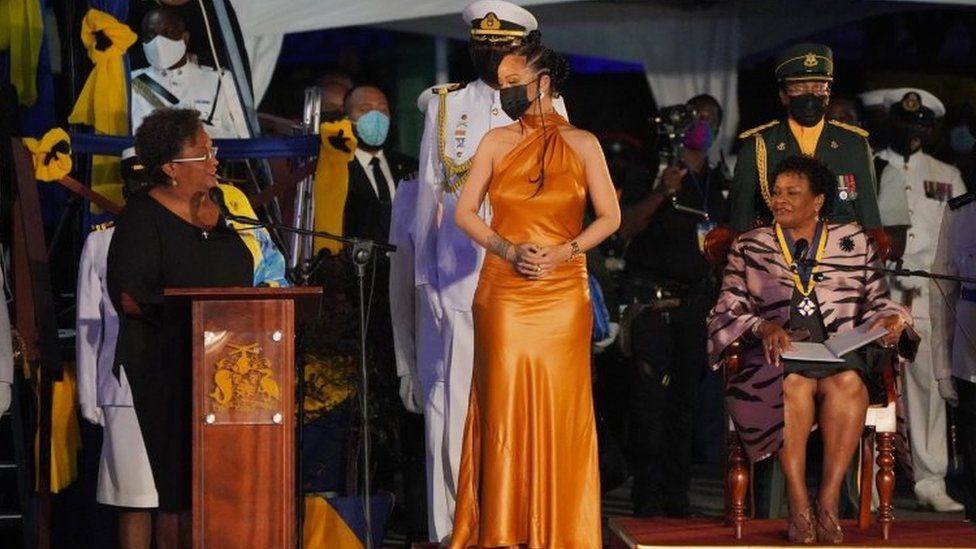
The Prince of Wales and Barbadian singer Rihanna attended the event, which coincided with the country’s 55th anniversary of independence.

In a speech, Prince Charles acknowledged the “appalling atrocity of slavery” the Caribbean island suffered.

The new era for Barbados ends Britain’s centuries of influence, including more than 200 years when the island was a hub for the transatlantic slave trade.

To signify the official change of power, a final salute was made to the British monarchy and the Royal Standard flag was lowered and replaced.

Speaking as the guest of honour at the event, Prince Charles reiterated the continuing ties between the two nations despite the constitutional status change.

He described the moment as a new beginning before being awarded the prestigious Order of Freedom of Barbados by the new president.

The Queen sent the country her “warmest good wishes” for “happiness, peace and prosperity in the future” and said the nation holds a “special place” in her heart.

Dame Sandra Mason, 72, the island’s governor-general since 2018, was named as president-elect of the nation following a vote in parliament last month. She now replaces the Queen as the head of state.

“Vessel Republic Barbados has set sail on her maiden voyage. May she weather all storms and land our country and citizens safely on the horizons and shores which are ahead of us,” she said after being sworn in.

Barbados announced its plan to become a republic last year, but it will remain within the Commonwealth.

Formerly known as the British Commonwealth, the Commonwealth of Nations is a loose association of former British colonies and current dependencies, along with some countries that have no historical ties to Britain.

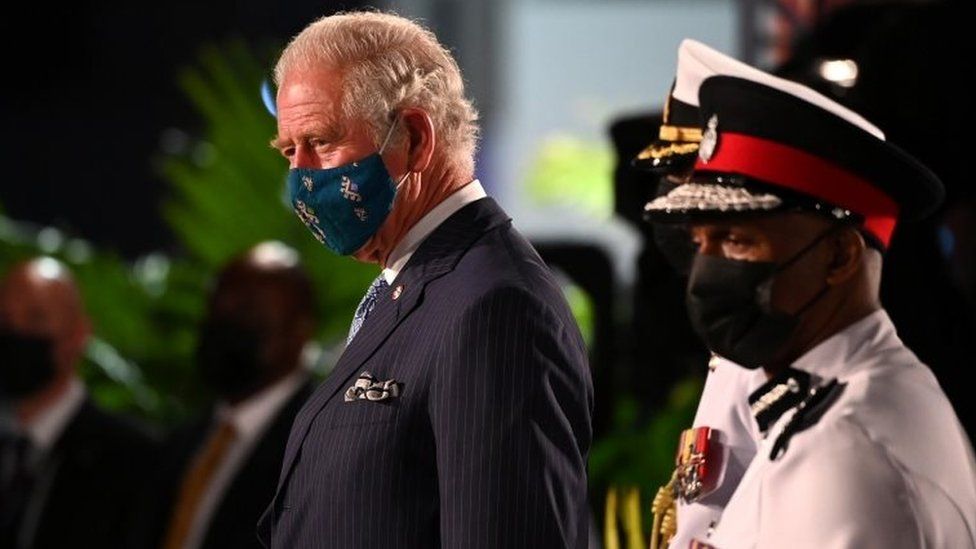
Prince Charles attends the Presidential Inauguration Ceremony to mark the birth of a new republic in Barbados at Heroes Square in Bridgetown
Image caption,Prince Charles travelled to Bridgetown as a guest of honour at the ceremony
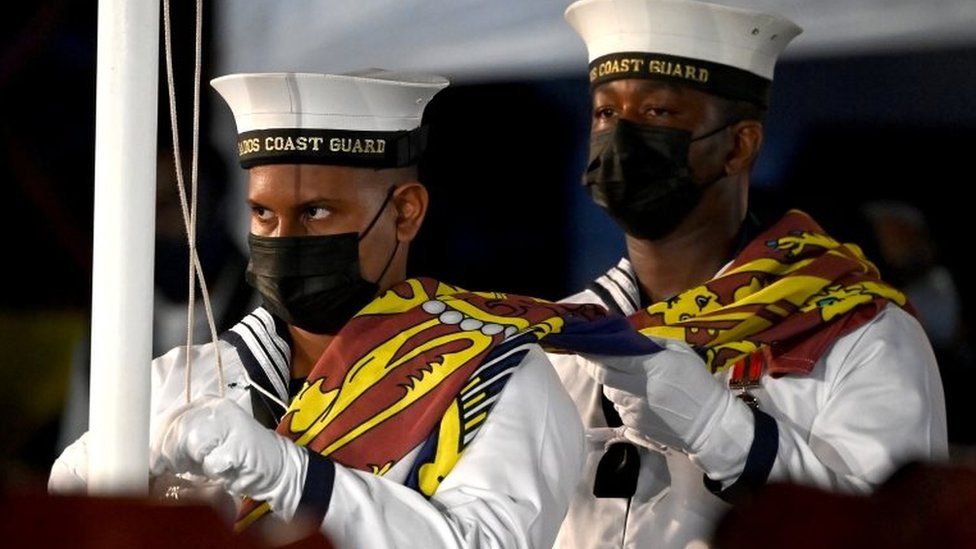
Members of the Barbados Coast Guard remove The Queen"s Royal Standard flag
Image caption,The British monarch’s Royal Standard flag was taken down and replaced to mark the official change of status
Rihanna (centre) attends the Presidential Ceremony in Heroes Square, Bridgetown
Image caption,Rihanna was declared a national hero at the independence day event

Leading national figures, including Prime Minister Mia Mottley, swore allegiance to Barbados in front of the new president at the ceremony, which lasted for several hours.

She later announced that pop star Rihanna would be named a national hero by President Mason. The artist and businesswoman, whose full name is Robyn Rihanna Fenty, was previously named an ambassador by her home country in 2018.

“May you continue to shine like a diamond and bring honour to your nation,” Ms Mottley said, in reference to one of Rihanna’s songs.

2px presentational grey line

A positive and pragmatic handover

Analysis box by Daniela Relph, royal correspondent

In the heat of a Barbados night, the handover ceremony has combined pomp and ceremony with one big party.

It has been a show of national pride with a sprinkling of this island’s most famous names as VIP guests including the cricketer Sir Garfield Sobers and the singer Rihanna.

In between them both sat the Prince of Wales. It must have been a moment of mixed emotions for him – he took the final salute and watched the Royal Standard lowered for the last time as his mother was removed as head of state.

He used his speech to emphasise the pain of slavery and the enduring friendship of the two nations.

The mood music from the royal household has been positive and pragmatic.

They can’t stop a constitutional shift but they can try to ensure positive relationships remain.

2px presentational grey line

The country’s prime minister has described the move to a republic as a “seminal moment” which will see Barbados fully leave its colonial past behind.

It was one of England’s first slave colonies. English settlers first occupied the island in 1627 and, under British control, it became a sugar plantation economy using enslaved people brought in from Africa.

Slavery was abolished in Barbados in 1834 and the country became fully independent in 1966.

In his speech on Tuesday, Prince Charles spoke of the “appalling atrocity of slavery” which he said “forever stains our history”.

Before Barbados, the last nation to remove the Queen as head of state was Mauritius in 1992.

With a population of about 285,000 people, Barbados is one of the more populous and prosperous Caribbean islands.

Once heavily dependent on sugar exports, its economy has diversified but has been hit hard by Covid-19 hurting tourism and rising prices caused by supply chain disruptions.

Book: “The Bible Against Itself: Why the Bible Seems to Contradict Itself”

The Bible Against Itself: Why the Bible Seems to Contradict Itself

The Bible Against Itself: Why the Bible Seems to Contradict Itself

by Randel McCraw HelmsAlex GrobmanMillennium Press 

All books are written for or against some point of view, and the books of the Bible are no different. Bible book authors were often motivated to write because they wanted to challenge or correct those who had written before them. As Helms explains, The Bible is a war-zone, and its authors are the combatants. Paul said of Peter, I opposed him to his face, because he was clearly in the wrong (Gal. 2:11). Helms notes that Jeremiah condemned the entire religious establishment of his timethe very same people that other Bible authors held in highest esteem: prophets and priests are frauds, every one of them (Jer. 8:10). Luke felt the need to write another gospel even though many writers have undertaken to draw up an account of the events (Luke 1:1). Luke obviously felt that Marks gospel was filled with errors and edited it freely. Not even Marks account of the words of the dying Christ was left unaltered.

(Goodreads.com)