(Courtesy of Bob Breszny)


‘House of Gucci,’ ‘C’mon C’mon,’ and ‘The Humans’ probe family life in very different ways.
NOVEMBER 22, 2021 (48hills.org)
For some of us, nothing quite sets the teeth on edge like the flood of saccharine holiday movies that begin arriving each year around now, with 2021 newbies including titles like A Castle For Christmas (that pair-up between Brooke Shields and Cary Elwes we’ve apparently all been waiting for) and shiny gay bauble Single All The Way. Most of them qualify as “family entertainment,” but the new arrivals we’re looking at that open this Thanksgiving week fall more into the realm of entertainment about families, and are definitely aimed at grownup viewers. While they range in quality from near-miss to exceptional, all probe family life in various shades of “dysfunctional,” and thus may be more relatable than the latest Hallmark Channel holiday princess fantasy.
The big gun in terms of commercial hopes and general hype is House of Gucci, Ridley Scott’s movie about that fabled Italian fashion famiglia’s internal strife—which eventually grew so intense it led to murder, as well as ouster from their own business empire. This throwback to the soap-operatic celluloid sagas of yesteryear (the kind often adapted from lurid page-turners by Sidney Sheldon or Harold Robbins) is billed as “inspired by” a nonfiction tome about those conflicts, meaning that it takes some pretty big liberties. Still, it hews close enough to the basic, amply documented facts.
The film offers a sort of companion piece to Scott’s 2017 All The Money in the World, which chronicle of John Paul Getty III’s abduction zeroed in one notorious criminal aspect of 1970s Italian life, its rash of kidnappings for ransom. House echoes that theme only in the discreet but constant presence of bodyguards protecting its wealthy protagonists. In 1978, shy, awkward law student Maurizio Gucci (Adam Driver) meets Patrizia Reggiani (Lady Gaga) at a party. She’s the stepdaughter of a successful trucking-company entrepreneur, so no pauper. Still, she’s dazzled by his famous name, and makes sure he’s dazzled by her attentions. When they marry, it causes a rift with his aristocratic father Rodolfo (Jeremy Irons), who pegs her as a gold-digger. But that’s fine by Maurizio, who prefers a quiet life away from the glitz and pressure of the “family business.”
His new wife, however, has other ideas. Her Machiavellian maneuvers do get him back in Dad’s good graces, as well as the Gucci brand’s executive management. She also sneaks around building allegiances to uncle Aldo Gucci (Al Pacino) and his own rather hapless son Paolo (Jared Leto), instigating a series of betrayals that turn into a full-on circular firing squad. At a certain point, Maurizio begins being repelled by her deceit and naked ambition. When he insists on a divorce, this scorned woman’s wrath (abetted by Salma Hayek as a fortune teller turned BFF and co-conspirator) proves lethal.
With so much dirt to spill, House of Gucci can hardly help but be entertaining. But it isn’t exactly a good movie, or even great trash—it takes itself too seriously to be much fun, while nonetheless being too melodramatic to achieve anything more than juicy “true crime” pulp. Again using cinematographer Dariusz Wolski, Scott lends the movie the same sleek yet coldly impersonal look Money had, which saps the garish joy one might expect from this gawk at rich-and-famous lifestyles. And his cast, despite all their collective Oscar wins and nominations, is uneven, to say the least.
The more restrained turns (particularly Driver and Irons) are fine. But others chew scenery in ways that are shameless without being particularly enjoyable. Leto cuts the prosciutto very thick in yet another vaguely irksome show of chameleon showiness. Pacino gives one of his better performances in recent years… until that all-too-familiar yelling starts. As for Lady Gaga, the fact that a pop superstar turns out a competent actress doesn’t mean she’s actually a good one, let alone has the star quality or depth of technique to carry a major role. She, like House of Gucci, is just OK in a context that practically demands the spectacular.
Likely to make a smaller initial splash, but also a better run at year-end awards and Top 10 lists, is Berkeley-born Mike Mills’ C’mon C’mon. This is a very different kind of family drama, low-key and naturalistic, not particularly plot-driven, though it does have a certain physical sprawl as its characters hop from one corner of the US to another (L.A., NYC, Oakland, New Orleans). Joaquin Phoenix plays Johnny, an NPR-type journalist who’s been somewhat out of touch with his sister Viv (Gaby Hoffman) since he offered unwelcome advice on her now-defunct marriage to the very high-strung Paul (Scoot McNairy). But when the latter departs Los Angeles for a new job in the Bay Area, his coping skills are poor enough that Viv must help with the move. That in turn prompts her to beg Johnny’s help with Jesse (Woody Norman), the 9-year-old son she’ll need to leave behind for a few days.
Jesse is a handful—alternately a quirky delight and exhaustingly mercurial, no doubt acting out the insecurities caused by his parents’ absences, plus perhaps a hereditary element of his father’s less-than-stable temperament. Though currently embroiled in a long-term radio project interviewing kids re: their views on the future, actual childcare is a new thing for Johnny, and Jesse is not an easy child. Nonetheless, they end up getting along famously. Which is a good thing, because fragile Paul soon undergoes a mental crisis that leaves the kid in his uncle’s charge for much longer than initially expected.
Those interview segments provide a running thread that elevates C’mon from a finely observed parenting drama in the Kramer vs. Kramer mode to a movie that has a lot to say about the slowly rising current of anxiety running through our era. Will there even be a future for today’s kids? What will it look like? How can we prepare them for it? Easily Mills’ best movie to date (and his best since 2005 debut feature Thumbsucker), C’mon C’mon has a distinctive B&W look, terrific performances, a soundtrack full of musical surprises, an offbeat structure (littered with both flashbacks and flash-forwards), and the freshness of improvisation without the usual sporadic longeurs of slackened inspiration. It’s profound in a seemingly offhand way, sans pretentiousness, and easily one of the year’s best US narrative films.
By all accounts one of the best stage plays in recent years is The Humans, a Pulitzer finalist and Tony winner in 2016 that author Stephen Karam has now adapted as his first directorial feature. It’s a Thanksgiving release that actually takes place on Thanksgiving, as the Blake family gathers for the traditional big meal in a Manhattan Chinatown apartment that musician daughter Brigid (Beanie Feldstein) and her boyfriend Richard (Steven Yeun) have just moved into.
Descending on the place with plenty of Tupperware-bourne foodstuffs are her parents, Erik (Richard Jenkins) and Deidre (Jayne Houdyshell), senile grandma Momo (June Squibb), and Brigid’s sibling Aimee (Amy Schumer). The latter is distraught because her own longterm relationship has just ended. But as the long day pulls toward evening, everyone else’s wounds are exposed, running a gamut from easily-bruised egos to infidelity, financial straits, alcoholism, “emotional eating,” and more.
When Richard mentions an episode of depression in his recent past, the response is, “In our family we don’t have that kind of depression. We just have a kind of stoic sadness.” Yet the Blakes know how to get under each other’s skin, and can hardly stop themselves, invariably apologizing just after they’ve said exactly the wrong thing yet again.
This is your classic “secrets and lies explode at the dinner table” kind of play, one that Karam works hard to render cinematic by making the creaky, cranky, variously malfunctioning apartment itself into a kind of character. It’s almost a haunted house, complete with jump scares and hinted-at malevolence always just out of view. While this layer of Gothicism seems somewhat gratuitous thematically, it does work atmospherically, lending The Humans a distinctive, interesting audiovisual texture.
This working-class family drama is otherwise effective, if not necessarily as devastating as some of its general type. The performances are all first-rate, with Houdyshell a sole holdover from prior stage incarnations. Feldstein is particularly vivid as a type that reliably makes holiday family get-togethers a torment: The perpetually needy, “unappreciated” (according to themselves) family member who’s oversensitive about any real or perceived personal slight, yet completely insensitive when it comes to dishing out the hurtful barbs.
House of Gucci and C’mon C’mon open Wed/24 at movie theaters nationwide. The Humans opens Wed/24 in limited theaters including the Roxie in SF, as well as launching on Showtime’s streaming platform.
 |
Special Event for Translators!Enhanced Crown Mysteries    December 10 – 12, 2021 Friday Evening, Saturday & Sunday Thane’s rarely taught pinnacle lessons For advanced* practitioners of Translation® and Releasing the Hidden SplendourTM, this is the alchemical creative process generated within the psyche of the individual that looses something NEW in the world. “ECM” makes understandable the formerly esoteric teachings of mystics of the ages. Learn of the phenomenally powerful Truth of “In the beginning was the word….” This understanding will enable you to “speak the word” and use this power that is your birthright. Thane also expands upon the symbolic meaning of the SEVEN DAYS OF CREATION. . . building the sixth and seventh steps of Translation®. A new and deeper understanding of Translation® awaits you in the Crown Mysteries. All lessons recorded by Thane and monitored by Al Haferkamp, H.W., M. Class Fees: $195 New or Review; $125 Life Members *Translation® and Releasing the Hidden SplendourTM are prerequisites for ECM. Register/More information |
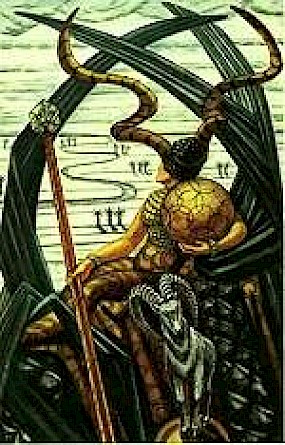
As the Queen of the Suit most connected to the home environment, families, materiality and fecundity, the woman represented by the Queen of Disks will most likely be a person whose attention centres upon the family environment. Here, she will excel, gaining a great deal of pleasure from providing a secure haven where she and others can feel cosseted and cared for.
In modern times the qualities for which this Queen stands have tended to be devalued and downgraded (‘I’m only a housewife’). This causes difficulties for the woman who feels most fulfilled expending her energies in a home situation, working with her family and a close circle of friends.
Yet the contribution that this sort of work makes to the lives of anyone who comes into contact with it cannot be underestimated. We all want to feel welcome and warm in our own homes. We want to feel nurtured and secure. So perhaps it’s time to re-instate the Queen of Disks to her rightful place – Regent to the Empress, and important to everybody. Furthermore, maybe we need to invoke our own caring qualities more readily so that we all pour our unique energies into our domestic surroundings.
If the Queen of Disks is ill-dignified in a reading, she will generally have lost sight of her position – or, perhaps, is being taken for granted by others. At that point the weaker side of her personality will show through. She may become dependent and clingy, believing herself to be unable to stand alone. She might manipulate by adopting a passive victim’s role.
Though usually the type of woman indicated by the Queen of Disks is a gentle soul, when angered she can become a fierce enemy, particularly where she sees injustice done to her family and friends. She’s loyal and willing to help, rooted in the practical aspects of life.
Her concept of spirituality centres on the nourishing aspects of her personality – she is therefor a facilitator, quietly assisting others on their journey, though often her contribution will go unnoticed.
She is often interested in, and involved with, the healing arts, being a willing and generous healer. When she is ambitious it is usually for others, again in her facilitator role. She maintains a strong link with Nature, loving plants, trees and animals.
(via angelpaths.com and Alan Blackman)
New Thinking Allowed with Jeffrey Mishlove James Tunney, LLM, is an Irish barrister who has lectured on legal matters throughout the world. He is a poet, a scholar, and author of The Mystery of the Trapped Light: Mystical Thoughts in the Dark Age of Scientism plus The Mystical Accord: Sutras to Suit Our Times, Lines for Spiritual Evolution. His paintings have been shown in galleries in Scandinavia and London.His website is http://www.jamestunney.com. Here he describes the history of the transhumanist movement, with a particular focus on its development in the 1920s – and a view to understanding both proponents and critics. On the positive side, the movement seeks to enhance the human lifespan and human capacities. On the negative side it sometimes treats humans as machines, perhaps even inferior to machines, or perhaps as cogs in a greater machine – denying conscious sovereignty and spirituality. New Thinking Allowed host, Jeffrey Mishlove, PhD, is author of The Roots of Consciousness, Psi Development Systems, and The PK Man. Between 1986 and 2002 he hosted and co-produced the original Thinking Allowed public television series. He is the recipient of the only doctoral diploma in “parapsychology” ever awarded by an accredited university (University of California, Berkeley, 1980). (Recorded on January 30, 2021)
John Doerr and Ryan Panchadsaram| Ted.com October 2021
“How much more damage do we have to endure before we realize that it’s cheaper to save this planet than to ruin it?” asks engineer and investor John Doerr. In conversation with Countdown cofounder Lindsay Levin, Doerr and systems innovator Ryan Panchadsaram lay out six big objectives that — if pursued with speed and scale — could transform society and get us to net-zero emissions by 2050. An action plan to solve the world’s climate crisis, backed up by a proven system for setting goals for success.
This talk was presented at an official TED conference, and was featured by our editors on the home page.
ABOUT THE SPEAKERS
Lindsay Levin · Entrepreneur, activist Lindsay Levin has dedicated her life to reshaping what leadership looks like, exploring our collective humanity through vulnerability and listening.
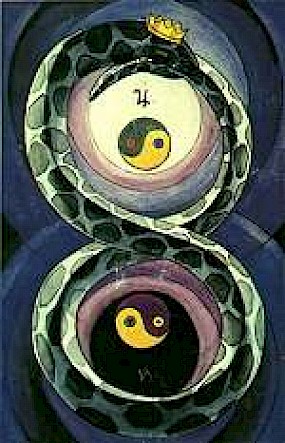
The Lord of Change is a card that indicates the necessity of constant change in life if we are not to stagnate. It often marks a turning point – a new job, a shift of fortune, a move of home.
Disks are an earthy suit, covering matters of material life, and the manifest Universe. If you look at the planet we live on, though in itself it seems solid and predictable (less so in recent years, mind you) it is in a constant state of change and movement. It turns in space, and if it did not, we’d all be very unhappy with the consequences. The cycle of seasons swings past us each and every year. The tides ebb and rise. Constant change is natural, normal and positive.
We do, though, often fear change in our lives. We will struggle against anything that appears to alter the pre-planned pattern we have applied to our future. But that’s exactly what this card does – instigates change. Sometimes we think that the change is bad – and on the face of it, it may appear to be – yet whenever the 2 of Disks appears, it’s warning us that change has become imperative. Something is stagnating, demanding to be broken down and made over.
It’s worth remembering that if you resist the change advocated by the Lord of Change, you might find that life imposes it upon you anyway – and then you’ll feel the effects either of the Death card, or the Tower. When this card appears, it demands a thorough re-assessment of your overall position and willingness to go with the chances that come your way.
The card is especially strengthened by cards like Fortune, and positive Disks and Wands. You can usually track down which area of life it applies to by looking at the cards that surround it – Cups would suggest you need to look at your emotional life. Disks would imply that it’s either your working or financial area that needs attention. Swords would probably indicate conflict around whatever changes you need to make, and may point to a need for clear communication. Wands would be more connected with your own application of Will, and the way you are trying to build your life. Major Arcana cards would suggest an inner, more spiritual area needs to be looked at.
(via angelpaths.com an dAlan Blackman)

At The Prosperos trustees meeting on November 21, William Fennie, H.W., M., was elected as the Acting Dean to fill the role of departing dean Al Haferkamp, H.W., M. effective January 1, 2022. A permanent dean will be elected at the annual meeting of the trustees over Labor Day weekend 2022.
There wasn’t even any competition for the spot.
And with its usual sense of creativity and welcome to change, the trustees will undoubtedly elect Mr. Fennie as permanent (and I do mean permanent!) dean at the Labor Day annual meeting. (What happened to Pluto in Capricorn?)
The trustees have had bellicose members before and now they’ve chosen one as the leader of the Executive Council. (Just to catch you all up, the Executive Council is a three member body that is separate from the trustees and that has absolute power over everything the school is and does. The trustees, like the High Watch and the Mentor’s Association may make suggestions, but it is the Executive Council which makes all the decisions related to the school. )
In most academic settings, the dean is answerable to a board of directors of some sort. But in The Prosperos, the Executive Council (the dean plus two others members chosen by the trustees) is not answerable to anybody but itself.
The one check on the power of the dean is that all three members of the Executive Council must agree upon any decisions made. But these people (the Executive Council) were chosen because they already are, in effect, in agreement with the dean of the school.
So, though The Prosperos teaches all about group dynamics, it has never been an exemplar of it, at least at its governing level.
When Thane Walker was the dean (and therefore head of the Executive Council), everybody knew that it was Thane who ran the school and all things related thereto. Thane was not only the dean, he was a 4th way teacher,. He was the equivalent of Gurdjieff at Gurdjieff’s school at Fontainebleau.
But Thane died in 1989. There have been several deans since Thane’s death, and they’ve all had the same absolute power that Thane had when he was dean. Fortunately none of have abused that power to any great degree, at least that I am aware of.
But with our new Acting Dean, that benevolent leadership may no longer be assumed.
To be frank and to be clear, Mr. Fennie is a bully.
And he’s bullied his way into the deanship of our school.
–Mike Zonta, BB editor
New Thinking Allowed with Jeffrey Mishlove Paul Levy is author of The Madness of George W. Bush: A Reflection of Our Collective Psychosis, Dispelling Wetiko: Breaking the Curse of Evil, Awakened By Darkness: When Evil Becomes Your Father, and The Quantum Revelation: A Radical Synthesis of Science and Spirituality. He has been a Tibetan Buddhist practitioner for the past three decades. His website is https://www.awakeninthedream.com/ Here he shares his revelation that the implications of both quantum physics and Buddhism converge to an understanding that we are living in a shared dream. That which we conceptualize as physical reality is inseparable from consciousness itself. The darkness and apparent evil within the dream we call reality is a summons for us to awaken collectively so that we can actualize the power of our awareness to change the dream. New Thinking Allowed host, Jeffrey Mishlove, PhD, is author of The Roots of Consciousness, Psi Development Systems, and The PK Man. Between 1986 and 2002 he hosted and co-produced the original Thinking Allowed public television series. He is the recipient of the only doctoral diploma in “parapsychology” ever awarded by an accredited university (University of California, Berkeley, 1980). He is past-vice-president of the Association for Humanistic Psychology and is the recipient of the Pathfinder Award from that association for his contributions to the field of human consciousness. (Recorded on April 24, 2020)