
Marianne Williamson A giant in the fields of alternative medicine and spirituality, my friend of three decades, Deepak Chopra, joins me on today’s podcast. We dive into the state of the world today, the miracle of human existence, and how aging has led us both to reevaluate the way we approach our lives. After the interview I take listener questions. Deepak’s Website: https://www.deepakchopra.com/ Follow Deepak on Instagram: https://www.instagram.com/deepakchopra Follow Deepak on Twitter: https://twitter.com/DeepakChopra Subscribe to The Marianne Williamson Podcast Apple Podcasts: https://apple.co/36qnqH4 Spotify: https://spoti.fi/2JV8pW4 Marianne’s YouTube Channel: https://www.youtube.com/MarianneWilli… Follow Marianne on Social Media Twitter: https://twitter.com/marwilliamson Facebook: https://www.facebook.com/williamsonma… Instagram: https://instagram.com/mariannewilliamson
Monthly Archives: June 2021
Bio: Gregor Mendel

From Wikipedia, the free encyclopedia
| The Right Reverend Gregor Mendel O.S.A. | |
|---|---|
| Born | Johann Mendel 20 July 1822 Heinzendorf bei Odrau, Silesia, Austrian Empire (now Hynčice, Czech Republic) |
| Died | 6 January 1884 (aged 61) Brünn, Moravia, Austria-Hungary (now Brno, Czech Republic) |
| Nationality | Austrian |
| Alma mater | University of Olomouc University of Vienna |
| Known for | Creating the science of genetics |
| Scientific career | |
| Fields | Genetics |
| Institutions | St Thomas’s Abbey |
| Ecclesiastical career | |
| Religion | Christianity |
| Church | Catholic Church |
| Ordained | 25 December 1846[1] |

| Part of a series on |
| Genetics |
|---|
| hideKey componentsChromosomeDNARNAGenomeHeredityMutationNucleotideVariationOutlineIndex |
| hideHistory and topicsIntroductionHistoryEvolution (molecular)Population geneticsMendelian inheritanceQuantitative geneticsMolecular genetics |
hideResearchDNA sequencingGenetic engineeringGenomics ( template)Medical geneticsBranches of genetics template)Medical geneticsBranches of genetics |
| hidePersonalized medicinePersonalized medicine |
 Category Category |
| vte |

Gregor Johann Mendel (/ˈmɛndəl/; Czech: Řehoř Jan Mendel;[2] 20 July 1822[3] – 6 January 1884) was a meteorologist,[4] mathematician, biologist, Augustinian friar and abbot of St. Thomas’ Abbey in Brno, Margraviate of Moravia. Mendel was born in a German-speaking family in the Silesian part of the Austrian Empire (today’s Czech Republic) and gained posthumous recognition as the founder of the modern science of genetics.[5] Though farmers had known for millennia that crossbreeding of animals and plants could favor certain desirable traits, Mendel’s pea plant experiments conducted between 1856 and 1863 established many of the rules of heredity, now referred to as the laws of Mendelian inheritance.[6]
Mendel worked with seven characteristics of pea plants: plant height, pod shape and color, seed shape and color, and flower position and color. Taking seed color as an example, Mendel showed that when a true-breeding yellow pea and a true-breeding green pea were cross-bred their offspring always produced yellow seeds. However, in the next generation, the green peas reappeared at a ratio of 1 green to 3 yellow. To explain this phenomenon, Mendel coined the terms “recessive” and “dominant” in reference to certain traits. In the preceding example, the green trait, which seems to have vanished in the first filial generation, is recessive and the yellow is dominant. He published his work in 1866, demonstrating the actions of invisible “factors”—now called genes—in predictably determining the traits of an organism.
The profound significance of Mendel’s work was not recognized until the turn of the 20th century (more than three decades later) with the rediscovery of his laws. Erich von Tschermak, Hugo de Vries and Carl Correns independently verified several of Mendel’s experimental findings in 1900, ushering in the modern age of genetics.[7][8]
Life and career
Mendel was born into a German-speaking Czech family in Hynčice (Heinzendorf bei Odrau in German), at the Moravian–Silesian border, Austrian Empire (now a part of the Czech Republic).[5] He was the son of Anton and Rosine (Schwirtlich) Mendel and had one older sister, Veronika, and one younger, Theresia. They lived and worked on a farm which had been owned by the Mendel family for at least 130 years[9] (the house where Mendel was born is now a museum devoted to Mendel[10]). During his childhood, Mendel worked as a gardener and studied beekeeping. As a young man, he attended gymnasium in Opava (called Troppau in German). He had to take four months off during his gymnasium studies due to illness. From 1840 to 1843, he studied practical and theoretical philosophy and physics at the Philosophical Institute of the University of Olomouc, taking another year off because of illness. He also struggled financially to pay for his studies, and Theresia gave him her dowry. Later he helped support her three sons, two of whom became doctors.[11]
He became a monk in part because it enabled him to obtain an education without having to pay for it himself.[12] As the son of a struggling farmer, the monastic life, in his words, spared him the “perpetual anxiety about a means of livelihood.”[13] Born Johann Mendel, he was given the name Gregor (Řehoř in Czech)[2] when he joined the Augustinian monks.[14]
When Mendel entered the Faculty of Philosophy, the Department of Natural History and Agriculture was headed by Johann Karl Nestler who conducted extensive research of hereditary traits of plants and animals, especially sheep. Upon recommendation of his physics teacher Friedrich Franz,[15] Mendel entered the Augustinian St Thomas’s Abbey in Brno (called Brünn in German) and began his training as a priest. Mendel worked as a substitute high school teacher. In 1850, he failed the oral part, the last of three parts, of his exams to become a certified high school teacher. In 1851, he was sent to the University of Vienna to study under the sponsorship of Abbot Cyril František Napp so that he could get more formal education.[16] At Vienna, his professor of physics was Christian Doppler.[17] Mendel returned to his abbey in 1853 as a teacher, principally of physics. In 1856, he took the exam to become a certified teacher and again failed the oral part.[18] In 1867, he replaced Napp as abbot of the monastery.[19]
After he was elevated as abbot in 1868, his scientific work largely ended, as Mendel became overburdened with administrative responsibilities, especially a dispute with the civil government over its attempt to impose special taxes on religious institutions.[20] Mendel died on 6 January 1884, at the age of 61, in Brno, Moravia, Austria-Hungary (now Czech Republic), from chronic nephritis. Czech composer Leoš Janáček played the organ at his funeral. After his death, the succeeding abbot burned all papers in Mendel’s collection, to mark an end to the disputes over taxation.[21]
Contributions
Experiments on plant hybridization
Main article: Mendelian inheritanceDominant and recessive phenotypes. (1) Parental generation. (2) F1 generation. (3) F2 generation.

Gregor Mendel, known as the “father of modern genetics”, chose to study variation in plants in his monastery’s 2 hectares (4.9 acres) experimental garden.[22]
After initial experiments with pea plants, Mendel settled on studying seven traits that seemed to be inherited independently of other traits: seed shape, flower color, seed coat tint, pod shape, unripe pod color, flower location, and plant height. He first focused on seed shape, which was either angular or round.[23] Between 1856 and 1863 Mendel cultivated and tested some 28,000 plants, the majority of which were pea plants (Pisum sativum).[24][25][26] This study showed that, when true-breeding different varieties were crossed to each other (e.g., tall plants fertilized by short plants), in the second generation, one in four pea plants had purebred recessive traits, two out of four were hybrids, and one out of four were purebred dominant. His experiments led him to make two generalizations, the Law of Segregation and the Law of Independent Assortment, which later came to be known as Mendel’s Laws of Inheritance.[27]
Initial reception of Mendel’s work
Mendel presented his paper, “Versuche über Pflanzenhybriden” (“Experiments on Plant Hybridization“), at two meetings of the Natural History Society of Brno in Moravia on 8 February and 8 March 1865.[28] It generated a few favorable reports in local newspapers,[26] but was ignored by the scientific community. When Mendel’s paper was published in 1866 in Verhandlungen des naturforschenden Vereines in Brünn,[29] it was seen as essentially about hybridization rather than inheritance, had little impact, and was only cited about three times over the next thirty-five years. His paper was criticized at the time, but is now considered a seminal work.[30] Notably, Charles Darwin was not aware of Mendel’s paper, and it is envisaged that if he had been aware of it, genetics as it exists now might have taken hold much earlier.[31][32] Mendel’s scientific biography thus provides an example of the failure of obscure, highly original innovators to receive the attention they deserve.[33]
Rediscovery of Mendel’s work
About forty scientists listened to Mendel’s two groundbreaking lectures, but it would appear that they failed to understand his work. Later, he also carried on a correspondence with Carl Nägeli, one of the leading biologists of the time, but Nägeli too failed to appreciate Mendel’s discoveries. At times, Mendel must have entertained doubts about his work, but not always: “My time will come,” he reportedly told a friend,[13] Gustav von Niessl.[34]
During Mendel’s lifetime, most biologists held the idea that all characteristics were passed to the next generation through blending inheritance, in which the traits from each parent are averaged.[35][36] Instances of this phenomenon are now explained by the action of multiple genes with quantitative effects. Charles Darwin tried unsuccessfully to explain inheritance through a theory of pangenesis. It was not until the early 20th century that the importance of Mendel’s ideas was realized.[26]
By 1900, research aimed at finding a successful theory of discontinuous inheritance rather than blending inheritance led to independent duplication of his work by Hugo de Vries and Carl Correns, and the rediscovery of Mendel’s writings and laws. Both acknowledged Mendel’s priority, and it is thought probable that de Vries did not understand the results he had found until after reading Mendel.[26] Though Erich von Tschermak was originally also credited with rediscovery, this is no longer accepted because he did not understand Mendel’s laws.[37] Though de Vries later lost interest in Mendelism, other biologists started to establish modern genetics as a science. All three of these researchers, each from a different country, published their rediscovery of Mendel’s work within a two-month span in the spring of 1900.[38]
Mendel’s results were quickly replicated, and genetic linkage quickly worked out. Biologists flocked to the theory; even though it was not yet applicable to many phenomena, it sought to give a genotypic understanding of heredity which they felt was lacking in previous studies of heredity, which had focused on phenotypic approaches.[39] Most prominent of these previous approaches was the biometric school of Karl Pearson and W. F. R. Weldon, which was based heavily on statistical studies of phenotype variation. The strongest opposition to this school came from William Bateson, who perhaps did the most in the early days of publicising the benefits of Mendel’s theory (the word “genetics“, and much of the discipline’s other terminology, originated with Bateson). This debate between the biometricians and the Mendelians was extremely vigorous in the first two decades of the 20th century, with the biometricians claiming statistical and mathematical rigor,[40] whereas the Mendelians claimed a better understanding of biology.[41][42] Modern genetics shows that Mendelian heredity is in fact an inherently biological process, though not all genes of Mendel’s experiments are yet understood.[43][44]
In the end, the two approaches were combined, especially by work conducted by R. A. Fisher as early as 1918. The combination, in the 1930s and 1940s, of Mendelian genetics with Darwin’s theory of natural selection resulted in the modern synthesis of evolutionary biology.[45][46]
Other experiments
Mendel began his studies on heredity using mice. He was at St. Thomas’s Abbey but his bishop did not like one of his friars studying animal sex, so Mendel switched to plants.[47] Mendel also bred bees in a bee house that was built for him, using bee hives that he designed.[48] He also studied astronomy and meteorology,[19] founding the ‘Austrian Meteorological Society’ in 1865.[17] The majority of his published works were related to meteorology.[17]
Mendel also experimented with hawkweed (Hieracium)[49] and honeybees. He published a report on his work with hawkweed,[50] a group of plants of great interest to scientists at the time because of their diversity. However, the results of Mendel’s inheritance study in hawkweeds was unlike his results for peas; the first generation was very variable and many of their offspring were identical to the maternal parent. In his correspondence with Carl Nägeli he discussed his results but was unable to explain them.[49] It was not appreciated until the end of the nineteenth century that many hawkweed species were apomictic, producing most of their seeds through an asexual process.[34][51]
None of his results on bees survived, except for a passing mention in the reports of Moravian Apiculture Society.[52] All that is known definitely is that he used Cyprian and Carniolan bees,[53] which were particularly aggressive to the annoyance of other monks and visitors of the monastery such that he was asked to get rid of them.[54] Mendel, on the other hand, was fond of his bees, and referred to them as “my dearest little animals”.[55]
He also described novel plant species, and these are denoted with the botanical author abbreviation “Mendel”.[56]
Mendelian paradox
In 1936, Ronald Fisher, a prominent statistician and population geneticist, reconstructed Mendel’s experiments, analyzed results from the F2 (second filial) generation and found the ratio of dominant to recessive phenotypes (e.g. yellow versus green peas; round versus wrinkled peas) to be implausibly and consistently too close to the expected ratio of 3 to 1.[57][58][59] Fisher asserted that “the data of most, if not all, of the experiments have been falsified so as to agree closely with Mendel’s expectations,”[57] Mendel’s alleged observations, according to Fisher, were “abominable”, “shocking”,[60] and “cooked”.[61]
Other scholars agree with Fisher that Mendel’s various observations come uncomfortably close to Mendel’s expectations. A. W. F. Edwards,[62] for instance, remarks: “One can applaud the lucky gambler; but when he is lucky again tomorrow, and the next day, and the following day, one is entitled to become a little suspicious”. Three other lines of evidence likewise lend support to the assertion that Mendel’s results are indeed too good to be true.[63]
Fisher’s analysis gave rise to the Mendelian paradox: Mendel’s reported data are, statistically speaking, too good to be true, yet “everything we know about Mendel suggests that he was unlikely to engage in either deliberate fraud or in unconscious adjustment of his observations.”[63] A number of writers have attempted to resolve this paradox.
One attempted explanation invokes confirmation bias.[64] Fisher accused Mendel’s experiments as “biased strongly in the direction of agreement with expectation … to give the theory the benefit of doubt”.[57] In his 2004 article, J.W. Porteous concluded that Mendel’s observations were indeed implausible.[65] However, reproduction of the experiments has demonstrated that there is no real bias towards Mendel’s data.[66]
Another attempt[63] to resolve the Mendelian paradox notes that a conflict may sometimes arise between the moral imperative of a bias-free recounting of one’s factual observations and the even more important imperative of advancing scientific knowledge. Mendel might have felt compelled “to simplify his data in order to meet real, or feared, editorial objections.”[62] Such an action could be justified on moral grounds (and hence provide a resolution to the Mendelian paradox), since the alternative—refusing to comply—might have retarded the growth of scientific knowledge. Similarly, like so many other obscure innovators of science,[33] Mendel, a little known innovator of working-class background, had to “break through the cognitive paradigms and social prejudices of his audience.[62] If such a breakthrough “could be best achieved by deliberately omitting some observations from his report and adjusting others to make them more palatable to his audience, such actions could be justified on moral grounds.”[63]
Daniel L. Hartl and Daniel J. Fairbanks reject outright Fisher’s statistical argument, suggesting that Fisher incorrectly interpreted Mendel’s experiments. They find it likely that Mendel scored more than 10 progeny, and that the results matched the expectation. They conclude: “Fisher’s allegation of deliberate falsification can finally be put to rest, because on closer analysis it has proved to be unsupported by convincing evidence.”[60][67] In 2008 Hartl and Fairbanks (with Allan Franklin and AWF Edwards) wrote a comprehensive book in which they concluded that there were no reasons to assert Mendel fabricated his results, nor that Fisher deliberately tried to diminish Mendel’s legacy.[68] Reassessment of Fisher’s statistical analysis, according to these authors, also disproves the notion of confirmation bias in Mendel’s results.[69][70]
Book: “Dying to Be Me: My Journey from Cancer, to Near Death, to True Healing”

Dying to Be Me: My Journey from Cancer, to Near Death, to True Healing
by Anita Moorjani, Wayne W. Dyer (Foreword)
In this truly inspirational memoir,Anita Moorjani relates how, after fighting cancer for almost four years, her body—overwhelmed by the malignant cells spreading throughout her system—began shutting down. As her organs failed, she entered into an extraordinary near-death experience where she realized her inherent worth . . . and the actual cause of her disease. Upon regaining consciousness, Anita found that her condition had improved so rapidly that she was able to be released from the hospital within weeks . . . without a trace of cancer in her body!
Within these pages, Anita recounts stories of her childhood in Hong Kong, her challenge to establish her career and find true love, as well as how she eventually ended up in that hospital bed where she defied all medical knowledge.
As part of a traditional Hindu family residing in a largely Chinese and British society, she had been pushed and pulled by cultural and religious customs since she had been a little girl. After years of struggling to forge her own path while trying to meet everyone else’s expectations, she had the realization, as a result of her epiphany on the other side, that she had the power to heal herself . . . and that there are miracles in the Universe that she had never even imagined.
In Dying to Be Me, Anita freely shares all she has learned about illness, healing, fear, “being love,” and the true magnificence of each and every human being!
This is a book that definitely makes the case that we
are spiritual beings having a human experience . . . and that we are all One!
(Goodreads.com)
Book: “Mistakes Were Made (But Not by Me): Why We Justify Foolish Beliefs, Bad Decisions, and Hurtful Acts”
Goodreads helps you keep track of books you want to read.Start by marking “Mistakes Were Made (But Not by Me): Why We Justify Foolish Beliefs, Bad Decisions, and Hurtful Acts” as Want to Read:Want to Read

Mistakes Were Made (But Not by Me): Why We Justify Foolish Beliefs, Bad Decisions, and Hurtful Acts
by Carol Tavris, Elliot Aronson
Why do people dodge responsibility when things fall apart? Why the parade of public figures unable to own up when they screw up? Why the endless marital quarrels over who is right? Why can we see hypocrisy in others but not in ourselves? Are we all liars? Or do we really believe the stories we tell?
Renowned social psychologists Carol Tavris and Elliot Aronson take a compelling look into how the brain is wired for self-justification. When we make mistakes, we must calm the cognitive dissonance that jars our feelings of self-worth. And so we create fictions that absolve us of responsibility, restoring our belief that we are smart, moral, and right — a belief that often keeps us on a course that is dumb, immoral, and wrong.
Backed by years of research and delivered in lively, energetic prose, Mistakes Were Made (But Not by Me) offers a fascinating explanation of self-deception — how it works, the harm it can cause, and how we can overcome it.
(Goodreads.com)
Book: “Trauma and Recovery: The Aftermath of Violence – From Domestic Abuse to Political Terror”

Trauma and Recovery: The Aftermath of Violence – From Domestic Abuse to Political Terror
When Trauma and Recovery was first published in 1992, it was hailed as a groundbreaking work. In the intervening years, Herman’s volume has changed the way we think about and treat traumatic events and trauma victims.
In a new afterword, Herman chronicles the incredible response the book has elicited and explains how the issues surrounding the topic have shifted within the clinical community and the culture at large. Trauma and Recovery brings a new level of understanding to a set of problems usually considered individually. Herman draws on her own cutting-edge research in domestic violence as well as on the vast literature of combat veterans and victims of political terror, to show the parallels between private terrors such as rape and public traumas such as terrorism. The book puts individual experience in a broader political frame, arguing that psychological trauma can be understood only in a social context.
Meticulously documented and frequently using the victims’ own words as well as those from classic literary works and prison diaries, Trauma and Recovery is a powerful work that will continue to profoundly impact our thinking.
(Goodreads.com)
Book: “Hold On to Your Kids: Why Parents Need to Matter More Than Peers”

Hold On to Your Kids: Why Parents Need to Matter More Than Peers
by Gordon Neufeld (Goodreads Author), Gabor Maté
International authority on child development Gordon Neufeld, Ph.D., joins forces with bestselling author Gabor Maté, M.D., to tackle one of the most disturbing trends of our time: Children today looking to their peers for direction—their values, identity, and codes of behavior. This “peer orientation” undermines family cohesion, interferes with healthy development, and fosters a hostile and sexualized youth culture. Children end up becoming overly conformist, desensitized, and alienated, and being “cool” matters more to them than anything else.
Hold On to Your Kids explains the causes of this crucial breakdown of parental influence—and demonstrates ways to “reattach” to sons and daughters, establish the proper hierarchy in the home, make kids feel safe and understood, and earn back your children’s loyalty and love. This updated edition also specifically addresses the unprecedented parenting challenges posed by the rise of digital devices and social media. By helping to reawaken instincts innate to us all, Neufeld and Maté will empower parents to be what nature intended: a true source of contact, security, and warmth for their children.
(Goodreads.com)
Book: “In the Realm of Hungry Ghosts: Close Encounters with Addiction”

In the Realm of Hungry Ghosts: Close Encounters with Addiction
by Gabor Maté
He would probably dispute it, but Gabor Maté is something of a compassion machine. Diligently treating the drug addicts of Vancouver’s notorious Downtown Eastside with sympathy in his heart and legislative reform in mind can’t be easy. But Maté never judges. His book is a powerful call-to-arms, both for the decriminalization of drugs and for a more sympathetic and informed view of addiction. As Maté observes, “Those whom we dismiss as ‘junkies’ are not creatures from a different world, only men and women mired at the extreme end of a continuum on which, here or there, all of us might well locate ourselves.” In the Realm of Hungry Ghosts begins by introducing us to many of Dr. Maté’s most dire patients who steal, cheat, sell sex, and otherwise harm themselves for their next hit. Maté looks to the root causes of addiction, applying a clinical and psychological view to the physical manifestation and offering some enlightening answers for why people inflict such catastrophe on themselves.
Finally, he takes aim at the hugely ineffectual, largely U.S.-led War on Drugs (and its worldwide followers), challenging the wisdom of fighting drugs instead of aiding the addicts, and showing how controversial measures such as safe injection sites are measurably more successful at reducing drug-related crime and the spread of disease than anything most major governments have going. It’s not easy reading, but we ignore his arguments at our peril. When it comes to combating the drug trade and the ravages of addiction, society can use all the help it can get. –Kim Hughes
(Goodreads.com)
Losing your connection to your Essence

“The fundamental thing that happened and the greatest calamity, is not that there was no love or support. The greater calamity which was caused by the first calamity is that you lost your connection to your essence.”
–A.H. Almaas

“The good news is our essence is here and we can reconnect.”
–Gabor Mate
Psychiatrists Recommend Serial Killers Get Out Feelings With Taunting Letter To Investigators That They Never Send

Friday 12:34PM (theonion.com)
WASHINGTON—Calling the method a convenient way to air negative emotions without embarrassing consequences, the American Psychiatric Association recommended Friday that serial killers try getting out their feelings by writing taunting letters to investigators without ever sending them. “Whenever a serial killer feels frustration about the incompetence of a detective, they can simply put down their feelings in writing—maybe in their own blood or bodily fluid—and then stow it safely away in a desk drawer,” said APA psychologist Dr. Maria Schlesinger, describing how cathartic it can be for deranged and psychotic murderers to spend a few minutes cutting out words from newspapers to form elliptical clues leading to the site of their grisly murder without tipping off the authorities. “This method lets criminally insane individuals vent their annoyance towards the police, but it won’t get them into nearly as much hot water as sending an actual letter to the local newspaper. In fact, once they get their feelings down on the page, many serial killers feel so much relief that they actually cackle maniacally for hours.” Schlesinger also encouraged serial killers to include flourishes in the letter like a victim’s severed thumb or penis if it helps to honestly express their feelings.
The Nightingale’s Song
Sam Lee: Living in England with a very strange secularity within our folk repertoire has allowed me to explore what a sacred spiritual form of practice might be with these birds and how they might enable a re-enchantment. I feel like nature is my spiritual leader in this respect and the nightingale is my imam at the top of that tower calling the prayer out.
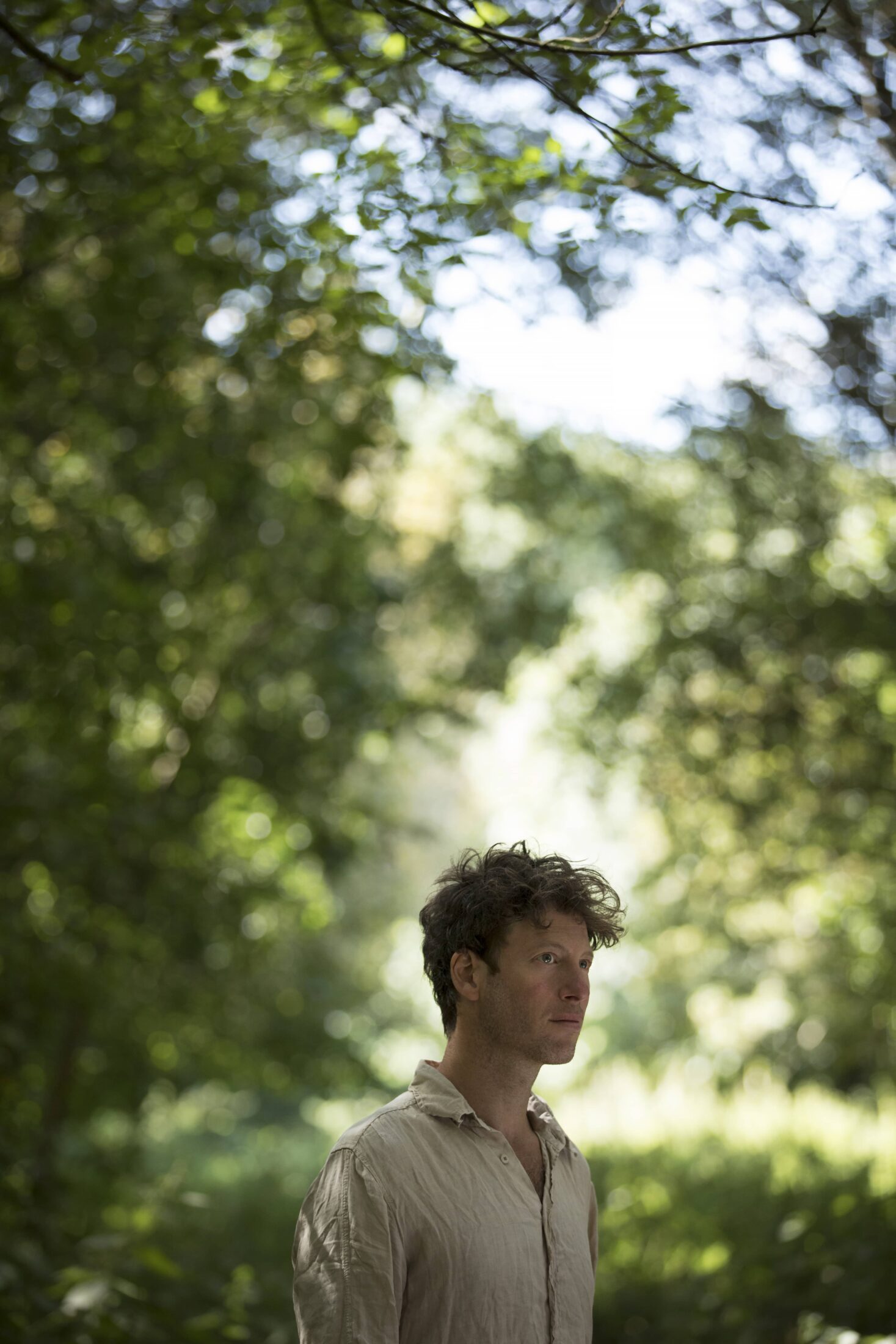
An Interview with Sam Lee
CONTRIBUTOR BIOS June 7, 2021 (emergencemagazine.org)
In this interview, which weaves conversation, song, and the music of nightingales, folk singer Sam Lee speaks about the transformative experience of collaborating with nightingales, the stories of ancestors passed through folk music, and the space for communion that is opened with silence.
Sam will be joining us as our special musical guest at our upcoming in person August retreat in Kent, England. You can learn more about the retreat and register here.
Transcript
Emergence MagazineSam, really lovely to join you today. Thanks so much for being here with us.
Sam Lee Thank you, Emmanuel, for having me.
EM So I spent, you know, the last week or so kind of immersed in your work, reading your new book, The Nightingale, listening to your albums and some of the remarkable recordings you’ve done singing with nightingales. And I was really struck by the relationship and parallels between folk music and birdsong, both in your work but also more broadly in the deep connection to place and landscapes they both embody. And this is something you write about. So I was curious to start our conversation today by asking how you first came to experience this relationship between folk music and birdsong, one that ultimately led you into such a unique relationship with the nightingale.
SL I come from a nature study background, growing up at a wonderful [camp], similar to one of the summer camps that you’d have out in the States, a very alternative, left-wing radical organization called Forest School Camps that enabled a unique way for children, and then me as an adult, as a staff member, to grow up in a playful, a very community-orientated but also ecologically minded relationship with nature; that allowed me to grow a confidence in my being there, but also a confidence in myself. And it went hand in hand with song, because the campfire singing tradition there was prolific like nowhere else I’ve ever come across. Hundreds of songs, many folk songs, many of the American classic folk songs, but a large proportion of traditional repertoire that spoke from that point of view of our elders, our ancestors, in the way that folk songs do so beautifully, which is to speak quite open heartedly about adoration of nature. And that recitation and the repetition of melody over and over again, verse after verse, allowed me as a child and growing up to see the natural world through many eyes and many stories, and story being the most important part of our being in this world and in nature. So it was sort of distilled in me from an early age. And in those songs, birds seem to appear everywhere, almost more prolifically than maybe one would have been aware just listening out to the sound world around. I befriended them, maybe before I’d even heard them. The nightingale I’d heard through folk song long before I got the opportunity to hear one. And, and the same with trees and what those trees and what those birds meant to those characters in those songs and giving a sense of an older wisdom that maybe I had an inclination towards.
EM You said that, you know, after your first encounter with a nightingale, you were reduced child-like, and I’m quoting you here, “to a state of wonderment, grinning inanely and transported through deep time, deep song, and deep earth.” That sounds like quite a transformative experience. Could you share your first encounter with a nightingale, what that was like for you?
SL There is a beautiful story around it. I was taken down with friends of mine and a pregnant, full-term mother. We heard the bird sing, and yes, I went through this kind of giddy … like, like my first kiss. <laughs> I think of it like that sense of: Wow, I want this again. And the story of the mother—she went into labor that night and gave birth to her second child, Tristan. And then she and her daughter were both killed in an accident in Kenya, which was their home, although we met in England. They were killed only six months later. And instantly, that moment of exquisiteness of this bird, this new love affair, was coated in a tragic veil. And never again have I heard the nightingale and not thought of Polly and Sita, mother and daughter. But at the same time, what it revealed to me was that, all the while I’ve been singing these folk songs—with a nightingale here and a nightingale there, or a lark here or a turtledove there—what I was doing by hearing that bird—really, in such a ceremonial way that it was a marked journey to go and meet the bird and be in his presence—what I was experiencing was the voice that every one of the folk singers, who for hundreds of years had sung that song and whose shoulders I stand on—I was experiencing that quality of excitement that they had felt when they heard their nightingale sing, you know, three hundred years ago, a thousand years ago—however old these songs are, and some of them go back a very long time. And I was suddenly able to inhabit the place of those ancestral singers in a way that I hadn’t. And I realized that the more I stepped into those stories in nature, the more I understood the songs; and the more I understood the songs, the more I understood what my human relationship with nature was, that they were my vocabulary and they were my entry point into the natural world in a way that made sense to me—as a part of the natural world, but also as a human teller of story and of nature’s song.
EM I mean, hearing you describe that sounds somewhat spiritual in a certain way, I guess. It really captured you on multiple levels. And that’s something I really felt when you were describing some of these experiences in your book. And there’s a wonderful line that’s stayed with me and described the nightingale in this way and its influence on you: “This tiny bird led me across a threshold and introduced me to a way of being in nature that I had never reckoned with. The experience was both a meditation on stillness yet also a provocation to dance with abandon.” That’s very beautiful.
SL <laughs> I think maybe some context is really important here, because the bird doesn’t exist in America. There are birds called nightingales, but it’s very much a European and Eurasian bird. And he sings his courtship song—it’s a night song, you know, as the nachtigallen, “the night wind,” “the night voice.” And he’ll sing in that silence all night from 11 p.m. through till dawn at 4 or 5 o’clock in the morning, unrelenting. It’s a persistent, extraordinary, improvised, constantly new but constantly taking from his 1500 different sounds and 250 repertoire of phrases, but always cycling a new combination. And within that musicality and ecstaticness and energetic explosions, often in the coldness of the night and in the stillness of the night, I recognized another artist, who dared into this space in a way that the loneliness of an unaccompanied folk singer—or as I was before I did music, as a dancer—I was so energized and, like, I had permission to be an expressive person. Because if a nightingale could do it out of a pure innate call, the call of nature, for that nightingale to sing, it called in me the opportunity to express. <laughter>
EM Your, I guess, project, this ongoing project that you have of singing with nightingales, as far as I understand it, it started by your desire to honor an encounter with a cellist and a nightingale earlier on in the history of recorded music and radio, in 1924, with this very famous British cellist, Beatrice Harrison. I wonder if you could share that story and talk a little bit about Beatrice and what she did.
SL Mmm, absolutely. She’s a very incredible woman. I should kind of contextualize that by saying she was around in the 1920s, which is relatively modern in the history of where music and nightingales have existed. There’s a long international legacy of that, but she is our British kind of apocryphal tale of where the nightingale came into popular consciousness. And it happened because as a darling society character, she was the muse of Elgar. She played the premier of Elgar’s Cello Concerto. She was friends with royalty. She was real out there on the scene and a real pioneer of women’s rights as well. And she convinced the BBC much against their judgment to try out some new broadcasting equipment that would allow microphones to be small enough to take outside of the studio. And so on the 19th of May, 1924, the BBC—brand new at that point and internationally broadcasting—broke into one of their concerts and stopped to say, “We have a broadcast from the thicket of her back garden down south of London,” where a mile of cable linking up to the telephone exchange brought the song of the nightingale singing that night with her on her cello improvising and playing some pieces. And it was a viral sensation. You know, it was the ultimate first in that kind of, yeah, media experience that traveled around the world. Millions of people listened to it; fifty thousand people wrote letters in to the BBC to say, “Please, can we have more?” And she became this figure—this lady of the nightingales—and every year she did this broadcast, and she sold millions of records. And she traveled the world and would play the Carnegie Hall several times a year and invite all the Americans to come to her home in Oxted and have tea with her and listen to her nightingale, which they did in the thousands. Literally, you know, tankers of humans came over across the sea to hear her nightingale. She really brought that kind of popular appreciation and did a lot in terms of the preservation of birds and, you know, the popularization of the Royal Society for the Protection of Birds, our big charity. So she’s a—she’s a formidable figure but what she did was bring art and the nightingale together.
EM And is that what inspired you, just kind of the confluence of your love of birds and nature and then hearing somebody who had found a way to be in relationship with them as a musician?
SL I wish it was as obvious as that. No, not at all. I’d been listening to nightingales every year as a kind of pilgrimage to hear them. I got this lucky commission, because the BBC had completely missed their ninetieth anniversary of this seminal event. And I wrote an email to the man at the BBC as you do, going, “Uh … can I uh … can I make a little documentary about this?” And they were like, “Heck, yeah.” I had forty hours’ notice to go and make it. It was the fastest turnaround in BBC history, I think. And I did; I made this little documentary. And it was going out there to sing a song with the birds in homage to her that I discovered that actually the birds sang back. And that was the big threshold for me. Really, the most important one, which was not just the discovery but realizing the birds and me and other musicians could collaborate, that the birds changed their key and their frequencies and their decoration to adapt to your music. And that blew me, because I’d only ever been a silent participant, you know—a listener. Never would I sing with the great master, you know, interrupt. But lo and behold, he invited me in. That led to this kind of, “well, if I can do this on my own, maybe I could get an audience to come and experience this too.” This is nature connection, elixir. I call it the kind of shot up the arm. The adrenaline hit of hearing musicians and birds in collaboration is a sensation like no others, and it’s quite a transformative experience. So I’ve created this sort of concert, but I think of it or as a ceremony for the birds that allows people to have an experience with nature that we in England don’t often have the permission to have because of the country we live in and the laws and the way we are and our relationship to land. It opens up all those boundaries and other people’s thresholds and comfort zones in a very powerful way.
Continue reading The Nightingale’s Song