
Craig Hamilton Find more inspiring videos, audios, and articles at https://craighamiltonglobal.com When the world seems to be out of control, it’s important to cultivate an ability to relinquish our deep-seated need to be in control. This allows us to surrender to the reality of what we’re facing and respond with wisdom and clarity.
Monthly Archives: January 2021
Book: “The Origin of Consciousness in the Break-down of the Bicameral Mind”

The Origin of Consciousness in the Breakdown of the Bicameral Mind
At the heart of this classic, seminal book is Julian Jaynes’s still-controversial thesis that human consciousness did not begin far back in animal evolution but instead is a learned process that came about only three thousand years ago and is still developing. The implications of this revolutionary scientific paradigm extend into virtually every aspect of our psychology, our history and culture, our religion — and indeed our future.
(Goodreads.com)
How Trump And Other Cult Leaders Infect Their Disciples
Now That He’s Gone: The State of Public Mental Health He Leaves Behind
By Bandy X. Lee and Harper West
January 22, 2021 (dcreport.org)
When we published The Dangerous Case of Donald Trump in 2017, we emphasized that, despite its title, Donald Trump was not our main focus. His presidency was more a statement about the nation and its state of public mental health, of which he was a barometer at the time of election and then the chief accelerant and exacerbator of its defects once in office.
Over the course of the last four years, we have witnessed how his “base” remained consistently at more or less 40% of the population despite continuous scandals and policy failures, including vastly increasing the death toll from COVID-19 through malfeasance and misfeasance and even a deadly assault on the Capitol. We had warned that this unwavering adherence was not a product of healthy, rational and well-informed decision-making, but followed more the pattern of pathological, abusive relationships.
Trump followers’ unwavering adherence was not a product of healthy, rational and well-informed decision-making, but followed more the pattern of pathological, abusive relationships.
This does not mean that each follower of the Trump will exhibit abnormal psychology; on the contrary, they will resemble more victims of abuse and members of a cult, predisposed not just because of personal trauma history but because of a state of poor collective mental health. Societal mental health is not the same as the sum of the mental health of individual members, and the themes and conflicts of groups are not the same as personal struggles, even though they interact.
Some problems are better conceived of as cultural disorders, as the World Mental Health Coalition recently labeled racism and white supremacy. Violence, in general, fits more the category of a societal disorder than an individual one—indeed, violence does not depend as much on individual characteristics, such as individual mental illness, as it does on social ones, such as levels of inequality in a society.
U.S. Primed for Abuse
It is important to note how the United States as a whole in the last few decades has been primed for nationwide vulnerability to narcissistic abuse, no matter the individual variations in resistance. After four years of the Trump presidency, many of us who opposed him feel traumatized and victimized by his emotional abuse. What may be surprising to some is that his followers are also victims of his abuse.
Donald Trump has attempted to manipulate reality for all of us, but the millions of people who support him are deeply under his spell. He even manipulated them to invade the Capitol, both for his own strategic gain to pressure Congressional Republicans to oppose Electoral College tallies and to serve his emotional need to continue the lie that he won the election. Some insurrectionists may spend years in prison all so their leader could temporarily perpetuate a self-delusion to feel better about himself.
‘Love Bombing’
Extreme narcissists often begin relationships with what is called “love bombing,” a false expression of affection that frequently involves over-praising and over-promising.
Trump actually said in private that he dislikes his followers, even noting about the insurrection that it looked “low class.” He likely holds contempt, furthermore, that they have failed—never mind that, according to an FBI agent, the nation barely escaped a massacre of its lawmakers by a minor miracle.
Yet at rallies, he praises supporters effusively and in a video after the insurrection told them: “We love you. You’re very special.” This love bombing forms a trauma bond in the victim of enmeshed patterns of dependency or emotional addiction. Trump followers crave his attention and approval, and he gives it to them, mainly because they then feed him the attention he craves. For the victim, it can lead to loss of sense of self, confusion and a relentless clinging to the abuser.
The extreme narcissist, however, views all relationships through the lens of: “What’s in it for me?” This transactional pattern is revealed in Trump’s abrupt abandonment of those he perceives to be disloyal to him or even fails to “win” on his behalf. If the former president is convicted in the Senate and barred from running for office in 2024, his followers may be surprised at how immediately his need for their attention and financial support disappears. Those who understand abusive personalities will not be surprised at all.
‘Flying Monkeys’

Cult leaders use “deluded dupes” for their own purposes, mostly to generate narcissistic supply or attention. Also, a priority is harvesting assets for personal use, as we see from the hundreds of millions of dollars Trump raised after he lost the election and monetized his presidency as never before.
Another way abusers victimize is by recruiting others to unwittingly do their dirty work. A popular psychological label for them is “flying monkeys,” who are the “henchmen” and “henchwomen” surrounding abusers to support their warped view of reality and self-centered behavior. Manipulation, intimidation, or opportunism and corruption may have caused their collusion with the extreme narcissist, but they serve to legitimize and maintain the abusive status quo.
Those in the population who are narcissistically wounded and insecure like to feel “in the know,” or part of a secret “in group,” which makes them feel powerful with a sense of belonging. As a result, they are attracted to conspiracy theories and cult-like organizations, a pattern that those at the Jan. 6 insurrection embodied, through membership in groups such as QAnon and Proud Boys.
When a society is made psychologically vulnerable through relative deprivation, then large segments of the population come to be drawn to narcissistic abuse or even “shared psychosis.” Sometimes called “folie à millions” or “madness among millions,” shared psychosis refers to the infectiousness of severe symptoms when a highly symptomatic individual is given an influential position.
Delusions Worse than Lies
When “mistruths” are not just strategic lies but delusions, for example, they spread much more rapidly. We can see this in how dramatically polls changed: only a small minority of Republicans thought in early November that Joe Biden did not win, but in a recent poll three out of four do not believe Biden won the election legitimately.
Removal of the highly symptomatic person from influence and exposure, such as from social media platforms, have already dissipated much of Donald Trump’s influence and ability to incite violence.
Further accountability, prosecution, and limit setting will help discredit and “deprogram” his stronghold on his hitherto steadfast followers. We have learned how powerful the spread and reach of mental pathology can be—to the point of almost losing our democracy!—but we must also recognize that these are well-known dynamics throughout history that are preventable. Next time, we can do better through greater mental health awareness and by holding our leaders to a mental health standard.
Harper West, M.A., L.L.P. (harperwest.co) is a licensed psychotherapist, award-winning author and developer of self-acceptance psychology. Both she and Dr. Lee (bandylee.com) have participated in town hall series that are available here and here.
Colin Wilson (1931 – 2013): The High and the Low (Part 1 Complete) — A Thinking Allowed Program
ThinkingAllowedTV NOTE: This is the full broadcast portion of the 88-minute DVD interview. http://www.thinkingallowed.com/2cwils… In this moving and profound program, Colin Wilson shares his personal struggle in dealing with states of panic and depression. His attempt to cope with these difficult experiences has led him to explore states of extreme lucidity and self-control. Colin Wilson was one of the most prolific writers in the English language. His novels include The Mind Parasites, The Philosopher’s Stone and Sex Diary of a Metaphysician. Other major works include A Criminal History of Mankind, The Occult, Mysteries, Religion and the Rebel, The New Existentialism, New Pathways in Psychology and The Outsider–his first and most famous book. A Thinking Allowed program, hosted by Jeffrey Mishlove
In Conversation: Dr. Cornel West and Arturo O’Farrill – Still Waiting Speaker Series
UCLA Herb Alpert School of Music “Our ancestors fought for what they expected to be a very different outcome than the one we are currently experiencing. The racial gulf has widened, and we are fighting battles that are bewildering to those of us who know the struggles of others who came before us.” The UCLA Herb Alpert School of Music and its Inaugural Dean, Eileen L. Strempel are proud to launch Still Waiting, a new speaker series that invites the public to join UCLA students in conversation with prominent figures invited by the school’s Anti-Racism Action Committee (ARAC), to help us understand ourselves and our response to this deeply hurtful moment in our nation’s racial reckoning. Still Waiting invites us to demand better of our communities and better of our actions in response to the tangible effects of racist policing, academic and institutional indifference, and methodologies that may bridge the gap between feelings of alienation and feelings of sanctuary and refuge for us all. To kick off the series, the School of Music is proud to welcome prominent and provocative democratic intellectual, Cornel West in conversation with Arturo O’Farrill, Associate Dean for Equity, Diversity and Inclusion at The UCLA Herb Alpert School of Music. Cornel West Cornel West is Professor of the Practice of Public Philosophy at Harvard University and holds the title of Professor Emeritus at Princeton University. He has also taught at Union Theological Seminary, Yale, Harvard, and the University of Paris. Cornel West graduated Magna Cum Laude from Harvard in three years and obtained his M.A. and Ph.D. in Philosophy at Princeton. He has written 20 books and has edited 13. He is best known for his classics, Race Matters and Democracy Matters, and for his memoir, Brother West: Living and Loving Out Loud. His most recent book, Black Prophetic Fire, offers an unflinching look at nineteenth and twentieth-century African American leaders and their visionary legacies. Dr. West is a frequent guest on the Bill Maher Show, CNN, C-Span and Democracy Now. He made his film debut in the Matrix – and was the commentator (with Ken Wilbur) on the official trilogy released in 2004. He also has appeared in over 25 documentaries and films including Examined Life, Call & Response, Sidewalk and Stand. He has produced three spoken word albums including Never Forget, collaborating with Prince, Jill Scott, Andre 3000, Talib Kweli, KRS-One and the late Gerald Levert. His spoken word interludes are featured on productions by Terence Blanchard, The Cornel West Theory, Raheem DeVaughn, and Bootsy Collins. In short, Cornel West has a passion to communicate to a vast variety of publics in order to keep alive the legacy of Martin Luther King, Jr. – a legacy of telling the truth and bearing witness to love and justice. About ARAC ARAC, the Anti-Racism Action Committee of The UCLA Herb Alpert School of Music, is a non-hierarchical group of students, staff, and faculty members committed to changing the atmosphere of our Bruin community by addressing issues of bias, marginalization and discrimination toward black, Indigenous and people of color and other intersectional communities.
Book: “Philology of the Flesh”
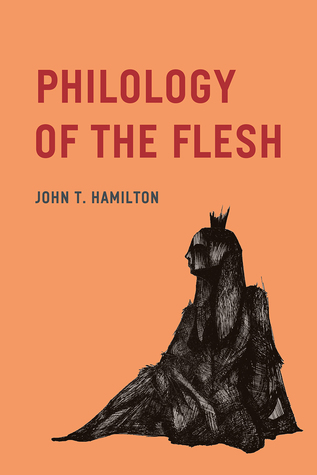
Philology of the Flesh
As the Christian doctrine of Incarnation asserts, “the Word became Flesh.” Yet, while this metaphor is grounded in Christian tradition, its varied functions far exceed any purely theological import. It speaks to the nature of God just as much as to the nature of language.
In Philology of the Flesh, John T. Hamilton explores writing and reading practices that engage this notion in a range of poetic enterprises and theoretical reflections. By pressing the notion of philology as “love” (philia) for the “word” (logos), Hamilton’s readings investigate the breadth, depth, and limits of verbal styles that are irreducible to mere information. While a philologist of the body might understand words as corporeal vessels of core meaning, the philologist of the flesh, by focusing on the carnal qualities of language, resists taking words as mere containers.
By examining a series of intellectual episodes—from the fifteenth-century Humanism of Lorenzo Valla to the poetry of Emily Dickinson, from Immanuel Kant and Johann Georg Hamann to Friedrich Nietzsche, Franz Kafka, and Paul Celan—Philology of the Flesh considers the far-reaching ramifications of the incarnational metaphor, insisting on the inseparability of form and content, an insistence that allows us to rethink our relation to the concrete languages in which we think and live.
(Goodreads.com)
My Cancer Journey 1/23
Ned Henry January 23, 2021 · nedhenry.medium.com
It’s 9:42 AM. Had a good ambien induced sleep. My watch tells me I slept for 5 hours and 50 minutes. Only 15 minutes of deep sleep. January is a disaster for sleep. Only 2 days so far that are in the green zone, 4 in the yellow zone, the rest are all in the red zone including last night. December was better — only 3 red days, the rest of the nights actually were green or yellow. I hadn’t looked at the history until this morning. Anyway got up at 8 and got some coffee. Don’t feel like eating yet. I put on some very peaceful Back piano music very softly and read the first 2 chapters of Carey’s book. It’s good. I’ll keep reading it from time to time. Then I put the easy chair back and relaxed and breathed with little buddha sitting on my chest. I decided to come in here and start on my sharing. It’s time to hear my lesson for the day. I know I’m a day behind in the course but so what.
ACIM — Lesson 22 — What I see is a form of Vengeance. (Wish I could share the entire 7 minute video on this lesson. It’s an important one.)
!0:30 Just had a pretty good shit. TMI for most of you but it wasn’t those little hard pellets this time but softer and easier and it felt better. Not a big dump yet but definitely progress. I looked around while I sat there and worked on the lesson.
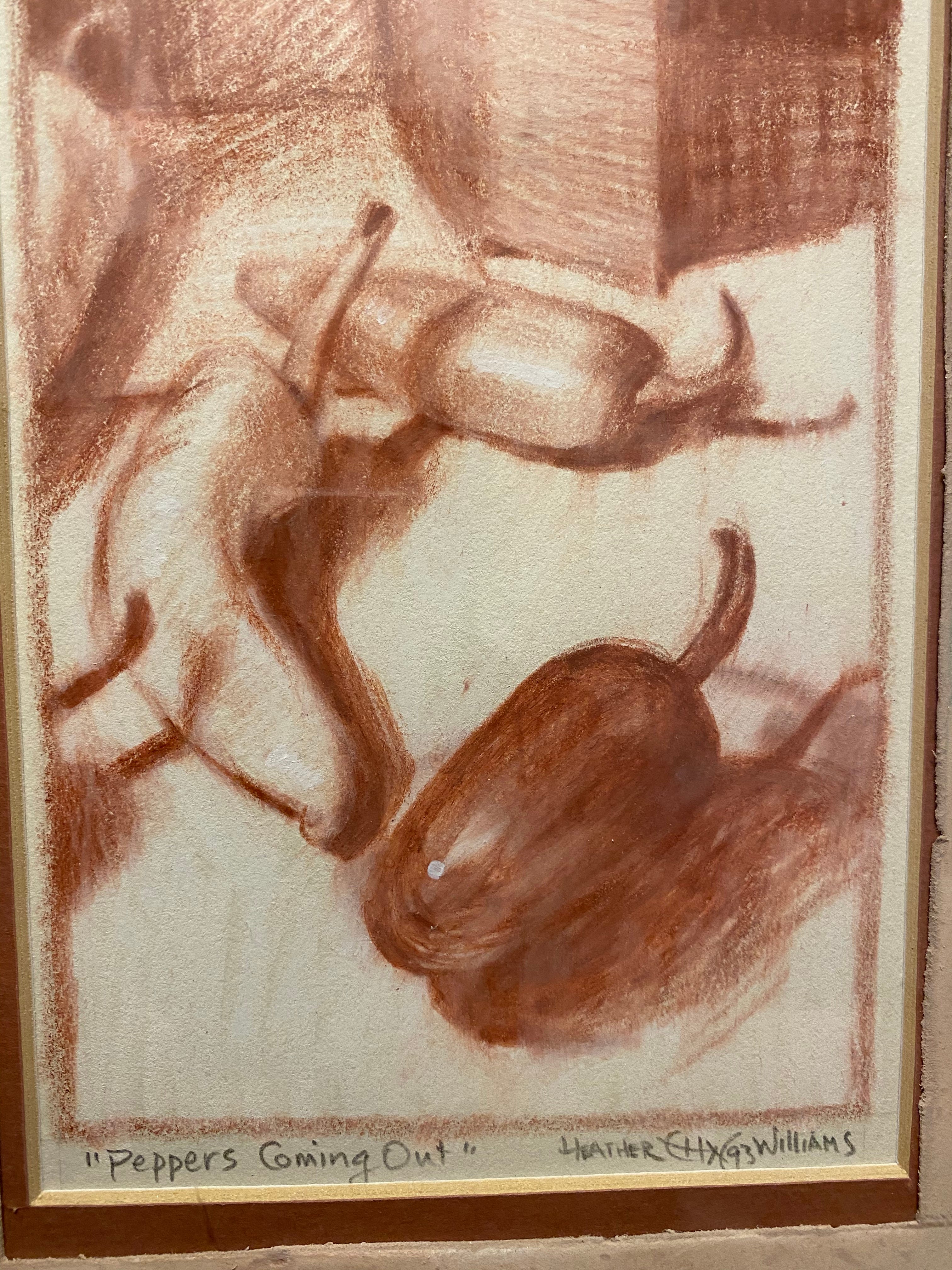
Through the door I saw one of Heather’s drawings. It’s hanging on the wall in my hallway. It’s called “Peppers Coming Out.”
Julie next door texted me that they were getting pizza for their Saturday dinner out. I thanked her and passed on the dinner. I have some easier on the stomach foods in the fridge. Was 201 lbs this morning. I’ll take it. Could not get below 206 in all of the year 2020. Also heard from AJ this morning and texted him back I was fine after my chemo day. Wrote to Jan and told her the doctors do not think deep tissue massage would be good for me right now. Not sure I agree with them but for now I’ll listen and hopefully touch base with her again in a month when the weather is warmer. I’d love to have her work on the energy flow in my body right now. And she is good at finding the places where it’s blocked and opening them up so energy flow is more natural and easy. Jan and Heather and Jane are a lot alike. All lesbian women with deep and long lasting partners who are kind and caring.
3:20 Been a busy day so far. Before I forget, this is next week’s opera line up at the Met all free on demand for one day each.
Monday, January 25
Mozart’s Don Giovanni
Tuesday, January 26
Rossini’s Le Comte Ory
Wednesday, January 27
Gounod’s Faust
Thursday, January 28
Verdi’s Falstaff
Friday, January 29
Wagner’s Der Fliegende Holländer
Saturday, January 30
Verdi’s Rigoletto
Sunday, January 31
Verdi’s Macbeth
I’ll be catching some of them. Let me know if you catch any of them.
So John across the street is going to go shopping for me tomorrow. I have to get him a list. He offered me Indian food tonight (which I love btw and have grown to really appreciate since I met AJ) but I passed this time until my stomach settles after chemo yesterday. Not sure what comfort food I’ll have but I do have some choices around here.
Had a good counseling session today. We talked about some astrology stuff which was very insightful both in my birth chart and in the current transits. It all makes sense. We also talked a little about sex which has always been a complicated issue for me.
4:15 — I got a call from Sue about the Covid vaccine distribution by Emory. I am on their waiting list and apparently they are starting to call people for appoinments. I called the number and played dumb about getting a call from them and then losing the message but jotting down this number. It kinda worked and kinda didn’t. I got a nice lady on the phone who heard me out, confirmed I was on the wait list for a call for an appointment, but could do nothing to get that appointment scheduled. It was the clinical team that did that. So I’m on the list but still waiting for an appointment. I told her I had cancer and asked if she could make a note of that in the record but she couldn’t. So like most of you, we wait for vaccine availability.
Sent a note to my lawyer about updating my will for distribution of the grand piano which is a family heirloom. That should get taken care of next week.
Also had a real good call with Steve in Jacksonville. He did not know I had cancer and well I thought he might want to know. He is an old friend from The Prosperos that I had lost touch with until we reconnected at the Spiritual Living Center of Atlanta which is the Religious science church where Paul Gonyea gave his talks. We have become very good friends again since that happy reunion. He is married to a wonderful woman named Monica. So we caught up and he asked for my blog link so I sent it. I’m not soliciting readers but I will make this available to anyone who wants it whether I know them or not and whether I know them well or not. I do look at those who are “following” me so I have an idea of who I am actually talking to besides myself.
It’s a beautiful warm day here in Atlanta so I am going back outside on the deck to sit and take in some more fresh air. Back later.
I can’t get enough of Bach piano. There’s an album on Apple Music called Bach Piano by Axel Gillison. It’s just so peaceful, so serene. Just talked to Jack and Lucy and friend John. Got caught up. Who cares? Doesn’t matter. But it was good for me.
I keep getting statements from Emory about all the charges I am racking up. But so far no bills and they have only asked for a few copays. I know it will be in the hundreds of thousands before I am all done but it looks like Medicare Advantage with United Healthcare is covering most of it. They haven’t asked me pay very much yet. Got a lovely card from cousin Cathy. She likes the US Mail so I think I’ll type and print a response and send it that way instead of text or email. I won’t hand write it. It would take too long and might not be very legible.
What I see is a form of vengeance. Very deep and interesting lesson today. Especially since I feel so good after chemo yesterday. It might be the Prednisone talking. I take that for 5 days after chemo and it is a steroid that makes you feel good, almost high and full of energy. Which is how I feel today.
Listening to Stabat Mater by Karl Jenkins. Bought the CD on Amazon since I couldn’t find it on Apple music. But then I found it. Gonna send the CD to Ronna. She will love it. Who wants CD’s? I’m gonna send them all out since I have them in the cloud now. Shoot me a note.
Sent my Whole Foods shopping list to John and he also picked up a mango Lassi for me from the Indian restaurant. It was too sweet so I added some plain yogurt to it to tone down the sugar. It might be easier for me to just place my own order with Whole foods. I think he does delivery anyway and since we live across the street from each other it would likley be on the same run. We’ll see what he says. So many people just want to help me out. It’s pretty humbling.
Well it’s about 8 PM. I think I might let this one fly and get stoned so I can feel my body better and do some stretching and walking in the house while I watch the opera tonight. Not sure I’ll slug through the whole Wagner opera. They are tough to sit through. But I will watch the beginning of Act 3 several times and be stoned when I do. Also want to catch the news which I taped. I missed it yesterday and want to see what David Brooks had to say on the Friday PBS Newshour yesterday. I like him. He is smart and insightful and gives commentary every Friday on the weeks events.
So later my friends. See you tomorrow.
What I see is a form of vengeance. (All that you fear does not exist.)
My Cancer Journey 1/22
Ned Henry January 22, 2021 · nedhenry.medium.com
Midnight — When you watch opera, you must remember to close your eyes occasionally and just listen to the orchestra.
Full day today. I have to be at the cancer at 7 AM and will be there most of the day. Not sure how much I will write when I get home. Maybe nothing more. I need to sleep. I’m tired.
ACIM — Lesson 21 — I am determined to see things differently.
8:45 PM. Been a long day. Just got up from a couple hour nap. Was tired — still am. But decided to take my mind off the nausea by doing some writing. I didn’t have much nausea after the first round of chemo. So I took some more nausea drugs and am waiting for them to kick in so I don’t throw up all my evening meds. Don’t feel like eating. Had to go slow again with Rituximat. Also had to stop again since I started to react to it. My body does not like that drug coming in there trying to disrupt what it thinks is normal cancer growth. It took from 10 or so to nearly 3 to get that one drug in me. And I had 4 more to go. Well, 3 more since the Prednisone is oral. Got done after 5 PM. The day started at 7 AM down there with labs. Then I met with the doctors. Well Dr. Allen right hand nurse practitioner, Priya and Dr. Tarabadkar, the lympnoma dermatologist. Got some questions answered. My labs look good. They gave me a copy and I’ll go over it some time with Sue. The sore on leg is healing and looks good. They do not want me to get my teeth cleaned yet but the good news is that the cancer has receded enough in my mouth that I can now brush my upper teeth on the outside side. If that makes sense. They gave me gabapentin for the cold feet circulation problem. We’ll see. I’ve taken that drug after my first knee replacement and well it’s OK. My feet are a little cold now. They told me I had to see the Palliative care people to get drugs for sleeping and they didn’t show up in the fusion room today as I had expected. So hopefully I can get someone from there on Monday. We’ll see how sleep goes this weekend. I have my ambien, and the anti anxiety “sleeping” drug they aleady gave me and benedryl and melatonin. By far my worst side effect has been sleeplessness. My watch told me I slept 2 and half hours last night. It keeps track. And they did confirm that there would be no consideration of moving me to Car-T chemotherapy after round 2 if the labs were more negative with R-Chop. Emory is not participating in that drug trial so it is not an option since the FDA has not quite yet approved it as an alternative course of action. So even though it was reported as very promising at the end of 2020, it’s off the table at this point. But R-Chop does appear to be working. That’s the good news. Probably won’t get much attention from Dr. Allen ( the head honcho oncologist) going forward anymore if I keep improving. I do notice that ALL the doctors and Nurse practitioners and nurses and people in the lab and everyone that does any hands on care is FEMALE. I have no men doctors in this fight for my life. Some of the people that did some of the tests in the first few weeks were men but other than that, men have been absent from the actual care giving. So I got Sara again in the infusion room for the long day there. I had her the first time and she wanted me again when she saw I was on the daily list. Such a sweet competent nurse. She lives in Candler Park. She watched over me and a few others with such gentle supervision. I asked her if she had kids since she is such a nurturing person. She said no. She said if she did have kids they would take all her energy and she wouldn’t focus her nurturing on her patients. Like there was a limit on her capacity. I don’t believe that but I didn’t tell her that. She called a few doctors over when I started to react again to the rituximat. She wanted me to tell me early if I started to itch so I did. I did not do that in Round one. I was just you know the strong silent type who would just weather the storm and not complain about a little itch — until it was everywhere and I was scratching like crazy. So this time we nipped it in the bud. Got more Benadryl and steroids in me and started back with the rituximat in 20 minutes. I listened to the Ride of the Valkyries as I invited and implored the rituximat to come into my body and do its job. I saw it coming to fight that cancer like the Valkyries come to fight evil and injustice. Pretty cool experience.
So I have this friend from the choir who works at Emory. Her name is like a little bird that you all know. I won’t say it here now since someone from Emory might read this someday and well I wouldn’t want to get her in trouble. She is a dear sweet friend and the one who visited me the MOST during my 3 week stay in the horrible rehab facility after my first knee replacment. We became fast friends after she showed me that kind of compassion. We got to know each other so much better. I have spent a couple of Thanksgivings with her family. Emory’s patient portal for WIFI sucks. It is open and does not have the bandwidth to handle all the traffic trying to get through. I used to work on this ethernet crap so I kind of understand bandwidth and how to boost it using software. And the priority at Emory has NOT been the patient portal and frankly it shouldn’t be. Patients are trying to entertain themselves and stay in touch and watch movies and shit. Like me. I’d rather the “good” networks be used by the professionals doing a job. But those networks are not available to patients without a password. Well this little birdie shared her password with me so I could get on a good network. She also did that when I was in that damn rehab hospital also an Emory facility. It makes all the difference in the world. It’s as good or better that what I have at home which means that I don’t use up bandwidth. I’m not a gamer at all so what I do is watch videos, YouTubes and send emails and stuff. Just a normal user not a power user by any means. But with a password, I could get on and watch a movie without getting that little circle that goes around and around spinning as it tries to build cache so it can keep showing video. And all it does is just spin around and around. So I’m on a good network. I started to watch Django Unchained again last night and got about an hour in before I went to bed so I thought I’ll finish that movie. Not. Watching a movie on a phone just plain doesn’t cut it. So what next — Ah… La Traviata is ON DEMAND for free. Now I had made the mistake of logging on the Met many months ago this summer and just listening to an opera while I was walking but didn’t watch it and well I got a bill that was let’s just say WAY bigger than my normal phone bill is. Turns out I am paying for all that data to drive an HD video just to LISTEN to an opera. BUT Now I know I am on a good WIFI network and don’t have to use cellular data. I can use WIFI instead. So I call up La Traviata and just listen to that music for hours. So much fun. So peaceful as I sat there and just took the chemo in with my mind lost in music. Opera is so rich — too rich really for one art form since it encompasses many arts forms and brings them together. You have to absorb amazing orchestral music, and interesting plot with twists and turns, complicated and flawed characters, incredible costumes and sets and like last night very creative visions the Director brings to their interpretation of the work written centuries ago. Throw in some ballet and dance and the most accurate and technically perfect voices you can find. It’s just too much to absorb. So last night I drank in the video and watched it again. I can’t tell you how many times I have seen La Traviata but I don’t miss it if I have a chance to see it again. So today, I just listened to it. Of course I knew what was going on and what they were singing about to each other. It was just a reception of creativity.
Did not crack a book all day and I had 3 with me including the one Jack and Carey sent me. And I had my kindle with more stuff to read. I did go over the lesson several times during the day. I am determined to see things differently.
So that’s my very full 10 hour day at the Winship Cancer center at Emory. Not bad at all. Just put on Billie Eilish Essentials. I texted Liz today and told her I was listening to the Ride of the Valkyries. She texted back that she was listening to Mantra for Healing by the Scared Sound Choir. Her link did not work but I found it finally on Apple music and listened to it for a little while. But then decided to get into La Traviata again. The mood will come to listen to Mantra for Healing. This is a long fight. One that will literally take the rest of my life.
Oh I did have a great visit today with the nutrition person — another woman -Stephanie. We went over my supplements and what I should continue and what I should not continue since it might interefere with chemo. That was very helpful. Most of what I have been doing is fine. But not all. She did not think I should take iron suplements with Vitamin C to help absorption. She did think I should continue Vitamin D and Collagen for protein and Psyllium hull powder to help with constipation. She said to boost my protein intake which is kind of what I’ve been doing. Eating a lot of smoked salmon. I mostly have been eating what I feel like eating at the time. Sometimes it’s fish eyes (tapioca) or yogurt with maple syrup or cereal or chicken soup or eggs. Or the wonderful meals people have been cringing over. Pete, my republican friend, is bringing me more meals this weekend. He’s become like a personal chef. Which is great for me since he is very good at the art of cooking.
It’s 10 PM and I’m gonna stop typing for a little while. We’ll see if I make it back or let this fly a little later. BAD GUY is playing. I love this song.
10:40 I lOVE YOU is playing.
It’s not true
Tell me I’ve been lied to
Cryin’ isn’t like you
Ooh
What the hell did I do?
Never been the type to
Let someone see right through
Ooh
Maybe won’t you take it back?
Say you were tryna make me laugh
And nothin’ has to change today
You didn’t mean to say, “I love you”
I love you and I don’t want to
Ooh
Up all night on another red eye
I wish we never learned to fly
I
Maybe we should just try
To tell ourselves a good lie
I didn’t mean to make you cry
I
Maybe won’t you take it back?
Say you were tryna make me laugh
And nothin’ has to change today
You didn’t mean to say, “I love you”
I love you and I don’t want to
Ooh
The smile that you gave me
Even when you felt like dyin’
We fall apart as it gets dark
I’m in your arms in Central Park
There’s nothin’ you could do or say
I can’t escape the way I love you
I don’t want to, but I love you
Ooh
Ooh
Ooh
Ooh
Ooh
ENCORE: DREAMS, SPIRITS & THE OCCULT: THE SECRET WORLD OF CARL G JUNG
BY GARY LACHMAN
FacebookTwitterEmailRedditPinterestWhatsApp
From New Dawn 174 (May-June 2019) (newdawnmagazine.com)
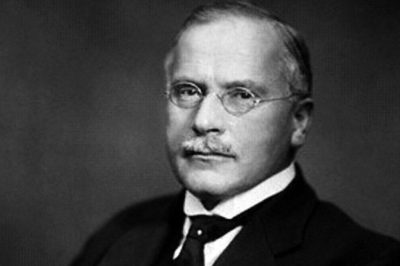
On 11 February 1944, the 68-year-old Carl Gustav Jung – then the world’s most renowned living psychologist – slipped on some ice and broke his fibula. Ten days later, in hospital, he suffered a myocardial infarction caused by embolisms from his immobilised leg. Treated with oxygen and camphor, he lost consciousness and had what seems to have been a near-death and out-of-the-body experience – or, depending on your perspective, delirium.
He found himself floating 1,000 miles above the Earth. Seas and continents shimmered in blue light and Jung could make out the Arabian desert and snow-tipped Himalayas. He felt he was about to leave orbit, but then, turning to the south, a huge black monolith came into view. It was a kind of temple, and at the entrance Jung saw a Hindu sitting in a lotus position. Within, innumerable candles flickered, and he felt that the “whole phantasmagoria of earthly existence” was being stripped away. It wasn’t pleasant, and what remained was an “essential Jung,” the core of his experiences.
He knew that inside the temple the mystery of his existence, of his purpose in life, would be answered. He was about to cross the threshold when he saw, rising up from Europe far below, the image of his doctor in the archetypal form of the King of Kos, the island site of the temple of Asclepius, Greek god of medicine. He told Jung that his departure was premature; many were demanding his return and he, the King, was there to ferry him back. When Jung heard this, he was immensely disappointed, and almost immediately the vision ended.
He experienced the reluctance to live that many who have been ‘brought back’ encounter, but what troubled him most was seeing his doctor in his archetypal form. He knew this meant that the physician had sacrificed his own life to save Jung’s. On 4 April 1944 – a date numerologists can delight in – Jung sat up in bed for the first time since his heart attack. On the same day, his doctor came down with septicæmia and took to his bed. He never left it, and died a few days later.
Jung was convinced that he hadn’t simply hallucinated, but that he had been granted a vision of reality. He had passed outside time, and the experience had had a palpable effect on him. For one thing, the depression and pessimism that overcame him during WWII vanished. But there was something more. For most of his long career, he had impressed upon his colleagues, friends, and reading public that he was, above all else, a scientist. He was not, he repeated almost like a mantra, a mystic, occultist, or visionary, terms of abuse his critics, who rejected his claims to science, had used against him. Now, having returned from the brink of death, he seemed content to let the scientist in him take a back seat for the remaining 17 years of his life.
Although Jung had always believed in the reality of the ‘other’ world, he had taken care not to speak too openly about this belief. Now, after his visions, he seemed less reticent. He’d had, it seems, a kind of conversion experience, and the interests the world-famous psychologist had hitherto kept to himself now became common knowledge. Flying saucers, astrology, parapsychology, alchemy, even predictions of a coming “new Age of Aquarius”: pronouncements on all of these dubious subjects – dubious at least from the viewpoint of modern science – flowed from his pen. If he had spent his career fending off charges of mysticism and occultism – initially triggered by his break with Freud in 1912 – by the late 1940s he seems to have decided to stop fighting. The “sage of Küsnacht” and “Hexenmeister of Zürich,” as Jung was known in the last decade of his life, had arrived.
All in the Family
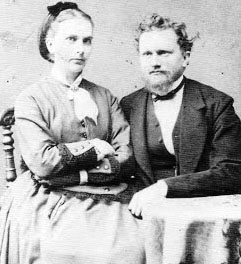
Yet Jung’s involvement with the occult was with him from the start – literally, it was in his DNA. His maternal grandfather, Rev. Samuel Preiswerk, who learned Hebrew because he believed it was spoken in heaven, accepted the reality of spirits, and kept a chair in his study for the ghost of his deceased first wife, who often came to visit him. Jung’s mother Emilie was employed by Samuel to shoo away the dead who distracted him while he was working on his sermons.
She herself developed mediumistic powers in her late teens. At the age of 20, she fell into a coma for 36 hours; when her forehead was touched with a red-hot poker she awoke, speaking in tongues and prophesying. Emilie continued to enter trance states throughout her life, in which she would communicate with the dead. She also seems to have been a ‘split personality’. Jung occasionally heard her speaking to herself in a voice he soon recognised was not her own, making profound remarks expressed with an uncharacteristic authority. This ‘other’ voice had inklings of a world far stranger than the one the young Carl knew.
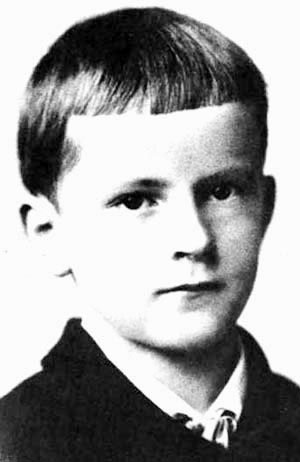
This ‘split’ that Jung had seen in his mother would later appear in himself. At around the age of 12, he literally became two people. There was his ordinary boyhood self, and someone else. The ‘Other’, as Carl called him, was a figure from the 18th century, a masterful character who wore a white wig and buckled shoes, drove an impressive carriage, and held the young boy in contempt. It’s difficult to escape the impression that in some ways Jung felt he had been this character in a past life. Seeing an ancient green carriage, Jung felt that it came from his time.
His later notion of the collective unconscious, that psychic reservoir of symbols and images that he believed we inherit at birth, is in a sense a form of reincarnation, and Jung himself believed in some form of an afterlife. Soon after the death of his father, in 1896 when Jung was 21, he had two dreams in which his father appeared so vividly that he considered the possibility of life after death. In another, later dream, Jung’s father asked him for marital advice, as he wanted to prepare for his wife’s arrival. Jung took this as a premonition, and his mother died soon after. And years later, when his sister Gertrude died – a decade before his own near-death experience – Jung wrote that, “What happens after death is so unspeakably glorious that our imagination and feelings do not suffice to form even an approximate conception of it.”1
Tables & Knives
Jung’s mother was involved in at least two well-known paranormal experiences that are recounted in practically every book about him. Sitting in his room studying, Carl suddenly heard a loud bang coming from the dining room. He rushed in and found his mother startled. The round walnut table had cracked from the edge past the centre. The split didn’t follow any joint but had passed through solid wood. Drying wood couldn’t account for it; the table was 70 years old and it was a humid day. Jung thought: “There certainly are curious accidents.” As if she was reading his mind Emilie replied in her ‘other’ voice: “Yes, yes, that means something.”
Two weeks later came a second incident. Returning home in the evening, Jung found an excited household. An hour earlier there had been another loud crack, this time coming from a large sideboard. No one had any idea what had produced it. Jung inspected the sideboard. Inside, where they kept the bread, he found a loaf and the bread knife. The knife had shattered into several pieces, all neatly arranged in the breadbasket. The knife had been used earlier for tea, but no one had touched it nor opened the cupboard since. When he took the knife to a cutler, he was told that there was no fault in the steel and that someone must have broken it on purpose. He kept the shattered knife for the rest of his life, and years later sent a photograph of it to psychical researcher JB Rhine.
Spirits Afoot
By this time Jung, like many others, was interested in spiritualism, and was reading through the literature – books by Zöllner, Crooks, Carl du Prel, Swedenborg, and Justinus Kerner’s classic The Seeress of Prevorst. At the Zofingia debating society at the University of Basel, he gave lectures on “The Value of Speculative Research” and “On the Limits of Exact Science,” in which he questioned the dominant materialist paradigm that reigned then, as today. Jung led fellow students in various occult experiments, yet when he spoke to them about his ideas, or lectured about the need to take them seriously, he met with resistance. Apparently, he had greater luck with his dachshund, whom he felt understood him better and could feel supernatural presences himself.2
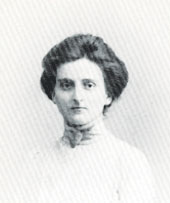
Another who seemed to feel supernatural presences was his cousin, from his mother’s side of the family, Helene Preiswerk. In a letter to JB Rhine about the shattered bread knife, Jung refers to Helly – as she was known – as a “young woman with marked mediumistic faculties” whom he had met around the time of the incident, and in his “so-called’ autobiography Memories, Dreams, Reflections he remarks that he became involved in a series of séances with his relatives after the incidents of the bread knife and table. Yet the séances had been going on for some time before the two events, and at their centre was Helly, whom Jung already knew well and who, by all accounts, was in love with him. This is an early sign of his somewhat ambiguous relationship with the occult.
Helly would enter a trance and fall to the floor, breathing deeply, and speaking in old Samuel Preiswerk’s voice – although she had never heard him. She told the others that they should pray for her elder sister Bertha, who, she said, had just given birth to a black child. Bertha, who was living in Brazil, had already had one child with her mixed-race husband, and gave birth to another on the same day as the séance.3 Further séances proved equally startling. At one point, Samuel Preiswerk and Carl Jung Sr – Jung’s paternal grandfather – who had disliked each other while alive, reached a new accord. A warning came for another sister who was also expecting a child that she would lose it; in August the baby was born premature and dead.4
Helly produced further voices, but the most interesting was a spirit named Ivenes, who called herself the real Helene Preiswerk. This character was much more mature, confident, and intelligent than Helly, who Jung described as absent-minded, and not particularly bright, talented, or educated. It was as if buried beneath the unremarkable teenager was a fuller, more commanding personality, like Jung’s ‘Other’. This was an insight into the psyche that would inform his later theory of “individuation,” the process of “becoming who you are.” Helly did blossom later, becoming a successful dressmaker in France, although she died young, at only 30.
In Jung’s dissertation on the séances, On the Psychology and Pathology of So-called Occult Phenomena, he describes Helly unflatteringly as “exhibiting slightly rachitic skull formation,” and “somewhat pale facial colour,” and fails to mention that she is his cousin. He also omits his own participation in the séances, and dates them from 1899 to 1900, whereas they had started years before. Gerhard Wehr politely suggests that, “[T]he doctoral candidate was obviously at pains to conceal his own role, and especially his close kinship relationship, thus forestalling from the start any further critical inquiry that might have thrown the scientific validity of the entire work into question.”5
In other words, Jung the scientist thought it a good career move to obscure Jung the occultist’s personal involvement in the business.
The Poltergeist in Freud’s Bookcase
In 1900, the 25-year-old Jung joined the prestigious Burghölzli Mental Clinic in Zürich. Here, he did solid work in word-association tests, developed his theory of ‘complexes’, and initiated a successful ‘patient-friendly’ approach to working with psychotics and schizophrenics. It was during his tenure that he also became involved with Freud. From 1906, when they started corresponding, to 1912, when the friendship ruptured, Jung was a staunch supporter of Freud’s work and promoted it unstintingly.
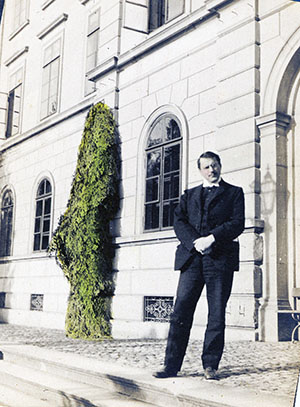
There were, however, some rocky patches. One centred on the famous poltergeist in Freud’s bookcase. Visiting Freud in Vienna in 1909, Jung asked him about his attitude toward parapsychology. Freud was sceptical and dismissed the subject as nonsense. Jung disagreed, and sitting across from the master, he began to feel his diaphragm glow, as if it was becoming red-hot. Suddenly a loud bang came from a bookcase. Both jumped up, and Jung said to Freud: “There, that is an example of a so-called catalytic exteriorisation phenomenon!”, Jung’s long-winded circumlocution for a poltergeist, or “noisy spirit.” When Freud said “Bosh!”, Jung predicted that another bang would immediately happen. It did. Jung said that, from that moment on, Freud grew mistrustful of him. From Freud’s letter to Jung about the incident, one gets the feeling that he felt Jung himself was responsible for it.
This isn’t surprising; Jung did manifest numerous paranormal abilities. While in bed in a hotel room after giving a lecture, he experienced the suicide of a patient who had a strong “transference” on him. The patient had relapsed into depression and shot himself in the head. Jung awoke in his hotel, feeling an odd pain in his forehead. He later discovered that his patient had shot himself precisely where Jung felt the pain, at the same time Jung woke up. More to the point, a visitor to his home once remarked about Jung’s “exteriorised libido,” how “when there was an important idea that was not yet quite conscious, the furniture and woodwork all over the house creaked and snapped.”
The Red Book
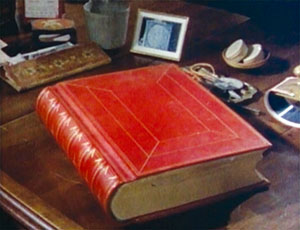
It was Jung’s break with Freud that led to his own ‘descent into the unconscious,’ a disturbing trip down the psyche’s rabbit hole from which he gathered the insights about the collective unconscious that would inform his own school of ‘analytical psychology’. He had entered a ‘creative illness’, unsure if he was going mad. In October 1913, not long after the split, Jung had, depending on your perspective, a vision or hallucination. While on a train, he suddenly saw a flood covering Europe, between the North Sea and the Alps. When it reached Switzerland, the mountains rose to protect his homeland, but in the waves he saw floating debris and bodies. Then the water turned to blood. The vision lasted an hour and seems to have been a dream that had invaded his waking consciousness. Having spent more than a decade treating mental patients who suffered from precisely such symptoms, Jung had reason to be concerned. He was ironically rather relieved the next summer when WWI broke out and he deduced that his vision had been a premonition of it.
Yet the psychic tension continued. Eventually there came a point where Jung felt he could no longer fight off the sense of madness. He decided to let go. When he did, he landed in an eerie, subterranean world where he met strange intelligences that ‘lived’ in his mind. The experience was so upsetting that for a time Jung slept with a loaded pistol by his bed, ready to blow his brains out if the stress became too great.
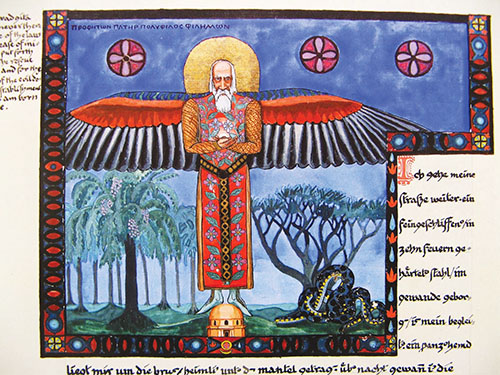
In his Red Book he kept an account, in words and images, of the objective, independent entities he encountered during his “creative illness” – entities that had nothing to do with him personally, but who shared his interior world. There were Elijah and Salome, two figures from the Bible who were accompanied by a snake. There was also a figure whom Jung called Philemon, who became a kind of ‘inner guru’ and who he painted as a bald, white-bearded old man with bull’s horns and the wings of a kingfisher. One morning, after painting the figure, Jung was out taking a walk when he came upon a dead kingfisher. The birds were rare in Zürich and he had never before come upon a dead one. This was one of the many synchronicities – “meaningful coincidences” – that happened at this time.
There were others. In 1916, still in the grip of his crisis, Jung again felt that something within wanted to get out. An eerie restlessness filled his home. He felt the presence of the dead – and so did his children. One daughter saw a strange white figure; another had her blankets snatched from her at night. His son drew a picture of a fisherman he had seen in a dream: a flaming chimney rose from the fisherman’s head, and a devil flew through the air, cursing the fisherman for stealing his fish. Jung had yet to mention Philemon to anyone. Then, one afternoon, the doorbell rang loudly, but no one was there. He asked: “What in the world is this?” The voices of the dead answered: “We have come back from Jerusalem where we found not what we sought,” words that form the beginning of Jung’s strange Seven Sermons to the Dead, a work of “spiritual dictation,” or “channelling,” he attributed to “Basilides in Alexandria, the City where the East toucheth the West.”

Ghosts in the House
By 1919, WWI was over and Jung’s crisis had passed, although he continued to practise what he called “active imagination,” a kind of waking dreaming, the results of which he recorded in the Red Book. But spirits of a more traditional kind were not lacking. He was invited to London to lecture on “The Psychological Foundations of the Belief in Spirits” to the Society for Psychical Research. He told the Society that ghosts and materialisations were “unconscious projections.” “I have repeatedly observed,” he said, “the telepathic effects of unconscious complexes, and also a number of parapsychic phenomena, but in all this I see no proof whatever of the existence of real spirits, and until such proof is forthcoming I must regard this whole territory as an appendix of psychology.”
Scientific enough, no doubt, but a year later, again in England, he encountered a somewhat more real ghost. He spent some weekends in a cottage in Aylesbury rented by Maurice Nicoll (later a student of Gurdjieff and Ouspensky) and while there was serenaded by eerie sounds, while an unpleasant smell filled the bedroom. Locals said the place was haunted and, on one particularly bad night, Jung discovered an old woman’s head on the pillow next to his; half of her face was missing. He leapt out of bed and waited until morning in an armchair. The house was later torn down. One would think that, having already encountered the dead on their return from Jerusalem, Jung wouldn’t be so shaken by a traditional English ghost, but the experience rattled him; his account of it only appeared 30 years later, in 1949, in an obscure anthology of ghost stories.
When his lecture for the SPR was reprinted in the Collected Works in 1947, Jung added a footnote explaining that he no longer felt as certain as he did in 1919 that apparitions were explicable through psychology, and that he doubted “whether an exclusively psychological approach can do justice to the phenomenon.” In a later postscript, he again admitted that his earlier explanation was insufficient, but that he couldn’t agree on the reality of spirits because he had no experience of them – conveniently forgetting the haunting in Aylesbury. But in a letter of 1946 to Fritz Kunkel, a psychotherapist, Jung admitted: “Metapsychic phenomena could be explained better by the hypothesis of spirits than by the qualities and peculiarities of the unconscious.”
A similar uncertainty surrounds his experience with the I Ching, the ancient Chinese oracle, with which he began to experiment in the early 1920s and which, like horoscopes, became part of his therapeutic practice. Although he mentioned the I Ching here and there in his writing, it wasn’t until 1949, again nearly 30 years later, in his introduction to the classic Wilhelm/Baynes translation, that he admitted outright to using it himself. And although he tried to explain the I Ching’s efficacy through what would become his paranormal deus ex machina, synchronicity, Jung admits that the source of the oracle’s insights are the “spiritual agencies” that form the “living soul of the book,” a remark at odds with his quasi-scientific explanation. Ironically, his major work on “meaningful coincidence,” Synchronicity: An Acausal Connecting Principle (1952), written with the physicist Wolfgang Pauli, provides only one unambiguous example of the phenomenon, and readers who, like me, accept the reality of synchronicity, come away slightly baffled by Jung’s attempt to account for it via archetypes, quantum physics, statistical analysis, mathematics, JB Rhine’s experiments with ESP, astrology, telepathy, precognition, and other paranormal abilities, all of which read like a recrudescence of Jung’s “I am a scientist” reflex.
Age of Aquarius
In the 1920s, he plunged into a study of the Gnostics – whom he had encountered as early as 1912 – and alchemy. It was Jung, more than anyone else, who salvaged the ancient Hermetic pursuit from intellectual oblivion. Another Hermetic practice he followed was astrology, which he began to study seriously around the time of his break with Freud. Jung informed his inner circle that casting horoscopes was part of his therapeutic practice, but it was during the dark days of WWII that he recognised a wider application. In 1940, in a letter to HG Baynes, Jung speaks of a vision he had in 1918 in which he saw “fire falling like rain from heaven and consuming the cities of Germany.” He felt that 1940 was the crucial year, and he remarks that it’s “when we approach the meridian of the first star in Aquarius.” It was, he said, “the premonitory earthquake of the New Age.”
He was familiar with the precession of the equinoxes, the apparent backward movement of the Sun through the signs of the zodiac. By acting as a backdrop to sunrise at the vernal equinox, each sign gives its name to an ‘age’ – called a ‘Platonic month’ – which lasts roughly 2,150 years. In his strange book Aion (1951), he argues that the ‘individuation’ of Western civilisation as a whole follows the path of the ‘Platonic months’ and presents a kind of “precession of the archetypes.” Fish symbolism surrounds Jesus because He was the central symbol of the Age of Pisces, the astrological sign of the fish. Previous ages – of Taurus and Aries – produced bull and ram symbolism. The coming age is that of Aquarius, the Water Bearer. In conversation with Margaret Ostrowski-Sachs, a friend of Hermann Hesse, Jung admitted that he had kept this “secret knowledge” to himself for years, and only finally made it public in Aion. He wasn’t sure he was “allowed” to, but during his illness he received “confirmation” that he should.
Although the arcane scholar Gerald Massey and the French esotericist Paul Le Cour had earlier spoken of a coming Age of Aquarius, Jung was certainly the most prestigious mainstream figure to do so, and it is through him that the idea became a mainstay of the counterculture of the 1960s and ’70s. This was mostly through his comments about it in his book Flying Saucers: A Modern Myth of Things Seen in the Sky (1958), in which he argued that UFOs were basically mandalas from outer space. During his crisis, he had come upon the image of the mandala, the Sanskrit ‘magic circle’, as a symbol of psychic wholeness, and he suggested that ‘flying saucers’ were mass archetypal projections, formed by the psychic tension produced by the Cold War that was heating up between Russia and America. The Western world, he argued, was having a nervous breakdown, and UFOs were a way of relieving the stress.
Jung wrote prophetically: “My conscience as a psychiatrist bids me fulfil my duty and prepare those few who will hear me for coming events which are in accord with the end of an era… As we know from ancient Egyptian history, they are symptoms of psychic changes that always appear at the end of one Platonic month and at the beginning of another. They are, it seems, changes in the constellation of the psychic dominants, of the archetypes or ‘Gods’ as they used to be called, which bring about… long-lasting transformations of the collective psyche. This transformation started… in the transition of the Age of Taurus to that of Aries, and then from Aries to Pisces, whose beginning coincides with the rise of Christianity. We are now nearing that great change… when the spring-point enters Aquarius…” Ten years later, The Fifth Dimension (whose very name, appropriated from the title song of The Byrds’ third LP, suggests the cosmic character of the Mystic Sixties) had a hit song from the hippie musical Hair echoing Jung’s ideas, and millions of people all over the world believed they were witnessing “the dawning of the Age of Aquarius.”
Jung the Mystic
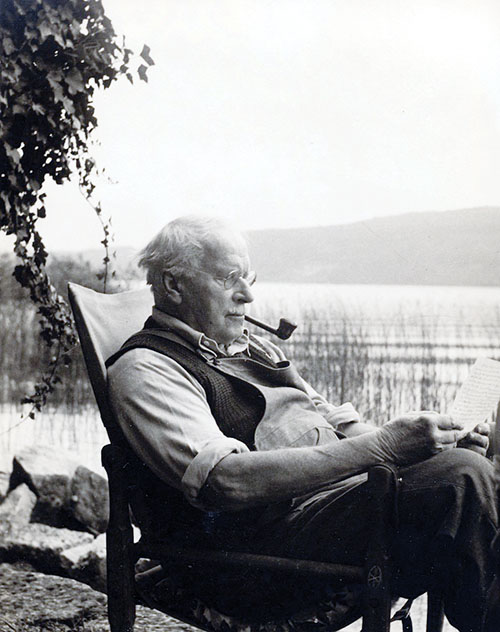
Jung died in 1961, just on the cusp of the ‘occult revival’ of the 1960s, a renaissance of magical thinking that he did much to bring about. He was also directly responsible for the “journey to the East” that many took then, and continue to take today. Along with the I Ching, Jung gave his imprimatur to such hitherto arcane items as The Tibetan Book of the Dead, Taoism and Zen, and without his intervention it’s debatable if these Eastern imports would have enjoyed their modern popularity. That he was in many ways a founding father of the Love Generation is seen by his inclusion on the cover of the Beatles’ Sgt Pepper’s Lonely Hearts Club Band album, although Jung himself would have thought “flower power” sadly naïve.
Although for all his efforts he has never been accepted by mainstream intellectuals, his effect on popular culture has been immense, and our contemporary grass roots, inner-directed spirituality, unfortunately associated with the New Age, has his name written all over it. Jung himself may have been equivocal about his relationship with mysticism, magic, and the occult, but the millions of people today who pay attention to their dreams, notice strange coincidences and consult the I Ching have the Sage of Küsnacht to thank for it.
The above article first appeared in Fortean Times 265 and is reprinted with the kind permission of the author.
This article was published in New Dawn 174.
© Copyright New Dawn Magazine, www.newdawnmagazine.com. Permission granted to freely distribute this article for non-commercial purposes if unedited and copied in full, including this notice.
© Copyright New Dawn Magazine, www.newdawnmagazine.com. Permission to re-send, post and place on web sites for non-commercial purposes, and if shown only in its entirety with no changes or additions. This notice must accompany all re-posting.
Waking Up is Hard To Do: Remembering Gurdjieff & Ouspensky
BY GARY LACHMAN
FacebookTwitterEmailRedditPinterestWhatsApp
From New Dawn 167 (Mar-Apr 2018)
In the spring of 1915 the writer and journalist Peter Demianovich Ouspensky, a familiar name in Russian Theosophical circles, gave a series of lectures in Moscow about his recent “search for the miraculous” in Egypt, Ceylon, and India. Ouspensky, a popular author on occult themes, had gone East in search of “schools,” teachers from whom he could learn a knowledge “unlike anything known or used by us” – the modern, scientific West that is.1 Such knowledge, he believed, was the only thing that could offer a way out of the “labyrinth of contradictions” that make up modern life. Ouspensky was convinced that through this knowledge the “thin film of false reality” – of money, prestige, and the pursuit of power – that we take to be real, could be dissolved and another reality, that of the “miraculous,” could be revealed.2
Ouspensky did not find what he was looking for in the East. He met many interesting people and travelled to many sacred places, but in the end he had to admit that the miraculous had eluded him. But the miraculous was not to be balked. It was waiting for Ouspensky, and if he could not find it, it would come to him.
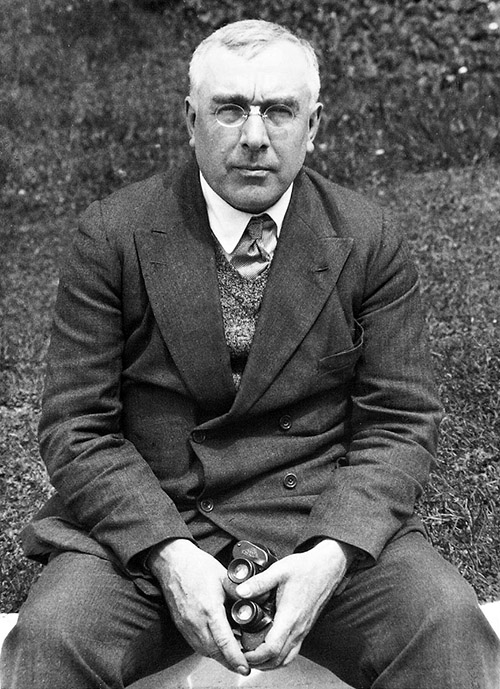
Apparently, it was much closer than he thought. In fact, it appeared one afternoon in small café in a busy Moscow side street in the form of a “certain G., a Caucasian Greek,” whom Ouspensky remembered was the author of a strange ballet, “The Struggle of the Magicians,” a notice for which he had recently seen in a newspaper. He had agreed to this meeting only after one of G’s students, who had attended his lectures, had persisted in inviting him. Ouspensky had finally said yes to his requests just to stop his pestering. Ouspensky had had his fill of gurus and had returned from the East not a little disillusioned. His interest in Theosophy and other occult ideas was more than a little bruised, and he was sure all that would come from this encounter was more confirmation of his scepticism. But what he learned from this “certain G.” changed all that.
Ouspensky’s “certain G.” was the enigmatic Armenian esoteric teacher George Ivanovitch Gurdjieff. Together the two were responsible for introducing to the West a startlingly new and often brutally demanding system of self-development, what Ouspensky later dubbed “the psychology of man’s possible evolution.” Today it’s widely known as the Fourth Way – to differentiate it from those of the fakir, yogi, or monk – or, more familiarly, “the work.” Gurdjieff had already been working with groups of students in Moscow for a few years before stage managing this meeting and had purposefully set out to attract Ouspensky, whom he wanted to secure as a Plato to his Socrates, that is, as a good interpreter and expositor of his ideas. He had his students read Ouspensky’s books – the most impressive of which, Tertium Organum, about higher dimensions and mystical states of consciousness, had made his name – and then sent them out to ensnare the philosopher. If Gurdjieff’s students had not been successful in getting a wary Ouspensky to this café, there is every chance that “the work” might not have survived the historical eruptions – World War I, the Bolshevik Revolution and Russian civil war – that were the backdrop to Ouspensky’s true encounters with the miraculous.
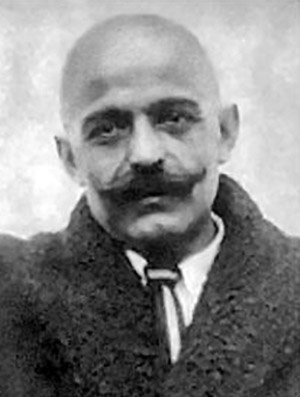
Ouspensky was immediately impressed by Gurdjieff as a man who knows, a man, that is, who possessed the kind of knowledge that he had sought in the East. But although it soon became clear through their conversation that Gurdjieff was as well versed in religious, spiritual, and mystical traditions as he was, and was equally if not better travelled – indeed, he had been to places that Ouspensky had only wished to visit – there was something more. Gurdjieff himself had a strange undeniable presence. This man “of an oriental type” with a “black moustache and piercing eyes” astonished Ouspensky because he seemed to be purposefully poorly disguised. His face, which reminded Ouspensky of “an Indian raja or Arab sheik,” did not suit the black overcoat and bowler hat he wore, as did the many small businessmen that frequented the place. But his disguise was obvious, and Ouspensky was not a little disconcerted to feel that while he knew this certain G. was in disguise, he also knew that he had to pretend that he wasn’t, and that he had to carry on their conversation as if all was perfectly normal. This was Ouspensky’s first experience of the kind of psychodrama and “role-playing” that Gurdjieff performed with his students and which, in the end, would drive him away.
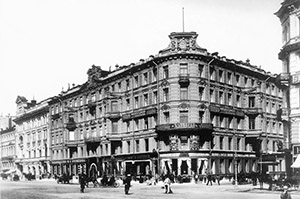
But that was in the future. From that meeting until the summer of 1918, while Russia exploded into chaos, Ouspensky submitted himself to Gurdjieff’s tutelage and began to learn the “system,” a story he tells in his posthumous masterpiece, In Search of the Miraculous. And if Gurdjieff himself impressed with an aura of strength and knowledge, the system he began to unfold to an increasingly ensnared Ouspensky made an even greater impact. It was logical, consistent, based on experience and observation and free of the kind of wishful thinking that Ouspensky had found in many other mystic teachings. In fact, it was almost specifically designed to attract a rigorous, critical intellect that had recently shorn itself of much of its romanticism. Whether this was so or not, in Ouspensky’s case it’s exactly what happened.
The Teachings
What was Gurdjieff’s teaching? When Ouspensky remarked on how life in big cities like London, where he had just been, was becoming more mechanical and increasingly turning people into machines, Gurdjieff corrected him. They already are machines, he said, and would be whether they lived in the city or not. “This must be understood,” Gurdjieff impressed on Ouspensky. “All the people you see, all the people you know, all the people you may get to know, are machines, actual machines working solely under the power of external influences.” Ouspensky was already concerned about the increasing mechanisation of modern life, but he believed that some things, the most important ones – thought, art, poetry – could stand against it. Gurdjieff told him he was wrong. These, too, can be and regularly are performed mechanically. He put up a fight, but it was not long before Ouspensky, himself a novelist and short story writer – witness Strange Life of Ivan Osokin and Talks With the Devil, respectively – agreed.
The most important question Ouspensky asked Gurdjieff was whether it was possible to stop being a machine? It was, Gurdjieff told him, but it was difficult and demanded much knowledge and effort. The problem is that man is asleep. What we take to be our waking consciousness is really just another kind of sleep; true wakefulness is something different. There are many reasons for this sleep. One is that human beings possess different minds or “centres,” each responsible for certain actions and behaviours. We have an intellectual, an emotional, a moving, and an instinctive centre, and also two “higher centres” from which we are cut off by our mechanicalness. When these work properly, all is good, but in modern man the centres are all confused, with one doing the work of another or stealing energy from other centres in order to do its own work. What is important for wakefulness is that each centre do its own work with its own energy and that all are in balance. It is then that the insights of “higher centres” can reach us. Such balancing is what Gurdjieff taught and his aim was to produce the “harmonious development of man.”
Another hurdle to wakefulness is that while we believe we possess a single “I,” a stable, reliable ego, the truth is that “we are legion,” as the man possessed by devils tells Jesus in Mark 5:9. We are not one but many. Our “I’s” shift with every mood. We decide to get up early tomorrow; when the alarm bell rings we turn it off and stay in bed. We decide to start a diet; when dinner time arrives we conveniently forget this. Our “I’s” shift because we are subject to a kind of hypnosis Gurdjieff called “identifying.” We lose our identity, our “I-ness” by giving it over to practically everything around us. Some of these disparate “I’s” can congeal into what is known as “false personality,” a picture of ourselves that allows us to ignore the contradictions that run rife through our lives but which are obvious to others.
Personality – let alone a false one – is itself an obstacle. Gurdjieff taught that we are made of two parts, what he called “essence” and “personality.” Essence is our own, it is what we are born with and is through essence that we can grow. But around essence accumulates our “personality.” This is what we learn or imitate from others and is the face we turn towards “life.” The problem is that personality becomes too rich, obscuring essence, rather like a bad orange whose thick rind covers a small bit of fruit. The aim of Gurdjieff’s system was to break down personality, to dismantle it and through the suffering that this entails, enable essence to grow.
Self-Remembering
What impressed Ouspensky most was what Gurdjieff had to say about a strange third state of consciousness he called “self-remembering.” There are four states or levels of consciousness. First there is sleep, which we pass through each night. Then there is what we normally call “waking consciousness,” but which is really another layer of sleep. This is our usual mechanical state of consciousness, which we falsely believe to be true consciousness. True consciousness, “self-consciousness,” only comes in the third level, what Gurdjieff called “self-remembering.” Normally our attention is directed outwards, toward the external world. Because we usually “identify” with things outside us, we “forget” about our own inner world. We forget that it is “I” – “you” – who is conscious and is actually in this moment engaged in the act of perceiving the world. Gurdjieff knew, as did Edmund Husserl, the founder of phenomenology, the philosophical method that gave birth to existentialism, that perception is intentional. He also knew that the less intentional and more passive we remain, the deeper our forgetfulness becomes.
Self-remembering is having the awareness of your own self, the observer and what you are observing, simultaneously. It is essentially a vivid sense of your own being, the fact that “you” exist, here and now. It can come to us out of the blue, and many examples of self-remembering can be found in literature; the episode of the madeleine in Proust’s Remembrance of Things Past is a classic example, although, of course, Proust doesn’t use the term “self-remembering.” In this sense, Gurdjieff shares much with the existential philosopher Martin Heidegger, who also believed that man’s greatest problem is what he called “forgetfulness of being,” loss of the sense of our own existence. Gurdjieff and Heidegger also arrive at the same remedy for this. Our forgetfulness or sleep in the face of being can be broken by a vivid grasp of the reality of our own finitude – our death – a medicine Heidegger prescribes in Being and Time and with which Gurdjieff agreed in his own perplexing jawbreaker of an esoteric masterpiece, Beelzebub’s Tales to His Grandson.
There is a fourth state of consciousness, “objective” or “cosmic consciousness,” in which we perceive reality as it truly is, and not obscured by our subjective perspectives. It is then that certain laws, the Law of Three and the Law of Seven, and an understanding of Gurdjieff’s version of the Great Chain of Being, the Ray of Creation, among other otherwise incomprehensible things, seem obvious. But this is far beyond us at present and actually useless to us unless we can maintain “self-remembering” for more than brief flashes.
Ouspensky’s Breakthrough
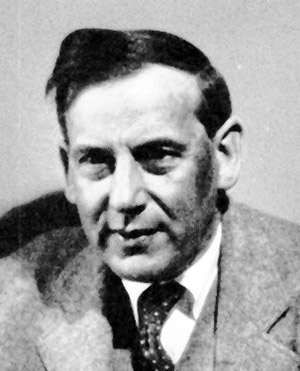
These and other ideas first became widely known when Lady Rothermere, wife of a powerful British newspaper baron, rescued Ouspensky from White Russian refugee status in Constantinople by inviting him to London all expenses paid. An English translation of Tertium Organum – which Ouspensky knew nothing about – had become a surprise best-seller in America and England; one of its most devoted readers was Lady Rothermere, and a handsome royalty check accompanied her invitation. In September 1921 Ouspensky found himself in Lady Rothermere’s luxurious St. John’s Wood salon, addressing an audience that included T. S. Eliot, Aldous Huxley, Algernon Blackwood, Gerald Heard among other London literary luminaries. Also among his listeners were A. R. Orage, editor of the leading journal of ideas The New Age, and Maurice Nicoll, a successful Harley Street physician and C. G. Jung’s main disciple in Great Britain. By the end of Ouspensky’s lecture on the system he had learned from G. – which surprised all and disappointed some who had come to hear something more along the lines of Tertium Organum – both Orage and Nicoll would become his students.
Ouspensky’s tutelage of Orage was short-lived. In February 1922, Gurdjieff himself arrived in London. As always, the appearance of this remarkable man caused disruption. Ouspensky had already impressed with his intellect and seriousness. But Gurdjieff was something else. The same solidity and sheer being that had convinced Ouspensky that Gurdjieff knew now bowled over Ouspensky’s students. And when Gurdjieff announced that he was establishing his Institute for the Harmonious Development of Man in Fontainebleau, just outside Paris, many who had metaphorically sat at Ouspensky’s feet – he really was an unlikely guru – now were eager to make their way across the English Channel. The New Age lost an editor and Jung an apostle. But while Orage remained with Gurdjieff until his own break with him not long before his death in 1934, Nicoll studied with Gurdjieff for a year, and then returned to London to work with Ouspensky.
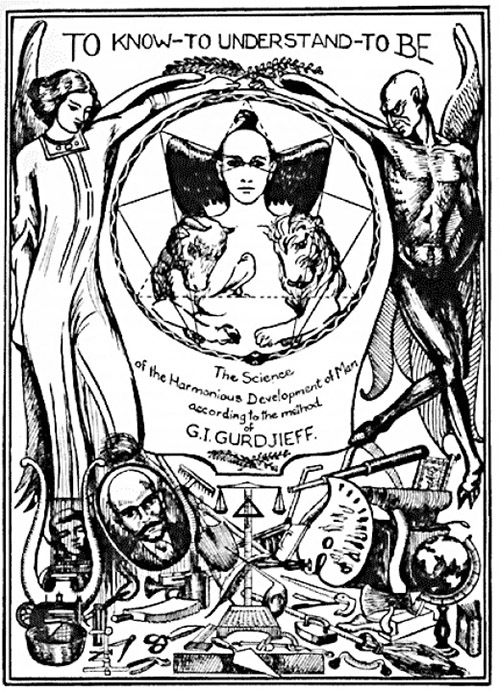
By this time Ouspensky had already ended his schooling with Gurdjieff and had set out to teach the system on his own, always giving Gurdjieff credit for it. Or at least for bringing it to the West. Gurdjieff said he had learned it during his time with the Sarmoung Brotherhood, a Central Asian version of Madame Blavatsky’s Tibetan masters, a story he tells in Meetings with Remarkable Men, the most immediately readable of his writings. But at other times Gurdjieff spoke of the system as “his,” so it is unclear how much belonged to him and how much he was “transmitting” from what he called the “inner circle of humanity.” Either way, Ouspensky had come to the conclusion that while he believed the system offered the sole method of “waking up,” he felt that he could no longer work with Gurdjieff himself.

Two Very Different Teachers
During their time together, Gurdjieff taught in a more or less traditional way, through lectures, relating ideas and various exercises or methods of fighting “sleep.” This, along with Ouspensky’s clarity and rigour as a writer and thinker, makes In Search of the Miraculous still the best introduction to “the work.” Ouspensky believed that somewhere along the line, Gurdjieff changed and that his methods and aims were no longer the same as when he first began to learn from him. They had become, as mentioned, more geared toward a kind of psychodrama or role-playing and had also become more focused on the kind of “shock tactics” familiar to one branch of “the work.” The “movements,” incredibly difficult postures and “sacred dances,” designed to outwit our mechanicalness and awaken slumbering parts of ourselves, were part of this. It also entailed making more and more of what Gurdjieff called “super-efforts,” pushing oneself beyond one’s usual limits. When Orage, a portly man and heavy smoker, arrived at Fontainebleau, he was given a shovel and told to dig. He did until his body ached and he sobbed with pain. When he felt he could no longer go on, a sudden influx of energy hit him; he had broken through his mechanical limits. Gurdjieff also made outlandish claims about the success of his Institutes in other cities, most, if not all untrue. Gurdjieff was much more of a “crazy guru” than Ouspensky, a more traditional serious philosopher. And to make things worse, in 1924, a year after it opened, except for a small group, Gurdjieff turned away practically all of his students, said the Institute was closing down, and furthermore, that hewas breaking off all relations with Ouspensky.
Exactly why teacher and student fell out remains unclear, although in my book In Search of P.D. Ouspensky, I take a stab at answering this question, the essential one in the psychohistory of “the work.” Probably the most likely reason is that they were two very different men and that whatever his faults – I don’t spare them in my book – Ouspensky had a genius of his own, as many of his readers know. However remarkable a teacher Gurdjieff was, Ouspensky could not have remained a student for very long. The strange thing is that he continued to teach the system – to which he added his own ideas about time, as spelled out in his magnum opus A New Model of the Universe – while having many troubling doubts about his teacher. One concern was reports of Gurdjieff enjoying the intimate favours of some of his students. At first Ouspensky dismissed these as gossip; later he wondered about their veracity. Gurdjieff, he knew, was no angel. Indeed, some who encountered him painted him as quite the devil. In any case, he kept everyone on their toes and Ouspensky had had enough of it.
Ouspensky taught the system in London and, during World War II, in New York and New Jersey, for some twenty-five years. Then, in a series of lectures held in London in 1947, a few months before his death, Ouspensky rejected it, telling his audience they had to think for themselves and start again from the beginning. Exactly what this meant remains one of the mysteries in the psychohistory of “the work.” Some think it was an expression of searing honesty by a man who realised he had made a mistake. Others see it as a grand “work” strategy, a “shock” sent to force people to wake up. Perhaps we will never know. Gurdjieff spent some time in New York in the 1930s, but his main base of operation, following the closing of his Institute, was Paris. There, in his small flat in the rue des Colonels-Renard, which he maintained during the Nazi occupation, he gathered his many students for enormous dinners that would last for hours, and during which he would get them drunk on vodka and pierce their personality to get to their essence. He died in 1949.
A simple way to see the difference between the two is this. Ouspensky’s approach was to create a method that could be applied by anyone with the will and determination to master it, independently of the personal power or baraka of the teacher, rather as Husserl’s phenomenological method can be learned by anyone with the necessary patience and persistence. But no one could learn how to be like Gurdjieff, although somehow his presence, which so impressed Ouspensky, was in some way able to help others to be like themselves, perhaps for the first time. We might say that Ouspensky’s was the way of knowledge, whereas Gurdjieff taught through being. And, of course, he knew some things too.
If that is the case, then we are lucky that Ouspensky laboured to capture what he learned from Gurdjieff and to present it in such a brilliant, vivid, and gripping way, as this is what remains for us today. We may not be able to benefit from Gurdjieff’s presence, but we may be able, through his and Ouspensky’s efforts, to make something of our own.This article was published in New Dawn 167.If you appreciate this article, please consider a contribution to help maintain this website.
Footnotes
1. P. D. Ouspensky, In Search of the Miraculous, Harcourt Brace and Co. 1949, 3
2. Ibid.
© Copyright New Dawn Magazine, www.newdawnmagazine.com. Permission granted to freely distribute this article for non-commercial purposes if unedited and copied in full, including this notice.
© Copyright New Dawn Magazine, www.newdawnmagazine.com. Permission to re-send, post and place on web sites for non-commercial purposes, and if shown only in its entirety with no changes or additions. This notice must accompany all re-posting.