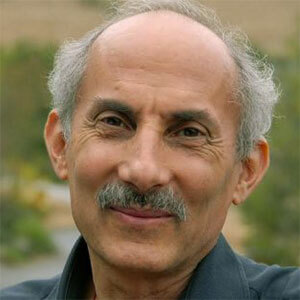
“Consciousness contains all things, but is not caught in them.“
–Jack Kornfield
Author, Buddhist Practitioner and one of the key teachers to introduce Buddhist mindfulness practice to the West.
(Contributed by Zoë Robinson, H.W., M.)

NBC News Comedian Sarah Cooper parodied President Trump’s remarks on mail-in voting and delivered a message in support of the process for the Democratic National Convention. » Subscribe to NBC News: http://nbcnews.to/SubscribeToNBC » Watch more NBC video: http://bit.ly/MoreNBCNews NBC News Digital is a collection of innovative and powerful news brands that deliver compelling, diverse and engaging news stories. NBC News Digital features NBCNews.com, MSNBC.com, TODAY.com, Nightly News, Meet the Press, Dateline, and the existing apps and digital extensions of these respective properties. We deliver the best in breaking news, live video coverage, original journalism and segments from your favorite NBC News Shows. Connect with NBC News Online! NBC News App: https://apps.nbcnews.com/mobile Breaking News Alerts: https://link.nbcnews.com/join/5cj/bre… Visit NBCNews.Com: http://nbcnews.to/ReadNBC Find NBC News on Facebook: http://nbcnews.to/LikeNBC Follow NBC News on Twitter: http://nbcnews.to/FollowNBC Follow NBC News on Instagram: http://nbcnews.to/InstaNBC#SarahCooper#DemConvention#NBCNews Comedian Sarah Cooper Mocks Trump’s Attacks On Mail-In Voting At 2020 DNC | NBC News
Headlines suggest that the epigenetic marks of trauma can be passed from one generation to the next. But the evidence, at least in humans, is circumstantial at best.


In mid-October, researchers in California published a study of Civil War prisoners that came to a remarkable conclusion. Male children of abused war prisoners were about 10 percent more likely to die than their peers were in any given year after middle age, the study reported.
The findings, the authors concluded, supported an “epigenetic explanation.” The idea is that trauma can leave a chemical mark on a person’s genes, which then is passed down to subsequent generations. The mark doesn’t directly damage the gene; there’s no mutation. Instead it alters the mechanism by which the gene is converted into functioning proteins, or expressed. The alteration isn’t genetic. It’s epigenetic.
The field of epigenetics gained momentum about a decade ago, when scientists reported that children who were exposed in the womb to the Dutch Hunger Winter, a period of famine toward the end of World War II, carried a particular chemical mark, or epigenetic signature, on one of their genes. The researchers later linked that finding to differences in the children’s health later in life, including higher-than-average body mass.
The excitement since then has only intensified, generating more studies — of the descendants of Holocaust survivors, of victims of poverty — that hint at the heritability of trauma. If these studies hold up, they would suggest that we inherit some trace of our parents’ and even grandparents’ experience, particularly their suffering, which in turn modifies our own day-to-day health — and perhaps our children’s, too.
But behind the scenes, the work has touched off a bitter dispute among researchers that could stunt the enterprise in its infancy. Critics contend that the biology implied by such studies simply is not plausible. Epigenetics researchers counter that their evidence is solid, even if the biology is not worked out.
“These are, in fact, extraordinary claims, and they are being advanced on less than ordinary evidence,” said Kevin Mitchell, an associate professor of genetics and neurology at Trinity College, Dublin. “This is a malady in modern science: the more extraordinary and sensational and apparently revolutionary the claim, the lower the bar for the evidence on which it is based, when the opposite should be true.”
Investigators in the field say the critique is premature: the science is still young and feeling its way forward. Studies in mice, in particular, have been offered as evidence of such trauma-transmission, and as a model for studying the mechanisms. “The effects we’ve found have been small but remarkably consistent, and significant,” said Moshe Szyf, a professor of pharmacology at McGill University. “This is the way science works. It’s imperfect at first and gets stronger the more research you do.”
The debate centers on genetics and biology. Direct effects are one thing: when a pregnant woman drinks heavily, it can cause fetal alcohol syndrome. This happens because stress on a pregnant mother’s body is shared to some extent with the fetus, in this case interfering directly with the normal developmental program in utero.
But no one can explain exactly how, say, changes in brain cells caused by abuse could be communicated to fully formed sperm or egg cells before conception. And that’s just the first challenge. After conception, when sperm meets egg, a natural process of cleansing, or “rebooting,” occurs, stripping away most chemical marks on the genes. Finally, as the fertilized egg grows and develops, a symphony of genetic reshuffling occurs, as cells specialize into brain cells, skin cells, and the rest. How does a signature of trauma survive all of that?
One working theory is based on animal research. In a series of recent studies, scientists at the University of Maryland School of Medicine, led by Tracy Bale, have raised male mice in difficult environments, by periodically tilting their cages, or by leaving the lights on at night. This kind of upbringing, effectively a traumatic childhood, changes the subsequent behavior of those mice’s genes in a way that alters how they manage surges of stress hormones.
And that change, in turn, is strongly associated with alterations in how their offspring handle stress: namely, the young mice are numbed, or less reactive, to the hormones compared to control animals, said Dr. Bale, director of the university’s Center for Epigenetic Research in Child Health and Brain Development. “These are clear, consistent findings,” she said. “The field has advanced dramatically in just the past five years.”
Perhaps the best explanation for how such trauma marks could be attached to a father’s sperm cells comes from Oliver Rando at the University of Massachusetts. His studies, also in mice, have zeroed in on the epididymis, a tube near the testicles where sperm cells load before ejaculation. There, they learn to swim over a period of days, and their genes can be marked, said Dr. Rando.
The molecules that affect the changes appear to be “small RNAs,” fragments of genetic material that scientists are still learning about, Dr. Rando said.
“This tube produces small RNAs and ships them to the sperm as they develop, suggesting that there exists a place that senses the dad’s environmental conditions and can change the package RNAs delivered through the sperm to the baby,” Dr. Rando said. He makes no broad claims beyond that.
Other researchers have attempted to fill out the picture. Once those RNA packages arrive at the epididymis, the hypothesis goes, they prompt a of cascade of changes at conception that evade the stripping, or rebooting, process and the subsequent reshuffling during early development.
The critics are far from persuaded. “It’s all very nice work, and yes, there are changes in the testicular cells,” said John M. Greally, a professor of genetics, medicine, and pediatrics at the Albert Einstein College of Medicine. “But as usual, the story that’s often told is overblown relative to the results, and too much causality is claimed.”
And this debate concerns only the animal research. The human studies thus far are much less persuasive, most experts agree, and have identified no plausible mechanism for epigenetic transmission. Some of the studies have focused not on small RNAs but on an altogether different chemical signature, called cytosine methylation, that could very well be added after conception, not before, Dr. Rando said.
The idea that we carry some biological trace of our ancestors’ pain has a strong emotional appeal. It resonates with the feelings that arise when one views images of famine, war or slavery. And it seems to buttress psychodynamic narratives about trauma, and how its legacy can reverberate through families and down the ages. But for now, and for many scientists, the research in epigenetics falls well short of demonstrating that past human cruelties affect our physiology today, in any predictable or consistent way.Earlier reporting on epigeneticsGrowing Pains for Field of Epigenetics as Some Call for OverhaulJuly 1, 2016The Famine Ended 70 Years Ago, but Dutch Genes Still Bear ScarsJan. 31, 2018Fathers May Pass Down More Than Just Genes, Study SuggestsDec. 3, 2015
Benedict Carey has been a science reporter for The Times since 2004. He has also written three books, “How We Learn” about the cognitive science of learning; “Poison Most Vial” and “Island of the Unknowns,” science mysteries for middle schoolers.
A version of this article appears in print on Dec. 11, 2018, Section D, Page 1 of the New York edition with the headline: Can We Inherit Trauma?. Order Reprints | Today’s Paper | Subscribe
Leor Weinberger | TEDMED 2020 | March 2020
Viruses mutate and spread from person to person, a dynamic process that often leaves us playing catch-up when there’s a new disease outbreak. What if vaccines worked the same way? Virologist Leor Weinberger shares a scientific breakthrough: “hijacker therapy,” a type of medical treatment that could attack, modify and spread alongside a virus, potentially treating afflicted individuals and slowing the spread of infections like HIV.
This video was produced by TEDMED. TED’s editors featured it among our daily selections on the home page.
ABOUT THE SPEAKER

“If the day and the night are such that you greet them with joy, and life emits a fragrance like flowers and sweet-scented herbs, is more elastic, more starry, more immortal — that is your success,” Thoreau wrote in his lovely case for defining you own success. But in the century and a half between his time and ours, we have increasingly shifted our definitions of success from the immaterial to the material, from the interior to the exterior, from the private to the public. And in that shift, we have incurred a peculiar and perilous blindness to the moral and humanistic dimensions of success — to how being a good human being and a good member of a community, of a society, of humanity itself factors into being a successful individual.
A mighty antidote to the blind cult of success came from Theodore Roosevelt (October 27, 1858–January 6, 1919) in his superb Sorbonne address, originally delivered in Paris on April 23 of 1910 under the title “Citizenship in a Republic” and later published as “Duties of the Citizen” in the 1920 volume Roosevelt’s Writings (public library) — the same twenty-seven-page masterpiece of a speech that gave us Roosevelt on the cowardice of cynicism and the courage to create rather than tear down.
Theodore Roosevelt
The qualities Roosevelt ascribes to good citizenship are the selfsame qualities that define success in any meaningful realm of human endeavor, be it art or science or entrepreneurship:
The good citizen in a republic must realize that the ought to possess two sets of qualities, and that neither avails without the other. He must have those qualities which make for efficiency; and that he also must have those qualities which direct the efficiency into channels for the public good. He is useless if he is inefficient. There is nothing to be done with that type of citizen of whom all that can be said is that he is harmless. Virtue which is dependent upon a sluggish circulation is not impressive. There is little place in active life for the timid good man. The man who is saved by weakness from robust wickedness is likewise rendered immune from robuster virtues. The good citizen in a republic must first of all be able to hold his own. He is no good citizen unless he has the ability which will make him work hard and which at need will make him fight hard. The good citizen is not a good citizen unless he is an efficient citizen.
And yet efficiency alone, Roosevelt cautions, is not only insufficient but can even be dangerous to society if aimed at an ethically unsound end. To borrow Schopenhauer’s excellent distinction between talent and genius — “Talent is like the marksman who hits a target which others cannot reach; genius is like the marksman who hits a target… which others cannot even see.” — the genius of the good citizen and the successful individual, for Roosevelt, is predicated not merely on hitting the target well, but on hitting the right kind of target in a moral sense. He writes:

Art by Alessandro Sanna from Pinocchio: The Origin Story
Nearly a century before Carl Sagan called for moving beyond “us” vs. “them” by bridging conviction with compassion, Roosevelt adds:

Art by Maurice Sendak from We Are All in the Dumps with Jack and Guy
With an eye to the most dangerous embodiment of success as self-interest unmoored from social and moral responsibility, Roosevelt issues an admonition of chilling prescience in the context of a Trumped society:
Complement this particular portion of Roosevelt’s Writings with Georgia O’Keeffe on success and public opinion, Dostoyevsky on creative integrity and success, and Victorian novelist Amelia E. Barr’s nine rules for success, then revisit Susan Sontag on what it means to be a decent human being.
October 30, 2020 • TheOnion.com
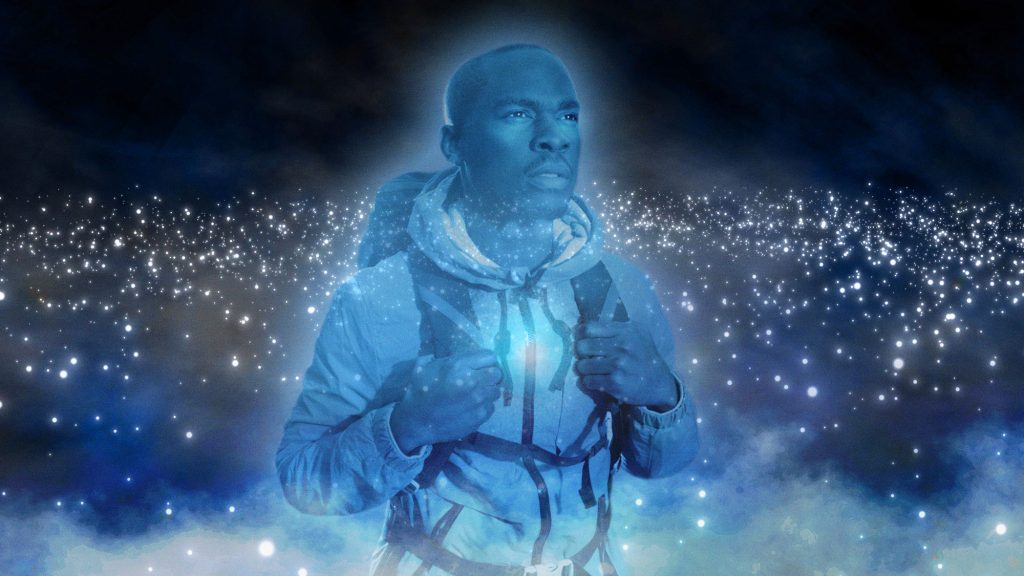
ASTRAL PLANE—Citing an increased desire to take some time for themselves before joining the great choir invisible, more souls are choosing to defer entrance to Heaven for a year in order to spend time backpacking through the spirit realm, according to a comprehensive interfaith report released Thursday. “I have my whole afterlife ahead of me to bask in the divine light of God, so I figure, hey, why not stop and spend some time exploring the celestial spheres?” said soul Greg Heinlen, one of thousands of incorporeal manifestations planning a gap year to enjoy the metaphysical realm’s most popular attractions. “I think it’s important to contemplate the cosmos at my leisure before I really commit to Heaven. Obviously, I want to drink from Lethe, the river of forgetfulness, and I want to surf the cosmic tides. And then, Purgatory—yes, it’s basically a tourist trap, but they have super cheap hostels, so I may as well check it out.” Heavenly officials have stressed that admission for all souls is subject to review and possible revocation if evidence comes to light of lewd pursuits during visits to Hell.
by Kittredge Cherry | Oct 12, 2020 (qspirit.net)

Two-spirit Native Americans are honored at Q Spirit for Indigenous Peoples’ Day (Oct 12, 2020). It is an alternative to the U.S. national holiday Columbus Day, which commemorates the arrival of European explorer Christopher Columbus in the Americas on Oct. 12, 1492.
Almost all Native American tribes traditionally recognized “two-spirit” people of non-binary or mixed gender. Sometimes they played a spiritual role. They appear as sacred figures in Native American rituals and myths.
Before Columbus arrived, most Native American societies valued people who blended male and female roles or characteristics. Their languages had words for third and sometimes even fourth genders. “Two spirit” is one of the many and varied Native American terms for alternative genders because one body housed both feminine and masculine spirits. Sometimes they served as spiritual guides who mediated between the realms of body and spirit, male and female. From a Western cultural viewpoint, the two-spirited people have been seen as lesbian, gay, bisexual, transgender (LGBT) or queer.
Contemporary artists have re-envisioned the freedom of two-spirit people before the Europeans arrived. In the image above, Wisconsin artist Ryan Grant Long includes an unknown Mayan couple enjoying a playful moment together in his series “Fairy Tales” series of same-sex love throughout history. For more info, see my article Artist paints history’s gay couples: Interview with Ryan Grant Long.
Two-spirit love in various indigenous cultures is depicted by Felix d’Eon, a Mexican Latinx painter and activist dedicated to the art of queer love, romance, and sensuality. For example, he paints a Dilbaa, a female-bodied person with a masculine essence in the Navajo (or Diné) system of four genders. The Navajo nation is in the southwestern United States.
“A Navaho Dilbaa, or Two Spirit Warrior, and his Bride” by Felix d’Eon
In the painting “Los Emberas,” d’Eon shows an embrace between a Were Pa (“false woman” or transwoman) and her male lover in the Emberá tribe from Colombia.
“Los Emberas” by Felix d’Eon
The original painting and prints of “Los Emberas” are available at Felix d’Eon’s Etsy shop. Additional paintings of queer two-spirit love in different communities in North and Central America are presented at the Corazon Mexica shop at Etsy, “imagining love and acceptance where too little exists today.”
“Muxe Ne Nadxii” (My Muxe Forever) by Felix d’Eon
Muxe is the third gender in the indigenous Zapotec culture of southern Mexico’s Oaxaca region. Muxes are usually people who were assigned male at birth and grew to identify as different genders, but others defy gender completely. D’Eon depicts their non-binary love in “Muxe Ne Nadxii” (My Muxe Forever).
“Xochipilli del Jade” by Felix d’Eon
Two-spirit people were not only accepted in many Native American societies, but also appear as sacred figures in Native American rituals and mythology. Xochipilli, the flower prince, is the Aztec god of two-spirit or queer people, as well as art, music, dance, games joy and beauty. Xochipilli is associated with gender-variance and same-sex eroticism while also being a fertility god. The Zuni have a two-spirit god called Ko’lhamana, and Hopi and Acoma-Laguna myths tell about a whole tribe of two-spirit people called the Storoka.
“Mahu” by Daniel Bissler
Artist Daniel Bissler painted “Mahu” as an homage to the third-gender people of Hawaii. Mahu play important spiritual and social roles in traditional Hawaiian culture. Mahu means “in the middle,” and Bissler chose pink, blue and white colors to evoke a gender between male and female. The moon forms a kind of off-center halo behind the head of the mahu.
Artist Brandon Buehring included several two-spirit groupings in his “Legendary Love: A Queer History Project.” In one sketch he portrays Warharmi, a “half-man, half-woman” and twins named Madkwahomai from the creaton myth of the Tipai tribe of the Kumeyaay people in California’s Imperial Valley.

“Warharmi and Madkwahomai” by Brandon Buehring
Buehring uses pencil sketches and essays “to remind queer people and our allies of our sacred birthright as healers, educators, truth-tellers, spiritual leaders, warriors and artists.” The project features 20 sketches of queer historical and mythological figures from many cultures around the world. He has a M.Ed. degree in counseling with an LGBT emphasis from North Carolina State University in Raleigh. He works in higher education administration as well as being a freelance illustrator based in Northampton, Massachusetts.
While Europeans were mostly hostile to two-spirit people among the Native Americans whom they converted to Christianity, a contemporary icon offers hope of reconciliation by showing holy same-sex love with both Christian and Native American imagery. John Giuliani’s “Jesus and the Beloved Disciple” shows Jesus and his male beloved in the native dress of the Aymara Indians, descendants of the Incas who still live in the Andean regions of Chile, Peru and Bolivia. Giuliani is an Italian-American artist and Catholic priest who is known for making Christian icons with Native American symbols. He studied icon painting under a master in the Russian Orthodox style, but chose to expand the concept of holiness to include Native Americans, the original inhabitants of the Americas.

“Jesus and the Beloved Disciple” by John Giuliani, 1996
An antidote and update to the terrifying historical images is provided by Kent Monkman, a Canadian artist of Cree ancestry whose work has strong queer and gay male imagery dealing with sexuality and Christianity. He decolonizes and reimagines grandiose 19th-century history paintings from a queer indigenous viewpoint. For example, in “A Wedding at Sodom” he shows a priest blessing the same-sex wedding of two men in the midst of a multi-racial brawl and celebration on the frontier of European settlement in the Wild West. It is based on how European trappers and traders gathered with indigenous people every spring in early 19th-century America for a raucous party and trading event called the Rendezvous.
The earliest known European depictions of Native Americans include two-spirit people. “Employments of the Hermaphrodites” is based on a watercolor made by Jacques Le Moyne de Morgues while exploring Florida in the 1560s. It illustrates his report that two-spirit people’s duties included caring for the sick and carrying the dead on stretchers.

“Employments of the Hermaphrodites,” engraving based on a watercolor by Jacques Le Moyne de Morgues (State Archives of Florida, Florida Memory)
George Catlin, famous artist who specialized in portraits of Native Americans in the Old West, sketched the “Dance to the Berdache” in the 19th century while on the Great Plains with the Sac and Fox Nation. He depicted a ceremonial dance to celebrate the Berdache, a European term for two-spirit people. But Catlin refused to give two-spirit people a place in his paintings of “traditional” Indian life.

“Dance to the Berdache” by George Catlin (Wikipedia)
Executions for homosexuality were common in Europe for centuries, and Europeans soon imported homophobic violence to the Americas. In perhaps earliest recorded example, the Spanish explorer Vasco Núñez de Balboa found homosexuality among the Native American chiefs in 1594 at Quarqua in Panama. He ordered 40 of these two-spirited people thrown to his war dogs to be torn apart and eaten alive to stop the “stinking abomination.”

Balboa executing two-spirit Native Americans for homosexuality in 1513 in Panama — engraving by Théodore De Bry, 1594 (Wikimedia Commons).
LGBTQ activists are reclaiming and honoring some the the queer people who were killed by colonists. Tibira do Maranhão, who is known as “the first indigenous gay martyr of Brazil,” was executed for sodomy by French missionaries in 1614. Contemporary LGBTQ activists are working to get Tibira canonized as a saint.
Despite the violence, some two-spirit individuals are still remembered in history and contemporary art. They include We’wha of Zuni and the Woman Chief known as Pine Leaf.
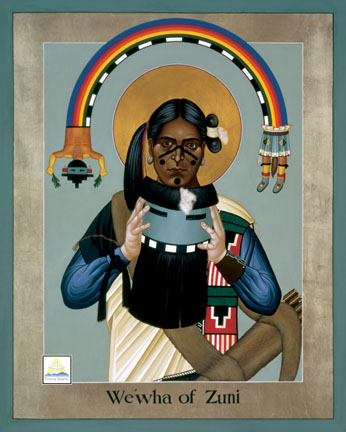
We’wha was a two-spirit Native American Zuni who served as a cultural ambassador for her people, including a visit with a U.S. president in 1886. We’wha (pronounced WAY-wah) was the most famous “lhamana,” the Zuni term for a male-bodied person who lived in part as a woman. Lhamanas chose to specialize in crafts instead of becoming warriors or hunters.
“We’wha of Zuni” by Robert Lentz. Prints of “We’wha of Zuni” are available through Amazon and at TrinityStores.com.
We’wha (1849-1896) was a skilled weaver and potter who helped Anglo-American scholars studying Zuni society. In 1886 We’wha traveled from her home in New Mexico to Washington DC, where she met president Grover Cleveland. She was welcomed as a celebrity during her six months in Washington. Everyone assumed that the 6-foot-tall “Indian princess” was female.
The spiritual side of We’wha is emphasized an icon by Brother Robert Lentz, is a Franciscan friar known for his innovative and LGBT-positive icons. She is dressed for a religious ceremony as she prepares to put on the sacred mask of the man-woman spirit Kolhamana. It is one of 10 Lentz icons that have sparked controversy since in 2005 when conservative Roman Catholic leaders accused Lentz of glorifying sin and creating propaganda for a progressive sociopolitical agenda with these “Images That Challenge.”

“We’wha” by Jim Ru
Jim Ru painted We’Wha with a dramatic blue background His icon was included in his show “Transcendent Faith: Gay, Lesbian and Transgendered Saints” in Bisbee Arizona in the 1990s.
Ru discusses We’Wha in a video.
We’wha is the subject of the book “The Zuni Man-Woman” by gay anthropologist Will Roscoe. He also wrote “Changing Ones: Third and Fourth Genders in Native North America” and “Jesus and the Shamanic Tradition of Same-Sex Love.” Roscoe’s website willsworld.org offers resources in the Native American two-spirit tradition, third genders in the ancient world, and studies in early Christianity.
“Woman Chief” is one of the names for the two-spirit tomboy born around 1800 to the Gros Ventre tribe. She was captured by the Crow nation when she was 10 and was so adept at hunting and warfare that she rose to become their chief.

“Biawacheeitche or Woman Chief aka Barcheeampe or Pine Leaf” by Ria Brodell
She is portrayed in the “Butch Heroes” series by genderqueer Boston artist Ria Brodell. The book version of “Butch Heroes” is available now. For more on Brodell’s work, see my article “Artist paints history’s butch heroes.”
Historical accounts say that she wore women’s clothes but had “all the style of a man and chief,” with “her guns, bows, lances, war horses, and even two or three young women as wives.”

“Pine Leaf, Indian Heroine” from “The Life and Adventures of James P. Beckwourth,” 1856 (Wikipedia)
She was killed in 1854 by the Gros Ventre tribe, but her story lived on in the popular memoirs of a freed slave and fur trader named James Beckwourth. He called her Pine Leaf because he refused his multiple marriage proposals by saying she would wed him “when the pine leaves turn yellow.” Later he figured out that pine leaves never turn yellow.
Two Spirit People at the Legacy Walk
Queer/trans/intersex indigenous history by Maya Gonzalez
___
Related book:
“Changing Ones: Third and Fourth Genders in Native North America” by Will Roscoe
___
Top image credit:
“Unknown Mayan Couple” by Ryan Grant Long
___
This post is part of the LGBTQ Calendar series by Kittredge Cherry. The series celebrates religious and spiritual holidays, events in LGBTQ history, holy days, feast days, festivals, anniversaries, liturgical seasons and other occasions of special interest to lesbian, gay, bisexual, transgender and queer people of faith and our allies.
This article was originally published on Q Spirit in October 2017 and was updated for accuracy and expanded with new material on Oct. 12,2020.
Copyright © Kittredge Cherry. All rights reserved.
Qspirit.net presents the Jesus in Love Blog on LGBTQ spirituality.

FollowKittredge CherryFounder at Q SpiritKittredge Cherry is a lesbian Christian author who writes regularly about LGBTQ spirituality.She holds degrees in religion, journalism and art history.She was ordained by Metropolitan Community Churches and served as its national ecumenical officer, advocating for LGBTQ rights at the National Council of Churches and World Council of Churches.
Latin might seem like an obscure, inscrutable language for naming plants. But it can open up the botanical world in ways you can’t imagine.

By Margaret Roach
The plants are trying to tell us something — if only we’d learn their official language, botanical Latin.
“I am the Allium with just one leaf,” says Allium unifolium. (Get it?)
“I am the juniper that carpets the ground,” says Juniperus horizontalis (whose alternate name, Juniperus prostrata, nails its appearance, too).
And Aster alpinus chimes in: “My ancestors hailed from above the timber line — you know, like, the Alps. I won’t appreciate some sodden, clayey spot in your garden.”
Not all plant names offer such easy clues about traits like appearance, preferred conditions or place of origin. It’s worth digging deeper, though, and I’m grateful to several formally trained old-school horticulturists, my first garden teachers, who used botanical Latin confidently.
Now, a recent book called “The Gardener’s Botanical: An Encyclopedia of Latin Plant Names” is nudging me to sharpen my skills. The author, Ross Bayton, earned his doctorate in plant taxonomy at the University of Reading and the Royal Botanic Gardens, Kew, in England, and is now the assistant director of the public Heronswood Garden in Kingston, Wash.

Dr. Bayton learned his first botanical Latin word around the age of 11, from his mother’s beloved sweet peas, Lathyrus odoratus, a plant she grew every year.
“I realized that odoratus meant fragrant, and then I saw that word on other plant labels in my own garden, like Viola odorata, Galium odoratum,” he recalled. “And that kicked it all off for me.”
In his garden, he then connected the dots of mollis, for soft (Acanthus mollis, Alchemilla mollis), and its opposite, spinosa, for spiny (Acanthus spinosus, Aralia spinosa). Now they join odoratus among the 5,000-plus entries in his illustrated dictionary.
Our proposal: A little botanical Latin self-study might make better use of some of your garden off-season hours than rewatching that TV series you already rewatched (although I may do that, too). A plant’s Latin name is the only way to know for certain what you’ll be getting when you buy plants in the spring, as common names vary by region — but you have to know how to decode some of the words.
Start with the plants in your garden, Dr. Bayton suggested, or even just learn to address your houseplants by their proper names.
This course delivers a bracing memory-fitness test, and a bit of a treasure hunt. Give in to the arcane, and be empowered: Get to know your plants, and the sometimes-nerdy snippets of the history of our human relationship with them, too.

And you won’t be tested on pronunciation.
“It’s not the language spoken on the streets of ancient Rome,” said Dr. Bayton of the naming system formalized in 1753 by Carl Linnaeus. “It’s based on that, but incorporates much ancient Greek and exists primarily as a written language.”
Gardeners on different continents pronounce Latin names in different ways. And while there may be an “official” way (as Dr. Bayton lists in the book), he added, “say them however you want, and most gardeners will understand you. And when searching for plant-care information online or in books, pronunciation is irrelevant.”
“Accuracy — knowing a plant’s correct name — is the key to finding out everything about it,” said Dr. Bayton, who offers the common name bluebell as one example of inaccuracy’s slippery slope.

How can we help you lead a better, more fulfilling life at home during the pandemic?Ask us a question or tell us what’s on your mind.
Which bluebell? The native Eastern wildflower Mertensia virginica or Hyacinthoides non-scripta, a bulb from Western Europe and England? The Campanula referred to as Scottish bluebell, or the Australian, Texas or California bluebells, each in a different genus?
Unlike common names, which can be shared by multiple plants and vary regionally, the Latin name is universal.
But even when we know the genus, let’s graduate beyond “my hydrangea” to the other word in the Latin binomial, the species name or specific epithet that modifies it. Let’s get to Hydrangea quercifolia (translation: the hydrangea whose leaves resemble those of an oak, oaks being genus Quercus), helping discern it from Hydrangea paniculata (whose leaves don’t).
“Hydrangeas are a big group, and they don’t all need the same treatment,” Dr. Bayton said. “If you want to know how to prune one, there are four distinct ways — so knowing it’s a hydrangea isn’t enough information.”
(Speaking of which, here’s a pop quiz, or a trick question: What’s the common name of the genus Hydrangea? Answer: There isn’t one. “What allows a name to skip over that botanical Latin barrier and not be feared?” Dr. Bayton said of the list of plants like this, which includes Magnolia, Rhododendron, Camellia, Iris, Fuchsia and Begonia. “A handful of iconic garden plants have names that are easy to pronounce and spell, and are so widely used that they’re devoid of dread.”)

Sometimes, imprecision can be not just inconvenient — the wrong plant ordered, a plant incorrectly pruned — but potentially dangerous, he said. Although Castanea (the true chestnut) and horse chestnuts (Aesculus) share that one key word in their common names and also some traits (both are deciduous trees bearing spiny fruits), they are not related, and the latter’s fruits, also called buckeyes, are poisonous.
Most Latin names are descriptive — sometimes vividly so. Toxicodendron (the genus of poison ivy, oak and sumac) and Urtica (stinging nettles; Urtica means “to burn”) spell danger: toxicity or the risk of urticaria, a skin rash.
A species name might reveal a slightly less terrifying trait, such as flower color. Yellow may be flavus or luteus, citrinus (lemon-colored) or aureus (gold). Silver is argenteus. Red is rubrum, as in the red maple (Acer rubrum); rosy-pink, roseus. Blue shades include azureus (sky) and darker caeruleus. Purple is purpureus. White is albus; black, nigrum (black pepper, Piper nigrum).
Native habitats might instead be called out by descriptors like sylvatica (of the woods) or palustris (marshland), maritima (seaside) or aquatica (in water).
Some plants speak of their geographic origins. Various Eastern North American natives bear the epithets canadensis or virginiana. But occasionally this backfires: Scilla peruviana doesn’t hail from Peru, although it did travel from its southwestern European or northwest African homeland on a ship named Peru, Dr. Bayton said, confusing the botanist who named it. The rules of botanical nomenclature say the oldest valid species name sticks, so it is peruviana evermore.
There is even the occasional anagram, where an existing genus name is remixed to form a new, botanically related one: Saruma is a cousin of the more familiar Asarum, like the native ground-cover ginger, Asarum canadense.
“Sometime taxonomists are just having fun with us,” Dr. Bayton said. “Like the one who named a cactus genus from Argentina Denmoza, because it comes from the province of Mendoza.”

A subset of plant names — both genus and species — are commemorative, honoring the explorer who discovered them, or perhaps the person who funded the mission during which they were found.
“There are plants named after politicians, after botanists, after botanist’s wives,” Dr. Bayton said. “So while the information contained in Latin names isn’t always directly helpful to the gardener, there are a lot of fascinating stories in it that explain how the world was explored and how plants were discovered.”
No surprise that they tilt heavily toward the European, where the system had its origins. Frequently honored collectors include the Scottish botanist David Douglas (the epithet douglasii, and also Douglasia, a genus of Western North American primrose relatives). The prolific British explorer Ernest Henry Wilson, who sent back thousands of plants from China, is noted by wilsonii (a Magnolia and a Picea among them), and Augustine Henry, an Irish plantsman, by henryi (including Lilium henryi).
Occasionally a local name was used, as with the Asian native plants Fatsia (from the Japanese for eight fingers, descriptive of the leaves’ lobes) and Kirengeshoma (for the Japanese words for yellow, lotus blossom and hat, describing its flowers). Catalpa sounds like botanical Latin, but it is actually an Indigenous North American name for a tree genus that includes two American species.
Women, too, are markedly underrepresented.
“A lot of both the men and, especially, women honored are aristocrats or royalty,” Dr. Bayton said. “But it’s considerably rarer to find a working woman so honored.”

Clivia was named for the Duchess of Northumberland, Charlotte Percy (nee Clive), the first person to bloom that South African plant brought back to England. The newly crowned Queen Victoria inspired an eponymous genus: Tropical waterlilies from the Amazon were named Victoria amazonica and put on display in the Crystal Palace in Hyde Park, London.
By contrast, Mathiasella, a plant Dr. Bayton included in the book and grows at Heronswood, honors Mildred E. Mathias, a California botanist who earned her doctorate in 1929 and in 1964 became the first woman president of the American Society of Plant Taxonomists. A botanical garden on the U.C.L.A. campus is also named for her.
So why not rename those that are not politically correct? The result would be taxonomic chaos.
“Today, I would rather not see plants named after some foreigner who came in and named them, when the plants were always known by the people who lived there,” Dr. Bayton said. “I am increasingly uncomfortable with that.”
With new introductions, he said, we should give them a local name, or just describe them with the chosen Latin name.
One that can help the gardener who eventually grows them.
For weekly email updates on residential real estate news, sign up here. Follow us on Twitter: @nytrealestate.A version of this article appears in print on Nov. 1, 2020, Section D, Page 5 of the New York edition with the headline: Learn a Classic Plant Language. Order Reprints | Today’s Paper | Subscribe
By Kenneth Boyd -Nov 5, 2019 (prindlepost.org)

CRISPR is in the news again! And, again, I don’t really know what’s going on.
Okay, so here’s what I think I know: CRISPR is a new-ish technology that allows scientists to edit DNA. I remember seeing in articles pictures of little scissors that are supposed to “cut out” the bad parts of strings of DNA, and perhaps even replace those bad parts with good parts. I don’t know how this is supposed to work. It was discovered sort of serendipitously when studying bacteria and how they fight off viruses, I think, and it all started with people in the yogurt industry. CRISPR is an acronym, but I don’t remember what it stands for. What I do know is that a lot of people are talking about it, and that people say it’s revolutionary.
I also know that while ethical worries abound – not only because of the general worries about the unknown side-effects of altering DNA, but because of concerns about people wanting to make things like designer babies – from what my news feed is telling me, there is reason to get really excited. As many, many, m–a–n–y news outlets have been reporting, there is a new study, published in Nature, that a new advance in CRISPR science means that we could correct or cure or generally get rid of 89% of genetic diseases. I’ve heard of Nature: that’s the journal that publishes only the best stuff.
I’ve also heard that people are so excited that Netflix is even making a miniseries about the discovery of CRISPR and the scientists working on it. The show, titled “Unnatural Selection” [sic], pops up on my Netflix page with the following description:
“From eradicating disease to selecting a child’s traits, gene editing gives humans the chance to hack biology. Meet the real people behind the science.”
In an interview about the miniseries, co-director Joe Egender described his motivation for making the show as follows:
“I come from the fiction side, and I was actually in the thick of developing a sci-fi story and was reading a lot of older sci-fi books and was doing some research and trying to update some of the science. And — I won’t ever forget — I was sitting on the subway reading an article when I first read that CRISPR existed and that we actually can edit the essence of life.”
89% of genetic diseases cured. Articles published in Nature and a new Netflix miniseries. Editing the essence of life. Are you excited yet???
So the point of this little vignette is not to draw attention to the potential ethical concerns surrounding gene-editing technology (if you’d like to read about that, you can do so here), but instead to highlight the kind of ignorance that myself and journalists are dealing with when it comes to reporting on new scientific discoveries. While I told you at the outset that I didn’t really know what was going on with CRISPR, I wasn’t exaggerating by much: I don’t have the kind of robust scientific background required to make sense of the content of the actual research. Here, for example, is the second sentence in the abstract of that new paper on CRISPR everyone is talking about:
“Here we describe prime editing, a versatile and precise genome editing method that directly writes new genetic information into a specified DNA site using a catalytically impaired Cas9 fused to an engineered reverse transcriptase, programmed with a prime editing guide RNA (pegRNA) that both specifies the target site and encodes the desired edit.”
Huh? Maybe I could come to understand what the above paragraph is saying, given enough time and effort. But I don’t have that kind of time. And besides, not all of us need to be scientists: leave the science to them, and I’ll worry about other things.
But this means that if I’m going to learn about the newest scientific discoveries then I need to rely on others to tell me about them. And this is where things can get tricky: the kind of hype surrounding new technologies like CRISPR means that you’ll get a lot of sensational headlines, ones that might border on the irresponsible.
Consider again the statement from the co-director of that new Netflix documentary, that he became interested in CRISPR after he read about how it can be used to “edit the essence of life.” It is unlikely that any scientist has ever made so bald a claim, and for good reason: it is not clear what it means for life to have an “essence”, nor that such a thing, if it exists, could be edited. The claim that this new scientific development could potentially cure up to 89% of genetic diseases is also something that makes an incredibly flashy headline, but again is much more tempered when it comes from the mouths of the actual scientists involved. The authors of the paper, for instance, state that the 89% number comes from the maximum number of genetic diseases that could, conceptually, be cured if the claims described in the paper were perfected. But that’s of course not saying much: many wonderful things could happen in perfect conditions, the question is how likely they are to exist. And, of course, the 89% claim also does not take into account any potential adverse effects of the current gene editing techniques (a worry that has been raised in past studies).
This is not to say that the new technology won’t pan out, or that it will definitely have adverse side effects, or anything like that. But it does suggest some worries we might have with this kind of hyped-up reaction to new scientific developments.
For instance, as someone who doesn’t know much about science, I necessarily rely on people who do in order to tell me what’s going on. But those who tend to be the ones telling me what’s going on – journalists, mostly – don’t seem to be much better off in terms of their ability to critically analyze the information they’re reporting on. We might wonder what kinds of responsibilities these journalists have to make sure that people like me are, in fact, getting an accurate portrayal of the state of the relevant developments.
Things like the Netflix documentary are even further removed from reality. Even though the documentary makers themselves do not make any specific claims as to understand the science involved, they clearly have an exaggerated view of what CRISPR technology is capable of. Creating a documentary following the lives of people who are capable of editing the “essence of life” will certainly give viewers a distorted view.
None of this is to say that you can’t be excited. But with great hype comes great responsibility to present information critically. When it comes to new developments in science, though, it often seems that this responsibility is not taken terribly seriously.
(DavidPond.com)
The week at a glance: All eyes are on the upcoming already highly contested election, which looks like it could be just as contested after the election as before! Mercury is stationary in the heavens on election day, changing from retrograde to direct—the last election occurring when Mercury was stationary was 2000 and the hanging chad debacle. Mercury is also squaring (challenged by) extremist Pluto, restrictive Saturn, and exaggerating Jupiter. To add to the mire, Mars, (the path for clear action) is still retrograde for two more weeks, adding to the confusion this day suggests for the election—dang!
The strength of democracy is based on one vote-one person, and the more people who vote, the clearer the outcome represents the true voice of the country. Fortunately, voter turnout is on track for this becoming the highest percentage of voters participating in the election process ever. Although the outcome may be delayed, the voice of the people won’t be denied—make sure your voice is heard with your vote.
We are at the tail end of the Saturn, Pluto, Jupiter conjunction in Capricorn we have been enduring all year. With the election occurring while the Capricorn influence is still dominant, it would first appear that the deck is stacked towards Trump. However, he is going through the most challenging astrology of his life, with Pluto, representing forces outside of his control (most notably the virus) opposing his Saturn and his ability to maintain control of his office. So although it is most often considered unwise by astrologers to predict the winner of elections because of not always being right, and invariably pissing some people off, none the less, this astrologer sees a highly contested, likely delayed, but ultimately not denied, Biden win.
Perhaps the best news is that the election will soon be over, and we can return to focusing on our lives—Ahhhh! A heads up for well-being in the meantime—if you find yourself in fear or dread of the outcome if your your candidate of choice doesn’t win, flip it—send positive energy to your candidate, imagining the good that can come with the win—you will feel better and add collective support in consciousness for your ideals.
Monday: This day favors lively conversations and enjoyable interaction with others with the Moon in communicative Gemini and in harmony to Venus (relationships). Allow delightful distractions and serendipity to enhance your day.
Tuesday: Mercury, the mind, is stationary today, changing from retrograde to direct, with the promise of improving conditions for communication and the flow of life progressing more smoothly. The Moon in Gemini fuels an interest to stay informed, but a square to Neptune clouds clarity. Just as Mercury is standing still, this is a good day to stand still and just watch—after remembering to vote!
Wednesday: The Moon is in mentally active Gemini in harmony to Mercury, enhancing communication, learning, and teaching. The Moon moves into nurturing Cancer this afternoon, fueling a desire to pull back from the world and nurture your personal life.
Thursday: Mixed blessings are in the heavens today with the Moon Cancer being supported by the Sun and Uranus finding unique opportunities for self-nurturing. However, with agitating aspects to Venus and Mars, relationships with others can get testy. To avoid difficulties with others, this is a day to tend stay within yourself and tend to your own business.
Friday: Discipline yourself to stay away from negative thinking today, while Mercury is being challenged by daunting Saturn, leading to a tendency to look through the glass darkly. With the Moon in Cancer opposite the Capricorn planets throughout the day, you may just want to pull into your shell and seal off from all that is going on in the world—probably a good idea.
Saturday: Plan on time for some fun and recreation, maybe even something wildly outside of the box, to take advantage of the Moon in fun-loving Leo and being being prodded by unconventional Uranus. A good creed to navigate this day is knowing you will be able to have as much freedom in your life as you are willing to give to others
Sunday: The Moon in dynamic Leo being supported by assertive Mars is good for fitness training and self-directed recreational activities. With a square to the Sun in Scorpio, a fun day can get marred by a tendency to get too set in your ways—the heads up being, staying out of resistance can lead to a great day—let it be.
(Courtesy of Gwyllm Llwydd.)