John Steinbeck on Good and Evil, the Necessary Contradictions of the Human Nature, and Our Grounds for Lucid Hope

By Maria Popova (brainpickings.org)

There are events in our personal lives and our collective history that seem categorically irredeemable, moments in which the grounds for gratefulness and hope have sunk so far below the sea level of sorrow that we have ceased to believe they exist. But we have within us the consecrating capacity to rise above those moments and behold the bigger picture in all of its complexity, complementarity, and temporal sweep, and to find in what we see not illusory consolation but the truest comfort there is: that of perspective.

John Steinbeck (February 27, 1902–December 20, 1968) embodies this difficult, transcendent willingness in an extraordinary letter to his friend Pascal Covici — who would soon become his literary fairy godfather of sorts — penned on the first day of 1941, as World War II was raging and engulfing humanity in unbearable darkness. Found in Steinbeck: A Life in Letters (public library) — which also gave us the beloved writer on the difficult art of the friend breakup, his comical account of a dog-induced “computer crash” decades before computers, and his timeless advice on falling in love — the letter stands as a timeless testament to the consolatory power of rehabilitating nuance, making room for fertile contradiction, and taking a wider perspective.johnsteinbeck.jpg?zoom=2&w=680

John Steinbeck

Steinbeck writes on January 1, 1941:

2e292385-dc1c-4cfe-b95e-845f6f98c2ec.pngSpeaking of the happy new year, I wonder if any year ever had less chance of being happy. It’s as though the whole race were indulging in a kind of species introversion — as though we looked inward on our neuroses. And the thing we see isn’t very pretty… So we go into this happy new year, knowing that our species has learned nothing, can, as a race, learn nothing — that the experience of ten thousand years has made no impression on the instincts of the million years that preceded.

But Steinbeck, who devoted his life to defending the disenfranchised and celebrating the highest potentiality of the human spirit, refuses to succumb to what Rebecca Solnit has so aptly termed the “despair, defeatism, cynicism[,] amnesia and assumptions” to which we reflexively resort in maladaptive self-defense against overwhelming evil. Instead, fifteen centuries after Plato’s brilliant charioteer metaphor for good and evil, Steinbeck quickly adds a perceptive note on the indelible duality of human nature and the cyclical character of the civilizational continuity we call history:

2e292385-dc1c-4cfe-b95e-845f6f98c2ec.pngNot that I have lost any hope. All the goodness and the heroisms will rise up again, then be cut down again and rise up. It isn’t that the evil thing wins — it never will — but that it doesn’t die. I don’t know why we should expect it to. It seems fairly obvious that two sides of a mirror are required before one has a mirror, that two forces are necessary in man before he is man. I asked [the influential microbiologist] Paul de Kruif once if he would like to cure all disease and he said yes. Then I suggested that the man he loved and wanted to cure was a product of all his filth and disease and meanness, his hunger and cruelty. Cure those and you would have not man but an entirely new species you wouldn’t recognize and probably wouldn’t like.

Steinbeck’s point is subtle enough to be mistaken for moral relativism, but is in fact quite the opposite — he suggests that our human foibles don’t negate our goodness or our desire for betterment but, rather, provide both the fuel for it and the yardstick by which we measure our moral progress.

He wrests out this inevitable interplay of order and chaos the mortal flaw of the Nazi regime and the grounds for hope toward surviving the atrocity of WWII, which, lest we forget, much of the world feared was unsurvivable in toto:

2e292385-dc1c-4cfe-b95e-845f6f98c2ec.pngIt is interesting to watch the German efficiency, which, from the logic of the machine is efficient but which (I suspect) from the mechanics of the human species is suicidal. Certainly man thrives best (or has at least) in a state of semi-anarchy. Then he has been strong, inventive, reliant, moving. But cage him with rules, feed him and make him healthy and I think he will die as surely as a caged wolf dies. I should not be surprised to see a cared for, thought for, planned for nation disintegrate, while a ragged, hungry, lustful nation survived. Surely no great all-encompassing plan has ever succeeded.

Mercifully, Steinbeck was right — the Nazis’ grim world domination plan ultimately failed, humanity as a whole survived these unforgivable crimes against it (though we continually fail to sufficiently reflect upon them), and we commenced another revolution around the cycle of construction and destruction, creating great art and writing great literature and making great scientific discoveries, all the while carrying our parallel capacities for good and evil along for the ride, as we are bound to always do.

So when we witness evil punctuate the line of our moral and humanitarian progress, as we periodically do, may we remember, even within the most difficult moments of that periodicity, Steinbeck’s sobering perspective and lucid faith in the human spirit.

Complement this particular fragment of the wholly magnificent Steinbeck: A Life in Letters with Albert Camus on strength of character amid difficulty, Hannah Arendt on how we humanize each other, Joseph Brodsky on the greatest antidote to evil, Toni Morrison on the artist’s task in troubled times, and Rebecca Solnit on our grounds for hope in the dark.
Mandelbrot Fractal Zoom

Link to an explanation of the Mandelbrot Set: https://en.wikipedia.org/wiki/Mandelbrot_set

A Mandelbrot Zoom simply zooms into a tiny piece of the Mandelbrot Set. Theoretically, one could zoom into any part of the Mandelbrot and continue to find self-similar-but-not-exact fractal-math flora, infinitely. With a powerful enough computer and a few months time, one can create the YouTube Mandelbrot Zoom as shown here in HD:

Were Washington, Lincoln and King George Bipolar?

FEB. 17, 2017 (nami.org) National Alliance on Mental Illness

By Bob Carolla

Does mental illness give strength and insight? Is the effect different from other illnesses? It’s a timely topic as Presidents’ Day approaches, honoring George Washington and Abraham Lincoln. 

Lincoln’s experience with depression is well-documented (the best book on the topic is Lincoln’s Melancholy: How Depression Challenged a President and Fueled His Greatness by Joshua Shenk). It gave him the ability to see beyond the terrible bloodshed of the Civil War to a future of recovery for the nation. 

In 2015, the AMC cable channel produced “Turn: Washington’s Spies,” a “historical drama” (i.e., historical fiction) that portrayed Washington having “a mental breakdown” during the winter of 1777-78 when his troops were camped at Valley Forge—with over 2,000 dying of exposure or disease. The portrayal included hallucinations and ravings. Historians soundly rebutted the AMC portrayal—no evidence exists to support it. 

However, Washington battled diseases such as smallpox, tuberculosis and malaria throughout his life. In “The Health of the President: George Washington,” published in HealthGuidance.org, Dr. Rudolph Marx points out that illness and disability can help shape courage and determination. In this respect, a kind of “parity” exists between Washington’s physical illnesses and Lincoln’s mental illness. In both cases, challenges to their health helped produce the strength and insight to persevere and become two of the greatest—if not the greatest—leaders in American history. 

A King with Bipolar Disorder  

The recent release of archival documents of Great Britain’s King George III—who lost the American colonies to Washington’s leadership—provides additional perspective to this topic. 

King George III ruled for 60 years off and on. After the loss of the American colonies, his mind and abilities began to deteriorate—not all at once, but in recurring fashion. Historically, he has been tagged with the stigmatizing title of “The Mad King.” Today, historians believe he lived with bipolar disorder, which appeared after the American revolution. Loss of the colonies may very well have been the “trigger” for onset of his condition. 

Recently, Queen Elizabeth released more than 30,000 documents about King George III from the royal archives (Many more are still to come). People magazine reported that they show a worsening of his handwriting over time; doctors can also identify descriptions of manic behavior. Ultimately, his illness took over permanently—he went into seclusion to Windsor Castle while his son, the Prince of Wales, took over his duties. 

During periods of recovery, King George III was nonetheless popular with the people. Like Lincoln, his personal experience with mental illness may have deepened his insight and compassion. People applauded when in 1786 and 1790, he showed mercy to a woman and man (respectively) who, experiencing delusions, attempted to assassinate him. Instead of being put to death or imprisoned for treason, they were committed to an asylum. As a result, Great Britain eventually adopted “not guilty by reason of insanity” as a formal provision in its body of criminal law.

What’s the lesson here? It’s that mental illness doesn’t discriminate. It can affect presidents and kings. And just like physical illnesses—such as those experienced by Washington—it can shape qualities that contribute to triumph. At the same time, as in the case of King George III, it may also sadly lead to tragedy. 

It’s a lesson worth thinking about. 

Book: “The End of Mental Illness”

The End of Mental Illness: How Neuroscience Is Transforming Psychiatry and Helping Prevent or Reverse Mood and Anxiety Disorders, ADHD, Addictions, PTSD, Psychosis, Personality Disorders, and More

The End of Mental Illness: How Neuroscience Is Transforming Psychiatry and Helping Prevent or Reverse Mood and Anxiety Disorders, ADHD, Addictions, PTSD, Psychosis, Personality Disorders, and More

by Daniel G. Amen 

New hope for those suffering from conditions like depression, anxiety, bipolar disorder, addictions, PTSD, ADHD and more. Though incidence of these conditions is skyrocketing, for the past four decades standard treatment hasn’t much changed, and success rates in treating them have barely improved, either. Meanwhile, the stigma of the “mental illness” label–damaging and devastating on its own–can often prevent sufferers from getting the help they need.

Brain specialist and bestselling author Dr. Daniel Amen is on the forefront of a new movement within medicine and related disciplines that aims to change all that. In The End of Mental Illness, Dr. Amen draws on the latest findings of neuroscience to challenge an outdated psychiatric paradigm and help readers take control and improve the health of their own brain, minimizing or reversing conditions that may be preventing them from living a full and emotionally healthy life.

The End of Mental Illness will help you discover:

Why labeling someone as having a “mental illness” is not only inaccurate but harmful.

Why standard treatment may not have helped you or a loved one–and why diagnosing and treating you based on your symptoms alone so often misses the true cause of those symptoms and results in poor outcomes
At least 100 simple things you can do yourself to heal your brain and prevent or reverse the problems that are making you feel sad, mad, or bad

How to identify your “brain type” and what you can do to optimize your particular type

Where to find the kind of health provider who understands and uses the new paradigm of brain health

(Goodreads.com)

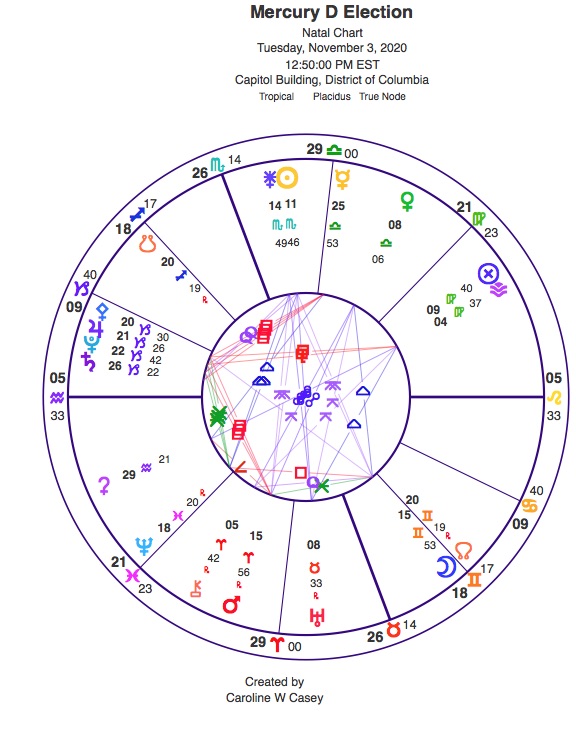
Election Day Advice

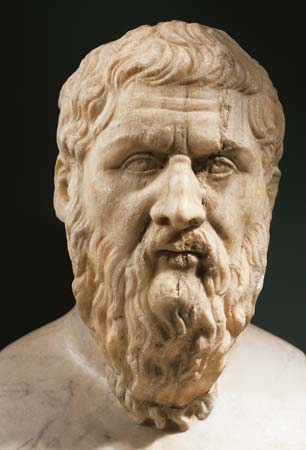
Plato

All things are our relatives; what we do to everything, we do to ourselves. All is really One.
–Black Elk

The emergence and blossoming of understanding, love, and intelligence has nothing to do with any tradition, no matter how ancient or impressive-it has nothing to do with time. It happens on its own when a human being questions, wonders, inquires, listens, and looks without getting stuck in fear, pleasure, and pain. When self-concern is quiet, in abeyance, heaven and earth are open.
–Toni Packer

The basis of Sufism is consideration of the hearts and feelings of others. If you haven’t the will to gladden someone’s heart, then at least beware lest you hurt someone’s heart, for on our path, no sin exists but this.
–Javad Nurbakhsh

May I do to others as I would that they should do unto me.
–Plato

Ahimsa is the highest duty. Even if we cannot practice it in full, we must try to understand its spirit and refrain as far as is humanly possible from violence.
–Mahatma Gandhi

(Contributed by Gwyllm Llwydd.)

Remember . . .

“When I despair, I remember that all through history the way of truth and love have always won. There have been tyrants and murderers, and for a time, they can seem invincible, but in the end, they always fall.

Think of it – always.”

– Mahatma Gandhi

Gandhi_2968255k.jpg

(Contributed by Gwyllm Llwydd.)