Long ago, in lands that were always warm, people got ice from the heavens.
At sunset, they poured water into shallow earthen pits or ceramic trays insulated with reeds. All through the night the water would radiate its heat into the chilly void of space. By morning, it turned to ice — even though the air temperature never dropped below freezing.
For centuries, desert dwellers in North Africa, India and Iran tapped into a law of physics called radiative cooling. All objects — people, plants, buildings, planets — give off heat in waves of invisible light. On a clear, starry night, that radiation can rise through the atmosphere until it escapes Earth entirely. Coldness, which is really the absence of heat, is created through this invisible connection to the cosmos.
To break that cycle, University of California at Los Angeles materials scientist Aaswath Raman wants to turn ancient technology into a 21st-century tool.Justin Andres, left, and Danny Laporte apply a protective layer of film containing copper and silver on SkyCool panels at Grocery Outlet in Stockton, Calif., on Oct. 5. (Sarahbeth Maney for The Washington Post)
Working with colleagues, he has developed a thin, mirror-like film engineered to maximize radiative cooling on a molecular level. The film sends heat into space while absorbing almost no radiation, lowering the temperature of objects by more than 10 degrees, even in the midday sun. It can help cool pipes and panels — like a booster rocket for refrigerators and cooling systems. Incorporated into buildings, it may even replace air conditioning. And it requires no electricity, no special fuel — just a clear day and a view of the sky.
“It sounds improbable,” Raman acknowledged. “But the science is real.”
Generations after people learned to make ice in the desert, he hopes that same science can help us survive in a rapidly warming world.SkyCool panels send heat to the sky and pull down cooling from space. They’re used to help keep refrigerators cool, reducing the amount of electricity they need, at Grocery Outlet in Stockton, Calif. (Sarahbeth Maney for The Washington Post)
Growing up in Alberta, Canada, where his father worked in the oil industry, Raman had an up-close view of the problem confronting the planet. Though the burning of fossil fuels is driving dangerous changes in the global climate, it also powers most of modern society.
Aaswath Raman (Oszie Tarula/UCLA)
“I had no illusions about being able to solve it immediately,” Raman said. “I understood how huge the energy industry is, and if you want to really displace it, anything that came after it would have to be just as big.”
He went to college to study astronomy, but an interest in solar panels led him to photonics, the study of light. Much like astronomy, photonics allowed him to explore the fundamental workings of the universe. At the same time, he hoped it might lead to discoveries that improved conditions on Earth.
In 2012, as he neared the end of his doctoral studies at Stanford University, he stumbled upon a reference to radiative cooling in an academic journal. Intrigued, he dug up whatever research on the phenomenon he could find.
Examples of radiative cooling after dark, also called night sky cooling, were everywhere. Raman uncovered century-old descriptions of the ancient ice-making practice and case studies from the 1970s describing efforts to cool buildings with rooftop pools (most efforts were abandoned when the pools became too difficult to maintain). He witnessed the phenomenon in his own life; it’s the reason frost can form on clear nights when the temperature stays above 32 degrees Fahrenheit.
And in climate change, he saw evidence of what happens when radiative cooling is disrupted. Earth also sends heat into space — that’s how it balances incoming energy from the sun. But the greenhouse gases created by human activities block infrared radiation, trapping it in the atmosphere. The planet is more than 1 degree Celsius (1.8 degrees Fahrenheit) warmer than in the preindustrial era, a shift that has worsened wildfires, intensified hurricanes and altered ecosystems across the world. United Nations scientists say humanity must reduce emissions by 7 percent a year to avoid still more catastrophic effects.
Yet radiative cooling has rarely been discussed as a potential tool for climate action, Raman said. Most researchers saw the phenomenon as an interesting physical fact with few practical applications. The reason: It is only measurable at night, when objects are emitting heat but not receiving any in return. Come morning, energy from the sun cancels out any cooling effect.
“Every paper made some kind of statement to the effect of, ‘Well, it’s usefulness is kind of limited because … you most need cooling during the day,’ ” Raman said. “Then I thought, well, why can’t we make this work during the day?”
The trick was to develop a material so perfectly reflective it absorbed almost no energy, even when exposed to full sunlight. On top of that, Raman wanted to maximize the amount of radiation the film sent into space.
So he found a loophole in the greenhouse effect.Eli Goldstein, SkyCool’s CEO and co-founder, works on the Grocery Outlet project. (Sarahbeth Maney for The Washington Post)
A brief physics lesson: Though we often think of them as separate phenomena, the light that we see and the radiant heat we feel are just different kinds of electromagnetic wave. Visible light comes in an array of wavelengths, from short violet to long red. Thermal radiation typically spans a range of longer wavelengths in the infrared part of the spectrum.
Earth’s atmosphere blocks some outgoing infrared radiation — and it’s blocking even more now that it’s chock full of carbon. But there are “windows” that electromagnetic waves of just the right length can slip through. Somehow, Raman would have to find a way to get objects to emit only radiation that fit through those windows.
With colleagues in Stanford’s engineering department, led by professor Shanhui Fan, he began crafting a film from many microscopic layers. The thickness and composition of these layers were designed to interfere with the way different wavelengths of light travel. Incoming solar radiation would rebound right back into space. Outgoing thermal radiation would bounce around between the layers, like a pinball in a machine; only the desired infrared wavelengths would be able to escape.
Chris Atkinson was program director for Advanced Research Projects Agency — Energy, a division within the U.S. Energy Department, which funded Raman’s early work. When he first heard about the experiment, “my initial response was, if this was so good, why hadn’t it been done before?” he recalled.
But Raman and his colleagues had something their predecessors lacked: modern nanotechnology. They could manipulate their materials, molecule by molecule, until it behaved exactly how they wanted.
“I was struck by the elegance and simplicity of it,” said Atkinson, now a professor of mechanical engineering at Ohio State University. “The fact that you can get something for nothing is remarkable, especially in the energy realm.”
In a few years the Stanford group had its first prototype. Placed outside in the hot California sun, it felt cold to the touch. It was a giddy, counterintuitive sensation, even to Raman.
Yet even after he convinced himself that daytime radiative cooling was possible, it wasn’t until a trip to visit his grandmother in Mumbai that Raman started to see how it could also be useful.
A growing number of homes in Mumbai had air conditioners in their windows, something he rarely saw during childhood visits. That’s an unqualified victory for people’s health, Raman said; exposure to extreme heat can lead to a range of illnesses, from respiratory illness to psychological distress.
But as demand for air conditioning grows, so too will its environmental impact. The hydrofluorocarbons used as coolants and the fossil fuels burned to power the appliances are major contributors to global climate change, associated with about 7 percent of all greenhouse gas emissions. By 2050, when the demand for air conditioning is expected to triple, cooling could become one of world’s top sources of planet-warming gases.
“We kind of realized there was a huge problem and a huge opportunity,” Raman said, “and that this technology, if we developed it correctly, could be a really meaningful solution.”
That realization gave him more parameters for his cooling material. It had to be cheap, so it would be accessible to people of all income levels. It had to be able to integrate into existing air-conditioning systems. As they continued to tinker with the technology, Raman and his collaborators set up a company, SkyCool Systems, to help bring it into the world.
The company produces SkyCool panels that can be incorporated into existing cooling systems. Water running through the panels is chilled by the film, then transported into the air-conditioning system, where it lowers the temperature of the refrigerant. This reduces the amount of electricity needed to turn hot air into cold.The SkyCool panels lowered Grocery Outlet’s electric bill by about $3,000 over the course of the summer, store manager Jesus Valenzuela said. (Sarahbeth Maney for The Washington Post)
It wasn’t difficult to convince Jesus Valenzuela, store manager at the Stockton, Calif., Grocery Outlet, to test the technology. Between the deli case, the dairy aisle, the freezer section and all the backroom storage, cooling alone cost him more than $100,000 a year. On top of that, the California native was worried by the disasters climate change had already wrought on his state.
An offer from Lime Energy to pay the installation fee sealed the deal. If the film worked, Valenzuela would only owe SkyCool Systems the savings from his electricity bill for the first two years.
The panels were installed this spring. Though Eli Goldstein, SkyCool’s co-founder and CEO, explained the technology to him, he didn’t quite get how the coldness of space could help chill chicken cutlets and freezer pizza.
“There’s a lot of technical things I don’t know about,” he said. But that didn’t matter: The SkyCool panels had lowered his electric bill by about $3,000 over the course of the summer, he said.
“All I know,” Valenzuela said, “is that it’s saving me money.”
LEFT: The SkyCool technology could provide a “meaningful solution” to the growing demand for air conditioning and its environmental impacts. (Sarahbeth Maney for The Washington Post) RIGHT: Danny Laporte replaces a protective layer of film. (Sarahbeth Maney for The Washington Post)
The SkyCool technology still needs to be refined, Atkinson said, and it must become significantly cheaper before it can be deployed widely. But the big scientific hurdle has been surmounted, he said. The rest is mostly business.
Meanwhile, Goldstein, Raman and their colleagues are working on further applications of the film. With a grant from the California Energy Commission, they have contracted with the California State University System to replace all the air conditioners in a school building — hoping to cool the entire structure with just the sky. In May, Raman published a journal article on the possibility of modifying off-the-shelf paints to enhance radiative cooling; if it works, building owners could simply paint their roofs to make the structures significantly cooler.
Raman has even researched the possibility of using radiative cooling to create light. In a study last year in the journal Joule, he demonstrated how cooling one side of a thermoelectric generator while keeping the other at air temperature could create a temperature gradient that, when converted into electricity, could power a lightbulb.
Each demonstration of radiative cooling’s power fosters in Raman a sense of kinship with the ice makers of long ago. He imagines them experimenting night after night, using trial and error to perfect their technique — the same scientific process Raman uses today.
In a rapidly changing world, it’s a reminder of what remains the same, he said: The laws of physics. The needs of people. The power of science to explain the workings of the planet and improve the lives of everyone who lives on it.
Correction: An earlier version of this story misidentified the company that paid for the SkyCool installation at the Grocery Outlet in Stockton. It is Lime Energy.
The School of LifeThe School of Life We are masters at knowing how to lie to ourselves. We pay a heavy price for this self-deception. If you like our films, take a look at our shop (we ship worldwide): https://goo.gl/I4iYme Join our exclusive mailing list: http://bit.ly/2e0TQNJ Or visit us in person at our London HQ https://goo.gl/7kr6zc FURTHER READING “Truly good people are always ready and even, at times, highly enthusiastic about telling lies. This sounds odd only because we are in the grip of a heroic but indiscriminate and delusional addiction to truth-telling…” You can read more on this and other topics on our blog TheBookofLife.org at this link: https://goo.gl/NKnY0I MORE SCHOOL OF LIFE Our website has classes, articles and products to help you think and grow: https://goo.gl/ucpGXn Watch more films on SELF in our playlist: http://bit.ly/TSOLself Do you speak a different language to English? Did you know you can submit Subtitles on all of our videos on YouTube? For instructions how to do this click here: https://goo.gl/981TBx SOCIAL MEDIA Feel free to follow us at the links below: Facebook: https://www.facebook.com/theschoolofl… Twitter: https://twitter.com/TheSchoolOfLife Instagram: https://www.instagram.com/theschoolof… CREDITS Produced in collaboration with: Nick Hilditch http://nickhilditch.com/wordpress/#TheSchoolOfLife
When Donald Trump steals our democracy, will Americans fight to save it? In Episode 7, Dr. Steven Reisner argues that if America is to be saved—if America is worth saving—Americans must reconnect with the emotion that psychoanalysts (and biblical prophets) believe is necessary for social change: shame.
I am coming to you today from St-Thomas-de-Conac, where I sought refuge from the American COVID Pandemic. But what I have discovered, in my exile, is that, even though I have lived my entire life in one place – New York City – exile is part of my DNA. I am the child of Jewish refugees who spent most of their lives in exile; When the Nazis attacked Warsaw, my father escaped into the Soviet Union, and five years later, when the Soviets advanced into Poland, he escaped from the Soviet Union, back into Poland, only to find Warsaw utterly destroyed.
My mother was sent from ghetto to ghetto and ultimately to Auschwitz. In the final days of the war, with the Soviet army approaching and the Nazis discovering they couldn’t kill Jews fast enough, she was one of a few thousand women prisoners sent on what is now referred to as a death march, to Germany. She escaped that march only to find her home also destroyed. She met my father soon afterward and together they escaped the pogroms in post-war Poland into Czechoslovakia, and then from Czechoslovakia into American Occupied Germany. Finally, eleven years after the start of the war, they arrived, on a military transport of Jewish refugees, in New York City.
New York City, where I was born, is a place where exiles come to be with other exiles. Everyone in New York is a refugee of one sort or another, whether as a result of immigration or of the great migration – everyone is in exile together. And I have taken exile even a step further. I have made exile my profession – because, honestly, that’s the psychoanalyst’s position – we are trained to look at the most important experiences in life from the outside. Intimate, but distant, offering patients a refuge because, in a sense, we are outsiders together.
And for the past six months I have been observing America from this little French village of about 500 people; a village where people have lived continuously for over a thousand years, where the church was built in the 11th century; where the house I am living in was built before the American revolution, and where the village itself was named for a skeptical apostle, doubting Thomas, who stood apart from the other apostles and poked his finger into Jesus’ wounds, to see what the truth really was.
So today, in the spirit of St. Thomas of Conac, I am going to poke my finger in America’s wounds, not because I doubt that they are real, they are real enough, but because I am skeptical of the way Americans have been responding to those wounds. Racism, COVID, poverty, the climate emergency – each is the cause of increasingly real and terrible suffering. But I fear that Americans have lost the ability to suffer in the true sense of the word. To suffer, etymologically and biblically, means to bear, to tolerate, to endure.
Americans do not suffer, we become traumatized. And, aided by psychologists and capitalists, Americans have come to believe that if we’ve been traumatized, it means we have been wronged, someone must be blamed, and someone owes it to us to make it right.
James Baldwin, writing from his own exile in France, put it this way: “Birth, suffering, love, and death are extreme states—extreme, universal, and inescapable. We all know this, but we would rather not know it.”
Capitalism helps us not know it. And how much effort Americans are willing to expend in order to not know suffering! That is the secret of why Americans do not vote in their own interest. Americans it seems will tolerate endless political corruption and corporate deception and personal debt, so long as we can continue to fool ourselves into believing that we live in a world where birth is not painful, love is not frightening, death is not inevitable and suffering can be undone by someone else’s suffering.
Suffering to avoid suffering? Sounds like MADNESS.
As I watch America from exile, the country is burning, people are fleeing and choking and dying – not only from the explosive fires in the West, but increasingly on the streets where police, Federal law enforcement and a few extremists seem to be working to stoke the embers of tribal hatred into full conflagrations of violence. Cars run over protesters, shots are being fired as groups of demonstrators taunt one another, and last week I watched footage of a man shooting point blank into a police car. And then more footage of a small group of bizarre protesters spewing venomous hatred near the hospital where the officers were being treated. The Sheriff took to social media to mobilize outrage, and the press amplified his words: Protesters were described as BLM; they weren’t. As endangering the lives of the hospitalized officers; they weren’t, and saying hateful things about the police, which they were.
Increasingly, this is what America looks like from exile: a country where the only acceptable emotions are hate and rage and selfishness. Trump calleds suspects “animals” and when police shoot them down in the streets, he calls it retribution, and takes credit for it. On social media, in the news, and in political discourse – rage: rage against antifa or BLM on one side, against the homeless housed in NYC hotels or politicians wanting to open schools, on the other.
This frightens me, because we are facing a very real threat to Democracy in the coming weeks. And if there’s one thing history has taught us, it is that rage can destroy democracy, but rage will not restore democracy. Rage is a tool of the right, because in America the right has always been armed, and ready to shoot, and backed by the government. Rage on the right is an end in itself – an expression of hatred of the left. On the left, rage is aimed in every direction, including at others on the left, and more and more, the rage is turning to violence. And it leaves the earth burning and scorched, like the fires in California, our days today are reminiscent of the prophecies of the old testament. Like this one, from the Prophet Amos:
“Listen, you who devour the needy and annihilate the poor … Shall not the earth shake for this? I will make the sun set at noon. I will darken the earth on a sunny day.”
Amos, Isaiah, all of the biblical prophets had basically one aim: to provoke the human response that is necessary, if we are to take responsibility for suffering and mobilize to alleviate it. But the emotion that guides us in desperate times, is in short supply in today’s America, even when democracy is burning and the sun is blotted out at noontime. That emotion is shame.
Shame – which according to prophets and psychoanalysts alike, is the foundation of civilization.
Primo Levi, writing about his liberation from Auschwitz, described the response of the Soviet soldiers looking for the first time upon the survivors:
They did not greet us, nor smile: they seemed oppressed, not only by pity but also by a confused restraint which sealed their mouths, and kept their eyes fastened on the funereal scene. It was the same shame which we knew so well, which submerged us after the selections, and every time we had to witness or undergo an outrage; the shame that the Germans never knew, the shame which the just man experiences when confronted by a crime committed by another, and he feels remorse because of its existence, because of its having been irrevocably introduced into the world of existing things, and because his will has proven nonexistent or feeble… incapable of putting up a good defense.
Shame is instant and visceral; we react to it even before our minds can process it. It is that vague or overwhelming internal sense that we have participated in something wrong. Shame is the first emotion that’s directed to ourselves, even if it is experienced in the presence of another, and our character develops under its influence. For the infant or child, it arises at the moment it discovers that its desire conflicts with its mother or parent’s desire. The infant is hungry and bites; the child wants to be naked in polite company. It’s not just a clash of desire, it’s what Freud calls, a fear of the loss of love. A fear of the loss of being welcome in the world that is good and safe and will feed you and clothe you and protect you.
Adam and Eve were ashamed because they acted on their desire to bite the apple only to discover that they were naked in the polite company of God. Expelled from the garden, human beings have tried ever since to learn the moral standards they must follow to be allowed back in.
Children are born helpless and dependent on their mothers, and simultaneously they are born primed to trust that their mother will care for them. And this is right, because, mothers are naturally inclined to care for their helpless babies. This is what led Freud to conclude that “the original helplessness of human beings is the primal source of all morality.” And not only morality, it’s also the of love, the love of giving and receiving care. And so when mother or father or God flinches in response to our desire, when our desire conflicts with their desire, we feel shame, and we are eager to learn the mysterious code of goodness that we have violated. Since they only want what is best for us, what have we done wrong?
I would say that it is because of this universal, primal shame that philosophers and theologians throughout history have worked to identify a universal code of goodness. And we fid the results of their search in religious texts, philosophical texts, in political documents – the rights of man, the declaration of independence, and it seems that over the centuries, our best minds have come to a consensus.
It comes down to a rather simple concept: and that is the idea that we have a moral obligation to welcome children into the world with love and thereafter to treat every human being as equally worthy of love. It is the concept that Emmanual Kant called Wurde, intrinsic worth, and which in English we call dignity.
Kant explained intrinsic value by contrasting it relative value, or market price:
Anything with a market price, Kant said, can be replaced by something else as its equivalent, But something that has innate valu admits of no equivalent, is above all price, and is therefore an end in itself. When something is an end in itself, it has wurde, dignity.
Kant continued, “Anyone who violates the rights of men intends to make use of the personhood of others merely as means, without valuing them at the same time as ends.”
And so he was led to formulate the second part of his categorical imperative, which philosophers call ‘the humanity formulation’:
Act in such a way as to treat humanity, whether in your own person or in that of anyone else, always as an end and never merely as a means.…
The Russian soldiers at Auschwitz felt shame because what they saw in front of them was indignity, human beings treated by the Nazis not as having innate worth, but as means to their ends of genocide, power, and retribution. And when the photographers starting sending pictures of the survivors out into the world, the entire world experienced that same visceral shame – shame that such raw, cruel, massive indignity had been introduced into the world of existing things.
In response to that shame, representatives from 50 of the nations of the world came together to begin the process of repairing the wound to humanity’s soul. And among the first actions undertaken by the newly formed United Nations was to craft a new universal moral code, the Universal Declaration of Human Rights, to serve as humanity’s collective answer to the death camps. It was based, much like Kant’s humanity formulation, on two simple propositions, : First, that all human beings are possessed of inherent dignity and, second, that by virtue of their inherent dignity, all human beings are possessed of human rights.
Eleanor Roosevelt, the widow of Franklin Delano Roosevelt, chaired the drafting committee. Here she is, presenting the document to the world:
I’m going to read you the Universal Declaration of Human Rights:
Whereas recognition of the inherent dignity and of the equal and inalienable rights of all members of the human family is the foundation of freedom, justice and peace in the world,
Whereas disregard and contempt for human rights have resulted in barbarous acts which have outraged the conscience of mankind, and the advent of a world in which human beings shall enjoy freedom of speech and belief and freedom from fear and want has been proclaimed as the highest aspiration of the common people,
Whereas it is essential, if man is not to be compelled to have recourse, as a last resort, to rebellion against tyranny and oppression, that human rights should be protected by the rule of law…
Now, therefore, the General Assembly, proclaims this Universal Declaration of Human Rights as a common standard of achievement for all peoples and all nations…
The Universal Declaration was an attempt to transform the shame of the nations of the world into a kind of redemption. And together the delegates named 30 essential and universally shared human rights: among them were life, liberty, security, freedom of thought, conscience, peaceful assembly, health care, education, equality before the law, the presumption of innocence, a decent job, the right to join a union – 30 universal, indivisible, interdependent and interrelated essential human rights, not merely as means to other ends, but as values in themselves.
And throughout the 1950’s, 60’ and 70’s, the struggle for civil rights, political rights and economic rights in America took inspiration from the Declaration, mobilizing the power of shame in the face of unjust suffering to outrage the conscience. But since the 1980’s, this strategy for social change has been under attack. First, by the neoliberalism of the Reagan era and now by the evangelical Christian moralism of the Trump era.
Neoliberals simply reversed Kant’s maxim. What had been seen as having inherent value, under neoliberalism began to be valued instead according to its market price: health, knowledge, beauty, science, art, even nature itself, each had its price. People, too, began to be seen once again merely as means and not as ends: workers became costs, students became debtors, patients became clients, passengers became customers and prisoners became sources of profit. We might call this the neoliberal imperative: Act in such a way as to treat humanity, whether in your own person or in that of anyone else, always as a means and never merely as an end.
Donald Trump is neoliberalism undisguised and without pretense. He is the terrifying mascot of a corporate and political America without shame. And in accepting neoliberal values, America’s will to protest injustice has been weakened – because neoliberalism teaches that suffering is not a moral issue, and it’s not a political issue, it is an economic issue, subject to negotiation. COVID, police violence, mass unemployment, climate disasters – we have been cajoled into seeing these, not as injustices, not as assaults on human dignity, but as personal traumas, to be addressed with cash payouts, so long as no corporate or government entity has to take responsibility.
Nowhere was this as clear as when the nation suffered a major attack on its own soil, on September 11th., leaving nearly 3,000 people dead and their families bereft. As with all mass tragedies, the government set up a fund to help those who suffered loss. But rather than distribute that money, as had always been done, according to need, or even equitably, the government chose to distribute the money in this case based on the assessment of what each life lost was worth – how much money that person would have made had they lived. The purpose was not to relieve or minimize suffering; rather it was the cold calculation of the means to stop lawsuits and protect American business. This is Kenneth Feinberg, the man who implemented the government program:
“If you’re going to discourage people from filing a lawsuit voluntarily, everybody has to receive a different amount of money. The stockbroker, the banker, they must get more than the waiter, the busboy, the cop, the fireman, the soldier… “
“It’s still a very cold calculation. It’s all mathematics.”
In neoliberal America, Suffering is paid off, and silenced, and subject to non-disclosure agreements. No one has to feel shame, or take responsibility, or apologize.
“To this day the government, the United States government has never apologized for 9/11. To this day, years later. It’s not litigation. It’s politics; it’s existential frankly. We were blindsided, we were attacked by a foreign power, this was an act of war. We will not apologize. BP never apologized. First of all they set up a program six weeks after the oil spill before there was any finding of any liability and they just said, look, pay the claim, we’re not apologizing…”
Donald Trump has a killer’s instinct for identifying whatever will provide him with the cultural and political power of the moment. Neoliberalism, white supremacists, and now he has empowered a third reactionary force; he has joined with a group of predominantly white evangelical Christians and orthodox Catholics, who instead of monetizing or ridiculing suffering, have moralized it, and not in the interest of social change, like the ancient prophets, but rather in the interest of social control.
Attorney General Bill Barr, Secretary of State Mike Pompeo, Vice President Mike Pence, Betsy DeVos, Mitch McConnell, and now Trump, all are part of a Republican campaign to use Christian doctrine to turn back the clock on American rights and freedoms, to the 18th century, when only white, male, property owners could vote, when most American Blacks were enslaved, and indigenous peoples were seen as standing in the way of America’s Christian manifest destiny.
Mike Pompeo is identified on the State Department’s website as a “Christian leader.” He has stated publicly that every act he undertakes as Secretary of State is informed by the bible. Accordingly, he had the nation’s foreign policy commitment to human rights reevaluated by a commission of religious conservatives who concluded that the American tradition prioritizes two rights above all others: property rights and religious liberty. Pompeo claims these are “God-given rights” and others are secondary, or ‘ad hoc.’ The Commission report unapologetically concluded that: “Unlike the Universal Declaration and unlike the majority of constitutions of the world… the U.S. Constitution does not recognize economic and social rights.”
Like Pompeo, Bill Barr, too, believes that religion is the basis of our constitutional rights. The Founders, he explains, believed that free government is only suitable and sustainable for a religious people. “Judeo-Christian moral standards,“ Barr wrote on the Justice Department’s website, “are like God’s instruction manual for the best running of …society.” Accordingly, he sees suffering, not with compassion, but as a moral failure, blaming the country’s high rates of addiction and depression on America’s –quote- “grim moral upheaval.” As Pompeo uses American foreign policy to hasten the rapture, Barr uses the power of law enforcement, and his belief in the absolute powers of the President and the Attorney General to impose his moral order on the nation. Barr sees “secular progressives,” as “increasingly militant threats to the moral order,” responsible for “virtually every measure of social pathology.” He has described Black Lives Matter as Bolshevik revolutionaries and has suggested that protesters practicing civil disobedience be charged with sedition.
We are a few short weeks from the most consequential election in the history of our country. Not because Trump might win a second term and destroy what’s left of our democracy. But because it is pretty much guaranteed that we will never know who really won the election of 2020. Trump has already declared the election process corrupt and says that he will not accept the results if he loses. And you can be sure that he has a plans in place to disrupt the vote count, change the representation to the electoral college and declare himself victorious. Barr has made it clear that since, as he put it ““all prosecutorial power is vested in the attorney general,” he will prosecute the law as he chooses. And, Trump is about to seat his third reactionary catholic supreme court justice. Lest we forget, we already have as Chief Justice, the man who, in the year 2000, when he was clerk for William Rehnquist, wrote the legal argument used by the conservative majority to stop the Presidential vote count and hand the election to George W. Bush. The Executive, the Legislative and Judicial branches of the government are aligned. Law enforcement is aligned… And our military leaders have already made clear that they will not intervene.
One week before Russian soldiers freed Primo Levi and the other prisoners who remained in Auschwitz, my mother and her cousin Fela, along with a few thousand other girls and women, were rounded up and organized into a death march toward Germany. The Reich was losing the war but the inexorable passion to kill every last Jew still determined where the Nazis were putting their resources. The women were given wooden clogs to wear. The snow stuck to them and made it hard to walk. The temperature was below 0. They would sleep on the road, in the snow.
My mother told me that there was a German soldier who took her aside one evening and explained that the next day they would all be put on a train, and that the SS would be taking full control of the transport, and so after that there would be no hope for them. He said a few of the soldiers had gotten together and decided that if any of the women escaped during the night, they wouldn’t shoot. And so, in the middle of the night my mother stepped away from the March and ran into the woods. She came to a house and found that it had been recently abandoned. The fireplace was still warm, there were plates and pots in the kitchen and clothing in the chests of drawers. She sat on a cushioned chair in a kind of shock, thinking about what clothing to take home for her parents and brothers and sister, knowing and not knowing that they had all died in Auschwitz.
She said she doesn’t know how long she was sitting there, but she found herself feeling overwhelmingly, unutterably alone. More alone than she could bear. And so, she left the house, retraced her steps and snuck back to the march, where her cousin was still sleeping. She woke up her cousin and told her that she had escaped and come back to get her and they could now escape together. Her cousin told her she must have been dreaming. That it was impossible. Meanwhile the Germans were rousing the prisoners to wake up and move on. The women who could, got up from the ground and started to march. My mother turned and saw Fela and two other girls running off the line into the woods. She, too, started to walk toward the edge of the line, but a German soldier, with a rifle had spotted her and raised his gun. Instinctively she stepped off the line, to the side of the road, lifted up her skirt and squatted down, half naked, as if to pee. The soldier turned shamefully away, giving my mother a moment of private dignity. It was the moment she needed, and she was able to escape into the woods. Because that soldier turned away, my mother is alive. My brother is alive, I am alive, my niece and nephew are alive. My children are alive and my grandson.
If we are to save America, (sigh) Let me put it this way, if America is worth saving, it will be because there are enough Americans who are still capable of being moved by the suffering of their fellow Americans, still capable of feeling fear and trembling when the sun sets at noon. And the earth darkens on a sunny day. Americans capable of feeling shame when the needy are devoured and the poor annihilated.
Our job, then, is to provoke fear, trembling and shame. Because, as MLK understood, and Gandhi, and Mandela, when a human being, standing naked, is soiled, ridiculed, and abused, when human dignity is assaulted, shame moves people of conscience to action.
That was the power of the Memphis Sanitation workers strike in the 1960’s when they stood, dignified and silent, holding signs saying simply, ‘I am a man.’ It was the dignity of tired, elderly Rosa Parks that helped inspire a mass movement. Dignity is how we ‘I am a man’ transformed into Black Lives Matter, the largest protest movement in American history. And it is dignity of a naked woman of color in Portland, whom the press called Athena, making as clear as possible to those boys dressed up as soldiers that she carried no weapon other than the power of her naked vagina and her generosity of spirit, the spirit and the object that Courbet painted so beautifully and directly and which he rightly called the Origin of the World. Even when a soldier shot her and her foot was bleeding, she simply raised her foot into the air and gestured the mildest approbation – like the mother responding to the biting baby. Hoping to provoke in those soldiers, the spectators, and the country, the civilizing emotion of shame.
Loose the bonds of wickedness, Isaiah said.
Let the oppressed go free.
Share your bread with the hungry, bring the homeless into your house.
Then shall your light rise in the darkness, and your gloom shall be as noonday.
Then you shall call and the lord will answer.
You shall cry and the lord will say
Here I am.
MOTHERLESS CHILD – Mahalia Jackson [Music]
This is Steven Reisner, and you have been listening to Madness, where psychology and capitalism collide. If you like what you hear, please write a review and share this podcast on social media and with your friends. My exile is ending tomorrow. By the time you hear this, I will be back in NYC, among my fellow refugees. Hopefully, I’ll talk to you, next time, from home.
In the final year of his twenties, penniless and hungry for meaning, John Muir (April 21, 1838–December 24, 1914) left the Wisconsin frontier, where his family had emigrated from Scotland two decades earlier in search of a better life, to wander across the wilderness of his new homeland. He began recording his encounters with nature, with its beauty and its capacity for transcendence, in a small pocket notebook — the first of the sixty journals he would keep for the remainder of his life, on the pages of which he emerged as the prose-poet laureate of nature, his soulful sensibility echoing across the generations in the writings of lyrical scientists like Rachel Carson and modern naturalists like Terry Tempest Williams and Robert Macfarlane. He would live as an ecstatic lover of the wilderness and die as a founding father of the National Parks.
John Muir
Growing up, the notion of becoming a writer never entered Muir’s imagination. Instead, he dreamt of becoming an inventor; then a physician; then a botanist. He took to “the making of books” only late in life, recounting: “When I first left home to go to school, I thought of fortune as an inventor, but the glimpse I got of the Cosmos at the University, put all the cams and wheels and levers out of my head.” It was during those school years that the polymath Alexander von Humboldt’s epoch-making book Kosmos first captivated the popular imagination with the notion of nature as a cosmos of connections, inspiring the young Walt Whitman to declare that “a leaf of grass is no less than the journey work of the stars” and the young John Muir to write his address on the flyleaf of his first journal as “John Muir, Earth-Planet, Universe.” On the pages of his journals, Muir would arrive at his animating credo that “when we try to pick out anything by itself, we find it hitched to everything else in the universe.”
Still in his twenties, a century and a half before neurologists began uncovering the healing power of nature, Muir began discerning the immense psychological and physiological rewards of immersion in the living cosmos of nature and its uncommon salve for the various malaises, distempers, and wearinesses of body and mind we accrue in the course of living as thinking, feeling creatures in a perpetually precarious world. In one of those notebooks, posthumously collected in the 1938 treasure John of the Mountains: The Unpublished Journals of John Muir (public library), he writes:
Nature, while urging to utmost efforts, leading us with work, presenting cause beyond cause in endless chains, lost in infinite distances, yet cheers us like a mother with tender prattle words of love, ministering to all our friendlessness and weariness.
In an entry from the journals he kept during his transformative time in the Sierra Mountains, he celebrates nature not only as a mental, emotional, and spiritual buoy but as a holistic sanity tonic distilled in the body. Well before Walt Whitman devised his marvelous outdoor workout while recovering from his paralytic stroke, well before William James advanced his revolutionary theory of how our bodies affect our feelings, Muir writes:
Gain health from lusty, heroic exercise, from free, firm-nerved adventures without anxiety in them, with rhythmic leg motion in runs over boulders requiring quick decision for every step. Fording streams, tingling with flesh brushes as we slide down white slopes thatched with close snow-pressed chaparral, half swimming or flying or slipping — all these make good counter-irritants. Then enjoy the utter peace and solemnity of the trees and stars… Find a mysterious presence in a thousand coy hiding things.
In the yellow mist the rough angles melt on the rocks. Forms, lines, tints, reflections, sounds, all are softened, and although the dying time, it is also the color time, the time when faith in the steadfastness of Nature is surest… The seeds all have next summer in them, some of them thousands of summers, as the sequoia and cedar. In the holiday array all go calmly down into the white winter rejoicing, plainly hopeful, faithful… everything taking what comes, and looking forward to the future, as if piously saying, “Thy will be done in earth as in heaven!”
Garden Supernovae by Maria Popova. (Available as a print.)
Several passages later, he adds:
Earth hath no sorrows that earth cannot heal, or heaven cannot heal, for the earth as seen in the clean wilds of the mountains is about as divine as anything the heart of man can conceive!
“We start this new decade knowing that it is the most consequential period in history,” says Prince William, The Duke of Cambridge. Inspired by President John F. Kennedy’s “Moonshot,” he calls on us all to rise to our greatest challenge ever: the “Earthshot.” A set of ambitious objectives for the planet, the Earthshot goals seek to protect and restore nature, clean the air, revive oceans, build a waste-free world and fix the climate — all in the next decade. To do it, we’ll need people in all corners of the globe working together with urgency, creativity and the belief that it is possible to repair the Earth.
This talk was presented at an official TED conference, and was featured by our editors on the home page.
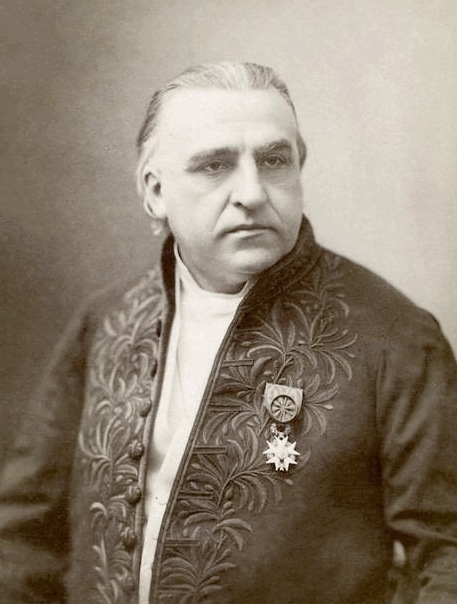
Charcot has been referred to as “the father of French neurology and one of the world’s pioneers of neurology”.[4] His work greatly influenced the developing fields of neurology and psychology; modern psychiatry owes much to the work of Charcot and his direct followers.[5] He was the “foremost neurologist of late nineteenth-century France”[6] and has been called “the Napoleon of the neuroses“.[7]
Personal life
Born in Paris, Charcot worked and taught at the famous Pitié-Salpêtrière Hospital for 33 years. His reputation as an instructor drew students from all over Europe.[7] In 1882, he established a neurology clinic at Salpêtrière, which was the first of its kind in Europe.[1] Charcot was a part of the French neurological tradition and studied under, and greatly revered, Duchenne de Boulogne.[8][9]
“He married a rich widow, Madame Durvis, in 1862 and had two children, Jeanne and Jean-Baptiste, who later became a doctor and a famous polar explorer”.[10]
Charcot uses hypnotism to treat hysteria and other abnormal mental conditions. All materials from “Iconographie photographique de la Salpêtrière” (Jean Martin Charcot, 1878)
Charcot’s primary focus was neurology. He named and was the first to describe multiple sclerosis.[1][12] Summarizing previous reports and adding his own clinical and pathological observations, Charcot called the disease sclérose en plaques. The three signs of multiple sclerosis now known as Charcot’s triad 1 are nystagmus, intention tremor, and telegraphic speech, though these are not unique to MS. Charcot also observed cognition changes, describing his patients as having a “marked enfeeblement of the memory” and “conceptions that formed slowly”. He was also the first to describe a disorder known as Charcot joint or Charcot arthropathy, a degeneration of joint surfaces resulting from loss of proprioception. He researched the functions of different parts of the brain and the role of arteries in cerebral hemorrhage.[1]
Charcot was among the first to describe Charcot–Marie–Tooth disease (CMT). The announcement was made simultaneously with Pierre Marie of France (his resident) and Howard Henry Tooth of England. The disease is also sometimes called peroneal muscular atrophy.[13]
Charcot’s studies between 1868 and 1881 were a landmark in the understanding of Parkinson’s disease.[14] Among other advances he made the distinction between rigidity, weakness and bradykinesia.[14] He also led the disease formerly named paralysis agitans (shaking palsy) to be renamed after James Parkinson.[14] He also noted apparent variations on PD, such as Parkinson’s disease with hyperextension.[15] Charcot received the first European professional chair of clinical diseases for the nervous system in 1882.[16]
Studies on hypnosis and hysteria
Charcot is best known today for his work on hypnosis and hysteria. In particular, he is best remembered for his work with his hysteria patient Louise Augustine Gleizes, who somewhat increased his fame during his lifetime; however, Marie “Blanche” Wittmann, known as the Queen of Hysterics, was his most famous hysteria patient at the time.[17][18][2] He initially believed that hysteria was a neurological disorder for which patients were pre-disposed by hereditary features of their nervous system,[7][19] but near the end of his life he concluded that hysteria was a psychological disease.[20]
Charcot first began studying hysteria after creating a special ward for non-insane females with “hystero-epilepsy”. He discovered two distinct forms of hysteria among these women: minor hysteria and major hysteria.[21] His interest in hysteria and hypnotism “developed at a time when the general public was fascinated in ‘animal magnetism’ and ‘mesmerization'”,[22] which was later revealed to be a method of inducing hypnosis.[23] His study of hysteria “attract[ed] both scientific and social notoriety”.[24] Bogousslavsky, Walusinski, and Veyrunes write:
Charcot and his school considered the ability to be hypnotized as a clinical feature of hysteria … For the members of the Salpêtrière School, susceptibility to hypnotism was synonymous with disease, i.e. hysteria, although they later recognized … that grand hypnotisme (in hysterics) should be differentiated from petit hypnotisme, which corresponded to the hypnosis of ordinary people.[22]
Charcot argued vehemently against the widespread medical and popular prejudice that hysteria was rarely found in men, presenting several cases of traumatic male hysteria.[25] He taught that due to this prejudice these “cases often went unrecognised, even by distinguished doctors”[26] and could occur in such models of masculinity as railway engineers or soldiers. Charcot’s analysis, in particular his view of hysteria as an organic condition which could be caused by trauma, paved the way for understanding neurological symptoms arising from industrial-accident or war-related traumas.[27]
The Salpêtrière School’s position on hypnosis was sharply criticized by Hippolyte Bernheim, another leading neurologist of the time.[22] Bernheim argued that the hypnosis and hysteria phenomena that Charcot had famously demonstrated were in fact due to suggestion. However, Charcot himself had had longstanding concerns about the use of hypnosis in treatment and about its effect on patients. He also was concerned that the sensationalism hypnosis attracted had robbed it of its scientific interest,[24] and that the quarrel with Bernheim, amplified by Charcot’s pupil Georges Gilles de la Tourette, had “damaged” hypnotism.[22]
Charcot thought of art as a crucial tool of the clinicoanatomic method. He used photos and drawings, many made by himself or his students, in his classes and conferences. He also drew outside the neurology domain, as a personal hobby. Like Duchenne, he is considered a key figure in the incorporation of photography to the study of neurological cases.[29]
Distorted views of Charcot
Distorted views of Charcot as harsh and tyrannical have arisen from some sources that rely on a fanciful autobiographical novel by Axel Munthe, The Story of San Michele (1929). Munthe claimed to have been Charcot’s assistant, but in fact, Munthe was just a medical student among hundreds of others. Munthe’s most direct contact with Charcot was when Munthe helped a young female patient “escape” from a ward of the hospital and took her into his home. Charcot threatened to report this to the police, and ordered that Munthe not be allowed on the wards of the hospital again.[30]
I can certify that Dr Munthe never was trained by my father”; and, further, that “[although Munthe] may have [incidentally] followed, like hundreds of others, some courses of Charcot, …he was not trained by him and certainly never had the intimacy of which he boasts [in his recently reviewed work, Memories and Vagaries]. …I was, myself, a student at the Salpetriere then, and can certify that he was not one of his students and that my father never knew him. Everything he says about professor Charcot is false….[31]
Bengt Jangfeldt, in his 2008 biography, Axel Munthe: The Road to San Michele, states that “Charcot is not mentioned in a single letter of Axel’s out of the hundreds that have been preserved from his Paris years” (p. 96).[32]
Legacy
One of Charcot’s greatest legacies as a clinician is his contribution to the development of systematic neurological examination, correlating a set of clinical signs with specific lesions. This was made possible by his pioneering long-term studies of patients, coupled with microscopic and anatomic analysis derived from eventual autopsies.[33] This led to the first clear delineation of various neurological diseases and classic description of them. For example, amyotrophic lateral sclerosis.[34]
Although, by the 1870s, Charcot was France’s best known physician, his ideas about hysteria were later refuted, and French psychiatry did not recover for decades. An example of the dismissal of Charcot’s views can be found in Edward Shorter’s History of Psychiatry: Shorter states that Charcot understood “almost nothing” about major psychiatric illness, and that he was “quite lacking in common sense and grandiosely sure of his own judgement”. This perspective overlooks the fact that Charcot never claimed to be a psychiatrist or to be practising psychiatry, a field that was separately organized from neurology within France’s educational and public health systems.[36] After Charcot’s death, the phenomenon of “hysteria” that he had described was no longer recognized as a real neurological condition, but was considered to be an “artifact of suggestion”.[37] However, Charcot continued to have a “prominent” position in French psychiatry and psychology.[38]
The negative evaluation of Charcot’s work on hysteria was influenced by a significant shift in diagnostic criteria and understanding of hysteria which occurred in the decades following his death.[39] The historical perspective on Charcot’s work on hysteria has also been distorted by viewing him as a precursor of Freud.[citation needed] After Charcot’s death, Freud and Janet wrote articles on his importance.[40] However, Charcot’s work on hysteria and hypnotism was at odds with the perspective Freud made famous, since Charcot believed in neurological determinism.
The Charcot-Janet school, which formed from the work of Charcot and his student Janet, contributed greatly to knowledge of multiple personality disorders.[41][42]
Influence on the development of anti-Semitism
Charcot claimed to have observed a higher prevalence of diseases with a hereditary component (notably arthritis and neurological disorders) in Jewish communities, where limited numbers combined with longterm endogamy. He also used Jewish patients as examples in some of his public lectures.[43]
When these claims were developed by neurologist Henry Meige, and others, in conjunction with the myth of the Wandering Jew, this was used as support by the apostles of French anti-Semitism, notably the journalist Edouard Drumont.[44] However, historian of science Ian Hacking cautions that Charcot’s interest in Jews and his claims about them must be seen in their nuanced, ambiguous context: “notice how Charcot shared most of the presuppositions of the genetic approach to mental illness that are current today [1998].
He could not fall back on a genome project to support his scientific speculations, but he did have a closed gene pool to study, not just in that Jews were endogenous but because many Jews in his clinic were descended from relatives, even cousins, who married each other. Scientific reasoning could motivate his constant attention to Jewish family lines …. Thus a reputable scientific quest merged with a great willingness to see Jews as aberrant, troublesome, ill.”[45]
However, by the very end of the 19th century, anti-Semitism in France had rapidly accentuated, due to the Dreyfus affair. “Because of this transition, it has become all too easy to read gross and manifest anti-Semitism” retrospectively into the hospital wards of one or two decades previous.[46]
More at: https://en.wikipedia.org/wiki/Jean-Martin_Charcot

 Justin Andres, left, and Danny Laporte apply a protective layer of film containing copper and silver on SkyCool panels at Grocery Outlet in Stockton, Calif., on Oct. 5. (Sarahbeth Maney for The Washington Post)
 SkyCool panels send heat to the sky and pull down cooling from space. They’re used to help keep refrigerators cool, reducing the amount of electricity they need, at Grocery Outlet in Stockton, Calif. (Sarahbeth Maney for The Washington Post)
 Eli Goldstein, SkyCool’s CEO and co-founder, works on the Grocery Outlet project. (Sarahbeth Maney for The Washington Post)
 The SkyCool panels lowered Grocery Outlet’s electric bill by about $3,000 over the course of the summer, store manager Jesus Valenzuela said. (Sarahbeth Maney for The Washington Post)



 Nature, while urging to utmost efforts, leading us with work, presenting cause beyond cause in endless chains, lost in infinite distances, yet cheers us like a mother with tender prattle words of love, ministering to all our friendlessness and weariness.