Thesis, antithesis, synthesis

From Wikipedia, the free encyclopedia

The triad thesis, antithesis, synthesis (GermanThese, Antithese, Synthese; originally:[1] Thesis, Antithesis, Synthesis) is a progression of three ideas or propositions in which the first idea is followed by a second idea that negates the first, and the conflict between the first and second ideas is resolved by a third idea.[2] It is often used to explain the dialectical method of German philosopher Georg Wilhelm Friedrich Hegel,[3] but Hegel never used the terms himself; instead his triad was concrete, abstractabsolute. Thesis, antithesis, synthesis originated with Johann Fichte.[1]

History of the idea

Thomas McFarland (2002), in his Prolegomena to Coleridge‘s Opus Maximum,[4] identifies Immanuel Kant‘s Critique of Pure Reason (1781) as the genesis of the thesis/antithesis dyad. Kant concretises his ideas into:

  • Thesis: “The world has a beginning in time, and is limited with regard to space.”
  • Antithesis: “The world has no beginning and no limits in space, but is infinite, in respect to both time and space.”

Inasmuch as conjectures like these can be said to be resolvable, Fichte‘s Grundlage der gesamten Wissenschaftslehre (Foundations of the Science of Knowledge, 1794) resolved Kant’s dyad by synthesis, posing the question thus:[4]

  • Are synthetic judgments a priori possible?
    • No synthesis is possible without a preceding antithesis. As little as antithesis without synthesis, or synthesis without antithesis, is possible; just as little possible are both without thesis.

Fichte employed the triadic idea “thesis–antithesis–synthesis” as a formula for the explanation of change.[5] Fichte was the first to use the trilogy of words together,[6] in his Grundriss des Eigentümlichen der Wissenschaftslehre, in Rücksicht auf das theoretische Vermögen (1795, Outline of the Distinctive Character of the Wissenschaftslehre with respect to the Theoretical Faculty): “Die jetzt aufgezeigte Handlung ist thetisch, antithetisch und synthetisch zugleich.” [“The action here described is simultaneously thetic, antithetic, and synthetic.”[7]]

Still according to McFarland, Schelling then, in his Vom Ich als Prinzip der Philosophie (1795), arranged the terms schematically in pyramidal form.

According to Walter Kaufmann (1966), although the triad is often thought to form part of an analysis of historical and philosophical progress called the Hegelian dialectic, the assumption is erroneous:[8]

Whoever looks for the stereotype of the allegedly Hegelian dialectic in Hegel’s Phenomenology will not find it. What one does find on looking at the table of contents is a very decided preference for triadic arrangements. … But these many triads are not presented or deduced by Hegel as so many theses, antitheses, and syntheses. It is not by means of any dialectic of that sort that his thought moves up the ladder to absolute knowledge.

Gustav E. Mueller (1958) concurs that Hegel was not a proponent of thesis, antithesis, and synthesis, and clarifies what the concept of dialectic might have meant in Hegel’s thought.[9]

“Dialectic” does not for Hegel mean “thesis, antithesis, and synthesis.” Dialectic means that any “ism” – which has a polar opposite, or is a special viewpoint leaving “the rest” to itself – must be criticized by the logic of philosophical thought, whose problem is reality as such, the “World-itself”.

According to Mueller, the attribution of this tripartite dialectic to Hegel is the result of “inept reading” and simplistic translations which do not take into account the genesis of Hegel’s terms:

Hegel’s greatness is as indisputable as his obscurity. The matter is due to his peculiar terminology and style; they are undoubtedly involved and complicated, and seem excessively abstract. These linguistic troubles, in turn, have given rise to legends which are like perverse and magic spectacles – once you wear them, the text simply vanishes. Theodor Haering’s monumental and standard work has for the first time cleared up the linguistic problem. By carefully analyzing every sentence from his early writings, which were published only in this century, he has shown how Hegel’s terminology evolved – though it was complete when he began to publish. Hegel’s contemporaries were immediately baffled, because what was clear to him was not clear to his readers, who were not initiated into the genesis of his terms.

An example of how a legend can grow on inept reading is this: Translate “Begriff” by “concept,” “Vernunft” by “reason” and “Wissenschaft” by “science” – and they are all good dictionary translations – and you have transformed the great critic of rationalism and irrationalism into a ridiculous champion of an absurd pan-logistic rationalism and scientism.

The most vexing and devastating Hegel legend is that everything is thought in “thesis, antithesis, and synthesis.”[10]

Karl Marx (1818–1883) and Friedrich Engels (1820–1895) adopted and extended the triad, especially in Marx’s The Poverty of Philosophy (1847). Here, in Chapter 2, Marx is obsessed by the word “thesis”;[11] it forms an important part of the basis for the Marxist theory of history.[12]

Writing pedagogy

See also: Rogerian argument

In modern times, the dialectic of thesis, antithesis, and synthesis has been implemented across the world as a strategy for organizing expositional writing. For example, this technique is taught as a basic organizing principle in French schools:[13]

The French learn to value and practice eloquence from a young age. Almost from day one, students are taught to produce plans for their compositions, and are graded on them. The structures change with fashions. Youngsters were once taught to express a progression of ideas. Now they follow a dialectic model of thesis-antithesis-synthesis. If you listen carefully to the French arguing about any topic they all follow this model closely: they present an idea, explain possible objections to it, and then sum up their conclusions. … This analytical mode of reasoning is integrated into the entire school corpus.

Thesis, Antithesis, and Synthesis has also been used as a basic scheme to organize writing in the English language. For example, the website WikiPreMed.com advocates the use of this scheme in writing timed essays for the MCAT standardized test:[14]

For the purposes of writing MCAT essays, the dialectic describes the progression of ideas in a critical thought process that is the force driving your argument. A good dialectical progression propels your arguments in a way that is satisfying to the reader.The thesis is an intellectual proposition.The antithesis is a critical perspective on the thesis.The synthesis solves the conflict between the thesis and antithesis by reconciling their common truths, and forming a new proposition.

More at: https://en.wikipedia.org/wiki/Thesis,_antithesis,_synthesis

The Science Behind Miracles

How our minds push our bodies to defy expectations, beliefs, and even our own biology—in short, to make miracles.

Outside|getpocket.com

  • Erik Vance

Photo: Erin Wilson

Imagine a man who could endure near-freezing water for 45 minutes at a stretch. Imagine if that same man could run a barefoot marathon in the Arctic or swim 50 meters under the ice of a frozen lake. Imagine that man said the secret to his abilities not only allows him to climb Himalayan mountains wearing shorts, but also eases everything from chronic pain to Crohn’s disease and even Parkinson’s. What would you call that man? A savant? Guru? Prophet of God, maybe?

That’s the character Scott Carney describes in his new book, What Doesn’t Kill Us, about legendary survivalist and icy-water swimmer Wim Hof. The 57-year-old Dutchman, often referred to as the Iceman, has devised a series of breathing techniques and conditioning exercises—mostly various types of hyperventilation and other ways to purge the body of CO2—that he credits as being the key to his extraordinary abilities. Hof, for his part, sees the whole thing in a much more spiritual light—getting back to a purer, more primitive version of ourselves.

The book is a fun read because, at first glance, Hof does seem superhuman. He claims that by slowly conditioning oneself to low-oxygen states (through breathing exercises) or extreme cold (through full-body muscle-clenching exercises), one can channel their spiritual energy and tap into all kinds of hidden powers. Carney is at his best when he tries to explain Hof’s abilities through science. For instance, he suggests that Hof has tapped into a specific type of fat cell called brown adipose tissue that is found in human babies but mostly disappears in adulthood; through his body training, it’s possible that Hof has encouraged this vestigial fat to play an increased role in trapping heat. But the tone of What Doesn’t Kill Us occasionally implies that we should worship the guy. And honestly, it’s hard not to.

Hof is one of those extraordinary characters who pops up occasionally throughout human history seeming to be nothing short of miraculous. For thousands of years, humanity has occasionally glimpsed man’s capacity to do the seemingly impossible or the miraculous using only force of will: walking on burning coals, healing the sick, enduring lethal temperatures for hours. And for all that time, we have been left to our own devices in guessing how such things are possible.

But today, modern science has revealed a number of fascinating mechanisms for how the brain influences the rest of the body, forming a string of enticing bread crumbs leading toward a more satisfying understanding of some of the limits of the human body—and how people like Hof cheat them.

Take one fascinating lead: the effect certain expectations have on bodily functions. The mind has a propensity to make predictions, and then ensure those predictions come to pass through internal “pharmacies” that, when lumped together, are also called placebo effects.

In my book, Suggestible You, I talked to scientists around the world who investigate placebos, internal pharmacies, hypnosis, and the power of belief on the body and mind. One of my favorite quotes came from Alia Crum, a psychologist at Stanford. “I don’t think the power of mind is limitless,” she said. “But I do think we don’t yet know where those limits are.”

In his book, Carney points to Wof’s ability to heal things like Parkinson’s, asthma, chronic pain, and digestive problems, giving us the impression that the mind can do anything it wants. As it happens, all of these diseases are also highly susceptible to the influence of placebo. Contrary to popular belief, not all placebo effects are the same, and not all conditions respond to them equally. That’s because a big part of placebo effects are chemical, employing things like dopamine, endogenous opioids, serotonin, and an untold number of other chemicals your brain idly keeps on hand in case it needs to adjust what’s happening in the body.

That’s what’s at the center of almost every “miracle” I’ve encountered: chemicals that have incredible effects but still follow the rules of biochemistry, even if we don’t yet fully understand what those rules and mechanisms are. Hof claims that one of the secrets to superhuman strength and healing is specialized breathing techniques. Fair enough. But I can introduce him to a healer in Beijing who says it’s about balancing spiritual heat with cold or a witch doctor in Mexico who says it’s about channeling spirits. What do they all share? The chemistry of expectation and belief—which, writ wide, is the world of placebo. A better definition for placebo might be to call it a measurement of the effect of one’s belief on their body.

Belief and placebos don’t just affect disease. They also boost athletic performance, as Hof demonstrates when he swam under 50 yards of ice. This is where scientists have begun asking some really interesting questions.

Placebo effects have long been studied in medicine, but Christopher Beedie, a sports psychologist at the Canterbury Christ Church University in England, is among the few scientists who study it in athletics. His work often examines how elite athletes perform under intense fatigue when they think they have some kind of performance enhancement. The interesting question for Beedie isn’t what can the human body do, but rather, what more can the human mind add to that?

“I don’t think there’s anything surprising about people who exist at the end of continua,” says Beedie. “[Hof] is an extension of the classic example of a unique athlete optimized on nearly all variables who’s also probably learned to capitalize on every component of placebo responding he can.”

One of the most studied mechanisms of placebo in medicine is that of pain relief. Scientists have documented an extensive network of self-medicating pathways in the brain involving internal opioid stores that kick into gear when our bodies expect a treatment—from aspirin to acupuncture—and don’t get one. And there’s a lot of overlap between pain and athletic performance. Because what is intense exercise but extended pain resistance? In fact, pain relievers like morphine are strictly regulated in athletics for their performance-enhancing powers.

In addition to painkillers, there may be a whole network of internal chemicals our bodies can dip into for increased performance. In one mind-boggling study from 2008, legendary Italian placebo scientist Fabricio Benedetti told weightlifters that they were getting performance-enhancing drugs when they were actually getting placebos and, secretly, lighter weights to lift. Once they believed the drugs were working, as perceived by the lighter weights, the loads were surreptitiously returned to their normal weight. The force the athletes were able to produce with their muscles increased while perceived fatigue stayed the same.

Beedie has done a lot of similar placebo performance experiments—consistently demonstrating their ability to give an impressive edge to cyclists, runners, and many other athletes—to the point where the athletes at his school don’t always believe what he says. He claims belief taps into “headroom” that every athlete has in their potential—or the idea that that athletes can push themselves to operate between their perceived maximum execution and the maximum that physics and their bodies will allow. By either removing energy-wasting anxiety or tapping into chemicals like opioids or as-yet-undiscovered internal performance drugs through one’s expectations, the brain can coax the body into that magical zone.

In fact, Beedie is convinced this headroom is the same space filled by performance-enhancing drugs. (Indeed it’s not even clear that some banned drugs, like erythropoietin, can outperform placebos.) He’s just finished the largest (not yet published) placebo study ever done in athletics—600 subjects in all—and found that the people most likely to respond to placebo were the ones experienced using supplements. Perhaps the previous supplements the athletes had taken primed them to have a placebo response. Perhaps people who naturally respond to a sports placebo are also likely to have taken performance enhancers. Either way, it suggests that artificial boosted performance and boosted performance from expectation produce similar effects.

“This [whole idea of expectation-based bodily responses] is an evolved mechanism that allows us to capitalize on untapped resources at critical points in our existence,” Beedie says. Belief is belief, so it’s possible that drugs—real or placebo—fill the same space that superstitious baseball pitchers fill by wearing mismatched socks or dirty underwear and the same space filled by Hof and his breathing methods. None of this is to say Hof isn’t incredible. His feats of endurance are astounding and perhaps even scientifically significant, like his ability to control his body temperature so well. But he’s not magic, and we should be careful about trusting important health decisions to any belief-based technique—even one that allows a person to swim under ice.

Perhaps the most interesting question is what can people like Hof really tell us about the effect of our mind on our bodies? Scientists already know that Parkinson’s disease, pain, and depression all respond very well to all kinds of beliefs, whether through special breathing, secret pills, or magic crystals. But could that same belief fuel unprecedented feats of athleticism? Beedie says that, especially for elite athletes, there’s a limit to the benefits of both psychological and pharmacological performance enhancers, so why not just use belief in place of drugs?

“We’re trying to educate athletes into the idea that the headroom is there to be filled, and drugs are not necessarily the only way of filling that headroom,” he says. “Confidence is the drug of champions.”

Erik Vance is the author of the new book Suggestible You. Reporting for this project was supported in part by the Pulitzer Center.

This article was originally published on January 16, 2017, by Outside, and is republished here with permission.

Saving People from Coronavirus Can Teach Us How to Do the Same for Climate Change


REYNARD LOKI APR 3, 2020 (YesMagazine.org)

A resident in the Trullo district of Rome, Italy wearing a face mask and gloves stands next to a mural featuring Swedish climate activist Greta Thunberg and her quote “You’re never too young to save the world” on March 30, 2020.PHOTO BY ANDREAS SOLAR / AFP / GETTY IMAGES

Amid the terrible news about the spreading coronavirus epidemic, a scintillating fact has emerged that can energize the environmental movement: The global slowdown in human activity has given Mother Nature a much-needed breath of fresh air. Between travel restrictions, reductions in public transport and overall economic activity that generates emissions—such as coal burning, refining oil and producing steel—the climate is getting the kind of rest from destructive human activity it hasn’t gotten since the dawn of the Industrial Revolution.

The lockdown in China (the world’s biggest emitter of greenhouse gases), for example, has cut the nation’s carbon dioxide emissions by 100 million metric tons in just two weeks, according to an analysis by Carbon Brief, a UK-based climate policy watchdog. That’s down a quarter from the same two-week period in 2019. Observations made by NASA and European Space Agency pollution monitoring satellites appear to confirm the analysis. They show a sudden and steep decrease in nitrogen dioxide—an air pollutant emitted by power plants, factories, and vehicles—over China during mid-February when the nation entered a quarantine.

“This is the first time I have seen such a dramatic drop-off over such a wide area for a specific event,” said Fei Liu, an air quality researcher at NASA’s Goddard Space Flight Center.

While these are significant and sudden reductions achieved over a remarkably brief period of time, they are temporary. The long-term effects on energy consumption and greenhouse gas emissions and other atmospheric pollutants are unclear. On one hand, Chinese authorities may try to boost production after the pandemic is over to try to make up for the lost time. On the other hand, the economic impact of the pandemic may suppress the global demand for Chinese goods for months or even years to come.

While a global pandemic can instigate a break in human activity, the climate crisis hasn’t been able to make a dent in it. Why is that?

“Any sustained impact on fossil-fuel use would come from reduced demand, which initial indicators suggest could have a major impact. For example, February car sales are forecast to fall by 30% below last year’s already depressed levels,” writes Lauri Myllyvirta, lead analyst at the Finland-based Centre for Research on Energy and Clean Air. “If consumer demand is reduced—for example, due to unpaid wages during the crisis cascading through the rest of the economy—then industrial output and fossil-fuel use might not recover, even though capacity is available to do so.”

Still, the findings offer climate activists a tantalizing fact: It is technically feasible to achieve big reductions in pollutants that are fueling the climate crisis. All that’s required is a break in economic production and human activity. But while a global pandemic can instigate a break in human activity, the climate crisis hasn’t been able to make a dent in it. Why is that?

For one thing, the coronavirus pandemic has a clear killer: a microorganism. And the global death toll is rising by the hour as the virus jumps from person to person. The climate crisis, on the other hand, doesn’t have a distinct killer. Countless deaths have been tied to all the human activity that is the cause of the climate crisis: heat waves, hurricanes, droughts, and yes, even diseases such as Lyme disease, the normal range of which has spread because of warming climates. And, of course, the invisible killer is not a microorganism: Air pollution is caused by a number of toxic chemicals, some of which are greenhouse gases that are heating up the planet. But the fatalities associated with climate impacts are many steps removed from the actual causes, which are simply a matter of degree: too many cars and trucks on the roads, too many planes in the sky, too many bulldozers clearing rainforests, too many factories, air conditioners, large-screen televisions, mansions. Ultimately, too many people consuming too many things.

Let’s say COVID-19, the disease caused by coronavirus, ends up killing 7 million people this year. That figure would probably shock most people. But that is the same number of people who die from air pollution—every single year. As Tedros Adhanom Ghebreyesus, director-general of the World Health Organization, writes, “Black carbon, methane, and nitrogen oxides are powerful drivers of global warming, and, along with other air pollutants such as carbon monoxide and ozone, they are responsible for over 7 million deaths each year, about one in eight worldwide.”

And that’s just air pollution. Heat exposure, coastal flooding and diseases such as malaria and dengue—all increased by climate change—could cause about 250,000 deaths annually between 2030 and 2050, according to the World Health Organization. A study led by Oxford University forecast that by 2050, climate-related reductions in food availability (primarily fruits and vegetables) will cause an additional 529,000 adult deaths worldwide.

Sadly, no one knows these statistics, because—tragically for all the people who might be saved, and for the planet—the mainstream news media barely covers the climate. The figures are shocking. Major network news programs devoted barely four hours to the climate crisis over the entirety of 2019, according to a recent study by Media Matters. That amounts to a paltry 0.7% of overall evening broadcasts and the Sunday morning news shows.

Clearly, we cannot rely on the media. And we can’t rely on world leaders, either. According to a recent report by a panel of world-class scientists, “The Truth Behind the Paris Agreement Climate Pledges,” the majority of the carbon emission reduction pledges for 2030 that 184 countries made under the international accord aren’t nearly enough to prevent global warming from exceeding 2° Celsius above pre-industrial levels, which is necessary to avoid the worst impacts of climate change. The authors further note that some nations won’t even meet their pledges, and some of the biggest polluters will even increase their emissions.

It’s up to you and me, and every single individual who wants a healthy planet for ourselves, our children and future generations. And environmental activists should use this moment in history to help people understand that we can, we should, and we must make changes to our behavior, our lifestyles, and our consumption habits.

Across the globe, the coronavirus pandemic has changed daily human life in ways small (like the length of time we wash our hands) and big (like how we work and play). It also demonstrates one salient fact: Our everyday activities affect so many things—not just our own personal health, but the health of our local communities and even the entire planet. Coronavirus is a killer, but it can also be a teacher. Let’s learn all of its lessons.

This article was produced by Earth | Food | Life, a project of the Independent Media Institute. It has been published here with permission. 


REYNARD LOKI is a senior writing fellow and the editor and chief correspondent for Earth | Food | Life, a project of the Independent Media Institute. His work has been published by Truthout, Salon, BillMoyers.com, EcoWatch and Truthdig, among others.

Prepare for the mother of all s**t storms if Sweden pulls this off

If Sweden, which has not locked down its economy and society, emerges with a death toll from COVID-19 that is somewhere in the middle of the pack of European countries, there is going to be a lot of recrimination, particularly against those who have tried to silence any discussion about the true extent of the threat that COVID-19 actually poses

Sweden

Cheers, say the Swedes

The_commentator_logo_updated9
the commentator

On 3 April 2020 (thecommentator.com)

In a word: Sweden. What happens if they pull this off? What happens if it turns out that we could have coped with COVID-19 without collapsing entire sectors of the economy putting millions on the dole, and imposing some of the most draconian restrictions on civil liberties in living memory?

Sweden has not closed the bars. Shopping malls are open. Schools and companies are open too. There are some restrictions such as on gatherings of over 50 people. But, in comparison with most European countries, life in Sweden is relatively normal.

Right now, Sweden’s death rate from coronavirus is 33 per million of the population. In France it is 83. In Italy it is 230. In Britain it is 43. In the Netherlands it is 78.

In the United States the number of deaths per million of the population is 18, but many argue that the outbreak in America took off later, and European levels of fatality from the virus are on their way. We shall see.

But, in any case, which levels of European fatality? The figures are all over the place. Partly this must be due to different ways in which the death toll is being counted.

In some countries, COVID-19 is being listed as the cause of death merely if it appears somewhere on the death certificate. In other words, you may have been days away from dying from terminal lung cancer, but if you had contracted COVID-19 in the meantime, your death will be listed in the overall COVID-19 fatality numbers. In other countries, it has to have been the single most obvious cause of death to make it into the same statistics.

Sweden appears to be in the latter category, which may be making their numbers look a little lower than in countries which list things differently. But probably not enough to radically change the comparisons.

Related

That will all be looked at closely when all this is over.

But if, when all such necessary adjustments have been made, Sweden emerges with a death toll from COVID-19 that is somewhere in the middle of the pack of European countries, there is going to be a lot of recrimination, particularly against those who have tried to silence any discussion about the extent of the threat that COVID-19 actually poses.

What is interesting though, is that precisely because it is Sweden, the usual suspects in our politics who benefit from disillusionment with the establishment may find it hard to profit from this. The Swedish government is led by Stefan Loeven, a Social Democrat.

Sweden is practically a role model for mainstream, left of centre politics. If you’re a European populist, it’s going to be more than a little incongruous to start singing the praises of Sweden, of all countries.

Similarly in America. Donald Trump has, albeit reluctantly, broadly followed the lockdown policies we see across most of Europe. Unless he very quickly does a 180 degree turn (and don’t rule that out) how can he profit from his usual disdain for the way things are done by the establishment?

That said, if this particular “Swedish model” wins the day, someone is going to get it in the neck. The question is, who?

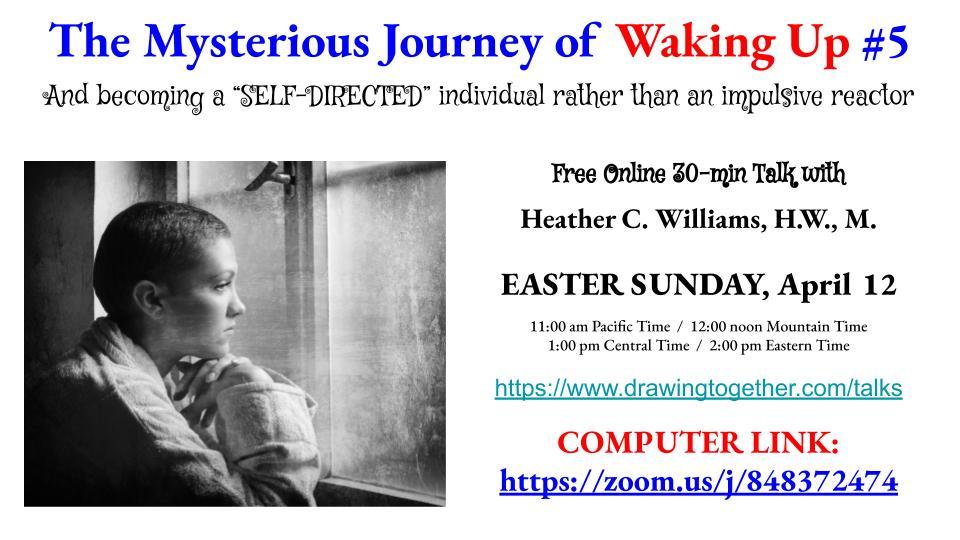
The Mysterious Journey of Waking Up #5

If there is a holiday about The Mysterious Journey of Waking Up – it is EASTER – when Jesus awakened! I invite you to come to The Prosperos Sunday Meeting on April 12 and begin your own journey of awakening!Save the link below to your calendar. See you on Easter Sunday!

With love and gratitude, Heather

WHAT:  THE MYSTERIOUS JOURNEY OF WAKING UP #5DATE: Sunday April 12TIME:  11:00 am Pacific / Noon Mtn / 1:00 pm Central / 2:00 pm Eastern

COMPUTER LINKhttps://zoom.us/j/848372474

CONNECT BY PHONE:
One tap mobile+13126266799,,848372474# US(Chicago)
+19292056099,,848372474# US(New York)Dial by your location      +1 312 626 6799 US (Chicago)       
+1 929 205 6099 US (New York)       
+1 346 248 7799 US (Houston)       
+1 669 900 6833 US (San Jose)       
+1 253 215 8782 US       
+1 301 715 8592 US
Meeting ID: 848 372 474
Find your local number: https://zoom.us/u/aoRqiholN

Book: “Democracy Incorporated”

Democracy Incorporated: Managed Democracy and the Specter of Inverted Totalitarianism

Democracy Incorporated: Managed Democracy and the Specter of Inverted Totalitarianism

by Sheldon S. Wolin 

Democracy is struggling in America–by now this statement is almost cliche. But what if the country is no longer a democracy at all? In “Democracy Incorporated,” Sheldon Wolin considers the unthinkable: has America unwittingly morphed into a new and strange kind of political hybrid, one where economic and state powers are conjoined and virtually unbridled? Can the nation check its descent into what the author terms “inverted totalitarianism”?

Wolin portrays a country where citizens are politically uninterested and submissive–and where elites are eager to keep them that way. At best the nation has become a “managed democracy” where the public is shepherded, not sovereign. At worst it is a place where corporate power no longer answers to state controls. Wolin makes clear that today’s America is in no way morally or politically comparable to totalitarian states like Nazi Germany, yet he warns that unchecked economic power risks verging on total power and has its own unnerving pathologies. Wolin examines the myths and mythmaking that justify today’s politics, the quest for an ever-expanding economy, and the perverse attractions of an endless war on terror. He argues passionately that democracy’s best hope lies in citizens themselves learning anew to exercise power at the local level.

“Democracy Incorporated” is one of the most worrying diagnoses of America’s political ills to emerge in decades. It is sure to be a lightning rod for political debate for years to come.”

(Goodreads.com)

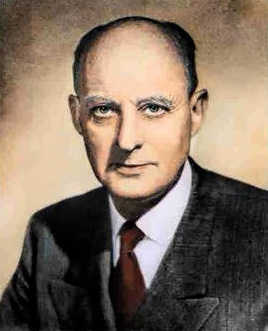
Bio: Reinhold Niebuhr

Reinhold Niebuhr

From Wikipedia, the free encyclopedia

The Reverend
Reinhold Niebuhr
BornKarl Paul Reinhold Niebuhr
June 21, 1892
Wright CityMissouri, US
DiedJune 1, 1971 (aged 78)
StockbridgeMassachusetts, US
Years active1915–1966
Spouse(s)Ursula Niebuhr (m. 1931)
RelativesH. Richard Niebuhr (brother)
AwardsPresidential Medal of Freedom (1964)
‹ The template Infobox clergy is being considered for merging. ›Ecclesiastical career
ReligionChristianity
ChurchEvangelical Synod of North America
Ordained1915
Academic background
Alma materElmhurst CollegeEden Theological SeminaryYale University
Academic advisorsDouglas Clyde Macintosh[1][2]
InfluencesAugustine of Hippo[3]Karl BarthMartin Buber[4][5]Immanuel Kant[6]Søren Kierkegaard[6]Samuel D. PressWalter Rauschenbusch[7]Paul Tillich[3][8]
Academic work
DisciplineTheology
School or traditionChristian realismneo-orthodoxy
InstitutionsUnion Theological Seminary
Doctoral studentsLangdon Gilkey[9]William Hordern[10]
Notable studentsTom Collings
Notable worksMoral Man and Immoral Society (1932)The Nature and Destiny of Man (1943)
Notable ideasChristian realism
Influenced[show]

Karl Paul Reinhold Niebuhr[a] (1892–1971) was an American Reformed theologianethicist, commentator on politics and public affairs, and professor at Union Theological Seminary for more than 30 years. Niebuhr was one of America’s leading public intellectuals for several decades of the 20th century and received the Presidential Medal of Freedom in 1964. A public theologian, he wrote and spoke frequently about the intersection of religion, politics, and public policy, with his most influential books including Moral Man and Immoral Society and The Nature and Destiny of Man. The latter is ranked number 18 of the top 100 non-fiction books of the twentieth century by Modern Library.[25] Andrew Bacevich labelled Niebuhr’s book The Irony of American History “the most important book ever written on U.S. foreign policy.”[26] The historian Arthur Schlesinger Jr. described Niebuhr as “the most influential American theologian of the 20th century”[27][28] and Time posthumously called Niebuhr “the greatest Protestant theologian in America since Jonathan Edwards.”[29]

Starting as a minister with working-class sympathies in the 1920s and sharing with many other ministers a commitment to pacifism and socialism, his thinking evolved during the 1930s to neo-orthodox realist theology as he developed the philosophical perspective known as Christian realism.[30][verification needed] He attacked utopianism as ineffectual for dealing with reality, writing in The Children of Light and the Children of Darkness (1944), “Man’s capacity for justice makes democracy possible; but man’s inclination to injustice makes democracy necessary.” Niebuhr’s realism deepened after 1945 and led him to support American efforts to confront Soviet communism around the world. A powerful speaker, he was one of the most influential thinkers of the 1940s and 1950s in public affairs.[27] Niebuhr battled with religious liberals over what he called their naïve views of the contradictions of human nature and the optimism of the Social Gospel, and battled with religious conservatives over what he viewed as their naïve view of scripture and their narrow definition of “true religion”. During this time he was viewed by many as the intellectual rival of John Dewey.[31]

Niebuhr’s contributions to political philosophy include utilizing the resources of theology to argue for political realism. His work has also significantly influenced international relations theory, leading many scholars to move away from idealism and embrace realism.[32] A large number of scholars, including political scientists, political historians, and theologians, have noted his influence on their thinking. Aside from academics, activists such as Myles Horton and Martin Luther King Jr., numerous politicians that include Hillary ClintonHubert HumphreyDean AchesonJames ComeyMadeleine Albright, and John McCain, as well as former US Presidents Barack Obama[33] and Jimmy Carter;[34] have also cited his influence on their thought.[26][35][36][37] Recent years have seen a renewed interest in Niebuhr’s work, in part because of Obama’s stated admiration for Niebuhr.[38] In 2017, PBS released a documentary on Niebuhr, titled An American Conscience: The Reinhold Niebuhr Story.

Aside from his political commentary, Niebuhr is also known for having composed the Serenity Prayer, a widely recited prayer which was popularized by Alcoholics Anonymous.[39][40] Niebuhr was also one of the founders of both Americans for Democratic Action and the International Rescue Committee and also spent time at the Institute for Advanced Study at Princeton, while serving as a visiting professor at both Harvard and Princeton.[41][42][43] He was also the brother of another prominent theologian, H. Richard Niebuhr.

Early life and education

Niebuhr was born on June 21, 1892, in Wright CityMissouri, the son of German immigrants Gustav Niebuhr and his wife, Lydia (née Hosto).[44] His father was a German Evangelical pastor; his denomination was the American branch of the established Prussian Church Union in Germany. It is now part of the United Church of Christ. The family spoke German at home. His brother H. Richard Niebuhr also became a famous theological ethicist and his sister Hulda Niebuhr became a divinity professor in Chicago. The Niebuhr family moved to LincolnIllinois, in 1902 when Gustav Niebuhr became pastor of Lincoln’s St. John’s German Evangelical Synod church. Reinhold Niebuhr first served as pastor of a church when he served from April to September 1913 as interim minister of St. John’s following his father’s death.[45]

Niebuhr attended Elmhurst College in Illinois and graduated in 1910.[b] He studied at Eden Theological Seminary in Webster Groves, Missouri, where, as he admitted, he was deeply influenced by Samuel D. Press in “biblical and systematic subjects”,[46] and Yale Divinity School, where he earned a Bachelor of Divinity degree in 1914 and a Master of Arts degree the following year,[47] with the thesis The Contribution of Christianity to the Doctrine of Immortality.[1] He always regretted not taking a doctorate. He said that Yale gave him intellectual liberation from the localism of his German-American upbringing.[48]

Marriage and family

In 1931 Niebuhr married Ursula Keppel-Compton. She was a member of the Church of England and was educated at the University of Oxford in theology and history. She met Niebuhr while studying for her master’s degree at Union Theological Seminary. For many years, she was on faculty at Barnard College (the women’s college of Columbia University) where she helped establish and then chaired the religious studies department. The Niebuhrs had two children, Christopher Niebuhr and Elisabeth Niebuhr Sifton. Ursula Niebuhr left evidence in her professional papers at the Library of Congress showing that she co-authored some of her husband’s later writings.[49]

Detroit

In 1915, Niebuhr was ordained a pastor. The German Evangelical mission board sent him to serve at Bethel Evangelical Church in DetroitMichigan. The congregation numbered 66 on his arrival and grew to nearly 700 by the time he left in 1928. The increase reflected his ability to reach people outside the German-American community and among the growing population attracted to jobs in the booming automobile industry. In the early 1900s Detroit became the fourth-largest city in the country, attracting many black and white migrants from the rural South, as well as Jewish and Catholic ethnics from eastern and southern Europe. They competed for jobs and limited housing, and the city’s rapid changes and rise in social tensions contributed to the growth in numbers of Ku Klux Klan members in the city, which reached its peak in 1925, and to the Black Legion. During that year’s city election campaign, in which the Klan publicly supported several candidates, including for the office of mayor, Niebuhr spoke out publicly against the Klan to his congregation,[50] describing them as “one of the worst specific social phenomena which the religious pride of a people has ever developed”. Only one of their several candidates gained a seat on the city council, and Charles Bowles, the mayoral candidate, was defeated.[50]

First World War

As America entered the First World War in 1917, Niebuhr was the unknown pastor of a small German-speaking congregation in Detroit (it stopped using German in 1919). All German-American culture in the United States and nearby Canada came under attack for suspicion of having dual loyalties. Niebuhr repeatedly stressed the need to be loyal to America, and won an audience in national magazines for his appeals to the German Americans to be patriotic.[51] Theologically, he went beyond the issue of national loyalty as he endeavored to fashion a realistic ethical perspective of patriotism and pacifism. He endeavored to work out a realistic approach to the moral danger posed by aggressive powers, which many idealists and pacifists failed to recognize. During the war, he also served his denomination as Executive Secretary of the War Welfare Commission, while maintaining his pastorate in Detroit. A pacifist at heart, he saw compromise as a necessity and was willing to support war in order to find peace—compromising for the sake of righteousness.[52]

Origins of Niebuhr’s working-class sympathy

Several attempts have been made to explicate the origins of Niebuhr’s sympathies from the 1920s to working-class and labor issues as documented by his biographer Richard W. Fox.[53] One supportive example has concerned his interest in the plight of auto workers in Detroit. This one interest among others can be briefly summarized below.

After seminary, Niebuhr preached the Social Gospel, and then initiated the engagement of what he considered the insecurity of Ford workers.[54] Niebuhr had moved to the left and was troubled by the demoralizing effects of industrialism on workers. He became an outspoken critic of Henry Ford and allowed union organizers to use his pulpit to expound their message of workers’ rights. Niebuhr attacked poor conditions created by the assembly lines and erratic employment practices.[55]

Because of his opinion about factory work, Niebuhr rejected liberal optimism. He wrote in his diary:

We went through one of the big automobile factories to-day. … The foundry interested me particularly. The heat was terrific. The men seemed weary. Here manual labour is a drudgery and toil is slavery. The men cannot possibly find any satisfaction in their work. They simply work to make a living. Their sweat and their dull pain are part of the price paid for the fine cars we all run. And most of us run the cars without knowing what price is being paid for them. … We are all responsible. We all want the things which the factory produces and none of us is sensitive enough to care how much in human values the efficiency of the modern factory costs.[56]

The historian Ronald H. Stone thinks that Niebuhr never talked to the assembly line workers (many of his parishioners were skilled craftsmen) but projected feelings onto them after discussions with Samuel Marquis.[57] Niebuhr’s criticism of Ford and capitalism resonated with progressives and helped make him nationally prominent.[55] His serious commitment to Marxism developed after he moved to New York in 1928.[58]

In 1923, Niebuhr visited Europe to meet with intellectuals and theologians. The conditions he saw in Germany under the French occupation of the Rhineland dismayed him. They reinforced the pacifist views that he had adopted throughout the 1920s after the First World War.

More at: https://en.wikipedia.org/wiki/Reinhold_Niebuhr

Bio: Daniel Berrigan

Daniel Berrigan

From Wikipedia, the free encyclopedia

The Reverend
Daniel Berrigan
SJ
Berrigan in 2008
BornDaniel Joseph Berrigan
May 9, 1921
Virginia, Minnesota, United States
DiedApril 30, 2016 (aged 94)
The BronxNew York City, U.S.
OccupationJesuit priest, peace activist, university educator
Known forAnti-Vietnam War activism
Anti-nuclear activism
RelativesPhilip Berrigan (brother)

Daniel Joseph Berrigan SJ (May 9, 1921 – April 30, 2016) was an American Jesuit priest, anti-war activist, Christian pacifist, playwright, poet, and author.

Berrigan’s active protest against the Vietnam War earned him both scorn and admiration, especially regarding his association with the Catonsville Nine.[1][2] It also landed him on the Federal Bureau of Investigation’s “most wanted list” (the first-ever priest on the list),[3] on the cover of Time magazine,[4] and in prison.[5]

For the rest of his life, Berrigan remained one of the United States’ leading anti-war activists.[6] In 1980, he founded the Plowshares movement, an anti-nuclear protest group, that put him back into the national spotlight.[7] He was also an award-winning and prolific author of some 50 books, a teacher, and a university educator.[5] He, along with his activist brother Philip Berrigan, was nominated in 1998 for the Nobel Peace Prize by 1976 laureate Mairead Maguire.

Early life

Berrigan wasSuperscript text born in Virginia, Minnesota, the son of Frieda Berrigan (née Fromhart), who was of German descent, and Thomas Berrigan, a second-generation Irish Catholic and active trade union member.[8] He was the fifth of six sons.[5] His youngest brother was fellow peace activist Philip Berrigan.[9]

At age 5, Berrigan’s family moved to Syracuse, New York.[10] In 1946, Berrigan earned a bachelor’s degree from St. Andrew-on-Hudson, a Jesuit seminary in Hyde Park, New York.[11] In 1952 he received a master’s degree from Woodstock College in Baltimore, Maryland.[5]

Berrigan was devoted to the Catholic Church throughout his youth. He joined the Jesuits directly out of high school in 1939 and was ordained to the priesthood on June 19, 1952.[5][12]

Career

Berrigan taught at St. Peter’s Preparatory School in Jersey City from 1946 to 1949.[13]

In 1954, Berrigan was assigned to teach French and theology at the Jesuit Brooklyn Preparatory School.[14][15][16][a] In 1957 he was appointed professor of New Testament studies at Le Moyne College in Syracuse, New York. The same year, he won the Lamont Prize for his book of poems, Time Without Number. He developed a reputation as a religious radical, working actively against poverty and on changing the relationship between priests and lay people. While at Le Moyne, he founded its International House.[18]

While on a sabbatical from Le Moyne in 1963, Berrigan traveled to Paris and met French Jesuits who criticized the social and political conditions in Indochina. Taking inspiration from this, he and his brother Philip founded the Catholic Peace Fellowship, a group that organized protests against the war in Vietnam.[19]

On October 28, 1965, Berrigan, along with the Rev. Richard John Neuhaus and Rabbi Abraham Joshua Heschel, founded an organization known as Clergy and Laymen Concerned About Vietnam (CALCAV). The organization, founded at the Church Center for the United Nations, was joined by the likes of Dr. Hans Morgenthau, Dr. Reinhold Niebuhr, Rev. William Sloane Coffin, and the Rev. Philip Berrigan, among many others. The Rev. Dr. Martin Luther King Jr., who delivered his 1967 speech Beyond Vietnam: A Time to Break Silence under sponsorship from CALCAV, served as the national co-chairman of the organization.

From 1966 to 1970, Berrigan was the assistant director of the Cornell University United Religious Work (CURW), the umbrella organization for all religious groups on campus, including the Cornell Newman Club (later the Cornell Catholic Community), eventually becoming the group’s pastor.[20]

Berrigan at one time or another held faculty positions or ran programs at Union Theological SeminaryLoyola University New OrleansColumbiaCornell, and Yale.[5] His longest tenure was at Fordham (a Jesuit university located in the Bronx), where for a brief time he also served as poet-in-residence.[5][21][22]

Berrigan appeared briefly in the 1986 Warner Bros. film The Mission, playing a Jesuit priest. He also served as a consultant on the film.[23][24]

Activism

Vietnam War era

But how shall we educate men to goodness, to a sense of one another, to a love of the truth? And more urgently, how shall we do this in a bad time?— Berrigan, quoted on the cover of TIME (Jan. 25, 1971)[25]

Berrigan, his brother and Josephite priest Philip Berrigan, and Trappist monk Thomas Merton founded an interfaith coalition against the Vietnam War and wrote letters to major newspapers arguing for an end to the war. In 1967, Berrigan witnessed the public outcry that followed from the arrest of his brother Philip, for pouring blood on draft records as part of the Baltimore Four.[26] Philip was sentenced to six years in prison for defacing government property. The fallout he had to endure from these many interventions, including his support for prisoners of war and, in 1968, seeing firsthand the conditions on the ground in Vietnam,[27] further radicalized Berrigan, or at least strengthened his determination to resist American military imperialism.[28][29]

Berrigan traveled to Hanoi with Howard Zinn during the Tet Offensive in January 1968 to “receive” three American airmen, the first American prisoners of war released by the North Vietnamese since the U.S. bombing of that nation had begun.[30][31]

In 1968, he signed the Writers and Editors War Tax Protest pledge, vowing to refuse to make tax payments in protest of the Vietnam War.[32] In the same year, he was interviewed in the anti-Vietnam War documentary film In the Year of the Pig, and later that year became involved in radical non-violent protest.

More at: https://en.wikipedia.org/wiki/Daniel_Berrigan

A Vision

By Wade Lee Hudson
(4/3/20 draft)

The COVID-19 crisis may change this nation’s character. Greater solidarity and compassion may deepen. The world we seek may soon be possible. The time for vision is here. 

A grassroots movement that addresses the whole person, the whole society, and our social system — a holistic democracy movement — can transform this nation into a compassionate community, and cooperate with people elsewhere who do the same in their country. 

The first step is a solid organizing plan. The second step is to steadily gain members with contagious joy and small, face-to-face communities who endorse the plan. The third step is to build momentum with political victories. The following scenario envisions how this can happen.

Step One: The Plan

An organizing committee that “looks like America” forms and drafts a brief set of core principles such as: 

Draft Declaration for Holistic Democracy – 3/27/20” 

We, the undersigned, commit to serve humanity, the environment, and life itself  by promoting holistic democracy, which addresses the whole person, the whole society, and our interwoven social system. We urge the development of organizations committed to these goals whose members:

  • identify as co-equal members of the human family, respect the essential equality of all human beings, affirm individuals’ multiple identities, recognize each individual’s unique personality and particular skills, and work together to weave our diverse peoples into one nation; 
  • aim to overcome unconscious bias and resist discrimination based on race, gender, class, sexual orientation, or any other similar identity;
  • promote partnerships, nurture democracy throughout society, empower people, support freedom for all, and oppose arbitrary efforts to dominate others;
  • work to prevent social problems by correcting root causes and standing up for each other; 
  • love others as they love themselves, avoid selfishness and self-sacrifice, rely on love and trust rather than hate and fear, channel anger productively, and decline to scapegoat or demonize; 
  • attract people with contagious joy, face-to-face community, and caring friendships;
  • honor their nation’s accomplishments, maintain its highest traditions, criticize its failures, and help build a more perfect union;
  • push for compassionate policies supported by strong majorities, sustain the legitimacy of minority opinions, recognize the value of visionary campaigns focused on goals not yet supported by strong majorities, and engage in nonviolent civil disobedience and boycotts when needed;
  • encourage members to improve their emotional reactions, engage in honest self-examination, support each other with their personal and spiritual growth, and avoid oppressive or disrespectful behavior;
  • seek to transform their nation into a compassionate community that:
    • cultivates the development of healthy families;
    • establishes everyone’s equal rights and their equality under the law;
    • assures everyone a decent standard of living;
    • cultivates shared leadership, assists the development of worker-owned businesses, and supports workers’ rights;
    • protects free speech, makes it easy for everyone to vote, and defends individuals’ freedom to engage in activities that don’t interfere with the rights of others; lives in harmony with the natural environment;
    • respects all living creatures;forms supportive relationships with other countries, affirms their right to self-determination, promotes human rights, and advocates peaceful resolution of conflicts with mediation and negotiation.

In these ways, step-by-step, person-by-person, family-by-family, community-by-community, nation-by-nation, we pursue the eventual, evolutionary transformation of our social system into a compassionate community that serves humanity, the environment, and life itself. 

The organizing committee then:

  1. Drafts a plan for how to advance these principles, establishes a fiscal home for the project, begins raising necessary funds, widely circulates the plan for review and comment, digests the comments, and updates the plan. 
  2. Convenes a Community Congress (or Citizens Assembly) with randomly selected Americans who, with expenses paid, adopt, modify, or reject the updated plan.

Step Two: Organize

If the Congress adopts a plan, the organizing committee convenes a founding convention to form a “holistic democracy network” with people who support the plan. Steps are taken to assure that participants “look like America.” The convention opens with a panel of prominent speakers who help attract participation. The convention is streamed live, but only those who participate in person vote.

Toward the end of the convention, people who endorse the plan form district teams with others who live in the same Congressional district. These teams meet regularly to share a meal and in groups of ten or less conduct a “holistic check-in” — each individual reports on what they’ve been doing, plan to do, or would like to do with regard to self-improvement, community service, and political action. Each group then conducts an Open Topic Dialog concerning whatever’s on their mind. 

Throughout the rest of the month, these teams may engage in other activities, but all teams meet regularly, share a meal, and conduct a holistic check-in and an open topic dialog. This common practice nurtures a sense of community among the network. 

All members promote the network and recruit members, especially person-to-person.  Periodically team representatives meet in regional gatherings to share reports on activities, brainstorm, and provide mutual support. These gatherings select representatives to state gatherings, which select representatives to national gatherings, which select representatives to international gatherings. Video conference calls are occasionally used as well.

District teams organize support from others in their district for efforts to persuade their Congressperson to engage in a monthly Community Dialog with their constituents. These dialogs enable randomly selected constituents to address any subject, without the dialog being dominated by the Congressperson.

The project also helps to organize a Purple Alliance that pushes for compassionate changes in national policy supported by a supermajority of Americans — including a majority of Republicans, Democrats, and Independents — such as limiting the amount of money individuals and organizations can spend on campaigns and issues. This alliance includes a wide range of activist organizations that continue to primarily focus on their own priorities, while occasionally encouraging their members to support the Purple Alliance action. 

Step Three: Act

When timely, the Purple Alliance backs a campaign led by others to enact legislation supported by a supermajority of Americans that would improve living conditions. The Alliance calls on their members and others to communicate to their Congressperson about the bill. They urge representatives who have not supported the bill to do so, and express their appreciation to those who have. They may call, write, email, visit the Congressperson’s office (either alone or with other team members), participate in a Community Dialog, join a demonstration, or engage in nonviolent civil disobedience. If the Congressperson has not yet gone on record in support of the bill, they gather support from individuals and organizations in their district for a resolution urging the Congressperson to do so. 

The initial goal might merely be to gain a specific number of co-sponsors for the bill. This would give the bill more credibility and strengthen the hand of the groups that are leading the campaign. The Alliance might then declare victory, move to another issue, and return to the initial issue when it’s farther along the legislative process. Regardless, the Alliance clarifies at the outset whose leadership it will follow: the Alliance will not support a compromise or an alternative bill if the designated leader objects. Nevertheless, the Alliance retains the option to withdraw from the campaign at any time.

Periodically, the Alliance reports to its members on progress with the campaign and updates the message to be communicated to Congresspersons. Holistic democracy network members meet with supportive Congresspersons to explore what more the Congressperson can do to help advance the network’s principles.

Network members ask countless organizations to endorse the network’s principles, including local and national Republican and Democratic parties. When any such bodies endorse the principles, network members may help transform that party into an activist organization that engages in precinct-organizing year-round (perhaps using the Open Topic Dialog).

Groups that endorse the network’s principles engage in a wide range of activities to advance its principles — without gaining prior approval from the network.

+++++

This approach calls for patience and dedication. There are no shortcuts. We keep the best of what we’ve inherited and build on that foundation. We create a fairer, more compassionate, and more democratic world that has many new structures, a new character, and a new appearance — a world that is transformed.

As this global movement develops, specific strategies and tactics vary across countries. But everyone shares a commitment to holistic democracy. With mutually reinforcing personal, social, cultural, economic, and political reforms, the holistic democracy movement promotes fundamental, systemic transformation.

+++++

NOTES: 

  1. The latest draft of this essay will always be here. Feedback is welcome. 
  2. Stephen Gerritson, George Fowler, and Alan Levin contributed greatly to the composition of the Declaration with many comments and suggestions.
  3. Those who contributed to or signed Americans for Humanity: A Declaration also helped with this effort.
  4. Feel free to take the Declaration, modify it if so desired, gain signers (perhaps using Google Forms), and post their names (perhaps using Airtable). Signers could then be invited to horizontally collaborate concerning next steps.