Navy captain of coronavirus-infected aircraft carrier relieved of command

Joe Garofoli Tal Kopan and Matthias Gafni April 2, 2020 Updated: April 3, 2020 7:04 a.m. (SFChronicle.com)

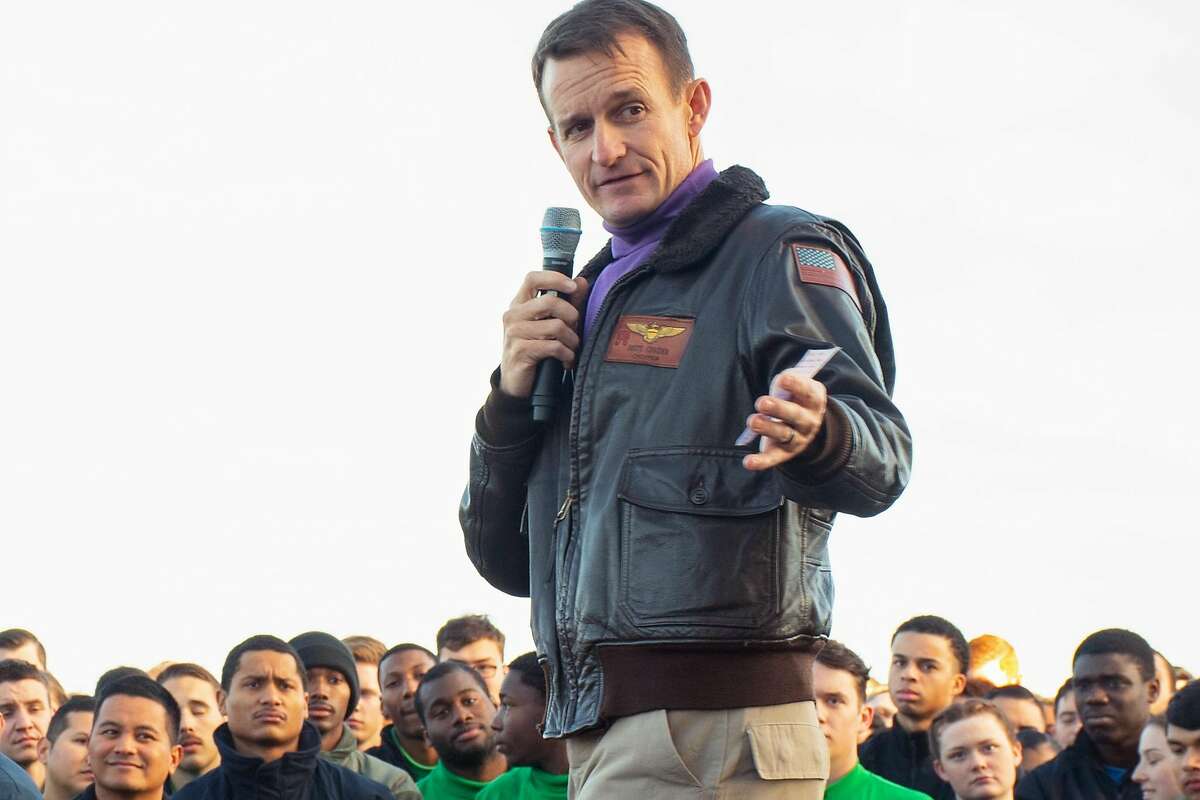
Capt. Brett Crozier wrote a letter to Navy brass Monday pleading for immediate assistance with the exploding COVID-19 outbreak aboard his aircraft carrier, the USS Theodore Roosevelt.
1of4Capt. Brett Crozier wrote a letter to Navy brass Monday pleading for immediate assistance with the exploding COVID-19 outbreak aboard his aircraft carrier, the USS Theodore Roosevelt.Photo: U.S. Navy
Capt. Brett Crozier was the commander of the aircraft carrier Theodore Roosevelt.
2of4Capt. Brett Crozier was the commander of the aircraft carrier Theodore Roosevelt.Photo: Seaman Alexander Williams 2019
Capt. Brett E. Crozier, then commanding officer of the 7th Fleet flagship Blue Ridge, watches as the British Royal Navy frigate HMS Sutherland moors in Yokosuka, Japan. Crozier, a Santa Rosa native, wrote a letter obtained by The Chronicle asking Navy officials for resources to allow isolation of his entire crew and avoid possible deaths in a situation he described as quickly deteriorating.
3of4Capt. Brett E. Crozier, then commanding officer of the 7th Fleet flagship Blue Ridge, watches as the British Royal Navy frigate HMS Sutherland moors in Yokosuka, Japan. Crozier, a Santa Rosa native, wrote a letter obtained by The Chronicle asking Navy officials for resources to allow isolation of his entire crew and avoid possible deaths in a Photo: Spc. 2nd Class Jordan KirkJohnson / U.S. Navy 2018

The captain of a nuclear aircraft carrier who pleaded with Navy officials for more resources to remove most of his nearly 5,000 crew members from the coronavirus-infected warship, warning sailors could die, was relieved of his command Thursday.

Capt. Brett Crozier, commander of the Theodore Roosevelt, sent a letter to Navy leaders this week pleading for immediate help for his crew as the coronavirus spread through the warship. Navy leaders, however, said he showed “extremely poor judgment” in copying the letter to more than 20 people, saying that allowed it to become public and undermine national security.

Acting Navy Secretary Thomas Modly said at a Pentagon news conference that Crozier had been relieved “at my direction.” He said the captain hadn’t let his superiors know the seriousness of the situation aboard his ship before The Chronicle revealed the contents of a letter he wrote to Navy brass, and that he hadn’t taken steps to ensure the plea would not be leaked.

Crozier was dismissed a day after top Navy officials had said he would not face retaliation for the letter asking for measures to help the crew of the aircraft carrier, which is in port in Guam.

“The fact that he wrote the letter … to his chain of command to express his concerns would absolutely not result in any type of retaliation,” Adm. Michael Gilday, chief of naval operations, said Wednesday. “This is what we want our commanding officers to be able to do.”

The send off for Captain Brett Crozier who was relieved from duty for TRYING TO SAVE THE LIVES OF HIS CREW pic.twitter.com/EEDG1U3rYE— Danny Ocean (@The_UnSilent_) April 3, 2020

The plea from Crozier, a Santa Rosa native, was made in a letter, obtained exclusively by The Chronicle, which reported about it Tuesday. Crozier, 50, asked Navy officials for resources to allow isolation of his entire crew and avoid possible deaths in a situation he described as quickly deteriorating.

“This will require a political solution but it is the right thing to do,” Crozier wrote in the letter Monday. “We are not at war. Sailors do not need to die. If we do not act now, we are failing to properly take care of our most trusted asset — our Sailors.”

On Thursday, Modly said Crozier had let his emotions color his judgment and that he had jeopardized naval operations. He said Crozier had been in touch with top military officers before writing the letter and had asked only for quicker evacuation of the carrier’s sailors.

“At no time did (Crozier) relay the various levels of alarm that I, along with the rest of the world, learned from his letter when it was published two days later by the CO’s hometown newspaper,” Modly said.

He said he did not know if Crozier had leaked the letter, but that the captain had copied the email to 20 to 30 people. He said that increased the chances it would be publicized outside the Navy’s chain of command, which showed “extremely poor judgment in times of crisis.”

“Command is a sacred trust, which must be continually earned,” Modly said, adding that he had spoken with Crozier before deciding to relieve him. “As I learned more about the events of the past week aboard the Teddy Roosevelt … I could reach no other conclusion than Capt. Crozier had allowed the complexity of his challenge with the COVID breakout on his ship to overwhelm his ability to act professionally, when acting professionally is what we needed most at the time.”

Just a day before his dismissal, Crozier wrote a letter to Roosevelt sailors and their families, also obtained exclusively by The Chronicle, in which he said he fought to “get all our Sailors into an environment more aligned with Centers for Disease Control and Prevention (CDC) recommendations, and that is more conducive to our team’s wellness, enabling us all to get back to sea.”

He described how each sailor would get an individual room in Guam where they will be fed, have wifi access, laundry service, mail instructions and most importantly their “own space.”

“Upon completion of this process, we will return to sea and be ready to execute whatever orders come our way; healthy and on a clean ship,” Crozier wrote.

Of nearly 1,300 sailors aboard the Theodore Roosevelt who have been screened for the disease, 116 tested positive, Navy officials said Thursday. But about half the tests have not been returned. About 1,000 sailors, or 20%, have been removed from the ship, Navy officials said.

In the next 24 hours, they said, they hope to take a total of 2,700 crew members off the vessel. The first sailors were moved to a oceanfront hotel in the tourist section of Guam on Wednesday.

Retired Adm. James Stavridis, former NATO supreme allied commander in Europe, told The Chronicle this week in an email that “we should expect more such incidents because warships are a perfect breeding ground for coronavirus. … It is impossible to do social distancing” on ships where sailors live in tight quarters.

President Trump was asked at a White House briefing Thursday whether it appeared that Crozier was being punished for trying to save the lives of his crew.

“No, I don’t think so at all,” the president replied. “I don’t agree with that at all. Not at all. Not even a little bit.”

One Roosevelt sailor told The Chronicle that dismissing Crozier was “the exact wrong thing to do.”

“Taking care of your people is the first rule of leadership. Firing him betrays that,” said the sailor, who is not being identified under The Chronicle’s anonymous sources policy because he was not authorized to speak to the media. He said sailors on the ship did not know Crozier had been relieved before the Pentagon announced it.

“We’re rudderless,” the sailor said.

Elizabeth Paz of Tulsa, Okla., whose 19-year-old daughter serves on the carrier, said she couldn’t believe the news.

“My heart just sank when I read that,” Paz told The Chronicle. “That’s just not right. He did what he thought was best for his crew. … Then he did everything he could to get the help he needed. And it worked.

“I thought he would be thought of as a hero after this is all over. Well, he is a hero to me either way. But it’s completely wrong for them to relieve him of his duty.”

Leading Democrats on the House Armed Services Committee blasted Navy leaders for an “overreaction” in dismissing Crozier, although they conceded that he did not handle the matter “appropriately.”

“While Captain Crozier clearly went outside the chain of command, his dismissal at this critical moment — as the sailors aboard the USS Theodore Roosevelt are confronted with the COVID-19 pandemic — is a destabilizing move that will likely put our service members at greater risk and jeopardize our fleet’s readiness,” said a statement signed by committee chair Adam Smith, D-Wash., Rep. John Garamendi, D-Walnut Grove (Sacramento County), Rep. Jackie Speier, D-San Mateo, and others.

“Captain Crozier was justifiably concerned about the health and safety of his crew, but he did not handle the immense pressure appropriately,” the House Democrats said. “However, relieving him of his command, when his crew needs leadership the most, seems like an overreaction.”

Lawrence Korb, a former assistant secretary of defense under President Ronald Reagan, said Crozier was a “real hero” who had put his sailors’ health above career concerns.

“He was trying to get the attention of his chain of command and they weren’t doing anything,” said Korb, a retired Navy captain who is now a senior fellow at the left-leaning Center for American Progress think tank. “Your main obligation is to take care of the women and men you’re in charge of.”

Joe Garofoli, Matthias Gafni and Tal Kopan are San Francisco Chronicle staff writers. Email: jgarofoli@sfchronicle.commatthias.gafni@sfchronicle.comtal.kopan@sfchronicle.com Twitter: @joegarofoli@mgafni@TalKopan

©2020 Hearst

Avenger Planet

by Michael T. Klare
Image courtesy of Trinity Care Foundation
Click this link http://www.tikkun.org/avenger-planet if you prefer to read it on Tikkun’s website.
[Editor’s  Note: It was bound to happen at some historical period that the explicit warning that nature itself would rebel against human perversion at the way we’ve been treating the earth for the past several thousand years, accelerated dramatically in the capitalist societies of the past four hundred years. From my perspective, Earth is alive and our mother, and is a material/ethical/spiritual unity that cannot keep alive its conscious beings while we continue to embody unethical, evil, cruel and wildly insensitive behavior toward each other and toward nature. This theme was beautifully presented again by Deena Metzger in her recent article in Tikkun, and is stated in an ancient language in the 2nd paragraph of the Sh’ma prayer which makes the prediction that worshipping idols (which meant then and now—money and power) we humans would perish from the earth. As I and Metzger both see it, the Coronavirus is only the latest “plague” and the Pharaohs of our time continue to ignore the messages.  We at Tikkun, and thru our ESRA—Environmental and Social Responsibility Amendment to the U.S. Constitution, have proposed some steps that are more radical than the “green new deal” yet actually quite moderate compared to what is fully needed and quickly—the replacement of capitalism by a different system based (check out how you can participate in a nonviolent love-oriented movement by reading my new book Revolutionary Love—which you can get thru www.tikkun.org/lj). Thanks to our media ally Tom Engelhardt of TomDispatch for sharing this article with Tikkun. –Rabbi Michael Lerner  rabbilerner.tikkun@gmail.com]

As the coronavirus sweeps across the planet, leaving death and mayhem in its wake, many theories are being expounded to explain its ferocity. One, widely circulated within right-wing conspiracy circles, is that it originated as a biological weapon developed at a secret Chinese military lab in the city of Wuhan that somehow (perhaps intentionally?) escaped into the civilian population. Although that “theory” has been thoroughly debunked, President Trump and his acolytes continue to call Covid-19 the China Virus, the Wuhan Virus, or even the “Kung Flu,” claiming its global spread was the result of an inept and secretive Chinese government response. Scientists, by and large, believe the virus originated in bats and was transmitted to humans by wildlife sold at a Wuhan seafood market. But perhaps there’s another far more ominous possibility to consider: that this is one of Mother Nature’s ways of resisting humanity’s assault on her essential life systems.Let’s be clear: this pandemic is a world-shattering phenomenon of massive proportions. Not only has it infected hundreds of thousands of people across the planet, killing more than 40,000 of them, but it’s brought the global economy to a virtual stand-still, potentially crushing millions of businesses, large and small, while putting tens of millions, or possibly hundreds of millions, of people out of work. In the past, disasters of this magnitude have toppled empires, triggered mass rebellions, and caused widespread famine and starvation. This upheaval, too, will produce widespread misery and imperil the survival of numerous governments.Understandably, our forebears came to view such calamities as manifestations of the fury of gods incensed by human disrespect for and mistreatment of their universe, the natural world. Today, educated people generally dismiss such notions, but scientists have recently been discovering that human impacts on the environment, especially the burning of fossil fuels, are producing feedback loops causing increasingly severe harm to communities across the globe, in the form of extreme storms, persistent droughts, massive wildfires, and recurring heat waves of an ever deadlier sort.Climate scientists also speak of “singularities,” “non-linear events,” and “tipping points” — the sudden and irreversible collapse of vital ecological systems with far-ranging, highly destructive consequences for humanity. Evidence for such tipping points is growing — for example in the unexpectedly rapid melting of the Arctic icecap. In that context, a question naturally arises: Is the coronavirus a stand-alone event, independent of any other mega-trends, or does it represent some sort of catastrophic tipping point?It will be some time before scientists can answer that question with any certainty. There are, however, good reasons to believe that this might be the case and, if so, perhaps it’s high time humanity reconsiders its relationship with nature.

Humans vs. Nature

It’s common to think of human history as an evolutionary process in which broad, long-studied trends like colonialism and post-colonialism have largely shaped human affairs. When sudden disruptions have occurred, they are usually attributed to, say, the collapse of a long-lasting dynasty or the rise of an ambitious new ruler. But the course of human affairs has also been altered — often in even more dramatic ways — by natural occurrences, ranging from prolonged droughts to catastrophic volcanic activity to (yes, of course) plagues and pandemics. The ancient Minoan civilization of the eastern Mediterranean, for example, is widely believed to have disintegrated following a powerful volcanic eruption on the island of Thera (now known as Santorini) in the 17th century BCE. Archaeological evidence further suggests that other once-thriving cultures were similarly undermined or even extinguished by natural disasters.It’s hardly surprising that the survivors of such catastrophes often attributed their misfortunes to the anger of various gods over human excesses and depredations. In the ancient world, sacrifices — even human ones — were considered a necessity to appease such angry spirits. At the onset of the Trojan War, for example, the Greek goddess Artemis, protectress of wild animals, the wilderness, and the moon, stilled the winds needed to propel the Greek fleet to Troy because Agamemnon, its commander, had killed a sacred deer. To appease her and restore the essential winds, Agamemnon felt obliged — or so the poet Homer tells us — to sacrifice his own daughter Iphigenia (the plot line for many a Greek and modern tragedy).In more recent times, educated people have generally seen coronavirus-style calamities as either inexplicable acts of God or as explicable, if surprising, natural events. With the Enlightenment and the Industrial Revolution in Europe, moreover, many influential thinkers came to believe that humans could use science and technology to overpower nature and so harness it to the will of humanity. The seventeenth-century French mathematician René Descartes, for example, wrote of employing science and human knowledge so that “we can… render ourselves the masters and possessors of nature.”This outlook undergirded the view, common in the last three centuries, that the Earthwas “virgin” territory (especially when it came to the colonial possessions of the major powers) and so fully open to exploitation by human entrepreneurs. This led to the deforestation of vast areas, as well as the extinction or near-extinction of many animals, and in more recent times, to the plunder of underground mineral and energy deposits.As it happened, though, this planet proved anything but an impotent victim of colonization and exploitation. Human mistreatment of the natural environment has turned out to have distinctly painful boomerang effects. The ongoing destruction of the Amazon rain forest, for example, is altering Brazil’s climate, raising temperatures and reducing rainfall in significant ways, with painful consequences for local farmers and even more distant urban dwellers. (And the release of vast quantities of carbon dioxide, thanks to increasingly massive forest fires, will only increase the pace of climate change globally.) Similarly, the technique of hydraulic fracking, used to extract oil and natural gas trapped in underground shale deposits, can trigger earthquakes that damage aboveground structures and endanger human life. In so many ways like these, Mother Nature strikes back when her vital organs suffer harm.This interplay between human activity and planetary behavior has led some analysts to rethink our relationship with the natural world. They have reconceptualized the Earth as a complex matrix of living and inorganic systems, all (under normal conditions) interacting to maintain a stable balance. When one component of the larger matrix is damaged or destroyed, the others respond in their unique ways in attempting to restore the natural order of things. Originally propounded by the environmental scientist James Lovelock in the 1960s, this notion has often been described as “the Gaia Hypothesis,” after the ancient Greek goddess Gaia, the ancestral mother of all life.

Climate Tipping Points

Posing the ultimate threat to planetary health, climate change — a direct consequence of the human impulse to dump ever more greenhouse gases into the atmosphere, potentially heating the planet to the breaking point — is guaranteed to generate the most brutal of all such feedback loops. By emitting ever more carbon dioxide and other gases, humans are fundamentally altering planetary chemistry and posing an almost unimaginable threat to natural ecosystems. Climate-change deniers in the Trumpian mode continue to insist that we can keep doing this with no cost to our way of life. It is, however, becoming increasingly apparent that the more we alter the climate, the more the planet will respond in ways guaranteed to endanger human life and prosperity.The main engine of climate change is the greenhouse effect, as all those greenhouse gases sent into the atmosphere entrap ever more radiated solar heat from the Earth’s surface, rising temperatures worldwide and so altering global climate patterns. Until now, much of this added heat and carbon dioxide has been absorbed by the planet’s oceans, resulting in rising water temperatures and the increased acidification of their waters. This, in turn, has already led to, among other deleterious effects, the mass die-off of coral reefs — the preferred habitat of many of the fish species on which large numbers of humans rely for their sustenance and livelihoods. Just as consequential, higher ocean temperatures have provided the excess energy that has fueled many of the most destructive hurricanes of recent times, including Sandy, Harvey, Irma, Maria, Florence, and Dorian.A warmer atmosphere can also sustain greater accumulations of moisture, making possible the prolonged downpours and catastrophic flooding being experienced in many parts of the world, including the upper Midwest in the United States. In other areas, rainfall is decreasing and heat waves are becoming more frequent and prolonged, resulting in devastating wildfires of the sort witnessed in the American West in recent years and in Australia this year.In all such ways, Mother Nature, you might say, is striking back. It is, however, the potential for “non-linear” events and “tipping points” that has some climate scientists especially concerned, fearing that we now live on what might be thought of as an avenging planet. While many climate effects, like prolonged heat waves, will become more pronounced over time, other effects, it is now believed, will occur suddenly, with little warning, and could result in large-scale disruptions in human life (as in this coronavirus moment). You might think of this as Mother Nature saying, “Stop! Do not go past this point or there will be dreadful consequences!”Scientists are understandably cautious in discussing such possibilities, as they are harder to study than linear events like rising world temperatures. But the concern is there. “Large-scale singular events (also called ‘tipping points,’ or critical thresholds) are abrupt and drastic changes in physical, ecological, or social systems” brought about by the relentless rise in temperatures, noted the U.N.’s Intergovernmental Panel on Climate Change (IPCC) in its comprehensive 2014 assessment of anticipated impacts. Such events, the IPCC pointed out, “pose key risks because of the potential magnitude of the consequences; the rate at which they would occur; and, depending on this rate, the limited ability of society to cope with them.”Six years later, that striking description sounds eerily like the present moment.Until now, the tipping points of greatest concern to scientists have been the rapid melting of the Greenland and West Antarctic ice sheets. Those two massive reservoirs of ice contain the equivalent of hundreds of thousands of square miles of water. Should they melt ever more quickly with all that water flowing into neighboring oceans, a sea level rise of 20 feet or more can be expected, inundating many of the world’s most populous coastal cities and forcing billions of people to relocate. In its 2014 study, the IPCC predicted that this might occur over several centuries, at least offering plenty of time for humans to adapt, but more recent research indicates that those two ice sheets are melting far more rapidly than previously believed — and so a sharp increase in sea levels can be expected well before the end of this century with catastrophic consequences for coastal communities.The IPCC also identified two other possible tipping points with potentially far-reaching consequences: the die-off of the Amazon rain forest and the melting of the Arctic ice cap. Both are already underway, reducing the survival prospects of flora and fauna in their respective habitats. As these processes gain momentum, entire ecosystems are likely to be obliterated and many species killed off, with drastic consequences for the humans who rely on them in so many ways (from food to pollination chains) for their survival. But as is always the case in such transformations, other species — perhaps insects and microorganisms highly dangerous to humans — could occupy those spaces emptied by extinction.

Climate Change and Pandemics

Back in 2014, the IPCC did not identify human pandemics among potential climate-induced tipping points, but it did provide plenty of evidence that climate change would increase the risk of such catastrophes. This is true for several reasons. First, warmer temperatures and more moisture are conducive to the accelerated reproduction of mosquitoes, including those carrying malaria, the zika virus, and other highly infectious diseases. Such conditions were once largely confined to the tropics, but as a result of global warming, formerly temperate areas are now experiencing more tropical conditions, resulting in the territorial expansion of mosquito breeding grounds. Accordingly, malaria and zika are on the rise in areas that never previously experienced such diseases. Similarly, dengue fever, a mosquito-borne viral disease that infects millions of people every year, is spreading especially quickly due to rising world temperatures.Combined with mechanized agriculture and deforestation, climate change is also undermining subsistence farming and indigenous lifestyles in many parts of the world, driving millions of impoverished people to already crowded urban centers, where health facilities are often overburdened and the risk of contagion ever greater. “Virtually all the projected growth in populations will occur in urban agglomerations,” the IPCC noted then. Adequate sanitation is lacking in many of these cities, particularly in the densely populated shantytowns that often surround them. “About 150 millionpeople currently live in cities affected by chronic water shortages, and by 2050, unless there are rapid improvements in urban environments, the number will rise to almost a billion.”Such newly settled urban dwellers often retain strong ties to family members still in the countryside who, in turn, may come in contact with wild animals carrying deadly viruses. This appears to have been the origin of the West African Ebola epidemic of 2014-2016, which affected tens of thousands of people in Guinea, Liberia, and Sierra Leone. Scientists believe that the Ebola virus (like the coronavirus) originated in bats and was then transmitted to gorillas and other wild animals that coexist with people living on the fringes of tropical forests. Somehow, a human or humans contracted the disease from exposure to such creatures and then transmitted it to visitors from the city who, upon their return, infected many others.The coronavirus appears to have had somewhat similar origins. In recent years, hundreds of millions of once impoverished rural families moved to burgeoning industrial cities in central and coastal China, including places like Wuhan. Although modern in so many respects, with its subways, skyscrapers, and superhighways, Wuhan also retained vestiges of the countryside, including markets selling wild animals still considered by some inhabitants to be normal parts of their diet. Many of those animals were trucked in from semi-rural areas hostinglarge numbers of bats, the apparent source of both the coronavirus and the Severe Acute Respiratory Syndrome, or SARS, outbreak of 2013, which also arose in China. Scientific research suggests that breeding grounds for bats, like mosquitoes, are expanding significantly as a result of rising world temperatures.The global coronavirus pandemic is the product of a staggering multitude of factors, including the air links connecting every corner of the planet so intimately and the failure of government officials to move swiftly enough to sever those links. But underlying all of that is the virus itself. Are we, in fact, facilitating the emergence and spread of deadly pathogens like the Ebola virus, SARS, and the coronavirus through deforestation, haphazard urbanization, and the ongoing warming of the planet? It may be too early to answer such a question unequivocally, but the evidence is growing that this is the case. If so, we had better take heed.

Heeding Mother Nature’s Warning

Suppose this interpretation of the Covid-19 pandemic is correct. Suppose that the coronavirus is nature’s warning, its way of telling us that we’ve gone too far and must alter our behavior lest we risk further contamination. What then?To adapt a phrase from the Cold War era, what humanity may need to do is institute a new policy of “peaceful coexistence” with Mother Nature. This approach would legitimize the continued presence of large numbers of humans on the planet but require that they respect certain limits in their interactions with its ecosphere. We humans could use our talents and technologies to improve life in areas we’ve long occupied, but infringement elsewhere would be heavily restricted. Natural disasters — floods, volcanoes, earthquakes, and the like — would, of course, still occur, but not at a rate exceeding what we experienced in the pre-industrial past.Implementation of such a strategy would, at the very least, require putting the brakes on climate change as swiftly as possible through the rapid and thorough elimination of human-induced carbon emissions — something that has, in fact, happened in at least a modest way, and however briefly, thanks to this Covid-19 moment. Deforestation would also have to be halted and the world’s remaining wilderness areas preserved as is forever. Any further despoliation of the oceans would have to be stopped, including the dumping of wastes, plastics, engine fuel, and runoff pesticides.The coronavirus may not, in retrospect, prove to be the tipping point that upends human civilization as we know it, but it should serve as a warning that we will experience ever more such events in the future as the world heats up. The only way to avert such a catastrophe and assure ourselves that Earth will not become an avenger planet is to heed Mother Nature’s warning and cease the further desecration of essential ecosystems.
__Michael T. Klare is the five-college professor emeritus of peace and world security studies at Hampshire College and a senior visiting fellow at the Arms Control Association. He is the author of 15 books, including the just-published All Hell Breaking Loose: The Pentagon’s Perspective on Climate Change (Metropolitan Books).

It’s OK to feel overwhelmed. Here’s what to do next

Elizabeth Gilbert|TED Connects

If you’re feeling anxious or fearful during the coronavirus pandemic, you’re not alone. Offering hope and understanding, author Elizabeth Gilbert reflects on how to stay present, accept grief when it comes and trust in the strength of the human spirit. “Resilience is our shared genetic inheritance,” she says. (This virtual conversation is part of the TED Connects series, hosted by head of TED Chris Anderson and head of curation Helen Walters. Recorded April 2, 2020)

This talk was presented at an official TED conference, and was featured by our editors on the home page.

ABOUT THE SPEAKERS

Elizabeth Gilbert · WriterThe author of “Eat, Pray, Love,” Elizabeth Gilbert has thought long and hard about some big topics. Her fascinations: genius, creativity and how we get in our own way when it comes to both.

Chris Anderson · Head of TEDAfter a long career in journalism and publishing, Chris Anderson became the curator of the TED Conference in 2002 and has developed it as a platform for identifying and disseminating ideas worth spreading.

Helen Walters · Curator

Helen Walters is the head of curation at TED, where she has the immense privilege of overseeing the work of an absurdly talented group of specialist curators and deep thinkers to bring the very sharpest minds and ideas to the TED stage.

Drake – Toosie Slide

Drake Toosie Slide (Official Video) Director: Theo Skudra Producer: Christian Tyler Production Company: Colossale Cinematographer: Theo Skudra Production Coordinator: Alex Dall’Orso B Cam: Ali Khurshid Loader/Drone Op: Tristan Clarke-McMurchy PA: Kit Weyman and Jade-Elie Pascual SFX Company: Dynamic Effects Collective SFX Supervisor: Hudson Kenny SFX Technician: Matthew Beecraft Editor: Theo Skudra Assistant Editor: Ashton Lewis Finishing Company: Artjail Artjail Executive Producer: Leslie McCartney Artjail Producer: Caitlin Schooley Artjail Coordinator: Alison Maxwell Colourist: Clinton Homuth Assistant: Kevin Wu

Lyrics:

Black leather glove, no sequins
Buckles on the jacket, it’s Alyx shit
Nike crossbody, got a piece in it
Got a dance, but it’s really on some street shit
I’ma show you how to get it

It go right foot up, left foot, slide
Left foot up, right foot, slide
Basically, I’m sayin’, either way, we ’bout to slide, ayy
Can’t let this one slide, ayy

Don’t you wanna dance with me?
No? I could dance like Michael Jackson
I could give you thug passion
It’s a Thriller in the trap where we from

Baby, don’t you wanna dance with me?
No? I could dance like Michael Jackson
I could give you satisfaction
And you know we out here everyday with it
I’ma show you how to get it

It go right foot up, left foot, slide
Left foot up, right foot, slide
Basically, I’m sayin’, either way, we ’bout to slide, ayy
Can’t let this one slide, ayy (Who’s babe?)

Two thousand shorties wanna tie the knot, ayy, yeah
Two hundred shooters on my brother’s block, woah, yeah
Petal off the rose like I love her not, maybe not
I don’t know what’s wrong with me, I can’t stop, woah, yeah

Won’t stop, woah, yeah, never stop
Got so many opps, I be mistakin’ opps for other opps
Got so many people that I love out of troubled spots

Other than the family I got, it’s either you or me
That’s just how I think, it’s either you or me
This life got too deep for you, baby
Two or three of us about to creep where they stayin’

Black leather glove, no sequins
Buckles on the jacket, it’s Alyx shit
Nike crossbody, got a piece in it
Got a dance, but it’s really on some street shit
I’ma show you how to get it

It go right foot up, left foot, slide
Left foot up, right foot, slide
Basically, I’m sayin’, either way, we ’bout to slide, ayy
Can’t let this one slide, ayy (Who’s babe?)

Toosie slide, then I hit it double time
Then I hit a spin ’cause we spun their block a couple times
If it’s not the right time, there’ll always be another time
I’m not even trippin’, we’ll just see ’em in the summertime, woah, yeah

Can’t describe the pressure I be puttin’ on myself, yeah
Really, I just can’t afford to lose nobody else, yeah
If they movin’ shaky, we’ll just do this shit ourselves, woah
If I’m movin’ shaky, Chubbs’ll do this shit himself, yeah

Solo niggas, only YOLO, for real
Heard a lot about ya but we don’t know, for real
Next time guarantee the truth’ll get revealed

Black leather gloves, no sequins (Yeah)
Buckles on the jacket, it’s Alyx shit
Nike crossbody, got a piece in it
Got a dance, but it’s really on some street shit
I’ma show you how

It go right foot up, left foot, slide
Left foot up, right foot, slide
Basically, I’m sayin’, either way we ’bout to slide, ayy
Can’t let this one slide, ayy

Don’t you wanna dance with me?
No? I could dance like Michael Jackson (Jackson)
I could give you thug passion (Passion)
It’s a Thriller in the trap where we from

Baby, don’t you wanna dance with me?
No? I could dance like Michael Jackson (Jackson)
I could give you satisfaction (‘Faction)
And you know we out here everyday with it
I’ma show you how to get it

It go right foot up, left foot, slide
Left foot up, right foot, slide
Basically, I’m sayin’, either way we ’bout to slide
(Who’s bae?)

Letra: https://geniuslyrics.net/drake/toosie-slide/

“Sweet Child O’ Mine” – New Orleans Style Guns N’ Roses Cover with Miche Braden

PostmodernJukebox Tune Into our VIRTUAL Music Festival April 2nd & 3rd: https://pmjlive.com/shelterinswing See PMJ Live: http://pmjlive.com?IQid=Youtube | Download: http://smarturl.it/EssentialsPMJ Sheet Music: http://bit.ly/SweetChildSheet Our friend Miche Braden returned to help us show what Guns N’ Roses “Sweet Child O’ Mine” would have sounded like if New Orleans blues legend Bessie Smith had recorded it back in the ’20s. That note at 3:58 was so powerful that the room literally shook… p.s. – those looking for the iconic opening guitar riff: it’s at 2:04 Check out Miche’s show, “The Devil’s Music: The Life and Blues of Bessie Smith”: http://devilsmusic.biz Scott Bradlee’s Postmodern Jukebox: http://postmodernjukebox.com/https://www.facebook.com/postmodernju…

(Contributed by Gwyllm Llwydd.)

5 Unexpected Signs Your Life Is Changing for the Better

Mel Rie

Mel Rie · Feb 21 · Medium.com

Even when it’s hard to gauge, these indicators will tell you when you’re on the right path

Photo by Kristopher Roller on Unsplash

Ifyou want your life to fundamentally change, you need to fundamentally change how you show up to it. Getting down to the core of who we are and what we want in life gets messy, but the good news is you’re probably doing better than you think.

We don’t always notice them, but the side effects of moving toward your tangible dreams and goals are good indicators you’re on the right path. You’ll know you’re killin’ it if these less “conscious” changes are taking place.


You’re starting to do crazy little things

Maybe there’s someone in the building at work you keep noticing. You have a sudden instinctual urge to know them. Normally you’d ignore that because it’s weird. But this time, based on a random gut feeling, you go out of your way to talk to them.

Who knows what happens next — maybe you just made a new work friend, maybe they offer inspiration or advice that changes your life. The main thing is you know how to listen to and follow your intuition.

Intuition is whispering to us all the time, but we’re usually too busy and noisy to listen. If you’re doing crazy little things you feel compelled to do but can’t quite explain, you’re tapped into something special. You’re waking up.

Your tribe is changing

That might mean you feel disconnected from people you’ve had in your life for years, and it probably feels confusing and painful. But know this — you’re moving away from people that don’t feel right anymore and you’re moving toward people that do.

Having people in your life that you consciously chose to fill it withis one of the best things you can do for yourself. Your tribe changing means your worldview is changing.

I have totally different people filling up my life and time right now than I did a year ago, and they reflect everything I love about myself and want more of. They feel right. They’re believers. They teach me things.

You laugh at your negative thoughts instead of trying to fix them

Being curious about your negative thought patterns and identifying what limiting beliefs fog your mind is great and all. Really. But if you’ve found yourself laughing at your own mind, like genuinely laughing out loud at the little fearful voice that whispered something rude to you, that’s the best “fix” there is. You’ve done it.

You know your thoughts don’t control you. They are separate from you. Keep laughing at them.

You notice your senses more often

Sometimes it’s as simple as damn, this grapefruit tastes amazing. When did these get so good? As inconsequential as it sounds, so many people are entirely unconscious and don’t notice things like this.

If you’re noticing the sun on your face when you step outside, the taste of good food in your mouth, the change in your body after you exercise and sweat, you’re not sleepwalking through life anymore.

You know to come up for air and not take this so seriously

Some people might fight me on this one.

By “this” I mean all this. You’re focusing on your side hustle, your quest for self improvement, your work, life. But you also know how to ease up and enjoy your time and the life unfolding around you without feeling the need to constantly be bettering yourself, and that means you’re doing something that a lot of people don’t know how to do. Including a lot of these self-improvement touting gurus. Sometimes… let go of the productivity hacks, alright?

Eat, drink and be merry, my friends.

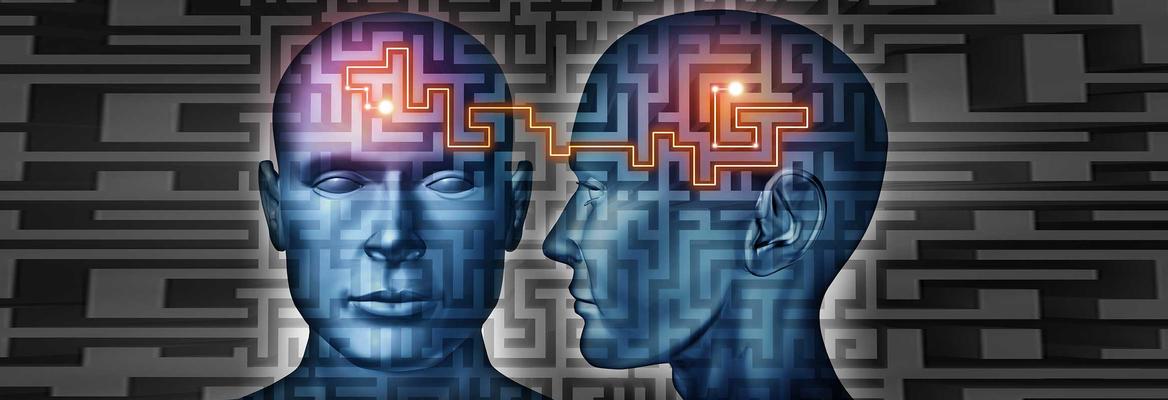
Matter is nothing more than the extrinsic appearance of inner experience

The external world is constituted by transpersonal experiential states

Bernardo Kastrup

Issue 86, 1st March 2020 (iai.tv)

Bernardo Kastrup

 | Dutch computer scientist and philosopher who has published fundamental theoretical reflections on the mind matter problem.

There is no heroic challenge to be faced here, merely an embarrassing sign that our most basic assumptions about the nature of reality are dead wrong.

The hard problem of consciousness is not a problem that needs to be solved, for it doesn’t exist in any objective sense. It is merely an internal contradiction of the reasoning behind metaphysical materialism, a conceptual short-circuit that arises as we logically work out the implications of the materialist conception of matter. There is no heroic challenge to be faced here, merely an embarrassing sign that our most basic assumptions about the nature of reality are dead wrong.

Like the rest of us, metaphysical materialists start from the contents of their own consciousness, such as perceptual experiences. All they are ever directly acquainted with are the colours, flavours and tones they perceive. But in order to explain why the external world we inhabit doesn’t comply with our inner wishes and fantasies, materialists consciously postulate that the world is constituted by a medium outside and independent of consciousness—namely, matter. As such, matter is a tentative explanatory abstraction, a conceptual creation of reasoning consciousness. We can never become directly acquainted with matter, for all we ever know about the world are our conscious perceptions.

Having conjured up matter, materialists then posit that their consciousness—where matter is conceived to begin with—must be reducible to matter; that is, to one of consciousness’s own abstractions. This is a contradiction in terms, specifically because of how materialists define matter.

Indeed, under mainstream materialism matter is defined in purely quantitative terms: measurable values of mass, electric charge, momentum, position, frequency, amplitude, etc. Once these numerical values are determined—be it through direct measurement or inference—they ostensibly say everything there is to be said about matter; nothing else is left. There is nothing about matter that isn’t captured by a list of numbers. Hence, under materialism matter—by definition—has only quantitative properties.

Quantities are useful in describing relative differences between qualities already known experientially, but they completely miss the qualities themselves.

Where does this idea of using quantities to define the world come from? It’s not difficult to see: quantities are very useful to describethe relative differences of the contents of perception. For instance, the relative difference between red and blue can be compactly described by frequency values: blue has a higher frequency than red, so we can quantify the visual difference between the two colours by subtracting one frequency from the other. But frequency numbers cannot absolutely describe a colour: if you tell a congenitally blind person that red is an electromagnetic field vibration of about 430 THz, the person will still have no idea of what it feels like to see red. Quantities are useful in describing relative differences between qualities already known experientially, but they completely miss the qualities themselves.

And here is where materialism incurs its first fatal error: it replaces the qualitative world of colours, tones and flavours—the only external world we are directly acquainted with—with a purely quantitative description that structurally fails to capture any quality whatsoever. It mistakes the usefulness of quantities in determining relative differences between qualities for—absurdly—something that can replace the qualities themselves.

Next, materialism attempts to deduce the contents of consciousness from the matter in our brain. In other words, it tries to recover the qualities of experience from mere quantities that, by deliberate definition, leave out everything that has anything to do with qualities in the first place. The self-defeating nature of this manoeuvre is glaringly obvious once one actually understands the magic mainstream materialism is trying to perform. This is precisely why the hard problem isn’t just hard, but impossible by construction. Yet, instead of realising this, we get lost in conceptual confusion and hope to, one day, heroically prevail against the hard problem. It would be an inspiring story of human resolve if it weren’t so embarrassingly silly.

If matter is a self-defeating concept, how can we explain the fact that we all seem to inhabit a common external world, whose dynamisms are clearly independent of our own conscious inner life?

In summary, from within their consciousness materialists fantasise about a world of matter putatively outside consciousness. This imagined world is, by deliberate definition, incommensurable with the qualities of conscious experience to begin with. Then, in a majestic feat of conceptual masochism, materialists set out to reduce the contents of consciousness to such abstract… well, content of consciousness. This is the tragicomic background story of the hard problem; a problem that need not be solved as much as seen through in all its gloriously self-defeating contradictoriness.

“But what is the alternative?” I hear you ask. If matter is a self-defeating concept, how can we explain the fact that we all seem to inhabit a common external world, whose dynamisms are clearly independent of our own conscious inner life?

First of all, let us immediately acknowledge the empirically obvious: there is a world beyond and independent of our individual consciousness; a world that we all inhabit. And, alas, we clearly can’t change how this world works by a mere act of individual conscious volition. But to acknowledge this does not require the bankrupt notion of matter outside consciousness. It only requires a transpersonal consciousness within which our individual consciousnesses are immersed.

Indeed, I maintain that the external world is itself constituted by transpersonal experiential states that simply present themselves to us in the form we call ‘matter.’ As such, ‘matter’ is merely the extrinsic appearance—the image—of inner experience; there’s nothing more to it. In the case of living beings, the ‘matter’ constituting their body is the extrinsic appearance of their individual experiential states (this being the reason why measurable patterns of brain activity correlate with inner experience). In the case of the inanimate universe, on the other hand, ‘matter’ is the extrinsic appearance of transpersonal experiential states.

‘Matter’ is merely the extrinsic appearance—the image—of inner experience; there’s nothing more to it. 

This hypothesis completely circumvents the hard problem, for it doesn’t require reducing qualities to mere quantities; it only requires reducing certain qualities to other qualities: the colours, tones and flavours that appear on our screen of perception are modulated by endogenous experiential states—such as instinctive thoughts and feelings—underlying the inanimate universe around us. This modulation between different types of qualities happens every day in our own consciousness: our thoughts routinely modulate our emotions, and vice-versa, although thoughts and emotions are qualitatively very different.

I am keenly aware that what I am suggesting above raises many questions, but it is impossible to answer them in a short essay such as this. Indeed, I’ve spent over a decade trying to give these questions a proper treatment, which required the many books and articles in my body of work. Here, beyond making clear that the hard problem is merely an internal contradiction of a bankrupt system of thought, I just wanted to hint at how it can be circumvented if one… well, thinks straight.

If you want to hear from leading thinkers like this debating renowned philosophers, cutting edge scientists, headline-making politicians, and beloved artists, come to HowTheLightGetsIn Hay 2020 for four days of debates and talks alongside music, comedy and parties.

Bernardo Kastrup will be appearing in The Limits of Material discussing consciousness and idealism.

History vs. Sigmund Freud

Todd Dufresne|TED-Ed

Working in Vienna at the turn of the 20th century, he began his career as a neurologist before pioneering the discipline of psychoanalysis, and his influence towers above that of all other psychologists in the public eye. But was Sigmund Freud right about human nature? And were his methods scientific? Todd Dufresne puts this controversial figure on trial in History vs. Sigmund Freud. [Directed by Brett Underhill, narrated by Addison Anderson].

MEET THE EDUCATORTodd Dufresne · Educator

ABOUT TED-EDTED-Ed Original lessons feature the words and ideas of educators brought to life by professional animators.