SUNDAY NIGHT TRANSLATION GROUP – 3/24/19

Translators:  Melissa Goodnight, Richard Branam, Mike Zonta, Hanz Bolen, Alex Gambeau

SENSE TESTIMONY:  Technology will make secrets impossible and cause potential misuse of power.

5th Step Conclusions:

1)  Truth is the infinite ability, infinite power of one being, one intelligence (with nothing set aside or secret), whose only potential is the crafting together of appropriate usefulness.

2)  Infinite Consciousness Beingness is pure essential principle, confidently intending the application of all knowing, toward perfectly crafting all doing — so every revelation is always rightly used to fullest capacity.

3)  It is the Sweet Communion of the secret I AM I that is within All, that comforts all.

4)  Each and Every Individuation of All ONe Mind I am, Instantaneously has at hand abundant well strong able harmonious choices and actions as the Universal Integrity of Being that is all there is. Instantaneous able choice is all there is.

5)  Truth Is the Absolute Autistical Harmony, the Kingdom of Abstract Cause, Being the Utilization of Relationships, this Certainty of Omnipotence is the (Discernment) Tasteful Delicacy of the exponential  Consciousness Aware Commonwealth of Living Life in Intentional Abundance.

What on Earth are these Spontaneity Conversations?

Well, their first purpose is to allow spontaneity to arise and enjoy it through simple unplanned conversation.  The most usual response from people that have participated in one is that it is very enjoyable, informative and lots of fun. Also, I share the YouTube recordings of them with the world; it is a way to introduce people by showing them how Prosperos people act when in conversation.
.
But we’re still in the development stages, learning to relax into them, learning to be familiar and comfortable with the Zoom technology, and learning to set ourselves up so that we can feel comfortable having our video camera on.
.
New people especially enjoy them because they get to really see who we are and how we behave when we’re in spontaneous conversation with each other, before explicitly explaining who we are through text, Sunday meetings, special events, and classes.
.
In the resulting YouTube recordings of the conversations, those who view it, new or old, really enjoy seeing each person present in the live video.  The problem with keeping your camera off is that viewers will hear your voice but not see you when you speak, thereby giving the impression that your voice is coming from a disembodied spirit in another dimension.
.
As far as feeling comfortable having your camera on during the meeting, where everyone else in the meeting can see you, some like to do so and some prefer not to be seen.  But the key here is simply to prepare yourself to go public.
.
In order for me to feel comfortable having my camera on, I have to wash up and dress up and be presentable for the camera. Also in my case, I have to clean up the part of my apartment that will be shown as behind me. Another important thing is the lighting, which is very important for video. The main light cannot be behind you or it makes your face look dark. The light needs to come from in front of you, or from each side, or both. Also, you don’t want extreme light on you, like sunshine, because in that case, the strong light makes most of your face look flat white with no features. You can test this out by simply starting your own Zoom meeting with video on and see how it looks, and modify your lighting until it looks good.
.
Why pay attention to all this?  Because, the resultant videos will be going out to the full distribution list, posted on the Bathtub Bulletin, posted to 19,878 people on Facebook, and next time it will also be posted on The Prosperos’ website. Also, everyone is encouraged to share them with friends and on your own Facebook timeline or other social media.
.
They’re always on Saturday, once a month, the third or fourth Saturday of the month (depending on what else may be going on on those dates), and always at 9:00 AM Pacific Time.
.
The next one will be on April 27th through the Zoom link https://zoom.us/j/184330520
.
I usually send out three or more reminders before each event.
.
Please consider attending one of them.
.
Much Love,
.
Ben
.
EmojiEmoji

New Zealand honours attack victims with silence, call to prayer

Date created : 

William West / AFP | People pray during congregational Friday prayers and two minutes of silence for victims of the twin mosque massacre, at Hagley Park in Christchurch on March 22, 2019.

Text by:NEWS WIRES

The Muslim call to prayer rang out across New Zealand on Friday followed by two minutes of nationwide silence to mark a week since a white supremacist gunned down 50 people at two mosques in the city of Christchurch.

As the call was broadcast around the country, thousands — including Prime Minister Jacinda Ardern and wounded survivors — stood in a park opposite the mosque where the killing began, as the nation of 4.5 million came to a standstill.

New Zealand is still in shock following the killings by alleged shooter Brenton Tarrant, a 28-year-old Australian national who had hoped to foment an ethnic war with his attacks.

But horrified Kiwis have responded with outpourings of love, with many embracing their Muslim neighbours on Friday in moving scenes across the country.

A muezzin in white skullcap issued the call to regular Friday prayers at 1.30 pm (0030 GMT) with chants of “Allahu Akhbar” (God is greatest) as thousands listened in Christchurch’s Hagley Park, across from the Al Noor Mosque.

New Zealand PM Ardern addresses ceremony to honour attack victims

The country then fell silent for two minutes, with public gatherings in Auckland, Wellington and other cities.

In neighbouring Australia, people stopped in the streets and in shops to mark the moment.

Al Noor imam Gamal Fouda then took to the lectern at Hagley Park to denounce the “evil ideology of white supremacy” and praise Kiwis for their support.

Unbreakable

“I look out and I see the love and compassion in the eyes of thousands of fellow New Zealanders and human beings from across the globe,” Fouda said.

“This terrorist sought to tear our nation apart with an evil ideology… But, instead, we have shown that New Zealand is unbreakable.”

The Al Noor mosque remains closed as workers repair bullet-pocked walls and clean blood-spattered floors.

But after Friday’s prayers, the sombre mood outside lightened markedly as non-Muslims approached the mosque to lay flowers or embrace and take selfies with Muslims.

Koro Tini, a 46-year-old Maori man with elaborate traditional facial tattoos and ceremonial native cloak, embraced and touched noses with a man who was among a group of Muslim worshippers.

Gamal Fouda, Imam of Al Noor mosque: ‘we have shown that New Zealand is unbreakable’

“We weren’t meaning to pose for pictures but people wanted to do it after the prayers. There’s a sense of joy and rejoicing,” Tini said.

‘Hate cannot win’

Many women across the country wore headscarves in solidarity with Muslims.

“I can take my scarf off if I feel afraid. They cannot,” said Kirsty Wilkinson, who came to Hagley Park with two friends, all in make-shift hijabs.

“The message I want to send is that hate cannot win.”

Tarrant took advantage of relatively lax New Zealand gun laws to acquire military-style weapons that he used to mow down 50 men, women and children — ranging in age from three years to 77 — and leaving dozens injured in an attack live-streamed online.

New Zealand police revealed on Friday that in October 2017 they met with Tarrant at his home and conducted a “security inspection” as part of the gun licence approval process.

The “correct process” was followed and the licence was granted, a police statement said.

Tarrant is in police custody and has been charged with murder.

Ardern on Thursday announced an immediate ban on assault rifles and military-style semi-automatic weapons, making good on a pledge to rid the country of the kinds of weapons the gunman used.

Police said that by Friday morning more than 1,000 people had contacted them about handing in firearms now in private possession, which are now outlawed and must be turned in under a government buyback scheme.

Prayers and pause

Major New Zealand newspapers published special tributes on Friday, with the front page of Christchurch daily The Press bearing the Arabic word “Salam” (Peace) and the names of the 50 killed.

The national mourning and moment of silence were broadcast on television networks, radio and across multiple local media websites.

“We are so happy that this prayer will be broadcast to the entire world so that everyone can be part of it,” Mustafa Farouk, president of the Federation of Islamic Associations of New Zealand, said in a statement announcing the prayer session.

Burials also resumed Friday in Christchurch, with 26 people expected to be laid to rest, ranging from three-year-old Mucaad Ibrahim to 77-year-old Muse Awale.

Salwa Mustafa, who lost her husband Khalid and 15-year-old son Hamza in the massacre, had defiant words despite her devastating loss.

“People say that… Muslims are terrorists. The whole world saw who is the terrorist,” she said of the shooter.

“Muslims are people of peace and love, not terrorists. And I hope the whole world now can understand the real Islam, the reality of Islam.”

(AFP)

Book: “The Power of Vulnerability: Teachings of Authenticity, Connections and Courage”

The Power of Vulnerability: Teachings of Authenticity, Connections and Courage

The Power of Vulnerability: Teachings of Authenticity, Connections and Courage

by Brené Brown (Goodreads Author)

Show Up and Let Yourself be Seen 

Is vulnerability the same as weakness? “In our culture,” teaches Dr. Brené Brown, “we associate vulnerability with emotions we want to avoid such as fear, shame, and uncertainty. Yet we too often lose sight of the fact that vulnerability is also the birthplace of joy, belonging, creativity, authenticity, and love.” On The Power of Vulnerability, Dr. Brown offers an invitation and a promise – that when we dare to drop the armor that protects us from feeling vulnerable, we open ourselves to the experiences that bring purpose and meaning to our lives. Here she dispels the cultural myth that vulnerability is weakness and reveals that it is, in truth, our most accurate measure of courage.

“The Power of Vulnerability is a very personal project for me,” Brené explains. “This is the first place that all of my work comes together. This audio course draws from all three of my books – it’s the culmination of everything I’ve learned over the past twelve years. I’m very excited to weave it all into a truly comprehensive form that shows what these findings and insights can mean in our lives.”

Guidance and Insights for Wholehearted Living

Over the past twelve years, Dr. Brené Brown has interviewed hundreds of people as part of an ongoing study of vulnerability. “The research shows that we try to ward disappointment with a shield of cynicism, disarm shame by numbing ourselves against joy, and circumvent grief by shutting off our willingness to love,” explains Dr. Brown. When we become aware of these patterns, she teaches, we begin to become conscious of how much we sacrifice in the name of self-defense -and how much richer our lives become when we open ourselves to vulnerability.

“In my research,” Dr. Brown says, “the word I use to describe people who can live from a place of vulnerability is wholehearted.” Being wholehearted is a practice—one that we can choose to cultivate through empathy, gratitude, and awareness of our vulnerability armor. Join this engaging and heartfelt teacher on The Power of Vulnerability as she offers profound insights on leaning into the full spectrum of emotions—so we can show up, let ourselves be seen, and truly be all in.

HIGHLIGHTS

Cultivating shame resilience—the key to developing a sense of worth and belonging.
Vulnerability as the origin point for innovation, adaptability, accountability, and visionary leadership.
Our emotional armory – how we use perfectionism, numbing, and other tactics to avoid feeling vulnerable.
The myths of vulnerability – common misconceptions about weakness, trust, and self-sufficiency.
Discovering your vulnerability armor – recognizing what makes us shut down, and how we can change.
The 10 guideposts of wholehearted living – essential skills for becoming fully engaged in life.
Six hours of stories, warm humor, and transformative insights for living a life of courage, authenticity, and compassion from Dr. Brené Brown.

Rethinking what sets humans apart starts with asking if we’re special at all

By Adam Rutherford

March 18, 2019 (popsci.com)

Human animal humanimal hand swan feeding

What separates humans from other animals?  Deposit Photos

You are an animal, but a very special one. Mostly bald, you’re an ape, descended from apes; your features and actions are carved or winnowed by natural selection. But what a special simian you are. Shakespeare crystalized this thought a good 250 years before Charles Darwin positioned us as a creature at the end of the slightest of twigs on a single, bewildering family tree that encompasses 4 billion years, a lot of twists and turns, and 1 billion species.

“What a piece of work is a man!” marvels Hamlet. “How noble in reason! How infinite in faculty! … In action how like an angel! / In apprehension how like a god! … The paragon of animals!” Hamlet then ponders the paradox at the heart of humankind: What is this quintessence of dust? We are special, but we are also merely matter. We are animals, yet we behave like gods. Darwin riffed on Hamlet in 1871 in his second masterpiece, The Descent of Man, declaring that we have “god-like intellect,” yet we cannot deny that man—and woman—carries the “indelible stamp of his lowly origin.” This is the central question in understanding our place in the scheme of evolution.

What makes us special, while we remain rooted in nature? We evolved from earlier creatures, each on a unique trajectory through time. We share DNA with all the organisms that have ever existed; the proteins encrypted by our genes utilize a code that is indistinguishable from that in an amoeba or a zebu.

Humanimal Adam Rutherford paradoxical homo sapiens animal

“Humanimal” by Adam Rutherford is on sale now.

Courtesy of The Experiment

How did we become the beings that we are today? Scientists call this state “behavioral modernity,” or sometimes “the full package,” meaning all the things that we consider as part of the human condition: speech, language, consciousness, tool use, art, music, material culture, commerce, agriculture, non‑reproductive sex, and more. Precisely when these facets of our lives arose in our species is debated. But we do know that within the last 40,000 years, they were all in place, all over the world. Which facet singles us out, among other animals—which is distinctively human?

Navigating this territory can be treacherous, and riven with contradictions. We know we are animals, evolved via the same mechanisms as all life. This is comprehensively displayed in the limitless evidence of shared evolutionary histories—the fact that all living things are encoded by DNA. Or that similar genes have similar functions in distantly related creatures (the gene that defines an eye is virtually the same in all organisms that have any form of vision). Or that our bodies harbor the indelible stamps of common descent in our bones (our hands contain bones almost perfectly like-for-like with the bones in the flat paddle of a dolphin’s fin, and with a horse’s front legs, and a bat’s wings).

Prudent skepticism is required when we compare ourselves with other beasts. Evolution accounts for all life, but not all traits are adaptations. We use animals in science every day to try to understand complex biochemical pathways in order that we might develop drugs or understand disease. Mice, rats, monkeys—even cats, newts, and armadillos—provide invaluable insights into our own biochemistry, but even so, all researchers acknowledge the limitations of those molecular analogies; we shared ancestors with those beasts millions of years ago, and our evolutionary trajectories have nudged that biochemistry to suit each species as it is today.

When it comes to behavior, though, the parallels frequently become either distant or examples of convergent evolution. The fact that a chimpanzee uses a stick to wheedle out a fat grub from the bark of a tree is a trick independent of the same ability in Caledonian crows, whose skills are frequently the source of increasing wonder as we study them more. Humans are obligate tool users; we’ve extended our reach far beyond our grasp by utilizing nature and inventing technology. But many other creatures use tools, around 1 percent of all animals, and these span nine classes—sea urchins, insects, spiders, crabs, snails, octopuses, fish, birds, and mammals. What this inevitably means is that using tools is a trick that has been acquired many times in evolution, and it is virtually impossible to assume a single evolutionary antecedent from which this behavior sprang. Orangutans use leaves and branches as gloves when handling spiny fruit and as hats when it’s raining, and they fashion twigs to aid masturbation. Chimps sharpen sticks with their teeth with which to kebab sleeping bush babies. Boxer crabs carry pairs of stinging anemones to ward off enemies, which earns them the less hardcore nickname of “pom-pom crabs.” There is no evidence that these similar behaviors show continuity through time.

Arguments around these issues are generally the preserve of scientists. But there is a set of behaviors that is also inspected forensically and with evolution in mind, which extends far beyond the academy. We are a species that devotes enormous resources, effort, and time to touching each other’s genitals. Most animals are sexual beings, and the primary function of sex is to reproduce. The statistician David Spiegelhalter estimates that up to 900,000,000 acts of human heterosexual intercourse take place per year in Britain alone—roughly 100,000 per hour. Around 770,000 babies are born in Britain each year, and if we include miscarriages and abortions, the number of conceptions rises to about 900,000 per year. This means that of those 900,000,000 British encounters, 0.1 percent result in a fertilized egg. Out of every 1,000 sexual acts that could result in a baby, only one actually does. In statistics, this is classed as not very significant. If we include homosexual behavior, and other sexual behavior that cannot result in a pregnancy, including solitary acts, then the volume of sex that we enjoy magnificently dwarfs its primary purpose.

Is Homo sapiens the only species that decouples sex from reproduction? Enjoying sex might seem like a uniquely human experience, yet while we are reluctant to consider pleasure in other animals, we are certainly not the only animals that engage in non-reproductive sex. Zoo behavior is often weird, as animals in captivity are far from their natural environment, but there are two male bears in the zoo in Zagreb, Croatia, who enjoy a daily act of fellatio, while simultaneously humming. Some goats perform auto‑fellatio (which, according to the famous Kinsey Report on sexual behaviors, 2.7 percent of men have successfully attempted). Some eighty species of male and fifty species of female primates are frequent masturbators. Some behaviors reflect deviant or criminal sexual behaviors, such as sea otters, who drown females and then keep their bodies to copulate with. The award for sheer ingenuity goes to the dolphins: There is one reported case of a male masturbating by wrapping an electric eel around his penis.

Some—not all—of these seemingly familiar sexual practices can be explained readily. Male Cape ground squirrels are promiscuous, and masturbate after copulation, we think, for hygiene reasons, protecting themselves from sexually transmitted diseases by flushing their tubes. Other behavior is still mysterious to us: Giraffes spend most of their time sexually segregated, and the vast majority of sexual relations appear to be male-to-male penetration. As with the myriad examples of sexual behavior between members of the same sex, it demonstrates that homosexuality—once, and in many places to this day, decried as a crime against nature—is widespread.

Because sex and gender politics are so prominent in our lives, some look to evolution for answers to hard questions about the dynamics between men and women and the social structures that cause us so much ire. Evolutionary psychologists strain to explain our behavior today by speculating that it relates to an adaptation to Pleistocene life. Frequently these claims are absurd, such as “women wear blush on their cheeks because it attracts men by reminding them of ripe fruit.”

Purveyors of this kind of pseudoscience are plenty, and most prominent of the contemporary bunch is the clinical psychologist and guru Jordan Peterson, who asserts in lectures this “fact” about blush and fruit with absolute certainty. Briefly, issues with that idea are pretty straightforward: Most fruit is not red; most skin tones are not white; and crucially, the test for evolutionary success is increased reproductive success. Do we have the slightest blip of data that suggests that women who wear blush have more children than those who don’t? No, we do not.

Peterson is also well known for using the existence of patriarchal dominance hierarchies in a nonspecific lobster species as supporting evidence for the natural existence of male hierarchies in humans. Why, out of all creation, choose the lobster? Because it fits with Peterson’s preconceived political narrative. Unfortunately, it’s a crazily poor choice, and woefully researched. Peterson asserts that, as with humans, lobsters have nervous systems that “run on serotonin”—a phrase that carries virtually no scientific meaning—and that as a result “it’s inevitable that there will be continuity in the way that animals and human beings organize their structures.” Lobsters do have serotonin-based reward systems in their nervous systems that in some way correlate with social hierarchies: Higher levels of serotonin relate to increased aggression in males, which is part of establishing mate choice when, as Peterson says, “the most desirable females line up and vie for your attention.”

Sexual selection is one of the driving forces of natural selection in most animals. In general, males compete with each other, and females subsequently have choice over which males they mate with. While this is one of the most studied areas of evolutionary biology, it’s incredibly hard to establish that rules applying to lobsters (or does and stags, or peacocks and peahens) also apply to humans. There are physical and behavioral differences between men and women in relation to sex, but our cultural evolution has loosened the shackles of natural selection to the extent that we cannot satisfactorily match our behavior with other beasts—and claims that we can often result from poor science.

Peterson believes that the system used by lobsters is why social hierarchies exist in humans. The problem with the assertion is this: Serotonin is indeed a major part of the neural transmitter network in humans, but the effect of serotonin in relation to aggression is the opposite. Lower levels increase aggression, because it restricts communication between the frontal cortex and amygdala. Lobsters don’t have an amygdala or frontal lobes. Or brains for that matter. Most serotonin in humans is produced to aid digestion. And lobsters also urinate out of their faces. Trying to establish evolutionary precedents that justify or explain away our own behavior is scientific folly.

If you wanted to make a different but equally specious political argument with a waft of science about how to arrange our society, you could compare us to killer whales. They live in a matriarchal social group, in some cases led by postmenopausal females. Or hyenas, the animal with the greatest jaw strength of any, which are also matriarchal, and engage in clitoral licking, to bond socially and to establish hierarchy. Or the insect order Hymenoptera, which includes ants, bees, and wasps, and are roughly the same evolutionary distance from us as lobsters. Their social hierarchy involves a single queen and males, whose role is twofold: protecting the colony, and providing sperm on demand—they are literally sex slaves. Or the freshwater small invertebrates called bdelloid rotifers: Millions of years ago, they abandoned males altogether and seem to be doing just fine.

Yes, hierarchies assuredly exist in animals, since competition is an inherent part of nature, and our sexual biology has common roots with all life on Earth. But we should not presume that understanding the biology of other animals will necessarily illuminate our own, as Peterson does. It’s a strange irony that someone who claims to bow to evolution should simultaneously fail to grasp its concepts. In some ways it’s a less-cogent argument to an evolutionary biologist than that of creationists, who simply deny that evolution has happened. Then again, it was Darwin who said that “ignorance more frequently begets confidence than does knowledge.” Nowadays, you can buy “lobster dominance” T-shirts.

We crave stories, and for those tales to deliver narrative satisfaction. We want dramatic triggers that bestow us with behaviors that are ours alone and therefore might be used to define humankind, and in doing so give us a sense of belonging or even purpose in the confusing modern world. We look to science and history to fulfill those cravings. But evolution doesn’t work that way; life is complex, culture is dynamic. Sometimes we talk about cultural evolution in opposition to biological evolution—the former being passed on socially, the latter being encoded in our DNA. But the truth is that they are intrinsically linked, and a better way to think about it is as gene–culture coevolution. Each drives the other, and cultural transmission of ideas and skills requires a biologically encoded ability to do so. Biology enables culture; culture changes biology. What humans uniquely do is accumulate culture, and build on it. Many animals learn, but only we teach.

As we meandered into the most recent 100,000 years or so, our culture became ever more significant in crafting our abilities. This is apparent in the fact that our bodies have not significantly changed in that time. A woman or man from 1,000 centuries ago would fit in perfectly well in any city in the world today if we tidied them up and gave them a haircut. But the way we live our lives since then has become ever more complex.

We are desperate to find the things that tipped us over the edge from being merely an animal into Hamlet’s paragon of animals. Was it our language? Was it religion, or music, or art, or any number of things that are not as unique to us as we had once thought? The truth is that it was all of these things and more—but crucially, it was in the engagement of our minds to transmit skills and ideas to others. We changed our societies and maximized how culture is transmitted. We took evolution’s work, and by teaching each other, we created ourselves. The stories we tell about how we came to be who we are often neglect the complexity of biology and the oceans of time during which we evolved. To understand human evolution, we need new stories.

Excerpted from “Humanimal: How Homo sapiens Became Nature’s Most Paradoxical Creature—A New Evolutionary History” by Adam Rutherford. (Originally published in the UK as “The Book of Humans.”) Reprinted by permission of the publisher, The Experiment. Available wherever books are sold.

(Submitted by Gwyllm Llwydd.)

Alain de Botton on Love, Vulnerability, and the Psychological Paradox of the Sulk

By Maria Popova (brainpickings.org)

thecourseoflove_alaindebotton.jpg?fit=320%2C480

“Nothing awakens us to the reality of life so much as a true love,” Vincent van Gogh wrote to his brother“Why is love rich beyond all other possible human experiences and a sweet burden to those seized in its grasp?” philosopher Martin Heidegger asked in his electrifying love letters to Hannah Arendt“Because we become what we love and yet remain ourselves.” Still, nearly every anguishing aspect of love arises from the inescapable tension between this longing for transformative awakening and the sleepwalking selfhood of our habitual patterns. True as it may be that frustration is a prerequisite for satisfaction in romance, how are we to reconcile the sundering frustration of these polar pulls?

The multiple sharp-edged facets of this question are what Alain de Botton explores in The Course of Love (public library) — a meditation on the beautiful, tragic tendernesses and fragilities of the human heart, at once unnerving and assuring in its psychological insightfulness. At its heart is a lamentation of — or, perhaps, an admonition against — how the classic Romantic model has sold us on a number of self-defeating beliefs about the most essential and nuanced experiences of human life: love, infatuation, marriage, sex, children, infidelity, trust.
ab1.jpg?resize=680%2C656

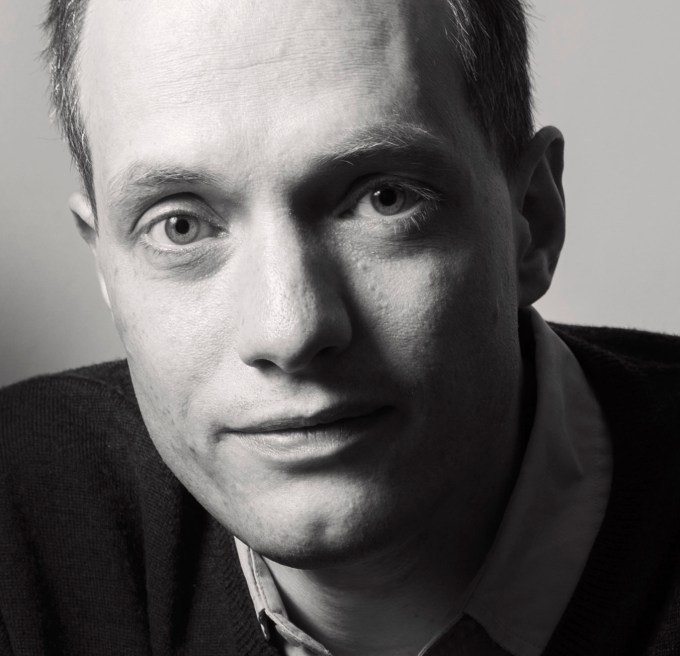
Alain de Botton

A sequel of sorts to his 1993 novel On Love, the book is bold bending of form that fuses fiction and De Botton’s supreme forte, the essay — twined with the narrative thread of the romance between the two protagonists are astute observations at the meeting point of psychology and philosophy, spinning out from the particular problems of the couple to unravel broader insight into the universal complexities of the human heart.

In fact, as the book progresses, one gets the distinct and surprisingly pleasurable sense that De Botton has sculpted the love story around the robust armature of these philosophical meditations; that the essay is the raison d’être for the fiction.
strongasabear_stangl0-1.jpg?resize=680%2C809

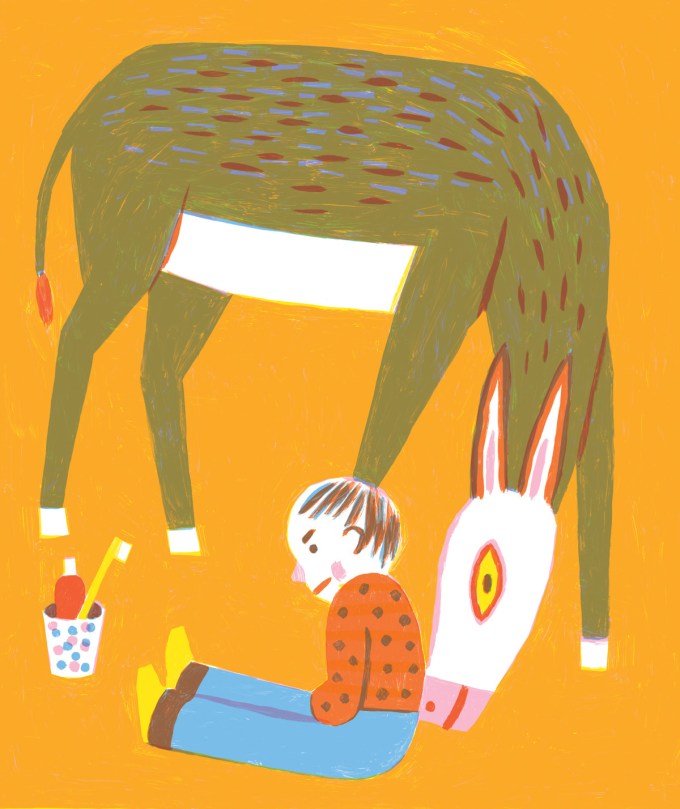
Art from Strong as a Bear by Katrin Stangl

In one of these contemplative interstitials, De Botton examines the paradoxical psychology of one of the most common and most puzzling phenomena between lovers: sulking. He writes:

2e292385-dc1c-4cfe-b95e-845f6f98c2ec.pngAt the heart of a sulk lies a confusing mixture of intense anger and an equally intense desire not to communicate what one is angry about. The sulker both desperately needs the other person to understand and yet remains utterly committed to doing nothing to help them do so. The very need to explain forms the kernel of the insult: if the partner requires an explanation, he or she is clearly not worthy of one. We should add: it is a privilege to be the recipient of a sulk; it means the other person respects and trusts us enough to think we should understand their unspoken hurt. It is one of the odder gifts of love.

Sulking, De Botton suggests, stems from a form of magical thinking — the belief, endearing in its origin but deleterious in its effect, that an impossibility is possible:

2e292385-dc1c-4cfe-b95e-845f6f98c2ec.pngSulking pays homage to a beautiful, dangerous ideal that can be traced back to our earliest childhoods: the promise of wordless understanding. In the womb, we never had to explain. Our every requirement was catered to. The right sort of comfort simply happened. Some of this idyll continued in our first years. We didn’t have to make our every requirement known: large, kind people guessed for us. They saw past our tears, our inarticulacy, our confusions: they found the explanations for discomforts which we lacked the ability to verbalize.

That may be why, in relationships, even the most eloquent among us may instinctively prefer not to spell things out when our partners are at risk of failing to read us properly. Only wordless and accurate mind reading can feel like a true sign that our partner is someone to be trusted; only when we don’t have to explain can we feel certain that we are genuinely understood.

But rather than bemoaning the sulk as a fatal flaw of a relationship, De Botton wrests from it evidence of the most hopeful and generous capacity of the human heart:

2e292385-dc1c-4cfe-b95e-845f6f98c2ec.pngWe would ideally remain able to laugh, in the gentlest way, when we are made the special target of a sulker’s fury. We would recognize the touching paradox. The sulker may be six foot one and holding down adult employment, but the real message is poignantly retrogressive: “Deep inside, I remain an infant, and right now I need you to be my parent. I need you correctly to guess what is truly ailing me, as people did when I was a baby, when my ideas of love were first formed.”

We do our sulking lovers the greatest possible favor when we are able to regard their tantrums as we would those of an infant. We are so alive to the idea that it’s patronizing to be thought of as younger than we are; we forget that it is also, at times, the greatest privilege for someone to look beyond our adult self in order to engage with — and forgive — the disappointed, furious, inarticulate child within.
isol_daytimevisions2.jpg

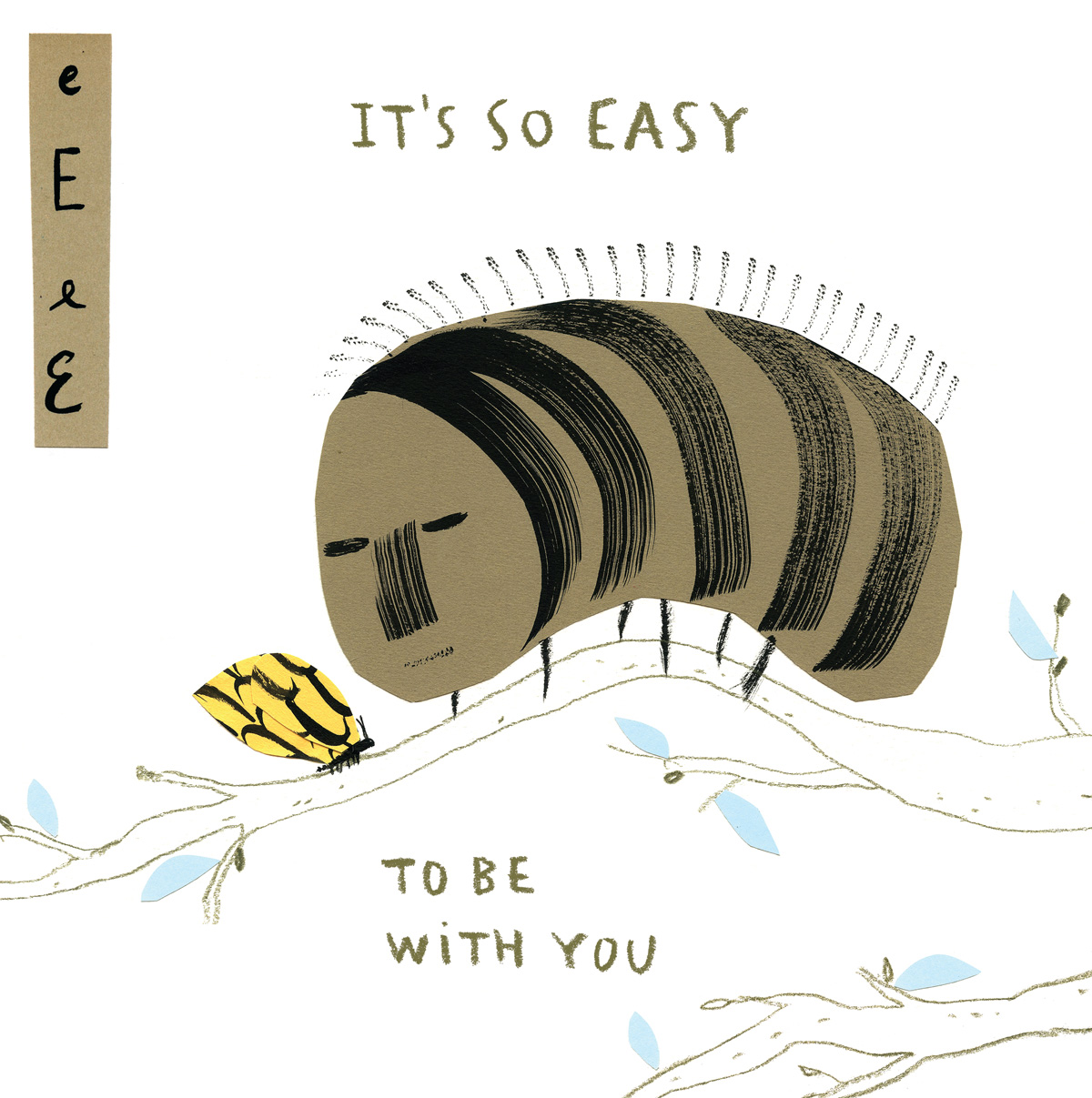
Art by Isol from Daytime Visions

Half a century after Iris Murdoch consoled a heartbroken friend by reminding her that “love is better than no love, though it can hurt so much,” De Botton revisits another facet of the same bewildering dynamic in a section on the interplay between trust and blame:

2e292385-dc1c-4cfe-b95e-845f6f98c2ec.pngThe most superficially irrational, immature, lamentable, but nonetheless common of all the presumptions of love is that the person to whom we have pledged ourselves is not just the center of our emotional existence but is also, as a result — and yet in a very strange, objectively insane and profoundly unjust way — responsible for everything that happens to us, for good or ill. Therein lies the peculiar and sick privilege of love.

Toward the end of the book, De Botton follows this paradoxical privilege to its equally paradoxical conclusion:

2e292385-dc1c-4cfe-b95e-845f6f98c2ec.pngMaturity begins with the capacity to sense and, in good time and without defensiveness, admit to our own craziness. If we are not regularly deeply embarrassed by who we are, the journey to self-knowledge hasn’t begun.

The Course of Love is an immensely perceptive and pleasurable read in its totality. Complement it with philosopher Erich Fromm on what is keeping us from mastering the art of loving, sociologist Eva Illouz on why love hurts, and Anna Dostoyevsky on the secret to a happy marriage, then revisit De Botton on the seven psychological functions of art and what philosophy is for.

For more of his largehearted wisdom on love and our human vulnerabilities, see his magnificent Design Matters conversation with Debbie Millman:
c16d1b01-af81-45be-9f49-04e9da051143.png

2e292385-dc1c-4cfe-b95e-845f6f98c2ec.pngMy view of human nature is that all of us are just holding it together in various ways — and that’s okay, and we just need to go easy with one another, knowing that we’re all these incredibly fragile beings.

Subscribe to Design Matters here for more invigorating conversations with artists, writers, designers, and other creative thinkers.