
Monthly Archives: January 2019
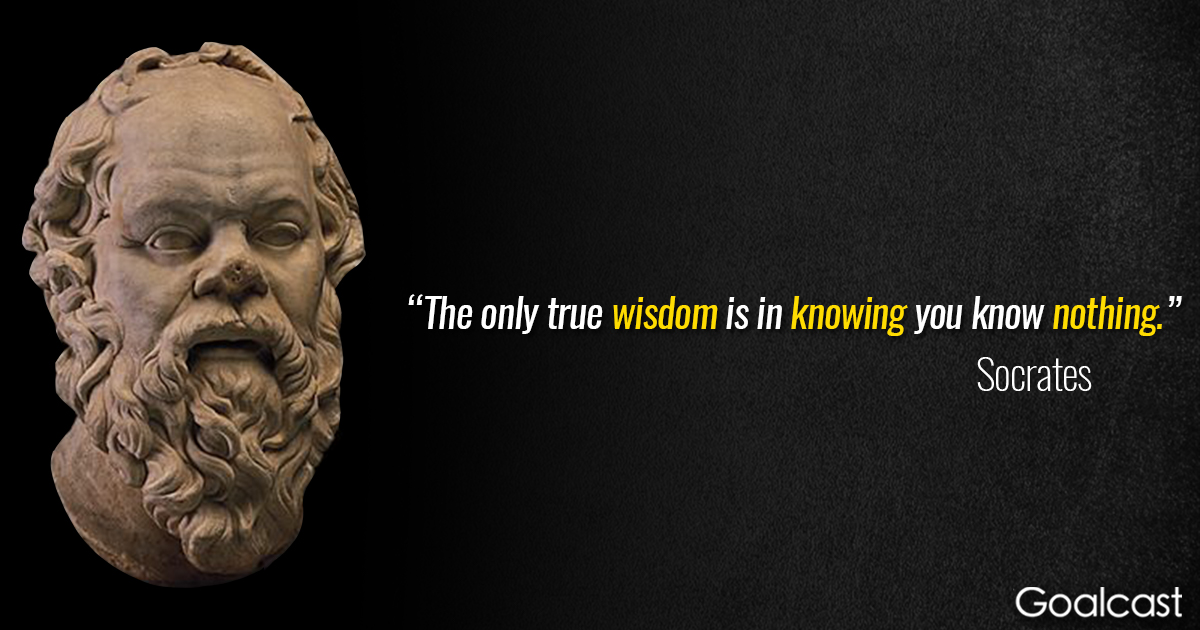
Socrates — What Makes Someone Wise?

Imagine you lived in a town where an ugly, big nosed and smelly man walked around undermining your intelligence.
You’re sweeping your yard or doing the laundry outside, minding your business, when this notorious man walks up to you and strikes up a conversation with you. His physical ugliness and unattractive scent does not make the greatest first impression.
You’ve heard about him before. A lot of your neighbors complained about him because he made them feel dumb. You’ve been preparing by brushing up on your studies, making sure he wouldn’t be able to stump you with any question he threw at you. This was your chance to shine to show how smart you were.
“Hello. Do you consider yourself a wise person? Do you believe that you are a smart individual?”
You answer, “Yeah sure, I guess. I wouldn’t say I’m the smartest person in the world but I think I’m doing quite well for myself.”
“Cool. I’ve been struggling with a problem for a while and I was wondering if you could help me come up with a solution. Do you believe that being deceitful is immoral?”
You chuckle and respond, “Of course! I value honesty and believe that you should never be deceitful. Anything that is deceitful is wrong and immoral. Isn’t it obvious? I’m sure any sane person would believe this.”
“Interesting. Let’s say you have a friend who wants to kill himself and has a knife handy to commit suicide. You and everyone he knows has tried to convince him otherwise, but he seems set on doing it. You obviously don’t want him to kill himself, but if you steal his knife he will lose the motivation to kill himself. Would you steal the knife?”
Taken aback, you say, “If it meant for me to save a friend, I guess I would…”
“But wouldn’t you consider that act to be deceitful?”
“Well, technically it is deceitful but — .”
“And wouldn’t that act of saving your friend by doing something deceitful be moral?”
Your meek response: “I guess so.”
“So it seems like not all deceitful acts are immoral… would you agree?”
“Yeah I guess.”
“So I guess you are not as smart as you thought you were.”
You try to fight back: “Well if you could ask me another question then I’d be happy to — .”
“Nah, I think I’ve seen enough. Have a good one.”
He winks at you and goes down the road, looking for someone else to question and potentially embarrass, while you stand there fuming. You decide to tell your friends all about the encounter and spread rumors about him. You’d make sure he wouldn’t be able to embarrass anyone ever again.
This is pretty much the story of Socrates and Euthydemus, with a little edits here and there, and one of many examples of a conversation with Socrates.
Socrates was considered a wise man because he knew that he did not know anything. The oracle of Delphi, a wise old woman, told Socrates’s friend that there was no one wiser than Socrates.
Socrates was confused and wondered — “How he could be the wisest man when he knew nothing? There must be a mistake. The oracle must have confused me for Socrates across town.”
But when he set out to find someone who was truly wiser than him, he found out the truth: no one was wiser than him because no one else was willing to admit that they knew nothing.
“Wisdom for Socrates was not knowing lots of facts, or knowing how to do something. It meant understanding the true nature of our existence, including the limits of what we can know.”
Nigel Warburton — A Little History of Philosophy
Socrates believed that people went around thinking they knew more than they actually knew, and pretended to know things that they could not truly be certain of. They took certain things as absolute truths, and never bothered to expand their knowledge of themselves and the world.
“What made Socrates so wise was that he kept asking questions and he was always willing to debate his ideas. Life, he declared, is only worth living if you think about what you are doing. An unexamined existence is all right for cattle, but not for human beings.
He constantly pushed to understand the nature of humans and the world. He exposed people who claimed to fully understand the concept of things like love, justice, bravery. What is good or bad? What does it mean to be moral or immoral? What does it mean to LOVE someone?
Do we even understand all these words that we throw around with each other daily? When we say certain things or believe in things we call “objective truths”, are they simply echoes of people smarter than us, or is it what we truly believe?
It’s easy to sit there and pretend like you understand everything. The world is not as simple as we perceive it to be. There are things we currently don’t and will never understand. We cannot sit here and act like we got it all figured out. Maybe we have an innate curiosity as man because we want to understand this strange, infinitely complex universe.
I know that I don’t know anything. But how do I actually know that I know that I don’t know anything? I can’t even know if I know that I know that I don’t know anything.

It’s hurting my brain just to even try to think about these things.
Socrates was such a burden to the people of Athens that they put him on trial for being so damn annoying.
He had a chance to say sorry and argue his way out of the trial. But Socrates had to be edgy and instead told the jury that he had done nothing wrong. In fact, they should actually be showering him with gifts and giving him free meals for the rest of his life for his dutiful service.
He had a chance to escape death if he ran away and promised to lived a quiet life, not annoying any more people. His friends begged him to take this option, but Socrates argued his way out of that and actually convinced his friend to agree that he should drink the hemlock honorably instead of trying to escape his death.
“Hell nah. I’d rather die than not question (annoy) other people.” He’d probably say and chug that hemlock like a champ.
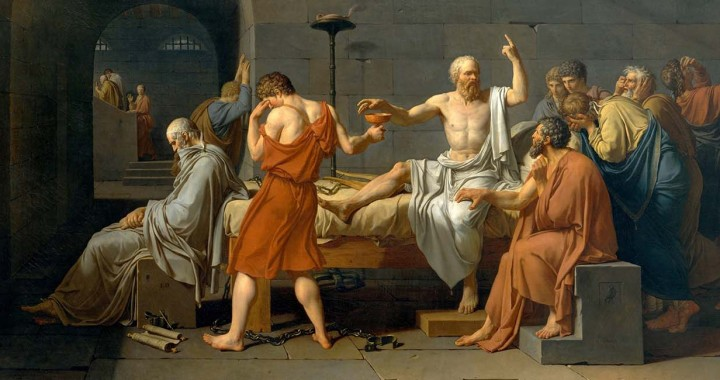
The Unexamined Life is Not Worth Living
We can learn humility from Socrates. While I don’t think Socrates was the MOST humble human to walk this planet, I do think his intellectual humility helped him become arguably the father of Western Philosophy.
He was never satisfied with what he knew and did not let the people around him be satisfied either. He told them to examine every part of their lives, and question everything everyday.
The key to attaining wisdom is to admit your ignorance. It seems paradoxical because we believe that being wise has something to do with acquiring vast amounts of knowledge. We tend to group the words knowledge and wisdom together, which leads us to confusing the two terms as synonyms.
If I had to personify the two words, I would say that the Sophists would characterize knowledge and Socrates would characterize wisdom.
The sophists were prideful in their knowledge and taught Athenians ways to improve their rhetoric and debating skills in exchange for money. The more knowledge they accumulated, the smarter they believed they were.
They thought that the more knowledge they accumulated, the more they understood the objective nature of the world.
Socrates, on the other hand, realized that the more he accumulated knowledge, the more he realized that he knew nothing. He saw through the arrogance of the Sophists and saw through their claims to know everything.
The Sophists were considered wise to the untrained eyes of the average Athenian, but Socrates exposed them every time he challenged them.
I want to be more like Socrates. I want to question the world and myself constantly, trying to understand and see through the illusions that we have placed for ourselves.
The first way to do that is to admit my ignorance in all things. To think and examine is to live.

The Ultimate, Ultimate, Ultimate Secret of Existence
Elbert Hubbard and Coleridge on claiming our heritage
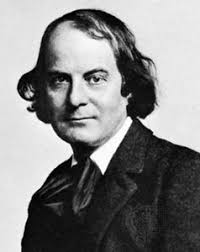
Elbert Green Hubbard (June 19, 1856 – May 7, 1915) was an American writer, publisher, artist, and philosopher. Raised in Hudson, Illinois, he had early success as a traveling salesman for the Larkin Soap Company. Wikipedia
The race has gained ground, made headway upon the whole; and thanks to the thinkers gone, there are thinkers now in every community who weigh, sift, try and decide. We no longer accept the doctrine that our natures are rooted in infamy, and that the desires of the flesh are cunning traps set by Satan, with God’s permission, to undo us. We believe that no one can harm us but ourselves, that sin is misdirected energy, that there is no devil but fear, and that the universe is planned for good. On every side we find beauty and excellence held in the balance of things. We know that work is needful, that winter is as necessary as summer, that night is as useful as day, that death is a manifestation of life, and just as good.
We have listened to Coleridge, and others, who said: “You should use your reason and separate the good from the bad, the false from the true, the useless from the useful. Be yourself and think for yourself; and while your conclusions may not be infallible they will be nearer right than the opinions forced upon you by those who have a personal interest in keeping you in ignorance. You grow through the exercise of your faculties, and if you do not reason now you never will advance. We are all sons of God, and it doth not yet appear what we shall be. Claim your heritage!”
–“Little Journeys to the Homes of English Authors” by Elbert Hubbard (1910)

Samuel Taylor Coleridge (21 October 1772 – 25 July 1834) was an English poet, literary critic, philosopher and theologian who, with his friend William Wordsworth, was a founder of the Romantic Movement in England and a member of the Lake Poets. He wrote the poems The Rime of the Ancient Mariner and “Kubla Khan“, as well as the major prose work Biographia Literaria. His critical work, especially on William Shakespeare, was highly influential, and he helped introduce German idealist philosophy to English-speaking culture. Coleridge coined many familiar words and phrases, including suspension of disbelief. He had a major influence on Ralph Waldo Emerson and on American transcendentalism.
“A great mind must be androgynous.”
―
The Saint of Dry Creek
Calvin Harris’ Sunday Meeting on January 20, 2019
Topic: “When the Teacher is Ready, the Student Appears”
Calvin Harris, H.W., M has been a member of the Prosperos Student Body since 1967. He studied for over 20 years as one of the personal students of the renowned Master Teacher, Thane of Hawaii – in Thane’s Fourth Way Mystery School, a teaching style that originated from the ancient Oral Tradition. Calvin has been teaching within the Prosperos School since the 1990s. Calvin ’s mission is to help individuals discover the wholeness hidden within the life experiences using the Prosperos core classes -Translation® and Releasing the Hidden Splendour.™
Calvin has engaged with Prosperos’ class methodologies for over five decades. He has integrated this perspective into his work both with individuals and community activities. Calvin has long been an ardent student and adventurer into the reality behind the myths and misunderstandings of personal histories. Calvin’s work with individuals is to help them discover their behavioral patterns, and As these patterns become known through the process of self-examination, and the therapeutic practices of Translation and RHS, a greater understanding develops of the subconscious programming at work, and the powerful mental software that runs our life is revealed and changed. It is the time and effort spent in a process like Translation and RHS that gives life new expressions and meaning that will allow for a different experience of a lifetime. Calvin has taught Prosperos classes, seminars, and workshops in Arizona, California, Michigan, Oregon, and Washington states.
Today, Calvin is engaged in Life Coaching and Mentoring for those interested in successfully living a more optimal lifestyle. he creates personalized packages, allowing for more access and use of skills and talents to get beyond conflicts and to redefine their world – To discover their bit of magic from the Truth within the method Calvin has surrounded himself with a richly textured community of contradictory and diverse individuals with a passion for life and a flair for success, innovation, and creativity. In his vocation, he performs the roles of mentor, teacher, storyteller, or loving friend.
Calvin has been seen around about Palm Springs Social Scene and participated at a Palm Springs Men’s gathering. Calvin has been a featured guest on Craig W. Cooley’s Rainbow Radio- KX 93.5 show in Laguna Beach, Ca. Discussing “Laughter” as an integral part of health and Life.
Why rumination is ruining your health (and how to stop it)


“Ugh, I blew it,” she repeats to herself.
Andrea’s still thinking about last week’s presentation.
Sitting at her desk on a Tuesday morning, she’s got a mental video loop on repeat. It shows the moment when she lost her place; when she briefly struggled to answer a question; the nervousness she felt throughout.
Despite showing preparation and poise in the majority of the presentation, she’s dwelling on the negative. Rather than focusing on today’s growing to-do list, Andrea’s cognitively stuck. She’s ruminating.
Rumination is relentless thinking focused on one’s negative feelings and problems. Whereas reflection can be productive, and motivate us to improve, ruminating is typically self-defeating. It can even be unhealthy.
But what if we learned to stop ruminating before we go too deep?
If Andrea had the tools to acknowledge the strengths and weaknesses of her presentation, and then move on, she’d likely be more productive, less anxious, and better at her job overall.
With the right tools, we can nip rumination in the bud, and avoid the consequences of negative thought loops.
Ruminating — a harmful defense mechanism
People don’t ruminate to deliberately inflict pain on themselves. Usually, we’re trying to do the opposite — avoid painful emotions.
Instead of confronting what’s really going on, we distract ourselves with more digestible thoughts.
Ruminators often believe that situations in their lives are uncontrollable. Rather than acknowledging that most people feel nervous while public speaking, and focusing on how to quell that nervousness, a ruminator thinks “Why is this happening to me?”
Researchers from the University of Manchester have found that ruminators believe that their overthinking will help them solve a problem. Clinical psychology David Carbonell agrees.
“Because we feel vulnerable about the future, we keep trying to solve problems in our head.”
Unfortunately, this is generally a fruitless effort.
Rumination worsens negative moods and interferes with our problem-solving capacity. Yale University researchers have also found that people who ruminate are more likely to become and stay depressed.

Unsurprisingly, the stress associated with chronic negative thinking can take a serious toll on our health — from suppressed immune functioning to increased incidence of coronary problems.
What’s more, overthinking stops us from taking action, even when our health is at stake. All that negative thinking burns precious cognitive energy, ultimately leading to mental fatigue, which can have a host of harmful symptoms: including mental block, lack of motivation, irritability, stress eating or loss of appetite and insomnia.
How to stop ruminating
If you have a tendency to ruminate, then consider the following your sane guide to finding some relief:
- Acknowledge. The first step toward breaking harmful thought cycles is to acknowledge that you’re ruminating. As the saying goes, we can’t see the forest for the trees. We get so deep in negative thinking, we don’t even realize that we’re punishing ourselves. And, says clinical psychologist David Carbonell, “The more we are engaged in overthinking, the less are we actually doing things in the physical environment.” But if we take a step back and identify what’s happening in our heads, we can move forward mindfully. Practices such as meditation can be helpful to train your mind to acknowledge such ruminative moments.
- Problem-solve. Next, switch into problem-solving mode. Decide whether there is anything you can do to resolve or ameliorate what you’re ruminating about. If so, make a list of concrete goals and steps to achieve them. If not, make an appointment with yourself to ruminate on that subject at a later time. Writes Robert Leahy, Director of the American Institute for Cognitive Therapy, “Chances are it won’t bother you very much when you meet up with it — and you will be able to enjoy your life during the rest of the day.”
- Get moving. When our thought cycles are especially overpowering, the best move is to get active. Go out and exercise: a workout session or a bike ride; a yoga class or a jog. If you’re at the office, a brisk walk can do the trick. Exercise not only releases stress-reducing endorphins, it also creates the perfect opportunity to practice mindfulness. The more we’re engaged in our current activity, the less mental space we have to ruminate.
- Get perspective. Finally, remember to put things in perspective. Be an objective observer, and describe the situation you’re thinking about without judgment. Then, consider whether your emotional punishment matches the crime. Often, we’ll find we’re being overly harsh on ourselves. If your stress doesn’t subside, visualize how you’ll feel in a week or a month from now. Be patient, and trust that you’ll feel that way soon. Whatever happened, it’s likely not the end of the world.
Break out of your comfort zone — stop dwelling
Dwelling on negative thoughts is not only unproductive, it can also threaten our health and wellbeing. It keeps us from being proactive about whatever’s bugging us and clouds our thinking.
Sometimes we’re more comfortable staying trapped in the hamster wheel of self-critical thinking.
We’re so accustomed to dwelling that it becomes an automatic reaction to stressful situations. But it’s worth the effort to retrain our brains to escape the rumination cycle.
By letting go of negative thoughts, we can move mindfully into the future and free up our brains for valuable cognitive work.
“Time to Break the Silence on Palestine”
In the spirit of Martin Luther King speaking out on the Viet Nam war, Michelle Alexander has written a very forthright and needed essay about Israeli civil rights abuses of the Palestinians on the West Bank. Or, more precisely, about the defening political silence from the political establishment in the US, and particularly from Congress.
Even a partial look at the 1787 comments on this essay on the NYT website reveal the depts of heated and conflicting interpretations on all sides of this issue and the futility of any easy solution. Three especially troubling aspects of the situation on the ground are: the role that political leaders among the many Arab factions have taken with respect to violence, which has contributed to the overall chaos in the region; how Israeli political voices for peace have been marginalized by Israel’s political establishment citing the rockets lobbed at Israel from the West Bank; and the inconsistent and highly politicized stance that US politicians have taken in the context of Israeli lobbying.
I write this to propose that there is a role for thoughtful people here. It is to be informed and reflect on the situation so as to stand as informed witnesses until the time comes for action as they see fit.
–Michael Kelly
* * * * *
Martin Luther King Jr. courageously spoke out about the Vietnam War. We must do the same when it comes to this grave injustice of our time.

Opinion Columnist
“We must speak with all the humility that is appropriate to our limited vision, but we must speak,” the Rev. Dr. Martin Luther King Jr. declared at Riverside Church in Manhattan in 1967.CreditJohn C. Goodwin

On April 4, 1967, exactly one year before his assassination, the Rev. Dr. Martin Luther King Jr. stepped up to the lectern at the Riverside Church in Manhattan. The United States had been in active combat in Vietnam for two years and tens of thousands of people had been killed, including some 10,000 American troops. The political establishment — from left to right — backed the war, and more than 400,000 American service members were in Vietnam, their lives on the line.
Many of King’s strongest allies urged him to remain silent about the war or at least to soft-pedal any criticism. They knew that if he told the whole truth about the unjust and disastrous war he would be falsely labeled a Communist, suffer retaliation and severe backlash, alienate supporters and threaten the fragile progress of the civil rights movement.
King rejected all the well-meaning advice and said, “I come to this magnificent house of worship tonight because my conscience leaves me no other choice.” Quoting a statement by the Clergy and Laymen Concerned About Vietnam, he said, “A time comes when silence is betrayal” and added, “that time has come for us in relation to Vietnam.”
It was a lonely, moral stance. And it cost him. But it set an example of what is required of us if we are to honor our deepest values in times of crisis, even when silence would better serve our personal interests or the communities and causes we hold most dear. It’s what I think about when I go over the excuses and rationalizations that have kept me largely silent on one of the great moral challenges of our time: the crisis in Israel-Palestine.
I have not been alone. Until very recently, the entire Congress has remained mostly silent on the human rights nightmare that has unfolded in the occupied territories. Our elected representatives, who operate in a political environment where Israel’s political lobby holds well-documented power, have consistently minimized and deflected criticism of the State of Israel, even as it has grown more emboldened in its occupation of Palestinian territory and adopted some practices reminiscent of apartheid in South Africa and Jim Crow segregation in the United States.
Many civil rights activists and organizations have remained silent as well, not because they lack concern or sympathy for the Palestinian people, but because they fear loss of funding from foundations, and false charges of anti-Semitism. They worry, as I once did, that their important social justice work will be compromised or discredited by smear campaigns.
Similarly, many students are fearful of expressing support for Palestinian rights because of the McCarthyite tactics of secret organizations like Canary Mission, which blacklists those who publicly dare to support boycotts against Israel, jeopardizing their employment prospects and future careers.
Reading King’s speech at Riverside more than 50 years later, I am left with little doubt that his teachings and message require us to speak out passionately against the human rights crisis in Israel-Palestine, despite the risks and despite the complexity of the issues. King argued, when speaking of Vietnam, that even “when the issues at hand seem as perplexing as they often do in the case of this dreadful conflict,” we must not be mesmerized by uncertainty. “We must speak with all the humility that is appropriate to our limited vision, but we must speak.”
And so, if we are to honor King’s message and not merely the man, we must condemn Israel’s actions: unrelenting violations of international law, continued occupation of the West Bank, East Jerusalem, and Gaza, home demolitions and land confiscations. We must cry out at the treatment of Palestinians at checkpoints, the routine searches of their homes and restrictions on their movements, and the severely limited access to decent housing, schools, food, hospitals and water that many of them face.
We must not tolerate Israel’s refusal even to discuss the right of Palestinian refugees to return to their homes, as prescribed by United Nations resolutions, and we ought to question the U.S. government funds that have supported multiple hostilities and thousands of civilian casualties in Gaza, as well as the $38 billion the U.S. government has pledged in military support to Israel.
And finally, we must, with as much courage and conviction as we can muster, speak out against the system of legal discrimination that exists inside Israel, a system complete with, according to Adalah, the Legal Center for Arab Minority Rights in Israel, more than 50 laws that discriminate against Palestinians — such as the new nation-state law that says explicitly that only Jewish Israelis have the right of self-determination in Israel, ignoring the rights of the Arab minority that makes up 21 percent of the population.
Of course, there will be those who say that we can’t know for sure what King would do or think regarding Israel-Palestine today. That is true. The evidence regarding King’s views on Israel is complicated and contradictory.
Although the Student Nonviolent Coordinating Committee denouncedIsrael’s actions against Palestinians, King found himself conflicted. Like many black leaders of the time, he recognized European Jewry as a persecuted, oppressed and homeless people striving to build a nation of their own, and he wanted to show solidarity with the Jewish community, which had been a critically important ally in the civil rights movement.
Ultimately, King canceled a pilgrimage to Israel in 1967 after Israel captured the West Bank. During a phone call about the visit with his advisers, he said, “I just think that if I go, the Arab world, and of course Africa and Asia for that matter, would interpret this as endorsing everything that Israel has done, and I do have questions of doubt.”
He continued to support Israel’s right to exist but also said on national television that it would be necessary for Israel to return parts of its conquered territory to achieve true peace and security and to avoid exacerbating the conflict. There was no way King could publicly reconcile his commitment to nonviolence and justice for all people, everywhere, with what had transpired after the 1967 war.
Today, we can only speculate about where King would stand. Yet I find myself in agreement with the historian Robin D.G. Kelley, whoconcluded that, if King had the opportunity to study the current situation in the same way he had studied Vietnam, “his unequivocal opposition to violence, colonialism, racism and militarism would have made him an incisive critic of Israel’s current policies.”
Indeed, King’s views may have evolved alongside many other spiritually grounded thinkers, like Rabbi Brian Walt, who has spoken publicly about the reasons that he abandoned his faith in what he viewed as political Zionism. To him, he recently explained to me, liberal Zionism meant that he believed in the creation of a Jewish state that would be a desperately needed safe haven and cultural center for Jewish people around the world, “a state that would reflect as well as honor the highest ideals of the Jewish tradition.” He said he grew up in South Africa in a family that shared those views and identified as a liberal Zionist, until his experiences in the occupied territories forever changed him.
During more than 20 visits to the West Bank and Gaza, he saw horrific human rights abuses, including Palestinian homes being bulldozed while people cried — children’s toys strewn over one demolished site — and saw Palestinian lands being confiscated to make way for new illegal settlements subsidized by the Israeli government. He was forced to reckon with the reality that these demolitions, settlements and acts of violent dispossession were not rogue moves, but fully supported and enabled by the Israeli military. For him, the turning point was witnessing legalized discrimination against Palestinians — including streets for Jews only — which, he said, was worse in some ways than what he had witnessed as a boy in South Africa.
Not so long ago, it was fairly rare to hear this perspective. That is no longer the case.
Jewish Voice for Peace, for example, aims to educate the American public about “the forced displacement of approximately 750,000 Palestinians that began with Israel’s establishment and that continues to this day.” Growing numbers of people of all faiths and backgrounds have spoken out with more boldness and courage. American organizations such as If Not Now support young American Jews as they struggle to break the deadly silence that still exists among too many people regarding the occupation, and hundreds of secular and faith-based groups have joined the U.S. Campaign for Palestinian Rights.
In view of these developments, it seems the days when critiques of Zionism and the actions of the State of Israel can be written off as anti-Semitism are coming to an end. There seems to be increased understanding that criticism of the policies and practices of the Israeli government is not, in itself, anti-Semitic.
This is not to say that anti-Semitism is not real. Neo-Nazism isresurging in Germany within a growing anti-immigrant movement. Anti-Semitic incidents in the United States rose 57 percent in 2017, and many of us are still mourning what is believed to be the deadliest attack on Jewish people in American history. We must be mindful in this climate that, while criticism of Israel is not inherently anti-Semitic, it can slide there.
Fortunately, people like the Rev. Dr. William J. Barber II are leading by example, pledging allegiance to the fight against anti-Semitism while also demonstrating unwavering solidarity with the Palestinian people struggling to survive under Israeli occupation.
He declared in a riveting speech last year that we cannot talk about justice without addressing the displacement of native peoples, the systemic racism of colonialism and the injustice of government repression. In the same breath he said: “I want to say, as clearly as I know how, that the humanity and the dignity of any person or people cannot in any way diminish the humanity and dignity of another person or another people. To hold fast to the image of God in every person is to insist that the Palestinian child is as precious as the Jewish child.”
Guided by this kind of moral clarity, faith groups are taking action. In 2016, the pension board of the United Methodist Church excluded fromits multibillion-dollar pension fund Israeli banks whose loans for settlement construction violate international law. Similarly, the United Church of Christ the year before passed a resolution calling for divestments and boycotts of companies that profit from Israel’s occupation of Palestinian territories.
Even in Congress, change is on the horizon. For the first time, two sitting members, Representatives Ilhan Omar, Democrat of Minnesota, and Rashida Tlaib, Democrat of Michigan, publicly support the Boycott, Divestment and Sanctions movement. In 2017, Representative Betty McCollum, Democrat of Minnesota, introduced a resolution to ensure that no U.S. military aid went to support Israel’s juvenile military detention system. Israel regularly prosecutes Palestinian children detainees in the occupied territories in military court.
Image
None of this is to say that the tide has turned entirely or that retaliation has ceased against those who express strong support for Palestinian rights. To the contrary, just as King received fierce, overwhelming criticism for his speech condemning the Vietnam War — 168 major newspapers, including The Times, denounced the address the following day — those who speak publicly in support of the liberation of the Palestinian people still risk condemnation and backlash.
Bahia Amawi, an American speech pathologist of Palestinian descent, was recently terminated for refusing to sign a contract that contains an anti-boycott pledge stating that she does not, and will not, participate in boycotting the State of Israel. In November, Marc Lamont Hill was fired from CNN for giving a speech in support of Palestinian rights that was grossly misinterpreted as expressing support for violence. Canary Mission continues to pose a serious threat to student activists.
And just over a week ago, the Birmingham Civil Rights Institute in Alabama, apparently under pressure mainly from segments of the Jewish community and others, rescinded an honor it bestowed upon the civil rights icon Angela Davis, who has been a vocal critic of Israel’s treatment of Palestinians and supports B.D.S.
But that attack backfired. Within 48 hours, academics and activists had mobilized in response. The mayor of Birmingham, Randall Woodfin, as well as the Birmingham School Board and the City Council, expressed outrage at the institute’s decision. The council unanimously passed a resolution in Davis’ honor, and an alternative event is being organized to celebrate her decades-long commitment to liberation for all.
I cannot say for certain that King would applaud Birmingham for its zealous defense of Angela Davis’s solidarity with Palestinian people. But I do. In this new year, I aim to speak with greater courage and conviction about injustices beyond our borders, particularly those that are funded by our government, and stand in solidarity with struggles for democracy and freedom. My conscience leaves me no other choice.
Image

Michelle Alexander became a New York Times columnist in 2018. She is a civil rights lawyer and advocate, legal scholar and author of “The New Jim Crow: Mass Incarceration in the Age of Colorblindness.”
Emmet Fox on love
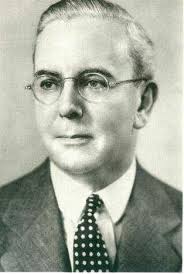
“There is no difficulty that enough love will not conquer: no disease that love will not heal: no door that enough love will not open…It makes no difference how deep set the trouble: how hopeless the outlook: how muddled the tangle: how great the mistake. A sufficient realization of love will dissolve it all. If only you could love enough you would be the happiest and most powerful being in the world…”
― (July 30, 1886 – August 13, 1951) was a New Thought spiritual leader of the early 20th century, famous for his large Divine Science church services held in New York City during the Great Depression. Wikipedia
“It is not possible that you could ever find yourself anywhere where God was not fully present, fully active, able and willing to set you free.”
― Find and Use Your Inner Power
(Submitted by Melissa Goodnight, HW, M.)
SUNDAY NIGHT TRANSLATION GROUP – 1/20/19
Translators: Melissa Goodnight, Richard Branam, Hanz Bolen, Mike Zonta, Alex Gambeau
SENSE TESTIMONY: Harming others in order to win is immoral.
5th Step Conclusions:
1) Truth is immediate possession, automatic winning; the same throughout the Universe; whose ethic is wholeness, completeness, perfection, oneness.
2) All is ONE Consciousness Beingness — the sole singular, unbroken continuity, that is always perfectly whole and purely wholesome, assuring triumphant dominion of righteousness and goodness throughout true existence.
3) The Great I AM is conscious of others Innate Integrity.
4) All One Mind Truth is everpresent instantaneous Genius Touching Being Valuing all Universal Integrity and worth.
5) Truth Carries’ Itself with Joyous Cosmic swagger: This One Infinite Consciousness is the Intimate Moral Character, Being the Essential Integrity that is Effortlessly Simplistic, this Resonating Harmony stimulates the Heart of All Relationships Because All Relationships are Immersed in Universal Principle.