
“Jihad isn’t what you think it is. Jihad is the battle against your own ego.”
–Cenk Batu ( Mehmet Kurtuluş) to suicide bomber in Cenk Batu, Undercover Agent, The Path to Paradise

“Jihad isn’t what you think it is. Jihad is the battle against your own ego.”
–Cenk Batu ( Mehmet Kurtuluş) to suicide bomber in Cenk Batu, Undercover Agent, The Path to Paradise
Matthew Stelzner
Published on May 22, 2018
Please join Matthew Stelzner and Jessica DiRuzza as they talk about the current outer planetary alignment of Saturn and Pluto in conjunction from 2018-2021. The significance of this time period is felt by so many as we come to the final years of the Uranus-Pluto square from 2007-2020. Saturn and Pluto are making their first conjunction since 1981-84. On this episode of Correlations, we dialogue about the wide range of experiences one may have during this powerful alignment and offer alternative perspectives and thought forms on how to live with these energies in an empowering way.
Matthew Stelzner: www.stelz.biz
Jessica DiRuzza: www.trustpsyche.com
Here are 10 classic novels that will hopefully be a never-ending journey into the heart-soul of literary excellence.

Twain’s tour de force and most famous novel delves into a number of issues. Exploring racism, war, religion and so much more, the book is Americana canon. It’s no stretch to say Huckleberry Finn is synonymous with American literature. Following an orphan boy and runaway slave in the Southern United States, Twain delved into the heart of so many important moral issues. With many poetic descriptions and the allure of once being a banned and censored book, Huckleberry Finn is a foundational classic.
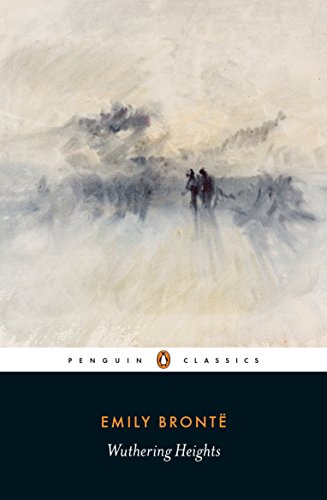
Written during the Victorian era, the characters and authorship of this book explores behavior that would have certainly made a Victorian blush to say the least. Brontë created an eerie and obsessive love story that transcended its time and genre.


“It is a truth universally acknowledged, that a single man in possession of a good fortune, must be in want of a wife. However little known the feelings or views of such a man may be on his first entering a neighbourhood, this truth is so well fixed in the minds of the surrounding families, that he is considered the rightful property of some one or other of their daughters.”
Colin Firth and the many excellent and so-so adaptations of this book aside, Pride and Prejudice proves to be a literary masterpiece.


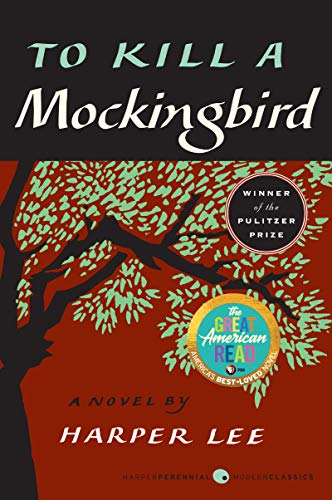
An unforgettable novel that is an easy read for many just getting into the classics. By no means a light-hearted book, To Kill a Mockingbird deals with some heavy themes like racial inequality, rape and moral ethics. Harper Lee’s inaugural novel was an instant bestseller and award winning book. It won the Pulitzer Prize in 1961 after being published in 1960. There was later a thrilling adaptation and equally compelling classic film made a few years later – a rarity when it comes to some of the classics.
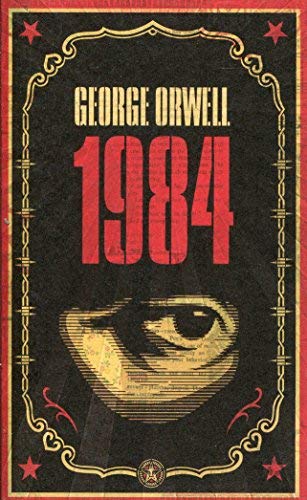
One of the most important works of the 20th century, 1984 brought many words into the cultural vernacular. Big Brother, doublespeak and the infamous slogan of War is Peace. George Orwell’s masterpiece only grows more haunting and relevant as we move into the future. Political satire was never meant to be this real.
As our main character Winston Smith loses himself in the bureaucratic nightmare of Ingsoc, we look on in horror and disdain. Yet, taking a look around our world today when despotic regimes are implementing social capital systems, and the politics of the English language degrades in so many ways, 1984 starts to take on a disconcerting prescience.
~ https://bigthink.com/personal-growth/10-must-read-classics

“The first 80 years are the hardest.”
–Carol Channing (January 31, 1921 – January 15, 2019) was an American actress, singer, dancer and comedienne. Known for starring in Broadway and film musicals, her characters usually radiated a fervent expressiveness and an easily identifiable voice, whether singing or for comedic effect. Wikipedia
By Maria Popova (brainpickings.org)
 Who are we when we, to borrow Hannah Arendt’s enduring words, “are together with no one but ourselves”? However much we might exert ourselves on learning to stop letting others define us, the definitions continue to be hurled at us — definitions predicated on who we should be in relation to some concrete or abstract other, some ideal, some benchmark beyond the boundaries of who we already are.
One of the most important authors of our time, Ursula K. Le Guin has influenced such celebrated literary icons as Neil Gaiman and Salman Rushdie. At her best — and to seek the “best” in an altogether spectacular body of work seems almost antithetical — she blends anthropology, social psychology, and sheer literary artistry to explore complex, often difficult subjects with remarkable grace. Subjects, for instance, like who we are and what gender really means as we — men, women, ungendered souls — try to inhabit our constant tussle between inner and outer, individual and social, private and performative. This is what Le Guin examines in an extraordinary essay titled “Introducing Myself,” which Le Guin first wrote as a performance piece in the 1980s and later updated for the beautifully titled, beautifully written, beautifully wide-ranging 2004 collection The Wave in the Mind: Talks and Essays on the Writer, the Reader, and the Imagination (public library). To speak of a subject so common by birth and so minced by public discourse in a way that is completely original and completely compelling is no small feat — in fact, it is the kind of feat of writing Jack Kerouac must have had in mind when he contemplated the crucial difference between genius and talent.

Ursula K. Le Guin by Laura Anglin
Le Guin writes:
I am a man. Now you may think I’ve made some kind of silly mistake about gender, or maybe that I’m trying to fool you, because my first name ends in a, and I own three bras, and I’ve been pregnant five times, and other things like that that you might have noticed, little details. But details don’t matter… I predate the invention of women by decades. Well, if you insist on pedantic accuracy, women have been invented several times in widely varying localities, but the inventors just didn’t know how to sell the product. Their distribution techniques were rudimentary and their market research was nil, and so of course the concept just didn’t get off the ground. Even with a genius behind it an invention has to find its market, and it seemed like for a long time the idea of women just didn’t make it to the bottom line. Models like the Austen and the Brontë were too complicated, and people just laughed at the Suffragette, and the Woolf was way too far ahead of its time.

Illustration from ‘The Human Body,’ 1959. Click image for details.
Noting that when she was born (1929), “there actually were only men” — lest we forget, even the twentieth century’s greatest public intellectuals of the female gender used the pronoun “he” to refer to the whole lot of human beings — Le Guin plays with this notion of the universal pronoun:
Le Guin turns to the problem of the body, which is indeed problematic in the context of this Generic He:

Illustration by Yang Liu from ‘Man Meets Woman,’ a pictogram critique of gender stereotypes. Click image for details.
For an example of someone who did Man right, Le Guin points to Hemingway, He with “the beard and the guns and the wives and the little short sentences,” and returns to her own insufficient Manness with a special wink at semicolons and a serious gleam at the significance of how we die:
And another thing. Ernest Hemingway would have died rather than get old. And he did. He shot himself. A short sentence. Anything rather than a long sentence, a life sentence. Death sentences are short and very, very manly. Life sentences aren’t. They go on and on, all full of syntax and qualifying clauses and confusing references and getting old. And that brings up the real proof of what a mess I have made of being a man: I am not even young. Just about the time they finally started inventing women, I started getting old. And I went right on doing it. Shamelessly. I have allowed myself to get old and haven’t done one single thing about it, with a gun or anything.
But between the half-assed semicolons and the guns lies the crux of the gender-imitation problem — the tyranny of how we think and talk about sex:
Le Guin parlays this subtle humor into her most serious and piercing point, partway between the tragic and the hopeful — the issue of aging:
Not a whole lot.
I keep thinking there must have been something that a real man could have done about it. Something short of guns, but more effective than Oil of Olay. But I failed. I did nothing. I absolutely failed to stay young. And then I look back on all my strenuous efforts, because I really did try, I tried hard to be a man, to be a good man, and I see how I failed at that. I am at best a bad man. An imitation phony second-rate him with a ten-hair beard and semicolons. And I wonder what was the use. Sometimes I think I might just as well give the whole thing up. Sometimes I think I might just as well exercise my option, stop short in front of the five-barred gate, and let the nazi fall off onto his head. If I’m no good at pretending to be a man and no good at being young, I might just as well start pretending that I am an old woman. I am not sure that anybody has invented old women yet; but it might be worth trying.
The Wave in the Mind, like Le Guin’s mind, is joltingly original in its totality, Chinook salmon in the wild. Complement this particular bit with Anna Deavere Smith on how to stop letting others define us.
By:Stuart Norval (France24.com)
“Time does not exist”. That’s just one of the theories of the theoretical physicist and writer Carlo Rovelli. He’s been listed as one of the 100 most influential global thinkers. His popular science book “Seven Brief Lessons on Physics” has been translated into 41 languages and has sold over a million copies worldwide. In his latest book, “The Order of Time”, he tackles the origins of time itself. He joined us for Perspective to tell us more.
/cdn.vox-cdn.com/uploads/chorus_image/image/62887326/ENLIGHTMENT_VIRTUE.0.jpg)
Why do people do good?
In the history of western philosophy, there are basically two answers to that question. The first is that people act morally because they are virtuous, because they’re committed to certain principles like honor or fairness. The second answer is that people act morally out of self-interest, because it is good — and ultimately profitable — to be known as someone who does the right thing.
A new book by David Wootton, a British historian of ideas, argues that the second interpretation has prevailed in the West, and that it has permeated every aspect of our lives. Today, we take it for granted that humans are hardwired to pursue power, pleasure, and profit. According to Wootton, this isn’t true at all.
Now, he concludes, we’re trapped in a world of hedonism and competition, in which the only real goal of society is the satisfaction of wants. And our ethical virtues are bound up with our ideas of material success — namely wealth and power.
Wootton’s book, Power, Pleasure, and Profit, is gripping, but it takes a fairly simplistic and narrow view of the Enlightenment. It also overlooks many of the disparate movements that emerged out of it. And yet, on the whole, the book has a fascinating story to tell. The Enlightenment spawned a series of assumptions about what human beings are, why they do what they do, and what the good life looks like.
We’re still hostage to those assumptions, whether we know it or not, and Wootton’s book asks us to consider the consequences. I spoke with him recently about those consequences, and why he thinks the Enlightenment produced a civilization obsessed with consumption and self-gratification.
A lightly edited transcript of our conversation follows.
It’s a truism in Western culture that human beings are self-interested animals driven by a desire to maximize pleasure and minimize pain. Is that false?
That’s a very cunning question you’re asking me. I’d say that it has become a truism, and my book is about how that happened and how we came to take this idea for granted. Before, say, the 18th century, this view of human nature wasn’t regarded as true. If you look at Christian writings or Aristotelian moral philosophy or whatever, you find very different assumptions about what human beings are like.
But we’re very much living in an Enlightenment paradigm, and this is the vision of human nature that was handed down to us from this era. We just accept that this is what humans are and that they can’t be otherwise.
But is it a fiction? Is it wrong?
Well, I don’t think it’s true in the sense that I think human beings are clearly capable of doing lots of things which they don’t find pleasurable, because they believe that they are noble or just or valuable in some way. The whole enterprise of one human being loving another human being involves something more than mere pleasure. It’s a commitment that can’t be reduced to mere pleasure.
My own view is that human behavior is far too complicated to say that we only care about pleasure or pain, or that everything can be reduced to such a simple model. I just don’t buy it, and I think it discounts a whole range of human behavior that is rich and interesting and terribly complex.
How did people think of moral virtue before the Enlightenment? What did it mean to be a “good person”?
Well, there were many ideas about this, but mostly a combination of Christian morality and Aristotelian ethics. What mattered wasn’t so much whether you succeeded or failed but rather what kind of person you were. It was about honor, self-respect, dignity, reputation, and a clear conscience.
So how did this view of human beings as pleasure-seeking machines come to dominate the western world? How did we become trapped, as you put it, inside this dogma?
I think it starts off with this Machiavellian notion in the 16th century that political systems are pure power-seeking processes, and that there’s no end to the pursuit of power and you can never have enough power and you will never stop pursuing power. Out of this you get an account of all political activities as self-interested and rational.
And it’s a short step from there to conclude that this must also be true of all political actors and people. So the argument starts in politics and then shifts over to this new discipline of psychology in the late 17th and 18th centuries, and it’s hugely popular because it gives an account of all human behavior as rational and therefore understandable and even predictable.
And then the field of economics starts to take root as capitalism emerges as the dominant economic paradigm and people start to say, “Well, we can modify behavior by tinkering with the system of rewards and punishments. We can nudge people into doing what we want them to do by giving them small rewards or punishments.”
What seems to have happened during the Enlightenment is that our ideas about politics and psychology and morality were subsumed by what we’d now call market logic. And this logic was baked into our values and institutions in a way that made them seem incontestable.
I think that’s more or less right. The puzzling question is trying to understand the causal mechanisms. Did capitalism produce selfish behavior? Or did selfish behavior produce a capitalist society?
:no_upscale()/cdn.vox-cdn.com/uploads/chorus_asset/file/13692202/0.jpg)
And what’s your answer?
I think it’s the new psychology that comes first, and that that psychology is what lays the groundwork for market capitalism. So instead of saying it’s the economy that shapes how we understand the world, I wanted to argue it’s how we understand the world that shapes our thinking about economy.
I’m not sure I agree with that. There’s this old Marxist notion that economic systems survive through the invention of values that support and justify their existence, and that seems right to me. We entered the age of global trade and capitalism and then conjured up moral philosophies — and by extension, a culture — that justified that way of life.
I suppose I’m trying to say, very cautiously, that that’s not what happened. The way I see it, people like Adam Smith (the 18th-century Scottish philosopher and economist) wanted to construct a new type of person in order to bring into existence a set of market relations that they thought would be good and admirable.
So I’d argue that the fundamental preconditions of understanding society in this way wasn’t the emergence of capitalism but rather the emergence of the natural sciences and the belief that the world — and people — could be reduced to predictable, law-abiding machines.
That’s interesting, though I’m not sure it’s mutually exclusive with what I said. After all, we could accept the premise that humans are as predictable as atoms and still reason our way to another type of economic system.
A lot of this hinges on how we choose to view human nature. You could look at it two ways: Either our consumer society works because we’re naturally greedy and acquisitive or we taught ourselves to be greedy and acquisitive so that our consumer society would work.
That’s right. I tend to the second view. I think we taught ourselves to be power-maximizing first, to be hyper-competitive, and then created political and economic systems suited to that view of human nature.
The psychologist Carl Jung believed that ideas have people, not the other way around. You seem to be making a similar argument about our views of human nature and happiness — that we’ve basically become hostage to these Enlightenment notions and have forgot that they were invented.
That’s fascinating, and yeah, that is what I’m saying. The natural world is what it is, and will behave the way it behaves no matter what we think. But it’s not so simple with human beings. Who we are, what we are, depends fundamentally on who and what we believe we are.
And so in that sense we construct ourselves through the language we use to talk about ourselves, and that shapes what we become and how we think. If we talk about ourselves in the language of self-interest, then self-interested people is what we get.
Now, we live in very complicated societies where we have lots of overlapping languages in which we talk. But from the 18th century on, the language of selfish, self-interested behavior becomes a predominant language, at least in the West, which creates the notion that the central role of government is to maximize wealth, maximize prosperity, and increase standards of living.
Perhaps we could put this a little differently and say that these ideas become true by virtue of our belief in him — in the same way that paper money is a fiction but becomes real when everyone collectively agrees that it’s real.
Exactly, money is a perfect example of this. If we lose faith in paper money, paper money ceases to have any value. And it has value simply and solely because we believe in it. The process of creating belief in paper money is a very complicated social process which runs over a hundred years or so. It sometimes breaks down and it did in the French Revolution, when paper money became worthless.
So in that sense we create social institutions that depend upon our own belief in them and we also create types of human behavior that depend upon our own beliefs in them. We often forgot how malleable we really are, and one of the things we need to learn is to look at ourselves and say, “Is this really what we want to be?” And if it isn’t, we need to recreate ourselves.
I’m curious if you think we’re currently under the spell of any fiction or dogma that guides our daily lives but will, in time, be revealed as false and destructive?
I think we’re at a moment in which there are tremendous strains on democracy as an idea and as a set of claims about rights that have served us very well. One might wonder if, in 50 or 100 years, people will look back and say, “How did we go on believing for so long that that was an effective way of organizing society?”
Maybe what we also need to do is look beyond the West for philosophical guidance. As you say, we have these dogmas that condition us to think in selfish, individualistic terms, and yet there’s an entirely different way of thinking about the self and happiness in Eastern wisdom traditions.
I think we need to step back from our individualist ways of thinking and ask if they’re working for us. And in doing that, we would do well to consider how other cultures encourage more cooperative or communitarian behavior. I’m no expert on Eastern philosophy or Buddhism, so I can’t really speak to this, but there is a lot of wisdom there and it’s hard to see how we wouldn’t benefit from engaging with it.
~ https://www.vox.com/conversations/2019/1/23/18128942/enlightenment-psychology-science-david-wootton
“A great teacher helps the student understand how to practice an effective method rather than attempt to teach realization. Then, the outer teacher becomes less needed as the student begins to understand how to practice most effectively. Most dialogues between teacher and student should, therefore, be geared toward helping the student better understand the application of the practice—which is universal and impersonal. In this way, the teacher over time makes himself redundant. To be out of a job is the highest accomplishment in the career of the teacher.” – Bentinho Massaro