Writer A.J. Jacobs was going through life feeling more grumpy than grateful. To start cultivating a thankful attitude, he decided to show some appreciation to the people behind his daily cup of coffee. Here’s what he discovered when he met his barista.
Gratitude is not an emotion that comes naturally to me. My innate disposition is moderately grumpy, more Larry David than Tom Hanks. But I’ve read enough about gratitude to know it’s one of the keys to a life well lived. Perhaps even, as Cicero says, it is the chief of virtues.
According to the research, gratitude’s psychological benefits are legion: It can lift depression, help you sleep, improve your diet, and make you more likely to exercise. Heart patients recover more quickly when they keep a gratitude journal. A recent study showed gratitude causes people to be more generous and kinder to strangers. Another study found that gratitude is the single best predictor of well-being and good relationships, beating out twenty-four other impressive traits such as hope, love, and creativity. As the Benedictine monk David Steindl-Rast (TED talk: Want to be happy? Be grateful) says, “Happiness does not lead to gratitude. Gratitude leads to happiness.”
For a while now I’ve made modest efforts to kick-start my gratitude whenever I could and to instill the value in my kids. My three boys are required to write handwritten thank-you notes when they get birthday gifts, much to their disbelief.
Sometimes, before a meal, I’ll say a prayer of thanksgiving. Sort of. I’m agnostic, so instead of thanking God, I’ll occasionally start a meal by thanking a handful of people who helped get our food to the plate. I’ll say, “Thank you to the farmer who grew the carrots, to the truck driver who hauled them, to the cashier at Gristedes grocery store who rang me up.”
“You know these people can’t hear you, right?” my son Zane asked me one night.
I told him I knew, but that it’s still good to remind ourselves of others’ contributions.
Yet Zane’s comment stayed with me. I wondered if I should commit more fully. What would it be like to personally thank those who helped make my food? Each one of them?
In my default mode, I’m mildly to severely aggravated more than 50 percent of my waking hours. That’s a ridiculous way to go through life.
I knew the idea was absurd — and that I could attempt it only because I make my living doing absurd things and writing about them. It’d be a major headache. It’d be time-consuming and travel-heavy. But it could also have huge benefits. It might be a nice thing for the people who make my meals possible. It would show my sons I’m serious about gratitude, and they should be too.
And it might make me more grateful, which would, in turn, make me less petty and annoyed. Because I needed to be less annoyed. Even though I know that I’m ridiculously lucky — I don’t lack for meals and I have a job that I mostly enjoy — I still let all the daily irritations hijack my brain. I’ll step on our dog’s dinosaur-shaped chew toy, or I’ll open an email that begins, “Dearest A.J., I regret to inform you . . . ,” and I’ll forget the hundreds of things that go right every day and focus on the three or four that go wrong.
In my default mode, I’m mildly to severely aggravated more than 50 percent of my waking hours. That’s a ridiculous way to go through life. I don’t want to get to heaven (if such a thing exists) and spend my time complaining about the volume of the harp music.
I needed a mental makeover, and a gratitude project could be my key to success. My goal for this project was to flip my ratio: By the end, I wanted to spend more than half of my average day experiencing gratitude and mild happiness. Or at least not outright irritation.
My first task: I had to choose what food item to be thankful for. I considered apples, white wine and Monterey jack cheese. I thought about nonfood items as well: my pen, my socks, my toothpaste. Almost every object I encounter in my day requires thousands of humans and tons of effort — effort I take totally for granted.
Finally, I settled on something I can’t live without: my coffee. It seemed right for a couple of reasons. I do love my morning cup from my local café. I take it to go, no milk. I’m not a fanatic and my palate is unrefined, but I relish coffee’s bitter taste and the pleasant buzz it gives me — it’s my favorite narcotic, hands down.
Also, coffee has a huge impact on our world. More than two billion cups of coffee are drunk every day around the globe. The coffee industry employs 125 million people internationally. Over the centuries, coffee has helped create international trade and shape our modern economy.
The act of noticing, after all, is a crucial part of gratitude; you can’t be grateful if your attention is scattered.
So I set out on the Great Coffee Gratitude Trail, intent on following all its twists and turns. I decided to do this project in reverse, starting with my local café and working my way backward to the birth of the coffee. My coffee shop, Joe’s Coffee, is a block’s walk from my apartment.
On a Thursday morning, I get in line, prepping myself to say the very first “thank you” of Project Gratitude. While waiting, I force myself to stash my smartphone in my pocket and actually notice my surroundings. The act of noticing, after all, is a crucial part of gratitude; you can’t be grateful if your attention is scattered.
There are moms pushing strollers, dogs tied up outside, the frequent hiss of the espresso machine. Glowing indigo lamps hang from the ceiling. That indigo light is lovely, I think to myself. I get to the counter and am greeted by my barista, a twenty-something woman with hair gathered in a ponytail atop her head. She hands me my order — a small black coffee, the daily blend.
“Thank you for my coffee,” I say.
“You’re welcome!” she says, smiling.
And there it is — my first thank you. It’s fine, but no lightning bolts yet. I slide my credit card to pay the three-dollar fee. (Three dollars is, of course, ridiculously expensive. But in a weird sense, as I later learned, it’s also wildly underpriced.)
A couple of days later, I’ve worked up the nerve to tell the barista about Project Gratitude. I asked her if she’d be willing to share with me a bit about what goes into making my coffee. She said she’d be happy to talk after her shift.
“Thanks again for the coffee,” I say, as we sit down at one of Joe’s small tables.
“Thanks for thanking me,” she says.
I consider thanking her for thanking me for thanking her, but decide to cut it off lest we get caught in an infinite loop. She tells me her name is Chung. Her parents are Korean immigrants, and she grew up in Southern California before moving to New York City for college.
Chung, a barista, has been snapped at by a bratty nine-year-old girl who didn’t like the milk-foam design on top of her hot chocolate.
“So . . . ,” I say. “Um . . . What’s it’s like being a barista?”
“It’s not always easy,” she says.
This is because you’re dealing with people in a very dangerous condition: pre-caffeination. Chung tells me tales of customers who refuse to even make eye contact. They just snarl their order and thrust out their credit card. She’s had customers berate her till she cried for mixing up orders (which she swears she didn’t). She’s been snapped at by a bratty nine-year-old girl who didn’t like the milk-foam design that Chung created on top of her hot chocolate. Chung made a teddy bear. The girl wanted a heart. “I wanted to tell her that she did need a heart—a real one.”
Yet Chung says the cranky customers are the minority. Most folks are friendly, especially when she sets the mood by being friendly first. And man, Chung is friendly. She is a smiler and a hugger. She’s like a morning-show host, but not forced or fake. During our half-hour chat, Chung got up no fewer than five times to hug longtime customers and former coworkers.
“I first realized I might be good at customer service when I was working as an usher at my church,” she says. “I saw that it takes a certain personality.”
And, like at church, when she’s at Joe Coffee, she sometimes watches as people are transformed, their faces lighting up when they get their cups.
“I see my job as getting them coffee, but also making them happy,” she tells me.
I ask her if she’s planning on being a barista for the long haul.
She shakes her head. “Actually, this is my last week.”
She’s moving back to California to take care of her parents. Plus, nowadays, she’s having trouble staying up on her feet her entire shift.
“Let me give you a visual of why,” Chung says.
She takes out her smartphone and swipes to a photo. It’s a startling image of her left foot, bloody, bruised, and with more than a dozen metal pins sticking out of it.
“A year and a half ago, I got hit by a bus,” she says. “I broke every toe, the heel, the ankle. The skin was gone.”
“Oh my God.”
“Yeah, it wasn’t pretty.”
On my way home, I make a pledge. I promise to look baristas in the eyes — because I know I’ve been that jerk who thrusts out the credit card without glancing up.
Chung says it’ll be sad to leave the regulars. She talks about Nancy and John, who arrive every morning as soon as the glass door is unlocked. “I always say, ‘How’s your day going?’ And John will say, ‘Now it’s going well.’” She’ll miss her coworkers, whom she says always have her back.
She won’t miss the occasional feeling that she doesn’t exist at all. “What’s upsetting is when people treat us like machines, not humans,” Chung says. “When they look at us as just a means to an end — or don’t even look at us at all.”
I thank Chung, and she gives me a hug (her 11th of the day, by my estimate).
On my way home, I make a pledge. Though I probably won’t hug any other baristas, I promise to look them in the eyes — because I know I’ve been that asshole who thrusts out the credit card without glancing up. I’m not sure if I ever did it to Chung, but I know I’ve treated many others — waiters, delivery people, bodega cashiers — as if they were vending machines.
I sometimes wear these noise-cancelling headphones when running errands, so that just makes me look more aloof and unfriendly. And this is an enemy of gratitude. UC Davis psychology professor Robert Emmons — who is considered the father of gratitude research — puts it this way: “Grateful living is possible only when we realize that other people and agents do things for us that we cannot do for ourselves. Gratitude emerges from two stages of information processing — affirmation and recognition. We affirm the good and credit others with bringing it about. In gratitude, we recognize that the source of goodness is outside of ourselves.”
From now on, when I have an interaction with anyone else, I’ll try to affirm and recognize them. I’ll try to remember to treat them as humans — at least until robots take over all service jobs. I’ll try to keep in mind that they have families and favorite movies and embarrassing teenage memories and possibly aching feet.
The burning bowl can be a powerful ritual at year’s end.
It’s a symbolic release—letting go of anything that no longer serves you.
Release old wounds, negative or unhealthy thought patterns, unfulfilled expectations, mistakes, or situations that may be holding you back from living your best life.
As we close out 2018, we invite you to become still and go within … let your heart tell you what needs to be released during the Unity Burning Bowl 2019.
Relax and become still.
Allow your heart to tell you what to release.
Send it to us for inclusion in the Silent Unity Prayer Vigil and Burning Bowl.
It’s that simple. Write your release on the form and let it go. Send it to us and we will hold it in the Silent Unity® Prayer Vigil Chapel for 30 days—supporting you in prayer!
After the turn of the new year, it will be burned in a fire with thousands of others in a ceremony at Unity Village.
We plan to stream the Burning Bowl ceremony in real time through Facebook Live from Unity Village on January 9, 2019!
We honor your release, your commitment, and your support—and we call forth and invoke for you your highest and best in 2019!
Investigated by the FBI, blackmailed, but bold enough to keep going, Billye Talmadge was one of the early members of the earliest lesbian rights organization in the U.S., the Daughters of Bilitis.
Episode Notes
From Eric Marcus: I first learned about Billye Talmadge when I began my research for the Making Gay History book back in the late 1980s. When I subsequently met and interviewed Billye, she taught me an important lesson. What I learned from reading about Billye, who was an early member of the Daughters of Bilitis—the first organization for lesbians in the United States, which was founded in 1955—made me think she was what some LGBT historians have called an “accommodationist.”
Billye earned that label because in the early days of the movement, DOB encouraged its members to wear traditionally feminine clothing (skirts, not fly-front jeans) that didn’t make them easily identifiable as lesbians.
This is the tricky thing about looking back on history through a contemporary lens—it makes it easy to criticize early activists over goals and tactics, because most of us don’t know nearly enough about what the world was like, what the context was, for their actions and decisions. At the time I interviewed Billye, I knew next to nothing about her life, but based on that contemporary lens I’d made assumptions about Billye “the accommodationist.” I couldn’t have been more wrong.
Casting aside my contemporary lens, I came to discover what Billye and the other courageous women on the front lines in the 1950s and ’60s were up against and how they nonetheless built a fledgling movement that provided a solid foundation for so much that came after.
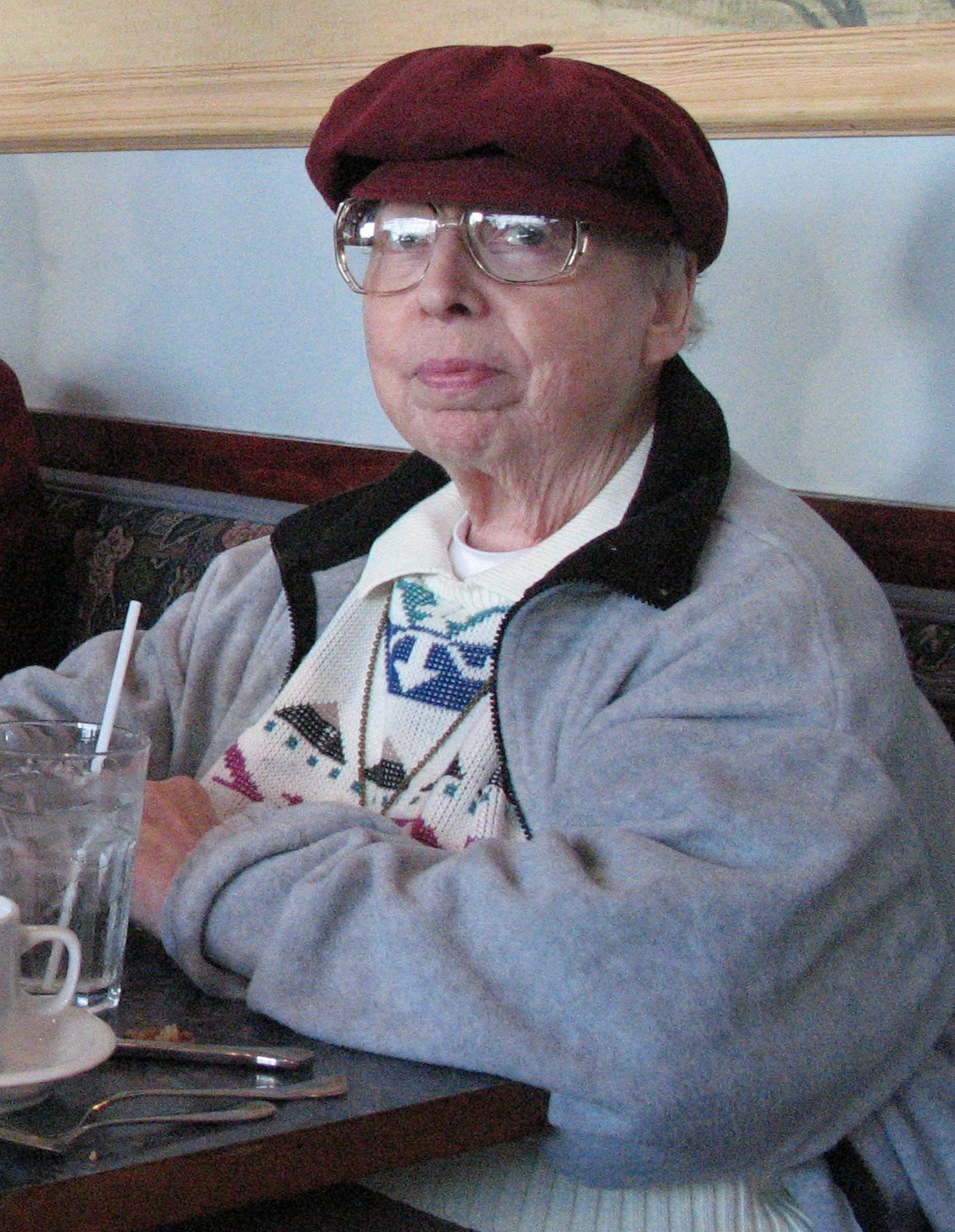
Billye Talmadge, 2014. Photo courtesy of Suzanne Deakins.
Exploring the links below you’ll discover just some of ways in which Billye challenged the prevailing prejudice against lesbians and how she moved the ball forward at a time when a woman wearing fly-front jeans could face arrest or worse.
Please note that for her inclusion in the Making Gay History book, Billye asked me to alter the spelling of her name to protect her identity. She said, “I’m not using my real name for this interview. If we were not living on my salary, I wouldn’t care about using my real name. I would not be fired on the spot if they found out, but it would be made so difficult for me that I would have to quit. That’s the usual way now, because you can fight this kind of discrimination. But what you can’t fight is the way they get around it and make it so god-awful that you say, ‘Fuck it!’ and quit. And financially at this point in time, I can’t. That’s the only reason I’m not using my name.”
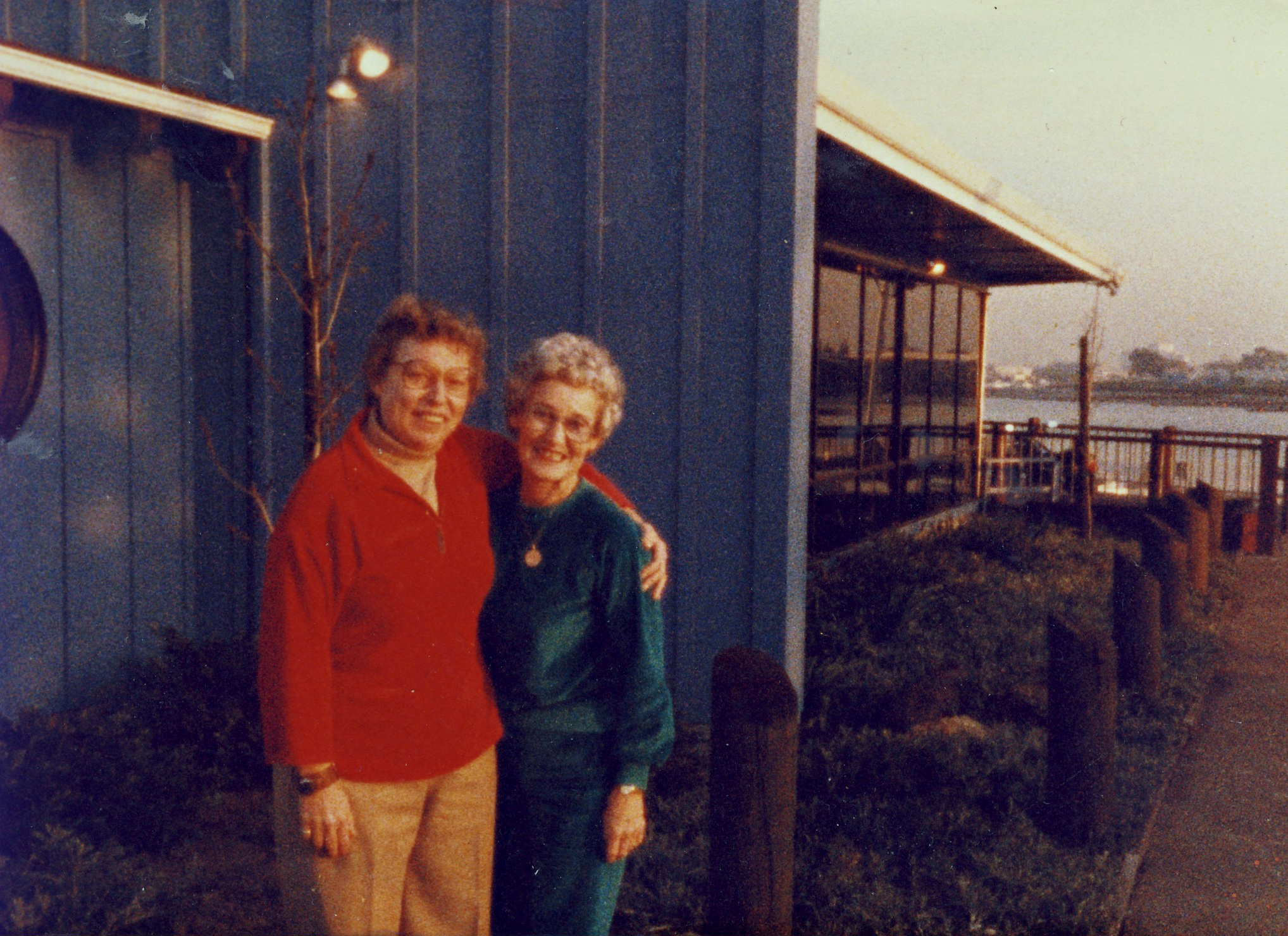
Billye Talmadge, in red, posing with her sister Betty, 1980s. Photo courtesy of Suzanne Deakins.
———
Read a brief biography of Billye Talmadge in this proudqueer.com article by Billye’s friend Suzanne Deakins. A short obituary of Billye appeared in the Bay Area Reporter.
Billye Talmadge’s oral history can be found in Eric Marcus’s book Making Gay History.
Watch a May 12, 1987 interview with Billye Talmadge from the Lesbian Herstory Archives’ Daughters of Bilitis Video Project.
Check out Beyond the Mist, a book of Billye’s musings and poetry, here.
For an obituary of Marcia Herndon, Billye’s longtime partner, go here.
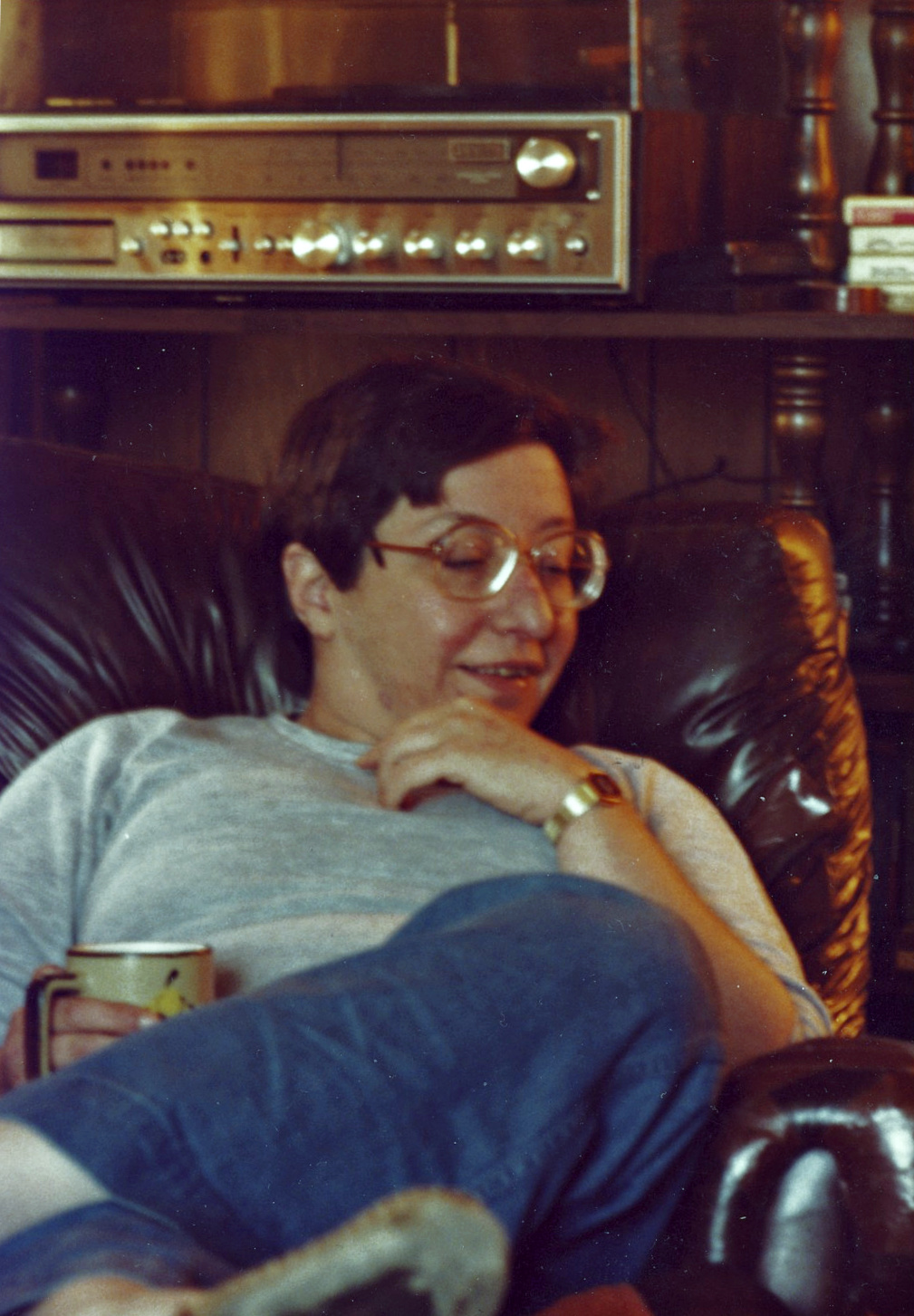
Undated photo of Billye Talmadge’s partner, Marcia Herndon. Photo courtesy of Suzanne Deakins.
For information about The Ladder, the magazine of the Daughters of Bilitis, read Malinda Lo’s AfterEllen.com article. And take a tour of a GLBT Historical Society exhibit about The Ladder in this video.
As Billye mentions in the episode, the Daughters of Bilitis held its first national convention in San Francisco in 1960. Have a look at this DOB newsletter in which they announce the convention.
The episode talks about the risk of arrest for male impersonation faced by women wearing fly-front jeans. In our MGH Shirley Willer episode, Willer, who was the one-time president of DOB, talks about how wearing masculine attire made her the target of police brutality.
In Billye’s episode, Billye explains how your teaching certificate could be revoked if you were suspected of being a communist or a homosexual. This makes reference to what’s become known as the Lavender Scare, which was the gay analog to the 1950s Red Scare. The Lavender Scare is chronicled in a 2004 book by David K. Johnson called The Lavender Scare: The Cold War Persecution of Gays and Lesbians in the Federal Government. Read a summary of the book here. A new documentary called The Lavender Scare deals with the same subject; watch the trailer here. And check out our episode with Hal Call of the Mattachine Society, too.
During season two we heard from Herb Selwyn, a lawyer and ally, who said even hairdressers faced the prospect of losing their licenses to work and financial ruin if they got caught up in a legal system that criminalized same-sex love.
Perceiving “a real spiritual aridity” in the gay community, Billye became one of the co-organizers of a conference that led to the founding of the Council on Religion and the Homosexual (CRH) in 1964. CRH brought together progressive ministers and local gay rights groups with the goal of educating San Francisco’s religious communities about discrimination and anti-gay violence. For more information about the Council on Religion and the Homosexual, listen to our episode featuring Herb Donaldson and Evander Smith. And have a look at an exhibit about the Council on Religion and the Homosexual mounted by the LGBT Religious Archives Network.
Billye Talmadge teaching consciousness and the importance of letting go of one’s “inner demons” so that one’s hidden splendor can be revealed, 1990s. Photo courtesy of Suzanne Deakins.
———
Episode Transcript
Eric Marcus Narration: I’m Eric Marcus and this is Making Gay History!
Billye Talmadge was an educator. Over the course of her life she was an elementary school teacher, accumulated two Ph.D.’s in education, and won awards for her work with blind and deaf children. But for most of her working life, who she was threatened what she did.
Billye brought her passion for education to her activism when she joined the first lesbian rights organization in the U.S., the Daughters of Bilitis, in the mid-1950s. Billye did everything from counseling women who had been thrown out of the military to holding “gab ’n’ javas” in her own living room. That was the 1950s version of a consciousness-raising group.
DOB offered Billye the chance to provide a new generation of women with the answers she herself had so desperately sought as a young woman coming of age in the 1940s.
But if anyone had found out about Billye’s work with the Daughters, she could have been fired from her job. When I interviewed her in 1989, she asked me to intentionally misspell her name for my book to conceal her identity. She was still worried about losing her job if her colleagues found out she was a lesbian.
Here’s the scene: Billye Talmadge is in her early 60s and lives with her partner, Marcia Herndon, and their three cats—two enormous calicos and one tiny kitten—in a small house in what was a rough neighborhood across the bay from San Francisco.
Billye is sitting at her dining room table. She’s heavy set, with short reddish-blond hair. She laughs easily and speaks with the excitement of a pioneer recalling the early days of her life in the movement. Billye lights a cigarette before explaining how she came to be a crusader for lesbian rights. But first she had to come to an understanding of her own identity.
———
Billye Talmadge: Cali, Cali, Cali, come…
EM: I’ll get her as soon as I attach…
BT: If you give me that string over there, I can play with it and…
EM: I’m gonna see if she’ll sit in my lap.
BT: I don’t think she will…
EM: Interview with Billye Talmadge. Sunday, August 6, 1989. At the home of Billye Talmadge and Marcia Herndon in Richmond, California. That’s the San Francisco Bay Area. Interviewer is Eric Marcus. Tape one, side one.
BT: I was always a tomboy, and I had had crushes, you know. And I had tried things with boys, and they just simply were not my cup of tea. I mean, I was uncomfortable. And I decided, If this is what it’s gonna be, I’m gonna know what one is supposed to do in this sort of business. So I had heard that there was this big dyke on campus.
EM: Where was this? Which school?
BT: This was in Kansas. And so I followed her for days. And so finally I saw her coming out of a cafe just off campus there going to her car, and I went up to her, and I said, “Well, I want to talk to you.” I’m sure I came on just that strong. And she sort of looked at me. And she said, “Well, okay, get in the car.” We got in and she started driving. And she said, “What is it?” And I said, “Well, I’ve just found out that I’m a homosexual and I want to know what this is all about.” I said, “I want to know how to make love to a woman. I never have and I think I better know.” And she looked at me and she kind of chuckled and she said, “Well, there’s only way to really show you.” And I said, “No, don’t show me, tell me.”
And so, we drove out somewhere. And we parked in a park, and I asked her every question I could think of. And she would answer to the best of her ability anything that I put to her.
And I think maybe somewhere along in there, when I look back on that particular scene, I think I knew then that, that there had to be questions like this that everybody was asking. And that somewhere, somehow there should be people who could answer as honestly as they could.
EM: At that time, this was 1950–51?
BT: Oh, no, this was, this was ’47, ’48.
EM: So there wasn’t… There was no one to call. And it was probably dangerous to be known, I assume.
BT: Absolutely. You could be thrown out of the campus in nothing flat.
EM: Let’s go back to when you first came in contact with DOB. How did you hear about DOB?
BT: I was with Jaye Bell. I know her as Shorty.
EM: Well, we’ll call her “Shorty” from here.
BT: She and I had moved down from the Tacoma-Seattle area.
EM: You were a couple by then.
BT: Yeah. We came down into the Bay Area. In fact, we were in Berkeley. And somebody we had met had been invited to this gathering at Del and Phyl’s, this buffet dinner or picnic type thing. And they ended up not going and Shorty and I did. But that was my first contact. And because I was… Both Shorty and I were so very impressed with Del and Phyl, and what they were trying to do. And it was another thing of, like a real interrogation. They were sitting there in the kitchen and we were just firing questions like crazy. And, but we both became very interested in it and just moved right in to…
EM: What interested you in that?
BT: The education, primarily. And the fact that there was the possibility of really, really helping people.
EM: Weren’t you concerned at that point about your job?
BT: No. [Laughs.] I look back on it, you know, and I don’t honestly know that I would have the guts now. I was a public school teacher at the time.
EM: This is the 1950s.
BT: Yeah.
EM: Where were you teaching?
BT: In Berkeley public schools. At that point of time, there were, there was a list of about 21 things that you could lose your teaching certificate for. The first one was to be a card-carrying communist. And the second one was to be suspected homosexual.
EM: Just suspected. They didn’t have to prove anything?
BT: They didn’t have to prove anything.
EM: And for you, for any professional woman, for any teacher, a bar was out of the question, wasn’t it?
BT: Yes, yes. At that point of time, to go to a bar was just sticking your neck in a noose. But there were house parties. This was one of the main reasons that the Daughters existed was, number one, in San Francisco at that point of time was to keep our kids out of the bars, because they were being raided and raided and raided and raided. And when we branched out a little bit, we had this chapter in Chicago. And two of our women were picked up and arrested on the streets for wearing fly-front jeans. They were arrested for impersonating males. That’s all that they had, was fly-front jeans. But they were picked up and arrested as impersonating a man.
EM: What could you do for them?
BT: Well, help them to know their rights. Number one, in most states you had to have more than one apparel to be impersonation and, two, unless they were soliciting or anything, or doing something other than that, other than the fly-front jeans, you know, to call a good lawyer, plead not guilty, and demand a jury trial.
They had no women police on the forces, and women, when they were stopped or picked up or whatever it—, were… I know of one person particularly… In fact, one of our DOB people was beaten to a bloody pulp.
EM: By the police.
BT: By the police. She was drinking and she was drunk, but she was beaten because she was a goddamn dyke and that was quoted again and again by the guy who was beating her to, you know…
EM: You sound very protective of DOB members, when you said you… Keep the kids out of the bars. I get a sense you had great concern.
BT: Well, we had a lot of kids too, see. You had to be 21 to be in DOB, but we had a lot of 17-year-olds, and they would come and they would call and they would try to, you know… And we couldn’t touch them legally because that was one way that they could get us.
EM: They meaning?
BT: They meaning the law. Because this then was still contributing to the delinquency of a minor. And that was seven years state pen.
EM: What could you do for the kids then? For the, for the young ones?
BT: We had house parties. They were not, they were not DOB things, and we, they did not drink, we would not let them drink. They had soda pop, they had Cokes.
EM: Really?
BT: Well, see, my my first and foremost punch was education and in any way whatsoever that we could achieve this and first and foremost of our girls. We had, we had one gab ’n’ java session for instance on, I can’t remember what it was, but how to make a butch into a dolly, or, you know, I mean something weird, but how to show, how to accommodate to a situation. So accommodate in that regard, if the, if the situation arose…
For instance, in our very first national convention that DOB had—we had it right here in San Francisco—and we had one woman who called us from Los Angeles area. She had been a subscriber and a member of DOB for several years. We’d never met her, we’d had a lot of correspondence from her. She had never been in a skirt in 17 years. She said, “Do we have to wear skirts?” And we said, “Yes, you have to wear a skirt.” And so she went out and she bought one skirt. She had several different men’s shirts to go with it. I didn’t care about the shirts, nobody else did. But she had to wear a skirt.
EM: Why?
BT: Honey, the law was still on the books that you could be arrested as a male for fly-front jeans.
EM: That’s a good reason to encourage her to wear a skirt.
BT: And that was the only reason. And, and if we had, and we had quite a number of people at our first convention. And if we had, you know, and we had police there, too, and they scanned every one of us. And I’m sure that Del and Phyl and I and a number of others were on the books to be watched.
EM: By the police. So this was a survival tactic to wear women’s clothes.
BT: Absolutely. Absolutely. And this was rough, too, because we wanted to bring our people together. And we wanted to have a convention. But we wanted to protect our people, too. We didn’t want to put them in jeopardy, and everything we did placed them in jeopardy, and they knew that. They did know that.
EM: Ah, ah, ah. No chewing.
BT: Oh, oh, oh, oh. Sorry about that.
EM: I’ll scratch the head.
BT: Ah, okay.
EM: No blood.
BT: I’ll give you an example. I had a threat of blackmail. And, um…
Nicki. Nicki. [To the cat.]
Shorty and I had moved down from Seattle and there was a very, very dear friend of mine still up there in the Tacoma area. And I was working and had, at this point of time I was working for a drugstore chain, and was still, I had to get my credential cleared. I had a couple of classes that I had to take to be certified in California.
EM: This was 1953.
BT: Yeah. Anyway, Shorty and I had met this woman here in the Bay Area, whom we liked very much, and I thought this was the perfect match for my friend in Tacoma, and so I started a communication between them, and I matched and I was good because they just celebrated their 30th anniversary.
EM: That’s a hell of a match.
BT: Yeah, I’m good. [Laughs.] And, but I had written this letter to Bonnie…
EM: In Tacoma.
BT: In Tacoma, and I, you know, I didn’t hear from her. What had happened was, Bonnie had gotten the letter, had read it just hurriedly, and had gone on to work, and apparently as she went out the door she dropped the letter, and the postman picked it up. And the postman then, because of my letter, which I had written on my company stationery, knew my name, my address, and where I worked.
EM: And he knew from the letter that you were…
BT: From the letter, obviously, that Bonnie was, too, was gay. And he proceeded to blackmail her on the basis of, if she didn’t provide him what he wanted, then he would see to it that I was blown all over the map. And I called her and I knew something was wrong. I didn’t know what. She said, “I can’t talk about it. I can’t talk about it on the phone.” And I said, “I’m coming up there.” And so I flew up there and found out what it was. And I said, you know, “Why in the hell didn’t you go to the police? Why didn’t you go to the post office? Why didn’t you do something?” She could not, felt she couldn’t because, and she said, “I want to, I want to work with this.” You know… “I think we’ll be alright.” She says, “I think I can persuade him and talk to him.”
And I was livid. I flew back the next day, I had to, but I was so angry. I wasn’t frightened. I was too angry to be frightened. So come Monday morning, I looked up “FBI” in the phone book. I don’t know anything else. You know, FBI was what came to my mind. I took my lunch hour and I stomp down to the FBI. There was no one home. The door was… And the door happened to be, I mean the office happened to be the upstairs in the post office in Oakland.
So I stormed down to the postmaster general in Oakland, and I said, “I want to talk to somebody about blackmail.” And he said, “What do you mean?” And I said, “I want to talk to somebody about a postal carrier who’s trying to blackmail me,” and he said, “My God, in my jurisdiction?” And I said, “No, the guy happens to be in Tacoma.” And he said, “Just a minute.” So he waltzed me over to the postal inspector.
And this was an education in itself because the postal inspector went all the way around the barn to say, you know, “What was in this letter?” He said, “Okay, let me ask you this.” He said, “Does the word ‘homosexuality’ enter the letter?” And I said, “Yes, it’s there, but,” I said, “it’s nothing that’s wrong.” And he said, “Let me ask you this, could my 16-year-old daughter read this letter? Would I allow her to?” And I said, “Yes,” and I said it would probably educate her but it would not harm her. And he said, well, the difficulty is that, this point of time nobody had ever come up with any definition of what was pornography, and using the postal department in this regard was, you know, tricky.
He said, “Now, again, is there anything in this letter that could not be read in court?” And I said, “Yes, it could be read in court, and I wouldn’t be afraid for it to. I would be embarrassed perhaps, but I would not be afraid.” And he said, “Okay, you let me handle this.”
The postal inspector in this, in Oakland area, contacted the postal inspector in the Tacoma area, and they landed the guy right smack on his ass. And so what happened was, he was, the man was confronted with it. He confessed, and he got three years.
EM: In jail?
BT: He certainly did, because the letter belongs to the writer until it’s dropped in the post office box. Then it belongs to the government. Once it is delivered, it is the sole property of the addressee, and anybody tampering with it tampers with the federal government. And anybody trying to use such an item in a blackmail situation that has gone through the post office, then they’re the ones who have committed the crime, not anybody else.
EM: And it becomes a federal crime.
BT: That’s right, and he spent three years in prison.
EM: Ever hear from him again?
BT: No.
EM: What an experience. Boy, were you gutsy.
BT: I was angry. Okay, and this was, this was the driving force, I think, of the very beginning of us in DOB. We were angry with what of the injustices that we saw. And our anger on those issues made us totally forget any fear. This is the only thing that drove us. I know.
EM: Um, thank you for your afternoon… and for the company of your cats.
———
Eric Marcus Narration: Maybe I wasn’t being completely honest when I thanked Billye Talmadge for the company of her cats—their new kitten was a cutie, and I could understand why Billye and Marcia had taken it in after neighborhood kids had beaten it. But the big calicoes took more than a few swipes at me, and seemed to think that the foam covers on the lapel mics were cat treats.
The blackmail story that Billye shared with me wasn’t the first I’d heard; extortion under the threat of exposure was a persistent fear going way back. You heard in our recent episode about Dr. Magnus Hirschfeld how blackmail overshadowed gay life in Berlin—and helped inspire him to found the first gay rights organization in the world back in 1897. That fear of blackmail was something the early organizations in the U.S. had to protect their members against. It was one of the reasons so many people in the early movement here used pseudonyms.
Billye mentioned the police “scanning” the first Daughters of Bilitis convention in 1960. The authorities had organizations like DOB and the Mattachine Society under surveillance. At one point the San Francisco police broke into, and searched, the Daughters’ headquarters and the FBI infiltrated DOB meetings… An FBI report from 1959 states that “the purpose of the DOB is to educate the public to accept the Lesbian homosexual into society.” That sounds about right.
After we decided to feature my 1989 interview with Billye in this season of Making Gay History, we worked on finding out what had happened to her in the years since. We came across an email address for her primary caregiver, Suzanne Deakins, and wrote to her. The next day, October 24, 2018, Suzanne responded to us. Her email said: “Billye Talmadge passed this morning at 7:25 a.m. Pacific time. It was a peaceful passing.” Billye was a few weeks shy of her 89th birthday.
Suzanne, who was also Billye’s dear friend of five decades and her one-time partner, told us that when Billye’s health began declining she moved Billye to Portland, Oregon, where Suzanne lives, and where Billye spent the last five years of her life. A small community of friends fundraised for her and kept an eye on her.
When I spoke with Suzanne, she said Billye had taken special pride in the fact that gay people could live so much more openly than when she was young. Her hard work had paid off. But, as we all know, there’s still plenty to do.
Making Gay History is a team effort. Thank you to executive producer Sara Burningham and the rest of the Making Gay History crew: producer Josh Gwynn, production coordinator Inge De Taeye, social media producer Denio Lourenco, photo editor Michael Green, and our guardian angel, Jenna Weiss-Berman. Our theme music was composed by Fritz Meyers.
A special thank-you to Billye Talmadge’s friend Suzanne Deakins for sharing her memories and photos of Billye.
The Making Gay History podcast is a co-production of Pineapple Street Media, with assistance from the New York Public Library’s Manuscripts and Archives Division and ONE Archives at the USC Libraries. Season four of this podcast has been made possible with funding from the Jonathan Logan Family Foundation, the Ford Foundation, the Calamus Foundation, and our listeners, including a generous gift from Andra and Irwin Press.
There’s a new way you can support Making Gay History. Click on the merchandise tab on our website and you’ll find Making Gay History t-shirts, tank tops, and hoodies. We’ve also got Making Gay History tote bags, and mugs. So you can wear us, carry us, drink with us, and at the end of the day, lay your head on a pillow that says “I Am Making Gay History.”
If you like what you’ve heard, tell your friends or give us a shout-out on social media. Find us on Facebook, Instagram, Twitter, and Tumblr.
And to find out what we’re cooking up next, subscribe to our newsletter. It’s easy. You can find the link for that and all our previous episodes, as well as archival photos, full transcripts, and additional information on Billye Talmadge, Marcia Herndon, and each of the people we feature at makinggayhistory.com.
–Gabor Maté (born January 6, 1944) is a Hungarian-born Canadian physician with a background in family practice and a special interest in childhood development and trauma, and in their potential lifelong impacts on physical and mental health, including on autoimmune disease, cancer, ADHD, addictions and a wide range of other conditions.Wikipedia
“Human freedom is not a freedom from but freedom to.”
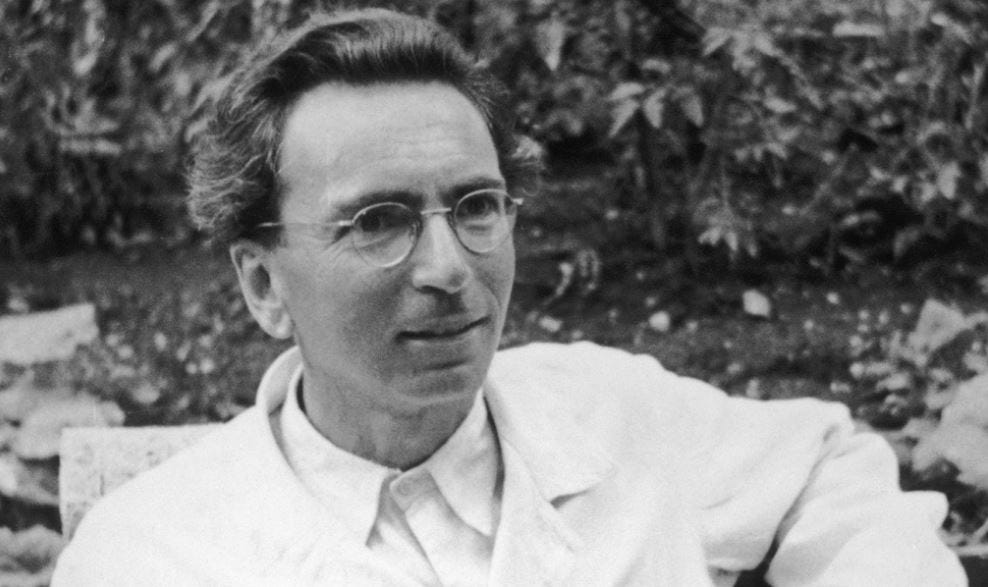
It was 25 September 1942 when Viktor Frankl and his wife were deported to the Nazi Theresienstadt Ghetto. Here, Frankl served as a general practitioner in a clinic where his skills in psychiatry proved useful. He was allocated to a psychiatric care ward, establishing a service of mental health care. He set up a unit to aid the newcomers to the camp in overcoming the shock, depression and grief suffered at the hands of the Nazis.
Frankl had been interested in depression and suicide when he was studying medicine at the University of Vienna. He would later go on to treat people who had suicidal tendencies at the Steinhof Psychiatric Hospitaland and in 1937 he even set up his own private practice for those with depression.
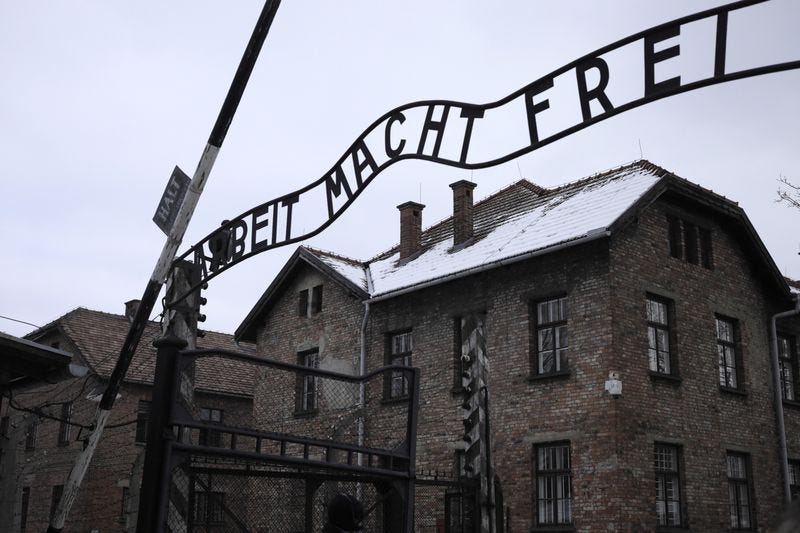
On 19 October 1944, Frankl and his wife Tilly were transported to the Auschwitz concentration camp. He was moved to Kaufering, a camp affiliated with Dachau, on 25 October, where he spent five months working as a slave laborer. In March 1945, he was offered a move to Türkheim, also affiliated with Dachau, where he worked as a physician until 27 April 1945, when American soldiers liberated the camp.
Viktor Frankl observed the psychological consequences of imprisonment on his fellow inmates. He quickly discovered that the inmates were engaged in a constant struggle to find a meaning to their suffering.
The horrific subjugation of the inmates caused many to view their lives as empty and defeated. Perhaps rightly so, but in order to survive the camp, Frankl wrote, each inmate had to discover a meaning within that would force them to keep on living.
The inmates needed, as Frankl wrote, to change their perception towards their lives. Inmates had to realise that their expectations no longer mattered. What mattered was whether they were able to answer the questions that life was asking of them. In other words, the inmates had to stop questioning the meaning of their lives, and instead begin to see that life was testing them.
“We who lived in concentration camps can remember the men who walked through the huts comforting others, giving away their last piece of bread. They may have been few in number, but they offer sufficient proof that everything can be taken from a man but one thing: the last of human freedoms — to choose one’s own attitude in any given set of circumstances — to choose one’s own way.”
Viktor E. Frankl, Man’s Search for Meaning
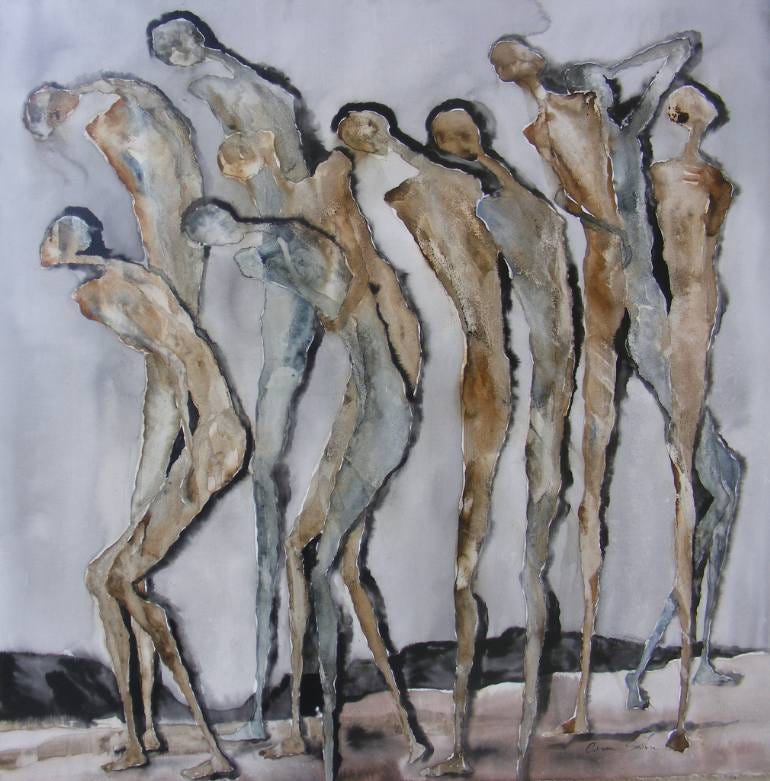
This change in attitude required immense strength and courage since it was easy, even perhaps justifiable, to fall into despair and allow death to take them away. The meaning of life in the camp, then, was to accept the challenge of suffering at every moment. Inmates had to admit their pain as a contest to overcome and remind themselves of this cause every waking moment in a deliberate fight to push back nihilism.
Frankl noted that humour was one tool the inmates used to show to life that they were braving its challenges. Laughter became their attack against the certainty of their hardships because to laugh at something is to show that you do not fear it. But, laughter also masked their pain, and the more the inmates laughed, the more they demonstrated to each other just how much pain they could handle. The laughter of the inmates acted as a protest, a refusal to bend to their horrific circumstances. Laughter showed to the others that they now viewed their suffering as a trial to pass through, rather than a chance to withdraw.
This change in perspective was critical if the inmates were to survive the brutal conditions of Auschwitz.
Of course, disease, hunger and exhaustion were great struggles that each inmate had to battle. But, Frankl wrote that if an inmate lost their reason to continue, death would always follow. The recognition of a purpose to their suffering allowed many inmates to avoid the main causes of death, namely apathy, disease and fatigue.
A meaning to life, Frankl believed, exists as a guardian angel that protects and serves the beholder.
Frankl gives the example of an inmate whose reason for living was based on rumours surrounding the date when the camp would be liberated. He grew ever more excited as the rumoured date neared, but when the expected day came, everything was as it always was and the rumours grew silent. The inmate refused to leave the hut the next day for work, dying days later from a loss of hope.
No inmate could rely on their own expectations of how life should or should not be. Instead, for a chance of survival, you had to view life as a constant struggle for answers.
Life, then, should be seen as a responsibility, a call to fulfil all that is expected from you.
“The more one forgets himself — by giving himself to a cause to serve or another person to love — the more human he is and the more he actualizes himself. What is called self-actualization is not an attainable aim at all, for the simple reason that the more one would strive for it, the more he would miss it. In other words, self-actualization is possible only as a side-effect of self-transcendence.”
― Viktor E. Frankl, Man’s Search for Meaning
…
Viktor Frankl extended his experiences in the concentration camp to normal life after the Second World War. Frankl returned to Vienna and began lecturing his own approach to psychological healing. He named this approach ‘logotherapy’, the founding premise being that a meaning to one’s life is the most powerful motivational force anybody could have.
Frankl wrote that we can find a meaning to life in three ways. The first is changing the attitude we have towards unavoidable suffering:
“Once, an elderly general practitioner consulted me because of his severe depression. He could not overcome the loss of his wife who had died two years before and whom he had loved above all else. Now how could I help him? What should I tell him? I refrained from telling him anything, but instead confronted him with a question, “What would have happened, Doctor, if you had died first, and your wife would have had to survive without you?:”
“Oh,” he said, “for her this would have been terrible; how she would have suffered!” Whereupon I replied, “You see, Doctor, such a suffering has been spared her, and it is you who have spared her this suffering; but now, you have to pay for it by surviving and mourning her.” He said no word but shook my hand and calmly left the office.”
Page 178–179, Man’s Search for Meaning.
He also gives the example of how a distraught woman came to his clinic and told him that she wished to commit suicide. The single mother had three children, two had recently died and she was left alone to take care of her disabled son.
The mother was suffering from depression, but Frankl eased her mind by reminding her that if it were not for her care, her son would now be in a disabled institution living in squalid conditions without the love of his mother. Frankl’s calm words shifted the mother’s perspective. She realised that she held a great meaning to her life — to be a mother.
Love is another a powerful source of meaning to people’s lives.
Viktor Frankl held the image of his wife, Tilly Grosser, closely throughout his long struggle in Auschwitz and most definitely for the rest of his life. He would spend many nights visualising her face and even holding mental conversations with her whilst he worked.
The image of his wife protected his heart from breaking and the hope that he might see her again was enough to keep him moving.
“For the first time in my life I saw the truth as it is set into song by so many poets, proclaimed as the final wisdom by so many thinkers. The truth — that Love is the ultimate and highest goal to which man can aspire. Then I grasped the meaning of the greatest secret that human poetry and human thought and belief have to impart: The salvation of man is through love and in love.”
It is in love that your eyes open and you discover the person for who they truly are; they are divine, they entice your heart and you wish to never part. It is a rather spiritual experience. Those who know better understand that to refuse such a love would be to refuse life itself, for love serves as a beacon, a sun that illuminates all other forms.
Love has always been, throughout history, a great source of meaning in people’s lives. And, it was love that carried Frankl through the long days of exhaustion, disease, mud and toil in the concentration camp.
Frankl’s wife was murdered in 1944 at Bergen-Belsen. He also lost both of his parents and a brother during the Holocaust. His sister left for Australia after the War.
“What man actually needs is not a tensionless state but rather a striving and struggling for a worthwhile goal, a freely chosen task. What he needs is not a discharge of tension at any cost but the call of a potential meaning waiting to be fulfilled by him.”
In this time of peace and prosperity, Frankl noted that to live a life of meaning one must find their unique vocation. This will often be a discipline of sort — art, writing or perhaps carpentry — or maybe a specific purpose. For Frankl, this was a scientific manuscript that he had completed before the War. The guards of the camp had destroyed it and he wished to one day rewrite it and share his knowledge to the world.
Everyone, Frankl wrote, knows what it is they should do with their life and those who dare to take on the obligation will ensure a life of fulfilment.
Each person has a gift; it is the responsibility of the beholder to act on this gift and not deprive others of what has been provided to them naturally. It is during the pilgrimage, the struggle against the wind where people find true fulfilment. The act of realising your potential is a meaningful responsibility for everyone.
Each meaning to life will vary with significance at different stages in one’s journey. There are times of affluence and times of unavoidable hardships in everyone’s life.
All three meanings can intertwine with each other too.
But, Frankl wrote that it takes only one — viewing suffering as an opportunity, love for someone or striving for an achievement — to live a meaningful and therefore fulfilling life.
In this Oct. 25, 2018, photo Aura Wharton-Beck, left, an assistant professor in the School of Education at the University of St. Thomas and a graduate of the school, clasps hands with Kevyn Perkins, center, during a moment of silence before a protest in the Anderson Student Center at the University of St. Thomas in St. Paul, Minn. The protest was in response to a racial slur written on the dorm door of Perkins, a University of St. Thomas freshman, on Oct. 19. At right is St. Paul mayor Melvin Carter. (Jean Pieri/Pioneer Press via AP)
Kevyn Perkins stopped cold when he saw the letters scrawled on the door to his dorm: “N—– go back” it said, inked in messy red marker. First he was blinded by confusion. Then rage. And then all he could think about was dropping out, finding a new school, escaping for good.
“I thought maybe I don’t belong here. So I called my brother and I said, ‘pick me up,’” said Perkins, 19, a freshman at the University of St. Thomas, a private and mostly white school in St. Paul, Minnesota. “He said that’s what they want you to do — you have to stay there and stay strong.”
Often overlooked amid the recent intense spasms of hatred — 11 dead in Pittsburgh synagogue, two African-Americans gunned down in a Kentucky grocery store, 13 mail bombs sent to prominent Democrats — are nearly daily flashes of hate that are no less capable of leaving their victims with deep and permanent emotional wounds.
In October alone, there were dozens of examples of the kind of hatred that smolders without ever reaching national attention. It stretched from coast to coast, targeting victims because of their race, religion, sexual orientation, gender and myriad other differences.
An Indiana woman was arrested last week after leaving a racist letter directed at African-American neighbors, urging them to leave the neighborhood because black people weren’t welcome. As early voting started in North Carolina, a black Republican volunteer was accosted with slurs and had a gun pulled on him at a polling place, leading to one man’s arrest. An Uber passenger in Colorado was arrested after threatening his Middle Eastern driver and chasing him down the street because police said he “hated all brown people.” Violent clashes broke out in New York City after a speech by the founder of a far-right group, leading to three arrests.
In a Texas courtroom, a man was sentenced to 24 years in prison on Oct. 17 for torching a mosque near the U.S.-Mexico border last year because of what authorities said was a “rabid hatred” of Muslims. In sending the arsonist to prison, Judge John Rainey declared: “This must stop. It is like a cancer to our society,” adding that incidents like this create “fear all over the world.”
Anti-Defamation League CEO Jonathan Greenblatt said xenophobic rhetoric is feeding the anxiety of the current political moment, and that anxiety is prompting fear and promoting resentment and “all the worst impulses.”
“We’re living in a moment where hate crimes are on the rise,” said Greenblatt. “We need more than ever for our leaders to ratchet back the rhetoric. People feel like they’re on edge across the country.”
President Trump’s critics have accused him of fanning the flames with his divisive political rhetoric — something the president pushed back against Friday. He put the blame back on reporters for “creating violence” with he has called “fake news” stories.
Several cases happened on college campuses, which strive to reflect the nation’s diversity but sometimes attract its intolerance.
At more than 40 colleges, racist flyers or stickers were found posted on campus in October, according to the Anti-Defamation League, which has reported a surge in activity by white supremacist groups since Trump took office.
At the College of the Holy Cross in central Massachusetts, a student was beaten in an assault that officials say was motivated by the victim’s sexual orientation. No one has been arrested in connection with the crime.
Students at DePauw University in Indiana reported four separate cases of hate speech in October. In three, racial and homophobic slurs and threats were yelled from cars passing by campus. In another case, a threat with the N-word was found in an elevator on campus.
Anti-Semitic posters appeared at the University of California, Davis, blaming Jews for allegations of sexual assault that were made against Justice Brett Kavanaugh. Several Jewish groups on campus wrote a letter demanding a stronger response from the school’s administration, saying Jews on campus have faced mounting prejudice in recent years.
“Anti-Semitism is very real and alive on our campus,” the letter said. “Jewish students should not have to be scared of walking on campus. Students are choosing not to openly identify as Jews through our clothing.”
For Perkins, the red lettering marred the image of the friendly, welcoming campus that was sold to him by college officials.
The incident led to a student protest that prompted the school to cancel class for a town hall meeting discussing racial tensions on campus.
Since he found the note Oct. 19, Perkins has become more withdrawn, he said, less outgoing. And although he decided to stay at St. Thomas, he’s left to wonder who on campus felt such hatred for him, and why.
“I’m already the odd one out, and the words, the hatred behind it really made me mad,” he said. “Degrading someone based on the color of their skin, I just couldn’t understand why someone would do that.”
AP National Writer Errin Haines Whack and AP researcher Monika Mathur contributed to this report.
Dr. Gabor Maté a renowned specialist in addiction, childhood trauma and stress joins me on the podcast today. We discuss the many forms addiction can take, how we can cope as damaged people in the world and are we being ruled by traumatised politicians? Gabor has a very loving, optimistic and benevolent worldview that you will hopefully benefit from listening to in this episode.
November 13, 2018 | Jill Nagle (wisdomofthebody.com)
One thing I try to remember to say up front to the couples I work with is, “Love brings up everything unlike itself, so that we can heal it.” This came from a quote I heard from Sondra Ray, via the late Geoffrey Karen Dior.
Let’s take that a segment at a time. First,
Love brings up everything unlike itself…
This means that love (and actually, connection or human interaction of any kind, but especially love) draws forth the unhealed parts of ourselves–the parts that do not feel loved. Maybe we are abused, and feel afraid of, or unsafe with, our partner. Maybe we were neglected, and feel alone, even when our partner is truly there for us.
Perhaps we were ridiculed, and feel protective or defensive around our partner. We might even pick people who have these same characteristics, because those unhealed parts of ourselves find them so familiar. Even if our partner were perfect, however, we may still experience them through the lens of our unhealed wounds.
To those young, unhealed parts of us. love represents the attention and spaciousness necessary to finally heal those parts. Only we probably don’t recognize it as such–the inner dialogue can go something like this:
1. Someone is paying attention to me
2. The message kicks in, consciously or not, “I am not safe/worthy/comfortable receiving this loving attention,” or “I cannot trust this”
3. So I push the person away, or throw a wrench into our flow, rather than settling in, receiving the love, and allowing the connection to take deeper root
Harville Hendrix, author of Getting the Love You Want, and Keeping the Love You Find says that we unconsciously pick “Imago” partners, those who embody the best and worst traits of our caretakers. I have seen this some of the time, and, what I also see is people experiencing their partner’s words and actions through an Imago lens, even if the partner does not resemble their caretakers in the least. Knowing that we do this helps us to get a bit of distance…
…so that we can heal it.
This means that, through an attentive, loving partner, we have the opportunity, if both partners are willing, to create space within the relationship for the young, unhealed parts to come forward. We can also do individual work, on our own, using the relationship as fodder to work with a counselor on what comes up for us within the relationship.
The reason I talk with couples about this philosophy up front is that if we’re all on board with this same reality, we can treat difficulties (excluding out-and-out safety threats) in the relationship as opportunities to grow and deepen, instead of taking them at face value, or creating stories that something “is wrong.”
Again, that line is,
Love brings up everything unlike itself, so that we can heal it.
Have you ever approached a relationship this way? Are you willing to try it? If so, please let me know how it goes!