Jeroen van Delft
Published on Jan 28, 2015
Joseph And The Amazing Technicolor Dreamcoat
Really Useful Films, 1999
Close Every Door 0:27:30

Marc Gafni
Published on Oct 4, 2016
The Universe: A Love Story Video Series with Barbara Marx Hubbard and Marc Gafni
Barbara Marx Hubbard: I think we’re at just the moment in our history as humanity when there are enough innovations and innovative people, loving people that we are connecting more and more rapidly every day. We have a communication system, we have the internet, we have a thinking layer of Earth to connect us and one of the things that we’re doing here with this whole series is to help connect the people who would like to tip the system to the higher order. And since it’s at a tipping point, you don’t know one more person in the right direction of the tipping point it goes.
Marc Gafni: Right and that’s so awesome and it’s so outrageous. Outrageous is the new awesome. When you have an evolutionary relationship to life, your experience is that your next act of awakening as outrageous love and creatively living that outrageous love and enacting it in the world can actually tip the entire system.
Read the whole transcript here: http://centerforintegralwisdom.org/co…
2. Contra factum non fit argumentum.
In English
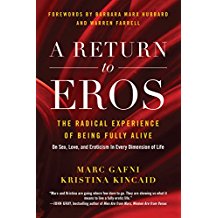
“Shame is when sex stops short of infinity.”
“The great realization of the spiritually incorrect Tantric masters is that reality is allurement. Allurement is the quality of attraction, which is the very fabric of existence. From electromagnetic attraction to gravity to rungs of evolutionary emergence to the intellectual sex between ideas that generates newness–all of reality is moved by the intense allurement for contact, which generates new creations. Way before sex appears on the scene, allurement is at work throughout the cosmos, attracting all expressions of creation to each other. From the first nanoseconds of the big bang to the first quarks that generated your body, to your own life, unique allurement is what drives all of life. Who are you if not your unique set of allurements? Your physical structure is the composition of the allurements that caused its atoms to form into molecules, its molecules into cells and its cells into organs. Everything in creation is attracted to everything else, and this urge to know each other, to communicate, to join and make something great, is the allurement that lies at the ver heart of life.”
“The word orgasm itself has been exiled to the sexual. Orgasm, however, refers to a moment of radical clarity and aliveness in which all the masks drop. In these moments the natural devotion and delight that exist between us all is nakedly revealed.”
“Giving one’s beloved the gift of one’s arousal is a great source of aliveness. Radical intimacy is to let your beloved witness your arousal.”
“Paradoxically, the place that understands the erotic secret well is the world of advertising. Even when television is bland and insipid, advertising is often erotic. We all realized long ago that advertising uses the sexual as a primary tool in its campaigns. Somehow we are meant to associate the beautiful woman and the sleek car. Moralists often accuse advertisers of a great ethical wrong in this kind of advertising. After all, it seems to falsely suggest that we will somehow get the girl if we buy the car. I think we have all figured out that the girl does not come with the car. Rather, the implication is far more subtle. On some level, this kind of advertisement actually intuits the Secret of the Cherubs. The profound implication of the girl/car nexus is that the sexual Eros expressed by the girl is a model of the kind of Eros the driver wants in his means of transportation. This profound and true idea drives much of advertising. It is perhaps more than a telling coincidence of language that these glamorous women are called “models’ — an obvious shoo-in for our theme! For essentially, they are illustrators of the metaphysical (and physical) fact that sex models the erotic. Their sexual allure is used to pull at the erotic string of our soul. When we buy into the ad, we are chasing not the sex it displays but the Eros modeled there, the Eros we so deeply, if subconsciously, quest after. Models, then, become a handy visual and linguistic reminder of the fact that all I am really after is some good Eros.”
“Prayer is erotic.”
“In ordinary love the face of the beloved closes you to all faces other than his or hers. In outrageous love, the face of the beloved opens you to the name of God that lives in every face.”
“Eros invites the democratization of greatness.”

Reports reached the Dalai Lama that a certain Master of Kung Fu was roaming the countryside converting young men to the study of violence. Though Tibetan by birth, this man had been raised in Peking and was said to have returned as a secret agent to astonish Tibetans with the superior power of the Chinese in such a way as to render the country open and eager for conquest.
The Master of Kung Fu had made his reputation by taking on eight fierce Lolo Warriors who attacked him on a mountain pass, killing seven of them so quickly that the one with the broken legs who survived swore the marvelous voyager had met their attack with movements so swift he seemed merely to walk through them and continue peacefully on his way.
Wherever the Master of Kung Fu stopped, he gathered followers and admirers who were fascinated by the mystical beauty of his methods. The dance of destruction, which he was always glad to perform in slow motion before an audience in the marketplace, was said to be awesomely beautiful. Done swiftly, the dance could not be seen. The master would seem to be standing absolutely still. Only a rush of wind indicated that he had spun about, throwing out his arms and legs in such fashion as to leave at least a dozen of the young toughs who were trying to dodge him grabbing at the parts of their bodies he had playfully flicked with his hands or feet to indicate which bones he could have broken, which organs destroyed.
Against all Buddhist laws, there had been unnecessary slaughter of yaks in order to provide the many husky monks, who had abandoned their lamaseries and robes, with black leather outfits like the one the Master of Kung Fu wore from neck to ankle, his huge muscles making the costume tight as his own flesh.
These leather-sheathed disciples followed their master everywhere challenging one another to duels, many of which ended in death or crippling. The Regent, and other advisors to the Dalai Lama were deeply concerned, especially after blasphemous rumors began circulating that the Master of Kung Fu was an incarnation of Shiva, Hindu God of Destruction.
There would have been riots had they thrown the man in jail, since he had done nothing wrong. He had a perfect right to be in the country. Not since his brilliant defense against the Lolos had he seriously injured anyone. When governments officials questioned his intentions, he said that he was a sincere religious mystic trying to communicate certain cosmic laws learned from his Chinese Guru.
It was decided not to attack him publicly but, in conformity with old Tibetan customs when someone claims religious privilege for questionable acts, to invite him most courteously to visit the Dalai Lama.
Pleased with the invitation, the Master of Kung Fu strode into the Dalai Lama’s ceremonial hall. Being only ten years old at the time, the young God-King could not help but be impressed with the marvelously potent vibrations he gave off. They reduced the monks and lamas present to womanish giggling and gasping. The Master of Kung Fu was indeed a handsome, dashing fellow with his thick blue-black hair falling down over the shoulders of his leather suit. His teeth flashed confidently under a handlebar mustache. He did not prostrate himself but merely bowed gallantly, then leaned back to fill his chest with air until his whole body seemed to swell, tighten, and gleam.
“Your Highness,” he began, “I know why you asked me here and I want you to stop worrying. Ugliness is my only enemy. You are all beautiful people” – a titter from the monks – “and I wouldn’t think of doing you any harm.”
“When you want to do harm,” asked the Dalai Lama, “what kind of harm can you do?”
“Well, I don’t want to see it as harm at all, Highness. I want to see it as help. I’m a lover of beauty is what I am, just like any enlightened man. And I know as well as you that you can’t raise up beauty in this world without clearing out the ugliness first. You may not be able to see the results right now – in fact it may seem like just the opposite – but what I’m doing is I’m raising up beauty by training a special cadre of men to prepare the ground. That’s why I like to do my recruiting from the lamaseries. There’s too much ugliness in this world, much too much. Something’s got to be done about it by people who can back their strength with moral zeal. I figure the place to start is right here in this country where I was born. I could use your help to get the job done.”
“What exactly do you do?” asked the Dalai Lama.
“Royal Highness, the best way to show you would be for you to stand here in front of me while I do a little dance it took me some fifteen years to perfect. Though I can kill a dozen men instantly with this dance, have no fear. This will only be a demonstration of ugliness destruction. Without seeing these ugly forces destroyed – for my arms and legs move faster than the blades of a helicopter – you will experience the great quietness that comes afterwards where they are stilled.”
The Dalai Lama stood up and immediately felt as if a wind had blown flower petals across his body. He looked down but saw nothing. “You may proceed,” he told the Master of Kung Fu.
“Proceed?” said the other, grinning jovially. “I’ve already finished. What you felt were my hands flicking across your body. If it please Your Highness, this is a demonstration in slow motion, of the way I could have destroyed the organs of your body one by one. With this knuckle, I could have severed the contact between your brain and your spine. With the tip of this finger, I could have left you impotent. With the edge of this hand, I could have made it impossible for you to excrete. With this toe, I could have broken your arm while breaking your leg in the same motion with my heel. Your eyes, ears, nose, throat, spleen, liver. you name it. I could have taken them all out during that one little dance.”
Beaming with pride, he flexed his muscles and looked his body over, up and down, approvingly. “To achieve the great peace,” he concluded, “there are demons inside and outside that need to be eradicated. They appear and disappear so rapidly you cannot see them, but I’ve learned to see them and I can catch them and kill them before they get away, just as you catch a fly.”
“I do not catch flies,” said the Dalai Lama. A murmur of approval went up from the assembled monks. “No,” said the Dalai Lama, glad to hear that his comrades had not been entirely seduced, “we do not catch flies in Tibet.”
The Master of Kung Fu seemed momentarily taken aback, but he puffed himself up once more and resumed: “Quite so. But there is much sickness in this land due to the flies. In China there is very little sickness since every man knows how to catch a fly. Your Highness, I was not brought up in the serene tranquility of this palace but in the streets of a city much like your Lhasa only larger. In the city called Peking I looked at eyes muddied from staring through fumes of putrefaction at images of capitalistic lust. I heard mouths speak incessantly to presumed social inferiors in tones full of insult, contempt, dissimulation, and vengeance. I have known hearts to beat excitedly over the torture of innocent men. I have watched gluttons with bloated stomachs riding on the backs of starvelings. I have seen legs wobbling pathetically to hold up a body poisoned by chemicals. I have seen ears eagerly bending to rumors, gossip, false reports, and greedy evangelism of all kinds. In short, I have witnessed corruption in every part of man’s body and have taken it upon myself to destroy this corruption once and for all.”
“And after it is destroyed?” asked the Dalai Lama.
“It is destroyed. Mine may only be an art of preliminaries but it IS final. And I am its master.”
“I know a master greater than you,” said the Dalai Lama.
“Without wishing to offend Your Highness, I doubt that very much.”
“Yes, I have a champion who can best you,” insisted the boy king.
“Let him challenge me then, and if he bests me I shall leave Tibet forever.”
“If he bests you, you shall have no need to leave Tibet.”
The Dalai Lama looked around to see if his monks were as confident as he was, but they all looked very disconsolate. The huge guards were looking away, hoping he wouldn’t call on one of them; and the others were looking at the guards, obviously convinced that not one of them stood the slightest chance.
The Dalai Lama clapped his hands. “Regents,” he said, “summon the Dancing Master, and while we’re waiting let’s have some tea.”
The tea ceremony was just about over when the Regent returned with the Dancing Master. He was a wiry little fellow, half the size of the Master of Kung Fu and well past his prime. His legs were entwined with varicose veins and he was swollen at the elbows from arthritis. Nevertheless, his eyes were glittering merrily and he seemed eager for the challenge.
The Master of Kung Fu did not mock his opponent. “My own guru,” he said, “was even smaller and older than you, yet I was unable to best him until last year. I could have finished him easily had I ever been able to touch him, but he moved too fast. Only last year did I finally catch him on the ear and destroy him, as I shall destroy you when you finally tire. To show that I know your methods and won’t be tricked into exhausting my energy, I shall first let you strike me at will. Your frail little hands can do me no harm while I’m at full strength.”
The two opponents faced off. The Master of Kung Fu was taking a jaunty, indifferent stance, tempting the other to attack.
The old Dancing Master began to swirl very slowly, his robes wafting around his head. His arms stretched out and his hands fluttered like butterflies toward the eyes of his opponent. The fingers settled gently for a moment upon the bushy eyebrows. The Master of Kung Fu drew back in astonishment. He looked around the great hall. Everything was suddenly vibrant with rich hues of singing color. The faces of the monks were radiantly beautiful. It was as if his eyes had been washed clean for the first time.
The fingers of the Dancing Master stroked the nose of the Master of Kung Fu and suddenly he could smell pungent barley from a granary in the city far below. He could smell butter melting in the most fragrant of teas, as the Dalai Lama, incomparably beautiful, sipped tea and watched him calmly. A flicking of the Dance Master’s foot at his genitals, and he was throbbing with desire. The sound of a woman singing through an open window filled him with exquisite yearning to draw her into his arms and caress her. He found himself removing his leather clothes until he stood naked before the Dancing Master, who was now assaulting him with joy at every touch.
His body began to hum like a finely tuned instrument. He could hear the great long horns resounding in a thousand rooms of the Potala, praising creation. He opened his mouth and sang like a bird at sunrise. It seemed to him that he was possessed of many arms, legs, and hands, and all wanted to nurture the blossoming of life.
The Master of Kung Fu began the most beautiful dance that had ever been seen in the great ceremonial hall of the Grand Potala. It lasted for three days and nights, during which time everyone in Tibet feasted and visitors crowded the doorways and galleries to watch.
Only when he finally collapsed at the throne of the Dalai Lama did he realise that another body was lying beside him. The old Dancing Master had died of exertion while performing his final and most marvelous dance. But he had died happily, having found the disciple he had always yearned for. The new Dancing Master of Tibet took the frail corpse in his arms and, weeping with love, drew the last of its energy into his body. Never had he felt so strong.
– Pierre Delattre
By Maria Popova
February 18, 2018 (brainpickings.org)
 “The gray drizzle induced by depression,” William Styron wrote in his classic memoir of what depression is really like, “takes on the quality of physical pain.” In my own experience, the most withering aspect of depression is the way it erases, like physical illness does, the memory of wellness. The totality of the erasure sweeps away the elemental belief that another state of being is at all possible — the sensorial memory of what it was like to feel any other way vanishes, until your entire being contracts into the state of what is, unfathoming of what has been, can be, and will be. If Emily Dickinson was correct, and correct she was, that “confidence in daybreak modifies dusk,” the thick nightfall of depression smothers all confidence in dawn.
And yet daybreak does come, with a shock and a rapture, to find us asking ourselves in half-belief: “What hurt me so terribly all my life until this moment?”
This rapturous rehabilitation of hope is what German philosopher Friedrich Nietzsche (October 15, 1844–August 25, 1900), poet laureate of the troubled psyche, describes in the preface to the second edition of his most personal book, The Gay Science: With a Prelude in Rhymes and an Appendix of Songs(public library) — a chronicle of “high spirits, unrest, contradiction,” which gave us his vitalizing New Year’s resolution and his famous proclamation that “God is dead.”

Friedrich Nietzsche
Nietzsche writes just before his thirty-seventh birthday:
Gratitude pours forth continually, as if the unexpected had just happened — the gratitude of a convalescent — for convalescence was unexpected. “Gay Science”: that signifies the saturnalia of a spirit who has patiently resisted a terrible, long pressure — patiently, severely, coldly, without submitting, but also without hope — and who is now all at once attacked by hope, the hope for health, and the intoxication of convalescence. Is it any wonder that in the process much that is unreasonable and foolish comes to light, much playful tenderness that is lavished even on problems that have a prickly hide and are not made to be caressed and enticed? This whole book is nothing but a bit of merry-making after long privation and powerlessness, the rejoicing of strength that is returning, of a reawakened faith in a tomorrow and the day after tomorrow, of a sudden sense and anticipation of a future, of impending adventures, of seas that are open again, of goals that are permitted again, believed again.
Nietzsche offers a complementary sentiment in the 268th of the aphorisms collected in the book:
Complement this particular portion of The Gay Science with poet Jane Kenyon on life with and after depression, Rebecca Solnit on hope in the dark, and Tchaikovsky on depression and finding beauty amid the wreckage of the soul, then revisit Nietzsche on how to find yourself, what it really means to be a free spirit, and why a fulfilling life requires embracing rather than running from difficulty.
(Conversationagent.com) In an interview with Jeremy Paxman of the BBC that took place in 1999, David Bowie predicted the impact of the Internet on society with new ways of expression, art, and communication. Google was just a few months old, and YouTube, Facebook or Twitter were not even an idea (arrived several years later.)
In the segment below you Bowie is talking about how the role of music has shifted from one of creating the excitement for rebellion to a more niche and fragmented role of quasi-co-creation with different communities.
He says the Internet would take up the job of becoming an instrument of conversation, which music played in the past. His comments on fragmentation and dissolution of the old ways to make room for a new way of connecting artist with audience — the gray space in the middle — were on point.
But he’s not talking about how everyone would have a computer on their desk, his message is more about what they will do with it, “I think we’re actually on the cusp of something exhilarating and terrifying.” Behavior was the focus of his observation — an insight we can credit to his incredibly well-read mind.
You can see the skepticism on the interviewer’s face as Bowie goes progressively from talking about music and rebellion to the space in the middle between artist and audience. It’s not “just a tool,” if you think about the possibilities, what we can say and do with it.
Up until the ’70s, says Bowie, as a society we had “known truths,” and “known lies,” and no duplicity or pluralism about the things we believed in. That started to break down rapidly in the ’70s and the idea became that there are always two, three, four, five sides to every question.
It was the backdrop for a medium such as the Internet to be created and show the fragmentation of society. The potential of what the Internet is going to do to society — both good and bad — is unimaginable… this is how Bowie pushes back on Paxman’s comments.
He gave the example of the President when the telephone was invented saying that in the future each town would have one, which to us today sounds preposterous. Utter BS, Bowie called it. “The actual context, and the state of content is going to be different,” now don’t we all feel foolish to be repeating that very same thing ad nauseam well into 2018!
Watch the segment to see how someone can be engaged, listening actively, and thinking critically during an interview.
This segment, along with a Wired article inside Facebook’s two years of hell (via Ben Thompson) actually gives me hope that we’re at a general wake-up call on the current trajectory and its diminishing returns on attention and well being.
As an independent voice, I continue to believe that meaningful exchanges matter, intelligent discourse is vital to well being and a productive society, that cohesion and support are the pillars to a thriving culture. If you are reading this blog, or forwarding articles to friends and colleagues, you appreciate the value of signal over noise.
Every week I also share a list of links of recent articles here, as well as stories worth thinking about from my curated and diverse reading list.
If thinking and doing better is for you, I encourage you to subscribe. It goes out on Sunday. (In coming weeks, I will also have some announcements you may not want to miss.) If you’re looking for more of the same pronouncements spouted all over social, this is not for you.
| Emanuel Swedenborg | |
|---|---|

Portrait of Swedenborg by Carl Frederik von Breda.
|
|
| Born | Emanuel Swedberg 29 January 1688 Stockholm, Sweden |
| Died | 29 March 1772 (aged 84) London, England, Great Britain |
| Education | Uppsala University |
| Occupation |
|
| Notable work |
|
| Theological work | |
| Era | 18th-century |
| Tradition or movement | Lutheranism |
| Main interests |
|
| Notable ideas |
|
Emanuel Swedenborg (/ˈswiːdənˌbɔːrɡ/;[1]  Swedish pronunciation (help·info); born Emanuel Swedberg on 29 January 1688;[2] died 29 March 1772) was a Swedish scientist, philosopher, theologian, revelator, mystic and founder of Swedenborgianism.[3] He is best known for his book on the afterlife, Heaven and Hell (1758).[4][5]
Swedenborg had a prolific career as an inventor and scientist. In 1741, at 53, he entered into a spiritual phase in which he began to experience dreams and visions, beginning on Easter Weekend, on 6 April 1744. It culminated in a ‘spiritual awakening’ in which he received a revelation that he was appointed by the Lord Jesus Christ to write The Heavenly Doctrine to reform Christianity.[6] According to The Heavenly Doctrine, the Lord had opened Swedenborg’s spiritual eyes so that from then on, he could freely visit heaven and hell and talk with angels, demons and other spirits and the Last Judgment had already occurred the year before, in 1757.[7]
For the last 28 years of his life, Swedenborg wrote 18 published theological works—and several more that were unpublished. He termed himself a “Servant of the Lord Jesus Christ” in True Christian Religion,[8] which he published himself.[9] Some followers of The Heavenly Doctrine believe that of his theological works, only those that were published by Swedenborg himself are fully divinely inspired.[10]
More at: https://en.wikipedia.org/wiki/Emanuel_Swedenborg

By Emanuel Swedenborg
Edited by Louis H. Tafel
Translated by Samuel M. Warren
Discusses different aspects of the union between the sexes, both on earth and in heaven. Read more
Hardcover or PDF, 766 pages
Conjugial Love is perhaps Swedenborg’s most controversial work. Following up his consistently maintained theological stance that angels are not a separately created race of genderless beings, Swedenborg asserts that gender characteristics are part of one’s spiritual substance and thus survive death. In contrast to most Christian thinkers, he says not only that there are marriages in heaven, but that such unions involve supremely pleasurable sexual experiences. Here marriage is linked to the deep substructure of the universe by correspondence (Swedenborg’s system of interaction between the spiritual and the material) and achieves a preeminence rarely accorded it today. For example, in Swedenborg’s view, chastity is an attribute that can be possessed to a greater degree by the married than by the celibate.
Idealistic in placing a premium on sexual abstinence before marriage and monogamy afterward, the work also takes a realistic look at the dark aspects of human sexuality. Though its eighteenth-century perspective naturally provides challenges for the twenty-first century reader, Conjugial Love is in many respects a powerful advocate of the equality of the sexes and of the possibility of lasting, and even ever-increasing, love between married partners.
(Submitted by Richard Branam.)
To quote Mike Zonta, H.W., M., “Translation is ‘magical thinking’ based on self-evident axioms and syllogistic reasoning (which is to say that Translation is not magical thinking at all).” And to quote Heather Williams, H.W., M., “Translation is the creative process of re-engineering the outdated software of your mind.” Translation is a 5-step process using words and their meanings and histories to transform the testimony of the senses and uncover the underlying timeless reality of the Universe.
Sense testimony:
Dementia causes loss of cognitive capacity and disconnection from friends.
