

As an astrologer “since the solar eclipse on August 21st, things seem to have shifted. Many people have notice some kind of difference, be it a vibrational shift or what? People are more courageous it seems, many have reported. Also a sense of certainty. That is true with most my friends, and people I correspond with on Face Book. It may sound woo-woo, or new age to you, but I shy away from that perspective, and I am telling you many many people are feeling this certainty and boldness.
How can you put your creative passion into something that takes your courage and bold certainty to bring peace and healing in Portland? This is the key question from August 21st, again on Sept 6th during the Full Moon and most every new and full Moon coming up the rest of the year. Contact me for dates if you wish for that. Leo is a wonderful and sincere leader and blesses us all. Courage to be the unique androgynous Being we each are. Leo loves to roar. And the courage there in powerful and a leader. I found a peace with this energy and the Full Moon in Pisces on Sept 6th, at 1:29 PM Portland time. This is a time of great imagination! What do you imagine in your life that would be helpful in the community. That is a key question, as well as being physically helpful and there for those in in the community you truly want to be. What can you offer? That is a key question. I would love to hear from you and what your imagination and skills bring to Portland.
I offer my astrology and teaching/counseling experience to share. This available to all people whom are exploring their sexual fluidity. My dear friend, and professional associate, Suzanne Deakins, Ph.d, H.W, M., have taught in this field for years, and no offer it in Portland, Oregon. If interested please email me, or call sometime.
Robert McEwen, H.W., M
Mentor and Astrologer
robbystarman@aol.com
503 706-0396
~ call or text
Robert
Full Moon September 6 2017 ~ The ‘God’ Note (DarkStarAstrology.com)
The Full Moon on 6 September 2017 falls at 14º Pisces decan 2. Pisces decan 2 is a Jupiter ruled decan and the most liquid area of Pisces, which means it also risks being the most toxic. This Full Moon then will be supremely absorbent of its environment, so can work positively or negatively. The most criminal and slimy of individuals could turn this great power into something quite nefarious. With Pisces decan 2 the evolutionary state of the soul is paramount, this Full Moon will absorb toxins just as well as it can absorb love and bliss.
Whatever the choice, it will just suck the juice out of it, so it better be good juice! Back in March 2016 we had a Solar Eclipse at 19º Pisces, so this September Full Moon may repeat some of that eclipse’s themes if you were touched by it. The two lunations are very similar because, just like in that eclipse. this Moon is also conjunct Neptune (Since Neptune is still floating through Pisces 2)
Full Moon September Astrology ~ Pisces 2
 The Moon is very happy in Pisces 2 due to its rulership here by triplicity (It’s the Cancer decan of Pisces). This placement in natal charts has certainly brought out some powerful and influential women in the field of medical science and healing. It would suggest playing god (Achernar’s influence, see below) with the Moon representing the womb of the Petri dish. A Full Moon here questions whether to dispense with god all together despite Pisces 2 being such a religious decan.
The lesson here is to become your own guru since those with Moon Pisces 2 often feel let down by god or spirituality in some way. Richard Dawkins, who has Moon in Pisces 2 wrote the “God Delusion” he says “It’s a horrible idea that God, this paragon of wisdom and knowledge, power, couldn’t think of a better way to forgive us our sins than to come down to Earth in his alter ego as his son and have himself hideously tortured and executed so that he could forgive himself ”.
Exploring the question of biology and divinity could also be an issue in the collective with this Full Moon. Dawkins of course sees god though the eyes of a westerner. He could just as easily be describing ‘white guilt’ or pathological altruism. No other religion on earth has such a self-sacrificing ‘hero’, it is unique to the west. (Quite a good ploy to keep us in our place though…) Dawkins completely misses out the point that there is resurrection, which is closer to the concept of reincarnation in the East. Christ = Khrisna?

A jihad of love | Mohamed El Bachiri | TEDxHilversum
His name is Mohamed. He is Muslim. Moroccan origin. Metro driver. Lives in Molenbeek Brussels. Given his name and background, some people might suspect him to be a terrorist. But he is a victim of the Brussels terrorist attacks on March 22nd, 2016. His wife Loubna died when the bombs exploded in the metro, leaving him behind with their three sons aged 10, 8 and 3. He misses her dearly, but he refuses to turn to hate, because that would mean that the terrorist win. So he started his own jihad: a jihad of love.
This talk was given at a TEDx event using the TED conference format but independently organized by a local community. Learn more at http://ted.com/tedx
(Contributed by Alana Fennie.)
“What is True Relationship?” by Robert McEwen, H.W., M.
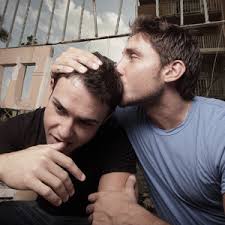
“Beyond the Labels into Healing” by Robert McEwen, H.W., M.
“Heal is to Be Whole” by Robert McEwen, H.W., M.
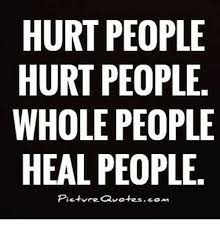
Translation does the trick. Mentors are available to talk to about this process and guide you.
Robert McEwen, H.W., M.
“Let’s Be Honest” by Robert McEwen, H.W., M.

Let’s be honest. There is no one that is more spiritual than another. That is the spiritual ego speaking. I don’t eat meat, I believe this yoga and do this practice. I am MORE spiritual than you are. This is false. Spirit is Spirit. It does not care what you eat or if you do yoga or if you listen to Mooji, or practice a course in miracles. Truth does not care. Truth just IS. There is no right or wrong way to be spiritual. What brings you peace, love and joy is all that matters. This isness that is peace, that is here, and that is always now. Forget the crystals, incense, and the books and the teachers. Trappings. There is nothing to get from any of it. It is Being only. There is a sense of Thanks that may come. The getting and the traps of what people think is spiritual is phony. What you are looking for, is all ready what you are looking from. Getting there is false….. you are there. The ideas of getting there is a fake. They are traps of ego trying to look good as a spiritual person. It is a false way to live. Let all that go. Live the way that is authentic to you. Be honest with yourself and your friends.
Be happy and free. There is nothing to expect and nowhere to get to. You are all ready there, here and now. Too simple.
Enjoy and laugh!
Robert
“66” by Gwyllm Llwydd
A Stoic’s Key to Peace of Mind: Seneca on the Antidote to Anxiety
“There are more things … likely to frighten us than there are to crush us; we suffer more often in imagination than in reality.”
BY MARIA POPOVA (brainpickings.org)

“The truth is, we know so little about life, we don’t really know what the good news is and what the bad news is,”Kurt Vonnegut observed in discussing Hamlet during his influential lecture on the shapes of stories. “The whole process of nature is an integrated process of immense complexity, and it’s really impossible to tell whether anything that happens in it is good or bad,” Alan Watts wrote a generation earlier in his sobering case for learning not to think in terms of gain or loss. And yet most of us spend swaths of our days worrying about the prospect of events we judge to be negative, potential losses driven by what we perceive to be “bad news.” In the 1930s, one pastor itemized anxiety into five categories of worries, four of which imaginary and the fifth, “worries that have a real foundation,” occupying “possibly 8% of the total.”
A twenty-four-hour news cycle that preys on this human propensity has undeniably aggravated the problem and swelled the 8% to appear as 98%, but at the heart of this warping of reality is an ancient tendency of mind so hard-wired into our psyche that it exists independently of external events. The great first-century Roman philosopher Seneca examined it, and its only real antidote, with uncommon insight in his correspondence with his friend Lucilius Junior, later published as Letters from a Stoic(public library) — the timeless trove of wisdom that gave us Seneca on true and false friendship and the mental discipline of overcoming fear.

In his thirteenth letter, titled “On groundless fears,” Seneca writes:
There are more things … likely to frighten us than there are to crush us; we suffer more often in imagination than in reality.
With an eye to the self-defeating and wearying human habit of bracing ourselves for imaginary disaster, Seneca counsels his young friend:
What I advise you to do is, not to be unhappy before the crisis comes; since it may be that the dangers before which you paled as if they were threatening you, will never come upon you; they certainly have not yet come.
Accordingly, some things torment us more than they ought; some torment us before they ought; and some torment us when they ought not to torment us at all. We are in the habit of exaggerating, or imagining, or anticipating, sorrow.

Seneca then offers a critical assessment of reasonable and unreasonable worries, using elegant rhetoric to illuminate the foolishness of squandering our mental and emotional energies on the latter class, which comprises the vast majority of our anxieties:
It is likely that some troubles will befall us; but it is not a present fact. How often has the unexpected happened! How often has the expected never come to pass! And even though it is ordained to be, what does it avail to run out to meet your suffering? You will suffer soon enough, when it arrives; so look forward meanwhile to better things. What shall you gain by doing this? Time. There will be many happenings meanwhile which will serve to postpone, or end, or pass on to another person, the trials which are near or even in your very presence. A fire has opened the way to flight. Men have been let down softly by a catastrophe. Sometimes the sword has been checked even at the victim’s throat. Men have survived their own executioners. Even bad fortune is fickle. Perhaps it will come, perhaps not; in the meantime it is not. So look forward to better things.

Sixteen centuries before Descartes examined the vital relationship between fear and hope, Seneca considers its role in mitigating our anxiety:
The mind at times fashions for itself false shapes of evil when there are no signs that point to any evil; it twists into the worst construction some word of doubtful meaning; or it fancies some personal grudge to be more serious than it really is, considering not how angry the enemy is, but to what lengths he may go if he is angry. But life is not worth living, and there is no limit to our sorrows, if we indulge our fears to the greatest possible extent; in this matter, let prudence help you, and contemn with a resolute spirit even when it is in plain sight. If you cannot do this, counter one weakness with another, and temper your fear with hope. There is nothing so certain among these objects of fear that it is not more certain still that things we dread sink into nothing and that things we hope for mock us. Accordingly, weigh carefully your hopes as well as your fears, and whenever all the elements are in doubt, decide in your own favour; believe what you prefer. And if fear wins a majority of the votes, incline in the other direction anyhow, and cease to harass your soul, reflecting continually that most mortals, even when no troubles are actually at hand or are certainly to be expected in the future, become excited and disquieted.
But the greatest peril of misplaced worry, Seneca cautions, is that in keeping us constantly tensed against an imagined catastrophe, it prevents us from fully living. He ends the letter with a quote from Epicurus illustrating this sobering point:
The fool, with all his other faults, has this also, he is always getting ready to live.
Complement this particular portion of Seneca’s wholly indispensable Letters from a Stoic with Alan Watts on the antidote to the age of anxiety, Italo Calvino on how to lower your “worryability,” and Claudia Hammond on what the psychology of suicide prevention teaches us about controlling our everyday worries, then revisit Seneca on making the most of life’s shortness and the key to resilience when loss does strike.
John Ashbery, Celebrated And Experimental Poet Of The 20th Century, Dies At 90 (npr.org)
John Ashbery, a Pulitzer Prize-winning poet known for his surrealist, confounding works, has died at age 90.
The poet died of natural causes in his Hudson, N.Y., home early Sunday, confirms Farrar, Straus & Giroux, the publicist for a new Ashbery biography.
His 1975 collection, Self-Portrait in a Convex Mirror, what many consider his masterpiece, won a rare trifecta of the literary world: the Pulitzer Prize, the National Book Award and the National Book Critics Circle prize. The title poem was a mediation on Parmigianino’s 16th century Italian painting of the same name. In 2012, Former President Barack Obama recognized Ashbery with the National Humanities Medal.

Poet John Ashbery, seen here in his New York apartment in 2008, is widely regarded as one of the 20th century’s greatest poets. He died at the age of 90 on Sunday, at his home in Hudson, N.Y.
Bebeto Matthews/AP
From an early age, his tendency to reject poetic conventions evolved under the influences of music and visual art, particularly that of Abstract Expressionist painters.
As The New York Times identified the relationship, “If the verse is challenging, that was in part Mr. Ashbery’s aim — to compel readers to rethink their presumptions about poetry, just as the Abstract Expressionists asked viewers to discard their preconceptions about painting.”
“My ambition was to be a painter,” he told Ashbery told Peter Stitt of the Paris Review. He took painting classes in his preteen years, but “found that poetry was easier than painting.” Meanwhile, he began consuming modern poetry.
He cut his teeth on a Louis Untermeyer anthology, he tells Stitt. In the way many critics found Ashbery’s poetry indecipherable, “I didn’t understand much of it at first … I guess it was just a desire to emulate that started me writing poetry.”
While his enigmatic poems confounded literary critics and peers, his experimental style reinvented literature for a generation of writers.
Ashbery’s first book puzzled admired poet W.H. Auden. As the Times notes, when Auden selected Ashbery as the Yale Younger Poets Prize winner for Some Trees (1956), he later “confessed that he had not understood a word of it.” Nevertheless, he said, Ashbery “was one of the writers who most formed my language as a poet.”
In fact, Ashbery joked to The Associated Press in 2008 that, were he to verbify his last name, it would mean “to confuse the hell out of people.”
His unorthodox work, Ashbery once told the London Times, is fluctuant because life itself is: “I don’t find any direct statements in life. My poetry imitates or reproduces the way knowledge or awareness come to me, which is by fits and starts and by indirection. I don’t think poetry arranged in neat patterns would reflect that situation. My poetry is disjunct, but then so is life.”
He described poetry as a “marginal occupation” within society, in a 2005 interviewwith Weekend Edition host Scott Simon. Critics have told him they’ve found his work inaccessible to a mainstream audience, he said, but his themes regarding the human experience, such as doubt and uncertainty, address many.
“I wish that they were as accessible to as many people as possible,” he told Simon. “They are not, I wouldn’t say, private. What they are is about the privacy of all of us and the difficulty of our own thinking and coming to conclusions. And in that way they are, I think, accessible if anybody cares to access them.”
(Contributed by Michael Kelly.)