Ancient Logic (plato.stanford.edu)

Logic as a discipline starts with the transition from the more or less unreflective use of logical methods and argument patterns to the reflection on and inquiry into these methods and patterns and their elements, including the syntax and semantics of sentences. In Greek and Roman antiquity, discussions of some elements of logic and a focus on methods of inference can be traced back to the late 5th century BCE. The Sophists, and later Plato (early 4th c.) displayed an interest in sentence analysis, truth, and fallacies, and Eubulides of Miletus (mid-4th c.) is on record as the inventor of both the Liar and the Sorites paradox. But logic as a fully systematic discipline begins with Aristotle, who systematized much of the logical inquiry of his predecessors. His main achievements were his theory of the logical interrelation of affirmative and negative existential and universal statements and, based on this theory, his syllogistic, which can be interpreted as a system of deductive inference. Aristotle’s logic is known as term-logic, since it is concerned with the logical relations between terms, such as ‘human being’, ‘animal’, ‘white’. It shares elements with both set theory and predicate logic. Aristotle’s successors in his school, the Peripatos, notably Theophrastus and Eudemus, widened the scope of deductive inference and improved some aspects of Aristotle’s logic.

In the Hellenistic period, and apparently independent of Aristotle’s achievements, the logician Diodorus Cronus and his pupil Philo (see the entry Dialectical school) worked out the beginnings of a logic that took propositions, rather than terms, as its basic elements. They influenced the second major theorist of logic in antiquity, the Stoic Chrysippus (mid-3rd c.), whose main achievement is the development of a propositional logic, crowned by a deductive system. Regarded by many in antiquity as the greatest logician, he was innovative in a large number of topics that are central to contemporary formal and philosophical logic. The many close similarities between Chrysippus’ philosophical logic and that of Gottlob Frege are especially striking. Chrysippus’ Stoic successors systematized his logic, and made some additions.

The development of logic from c. 100 BCE to c. 250 CE remains mostly in the dark, but there can be no doubt that logic was one of the topics regularly studied and researched. At some point Peripatetics and Stoics began taking notice of each other’s logical systems, and we witness some conflation of both terminologies and theories. Aristotelian syllogistic became known as ‘categorical syllogistic’ and the Peripatetic adaptation of Stoic syllogistic as ‘hypothetical syllogistic’. In the 2ndcentury CE, Galen attempted to synthesize the two traditions; he also professed to have introduced a third kind of syllogism, the ‘relational syllogism’, which apparently was meant to help formalize mathematical reasoning. The attempt of some Middle Platonists (1st c. BCE–2nd c. CE) to claim a specifically Platonic logic failed, and in its stead, the Neo-Platonists (3rd–6th c. CE) adopted a scholasticized version of Aristotelian logic as their own. In the monumental—if rarely creative—volumes of the Greek commentators on Aristotle’s logical works we find elements of Stoic and later Peripatetic logic as well as Platonism, and ancient mathematics and rhetoric. Much the same holds for the Latin logical writings by Apuleius (2nd c. CE) and Boethius (6th c. CE), which pave the way for Aristotelian logic, thus supplemented, to enter the Medieval era.

More at:  https://plato.stanford.edu/entries/logic-ancient/

(Contributed by Heather Williams, H.W., M.)

An ‘Incomprehensible’ Climb in Yosemite by Mike McPhate (nytimes.com)

Alex Honnold after completing his free solo climb of El Capitan on Saturday.CreditJimmy Chin/National Geographic

June 6, 2017

Alex Honnold is considered a near mythic figure in the rock climbing world.

He is part of a tiny class of elite practitioners who will sometimes climb free solo, meaning with no rope.

But Mr. Honnold, a Sacramento native, is also known for climbing harder, longer and faster than anyone.

On Saturday, he pulled off what is being called his greatest feat yet, free-soloing nearly 3,000 feet up El Capitan, Yosemite’s iconic granite wall.

The route, known as Freerider, involves a complex system of cracks and a notoriously hard section about two-thirds of the way up with holds the width of a pencil. Guides say to allow four days to do the climb. Mr. Honnold did it under four hours. (See photographs of his ascent.)

INTERACTIVE FEATURE

A Record-Setting Climb Up El Capitan, Without Ropes

On Saturday, the professional climber Alex Honnold became the first to climb the nearly 3,000-foot El Capitan, Yosemite’s iconic granite wall, without ropes, called free soloing.

OPEN INTERACTIVE FEATURE

Climbing professionals called it “incomprehensible” and “generation defining.”

“It’s hard to translate how groundbreaking this ascent is,” said Kevin Jorgeson, whose 2015 ascent of El Capitan’s Dawn Wall with Tommy Caldwell was seen as a milestone in the sport.

We caught up with Mr. Honnold, 31, by phone on Sunday. Some excerpts:

Q. What goes into preparing for a climb like this?

A. The physical side of it is quite a bit of work — going up on the wall day in and day out to memorize moves, to check different sequences and figure out the best way to use the holds that feels the most secure.

But the mental side is the bigger unknown. That’s the part where you just imagine the whole experience and process it for a long time and then wait until you’re ready.

Were there any doubts going into it?

Not so much. A couple years ago when I looked at the wall it was more fear than anything. I’d look at it and be like, “Oh my God that seems daunting.” But because of all the preparation and all the time I’ve spent visualizing and imagining, by yesterday I was like, “This is going to be awesome.”

Regular people see this as insane. Do you worry about dying young?

I do worry about dying young, which is why I spent a year or two preparing. I climbed El Cap without falling as early as 2008 or 2009. So physically I’ve been able to free solo this for eight or nine years. But it’s taken me a long time to feel safe enough on it that I want to do it.

What did your mother say?

She said “congratulations” of course. Then she said, “Thanks for not telling me ahead of time.”

She didn’t know?

No. You don’t want to tell a lot of people because then obviously they are worried and then they project that on to you and then you start to worry. It just complicates things.

Do you have a next big project in mind?

No. Not like this. This has been the all-consuming dream for years.

This interview was condensed and edited for clarity.

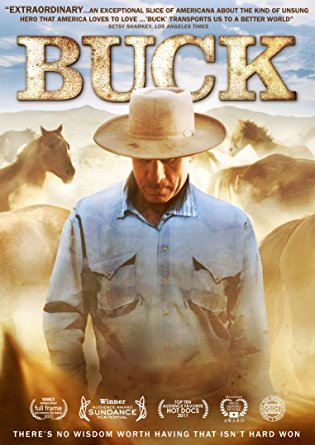
DVD recommendation: “Buck”

BUCK, a richly textured and visually stunning film, follows Buck Brannaman from his abusive childhood to his phenomenally successful approach to horses. A real-life horse-whisperer , he eschews the violence of his upbringing and teaches people to communicate with their horses through leadership and sensitivity, not punishment. Buck possesses near magical abilities as he dramatically transforms horses – and people – with his understanding, compassion and respect.

A truly American story about an unsung hero and one of the most successful documentaries of the year, BUCK is about an ordinary man who has made an extraordinary life despite tremendous odds.

(Amazon.com)

“‘They’re not even people’: why Eric Trump’s dehumanizing language matters” by Brian Resnick (vox.com)

The psychology of what happens when we think our opponents are less than human is troubling.

On Tuesday night, Eric Trump told Sean Hannity how he really feels about Democrats and his father’s political opponents: “I’ve never seen hatred like this. To me, they’re not even people.”

The statement is of the hyperbolic sort that commonly plays on Fox News’s opinion programming. But this is considerably more troubling. The language is plainly dehumanizing, and such language — historically and psychologically — is dangerous.

Now, Eric Trump’s phrasing is unlikely to incite anything horrible. It was a flip remark that he probably put little thought into.

But let’s take this as an opportunity to remember that the language we use to talk about people we disagree with matters deeply. Dehumanization is already disturbingly prevalent in America. We don’t need influential people stoking it further.

Dehumanization is a mental loophole that allows us to dismiss other people’s feelings and experienceLook back at some of the most tragic episodes in human history and you will find words and images that stripped people of their basic human traits. In the Nazi era, the film The Eternal Jew depicted Jews as rats. During the Rwandan genocide, Hutu officials called Tutsis “cockroaches” that needed to be cleared out.

RELATED:

The dark psychology of dehumanization, explained

In the wake of World War II, psychologists wanted to understand how the genocide had happened. And we got Stanley Milgram’s infamous electroshock experiment, which showed how quickly people cave to authority. There was also Philip Zimbardo’s “prison experiment,” which showed how easily people in positions of power can abuse others. At Stanford, Albert Bandura showed that when participants overhear an experimenter call another study subject “an animal,” they’re more likely to give that subject a painful shock. If you think of murder and torture as universally taboo, then dehumanization of the “other” is a psychological loophole that can justify those acts.

From these experiments and those that followed, it became clear that “it’s extremely easy to turn down someone’s ability to see someone else in their full humanity,” Adam Waytz, a psychologist at Northwestern University, told me earlier this year. Studies find even children as young as 5 years old see the world in terms of us versus them.

In the months since Donald Trump’s election, it’s become shockingly commonplace for Americans to blatantly dehumanize Muslims and Mexican immigrants — and then use violence against them. Hate crimes against Muslims in the US are at their highest levels since 2001. And there’s plenty of anecdotal evidence (and some empirical research too) that America is becoming a coarser, meaner place.

Eric is not the only Trump to use dehumanizing language. You may recall that Donald Trump Jr. compared Syrian refugees to a bowl of Skittles. And one of the president’s favorite vocal tics is say people who fail at things are “like dogs.”

Dehumanizing beliefs are linked to aggression

In the 1970s, Bandura predicted that dehumanization would lead to increased aggression. Today, there’s something similar: Willingness to dehumanize others predicts aggressive attitudes — and perhaps actions — towards those people. Dehumanization makes you less likely to believe a person is capable of having agency (i.e. an independent mind) and experience (i.e. the ability to feel complicated emotions). You can start to see a person as more animal than human.

Dehumanization likens our opponents “to disease, disease carriers, or … a faceless horde,” Nick Haslam, one of the world’s leading experts in dehumanization psychology, told me early this year. “That helps you have less compassion for them; that allows you to see them as morally unequal and not deserving.”

Simply put: Dehumanization is a mental loophole that lets us harm other people.

We can’t kid ourselves. Inside us all is the same mental machinery that fueled the atrocities of the past century. “We think others to death and then invent the battle-axe or the ballistic missiles with which to actually kill them,” writes the philosopher Sam Keen. Turning on dehumanization won’t immediately lead to massacre, but it does make it easier to make life marginally worse for the marginalized. And yes: dehumanization exists in America today, particularly towards Muslims and immigrant groups. It’s self-sustaining: Believing you have been dehumanized is correlated with willingness to dehumanize and act violently against others.

It matters that Eric Trump said this. We often look to the powerful and influential for cues on how to behave. If it’s okay for the rich and successful Eric Trump to believe his father’s opponents are less than human, then others may too.

(Contributed by Suzanne Deakins, H.W., M.)

Full Moon 9 June 2017 ~ Magic Wound (darkastrologystar.com)

Full Moon June 2017

The Full Moon on 9 June 2017 falls at 18º Sagittarius decan 2 The Full Moon June 2017 forms part of what the Huber school called an irritation triangle. This can cause sudden fits of anger. Since Pluto and Ceres are plugged into the ‘irritation’, outbursts in the collective will reveal where there have been abuses of power in relation to children or the vulnerable. We could see where the unscrupulous have made money out of human trafficking.(Eg exploiting boatloads of migrants across the Mediterranean at a great risk to those migrants lives.)The fixed star for this Full Moon is Sabik, found in Ophuichus, a favorite of occultists.

Full Moon June In Sagittarius 2

This Full Moon June is great for natural healing, especially when it comes to women’s health, genetics and midwifery. Breeding and DNA are a theme here as the serpents symbol so closely resembles the double helix and the caduceus of Mercury is also highlighted. There is also a certain amount of deception too however… The forked tongue of the snake makes itself felt here in the form of jealousy or spiteful rumors. Sabik is problematic generally, so the lunar energy makes it hard for us to clarify truth from fiction. What is certain though, is the ability to conjure up fanciful stories! These tales are so dramatic and entertaining, that in the end no one cares if they are actually factual or not. Maybe the fiction contains an element of truth that is eternal, like a myth.

The Moon has some dignity in Sagittarius 2. One of its unique abilities in this position is to unify desperate elements together in order to fulfill as specific goal. Moon in Sagittarius 2 is rather like a blinkered horse. That way it won’t be tempted, or detracted by the forbidden fruit of temptation. Austin Coppock warns of Moon in Sagittarius 2’s “greater powers of concentration and focus.” as it also carries with it “the potential for monomania, and its gift of perseverance will fortify the fools quest as well as the sages errand.” At the same time I do think this Full Moon’s healing potential is best channeled into a single goal. Otherwise the Moon’s power here can sour Sagittarius 3’s healing medicine, if it is allowed to run amok and not funneled positively.

Full Moon June ~ Fixed Star Sabik

Now we will see why we have to be so careful with this Full Moon June’s magical potential. Sabik, is a star on the right leg of the Serpent Bearer or more famously the so called 13th sign Ophuichus. Generally “When Ophiuchus, encircled by the serpent’s great coils, rises he renders the forms of snakes innocuous to those born under him. They will receive snakes into the folds of their flowing robes, and will exchange kisses with these poisonous monsters and suffer no harm.” [1] Robson doesn’t seem to like Sabik saying “It causes wastefulness, lost energy, perverted morals, and success in evil deeds.” [2] These ‘evil deeds’ are probably to do with the use of magic as manipulative sorcery. But in the case of good-hearted seers who use the Tarot or other means of divination, including astrology, they should have the ‘success’ without them being branded as ‘evil’. Sabik’s potential for ‘evilness’ depends on which planet this star falls on.
Full Moon June 2017

Full Moon June 2017 Aspects

Moon opposite Ceres is the aspect equivalent to the Salvation Army, seeking to rescue those in the most need. Those touched by this Full Moon must be careful however, that their saving doesn’t turn into a savior complex. When this aspect warps, it warps big. At this time we can be the smothered or do the smothering. At the most negative, Moon opposite Ceres can be one of the narcissistic parent who engulfs their child to the extent that the child doesn’t even realize she is being abused.
Sun quincunx Pluto puts a quirky slant on Plutonian sexuality, but sometimes it can be downright kinky. Its strength comes from playing the lovable freak card. But those touched by this Full Moon could get quite obsessive in their need to be themselves at all costs. The collective mood at this Full Moon is one where one is are apt to play the fool and act rebelliously because it is empowering in a world were we feel disenfranchised. I’m thinking of 4Chan memes and such.

The Irritation triangle:

“This figure needs constant movement and stimulating activity. The energies stored in it are looking for a way to resolve the state of opposing forces, the blockage of energy flow and the rigid attitude they produce….the liberation of tension is a desperate longing. Sudden bursts of anger can arise as a reaction to external pressures. The defensive behavior does not last long, though, it is over quickly and forgotten again.”[4]

Full Moon June 2017 Summary

Full Moons tend to make us purge and release things from our lives, so we need to make sure that we are in control of this and no one is forcing our hand! Sometimes we can let go of things that we regret later, due to heightened emotions and impulsive reactions. The bright light of the sun throws a spotlight on our lunar demons. In this Full Moon the shadow is extra dark with the stark shaft of light from the irritation triangle shining on Sun conjunct Ceres.

This Full Moon wound could show up where we have felt scarred, betrayed or tainted. The wound could come from family scandals, a problem with inheritance or an undesirable ancestral trait. On the other hand, having an overly-cosseted childhood can leave one ill-equipped to deal with the gritty reality of the outside world. The modern day demand for ‘safe spaces’ is a good example of how wrapping people up in cotton wool can diminish emotional robustness.

1 Manilius, Astronomica, 1st century AD, book 5, p.333.
2. The Fixed stars & Constellations in Astrology. Vivian Robson. pg 199
3. 36 Faces. Austin Coppock. p.203.
4. Aspect Pattern Astrology. Huber. p.177.

Moon Phases

Previous ~ New Moon May 25 2017
Next ~ New Moon June 24 2017

Check out all the full moons and new moons of 2017 on the Moon Phases Page.

“The Benefits of Talking to Yourself” by Kristin Wong (nytimes.com)

Photo

Talking to oneself can influence behavior and cognition. CreditGetty Images

June 8, 2017

A stranger approached me at a grocery store. “Do you need help finding something?” he asked. At first, I wasn’t sure what he meant. Then the realization kicked in: I was talking out loud, to myself, in public. It was a habit I’d grown so comfortable with that I didn’t even realize I was doing it.

The fairly common habit of talking aloud to yourself is what psychologists call external self-talk. And although self-talk is sometimes looked at as just an eccentric quirk, research has found that it can influence behavior and cognition.

“Language provides us with this tool to gain distance from our own experiences when we’re reflecting on our lives. And that’s really why it’s useful,” said Ethan Kross, a professor of psychology at the University of Michigan.

When we talk to ourselves we’re trying to see things more objectively, Mr. Kross said, so it matters how you talk to yourself. The two types of self-talk you’re likely most familiar with are instructional self-talk, like talking yourself through a task, and motivational self-talk, like telling yourself, “I can do this.” It might be corny, but motivating yourself out loud can work.
One study published in Procedia — Social and Behavioral Sciences researched the effects of both motivational and instructional self-talk on subjects playing basketball. It found that players passed the basketball faster when they motivated themselves through the task out loud.

Even how you refer to yourself when talking to yourself can make a difference. Mr. Kross and his colleagues studied the impact of internal self-talk — talking to yourself in your head — to see how it can affect attitudes and feelings. They found that when their subjects talked about themselves in the second or third person — for example, “You can do this” or “Jane can do this” instead of “I can do this” — not only did they feel less anxiety while performing, but their peers also rated their performances better. Mr. Kross said this was because of self-distancing: focusing on the self from the distanced perspective of a third person, even though that person is you.

“In terms of why psychological distance helps, the example I like to give is to think about a time with a friend or loved one ruminating about a problem,” Mr. Kross said. “As an outsider, it’s relatively easy for you to advise them through that problem. One of the key reasons why we’re so able to advise others on a problem is because we’re not sucked into those problems. We can think more clearly because we have distance from the experience.”

So if you’re frazzled and need a motivational pep talk, you might consider giving it in the second or third person, which can help you look at the situation from a logical, objective perspective rather than an emotional, biased one.

Beyond motivational self-talk, talking to yourself out loud in an instructional way can speed up cognitive abilities in relation to problem-solving and task performance.

So, for example, when you’re searching for that item you just can’t find at the grocery store, talking to yourself out loud may help you find it faster. This is because of the feedback hypothesis.

“The idea is, if you hear a word, does that help you see something?” said Gary Lupyan, a researcher and psychology professor at the University of Wisconsin-Madison.

According to the feedback hypothesis, the name of an item and its label make you think of what that item looks like. “This helps you distinguish it from other items with different names,” Mr. Lupyan said.

Mr. Lupyan wanted to test the feedback hypothesis with self-talk. In a series of experiments, he and his team asked subjects to search for different objects in different situations. In one experiment, subjects were asked to search for a picture of a specific item, like a banana, among 20 pictures of random items.

“We had some of the subjects say the name of the object out loud to themselves,” he said. “The idea was, does saying the name actually help you activate its visual features?”

Mr. Lupyan and his colleagues found that when subjects said the word “banana” before searching for a picture of one, they found the picture faster and more accurately. Saying the word out loud, the study found, made the subjects more aware of its physical traits, which then made the banana stand out among other objects.

It’s worth noting, however, that this type of self-talk isn’t as effective if you don’t know what the item looks like. In other words, if you’re searching for a papaya and you have no idea what a papaya looks like, asking yourself, “Where are the papayas?” probably won’t do much for you.

“The finding was that saying a name out loud helps, but only with objects they have familiarity with,” Mr. Lupyan said. Without that familiarity, talking to yourself out loud can slow you down, he added.

Instructive self-talk can be useful beyond finding your lost car keys or picking out a friend in a crowd. The aforementioned basketball study also found that players passed and shot the basketball more accurately when they instructed themselves through the task out loud, suggesting that talking to yourself about what you’re doing can keep you focused. The study concluded that motivational self-talk worked best on tasks based on speed, strength and power, while instructional self-talk worked best with tasks that involved focus, strategy and technique. In the real world, this might translate to parallel parking, following a recipe or putting together an Ikea side table.

“My bet is that self-talk works best on problems where you’re trying to stay on task and there are possible distractions,” Mr. Lupyan said. “For tasks with a multistep sequence, talking to yourself out loud can help you keep out distractions and remind yourself where you are.”

“White Buffalo Woman” from “Return of the Bird Tribes” by Ken Carey

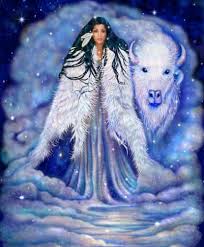
She came from the stars. To many tribes she came, though each knew her by a different name. You might see her now as two young Sioux hunters first saw her, walking barefoot, like a vision, across the low rolling hills of the prairie. They had climbed to the top of one such hill, looking for game, for some sign of movement on the broad rolling sea of grasses. Far away they saw a dot upon the horizon. They watched it carefully. By the time it disappeared behind the hill before them, they were almost certain it was human.

With bated breath they waited. At last, upon the crest of the hill, a young woman appeared wearing a beautiful white buckskin dress, decorated with dark porcupine quills. At her side she carried a skin pouch. An eagle feather, woven into her long, braided, black hair, caught the light of the early afternoon. Remarking upon her extraordinary beauty, the first of the warrior braves exclaimed how he would like couple with her there in the sun-warmed prairie grass.

Put aside such thoughts,” spoke the other brave. “This is a sacred woman, a vision perhaps, certainly not one to be approached in that manner.”

But to his surprise, the woman in white buckskin smiled at the lusty warrior and said to him, “Come to me. You shall have what you desire.”

And so the second brave was left standing alone on the prairie, watching as his brother walked off, apparently enjoying the mysterious woman in the swirling cloud of dust that for a while hid them both from sight. When the dust had settled enough to see, there was the woman, bringing slowly together the stitches of her dress. At her feet, partially decomposed, lay a corpse, alive with worms, beetles and a cloud of hungry flies.

Then White Buffalo Calf Woman—who was the form in which the Great Spirit had come to teach the people of the plains—spoke to the young brave, who now remained alone and said, “A man who looks first to a woman’s outer beauty will never know her beauty divine, for there is dust upon his eyes and he is as good as blind. But a man who sees in a woman the spirit of the Great One and who sees her beauty first in spirit and in truth, that man will know God in that woman; and should she choose to lie with him, he will share with her in enjoyment more fully than the former every could. And all will be as it should.”

‘You, when you looked upon me, were not blind to my beauty, but your first thoughts were, “Who is she, this beautiful woman? What is it that makes her countenance glow so in the afternoon sun? What thoughts are those that dance behind her eyes? From what land does she come? With what tidings?”

“And so, my young friend, have no fear. You, too, shall have what you desire.”

You and your friend symbolize two paths that the men of a tribe can take. If you seek first the sacred vision of the Great Spirit, you will see as the Creator sees, and in that seeing, you will find that what you need from the earth will come readily into your hands. But if you seek first to secure your early desire and forget the spirit, you will die inside.”

In olden days, most of the men took your path; but in this age many men are now going the path of your fallen brother. What you saw in the cloud was a speeded up lifetime; your brother lived many years in those moments while you saw only a swirl of dust. It was not so bad for him as you might imagine. He lived a life that many in this forgetful age would even say was a ‘good’ one. But he was ruled ever by his passions. In the end, his body turned to dust, for all his thoughts were dust. He had forgotten not only the Great Spirit, but his own spirit as well. He contributed nothing of meaning to me, to womankind, or to the people of the plains.”

Why Are Atheists Generally Smarter Than Religious People?

By Laura Geggel, Senior Writer | June 5, 2017 (livescience.com)

For more than a millennium, scholars have noticed a curious correlation: Atheists tend to be more intelligent than religious people.

It’s unclear why this trend persists, but researchers of a new study have an idea: Religion is an instinct, they say, and people who can rise above instincts are more intelligent than those who rely on them.

“Intelligence — in rationally solving problems — can be understood as involving overcoming instinct and being intellectually curious and thus open to non-instinctive possibilities,” study lead author Edward Dutton, a research fellow at the Ulster Institute for Social Research in the United Kingdom, said in a statement.

Smart cookie

In classical Greece and Rome, it was widely remarked that “fools” tended to be religious, while the “wise” were often skeptics, Dutton and his co-author, Dimitri Van der Linden, an assistant professor of psychology at Erasmus University Rotterdam in the Netherlands, wrote in the study.

The ancients weren’t the only ones to notice this association. Scientists ran a meta-analysis of 63 studies and found that religious people tend to be less intelligent than nonreligious people. The association was stronger among college students and the general public than for those younger than college age, they found. The association was also stronger for religious beliefs, rather than religious behavior, according to the meta-analysis, published in 2013 in the journal Personality and Social Psychology Review.

But why does this association exist? Dutton set out to find answer, thinking that perhaps it was because nonreligious people were more rational than their religious brethren, and thus better able to reason that there was no God, he wrote.

But “more recently, I started to wonder if I’d got it wrong, actually,” Dutton told Live Science. “I found evidence that intelligence is positively associated with certain kinds of bias.”

For instance, a 2012 study published in the Journal of Personality and Social Psychology showed that college students often get logical answers wrong but don’t realize it. This so-called “bias blind spot” happens when people cannot detect bias, or flaws, within their own thinking. “If anything, a larger bias blind spot was associated with higher cognitive ability,” the researchers of the 2012 study wrote in the abstract.

One question, for example, asked the students: “A bat and a ball cost $1.10 in total. The bat costs $1.00 more than the ball. How much does the ball cost?” The problem isn’t intuitive (the answer is not 10 cents), but rather requires students to suppress or evaluate the first solution that springs into their mind, the researchers wrote in the study. If they do this, they might find the right answer: The ball costs 5 cents, and the bat costs $1.05.

If intelligent people are less likely to perceive their own bias, that means they’re less rational in some respects, Dutton said. So why is intelligence associated with atheism? The answer, he and his colleague suggest, is that religion is an instinct, and it takes intelligence to overcome an instinct, Dutton said. [8 Ways Religion Impacts Your Life]

Basic instinct

The religion-is-an-instinct theory is a modified version of an idea developed by Satoshi Kanazawa, an evolutionary psychologist at the London School of Economics, who was not involved in the new study.

Called the Savanna-IQ Interaction Hypothesis, Kanazawa’s theory attempts to explain the differences in the behavior and attitudes between intelligent and less intelligent people, said Nathan Cofnas, who is pursuing a doctorate in philosophy at the University of Oxford in the United Kingdom this fall. Cofnas, who specializes in the philosophy of science, was not involved with the new study.

The hypothesis is based on two assumptions, Cofnas told Live Science in an email.

“First, that we are psychologically adapted to solve recurrent problems faced by our hunter-gatherer ancestors in the African savanna,” Cofnas said. “Second, that ‘general intelligence’ (what is measured by IQ tests) evolved to help us deal with nonrecurrent problems for which we had no evolved psychological adaptations.”

The assumptions imply that “intelligent people should be better than unintelligent people at dealing with ‘evolutionary novelty’ — situations and entities that did not exist in the ancestral environment,” Cofnas said.

Dutton and Van der Linden modified this theory, suggesting that evolutionary novelty is something that opposes evolved instincts.

Philosophical take

The approach is an interesting one, but might have firmer standing if the researchers explained exactly what they mean by “religious instinct,” Cofnas said.

“Dutton and Van der Linden propose that, if religion has an instinctual basis, intelligent people will be better able to overcome it and adopt atheism,” Cofnas said. “But without knowing the precise nature of the ‘religious instinct,’ we can’t rule out the possibility that atheism, or at least some forms of atheism, harness the same instinct(s).”

For instance, author Christopher Hitchens thought that communism was a religion; secular movements, such as veganism, appeal to many of the same impulses — and possibly ‘instincts’ — that traditional religions do, Cofnas said. Religious and nonreligious movements both rely on faith, identifying with a community of believers and zealotry, he said.

“I think it’s misleading to use the term ‘religion’ as a slur for whatever you don’t like,” Cofnas said.

Religion and stress

The researchers also examined the link between instinct and stress, emphasizing that people tend to operate on instinct during stressful times, for instance, turning to religion during a near-death experience.

The researchers argue that intelligence helps people rise above these instincts during times of stress. [11 Tips to Lower Stress]

“If religion is indeed an evolved domain — an instinct — then it will become heightened at times of stress, when people are inclined to act instinctively, and there is clear evidence for this,” Dutton said. “It also means that intelligence allows us to be able to pause and reason through the situation and the possible consequences of our actions.”

People who are able to rise above their instincts are likely better problem-solvers, Dutton noted.

“Let’s say someone had a go at you. Your instinct would be to punch them in the face,” Dutton told Live Science. “A more intelligent person will be able to stop themselves from doing that, reason it through and better solve the problem, according to what they want.”

The study was published May 16 in the journal Evolutionary Psychological Science.

Original article on Live Science.

(Contributed by Suzanne Deakins, H.W., M.)

Biblical Series III: God and the Hierarchy of Authority


Published on Jun 6, 2017

Although I thought I might get to Genesis II in this third lecture, and begin talking about Adam & Eve, it didn’t turn out that way. There was more to be said about the idea of God as creator (with the Word as the process underlying the act of creation). I didn’t mind, because it is very important to get God and the Creation of the Universe right before moving on 🙂 .

In this lecture, I tried to outline something like this: for anything to be, there has to be a substrate (call it a potential) from which it emerges, a structure that provides the possibility of imposing order on that substrate, and the act of ordering, itself. So the first is something like the precosmogonic chaos (implicitly feminine); the second, God the Father; the third, what the Christian West has portrayed as the Son (the Word of Truth).

Tickets for the next lecture(s) (and as for the rest of the series, as a whole) are available at http://jordanbpeterson.com/bible-series

Patreon: https://www.patreon.com/jordanbpeterson
Self Authoring: http://selfauthoring.com/
Jordan Peterson Website: http://jordanbpeterson.com/
Podcast: http://jordanbpeterson.com/jordan-b-p…
Reading List: http://jordanbpeterson.com/2017/03/gr…
Twitter: https://twitter.com/jordanbpeterson

Thomas à Kempis on love

“Love feels no burden, thinks nothing of its trouble, attempts what is above its strength, pleads no excuse for impossibility, for it thinks all things are lawful for itself and all things are possible”

“Love flies, runs, leaps for joy; it is free and unrestrained. Love gives all for all, resting in One who is highest above all things, from whom every good flows and proceeds. Love does not regard the gifts, but turns to the Giver of all good gifts. Love knows no limits, but ardently transcends all bounds. Love feels no burden, takes no account of toil, attempts things beyond its strength; love sees nothing as impossible, for it feels able to achieve all things. Love therefore does great things; it is strange and effective; while he who lacks love faints and fails.”

― Thomas à Kempis, The Inner Life

Thomas à Kempis (1380 – July 25, 1471) was a German who became a canon regular in the Netherlands and authored The Imitation of Christ, one of the most popular and best known Christian books on devotion. Wikipedia