“Usonia now” by Amelia Schonbek (curbed.com)


Is this experimental Frank Lloyd Wright community now just another Westchester suburb?

June 8, 2017

If you look at an aerial photo of Westchester County from the 1940s, as the founders of Usonia may well have done, you’ll see a number of towns dissolving into farmland or woods, divided by a few highways but not much else. It was exactly what the founders were looking for: some verdant, empty land on which to build affordable homes, raise their children, experience nature, and form a community together. They were a group of mostly young Jews from New York City, not really hippies—they had professional jobs and intended to keep them—but they had socialist leanings, a strong desire to escape the claustrophobia of New York, and a set of plans drawn up by Frank Lloyd Wright for a 47-family intentional community: a long swath of land with houses scattered across it on circular plots that all blended into one another. Wright was against fences, and they wrote a prohibition on demarcating property into Usonia’s covenant.


Standing in the middle of Usonia today feels almost like standing in the middle of that midcentury vision. Hundred-foot trees rise all around, and the homes, made of wood and glass and stone and designed by Wright or his apprentices, are so well placed among the hills that it feels like they grew out of the land. It’s very, very quiet. But walk outward and the spell breaks a bit. In the driveway of one home, a basketball hoop has been affixed to a Wrightian natural stone wall. On the northern edge of the neighborhood you can hear cars whizzing by. Today’s aerial maps show, all around Usonia’s deep green woods, rows of tiny square houses and square lawns. And next to one property in the middle of Usonia is a winding section of chain-link fence. Modern suburban life has, in the decades since the community was built, crept increasingly close.

And Usonia has changed. Children of the original members still live in the community, but now they share it with newer families, some of whom have less interest in the ideals that shaped it. Some don’t live in Usonia full-time, but come up only on weekends. “When I was growing up, this was a community where doors were open,” says Josh Podell, who has lived in Usonia for much of his life. “Every adult was almost like your secondary parent. All of those things have changed. There isn’t as much community spirit.”

Whether that shift was inevitable, and whether it matters, is the subject of a lot of debate in Usonia. Are all experiments in cooperative living necessarily short-lived, made for and defined by the particular moment in which they took shape? Or has Usonia become some looser version of itself for another reason, perhaps generational or cultural? Frank Lloyd Wright regularly made lofty, outsize claims about the power of his architecture: it could shape experience, he argued, could lead to freer, more democratic lives. Was there ever any way for his houses to deliver on those promises?


Before it was a place on the map of upstate New York, Usonia was an idea that David and Priscilla Henken had for a cooperative inspired by Frank Lloyd Wright’s philosophies of the ideal American community. Wright wanted to dismantle American cities and replace them with a vast network of small communities modeled after Broadacre City, his utopia. He believed, he wrote in 1932, that every family should have an acre of land and a beautiful home. (“No distinction exists between much and little, more and less. Quality is in all, for all, alike.”) He went on to write that “each citizen of the future will have all forms of production, distribution, self improvement, enjoyment, within a radius of a hundred and fifty miles of his home now easily and speedily available by means of his car or plane.”

The building block of Wright’s vision was the Usonian home, an affordable house for the masses. (Wright advocated replacing the word American with Usonian, to indicate the country’s unique architectural vernacular.) The standard Usonian home would be a single story, oriented away from the street and toward nature. Large windows were meant to bring the outdoors in, but overhangs helped people feel protected from the outside world as well. Wright wanted to encourage families to spend most of their time together, so he made open-plan living and work spaces, centered around a hearth that would draw people together. Bedrooms were kept very small to discourage inhabitants from spending too much time away from the communal space.

In 1940, the Henkens had seen Wright’s models for Usonian homes and Broadacre City at the Museum of Modern Art, and promptly uprooted their life and moved to Taliesin, where David Henken joined Wright’s fellowship program. When David completed his training, he and Priscilla moved back to New York, and, with David’s sister and brother-in-law and a small group of friends, launched an all-encompassing, years-long campaign to get their community off the ground. They decided to name it Usonia in honor of Wright, who signed on to design the master plan and some of the houses himself.

It was the early 1940s, and, coming out of the financial distress of the Depression, cooperatives were hugely popular. Some of the early informational meetings about Usonia drew hundreds. But for the core group, the appeal was far more than economic. They felt that cooperative living “could help create a more just society,” wrote Roland Reisley, an early member, in his book Usonia, New York: Building a Community with Frank Lloyd Wright. Two Usonians who were psychologists drew up a questionnaire to assess whether prospective members fit in well with the group’s ideals. Could potential members imagine living with an Active Musician? Trotskyite? Pacifist? Chicken Raiser? They had dreams of creating a racially diverse, integrated community, and hoped a black family would join Usonia. But they stopped short of actively recruiting families of color, believing the community’s self-presentation as a group of people interested in diversity would speak for itself. (It took decades before a black family joined the community.)

The founders wanted to combine Wright’s concepts of affordable home ownership and organic architecture with classical cooperative ideals like democratic governance and joint ownership of resources. Hammering out the details took years. Co-op meetings “were loud, they were endless, they sometimes were pointless, and I can’t say nobody’s feelings got hurt,” one early Usonian told Reisley. “But they were invigorating, and everybody took part.” Over time, the group came up with a series of legally binding covenants which members would agree to when they joined Usonia. They governed things like architectural style (all building designs must be approved by the whole group), communality (no property delineations were allowed), and political neutrality. The covenants could only be amended by a unanimous vote.

The Usonians bought 97 acres of land in Westchester in 1947 and broke ground on the first houses a few years later. Each weekend, members took the train from the city to help clear land and assist in construction to try and keep costs down. Hope Sobie, who was a small child when her parents joined Usonia in the early 1950s, remembers watching her father chase after the bulldozer that was clearing their parcel to make sure the driver didn’t take down any more trees than was absolutely necessary.

By the time Sobie’s family moved in, there were already a handful of families living in Usonia. The day they arrived, Sobie remembers, “we just bopped in to all the houses and we met ’em all. Anyone you’d meet would be friendly, sharing things.”

In a lot of ways, life in Usonia in those years was idyllic. Children were on a first-name basis with all the adults in the community, and could walk into anybody’s house and open the fridge without a second thought. Originally, the Usonians intended to build a shared community house for meetings and activities, but they soon realized it wasn’t necessary, because all their houses were de facto community space. They formed a cantata singing group that rehearsed in the Friedman family’s living room; children got cooking lessons in the Lurie family kitchen; the women held an exercise class that rotated among their houses. Sobie remembers that when her mother hosted the group, she opened up the folding doors separating the master bedroom and the living room to make sure the space was big enough for the women to jump across.

Money was tight, but they helped one another out. “We were very tolerant with our members,” Reisley remembers. “Somebody was a little slow with their payments, okay, you’re slow.” In his book, Reisley writes that “through the years the cooperative maintained a semiofficial slush fund for members’ use”; whenever it seemed like someone was in need, he or she would receive an anonymous offer of assistance.

Not everything was perfect, of course. The Usonians fought over the things that members of every community fight over: how to spend shared resources; who was shirking their volunteer responsibilities. And the larger financial problems they faced continually threatened to sink them.

One of Usonia’s main draws was the idea that you could build a beautiful home in the community for very little money—$5,000 to $7,500, according to Wright’s original estimates. “Well, you should never let an architect give quotes for the price of houses,” says Podell, who was David Henken’s nephew. “They have no concept of money.” Though Wright wanted Usonian homes to be affordable for a wide swath of people, he was unbending about the quality of materials that should be used. Amid the postwar building boom, costs quickly rose out of control.

The cooperative’s structure entailed group ownership of both land and houses; families held 99-year leases on their homes. Each family had a Usonian account in which they put money that was then directed toward the costs of building their home and investing in common space. “Essentially,” Reisley told me, “members invested in the cooperative and had equity that was equal to their investment.” It had been a struggle to obtain mortgages as a group; now, the spiraling construction costs meant that they risked foreclosure. A series of fraught discussions resulted in the decision to dismantle part of the cooperative structure, giving each family individual ownership over its home and maintaining cooperative control of communal land. “Almost three years of tumultuous meetings—held several times a week and for hours—followed,” Reisley wrote.

But they stuck together, maybe in part because going back into the wider world didn’t seem all that appealing. The rest of Westchester was deeply conservative, and it was the height of McCarthyism. Rumors swirled that the young Jewish families from the Bronx living in those radical houses were actually communists. In the stately Center-Hall Colonial houses of Pleasantville and Chappaqua, Usonia was sometimes referred to as Insania.

So, in spite of the committees and the meetings and the financial stress, nobody really left Usonia in those early years. They dammed a stream to make a natural swimming pool, carpooled to their jobs in the city, got dogs, sent their kids to Sunday school at the Ethical Culture Society, wrote for the Newsonian (“All the news that fits, we print”), threw parties to which everyone was always invited. And then, as their children grew up and left home, things began to change.

The train up from Grand Central Station is crowded even early on a Saturday morning, full of weekenders headed for the dense network of towns that stretch north from New York City: White Plains, Valhalla, Mount Pleasant. Pleasantville Station is surrounded by a farmers market that may as well be in Brooklyn; the road out of town is lined with sprawling old houses. One minute you’re driving past verandas and white picket fences, the next, after a quick turn onto a narrow, unmarked road, you’re in Usonia.

It’s early spring, and a cloud of new, bright-green leaves fills the woods. All around is stillness and quiet. I’d heard stories about flocks of children on bicycles trailed by a neighborhood’s worth of dogs, but I pass only cars on the road as I approach Roland Reisley’s house at the southern end of Usonia.

There are three homes in Usonia that Wright designed himself, and Reisley lives in one of them. “Without exception, you enter a Frank Lloyd Wright house through a narrow entryway,” Reisley tells me as he opens his door, gesturing to the low ceiling overhead before stepping aside to welcome me in. Wright, he explains, wanted to create a feeling of compression when you walked in the door, so that once you stepped into the common space of the house, you’d feel expansiveness and release, the relief of coming home. Reisley ushers me outside to his deck, cantilevered into the trees, and begins to tell me what’s shifted in Usonia in the more than six decades since he moved in.

For the first 40 years that Usonia existed, the community was incredibly stable. Only 12 of the 47 houses changed hands, and six of those were transferred from parents to children. But since then, as original members have grown old and died, and children have moved away, it’s become possible to join the community without being particularly interested in the “shoulder-to-shoulder, egalitarian” ethos that the original members fostered. (The covenants, which are still in place and remain legally binding, don’t require community members to commit a certain amount of time or labor to Usonia.) The houses have also become markedly more expensive, sometimes selling for over $1 million. “The community would acquire a reputation as an upper class haven,” Reisley wrote in his book. “The thought of Usonia as an enclave for elitist millionaires would have appalled the founders.”

Original Usonians tend to see this as a generational shift. “This generation has different priorities,” Podell tells me. “They come in expecting the community to give more to them. And this community, in the past, was based on everybody giving to one another. That’s a big difference.”

There are, of course, some new residents who wish the community was as cooperative as it was in the ’50s and ’60s. “I liked the idea that this would be more than just people living on a street together,” says Ellen Vellensky, who moved to Usonia from New York City around four years ago. “I did get the impression that it was more of a community than it is. For me, that’s a little bit of a bummer. I haven’t met all of my neighbors. Everyone moves in at a different point in their life. I think if I said to them, I’m going to go rebuild the playground or something, some neighbors would be like, what are you doing? Because they don’t have children.”

But others are less invested in the idea. Sarah Lash and her husband are also newer residents of Usonia—the type who refer to themselves as residents, rather than members—who moved from Brooklyn four years ago. “We weren’t assuming that this was going to be our social network, but it was nice to know it was a patently more close-knit community than the typical,” Lash tells me. “The community is something you can opt into, or not. Some people are really gung-ho, others do their own thing. I don’t think there’s any pressure to be part of the community.”

Lash is right, in a sense: Usonians don’t need to actively build their community anymore. There is no land to clear, no well to dig, no group mortgages to negotiate. And in the absence of make-it-or-break-it moments, the decisions that preoccupy them—whether to cut down invasive trees, whether a proposed addition to a house is in keeping with Wright’s Usonian principles—can feel rather insignificant compared to the high-minded striving of the early days, when a bunch of kids in their 20s were trying to create something like utopia.

Up the hill from Reisley’s house, Lynnette Widder is painstakingly restoring a 1949 Usonian home designed by Kaneji Domoto, one of Wright’s apprentices. The house is very small, but laid out so that it feels spacious. The living room faces a wall of floor-to-ceiling glass windows, which look out toward the forest, and the kitchen is open, rather than walled-off like a galley. All the kitchen counters are very low, because Irene Lurie, who built the house with her husband, was short, and Domoto fit the workspaces to her height. A series of skylights run from the common space to the back of the house, where there are three compact bedrooms, two of which, meant for the Luries’ daughters, have a retractable door between them that could be pulled open or shut depending on how the sisters were getting along.

Widder is refinishing all the original cabinets, keeping the fixtures, and restoring the radiant floor heating that was a fixture in Usonian homes. Over the two years that she’s worked on the house, she’s thought a lot about what Usonia has come to mean. A community will necessarily look different in 2017 than it did in 1947, she tells me. “I know some of the old-timers are very melancholic. Oh, we used to have a newsletter together, blah blah blah, it’s not like that anymore,” she says. “But look around the country: We’re not emerging from a war where everyone pulled together and planted victory gardens. It’s just not that moment.”

Widder loves the idea of Usonia, but doesn’t have any qualms about her reasons for buying a home there. “It was more about preserving what I perceived to be the value of the place, and less about making my own chapter,” she says. “I felt so strongly about this house not falling into the hands of someone whose first move was going to be to turn the garage into a master bedroom. To me, that would be so difficult to correlate with the spirit of the place.”

Whether it’s more important to preserve the buildings themselves or revive the ideals that led to their construction depends, of course, on who you ask. Unsurprisingly, Reisley leans toward the second camp. “People say, ‘Come on, Roland, you’re being romantic. That was then, this is now,’” he tells me. “Things are indeed very different. I, however, assert that human beings are not that different. We have social needs. It’s worth our effort to move even a little bit more in that direction.”

The contemporary analogs of the original Usonians—young, progressive idealists—would likely agree. In spite of what some may think, they are not less inclined toward community-building than their predecessors. But in the post-recession landscape, many of them probably can’t afford to own a home, either. Many millennials can no longer expect to graduate from college; find stable, well-paying jobs; and start families in their 20s. Even if they do, it’s likely that both parents will be working long hours: Gone are the days when one parent could stay at home to raise children and manage the household. So they form communities in different ways. (Just look to the social-justice movements of the past decade for evidence.)

The architectural historian Neil Levine has written that “Wright envisaged a dynamic kind of community-in-the-making” that resulted from collaboration between “individuals from diverse backgrounds, uprooted from their rural origins or transported from an alienating urban environment… community was not a natural inheritance, but had to be constructed.”

Wright himself was never able to achieve that ideal—he was, in addition to being a brilliant architect, a noted jerk whose own experiment in communal living, Taliesin, could be dysfunctional and exploitative. He is remembered far more for the brilliant way his buildings interact with the natural environment than he is for a deep commitment to cooperative living. And his strength—building in harmony with the environment—is ultimately the main reason new members are drawn to Usonia today.

The weekend after I visited Usonia, the community planned to get together for its annual spring cleaning, when they ready the common outdoor spaces where many members gather in the summertime. Reisley’s house is just up the hill, and from his balcony, you can see the fruit trees, in peak bloom, that dot Usonia, and watch birds glide overhead among the branches. The smell of woodsmoke from a winter’s worth of hearth fires drifts out the open living-room window. Reisley points to a long, low stone wall that forms the edge of his terrace, and remarks on how much he appreciates the way the stones seem to flow out of the hill behind them. He has looked at these stones, and this hill, probably every day for the better part of his life, but still, he sees them. “Isn’t that beautiful?” he asks.

For all his pontificating about the power of architecture, Wright only had so much control over the way his clients lived their lives in his houses. And no matter how often they talk about the principles that guided Usonia in the early days, the original residents can’t will new members to follow along. But Wright was correct about one thing: A community is continually being created, as much in the subtle, individual choices its members make every day as the bigger, clearer decisions. Usonia always was “a direct, sometimes chaotic democracy,” as Reisley has said. It will keep on being the sum of its parts.
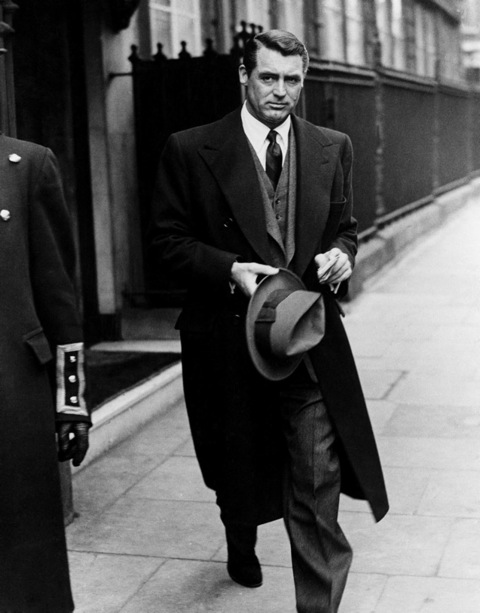
“Cary Grant ultimately an enigma even to himself” by David Wiegand (sfchronicle.com)

June 8, 2017

Cary Grant was one of the best-known celebrities of the 20th century — to everyone, it seems, but himself. The former Archie Leach invented a persona from the raw materials of charm, talent, ambition and good looks, but spent much of his life searching for peace of mind, he wrote in an unpublished memoir.

The film icon is the subject of the informative but not very well-made documentary “Becoming Cary Grant,” directed by Mark Kidel and airing on Showtime on Friday, June 9.

Archie was 11 when his mother suddenly disappeared from his life in Bristol, England, with no explanation from his father other than that she had gone to the seashore. In fact, Elias Leach had his wife, Elsie, committed to an asylum, where she was diagnosed with “mania” and said by her husband to believe there were several women concealed in their home. Soon after, Elias decamped to Southampton where he started a second family and left Archie to be raised by his grandmother.

Kidel frames the film with Grant’s well-documented LSD therapy sessions when he was in his early 50s, during which he connected with his childhood, concluded that his inability to trust women was his way of punishing his mother for abandoning him, and eventually came to feel empathy for both his parents.

The film includes commentary from his daughter, Jennifer Grant, his last wife, Barbara (Harris) Jaynes, longtime friend Judy Balaban, and authors David Thomson and Mark Glancy.

Jonathan Pryce provides Grant’s voice, reading passages of the memoir.

Kidel makes good use of clips from several Grant films at times, but at other times, Kidel goes terribly off the rails. On the plus side, a clip from “None But the Lonely Heart” shows Grant playing the Cockney he could have become had he not reinvented himself. The scene includes a photo of Grant’s father, placed at the actor’s request on the wall of the set.

On the minus side, we get the far too obvious use of the scene in Howard Hawks’ “Bringing Up Baby” when Grant’s character is wearing a frilly negligee and proclaims, “I just went gay all of a sudden” as we are hearing from Thomson that Grant may have questioned his sexuality at times in his life. That clip segues into David Huxley (Grant) telling Susan Vance (Katharine Hepburn) of the importance of finding “my bone! My intercostal clavicle!”

Elsewhere, as we are hearing about Grant’s mistrust of women, we get a scene from “Blonde Venus” showing Marlene Dietrich emerging from a gorilla costume.

Other ham-fisted filmmaking touches include extinguishing a candle flame when we hear that Elias Leach has died in 1935, and, unrelentingly, waves breaking on a sandy beach over and over again throughout the film for dramatic effect that becomes ludicrous.

The film is informative, though, and is graced by home movie footage shot by Grant himself. We don’t always know who is in the footage, but it gives us a good sense of the times while contrasting, appropriately, with the inner restlessness expressed in Grant’s memoir.

“There was a void in my life, a sadness of spirit that affected everything I did,” he wrote, but after the LSD sessions, stated, “At last I was close to happiness.”

The documentary adds to the mountain of information about Grant, and brings us somewhat closer to understanding who he really was. But it’s likely aspects of both Archie Leach and Cary Grant will remain an enigma forever.

David Wiegand is an assistant managing editor and the TV critic of The San Francisco Chronicle. Follow him on Facebook. Email: dwiegand@sfchronicle.com Twitter: @WaitWhat_TV

ALERT VIEWERBecoming Cary Grant: Documentary, 9 p.m. Friday, June 9, Showtime

David Wiegand

David Wiegand

Assistant Managing Editor and TV Critic

“Intimate Relationship as a Spiritual Crucible” by John Welwood (lionsroar.com)

Love, Relationship, Spirituality, Shambhala Sun, Lion's Roar, Buddhism

Artworks by Eugenia Loli.


May 31, 2017

While most people would like to have healthy, satisfying relationships in their lives, the truth is that everyone has a hard time with intimate partnerships. The poet Rilke understood just how challenging they could be when he penned his classic statement, “For one person to love another, this is the most difficult of all our tasks.”

Rilke isn’t suggesting it’s hard to love or to have loving-kindness. Rather, he is speaking about how hard it is to keep loving someone we live with, day by day, year after year. After numerous hardships and failures, many people have given up on intimate relationship, regarding the relational terrain as so fraught with romantic illusion and emotional hazards that it is no longer worth the energy.

Although modern relationships are particularly challenging, their very difficulty presents a special arena for personal and spiritual growth. To develop more conscious relationships requires becoming conversant with how three different dimensions of human existence play out within them: ego, person, and being.

Every close relationship involves these three levels of interaction that two partners cycle through—ego to ego, person to person, and being to being. While one moment two people may be connecting being to being in pure openness, the next moment their two egos may fall into deadly combat. When our partners treat us nicely, we open—“Ah, you’re so great.” But when they say or do something threatening, it’s “How did I wind up with you?” Since it can be terribly confusing or devastating when the love of our life suddenly turns into our deadliest enemy, it’s important to hold a larger vision that allows us to understand what is happening here.

Relationship.

Relationship as Alchemy

When we fall in love, this usually ushers in a special period, one with its own distinctive glow and magic. Glimpsing another person’s beauty and feeling, our heart opening in response provides a taste of absolute love, a pure blend of openness and warmth. This being-to-being connection reveals the pure gold at the heart of our nature, qualities like beauty, delight, awe, deep passion and kindness, generosity, tenderness, and joy.

Yet opening to another also flushes to the surface all kinds of conditioned patterns and obstacles that tend to shut this connection down: our deepest wounds, our grasping and desperation, our worst fears, our mistrust, our rawest emotional trigger points. As a relationship develops, we often find that we don’t have full access to the gold of our nature, for it remains embedded in the ore of our conditioned patterns. And so we continually fall from grace.

For one person to love another, this is the most difficult of all our tasks.
-Rilke

It’s important to recognize that all the emotional and psychological wounding we carry with us from the past is relational in nature: it has to do with not feeling fully loved. And it happened in our earliest relationships—with our caretakers—when our brain and body were totally soft and impressionable. As a result, the ego’s relational patterns largely developed as protection schemes to insulate us from the vulnerable openness that love entails. In relationship the ego acts as a survival mechanism for getting needs met while fending off the threat of being hurt, manipulated, controlled, rejected, or abandoned in ways we were as a child. This is normal and totally understandable. Yet if it’s the main tenor of a relationship, it keeps us locked in complex strategies of defensiveness and control that undermine the possibility of deeper connection.

Thus to gain greater access to the gold of our nature in relationship, a certain alchemy is required: the refining of our conditioned defensive patterns. The good news is that this alchemy generated between two people also furthers a larger alchemy within them. The opportunity here is to join and integrate the twin poles of human existence: heaven, the vast space of perfect, unconditional openness, and earth, our imperfect, limited human form, shaped by worldly causes and conditions. As the defensive/controlling ego cooks and melts down in the heat of love’s influence, a beautiful evolutionary development starts to emerge—the genuine person, who embodies a quality of very human relational presence that is transparent to open-hearted being, right in the midst of the dense confines of worldly conditioning.

Relationship.

Relationship as Charnel Ground

To clarify the workings of this alchemy, a more gritty metaphor is useful, one that comes from the tantric traditions of Buddhism and Hinduism: relationship as charnel ground. In many traditional Asian societies, the charnel ground was where people would bring dead bodies, to be eaten by vultures and jackals. From the tantric yogi’s perspective, this was an ideal place to practice, because it is right at the crossroads of life, where birth and death, fear and fearlessness, impermanence and awakening unfold right next to each other. Some things are dying and decaying, others are feeding and being fed, while others are being born out of the decay. The charnel ground is an ideal place to practice because it is right at the crossroads of life, where one cannot help but feel the rawness of human existence.

The chaos that takes place in your neurosis is the only home ground that you can build the mandala of awakening on.
-Chogyam Trungpa Rinpoche

Chögyam Trungpa Rinpoche described the charnel ground as “that great graveyard, in which the complexities of samsara and nirvana lie buried.” Samsara is the conditioned mind that clouds our true nature, while nirvana is the direct seeing of this nature. As Trungpa Rinpoche describes this daunting crossroads in one of his early seminars:

It’s a place to die and be born, equally, at the same time, it’s simply our raw and rugged nature, the ground where we constantly puke and fall down, constantly make a mess. We are constantly dying, we are constantly giving birth. We are eating in the charnel ground, sitting in it, sleeping on it, having nightmares on it… Yet it does not try to hide its truth about reality. There are corpses lying all over the place, loose arms, loose hands, loose internal organs, and flowing hairs all over the place, jackals and vultures are roaming about, each one devising its own scheme for getting the best piece of flesh.

Many of us have a cartoon-like notion of relational bliss: that it should provide a steady state of security or solace that will save us from having to face the gritty, painful, difficult areas of life. We imagine that finding or marrying the right person will spare us from having to deal with such things as loneliness, disappointment, despair, terror, or disintegration. Yet anyone who has been married for a long time probably has some knowledge of the charnel ground quality of relationship—corpses all over the place, and jackals and vultures roaming about looking for the best piece of flesh. Trungpa Rinpoche suggests that if we can work with the “raw and rugged situation” of the charnel ground, “then some spark or sympathy or compassion, some giving in or opening can begin to take place. The chaos that takes place in your neurosis is the only home ground that you can build the mandala of awakening on.” This last sentence is a powerful one, for it suggests that awakening happens only through facing the chaos of our neurotic patterns. Yet this is often the last thing we want to deal with in relationships.

Trungpa Rinpoche suggests that our neurosis is built on the fact that:

…large areas of our life have been devoted to trying to avoid discovering our own experience. Now [in the charnel ground, in our relationships] we have a chance to explore that large area which exists in our being, which we’ve been trying to avoid. That seems to be the first message, which may be very grim, but also very exciting. We’re not trying to get away from the charnel ground, we don’t want to build a Hilton hotel in the middle of it. Building the mandala of awakening actually happens on the charnel ground. What is happening on the charnel ground is constant personal exploration, and beyond that, just giving, opening, extending yourself completely to the situation that’s available to you. Being fantastically exposed, and the sense that you could give birth to another world.

This also describes the spiritual potential of intimate involvement with another human being.

Another quote with a similar feeling comes from Swami Rudrananda (known as Rudy, a German teacher who was a student of the Indian saint Swami Nityananda), further describing how to work with neurosis in this way:

Don’t look for perfection in me. I want to acknowledge my own imperfection, I want to understand that that is part of the endlessness of my growth. It’s absolutely useless at this stage in your life, with all of the shit piled up in your closet, to walk around and try to kid yourself about your perfection. Out of the raw material you break down [here he is also speaking of the charnel ground] you grow and absorb the energy. You work yourself from inside out, tearing out, destroying, and finding a sense of nothingness. That nothingness allows God to come in. But this somethingness—ego and prejudices and limitations—is your raw material. If you process and refine it all, you can open consciously. Otherwise, you will never come to anything that represents yourself … The only thing that can create a oneness inside you is the ability to see more of yourself as you work every day to open deeper and say, fine, “I’m short-tempered,” or “Fine, I’m aggressive,” or, “Fine, I love to make money,” or, “I have no feeling for anybody else.” Once you recognize you’re all of these things, you’ll finally be able to take a breath and allow these things to open.

Rudy suggests that we have to acknowledge and embrace our imperfections as spiritual path; therefore grand spiritual pretensions miss the point. In his words, “A man who thinks he has a spiritual life is really an idiot.” The same is true of relationships: beware of thinking you have a “spiritual relationship.” While loving connection provides a glimpse of the gold that lies within, we continually corrupt it by turning it into a commodity, a magical charm to make us feel okay. All the delusions of romantic love follow from there. Focusing on relationship as a spiritual or emotional “fix” actually destroys the possibility of finding deep joy, true ease, or honest connection with another.

Relationship.Sooner or later relationship brings us to our knees, forcing us to confront the raw and rugged mess of our mental and emotional life. George Orwell points to this devastating quality of human love in a sentence that also has a charnel ground flavor to it: “The essence of being human is that one does not seek perfection, and that one is prepared, in the end, to be defeated, and broken up by life, which is the inevitable price of fastening one’s love upon other human individuals.”

This then is the meaning of the charnel ground: we have to be willing to come apart at the seams, to be dismantled, to let our old ego structures fall apart before we can begin to embody sparks of the essential perfection at the core of our nature. To evolve spiritually, we have to allow these unworked, hidden, messy parts of ourselves to come to the surface. It’s not that the strategic, controlling ego is something bad or some unnecessary, horrible mistake. Rather, it provides the indispensable grist that makes alchemical transformation possible.

This is not a pessimistic view, because some kind of breakdown is usually necessary before any significant breakthrough into new ways of living not so encumbered by past conditioning. Charnel ground, then, is a metaphor for this breakdown/breakthrough process that is an essential part of human growth and evolution, and one of the gifts of a deep, intimate connection is that it naturally sets this process in motion. Yet no one wants to be dismantled. So there are two main ways that people try to abort this process: running away and spiritual bypassing.

The problem with running away when a relationship becomes difficult is that we are also turning away from ourselves and our potential breakthroughs. Fleeing the raw, wounded places in ourselves because we don’t think we can handle them is a form of self-rejection and self-abandonment that turns our feeling body into an abandoned, haunted house. The more we flee our shadowy places, the more they fester in the dark and the more haunted this house becomes. And the more haunted it becomes, the more it terrifies us. This is a vicious circle that keeps us cut off from and afraid of ourselves.

One of the scariest places we encounter in relationship is a deep inner sense of unlove, where we don’t know that we’re truly lovable just for being who we are, where we feel deficient and don’t know our value. This is the raw wound of the heart, where we’re disconnected from our true nature, our inner perfection. Naturally we want to do everything we can to avoid this place, fix it, or neutralize it, so we’ll never have to experience such pain again.

The essence of being human is that one does not seek perfection, and that one is prepared, in the end, to be defeated, and broken up by life, which is the inevitable price of fastening one’s love upon other human individuals.
-George Orwell

A second way to flee from the challenges of relationship is through spiritual bypassing—using spiritual ideas or practices to avoid or prematurely transcend relative human needs, feelings, personal issues, and developmental tasks. For example, a certain segment of the contemporary spiritual scene has become infected with a facile brand of “advaita-speak,” a one-sided transcendentalism that uses nondual terms and ideas to bypass the challenging work of personal transformation.

Advaita-speak can be very tricky, for it uses absolute truth to disparage relative truth, emptiness to devalue form, and oneness to belittle individuality. The following quotes from two popular contemporary teachers illustrate this tendency: “Know that what appears to be love for another is really love of Self, because other doesn’t exist,” and “The other’s ‘otherness’ stands revealed as an illusion pertaining to the purely human realm, the realm of form.” Notice the devaluation of form and the human realm in the latter statement. By suggesting that only absolute love or being-to-being union is real, these teachers equate the person-to-person element necessary for a transformative love bond with mere ego or illusion.

Yet personal intimacy is a spark flashing out across the divide between self and other. It depends on strong individuals making warm, personal contact, mutually sparking and enriching each other with complementary qualities and energies. This is the meeting of I and Thou, which Martin Buber understood not as an impersonal spiritual union but as a personal communion rooted in deep appreciation of the other’s otherness.

A deep, intimate connection inevitably brings up all our love wounds from the past. This is why many spiritual practitioners try to remain above the fray and impersonal in their relationships—so as not to face and deal with their own unhealed relational wounds. But this keeps the wounding unconscious, causing it to emerge as compulsive shadowy behavior or to dry up passion and juice. Intimate personal connecting cannot evolve unless the old love wounds that block it are faced, acknowledged, and freed up.

As wonderful as moments of being-to-being union can be, the alchemical play of joining heaven and earth in a relationship involves a more subtle and beautiful dance: not losing our twoness in the oneness, while not losing our oneness in the twoness. Personal intimacy evolves out of the dancing-ground of dualities: personal and trans-personal, known and unknown, death and birth, openness and karmic limitation, clarity and chaos, hellish clashes and heavenly bliss. The clash and interplay of these polarities, with all its shocks and surprises, provides a ferment that allows for deep transformation through forcing us to keep waking up, dropping preconceptions, expanding our sense of who we are, and learning to work with all the different elements of our humanity.

When we’re in the midst of this ferment, it may seem like some kind of fiendish plot. We finally find someone we really love and then the most difficult things start emerging: fear, distrust, unlove, disillusion, resentment, blame, confusion. Yet this is a form of love’s grace—that it brings our wounds and defenses forward into the light. For love can only heal what presents itself to be healed. If our woundedness remains hidden, it cannot be healed; the best in us cannot come out unless the worst comes out as well.

So instead of constructing a fancy hotel in the charnel ground, we must be willing to come down and relate to the mess on the ground. We need to regard the wounded heart as a place of spiritual practice. This kind of practice means engaging with our relational fears and vulnerabilities in a deliberate, conscious way, like the yogis of old who faced down the goblins and demons of the charnel grounds.

The only way to be free of our conditioned patterns is through a full, conscious experience of them. This might be called “ripening our karma,” what the Indian teacher Swami Prajnanpad described as bhoga, meaning “deliberate, conscious experience.” He said, “You can only dissolve karma through the bhoga of this karma.” We become free of what we’re stuck in only through meeting and experiencing it directly. Having the bhoga of your karma allows you to digest unresolved, undigested elements of your emotional experience from the past that are still affecting you: how you were hurt or overwhelmed, how you defended yourself against that by shutting down, how you constructed walls to keep people out.

To see fully that the other is not you is the way to realizing oneness … Nothing is separate, everything is different … Love is the appreciation of difference.
-Swami Prajnanpad

Another term for directly engaging our karma might be “conscious suffering.” This involves saying “yes” to our pain, opening ourselves to it, as it is. This kind of yes doesn’t mean, “I like it, I’m glad it’s like this.” It just means, “Yes, this is what’s happening.” Whatever comes up, you are willing to meet it and have a direct experience of it. For example, if you’re hard-hearted, you have a full experience of that. Then you see how acknowledging this affects you and what comes from doing that.

Bhoga involves learning to ride the waves of our feelings rather than becoming submerged in them. This requires mindfulness of where we are in the cycle of emotional experience. A skilled surfer is aware of exactly where he is on a wave, whereas an unskilled surfer winds up getting creamed. By their very nature, waves are rising fifty percent of the time and falling the other fifty percent. Instead of fighting the down cycles of our emotional life, we need to learn to keep our seat on the surfboard and have a full, conscious experience of going down. Especially in a culture that is addicted to “up,” we especially need our “yes” when the down cycles unfold—to be willing to fall apart, retreat, slow down, be patient, let go. For it’s often at the bottom of a down cycle, when everything looks totally bleak and miserable, that we finally receive a flash of insight that lets us see the hidden contours of some huge ego fixation in which we’ve been stuck all our life. Having a full, conscious experience of the down cycle as it’s occurring, instead of fighting or transcending it, lets us be available for these moments of illumination.

While the highlands of absolute love are most beautiful, few but the saints can spend all their time there. Relative human love is not a peak experience nor a steady state. It wavers, fluctuates, waxes and wanes, changes shape and intensity, soars and crashes. “This is the exalted melancholy of our fate,” writes Buber, describing how moments of I/Thou communion cannot last too very long. Yet though relationships participate fully in the law of impermanence, the good news is that this allows new surprises and revelations to keep arising endlessly.

Relationship.Relationship as Koan

Relating to the full spectrum of our experience in the relational charnel ground leads to a self-acceptance that expands our capacity to embrace and accept others as well. Usually our view of our partners is colored by what they do for us—how they make us look or feel good, or not—and shaped by our internal movie about what we want them to be. This of course makes it hard to see them for who they are in their own right.

Beyond our movie of the other is a much larger field of personal and spiritual possibilities, what Walt Whitman referred to when he said, “I contain multitudes.” These “multitudes” are what keep a relationship fresh and interesting, but they can only do that if we can accept the ways that those we love are different from us—in their background, values, perspectives, qualities, sensitivities, preferences, ways of doing things, and, finally, their destiny. In the words of Swami Prajnanpad, standing advaita-speak on its head: “To see fully that the other is not you is the way to realizing oneness … Nothing is separate, everything is different … Love is the appreciation of difference.”

Two partners not holding themselves separate, while remaining totally distinct—“not two, not one”—may seem like an impossible challenge in a relationship. Bernard Phillips, an early student of East/West psychology, likens this impossibility of relationship to a Zen koan, a riddle that cannot be solved with the conceptual mind. After continually trying and failing to figure out the answer, Zen students arrive at a genuine solution only in the moment of finally giving up and giving in. In Phillips’ words:

Every human being with whom we seek relatedness is a koan, that is to say, an impossibility. There is no formula for getting along with a human being. No technique will achieve relatedness. I am impossible to get along with; so is each one of you; all our friends are impossible; the members of our families are impossible. How then shall we get along with them? … If you are seeking a real encounter, then you must confront the koan represented by the other person. The koan is an invitation to enter into reality.

In the end, to love another requires dropping all our narcissistic agendas, movies, hopes, and fears, so that we may look freshly and see “the raw other, the sacred other,” just as he or she is. This involves a surrender, or perhaps defeat, as in George Orwell’s words about being “defeated and broken up by life.” What is defeated here, of course, is the ego and its strategies, clearing the way for the genuine person to emerge, the person who is capable of real, full-spectrum contact. The nobility of this kind of defeat is portrayed by Rilke in four powerful lines describing Jacob’s wrestling match with the angel:

Winning does not tempt that man
For this is how he grows:
By being defeated, decisively,
By constantly greater beings.

In relationship, it is two partners’ greater beings, gradually freeing themselves from the prison of conditioned patterns, that bring about this decisive defeat. And as this starts reverberating through their relationship, old expectations finally give way, old movies stop running, and a much larger acceptance than they believed possible can start opening up between them. As they become willing to face and embrace whatever stands between them—old relational wounds from the past, personal pathologies, difficulties hearing and understanding each other, different values and sensitivities—all in the name of loving and letting be, they are invited to “enter into reality.” Then it becomes possible to start encountering each other nakedly, in the open field of nowness, fresh and unfabricated, the field of love forever vibrating with unimagined possibilities.


This essay is adapted from a talk given at the California Institute of Integral Studies in San Francisco. Copyright 2008 by John Welwood. All rights reserved.

John Welwood, Ph.D. is a psychotherapist who has been a student of Tibetan Buddhism for more than thirty-five years. His books include Perfect Love, Imperfect Relationships: Healing the Wound of the Heart.

(Contributed by Ugur Yilmaz.)

GENTRI Covers – “Let It Be” (The Beatles Cover)


“I went to bed one night and had a kind of restless night.
But I had a dream where my mother, who had been dead at that point for about 10 years, came to me in the dream and it was as if she could see that I was troubled. And she sort of said to me, she said,

‘Let it be.‘”

-Paul McCartney

Download ‘RISE’ on iTunes: http://apple.co/203uumf
Get ‘RISE’ on Amazon: http://amzn.to/1QreF0P
Facebook/Twitter/Instagram: @GENTRImusic

“STOOP SUMMIT” by Sarah Goodyear (nydailynews.com)

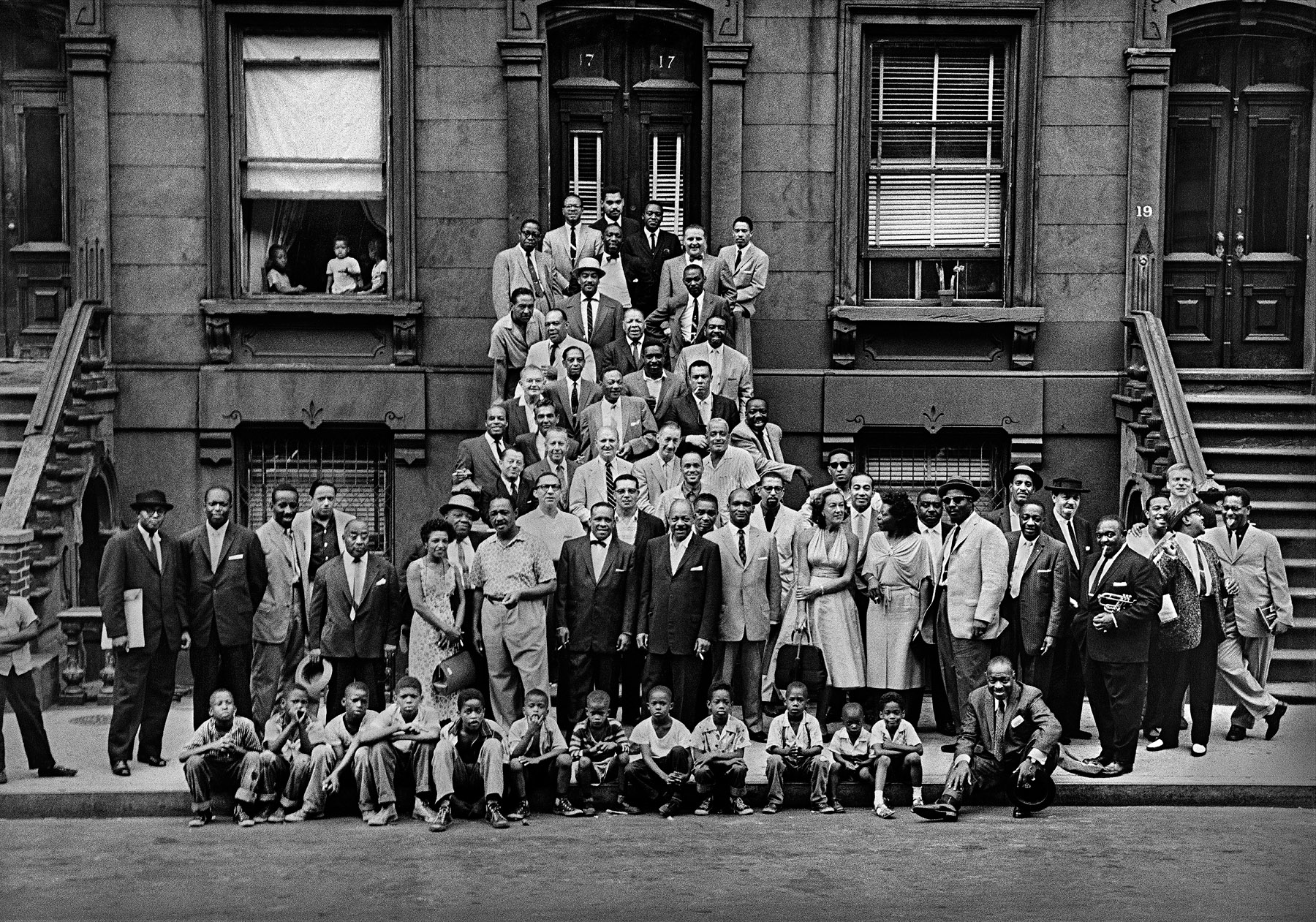
Art Kane’s famous photo of jazz greats, titled “Harlem 1958”; approved for one-time use only. MUST CREDIT: Photograph by Art Kane – courtesy Art Kane Archive NOTE: this is a downsized low-res photo for web use

Click on each musician to watch a performance clip:  http://interactive.nydailynews.com/2016/08/story-behind-great-day-in-harlem-photo/

How a Harlem brownstone was immortalized when the living legends of jazz assembled there for an iconic photograph

AUGUST 12, 2016

A recurring series on iconic scenes from the city’s storied culture.

The year was 1999, and Noella Cotto was just looking for a place in Harlem to call her own. When she finally found the perfect place — a brownstone, in decent shape, at 17 E. 126th Street — she had no idea that the building had played a historic supporting role in American pop culture when, in 1958, 57 of the coolest cats in jazz assembled there to have their picture taken for a special issue of Esquire magazine. Cotto, who worked as a postal cop at the time, was unaware that the famous photo, titled “Harlem 1958,” was ubiquitous around the neighborhood, or that a generation of folks who’d grown up in the so-called Cultural Capital of Black America had seen the image so often, hanging in barber shops and bodegas, that they’d long since forgotten about it themselves. Nor did she realize that the photo had gotten another close-up only five years earlier in an Oscar-nominated documentary, “A Great Day in Harlem.”

The whole audacious idea was conceived by a man who none of the musicians knew, 33-year-old Art Kane, who had made a name for himself as a magazine art director but whose passion was photography. This was his first professional shooting assignment and, with it, he ended up making history almost by accident.

“He became aware that Esquire was planning a big issue on jazz,” says Jonathan Kane, Art’s son, a musician and photographer who also manages his late father’s photographic legacy (Art Kane died in 1995). “He cooked up the idea of doing a big portrait (with) all these musicians. Art pitched his crazy idea, and they said, Do it.” There was no question about where he would shoot. “Harlem was where the jazz scene came into being and coalesced,” Kane says. “It had to be in Harlem. And he wanted a place that reflected everyday life rather than a club. This could be a street where anybody could live.”

One of the musicians answering the call was Sonny Rollins, the brilliant tenor saxophonist who was 27 years old when the picture was shot and already among the period’s most acclaimed jazz artists. Rollins, who says he started playing music when he was 7 or 8 years old, had grown up in central Harlem, surrounded by the ferment of jazz. “All of the black musicians lived in Harlem, it was the only place you could live,” he says. “Harlem was the place. All my idols, like Fats Waller, all these people performed around where I went to school, at P.S. 89, at 135th Street and Lenox Avenue. So it was quite a community.”


“There were musicians from several eras of jazz. That picture depicted what a robust scene it was for jazz musicians in New York.”

— Sonny Rollins

When he heard about the photo shoot, he knew he had to be there. “I didn’t hesitate,” says Rollins, who is now 85 and, along with Benny Golson, one of only two surviving musicians in the photo. “Something like that had never been done, and the guys were just eager to do it. I certainly was eager to do it. They were all my compadres. It was great fun.”

They had fun even though the start time, in jazz terms, was brutal. Because he wanted to utilize the best light on the north side of the street, avoiding any shadows, Kane asked people to arrive by 10 a.m. — a tall order for artists who typically worked until 4 in the morning. In the 1994 documentary about the photograph, Steve Frankfurt, who was assisting Kane that day, put that early call time in perspective: “Somebody said they didn’t realize there were two 10 o’clocks in the same day.”

The nighthawks showed up anyway, dressed to the nines and ready for action. They came by subway and commuter train. They came by taxi and on foot. Among the greats who made the gig that morning were Thelonious Monk, Charles Mingus, Gene Krupa, Mary Lou Williams, Roy Eldridge, Milt Hinton and Lester Young. It was a crazy scene, made even more beautiful by the row of neighborhood kids who sat in a row along the curb alongside a jovial Count Basie. “There were musicians from several eras of jazz,” Rollins says. “I think that picture depicted what a robust scene it was for jazz musicians in New York.”

After scouting for a typical building on a typical block, Kane chose 126th St. between Fifth and Madison Aves. He wanted one that was convenient to the subway and what was then the New York Central Railroad (now Metro North), which had a station at 125th and Park. He put out the call for musicians through agents, record labels, union halls, clubs — pretty much any channel he could think of.

history

Jonathan Kane

HISTORY IN THE MAKING The January 1959 issue of Esquire in which Art Kane’s photo originally appeared.

“A Great Day in Harlem” dives into the story behind the picture in detail, incorporating the priceless, joy-infused Super-8 footage that Mona Hinton, Milt’s wife, shot during the session. It shows the musicians milling about, greeting each other, telling stories, laughing — doing just about everything but paying attention to the photographer across the street, who implored them to come into formation through a megaphone improvised from a rolled-up newspaper.

More than three decades later, director Jean Bach sought out many of the then-surviving musicians to interview them about the picture, including Dizzy Gillespie, Art Blakey and Marian McPartland. “Living in New York, you saw everybody,” trumpeter Art Farmer says in the film. “Anyone there, you were liable to run into any of them any day.”

***

By the time Noela Cotto started searching for a home in Harlem, the neighborhood was perceived as pretty sketchy, and she encountered a variety of obstacles. People told her it wasn’t safe, an assertion she dismissed. They told her she wouldn’t be able to get a construction loan to fix up one of the many buildings that had fallen into disrepair; that was harder to argue with. She thought about buying a co-op, yet despite her steady job, she encountered problems when she talked to a real-estate agent about purchasing one at a new building just a short distance from where she lives now. “The lady was racist,” says Cotto, who is Puerto Rican. “ ‘You probably don’t qualify,’ she told me. That woman did everything she could to keep me from seeing a place.”


“Every time I think about those artists, what they had to go through…it’s great music.”

— Noella Cotto

That was just as well, as it turns out. Cotto ended up getting a tip from a different agent that the building at 17 E. 126th Street was available. It was in fair shape after a developer’s rudimentary renovation, and she was able to swing the price. (Cotto suspects the previous owner was also unaware of its heritage, or he certainly would have charged more.) Today, the building is probably worth six times what she paid for it. “You’re going to pay a million for a shell now,” Cotto says. “Everything is being taken up. I consider myself pretty fortunate.”

Cotto, now 67, has settled nicely into the house. She has three steady tenants, including her former partner on the postal beat, and she says the group feels like family: “We all look out for each other.”

Being a big jazz fan, Cotto could really appreciate the significance when she found out, not long after she closed the deal, that she was obtaining a piece of history. She made a point of listening to the music of every single person in the picture. She bought an original copy of the Esquire jazz issue on eBay. “Every time I think about those artists — what they had to go through,” she says. “It’s great music.”

***

“An aesthetic, a tradition, and an audience: these are the prerequisites for a Golden Age,” wrote John Clellon Holmes in an essay that accompanies the photograph in Esquire, “and jazz has achieved them now.” The world represented by those 57 men and women — a world of late-night clubs, of gents in suits and hats and ladies in gloves, of martinis and Lucky Strikes — was already vanishing in the rear-view mirror of popular culture. Harlem was changing, too, emptying out and deteriorating. But change has always been part of the place.

Back in 1958, the city was still a place where aspiring musicians could live on the cheap, sometimes in boarding houses with other rising talents. Scoville Brown, a saxophonist and clarinetist, reminisces in the film about living in a place like that, run by a guy named Pop Collins. “It was a notorious home for musicians where you could come, eat and sleep for a reasonable sum,” Brown says. “I think his dinners were 35 cents apiece, and they were outta sight.” The rooms, he says, went for about $8 or $9 a week.

These days, a one-bedroom apartment at 62 E. 126th, just a block from the spot where Art Kane wrangled all those genius jazz artists, goes for $1,900 a month. And in this rapidly gentrifying neighborhood, that’s a deal.

An increase of 30% in home prices since 2010 means that ordinary working people are increasingly unlikely to afford property in Harlem. The same goes for artists in any medium — unless they’re celebrities like Neil Patrick Harris, who three years ago paid $3.6 million for a townhouse on Fifth Avenue between 125th and 126th, just around the corner from the jazz house. (He and his husband then renovated it at an unknown cost.)


“Certain things end up being bigger than the original intention. The photograph has become part of our cultural fabric.”

— Jonathan Kane

Fewer than half the people living in Harlem now are black, the first time that’s been true since the 1930s, when the Harlem Renaissance was in full swing and Langston Hughes lived one block up on 127th Street. Cotto says she welcomes the increasing racial diversity. The area was Italian and Irish once, she points out, before Latino and African-American people moved in, and it has never stopped shifting. She made a note of it recently when she was walking down 125th Street, where a Bed Bath & Beyond opened recently and a Whole Foods is under construction. “From Lenox to the end of the block, I counted 20 white people. It’s mixing up nicely. The Barrio used to be Puerto Rican,” she says, referring to the part of the neighborhood sometimes known as Spanish Harlem. “Now, it’s mostly Mexican. Everything is changing.” Still, she adds, “I do wish we had more Chinese- and pizza places.”

Cotto also enjoys the regular flow of tourists and jazz fans, from as far away as Japan, who come to see the place where the musical innovators stood. She has taken pains to keep the stairs exactly as they were in the original photograph. Some, like the group Women in Jazz, come to recreate the image that Art Kane engineered all those years ago. “I’ve met some really nice people,” she says.

East Harlem — the area east of Fifth Avenue and north of 96th Street — is being touted in news stories and on real-estate blogs as one of the last “affordable” parts of Manhattan. Affordable, that is, if you’ve got plenty of money to spend. Earlier this year, the median price of a condo in Harlem was $640,000. That may be considerably less than the figure of $910,000 in Manhattan overall, but it’s still a lot of scratch.

brownstone

Jonathan Kane

TAKE THE 2/3 TRAIN The brownstone at 17 E. 126th Street today, with the tripod photographer Art Kane used when shooting “Harlem 1958.”

You can see the neighborhood’s ups and downs encapsulated in the most famous riff on Art Kane’s picture. In 1998, XXL magazine commissioned photographer Gordon Parks to shoot “A Great Day in Hip-Hop.” The event drew 177 figures from across the country, including Rakim, Slick Rick, Phife of A Tribe Called Quest, Black Thought of the Roots, Fab 5 Freddy, Busta Rhymes and Grandmaster Flash. Debbie Harry of Blondie was there, too. (Lauryn Hill, the story has it, arrived 10 minutes after the picture was taken.)

The swarm of hip-hop artists occupied not only the stoop of number 17, but also the ones on either side. Forty years after the original was taken, the most glaring difference on the street was the condition of number 17 itself: Cinder blocks filled the doorway at the top of the steps and one of the windows. The facade was marred with crude graffiti.

Today, the building looks much more as it did in 1958. One of Cotto’s tenants, an artist, repainted the house number on the glass in the doorway, exactly as it was then. And the brownstone remains a touchstone for people seeking something both ephemeral and timeless that briefly came into being that day. “Certain things that happen in this world end up being bigger than the original intention,” Jonathan Kane says. “(The photograph) has become part of our cultural fabric.”

In the documentary about Art Kane’s picture, writer Nat Hentoff cites a reason the music those men and women played endures: “It is the immediacy of what that person was thinking at that moment in time.”

In “Harlem 1958,” Kane caught a bit of that magic. Looking at it, you can feel the immediacy of the moment, of all those people thinking together. It was here. It was gone. It’s still happening. “Jazz is something real and something solid,” Rollins says. “It’s a positive force. Jazz will always survive.”

Biography: Edith Hamilton

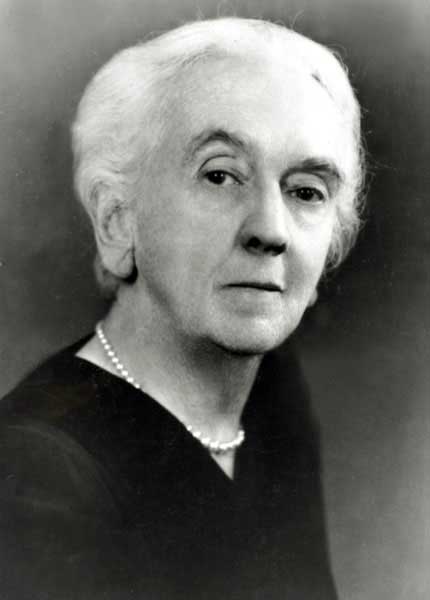
Edith Hamilton (August 12, 1867 – May 31, 1963) was an American educator and internationally-known author who was the most renowned classicist of her era. A graduate of Bryn Mawr College, she also studied in Germany at the University of Leipzig and the University of Munich. Hamilton began her career as an educator and head of the Bryn Mawr School, a private college preparatory school for girls in Baltimore, Maryland; however, Hamilton is best known for her essays and best-selling books on ancient Greek and Roman civilizations.

Hamilton’s second career as an author began after her retirement from Bryn Mawr School in 1922. She was sixty-two years old when her first book, The Greek Way, was published in 1930. It was an immediate success and a featured selection by the Book-of-the-Month Club in 1957. Hamilton’s other notable works include The Roman Way (1932), The Prophets of Israel (1936), Mythology (1942), and The Echo of Greece (1957).

Critics have acclaimed Hamilton’s books for their lively interpretations of ancient cultures, and she is described as the classical scholar who “brought into clear and brilliant focus the Golden Age of Greek life and thought … with Homeric power and simplicity in her style of writing”. Her works are said to influence modern lives through a “realization of the refuge and strength the past” to those “in the troubled present.” Hamilton’s younger sister was Alice Hamilton, an expert in industrial toxicology and the first woman appointed to the faculty of Harvard University.

More at:  https://en.wikipedia.org/wiki/Edith_Hamilton

Online Sunday Meetings 2017


Drawing by Heather Williams, H.W., M.

“Ballet dancer saves homeless man pushed onto train tracks” by Gina Daidone and Natalie Musumeci (nypost.com)

June 5, 2017

Some heroes wear tights.

A Big Apple ballet dancer came to the rescue of a homeless man after he was shoved onto the subway tracks at an Upper West Side train station over the weekend.

Gray Davis, 31, a dancer with the American Ballet Theatre, was in the Broadway-Seventh Avenue station at 72nd Street after having watched his wife perform with the same ballet company at the Metropolitan Opera House when 58-year-old Stephen Ling was pushed.

Davis jumped down onto the uptown tracks at the station, where Ling was shoved by a woman at around 11:45 p.m. Saturday, police said.

Ling, who is homeless, was knocked unconscious from the impact of the fall – and miraculously Davis was able to revive Ling and push him back up onto the platform in the nick of time before a train pulled into the station, cops said.

Emergency responders rushed Ling to St. Luke’s-Roosevelt Hospital Center where he was treated for cuts and bruises, according to police.

The suspect, Carolyn Mack, 23, of the Bronx, was arrested and charged with assault for the attack, police said.

Davis, a native of Greenwood, SC, has been with the American Ballet Theatre since 2007.

Davis’s mother, Janie Krabbe B. LeTourneau, recounted the incident in a Facebook post shared by the American Ballet Theatre.

LeTourneau wrote how she, Davis and his wife, Cassandra Trenary, were in the train station headed home from Lincoln Center when “the most disturbing thing I have ever witnessed happened.”

“As we watched a man and woman on the opposite platform punching each other, Cassandra Trenary made Gray go look for security..all of a sudden the woman threw the man onto the train tracks, while a train was due any minute,” LeTourneau wrote.

“We were all horrified about what was about to happen as the man lay unresponsive on that track…out of no where and just in time we all watched as a brave young man jumped down, and lifted the man high up on to safety like he was a feather,” the post continued.

A “shocked” LeTourneau turned to her daughter-in-law and asked if that was Davis and Trenary responded, “Yes, it is.”

LeTourneau wrote how her son “then lifted himself up miraculously just before the train got there.”

“People started cheering and yelling ‘you are a hero’. The three of us have been in shock ever since,” said LeTourneau.

“My son has always made me proud, but I’ve never been as proud of him as I was tonight, out of 2 full platforms of people, he was the only person brave enough to jump down and save that man’s life. This certainly is a day I will never forget in more ways than one,” she wrote.

Mack initially fled the scene and ran up to the street-level.

She was followed by a witness who flagged down police in a squad car who ultimately nabbed her, police said.

Mayor Bill de Blasio, who was asked about the incident by reporters on Monday, said he was “not aware of the details,” but did say, “I commend that dancer for doing that.”

Betsy Shirley on being flexible

“Blessed are the flexible for they shall not get bent out of shape.”

–Betsy Shirley, Buck Brannaman’s foster mother

Dan M. “Buck” Brannaman (born January 29, 1962) is a horse trainer and a leading practitioner with a philosophy of handling horses based on classical concepts from the vaquero tradition; working with the horse’s nature, using … Wikipedia

Consciousness, spirituality, biography, sexuality, androgyny, futurism, space, the arts, science, astrology, democracy, humor, books, movies and more