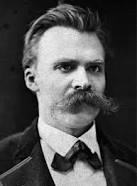
Nietzsche on living dangerously

“For believe me! — the secret for harvesting from existence the greatest fruitfulness and the greatest enjoyment is: to live dangerously!”

–Friedrich Wilhelm Nietzsche (October 15, 1844 – August 25, 1900) was a German philosopher, cultural critic, poet, philologist, and Latin and Greek scholar whose work has exerted a profound influence on Western philosophy and modern intellectual history. Wikipedia

“The Picture” by Calvin Harris, H.W., M.

The Coffee House, this day is quiet, many of the College students, with their study groups or tutors have not yet arrived or maybe have come and gone for the Day. The number of independent or career fast track workers, called “the Work from Home Crew” are down to one or two that have secured their pick of location, were the choice seats of the coffee house at that time of the morning are those tables and chairs that catches the full rays of morning sunlight to illuminate their makeshift workstations.

Within this quiet unpopulated space, one can move unimpeded to and fro around the room. New Artwork, has been put on the Coffee House walls, the black and white photos representing the faces of its culturally and socially diverse population have been taken down and replaced with color themed impressions of faces depicting the human condition.

Perusing the pictures in the room and surprised by the connections I made with many of the pictures, I was taken aback by one picture in particular that caught my eye, it was the subject matter “A Man smoking Cigarettes”. Examining it more carefully, in my mind’s eye I deduced that it must be allegory caught on canvas. 

It’s subject matter, an attractively handsome, yet intense almost brooding young man, I thought he must be an Artist of some kind. Because aren’t Artist of a certain age and culture always handsome and brooding? And of course, some of that intensity and brooding brought on themselves by their introspective feeling of restraint of their will or power.  

The background of this picture of the young man was drawn black, and the young man materialized on the canvas in shades of gray, which bode well in establishing the mood and temperament of the young man. Yes, I thought to myself, like this young man we are all shades of gray in life. Yes, the grays worked well for this depiction of the man.

My eye moved to the lit cigarette in the man’s well-formed mouth. How did that feel on those lips? Are those lips dry, dried perhaps by drinking wine, gin, or tequila? Or perhaps moist from the saliva of his mouth being moved over those lips by an unconscious tongue?

Is this cigarette about to allow an inhale or exhale? Is it a moment of contemplation, relaxation, a power play, or just to make a point as in a pregnant pause before his next sentence?

I am captivated by the other lit cigarettes in his hands, six more I think what dexterity! Like a card shark or mathematician who could make magic with his hands, or is the magic he does in the bedroom felt and known to him by his partner’s exhale in the release?

Seven has always been a lucky number is it for him the number that says that at the end of his day or week, by the 7th smoke his day is done, it is complete, the drama, the frustration, the stress, the disappointment, or the laughter, the cheers, the accolades, and finally the triumph is it all caught up in that 7th cigarette swirl of smoke.

-Fin-

“Intervention of Your Expectations?” by Robert McEwen, H.W., M.

     I think we all have many expectations if we want to admit it or not.  Everyday we wake up and have them.  
 
    “What am I going to GET today?”  Well,  our flimsy ego has that question.  “If I do this, if I look good to this person, I might GET this or that.  We are trained as youngsters to act that way.  Be good and you get this and you won’t get that.  Reward and punishment” kind of deal.  Life becomes a game of acting in an inauthentic way, faking, to get something, or someone.  But we always get busted.  Time will tell us  if that theory becomes true in our life experience. So, why not bust ourselves before the shit hits the fan and we get all sad and disappointed about not getting what the ego thinks it wants?  That is an intervention of sorts.  The people, places and things we think we need comes out of survival, in the beginning.  As kids we have parents we think are god and don’t want to be punished, and we want to be rewarded.  B.F Skinner, the psychologist created a whole school of thought on that.  He used rats in a cage to prove his theories.  Punishment, electric shocks, and rewards, some bits of cheese, as rewards.  Many of us go through life trying to get the cheese.  Whatever we think that is: attention, approval, pleasures of the senses, bliss, or whatever.   The rest of the time we spend trying to avoid the pain of the shock treatment!  Could be emotional pain, physical pain, mental pain, or social pain.   Simple theory.  Anthony Robbins also based his million dollar motivational trainings on this very theory and mopped up financially with that.  He thinks the pleasure and pain theory  motivates all our behavior.”
 
    “So, test it out, and see if in your life this theory holds water.  Are you dancing to that kind of thinking and living?  I have done some journaling and investigation of this simple theory, and am still testing it out.  Take a look at it with me.  I would be curious to hear your outcomes with that?
 
Robert McEwen, H.W., M.
503 706-0396

“When Japan Had a Third Gender” by Susan Chira (nytimes.com)

An original perspective picture of the Great Gateway and Nakano-cho in the Shin Yoshiwara, (1730s–1740s), by Okumura Masanobu. The work is part of “A Third Gender: Beautiful Youths in Japanese Prints,” at the Japan Society. CreditRoyal Ontario Museum; Photo: Hiroko Masuike/The New York Times

A figure in a translucent kimono coyly holds a fan. Another arranges an iris in a vase. Are they men or women?

As a mind-bending exhibition that opened Friday at the Japan Society illustrates, they are what scholars call a third gender — adolescent males seen as the height of beauty in early modern Japan who were sexually available to both men and women. Known as wakashu, they are one of several examples in the show that reveal how elastic the ideas of gender were before Japan adopted Western sexual mores in the late 1800s.

The show, “A Third Gender: Beautiful Youths in Japanese Prints,” arrives at a time of ferment about gender roles in the United States and abroad. Bathroom rights for transgender people have become a cultural flash point. The notion of “gender fluidity” — that it’s not necessary to identify as either male or female, that gender can be expressed as a continuum — is roiling traditional definitions.

Photo

Detail of “Two Couples in a Brothel” (1769–70), by Suzuki Harunobu.CreditRoyal Ontario Museum; Photo: Hiroko Masuike/The New York Times

“This brings us back to history to think about the present and the future,” said Asato Ikeda, an assistant professor of art history at Fordham University and the guest curator of the exhibition, which covers the Edo period from 1603 to 1868.

She said that like other societies in the past and present — the hijra in India; the “two-spirit people in some American indigenous cultures — the diversity in gender definitions and sexual practices in Edo Japan challenges modern notions that male and female are clear either-or identities.

The art on display shows how many permutations were acceptable in Edo society: men or women in liaisons with the adolescent wakashu; female geisha dressing like wakashu and engaging in rough sex; male prostitutes cross-dressing as women; men impersonating women on the Kabuki stage, a tradition that lasts to this day; and even a male Kabuki actor impersonating a woman who pretends at one point to be a man.

Photo

Detail of “Merry-Making in the Mansion” (1624-1644), by an unidentified artist.CreditRoyal Ontario Museum; Photo: Hiroko Masuike/The New York Times

That suggests, Professor Ikeda said, that some blurring of gender identity was deliberate, playful and often arousing, since the prints were relatively inexpensive and widely circulated, some as erotica.

The wakashu are a case in point. The term describes the time a male reaches puberty and his head is partly shaved, with a triangle-shaped cut above the forelocks that is a telltale way to identify wakashu. During this stage of life only, before full-fledged adulthood, it was socially permissible to have sex with either men or women.

In the prints, the wakashu are presented as beautiful and desirable, sometimes practicing what were seen at the time as feminine arts like flower-arranging or playing the samisen. Like unmarried women, wakashu who belonged to the samurai class could wear the long-sleeved kimono known as furisode. In several prints, you have to look closely to find the shaved triangle in the hair, or spot a sword tucked in a samurai wakashu’s sash (or, in the erotic woodblocks, to see the genitals on display), to differentiate between the wakashu and the women pictured near them.

A Third Gender: Beautiful Youths in Japanese Prints Video by JapanSocietyNYC

In some cases, there are sly literary allusions that deliberately transpose gender. These prints depict episodes from classical literature, or Buddhist and Confucian traditions, but flip the genders of the main characters, or recast the men as wakashu.

Photo

“O-Kuni,” from the series “Patterns of Flowers” (1896), by Kobayashi Kiyochika.CreditRoyal Ontario Museum; Photo: Hiroko Masuike/The New York Times

The art in the exhibition ranges from lively snapshots of daily life to uninhibited portrayals of desire. A screen shows several wakashu surrounding a Buddhist monk, teasingly holding down his hands, plying him with alcohol and tickling his feet, suggesting foreplay before male-male sex. A young woman passes a love note to her wakashu lover behind the back of an older artist who is signing his name to a painting. A wakashu dreams of sex with a famous prostitute, while another woman tenderly covers him with a jacket.

Several prints reflect Edo society’s strict hierarchy of class and age, one reason the curators caution it is misleading to compare gender norms directly to the present day. The Edo period was one of relative peace in Japan, following many years of war between competing samurai. It was also marked by nearly complete isolation from the West. That is one reason it may have offered space for sexual experimentation, but only within certain bounds.

Photo

“Dancing in a Kabuki Performance” (1800s), by Kaian (Megata Morimichi).CreditRoyal Ontario Museum; Photo: Hiroko Masuike/The New York Times

Any hint of adult male-male sex was confined to outcast groups such as Kabuki actors, said Michael Chagnon, the curator of exhibit interpretation at the Japan Society, although homosexuality was practiced among samurai for centuries and commercialized during the Edo period. Men are usually in charge, both in pursuit of sexual partners and in sexual positions, except for experienced women who pursue younger wakashu. There is virtually no depiction of lesbianism, since women were not granted the sexual freedoms men were. The only print showing two naked women is ambiguous, with art historians uncertain whether it suggests mutual desire. Older men have sex with younger wakashu.

The exhibition raises and confronts questions of pederasty or exploitation, given that wakashu were sexually available after puberty, younger than would now be considered the age of consent. The curators consulted social workers and lawyers during the original exhibit, held at the Royal Ontario Museum in Toronto, to make sure the work was not considered child pornography.

Mr. Chagnon said marriages and sexual liaisons took place at an earlier age than the present day, partly because people died so much younger, often by their late 30s. The notion of age of consent did not exist in Edo Japan, he said, and was imported later.

Photo

Detail of the perspective picture: triptych of “Three Poems on Autumn Twilight” (circa 1742–1744), by Okumura Masanobu. CreditRoyal Ontario Museum; Photo: Hiroko Masuike/The New York Times

The Edo period ended after Japan was humiliated by demands from a militarily superior West – the black ships of Commodore Perry wrested concessions from a country that had once confined Western traders to offshore islands. And it was then in the late 1860s, as Japan rushed to adopt Western technology and forms of government, that it also imported more rigid Western notions of gender and permissible sexual expression. The tradition of wakashu ended. Homosexuality was outlawed for a time.

Same-sex marriage is not legal in Japan today, although it was debated in the legislature in 2015 and some cities have allowed partnership certificates for same-sex couples. A gay subculture flourishes, with many artists playfully shifting and layering identities, mainly through the internet. But gay men are generally expected to marry women and produce children, fulfilling social expectations while conducting their sexual lives discreetly.

In an uncanny echo of the past, some Japanese men today, known as “genderless danshi,” are once again blurring lines, dressing androgynously, using makeup or wearing clothes typically seen as feminine.

“Even though we have this rich tradition of gender, prints like these are not found in our textbooks,” said Professor Ikeda, who grew up in Japan. “We don’t do these kinds of exhibitions in Japan.”

It is one of the many reflections on contemporary society that this provocative exhibition raises. Walking through it is a reckoning with categories, definitions and how they resonate in societies still uncertain about whether lines between genders should be bent or blurred.

M-Theory, String Theory, and Parallel Worlds, by Dr. Michio Kaku

Originally Published on Mar 13, 2017

Subscribe to Dr. Michio Kaku’s Universe at https://goo.gl/nFNsv0
More of Dr. Michio Kaku at:
Website: http://mkaku.org/
Facebook: https://www.facebook.com/michiokaku
Twitter: https://twitter.com/michiokaku
==========================================
Copyright Disclaimer Under Section 107 of the Copyright Act 1976, allowance is made for “fair use” for purposes such as criticism, comment, news reporting, teaching, scholarship, and research.

“Forget Colonization. The UAE Plans to Build a City on Mars” by 2117 by Philip Perry (bigthink.com)

Article Image
Artist conception of a future Martian city.

The US, Russia, China, India, the EU, and even private companies are in a race to colonize Mars. There are lots of technical things to work out, from food supply to protection from solar radiation. Though few smaller countries have jumped into the Mars race thus far, the United Arab Emirates (UAE), is looking far beyond planting a flag or a few threadbare shelters. Their motto seems to be, go big or go home. The country recently released its plan to build a futuristic city on the Red Planet by 2117. The proposal and accompanying images look like something ripped from the pages of a sci-fi novel.

The UAE is a collective, an oil rich federation of seven smaller states. They are late coming to the space race. But the country developed extremely quickly, from a Gulf backwater to one of the richest and most developed countries in the region, in less than half a century.

A rustic, pearl diving village a little over 40 years ago, Dubai today is a glittering metropolis full of modern skyscrapers. It even boasts the world’s tallest. This financial hub of the region hosts impressive sites including an archipelago of manmade, palm islands, “The World” islands, and the planet’s largest indoor ski resort, among others. Read into this, maybe they can pull it off.

The UAE launched its space program in 2014. Though a newcomer, if the country’s development is any indication, it could become a major player in the next great space race. The Emerati agency plans to work with their British and French counterparts, beginning next year, in order to send up an unmanned Mars probe named “Hope,” by 2021, reaching the Red Planet two years later. The Martian city announcement was made recently at the World Government Summit in Dubai. Visitors were able to gaze at a 3D model of the proposed city.

Model of the city. HH Sheikh Mohammed via Twitter.

Entering into the space race adds cache to a country. It telegraphs that you’ve come a long way, in terms of wealth and technological development. There’s no way they’ll be the first to put people on Mars, starting their own space agency so late. Instead, the UAE found a different way to distinguish itself. No newcomer to city design in and of itself, officials are planning to establish the first urban living community, based on human happiness, in oncoming years. So placing the first metropolis on Mars may not be out of its wheelhouse.

The “City of Wisdom” as it’s being called, will be about the size of Chicago, according to the announcement. Vice president of the UAE and sovereign of Dubai, Sheikh Mohammed bin Rashid Al Maktoum, announced the project. “Human ambitions have no limits, and whoever looks into the scientific breakthroughs in the current century believes that human abilities can realize the most important human dream,” he said.

The first step he said, was building up science programs in schools and universities. Just as Sputnik triggered advanced science and math education programs in the US, so too will this spur such learning in the UAE. Besides that, the Sheikh plans to build an Emirate scientific group, which will include international experts. These will be broken up into teams.

Another conceptualization. HH Sheikh Mohammed via Twitter.

Each will investigate a certain aspect, such as the faster transportation to Mars, as it now takes 150-300 days, depending on where each planet is in their journey around the sun. That’s way too slow, considering that the first toehold colony will be supplied with dried food from Earth, at least at first, and will depend on such shipments. Other teams will look at growing food, creating energy, methods of transportation across the planet’s surface, and more.

Scientific and research committee manager Saaed Al Gergawi, told CNBC that the city is expected to house 600,000 people. He said, “We came up with that number because it’s like someone going to an exotic island, not everyone can go first, then we get advancement of rocket tech, which makes people move there easily, then the advancement of oxygen tech to make it more earth like, which would incentivize people.”

A lot of questions remain. For instance, will substantial radiation shielding be needed? If so, how do they plan on doing it? Solar radiation bombards the Red Planet, which will put human health at serious risk. One theoretical NASA plan is to build a magnetic shield which protects the planet. But if it doesn’t work, buildings will have to have special shielding in order to protect colonists.

Other questions include, How will the city be built, and where on the surface will it reside? This is a long-term project, but the expansive timeline could give the UAE space agency the time it needs, to make sure this considerable feat becomes a reality. As the earliest colonies take shape in the next few decades, UAE scientists will be able to adjust their plans to fit conditions on the ground.

To learn more about the UAE project, click here:


“The Astrology of Midlife and Aging” by Erin Sullivan (astro.com)

The Significance of Saturn and Uranus in the Midlife Transition

The transitions of life’s second half offer a special kind of opportunity to break with the social conditioning that has carried us successfully this far and [onward] to do something really new and different.

William Bridges, Transitions [1]

The two planets most consistently lively in a psychoactive fashion during the midlife transition are Saturn and Uranus. Prior to the sighting of Uranus in 1781, Saturn was the ruler of the sign Aquarius, and as with all the signs with modern rulers, the ancient ruler is not only still effective, it acts as a highly significant agent in the sign’s behavior or manifestation.

Saturn and Uranus embody antithetical properties and have strongly polarized characteristics:

  1. Saturn embodies the positive agency of homeostasis and urges us to stay the same, to automatically correct any influence toward change, transformation, or upheaval. Saturn’s agency thus, is to maintain earthy, practical needs, even at the risk of calcification or depression. If Saturn is not honored in life, then it can bring a sense of soulless conventionality and psychological and physical stuckness to bear on the soul.
  2. Uranus is the planetary medium which impels us toward change and acts as the inner agency for experimentation, growth, evolution and individuation. Too, Uranus is our inner witness, watching for opportunities to change habitual behaviors, disrupt the status quo and stir up any stagnant pool. If Uranus is not honored, then anxiety and manic behavior can irrupt, forcing one to “wake up” to what is required.

As you might suspect, if we were made up only of Saturn and Uranus as planetary agents for life forces, we would not survive the stress of the conflict! In fact the conflict of Saturn and Uranus are older than time, and herald the archetypal struggle of heaven and earth that is present in all forms of creative struggle, whether that is socio-political, interpersonal, or within one’s own self.

In the Beginning …

Order at:
www.amazon.com or
www.amazon.co.uk

Mythologically, Uranus is the eponymous planet of the ancient Greek god who was, in fact, the heavens as a place. Ouranos was never worshipped as a god, nor are there any shrines, emblems or evidence of temples and the usual indicators of an individual entity. That Ouranos was the sky, and not a sky god gives him a very special place in myth – not as a singular entity but as a realm of experience. This is very significant in considering the astrology of Uranus and the interpretation of its qualities both as a natal planet and in transit.

Ouranos came into being because, Gaia – mother earth – created him herself to comfort her and be her consort. After she birthed many other earth and nature divinities on her own (or with the aid of Eros, according to the oldest myth) she grew lonely and wanted a mate. And, so she created Ouranos, the heavens, to surround her and keep her constant company, and he enveloped the earth in all his aetheric power. Their union produced many offspring, such as the Cyclopes and the Titans.

Then, Gaia found herself pregnant with new offspring, the Hekatonchires, or the “hundred-handed ones”. They were multiple and monstrous, but being a mother, Gaia loved them anyway. Ouranos, did not. He was horrified at their monstrosity, their imperfect and fearful traits, and refused her birthing them. Naturally, Gaia grew uncomfortable and angry, and she employed the youngest of the Titan’s, their son, Kronos in an act that would change the course of mythic history.

She presented Kronos with a scythe, made of adamant – obsidian – a clear, hard crystalline sickle and told him to reach up, “as Ouranos lay round Gaia, longing for love”, and castrate him. Which he did. [2] Thus, forever separating the archetypal parents, as well as launching a new mythology.

We can view this myth variously, but with the ensuing battle of the Titans and the collapse of the unified male/female, and the polarization of “above and below”, there issued a new archetype into life. The separation of heaven and earth, of male and female, the split of the archetypal parents into separate quarters, remains a strong and influential component in our collective and individual psyches.

We can view the “above/below” polarity in many ways. Not only does it symbolize the manifestation of conscious and unconscious behavior, it also represents the first inklings of dual perception – that there is something “outside ourself” or even deep within ourself that is in opposition or conflict.

Jung thought mediation of conflict was the stuff of life; that inner conflict resolution was the reply to the universal challenge toward wholeness. This is a powerful concept, and more often than not, resolution of inner conflict results in conscious peace of mind for individuals.

The function of Saturn and Uranus, the mythic father/son conflict as we experience it in mid-life, is about resolution of conflict and the need for change, even if it is a violent or disruptive act. As a psychic complex, or a dichotomy, Saturn can act as the severing function of our creative ideas. We might be so worried about our own creativity that it never actually is given birth, but is “castrated” before any idea, concept, action or experiment is enacted! In contrast to this suppression, if Uranus has the upper hand, so to speak, then we can be too outrageous, too eccentric and simply unable to get our point across or find an acceptable median for behavior or communication.

The urge for creative experimentation and individuation at midlife can be stuffed back down inside the psychic womb, just as Ouranos stuffed the Hekatonchires back into the womb of Gaia. And, it would then take an “adamant” personal attitude toward ones’ own self to birth the inner urge for creative change.

Howard Sasportas, in The Twelve Houses, says: “Uranus’ house may show where we rashly disrespect the limits of our human-ness’. Presuming we can automatically transcend the restrictions of the physical body or ‘rise above’ the instinctual components of our nature, we commit the sin of hubris and invite punishment to fall on us.” [3]

Saturn is the planet that held domain over the entire solar system until 1781 CE, the period of both the French and American revolutions, inaugurating the Industrial Revolution and involved the whole of western civilization as it was then. Prior to that era, social life existed within the bounds of family and cultural limitations. In synchrony with the advent of the “new planet” sighted by astronomer Herschel, there followed decades of phenomenal innovation and discovery. The flourishing of science, technology, philosophy, literature, music, social opportunities and, in virtually every aspect of human life, exploded Western civilization toward liberation, freedom and choice.

Uranus has become the standard bearer now for such terms as liberation, freedom, choice, individuality, uniqueness, innovation, challenge and breaking out of old ways and challenging the status quo. Saturn was and remains the criterion in astrology for the opposite of those values, indeed, is often relegated to a kind of “prison guard” realm. So, it may seem curious that I equate the overthrow of Ouranos/Uranus by Kronos/Saturn with liberation and freedom according to the rote astrological definition of each planet – and call that act the beginning of a new way of being.

With respect to Saturn and Uranus as “celestial sacred” symbols, they are both heavenly in position (in the sky) , but are quite different in symbol. As I mentioned above, Saturn is to do with the realm of the world and its forms. While, Uranus is to do with the ideal of the world and its forms. To propitiate both is the trick. How to acknowledge the perfection of the Ideal, while humanly existing in the realm of the Real? Essentially, we are required, periodically, to give birth to ourselves as if it were a new idea, a new culture, a new mythology.

Naturally, there is an underbelly – a shadow – of the Uranian attribute which also refers back to the origin myth: if we don’t trust our ability to render a creation or idea into form (Saturn) we abandon it, abort it, before it can be given birth. In other words we refuse birth of the creation due to its imperfection – just like Ouranos and the Hekatonchires.

In Creation Myths, Jungian analyst Marie Louise Von Franz says about crossing the threshold from the Ideal possible to the Real thing,“People sometimes resist becoming creative because one’s would be creativeness is always so much more impressive and important than the little egg on lays in the end when birth takes place!”

It is during such times of high innovation and creativity as adolescence, midlife and the threshold of old age that we have difficulty in the trust of our own creative powers. [5]

One might think that the principles of Uranus overpowering Saturn would be the “new way”, but rather the opposite is what happens in our inner life. It is in this paradox that the astrological and therefore psychological struggle for identity lies.

As psychic components, both Saturn and Uranus are needed for wholeness. For innovation to become manifest it requires the adamant sickle of old Kronos – the discipline of matter over mind. The eidolon itself is simply the archetype of Uranus while the Idea takes form with the effort and adamant labor of Saturn. An harmonious equilibrium between both is the substance of progress, evolution and the development of consciousness.

At the midlife threshold, we arrive at a crossroads – at which stands the god of change and the god of stasis. These gods, represented by Uranus/change and Saturn/stasis, begin a dance toward the future.

It is at this very threshold – the doorway between youth and old age – that we meet many facets of ourself which have remained dormant or sleeping, awaiting this moment in development for their proper time. It is in this threshold, this liminal place, where we are not who we used to be, but are not yet who we are to become. For most extraverted people of this era, this experience of liminal living is a most uncomfortable and at times, deeply distressing place.

Uranus by Sign as Midlife Purpose indicators

Dream or Fantasy?

Because we are exploring the half-Uranus cycle as the gateway to midlife’s transition, the sign Uranus is in natally secrets characteristics of the opposite sign as its “unlived life”. When any planet in transit comes to the opposition point to itself in the natal chart, a half-cycle is noted. And, as with all half-cycles, it simulates the lunation cycle as a “full planet phase”, which allows for the fullness of the experience of that planet to emerge and reflect back the messages and lessons learned. That is, the opposition, or the “half-cycle” is an illumination from the transiting planet and its manifestation of intent as it reflects back to the natal planet its “secret intent”.

The fullness of any experience always is in reflection to the things “not had”; if we long for chocolate cake it is because we haven’t had it in a while. Similarly if we long for something we haven’t had for a while, or ever had perhaps, often it is something that actually does lie within the realm of possibility, and also, more importantly, within ones own Self.

This potential “thing” that could happen, must lie within the seed of self, or it won’t be possible. Facing reality is important here, and so is facing the myriad contexts in which we live out our dreams. If you have never studied the piano, then it is unlikely you will become a concert pianist in midlife – however, if you have always longed to play the piano and learn music, it is certainly something that can be done in midlife and enjoyed.

So, it is the beginning of a time of high potential to carry out a life dream you have always carried within, but time and circumstances have only arrived now to live it. So, if you have nurtured a dream to get a degree or take up a new trade, or travel to foreign places, but so far life has not presented you with the environment or context to fulfil those dreams and at midlife you find yourself in a new life situation (such as, the children have moved on, your partner is supportive, or you are on your own) then it is entirely possible.

Distinguishing between fantasy and dream is important in midlife. Fantasy serves a meaningful function for us – the psyche needs time off, play-time, and fantasies are very healthy for that. They are often not rendered into reality, however, such as in the example of wanting to play the piano but not knowing how does not prevent the psyche from exploring what that would be like. So an elaborate fantasy might be built around playing a complex and beloved piece music at the piano, doing it brilliantly, and basking in the applause at the Metropolitan in New York or the Royal Albert Hall in London. No harm done.

But a dream, ah, that is different. Dreams are often linked to a real potential. Dreams are always good to nurture, while fantasies are to be indulged in. A dream comes true if both Saturn and Uranus are working at optimum. Saturn will remind you what you cannot do, and Uranus will prod you to explore, experiment and to define what it is your genius or daemon is dragging you toward. Between the two agencies, you can harness your creative potential and live it out realistically.

The half-Uranus is a time of awakening to the unlived life and the time to assess your assets and liabilities objectively. Being able to witness yourself and your own true limits and boundaries, while simultaneously appreciating that which is really possible to fulfil is the task assigned at the crossroads. Mediating the gods of “stop” and “go” can generate a very fruitful quest.

Saturn’s job is to let you know what your limits and boundaries are, and in that safe, contained place, you can become successful. You might say to yourself, “I can do anything I want, within limits.”

So, when your natal Uranus is opposed by transiting Uranus, it is sending you a message, that all the unique traits and characteristics taht you embody but have not yet brought to life, are calling out.

It is obvious that the midlife can bring far too many “unlived” aspects of your life to the fore – hence the panic and angst that are frequently associated with midlife crisis. The creative aspect of Divine Discontent comes most alive at the threshold of midlife, and thence periodically throughout the entire transition.

I have associated Saturn with Divine Discontent, but it is a quality of Uranus as well.[6] The two planets walk hand in hand on this journey, and, as mentioned before, Saturn is the planet that defines our limits, while Uranus is the planet that offers all possibility. Being grumpy and depressed is not necessarily Divine Discontent, it might simply be being grumpy and miserable. However, the mood, the tenor and numinosity associated with Divine Discontent is a prod from the unconscious toward greater creativity, to find the means to exploit your talent.

[How does the half Uranus return affect different generations? We have selected only a few of Uranus’ natal positions which might be interesting for our readers as they deal with the current generations.]

Leo

Uranus in Leo has its crossover experience when Uranus transits Aquarius. Since Leo is the archetypal sign of the heart and the child, there are many indications that the first “half” of life is spent playfully and without concern for the collective, but suddenly there is a calling at midlife to nurture the world soul. The polarity of Leo and Aquarius embodies the syzygy of Individualism and Collectivity. That is, You and The Group. Within the social and tribal collective we exist as an individual, but it is only in the context of others that we can define our individuality. The conflict that exists at midlife for the Uranus in Leo is primarily one of finding ones own self within a supportive group, and to begin a process of humanitarian individuation.

Virgo

Midlife occurs when Uranus enters Pisces and the polarity between serving or suffering on behalf of the world rises to critical mass. Since the most recent Uranus in Virgo group has a majority of individuals who have the Uranus/Pluto conjunction, the quality of their midlife is amplified by this nuclear aspect. Uranus in Virgo is about individuation through the process of being useful, serviceable, helpful and on call for those who suffer. Now, when the half Uranus cycle occurs, there comes a sacrifice to be made that will serve each individual psyche toward its ultimate intent – to sacrifice something deeply personal to the demand of the global ethos. Through inventiveness and “progress” the culture arrives at a time of maximum sacrifice, and in that environment, the Uranus in Virgo generation comes of age. Finding a life purpose through organization and re-culturalization will bring the essence of Uranus in Virgo’s ultimate intent in life.

Libra

Uranus in Aries is the advent of midlife for those who were born with it in the sign of Libra. As each sign represents an evolution from the previous, and a preparation for the next, it follows that the intent of Uranus in Libra is to find a balance between the individual and the collective. Now, this has been said before with the other signs, because Uranus itself represents the concept of the “one in the many”, however, it is especially significant for Libra/Aries. The restoration of the individual rights and prerogatives of each person in balance with a new social order is the key to this individuation process. The first half of life is spent coming to terms with relationships in an intensely personal fashion, while the crossover experience into midlife induces the psychic demand to find ways for all individuals to have a sense of equality, belonging and influence in the world.

Scorpio

When Uranus enters Taurus, and opposes the natal Uranus of those who have it in Scorpio, the shock of “real world” practicality awakens a new impetus for personal growth. Uranus in Scorpio has already spent half its life in a state of mystical and transformative experience, and at midlife must transmute the esoteric intangibles into manifest form. Uranus in Scorpio urges the individual to explore his or her uniqueness and individual self in ways that are often dark and mysterious. The path to self and wholeness involves incorporating the shadow self and, in midlife, acknowledging the purpose of the shadow. This will take the form of dealing with collective shadow material and working with it to integrate the darker aspects of society and the world – and ultimately, to perform a kind of magical transformation for the future. The inner resources of Uranus in Scorpio are profound, drawing on an ancestral level of information. But, the impulse to truly embody the “work of the ancestors” either through good works, teachings or commerce becomes essential to their sense of inner purpose.


Transits of Midlife: 37 to 60
The Half-Uranus – A Meeting at the Crossroads
The Generic Aspects from the Half-Uranus to the
Second Saturn Return and Their Meeting


The Preparation Phase Prior to the Half-Uranus36:

Jupiter and Saturn – Preparing the Way to Midlife


Across the Threashold – Uranus and Neptune (and Pluto)38-44:The Big Leap Forward38:Second Return of the Lunar Nodes40:Saturn Trine Saturn – Familiar Boundaries42:

Neptune Square Neptune – Beautiful Dreamer


Pluto – The Nuclear Dilemma and the Existential Experience The “Problem” with Pluto The Power of Pluto – For Some of Us

So, what does that mean?


Middlescence44-46:Saturn and Uranus – Success in Limitation Know Thyself and Nothing Too Much47-48:

Inversion of the Lunar Nodes and Jupiter Return – quo vadis?


50:The Watershed52:

Saturn Square Saturn – Return of the Repressed and Liminality


54-57:Integration 54:The Second Lunar Return,
Saturn Sextile Saturn
 55-56:Uranus, Neptune and Pluto Trine Themselves,
Third Return of the Lunar Nodes
  59-60:The Saturn Return

Sans teeth, sans eyes, sans everything?


Taken from:
Erin Sullivan:
The Astrology of Midlife and Aging.
Tarcher/Penguin, 2005.
[shortened and slightly adapted excerpts]

You can order this book at:
www.amazon.com or www.amazon.co.uk


Notes:

  1. William Bridges, Transitions: Making Sense of Life’s Changes (Reading MA, 1980), S. 52.
  2. Hesiod, Theogony. (London: Penguin Classics, 1973). p. 28, ln. 176.
  3. Howard Sasportas, The Twelve Houses (London, Aquarian Press), 1985, p. 266.
  4. Siehe Erin Sullivan, Venus and Jupiter: Bridging the Ideal and the Real, (London: CPA Press, 1996).
  5. Marie-Louise Von Franz, Patterns of Creativity Mirrored in Creation Myths (Dallas, TX: Spring, 1972), S. 85.
  6. Saturn in Transit: Boundaries of Mind, Body and Soul. Erin Sullivan. Weiser Publications. York Beach, Maine. 2000.

Erin Sullivan’s Website:
www.erinsullivan.com

(Contributed by Robert McEwen, H.W., M.)

Consciousness, spirituality, biography, sexuality, androgyny, futurism, space, the arts, science, astrology, democracy, humor, books, movies and more