
A framework for a good life

Published in Personal Growth
Dec 14, 2023 (Medium.com)
Values, principles, and priorities are three of the essential things for a good life. They give us a sense of direction. When we know what is important to us, we are more likely to be intentional about our choices.
We align our actions with our long-term goals. And, of course, it improves our chances of finding life satisfaction.
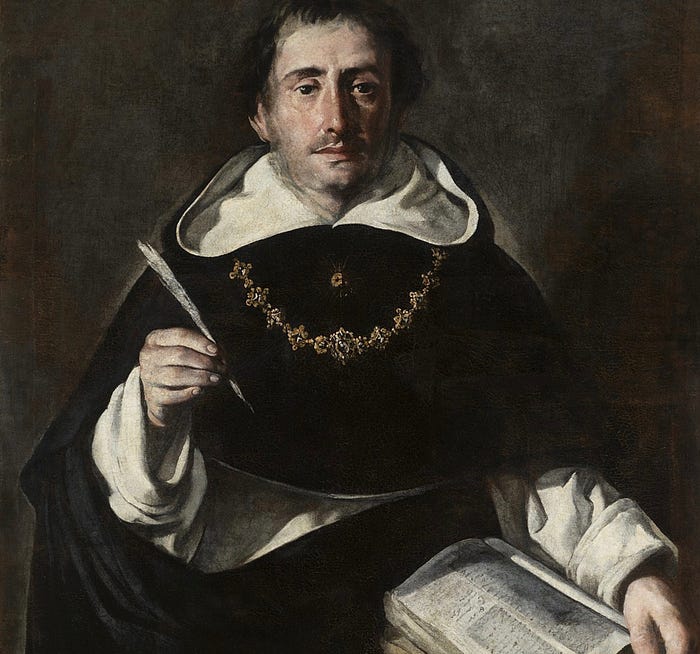
The renowned Italian theologian and philosopher Thomas Aquinas was born into a noble family in Roccasecca, Italy. He had a lot to say about mastering the human condition.
His early life was immersed in faith, as he was raised in a Benedictine monastery. At fifteen, he entered the Dominican Order, a decision that defied his family’s wishes.
Despite their opposition, Aquinas embraced the Dominican life without hesitation. He dedicated his life to studying theology and philosophy.
His intellectual journey took him to the University of Naples, where he was exposed to the works of Aristotle, a pivotal figure in his intellectual development.
Aquinas recognised the compatibility of Aristotelian philosophy with Christian theology. He believed both could provide insights into the nature of reality and the human condition.
His ability to bridge the gap between philosophy and theology caught the attention of the Dominican Order. He was sent to Paris in 1252 to study under Albert the Great, a renowned theologian and scholar.
Under Albert’s guidance, Aquinas’ intellectual life was further strengthened. His synthesis of faith and reason became more refined.
Aquinas observed, “Three things are necessary for the salvation of man: to know what he ought to believe; to know what he ought to desire; and to know what he ought to do.”
He recognised that the pursuit of salvation, the ultimate goal of human existence, requires a harmonious balance of knowledge, desire, and action.
Belief
Beliefs and convictions determine your perceptions and realities in life. We act based on what we believe to be true. As subjective as it may be. It’s even more life-changing in the context of religious or spiritual beliefs.
Beliefs evolve, though.
“We can’t have full knowledge all at once. We must start by believing; then afterwards we may be led on to master the evidence for ourselves,” says Aquinas.
But what you believe to be the only truth for a good life (principles, doctrines, or assumptions) determines your worldview.
Knowledge, For Aquinas, may mean understanding God’s nature, the principles of morality, and the purpose of human existence. This knowledge provides a foundation for discerning right from wrong and making wise decisions.
Your fundamental truths about existence, morality, and the nature of reality are either helping you build your version of a great life or hindering your self “becoming.”
Philosopher Friedrich Nietzsche thought, ‘There are no facts, only interpretations.’ Be mindful of what you believe to be the “only way to live.” Your entire life depends on it.
Desire
Desire, Aquinas asserted, is the driving force behind human action. It is the longing for what we believe is good and fulfilling. A virtuous desire directs our actions towards what is truly good.
In a religious context, it involves desiring spiritual growth, righteousness, and a closer relationship with the divine. For philosophers, it could mean aspiring to ideals such as justice, compassion, and wisdom.
How do we apply desire in life? By setting meaningful and ethical goals. That means aspiring to personal excellence.
Desire can be channeled into personal growth, career development, and relationships. You can seek fulfilment in ways that go beyond immediate gratification.
Aquinas believed human desires are inherently good, as they reflect our innate inclination towards what is beneficial and fulfilling.
However, these desires can be misguided. Our desires can lead us towards fleeting pleasures or self-centred pursuits. A path that hinders spiritual development.
Conduct
Action, the final component, is the manifestation of our beliefs and desires. It is through our actions that we live out our values.
Aquinas emphasised the importance of good actions, guided by our knowledge and desires, as the path to achieving salvation.
Virtuous actions, guided by knowledge and good desires, are the bedrock of a fulfilling and spiritually enriching life.
Aquinas thought saving yourself is not just about beliefs and desires but also about what you do. In a religious context, it often aligns with the concept that faith without works is dead.
Or the need for believers to manifest their faith through charitable acts, kindness, and adherence to moral principles. Ethical actions lead to personal integrity and the greater good of society.
In practice, it means treating others with respect. “Always treat people as ends in themselves, never as means to an end,” Philosopher Immanuel Kant said.
Aquinas’ teachings on desire and action emphasise the transformative power of aligning our beliefs with what we ought to desire and do.
Cultivate desires rooted in knowledge and translate them into meaningful actions. It’s a path of personal and spiritual growth.
His statement suggests a holistic approach to life that integrates belief, desire, and action. It implies a good life is not a passive state but an active and transformative process.
It also involves the entirety of your being — mind, heart, and behaviour. Aquinas encourages us to align our beliefs with virtuous values, desires with virtue, and actions with moral principles.
While the original context may have been more closely tied to religious or philosophical teachings, these concepts can also be relevant for a good life.
Aquinas’s quote is a framework for leading a purposeful and meaningful life. Be intentional in your beliefs, desires, and actions. Be willing to adjust your beliefs in the face of new evidence or perspectives.
Be open to changing your perception of life when you come across better knowledge. “The greatest discovery of my generation is that human beings can alter their lives by altering their attitudes of mind,” says philosopher and psychologist William James.
Finally, remember what political ethicist Mahatma Gandhi said, “Your beliefs become your thoughts, your thoughts become your words, your words become your actions, your actions become your habits, your habits become your values, your values become your destiny.”
For more content like this, join over 70K curious subscribers who receive my best essays and free curated tools for smarter living. Join us and get a free ebook (A collection of essays on life, meaning and getting things done).

Written by Thomas Oppong
·Writer for Personal Growth
Making the wisdom of great thinkers instantly accessible. As seen on Forbes, Inc. and Business Insider. For my popular essays, go here: https://thomasoppong.com