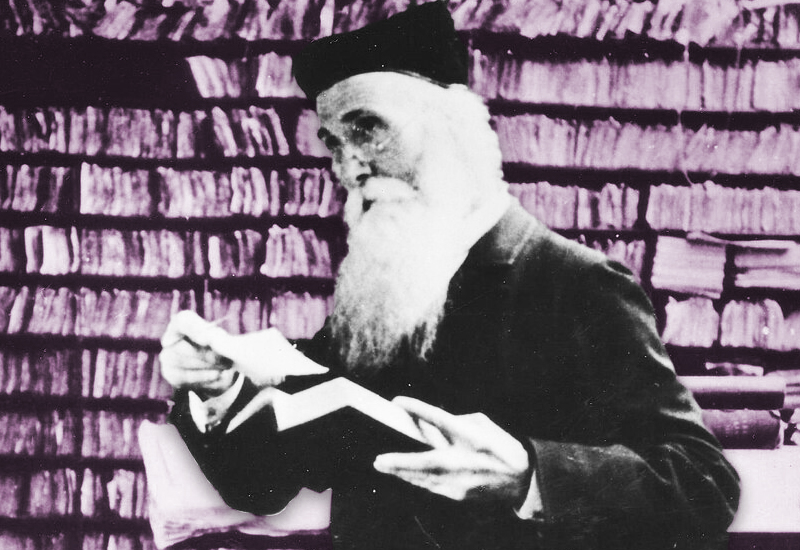
In 1857, members of the Philological Society of London, frustrated with the omissions and inaccuracies of the prominent dictionaries of the day, established a “Committee to collect unregistered words in English.” At first, their aim was only to create a supplementary dictionary, but the project soon expanded. The original committee consisted of Herbert Coleridge, Frederick Furnivall, and Richard Chenevix Trench; but the project didn’t really take flight until James Murray joined as editor in the 1870s—which was also when the Oxford University Press bought the rights to publish the massive dictionary on which they were now at work. Murray built an iron shed in his back garden and called it the “scriptorium”; it was outfitted with over a thousand “pigeon holes,” where Murray and his team collected quotation slips submitted by volunteer readers from all around the world, each of which contained evidence of words, their usage and meanings. “It is akin to mapping the human genome. It was that big an enterprise,” said author and researcher Pip Williams. Murray hoped to finish the dictionary in ten years; it would take fifty. The first fascicle—which was entitled A New English Dictionary on Historical Principles; Founded Mainly on the Materials Collected by The Philological Society, and covered “A” to “ant” in 352 pages, was finally published on February 1, 1884. It wasn’t until 1928, 13 years after Murray’s death, that the final fascicle (the 125th) was completed, and the dictionary was published in its full form—and even then, it wouldn’t actually be finished; after all, as the English language evolves, so must the dictionary. Today, many editions and supplements later, the OED is the gold standard of dictionaries, but it’s safe to say it will never really be completed—until humans finally give up making up words for things, that is. Here’s hoping we don’t.
Leave a Reply
Consciousness, spirituality, biography, sexuality, androgyny, futurism, space, the arts, science, astrology, democracy, humor, books, movies and more