

Dear Readers:
Welcome to our newsletter series, In Brief, where we revisit a piece from the MIT Press Reader archive and invite the author to reflect on it through a short set of questions and answers.
This month, we’re delighted to welcome Daniel R. DeNicola, Professor Emeritus of Philosophy at Gettysburg College and author of Understanding Ignorance, which recasts ignorance not merely as a lack of knowledge but as a complex cognitive phenomenon that interacts with knowledge, ideology, and lived experience in many surprising ways. In a related Reader essay, DeNicola turns to Plato’s centuries-old allegory of the cave to explore the various gradations of ignorance, the value of educational intervention, and why our resistance to the truth can make its eventual acceptance all the more profound.
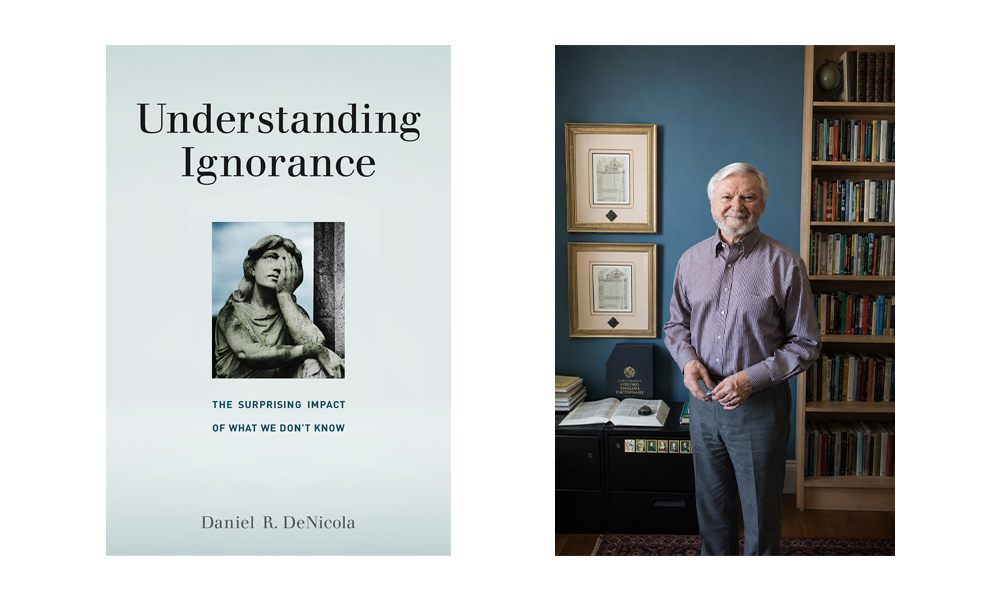
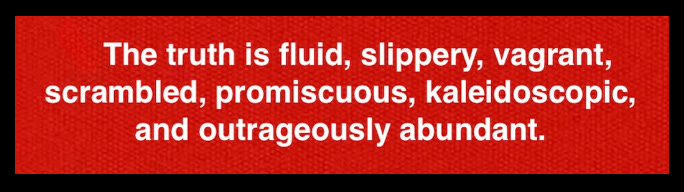
| Plato’s freed prisoner does not immediately welcome enlightenment; the truth is disorienting, even painful. How does one lead someone out of the proverbial cave without making them feel attacked or psychologically uprooted? Plato’s prisoners have epistemic resistance because they believe they already know the truth. He presents it as a problem of getting them to see for themselves, a forced introduction to new experiences. But, in his Symposium, Plato offers a gentler way: epistemic seduction. Although the pursuit of truth or goodness may not be self-generated, our response to beauty is natural, involuntary, and motivating. The educator’s skill is first to find whatever the student finds beautiful, what they love, and then to use it as a gateway to the truth. Some argue that ignorance can be merciful. In a world saturated with crisis and cruelty, much of it instantly viewable online, do you think there are moments when not knowing is good? Or is ignorance always a danger? Yes, there are times when ignorance is therapeutic — for example, to cope with the trauma of a horrible accident, one might refuse to see photos, learn details, or replay videos of the scene. The first danger, however, is that hiding from the truth would eventually hobble rather than heal; the second risk is that “therapeutic ignorance” would mask pernicious, willful ignorance. Still, ignorance is not always a danger. Without ignorance, we’d have no space for the unknown, which is required for creativity and freedom; and thus, no adventure or mystery, no unfamiliar stories to unfold, no wonder about the future, and much more. Plato’s prisoners mistake shadows for reality. What do you see as the most deceptive “shadows” of contemporary life — the illusions we are most likely to confuse for truth? Today, we embrace virtual reality — the oxymoronic phrase itself encapsulates Plato’s diagnosis of the human plight. We are immersed in images, illusions, imitations, simulations, and now in intelligence that is “artificial,” rife with deception. I believe the most dangerous are those intended to distort our social, historical, and political understanding. They divide and confuse us, infecting our lives with a protective skepticism and debilitating cynicism. We are not just losing our grip on the truth, but on the very concept of objective truth, our tether to reality. |
| Check out these recent roundups of MIT Press Reader stories: May 2026 April 2026 March 2026 February 2026 Browse previous issues of In Brief April 2026 March 2026 February 2026 Copyright © 2026 The MIT Press, All rights reserved. |


 Truth is sought for itself; and in seeking that which is sought for itself one is only concerned to find it… The seeker after the truth… is not he
