

Dream Psychology
Maurice Nicoll
Dream Psychology is written in a simple, popular way which makes it readable and understandable by almost any one, without technical preparation or without special information regarding the psychoanalytic psychology. The style is very clear and the various matters discussed are put in a way which should be of considerable help in spreading a sympathetic attitude towards psychoanalysis. The author is evidently a strong adherent of the Zurich school rather than of the more strictly Freudian, and discusses psychoanalysis and the dream more particularly from this point of view. He especially utilizes the method of what he calls constructive interpretation both of symptoms and of dreams rather than of the more purely reductive analysis of Freud. In other words, instead of simply trying to split things up into the material of which they are made, he believes that the dream should be considered from a teleological point of view.
About the author
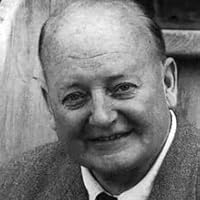
Maurice Nicoll
Maurice Nicoll (19 July 1884 – 30 August 1953) was a British psychiatrist, author and noted Fourth Way teacher. He is best known for his Psychological Commentaries on the Teaching of Gurdjieff and Ouspensky, a multi-volume collection of talks he gave to his study groups.
Nicoll was born at the Manse in Kelso, Scotland, the son of William Robertson Nicoll, a minister of the Free Church of Scotland. He studied science at Cambridge before going on to St. Bartholomew’s Hospital and then to Vienna, Berlin, and Zurich where he became a colleague of Carl Gustav Jung. Jung’s psychological revelations and his own work with Jung during this period left a lasting influence on Nicoll as a young man.
After his Army Medical Service in the 1914 War, in Gallipoli and Mesopotamia, he returned to England to become a psychiatrist. In 1921 he met Petr Demianovich Ouspensky, a student of G. I. Gurdjieff and he also became a pupil of Gurdjieff in the following year. In 1923 when Gurdjieff closed down his Institute, Nicoll joined P.D. Ouspensky’s group. In 1931 he followed Ouspensky’s advice and started his own study groups in England. This was done through a program of work devoted to passing on the ideas that Nicoll had gathered and passed them on through his talks given weekly to his own study groups.
Many of these talks were recorded verbatim and documented in a six-volume series of texts compiled in his books Psychological Commentaries on the Teaching of Gurdjieff and Ouspensky.
Nicoll also authored books and stories about his experiences in the Middle East using the pseudonym Martin Swayne.
Though Nicoll advocated the theories of the Fourth Way he also maintained interests in essential Christian teachings, in Neoplatonism and in dream interpretation until the end of his life.

The New Man
Maurice Nicoll
Argues that the purpose of Jesus Christ’s parables and miracles was to teach people how to reach a higher level of spiritual development.
(Goodreads.com)
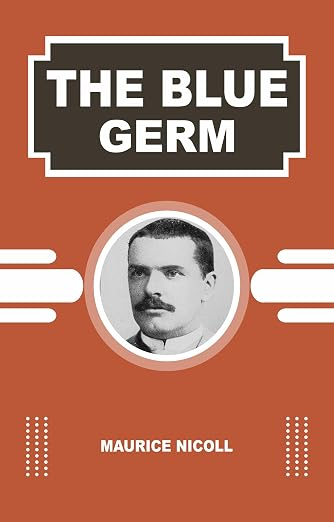
The Blue Germ
The Blue Germ by Maurice Nicoll is a gripping science fiction novel that delves into the realms of medical experimentation and its unforeseen consequences. Set in a world on the brink of technological and scientific breakthroughs; the story revolves around a mysterious blue germ; a virus with extraordinary properties; that begins to spread uncontrollably. As the germ wreaks havoc; it becomes apparent that its effects are not only physical but also psychological; leading to a profound examination of human nature and societal structures. The novel follows a diverse cast of characters; including scientists; doctors; and ordinary individuals; as they grapple with the crisis and its far-reaching implications. Nicoll’s narrative combines suspense with thought-provoking themes; exploring the ethical boundaries of scientific advancement and the unpredictable outcomes of tampering with nature. The Blue Germ offers a compelling mix of intrigue; action; and philosophical inquiry; making it a captivating read for fans of speculative fiction and those interested in the intersection of science and ethics.