
Mackenzie Boucher | April 28, 2023 (dhsspectrum.com)
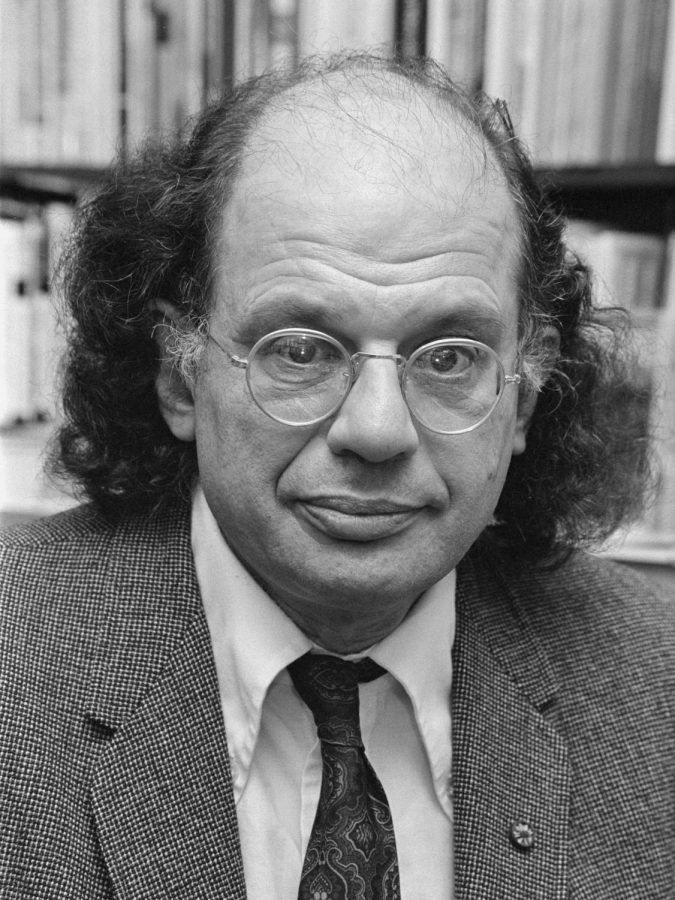
Allen Ginsberg
For a “Brooklyn Baby” (1) by nature, with a soft spot for jazz, adoration for “Coney Island Baby” by Lou Reed, and the chronic subliminal fantasy of the life of a beat poet, the formulaic nature of modern convenience has made the flow of consciousness, first thought best-thought theory of the Beat Generation, an impossible dream. Social Media has not only streamlined creativity, dictating what books are read by the masses and which are left collecting dust but has made everything permanent. Whereas just 20 years ago, you had to go to a concert or live event to view it (exceptions of course being shows like SNL, which are live broadcasted) now you can find a video of almost any concert, and immortalized posts of perfected final runs of choreography, and cropped speeches notarizing only the best and worst 15-30 seconds. Songs were allowed to have slow build-ups, to bury the lead. Now most songs start in medias res, there’s no need for songs to be more than 2:00 minutes long, as long as you have a golden 15 seconds, clear chorus, simplistic message, and can prolong that same tune. With little variation for a minute and a half to two minutes, you have a Billboard Hot 100. Songs are no longer spontaneous, psychedelic, or subliminal, but rather calculated and manufactured carefully and precisely, to say the least, Bob Dylan would not do well in the 21st century. Whether or not this is a good or a bad thing, is a personal prerogative, depending on if you subscribe to the idea of musical fate or formula, world-making or songwriting, authentic rough cuts or lo-fi bops.
This social media frame of mind undoubtedly affects creativity, even latently. One has a thesaurus and encyclopedia on their person at almost all times, as opposed to writing generations before the 2000s, new writers have the crème de la crème of vocabulary, with minimal understanding. Switching out synonyms and phrases until the final product is only a vague maximalist version of the original, that is conventionally pleasing but creatively unstimulating.
“
By all accounts, Beat Poetry was nonconformist back in the 50s and 60s when it reached its peak, but now it would not only be nonconformist, but nearly impossible to reintroduce to a new generation.
By all accounts, Beat Poetry was nonconformist back in the 50s and 60s when it reached its peak, but now it would not only be nonconformist, but nearly impossible to reintroduce to a new generation. In San Francisco, Los Angeles, and most notably New York, disillusioned, surreal, spiritual, and high on hallucinogens, Beat Poets were the face of the counterculture. They weren’t concerned with length or rhyme scheme, they welcomed controversy, having affairs with anarchism, and the unfortunate truths of America that would trigger widespread MAGA protests if put into the context of the modern world. Heavily inspired by the syncopated stream of consciousness jazz and challenging mainstream ideologies and trends, Beat Poets took to dive bars, bookstores, and just about anywhere eclectic that wasn’t outright hostile to the movement. With a desire for higher consciousness, and freedom from sexual chastity, the Beat Poets created poems with topics and nuances that even now are marvels of what the human consciousness can create when unconscious desires are tapped into. But with Buddhist beliefs that challenged Christian nationalism, combined with their anti-mainstream, blatant mimicry of the post-WWII message, “war is over and America’s the champion” propaganda, many viewed the Beat Poets as a heretic menace and national threat. In Allen Ginsberg’s case, his publisher was arrested for publishing his 112-line poem “Howl,” a poem that is both an introspective of personal experience, and retrospective of adversity in the U.S, on account of obscenity. Lines like, “Moloch! Solitude! Filth! Ugliness! Ashcans and unobtainable dollars! Children screaming under the stairways! Boys sobbing in armies! Old men weeping in the parks!” were seen as damaging to the image of Great America, others were sexually obscene and violent in the depiction of the illusion America that often pollutes its citizens with materialistic values driven by sex, drugs, power, and money. Not dissimilar to modern book-banning efforts in conservative states, and even liberal states, Beat Poetry was under the threat of censorship until its eventual end in the 60s.
“Walking Through Roxbury,” by Jack Kerouac, delves into the effects of this materialism. These pieces were written before the major economic globalization seen decades later, when outsourcing became increasingly more common, and three day delivery, press of a button consumerism expedited the modern buyer experience.“So God bless those trash trucks,” Kerouac says, for hiding the flaws of society, a sentiment that even now is striking, that trash doesn’t dematerialize in the bin, that it not only is a profession, but runs the country, a sentiment which the collective conscious often suppresses, because not only is it depressing, it’s not aesthetically pleasing to be reminded that our waste will leave far more of a impact on society than ourselves.
Today would be by many historical markers a tantamount time as the 50s for the second wave Beat Generation. Even as a counterculture movement, most of the famous beat poets are white men due to the period, a second wave would introduce a new generation of diverse beat poets, that could speak to political turmoil, and the disillusionment of the dream of equality as we reach almost 60 years since The Civil Rights Act of 1964. Like the Beat Poets then, we find ourselves in a violent era of war and gun violence issues that are largely at a political stalemate, which fosters a sense of progressive hopelessness and general mistrust in the political system. The counterculture movement of the Beat Generation was replaced by rock and second-wave feminism, but now music streaming services have made music from the generation easily accessible, whereas at the time of its demise before the internet when a movement ended, it was hard to find pieces to restart it. It was also further destabilized by Nixon’s War on Drugs, but today we have more hallucinogens researched and legal than ever, and modern pop stars openly discuss using them in their creative process, yet the kind of poetry and writing associated with hallucinogens in the Beat Generation is yet to return. All this combined would make now the perfect time for a Beat Generation that could surpass the original in diversity, and political issues, but there are several reasons we will never see this golden age again.
“
The rise of auto-correct has removed even the basic right of spelling things wrong and using unconventional grammar in an age when people chiefly use technology to write, making all rough drafts softer.
The rise of auto-correct has removed even the basic right of spelling things wrong and using unconventional grammar in an age when people chiefly use technology to write, making all rough drafts softer. When writing poetry online, the blue line of mistakes riddles the piece, claiming this and phrase and that phrase is wrong, discouraging writing for a beat, a sound, an ambiance, or spontaneity if it’s conventionally incorrect. This speaks to a larger trend of individuals carefully curating everything they put out. Accounts, and messages, all are held to an aesthetic standard, a narrative. Beat Poetry benefited from spontaneity, the idea that you had to be at a place to experience the poetry, but now places that ban phones are not the types of business Beat Poetry thrived on, rather The Masters and medical examination rooms are among the few places where recording is prohibited by civilians, not ideal counterculture scenes. Conventional literary courses also neglect to teach Beat Poetry at all, and most of what the average person knows may be from the U.S. History class and pop culture references, which don’t exactly paint Beat Poets as political and literary minds, but rather pretentious, cigarette smoking, turtle-neck wearing dissociative hippies.
To be a modern beat poet would mean rejecting social media, reverting to pen-to-pad writing, and unlearning the instinct to make every line perfect, quotable, and indisputable, and instead write to spark emotion, and use raw emotion to write. To a greater extent, the Beat movement is needed now more than ever, we need to see the revitalization of pure unbridled art, that is unafraid of political push-back and societal scapegoating, to spark change and inspiration. Not only is AI correcting how we write, but in the future, it may be able to fully mimic it, but AI will never achieve distilling the human subconscious that makes Beat Poetry and other art worth creating. Beat Poetry is the antithesis of technology globalization and that is both its strength and weakness. Whether or not this could ever be achieved is unlikely, but living it on an individual level may be the solitary self-preserving act to avoid creative conformity, and living by the first thought, best thought rule, is often the only way to write about difficult topics whose message is often lost in embellishment.
Notes:
- Track on the excellent album UltraViolence by Lana Del Rey, which is heavily influenced by Beat Poetry. Features songs that are complete first drafts, and the West Coast music video, which is inspired by Chet Baker’s “Let’s Get Lost.” The song itself romanticizes Lou Reed, jazz, beat poetry, hallucinogens, and New York in the 70s.
(Contributed by Gwyllm Llwydd)
