
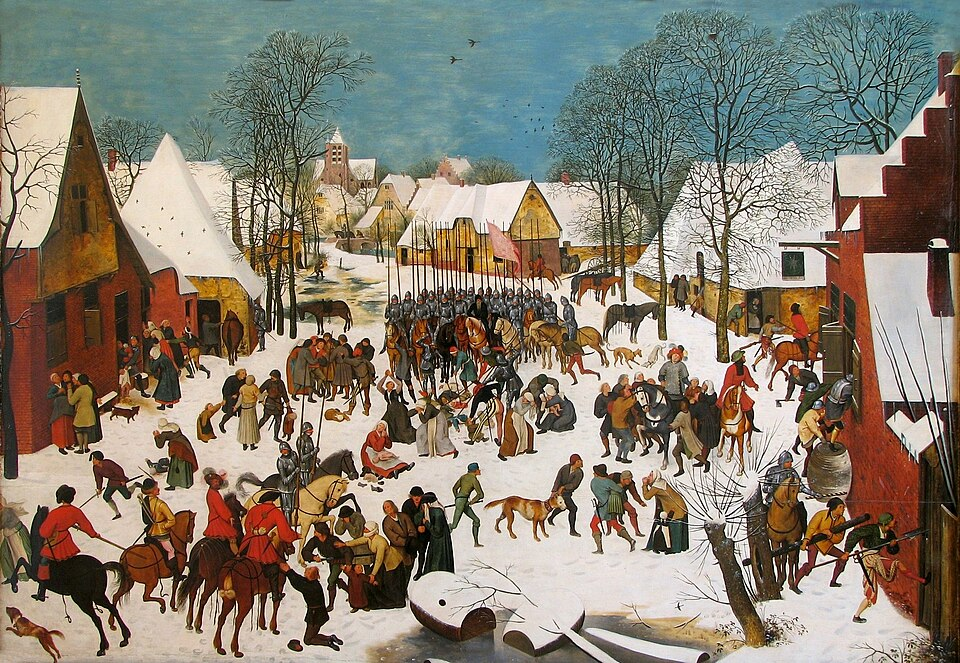
The Massacre of the Innocents
1586-1590 Art: Pieter Brueghel the Younger
(After Pieter Brueghel the Elder)
- Google AI Overview
The Massacre of the Innocents is a biblical event from the Gospel of Matthew where King Herod the Great, fearing the newborn Jesus as a rival king, ordered the execution of all male infants under two years old in Bethlehem; it’s a significant theme in Christian art, often depicting brutal violence, symbolizing tyranny and innocent suffering, with Jesus saved by fleeing to Egypt.
The Biblical Story
- Source: The story appears in Matthew 2:16-18.
- Context: Magi (wise men) visited Herod, reporting the birth of a new “King of the Jews” in Bethlehem.
- Herod’s Decree: Fearing for his throne, the paranoid King Herod ordered his soldiers to kill all male children in Bethlehem and its surrounding areas aged two and under.
- Jesus’s Escape: An angel warned Joseph, and Jesus’s family fled to Egypt, thus escaping the massacre.
Significance & Commemoration
- Christianity: The event commemorates the first martyrs (the “Holy Innocents”) and is observed in many Christian traditions (Catholic, Lutheran, Anglican) on December 28th, as the fourth day of Christmastide.
- Symbolism: It represents the struggle against evil, the brutality of tyrannical power, and the vulnerability of innocence.
Artistic Depictions
- Popular Subject: The Massacre of the Innocents has inspired countless artworks, notably by artists like Pieter Bruegel the Elder, Peter Paul Rubens, and Nicolas Poussin.
- Variations: Artists often portrayed the scene with intense emotion, sometimes setting it in contemporary times or places (like Bruegel’s snowy Netherlandish village) to comment on current atrocities.