Amrit Sandhu Jun 29, 2025 Inspired Evolution Podcast Steve Judd delivers a powerful and urgent call to humanity, asserting that the next 36 months will shape the next century. Drawing on decades of astrological expertise, he explores the Saturn-Neptune conjunction, Pluto’s entry into Aquarius, and the unseen planetary forces driving humanity toward a pivotal evolutionary threshold. With humor, depth, and clarity, he critiques modern systems of power, advocates for conscious transformation, and promotes astrology as a tool for radical self-understanding. Judd discusses exponential technological change, collapsing old paradigms, post-national communities, and the convergence of science, myth, and spirit. He paints a bold vision of a new multidimensional human consciousness rooted in compassion, intuition, and planetary responsibility. This is not just astrology, it’s a cosmic survival manual for a species on the brink of either awakening or collapse.
Ecological Awareness and the Paranormal with Jack Hunter
New Thinking Jul 5, 2025 Jack Hunter, PhD, is currently a Visiting Lecturer in the Department of Theology and Religious Studies at the University of Chester in the UK. He is author of Engaging the Anomalous, and is editor of a new anthology titled Greening the Paranormal: Exploring the Ecology of Extraordinary Experience. He is also coeditor, with David Luke, of Talking With The Spirits: Ethnographies From Between The Worlds. He is also founder of the journal, Paranthropology. In this interview, rebooted from 2019, he proposes that ecology and parapsychology have much in common — and that the obstacles facing both fields are similar in many ways. He notes that many ecological activists report having had both paranormal and religious conversion types of experiences. He suggests that the complex relationships among non-human life forms uncovered in ecology provide a model for understanding the wide variety of paranormal phenomena. He also maintains that were are learning many surprising things about how plants communicate, suggesting a hidden intelligence and, perhaps, even consciousness. New Thinking Allowed host, Jeffrey Mishlove, PhD, is author of The Roots of Consciousness, Psi Development Systems, and The PK Man. Between 1986 and 2002 he hosted and co-produced the original Thinking Allowed public television series. He is the recipient of the only doctoral diploma in “parapsychology” ever awarded by an accredited university (University of California, Berkeley, 1980). He is also the Grand Prize winner of the 2021 Bigelow Institute essay competition regarding the best evidence for survival of human consciousness after permanent bodily death. He currently serves as Co-Director of Parapsychology Education at the California Institute for Human Science. (Recorded on September 22, 2019)
Ravi Ravindra on evangelism
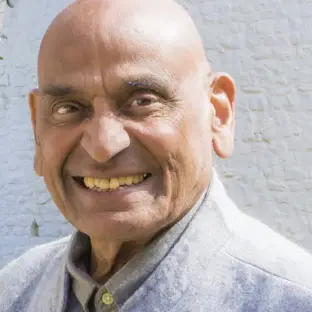
“A need for approval lies behind all efforts of evangelism. If someone else can be convinced, that will show us that we are on the right path. The attempt to convince someone of anything is a mark of insecurity.”
~ Ravi Ravindra
RAVI RAVINDRA, PhD, is an international speaker and the author of books on religion, science, and spirituality. A Canadian of Indian birth, he is Professor Emeritus at Dalhousie University in Halifax, where he served for many years as a professor in comparative religion, philosophy, and physics. … Google Books
Born: 1939 (age 86 years), India
Quakers and the penal system
Google AI Overview
While not directly creating the entire penal system, Quakers significantly influenced its early development in the United States, particularly with the concept of solitary confinement as a means of rehabilitation. They emphasized reforming criminals rather than just punishing them, leading to the establishment of the first penitentiary in Philadelphia, which utilized solitary confinement.
Here’s a more detailed explanation:
- Early Quaker Influence:Quakers, known for their pacifist beliefs, were among the first to advocate for prison reform in the United States.
- Walnut Street Jail:The Philadelphia Society for Alleviating the Miseries of Public Prisons, largely composed of Quakers, was instrumental in transforming the Walnut Street Jail in Philadelphia into a place where prisoners were housed in solitary confinement.
- Eastern State Penitentiary:In 1829, the Eastern State Penitentiary, also in Philadelphia, was built based on the Quaker-inspired idea of solitary confinement as a way to promote penitence and rehabilitation.
- Reformation over Retribution:Quakers believed that solitary confinement, while harsh, could lead to introspection and repentance, ultimately reforming criminals rather than just punishing them.
- Impact:While the Eastern State Penitentiary’s solitary confinement model eventually faced criticism, it significantly influenced prison design and philosophy in the US and abroad, establishing the “penitentiary” as a place of reform.
Book: “Christian Astrology”
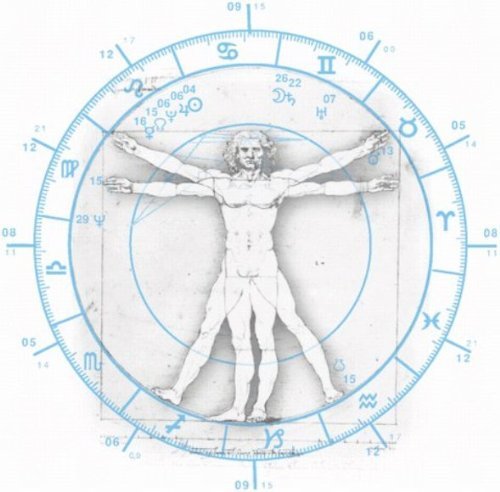
Christian Astrology
William Lilly
William Lilly (1 May (O.S.)/11 May (N.S.), 1602 – 9 June 1681), was a famed English astrologer during his time. Lilly was particularly adept at interpreting the astrological charts drawn up for horary questions, as this was his speciality.
Lilly caused much controversy in 1652 for allegedly predicting the Great Fire of London some 14 years before it happened. For this reason many people believed that he might have started the fire, but there is no evidence to support these claims. He was tried for the offence in Parliament but was found to be innocent.
Lilly’s most comprehensive book was published in 1647 and was entitled Christian Astrology. It is so large that it came in three separate volumes in modern times, and it remains popular even today and has never gone totally out-of-print. It is considered one of the classic texts for the study of traditional astrology from the Middle Ages, in particular horary astrology, which is mainly concerned with predicting future events or investigating unknown elements of current affairs, based on an astrological chart cast for the time a particular question is asked of the astrologer. Lilly studied thousands of horary charts, most of the time successfully giving correct answers for a wide range of questions from the location of missing fishes to the outcome of battles.
(Goodreads.com)
After 249 years, where are we with the ‘life, liberty and pursuit of happiness’ thing?
Not what I was hoping for this year.

By Jack Ohman
July 4, 2025 (jackohman.substack.com and SFChronicle.com))
Jack Ohman’s You Betcha! is a reader-supported publication. To receive new posts and support my work, consider becoming a free or paid subscriber.

The preamble to the Declaration of Independence is something most Americans had to memorize in grade school. This is the first sentence:
We hold these truths to be self-evident, that all men are created equal, that they are endowed by their Creator with certain unalienable Rights, that among these are Life, Liberty and the pursuit of Happiness.
Let’s see where we are with Sentence One, on this July 4, the 249th anniversary of the founding of the United States.
Over the course of those 249 years this country has bumped along through a Civil War, two world wars, a great depression, several recessions and multiple struggles for civil rights.
There were also huge, undeniable triumphs.
We sent human beings to the moon, and dozens of spacecraft that explored the solar system.
We built grand global alliances that defeated fascism — and maintained them for 80 years.
We came close to mending many of the wounds caused by the Civil War through the 1964 Civil Rights Act and the 1965 Voting Rights Act. We made remarkable economic and social progress over decades of slow but steady effort.
The preamble notes that “all men are created equal”.
Tell that to any given oppressed group in the United States now. Are you trans? You’re not better off than you were just a year ago. You can’t even serve your country now, thanks to President Donald Trump, and his Secretary of Defense Pete Hegseth.
Trump and friends have made sure that any group that doesn’t happen to be white is excluded from our national story. No DEI. History isn’t being rewritten, it’s being erased.
Is the concept of liberty stronger today?
Not seeing a lot of liberty, particularly if you’re an individual seeking asylum in this country. No, you’re looking at a Supreme Court that has, with a small asterisk, put birthright citizenship itself at risk.
If the Trump administration so determines, you can be swept off the street by masked, unidentifiable federal agents, and, if they get their way, the U.S. military itself. Then you could be offshored to some detention facility in El Salvador or South Sudan.
If you disagree with the administration, or even ask hard questions, you can be publicly humiliated by your president of the United States on social media. Sometimes he uses language that is implicitly violent, igniting the craziest of his followers to kill fellow Americans in the middle of the night.
In 2019, Trump said “I have the support of the police, the support of the military, the support of the Bikers for Trump—I have the tough people, but they don’t play it tough until they go to a certain point, and then it would be very bad, very bad.”
It’s difficult not to see this as inflammatory rhetoric.
The president himself is at liberty to sell off the reputation of the United States to the highest bidder, using his own name as a brand to sell junk products, like watches, basketball shoes and even cologne. There’s even an online Trump store.
Is this country truly fulfilling its promise of the pursuit of happiness?
Well, you are at liberty to pursue Trump’s happiness. We already know what makes him happy: constant adulation, junk food and idiotic external stimulation. His bad childhood is being passed on to us.
Your happiness, as well as your physical well-being, is secondary.
The U.S. Senate just passed a piece of legislation that will cut funding for rural hospitals, nursing homes, and put you back to work in order to get Medicaid.
It will add $3.3 trillion dollars of debt and further enrich the 400 wealthiest families in the country.
At least Sen. Lisa Murkowski will get those Alaskan fishing trawlers covered, though.
Trump called the bill “beautiful.”
It is, if you’re a billionaire. If you’re not, beauty is in the eye of the beholder.
The last sentence of the preamble from the Declaration of Independence reads as follows:
But when a long train of abuses and usurpations, pursuing invariably the same Object evinces a design to reduce them under absolute Despotism, it is their right, it is their duty, to throw off such Government, and to provide new Guards for their future security.
It’s rather clear that we’re riding a long train of abuses and usurpations now. Emoluments? Thpppt. Fourteenth Amendment? Meh. Systematic racism? Who cares? Intimidation of academic institutions and law firms? Whatevs. Random destructions of personal reputations? Yup. Science denial? The new normal is abnormal.
Is this “absolute despotism”?
I don’t wish to rain on your fireworks supply, but we are perilously close to that.
As we approach July 4, 2026, the 250th anniversary of the Declaration of Independence, we will presumably have an election just a few months later.
Don’t think about egg prices this time.
Think about what America should be all about: life, liberty and the pursuit of happiness.
That’s a first sentence that we should continue to celebrate.
Book: “The Rise & Fall of the Great Powers”
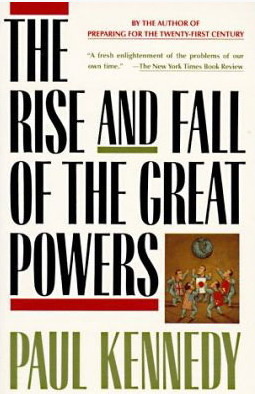
The Rise & Fall of the Great Powers
Paul Kennedy
This study describes how the past 500 years shows that nations which became great powers had to decline as their growth rate slowed and their spending on defence continued to increase and explains how this can be eased or worsened by clever or short-sighted policy decisions. The final chapter looks at the current dilemna of the USA, the USSR, the EEC, Japan and China, and peers. Paul Kennedy also wrote “Strategy and Diplomacy, 1870-1945” and “The Realities Behind Diplomacy, 1865-1980”
About the author
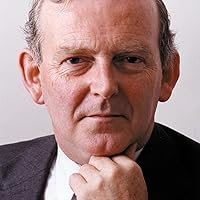
Paul Kennedy
Paul Michael Kennedy is a British historian specialising in the history of international relations, economic power and grand strategy. He has published prominent books on the history of British foreign policy and Great Power struggles.
(Goodreads.com)
Winner Didn’t Even Know It Was Pie-Eating Contest

Featured Books from New Thinking Allowed
The book ranges across the origins of ecology, the nature of spirituality and religion, the evidence for non-human intelligence, ecopsychology and the ecological self. It examines animism, parapsychology and sacred geography.

This book is the first scholarly study of the life and work of Joséphin Péladan that succeeds in placing it in the context of the history of Western Esotericism while also providing a clear roadmap to the entirety of Péladan’s initiatory teachings and philosophy of the esoteric power of art.

Through a careful study of Sri Ramakrishna’s recorded oral teachings in the original Bengali, Ayon Maharaj (also known as Swami Medhananda) reconstructs his philosophical positions and analyzes them from a cross-cultural perspective. Sri Ramakrishna’s spiritual journey culminated in the exalted state of “vijñana,” his term for the “intimate knowledge” of God as the Infinite Reality that is both personal and impersonal, with and without form, immanent in the universe and beyond it.

This book provides a timely synthesis and discussion of recent developments in mindfulness research and practice within mental health and addiction domains. The book also discusses other Buddhist-derived interventions – such as loving-kindness meditation and compassion meditation – that are gaining momentum in clinical settings.

Jeffrey Mishlove gives skeptics room to voice their most sophisticated criticism of parapsychology research and allows researchers their most articulate responses. The reader will find a clear and unbiased presentation of a wide variety of phenomena long relegated to the realm of the “supernatural,” and of new theories now unifying these phenomena with leading physicists’ understandings of the universe.