“The mind is its own place, and in it self can make a Heav’n of Hell, a Hell of Heav’n,” wrote Milton in Paradise Lost. Because the mind (which may in the end be a full-body phenomenon) is the cup that lifts the world to our lips to be tasted — a taste we call reality — it is difficult to examine the cup itself, to observe the inner workings of the mind as it sips questions and turns them over with the tongue of thought to form ideas, to render a world. We can’t will it, because the will is a handmaiden of the mind; we can only surrender to it, and never willingly, when something unexpected — a grave illness, a great loss, a great love — vanquishes the tranquilizing effect of habit, jolts us awake from the trance of near-living, and makes us see reality afresh, purified and magnified.
No one, to my mind, has articulated those vivifying interruptions more powerfully — or more delightfully — than William Henry Hudson (August 4, 1841–August 18, 1922).
Born in Argentina as Guillermo Enrique Hudson, he lost his mother when he was only a teenager. Darwin had just published On the Origin of Species. The disconsolate boy devoured it immediately — it must have been a salve, this beautiful and brutal model of nature in which the survival of the species is perfected by the deaths of individuals. Like the young John James Audubon, who turned to birds in the wake of losing his own mother, Hudson — who would eventually become the Audubon of the pampas — grew passionately interested in ornithology. He resented the way science was done, killing living birds to make “skins” for study; he resented the way civilization was done, destroying wildlife habitats for human needs. He felt the urgency and ecstasy of a calling — to enchant the world with the wondrous birds of Patagonia he had spent his youth observing, taking meticulous notes about their morphology, habits, and migration patterns, thinking constantly about what it is like to be a creature so profoundly other.
William Henry Hudson
In his early thirties, Hudson sailed for England, eager to share what he knew of a feathered universe entirely alien to the European mind.
He reached out to John Gould — the Old World’s preeminent ornithologist, a disaffected taxidermist who had risen to fame largely thanks to his wife’s extraordinary ornithological art — and received a curt rejection.
Unable to find work, he folded his gaunt six-foot frame into a giant origami bird to sleep on the benches of Hyde Park.
It took him two years to get a paying job as a writer — for a women’s magazine, under the pseudonym Maud Merryweather. He wrote the way he felt the living world — passionately, rigorously, his tender curiosity shimmering with awe.
Doors began to crack open and he was soon writing for other small journals. For fifteen years, he trojan-horsed birds into popular interest stories, until he finally published his first book of ornithology, about the birds of Argentina. He was forty-seven.
Many-colored knight by Henrik Grønvold from Birds of La Plata by William Henry Hudson, 1920. (Available as a print and a greeting card.)
Then the floodgates opened and out came pouring some of the most breathtaking nature writing our civilization has produced. Hemingway cited Hudson in his novels. Joseph Conrad marveled that his prose was “like the grass that the good God made to grow and when it was there you could not tell how it came.” By the end of Hudson’s life, his collected works — dozens of ornithological books and natural history essays, novels and travelogues, written with a philosopher’s quickening of mind and poet’s sensitivity to the light of the world — amounted to twenty-four volumes.
Shortly after his death, he was honored with a bird sanctuary memorial in his name in Hyde Park, not far from the bench that had held his dreams as a homeless young writer.
What shaped Hudson’s gift for channeling the beating heart of nature, for rendering the living world in such exultant and exacting detail, was the ruin of his best laid plans — an accident that befell him in Patagonia just before he left Argentina for good. Pulsating through it is the reminder that every loss of control is an invitation to surrender, and it is only in surrender that we break out of our stories to contact a deeper truth — about ourselves, about the world, about the interchange between the two that we call reality.
White-banded mockingbird by Henrik Grønvold from Birds of La Plata by William Henry Hudson, 1920. (Available as a print and a greeting card.)
Not long after turning thirty, determined to make a name for himself as an ornithologist, Hudson set out on a yearlong observing expedition from the pampas to Tierra del Fuego, across the austere scrub and cold canyons of the Patagonian desert. Recounting the experience a lifetime later in his altogether magnificent 1893 book Idle Days in Patagonia (public domain), he reflects on the spirit in which he entered upon the adventure:
To my mind there is nothing in life so delightful as that feeling of relief, of escape, and absolute freedom which one experiences in a vast solitude, where man has perhaps never been, and has, at any rate, left no trace of his existence.
But things did not go as planned from the outset. The southbound steamer he boarded in Buenos Aires ran aground in the middle of the second night. Hudson awoke to find himself beached on the Patagonian coast. Too restless to wait for rescue, he decided to trek inland in search of human habitation, which the octogenarian captain had assured him was near.
After two days of walking, without provisions or a map, he came upon a gasp of a vista — the Rio Negro river snaking across the desert, “broader than the Thames at Westminster, and extending away on either hand until it melted and was lost in the blue horizon, its low shores clothed in all the glory of groves and fruit orchards and vineyards and fields of ripening maize.”
He eventually made it to a farmhouse laden with fruit that “glowed like burning coals in the deep green foliage.” After replenishing his energies, he set out on the first leg of the expedition proper — an eighty-mile ride along the river — accompanied by a young Englishman.
Patagonia’s Upsala Glacier seen from the International Space Station. (Photograph: NASA)
They stopped midway at a “rude little cabin,” in “a dreary and desolate spot, with a few old gaunt and half-dead red willows for only trees.” One hot afternoon, bored and birdless, Hudson picked up his companion’s revolver to examine it. It went off immediately, sending a bullet through his left knee. Blood came streaming, more blood than he had ever seen.
The young man, afraid that Hudson would die without medical care, decided to ride out in search of rescue. He left Hudson a jug of water, locked him in the windowless cabin “to prevent the intrusion of unwelcome prowlers,” and promised to return before nightfall. He didn’t. When darkness came, it was total — Hudson had no candle. Shivering with pain under his blood-soaked poncho, finding that he could “neither doze nor think,” all he could do was listen. And yet he did think, a lovely thought about the importance of hearing to unsighted people and animals dwelling in the dark — one of those sudden flashes of empathy for otherness that our own suffering can spark.
Suddenly he registered a strange sound, as if someone were dragging a rope across the clay floor. He lit one of his few matches and looked around, but saw nothing, and so he passed the “black anxious hours” with his mind’s ear pressed to the world outside the cabin, until he could hear the emissaries of dawn — the scissor-tail tyrant birds twittering in the willow, the red-billed finches singing in the reeds, a song that sounded like crying.
Black-headed siskin by Henrik Grønvold from Birds of La Plata by William Henry Hudson, 1920. (Available as a print and a greeting card.)
Red-faced rock martin by Henrik Grønvold from Birds of La Plata by William Henry Hudson, 1920. (Available as a print and a greeting card.)
But none was more assuring, more life-affirming than “the dreamy, softly rising and falling, throaty warblings of the white-rumped swallow”:
A loved and beautiful bird is this, that utters his early song circling round and round in the dusky air, when the stars begin to pale; and his song, perhaps, seems sweeter than all others, because it corresponds in time to that rise in the temperature and swifter flow of the blood — the inward resurrection experienced on each morning of our individual life.
As day at last began to break, an enormous venomous snake slithered out from under his poncho — it had slept beside him all night.
The young Englishman returned in the morning with an oxcart that took Hudson, over two delirious days along a hot dusty road, to the headquarters of the South American Missionary Society. There he remained bedridden for months, his dreams crushed, his expedition foreclosed before it had begun. With no birds to observe, Hudson began examining the very instrument of observation.
A generation before Virginia Woolf wrote so movingly about illness as a portal to self-understanding, Hudson found in his incapacitation, in the devastation of his plans, what we always find when we are forced to halt our ordinary methods of avoiding ourselves — an unbidden opening into the nature of the mind, into that glowing space between the mechanics of cognition and the mystery of consciousness, articulated in the language of his heart: birds.
He writes:
Lying helpless on my back through the long sultry mid-summer days, with the white-washed walls of my room for landscape and horizon, and a score or two of buzzing house-flies, perpetually engaged in their intricate airy dance, for only company, I was forced to think on a great variety of subjects, and to occupy my mind with other problems than that of migration. These other problems, too, were in many ways like the flies that shared my apartment, and yet always remained strangers to me, as I to them, since between their minds and mine a great gulf was fixed. Small unpainful riddles of the earth; flitting, sylph-like things, that began life as abstractions, and developed, like imago from maggot, into entities: I always flitted among them, as they performed their mazy dance, whirling in circles, falling and rising, poised motionless, then suddenly cannoning against me for an instant, mocking my power to grasp them, and darting off again at a tangent. Baffled I would drop out of the game, like a tired fly that goes back to his perch, but like the resting, restive fly I would soon turn towards them again; perhaps to see them all wheeling in a closer order, describing new fantastic figures, with swifter motions, their forms turned to thin black lines, crossing and recrossing in every direction, as if they had all combined to write a series of strange characters in the air, all forming a strange sentence — the secret of secrets! Happily for the progress of knowledge only a very few of these fascinating elusive insects of the brain can appear before us at the same time: as a rule we fix our attention on a single individual, like a falcon amid a flight of pigeons or a countless army of small field finches; of a dragon-fly in the thick of a cloud of mosquitoes, or infinitesimal sand-flies. Hawk and dragon-fly would starve if they tried to capture, or even regarded, more than one at a time.
Hudson sometimes hobbled out of his room with a stick to talk to people, but although he listened earnestly “to the story of their small un-avian affairs,” he had never found it easy to connect with humans:
I could always quit them without regret to lie on the green sward, to gaze up into the trees or the blue sky, and speculate on all imaginable things.
Red oven-bird by Henrik Grønvold from Birds of La Plata by William Henry Hudson, 1920. (Available as a print and a greeting card.)
With the distance of a lifetime, he would look back on the experience as a microcosm of life itself, in which it never the execution of our plans but their interruption, those rude demolitions of the maquette we mistake for reality, that leaves us most profoundly transformed, deepened, magnified:
Our waking life is sometimes like a dream, which proceeds logically enough until the stimulus of some new sensation, from without or within, throws it into temporary confusion, or suspends its action; after which it goes on again, but with fresh characters, passions, and motives, and a changed argument.
“One must be a seer, make oneself a seer,” Arthur Rimbaud wrote, “by a long, gigantic and rational derangement of all the senses.” As more and more of our senses are being amputated by the blade of our image-centric culture, reducing the vast and delicate sensorium of human experience — moss on a rock, a salty summer evening at the ocean’s edge, a lover’s kiss — to a purely visual representation on a two-dimensional screen, it matters all the more that we train our vision to see beyond the veneer of the visible.
It is hardly surprising, given the co-evolution of vision and consciousness, that how we look at the world — what we choose to bring into consciousness — shapes what we see, which in turn shapes the world we make in the image of our vision. This is why we call visionaries the people who see sides and paths others do not, who catch in the prism of their consciousness the light of the world invisible to the rest and cast it back magnified, more luminous, iridescent with possibility.
The pioneering modernist poet H.D. (September 10, 1886–September 27, 1961) was such a person, and one who saw deeply into the nature of the prism itself, who located the seer’s vision not in the mind but in what she called the “over-mind.”
H.D.
Born in Pennsylvania as Hilda Doolittle, the daughter of an astronomer who liked to say that “his one girl was worth all his five boys put together,” she grew up watching her father magnify stars through his telescope and her grandfather — a marine biologist — magnify cells under his microscope. Here were layers of reality, bright and dazzling, beyond what was visible to the eye, lavishing with wonder those who have the right instruments. Such an experience at so formative an age can’t but reveal the mind itself as an instrument for gaging reality, its lens polished by our experience, its focus the making and unmaking of our lives, and all of it, all of it, not above the body but of it. H.D. would devote her life to undoing the damage Descartes has done to our cultural mythos, insisting instead on the synthesis of body and mind, of spirituality and sexuality, of love and reason.
In 1919, catatonic with grief in the aftermath of a miscarriage and a world war that had slain both her father and her brother, having barely survived the Spanish Flu herself, H.D. took refuge on the Scilly Islands on her way to Greece with her newborn baby and the woman who would become her partner for the remainder of her life — the novelist, poet, and magazine editor Bryher. There amid the lapping blue waves and lush subtropical gardens of a natural world so breathtaking it seems almost supernatural, enveloped in her lover’s intellectual kinship and passionate devotion, she started coming back to life. And, as such resuscitations of élan vital tend to do, some inner veil lifted one day to leave her feeling a profound participancy in the streaming life of the universe. At the center of it was a revelation about the nature of vision, which H.D. recorded in a series of shamanic diary fragments published long after her death as Notes on Thought and Vision (public library).
She identifies three “states or manifestations of life” — the body, the mind, and the “over-mind,” bearing echoes of Emerson’s notion of the “Oversoul,” that faculty for contacting what the transcendentalists’ hero Goethe called “the All.” The highest achievement of human development, she observes, is “equilibrium, balance, growth of the three at once” — a brain without embodiment is “a disease comparable to cancerous growth or tumor” (what a prophetic indictment of AI), a body without a mind is “an empty fibrous bundle of glands,” and an over-mind without the other two is madness. A healthy body, therefore, is not a conglomeration of certain parts, abilities, and attributes, but a harmonious integration with the mind, just as a healthy mind is not a checklist of cognitive capacities but a harmonious integration with the body, and out of these twin harmonies arises the vision of the over-mind.
Swimming in the cerulean womb of the world, she finds a metaphor — or a metaphor finds her — for the essence of the over-mind:
That over-mind seems a cap, like water, transparent, fluid yet with definite body, contained in a definite space. It is like a closed sea-plant, jellyfish, or anemone.
Into that over-mind, thoughts pass and are visible like fish swimming under clear water.
The over-mind is the superorganism of the psyche, pulsating with “super-feelings”:
These feelings extend out and about us; as the long, floating tentacles of the jellyfish reach out and about him. They are not of different material, extraneous, as the physical arms and legs are extraneous to the gray matter of the directing brain. The super-feelers are part of the super-mind, as the jellyfish feelers are the jellyfish itself, elongated in fine threads.
Vision is of two kinds — vision of the womb and vision of the brain. In vision of the brain, the region of consciousness is above and about the head; when the centre of consciousness shifts and the jellyfish is in the body… we have vision of the womb or love-vision.
The majority of dream and of ordinary vision is of the womb.
The brain and the womb are both centers of consciousness, equally important.
Lamenting that the creative culture of her time was already suffering from the debilitating brain bias that only metastasized in our own era, she shines an optimistic gleam into the future:
I believe there are artists coming in the next generation, some of whom will have the secret of using their over-minds.
But nothing feeds the over-mind more, nothing reveals it and anneals it more, than love. The world deepens and broadens and begins to shimmer when we are in love precisely because the experience embodies us and enminds us at the same time, touching the total person with its light. Surely drawing on her experience of falling in love with Bryher, which had come unbidden like a rainbow after a summer storm, H.D. considers how this happens:
We begin with sympathy of thought.
The minds of the two lovers merge, interact in sympathy of thought.
The brain, inflamed and excited by this interchange of ideas, takes on its character of over-mind, becomes… a jellyfish, placed over and about the brain.
The love-region is excited by the appearance or beauty of the loved one, its energy not dissipated in physical relation, takes on its character of mind, becomes this womb-brain or love-brain… a jellyfish in the body.
The love-brain and over-brain are both capable of thought. This thought is vision… The over-mind is like a lens of an opera-glass. When we are able to use this over-mind lens, the whole world of vision is open to us… The love-mind and the over-mind are two lenses. When these lenses are properly adjusted, focused, they bring the world of vision into consciousness. The two work separately, perceive separately, yet make one picture.
My sign-posts are not yours, but if I blaze my own trail, it may help to give you confidence and urge you to get out of the murky, dead, old, thousand-times explored old world, the dead world of overworked emotions and thoughts.
But the world of the great creative artists is never dead.
All it takes to recreate the old stale world, she insists, are just a few creative kindreds who entwine their vision:
Two or three people, with healthy bodies and the right sort of receiving brains, could turn the whole tide of human thought, could direct lightning flashes of electric power to slash across and destroy the world of dead, murky thought.
Two or three people gathered together in the name of truth, beauty, over-mind consciousness could bring the whole force of this power back into the world.
In a world where war seems to be a recurring reality, a new kind of warrior spirit is beginning to emerge. In my book The Warrior’s Journey Home: Healing Men, Healing the Planet, I quoted Chögyam Trungpa a Tibetan Buddhist master and scholar.
“Warriorship here,” said Trungpa, “does not refer to making war on others. Aggression is the source of our problems, not the solution.” He goes on to say, “Here the word ‘warrior’ is taken from the Tibetan pawo which literally means ‘one who is brave.’ Warriorship in this context is the tradition of human bravery, or the tradition of fearlessness. Warriorship is not being afraid of who you are.”
I first heard the words “compassionate” and “warrior” combined when I read the book Warrior Compassion: Unleashing the Healing Power of Men by Sean Harvey.
“When we combine the concepts of warrior and compassion, an energetic shift happens,” says Harvey. He goes on to say, “Compassion is most easily defined as the feeling or emotion when a person is moved by suffering or distress of another, and by the desire to relieve the suffering. Taking a step further, to be compassionate to others, we must begin by learning to become compassionate to ourselves.”
I recently had the pleasure of interviewing Sean for my podcast. You can see the full interview here.
“The warrior archetype represents strength, courage, and the relentless pursuit of justice and honor. It embodies discipline, resilience, and unwavering determination to protect and defend what is most valued.”
In their book, King, Warrior, Magician, Lover: Rediscovering the Archetypes of the Mature Masculine, Jungian analyst Robert Moore and mythologist Douglas Gillette describe both the mature as well as immature aspects of each archetype. Many people today blame Patriarchy, “toxic masculinity,” or sometimes men themselves. But Moore and Gillette have a different understanding.
“Patriarchy, in our view, is an attack on masculinity in its fullness as well as femininity in its fullness,” say Moore and Gillette. “Those caught up in the structures and dynamics of patriarchy seek to dominate not only women but men as well. Patriarchy is based on fear — the boy’s fear, the immature masculine fear — of women, to be sure, but also fear of men. Boys fear women. They also fear real men. Patriarchy expresses what we call Boy Psychology. It is not an expression of mature masculine potentials in their essence.”
From our board rooms to our bedrooms and even in the men we see exercising political power in our government, we can recognize the absence of mature masculinity and the presence of Boy Psychology.
The Boy Psychology Archetypes and Mature Masculinity of the Warrior
For each archetype Moore and Gillette describe two polar opposites. They describe Boy Psychology of the Warrior as TheGrandstander Bully and The Coward.
“The boy (or man) under the power of the Bully intends to impress others. His strategies are designed to proclaim his superiority and his right to dominate those around him. He claims center stage as his birthright. If ever his claims to special status are challenged, watch the ensuing rageful displays!”
It is not difficult to see examples of this kind of Boy Psychology.
In describing the archetypal Coward, they say:
“The boy (or man) possessed by The Coward, shows an extreme reluctance to stand up for himself in physical confrontations. He will usually run away from a fight, excusing himself by claiming that it is more ‘manly’ to walk away. He will easily acquiesce pressure from others and unable to feel heroic he will cave in.”
Moore and Gillete recognize the destructiveness of Boy Psychology and also the discomfort that many have in embracing the mature warrior archetype.
“We live in a time when people are generally uncomfortable with the Warrior form of masculine energy — and for some good reasons. Women especially are uncomfortable with it, because they have often been the most direct victims of it in its immature shadow form. Around the planet, warfare is our century has reached such monstrous and pervasive proportions that aggressive energy itself is looked upon with deep suspicion and fear.”
Yet, we need not fear the energy of the mature warrior. In his book, Warrior Compassion, Sean Harvey says,
“When we bring the warrior spirit to compassion, it becomes a courageous and loving energy that brings healing to the suffering in the world. I define warrior compassion as:
“The fierce healing power within that liberates you to courageously walk from a place of deeper consciousness, compassion, and connection in the world while expanding creativity, authenticity, intimacy, and a sense of community in the ways we live and carry out our mission.”
In describing the work Sean engages with in proving leadership and training he says,
“We address isolation, dismantle hate, bridge polarization, and humanize hyper-masculine systems, organizations, and communities. We build bridges that transform the world.”
What makes Sean’s work so powerful and effective is that he works both with individual men and with groups and organizations to create deep systemic change.
“Hyper-masculine systems often perpetuate cultures of fear, control, and exclusion,” Sean says, “but they can be reimagined as spaces of collaboration, inclusion, and shared humanity. At the Warrior Compassion Institute, we work with organizations in sectors such as military, law enforcement, government, and corporate environments to transform their cultures from the inside out. Our programs emphasize trauma-informed psychological safety, redefined power dynamics, and compassionate leadership to foster systems where everyone can thrive.”
In a world where many countries are led by authoritarian male leaders and many are influenced by their false promises, we need a new kind of mature masculine strength and power that Sean Harvey is helping to bring about. In her prescient and important book, Strongmen: Mussolini to the Present, historian Ruth Ben-Ghiat says,
“Ours is an age of authoritarian rulers: self-proclaimed saviors of the nation who evade accountability while robbing their people of truth, treasure, and the protections of democracy. They use masculinity as a symbol of strength and a political weapon. Taking what you want, and getting away with it, becomes proof of male authority. They use propaganda, corruption, and violence to stay in power.”
Sean Harvey offers a different vision for our future. You can learn more about Sean and his work by visiting his website: https://www.warriorcompassion.com/
There are times in life to create output, and other times to be inwardly preparing for whatever comes next. I’ve been on a kind of sabbatical over the last three months, not because I consciously set out to do that but because my body and spirit demanded it. I’ve needed to be quiet, and in case I hadn’t gotten the point I even contracted laryngitis. I appreciate my Substack community for support when my voice has been still as much as for when I’m writing or speaking.
Many of us are feel something changing within ourselves, as we’re subconsciously sensing that like snakes we need to shed an old skin. The times have changed and we need to change with them. The words of Eleanor Roosevelt that “These are not ordinary times” ring true today.
In order to respond adequately to the challenges of this moment, we need to break free of our ordinary routines. This doesn’t necessarily mean our behavioral routines, so much as our emotional and intellectual ones. The world will not change unless we do. This isn’t a time to cower…to play victim…to blame everything on others…to rely on someone else to do our thinking for us…or to disavow our responsibilities to other people, the planet, or our great grandchildren. It’s also not time to look the other way when to learn about something would probably mean to be confronted by painful truths.
The effort to repair what’s been broken and to create a better world begins within. It entails a profound internal gear shift from old ways to new, from giving ourselves permission to be shallow to demanding of ourselves that we plumb our own depths. American popular culture is not a conduit for depth, yet only there will we find the seeds with which to regenerate the world.
First, we need to cultivate quiet. The chatter of the world is cluttering our minds, and participating in it clutters it further. In the words of the Dalai Lama, “To save the world we must have a plan, but no plan will work unless we meditate.” Whether our practice of disciplined quiet is meditation, is not the issue. But what is the issue is whether we learn to be still within ourselves, to reflect, to deeply and carefully consider our words and actions. For that makes a tremendous difference in how we show up in the world. It’s the most powerful corrective when both our inner and outer worlds have gone off the rails. The problem is not just what people has done; it’s who we have been, that we would have even considered doing what we’ve done. The evolution of our personhood is the core requirement for bringing us out of the mess we find ourselves in now.
But we can’t just look inward. We can’t adequately respond to what’s going on unless we know what’s going on. Educating ourselves is a first principle of non-violence. Does that mean we should doom scroll all day? Of course not. You don’t need to see fifty videos about the same problem to recognize the pattern they reflect. With a lot of things today it’s wise to look, but not to dwell. If you stare for too long at videos of human brutality, for instance, your nervous system begins to crack under the weight of the horror. Particularly horror at the fact that it’s happening here. But if you don’t look at all, you’re not in transcendence; you’re in denial. These are very serious times and we must be very serious people. No more kid stuff. No more ditzy. No more playing small.
We have had for years such a shallow politics, focused on symptoms but not cause, short term fixes but not long term solutions. None of that will get us out of the mess that we’re in now. This truly is a time of the citizen activist – people coming up with different conversations than those imposed by political and media gatekeepers. I’m impressed by much of the content created on social media these days, with a particular bow to all the women who refuse to stay silent in the face of assaults on democratic and humanitarian values now perpetrated by this administration. But at a certain point we can’t just keep stirring the soup. We need to do more than that. We need to move the needle.
Many have compared today’s America to the fall of Rome, and it’s not an incorrect comparison. In some ways, it’s eerily almost too correct. Rome fell not only because of its own internal contradictions and compromises, but because it was invaded by barbarians. And we’ve been invaded by barbarians too.
The fact that modern barbarians wear business suits rather than trousers and tunics doesn’t make them any more civilized, because they are not. In the words of Mark Twain, “History Doesn’t Repeat Itself, but It Often Rhymes.” And it’s rhyming now. Goons disappearing innocent people off the streets, traumatizing and terrorizing whole groups of good people who have actually been following the law, is barbaric. And the people who are enabling this, creating the new American despotism behind it – they are barbarians too. Don’t let all that gilt fool you.
American democracy is essentially in a free fall, the traditions and even Constitutional principles that have guaranteed the basics of our liberty now smashed in some cases to smithereens. They were weakened first by our own complicity with accumulated compromises of our ethical and political values, both personally and politically. America, like ancient Rome, was already weakened before the barbarians ever got to the gates of the city. Then the gates opened way too easily. The barbarians had a very easy time destroying things once they got past.
Yet history does not have to repeat itself, as long as we learn the lessons inherent in the rhymes. This is not ancient Rome, but we can learn from its mistakes. Within each of us lies the key to our renewal, our moral redemption and democratic repair, because each of us can rethink what went wrong. There is a portal of possibility by which we can save our country, admittedly thin but filled with light. We were born for this hour. It is why we are here.
Gandhi said politics should be sacred. He did not mean dogmatic or doctrinal in any way. He meant coming from the depths of ourselves, from a place within us where there is a light that is not of this world. We need an anti-gravitational forcefield to break America’s free fall. That means thinking and acting in ways that are higher, more enlightened, more spiritually reverent and dedicated to love than the reptilian nature of traditional politics. Be alert for ways to participate in the creation of that forcefield, seeing every encounter and every circumstance as an opportunity to grow. Prepare yourself for your part in a historic overcoming, because that is what this is. Darkness exists, but Light pays no mind. Angels are the thoughts of God – of love, of justice, of faith in a Higher Power – and they will break the free fall if we allow them to work through us.
I remember a book of fairy tales that I read when I was a child. The hero had a Sword of Truth and a Shield of Virtue. Such is the need, that we take up ours.
Nicholas Confessore is an investigative reporter for The Times and a staff writer for the magazine. For this article, he reviewed thousands of pages of court documents and interviewed former Biden administration officials, lawyers at L.G.B.T.Q. advocacy groups and the A.C.L.U. and dozens of civil rights experts and current and former L.G.B.T.Q. activists.
June 19, 2025 9NYTimes.com)
One day last December, a clutch of dark-suited lawyers descended the steps of the Supreme Court to a hero’s welcome. The lawyers, from the American Civil Liberties Union, had that morning joined counterparts from the Biden administration in asking the court to block a Tennessee law that bars doctors from providing puberty blockers, cross-sex hormones and surgery to young people who feel that their bodies are the wrong sex. In the plaza outside the court, L.G.B.T.Q. advocacy groups had turned out hundreds of supporters, who hugged, cheered and waved rainbow and pink-and-blue flags. Club music filled the air, clashing against the country songs blasted by a smaller group of counterprotesters. Photographers roamed, capturing images and videos that would later populate the A.C.L.U.’s social media feeds.
Later, in a private briefing for the group’s top donors, an A.C.L.U. official declared victory. “We set out to deliver a clear message to the Supreme Court that law, science and the court of public opinion are absolutely on our side,” she said. “And I have to tell you: Boy did we demonstrate that yesterday.” Another A.C.L.U. executive, posting on Instagram, declared that “HISTORY WAS MADE, Y’ALL!!”— referring not to the case, exactly, but to a different milestone: Chase Strangio, an A.C.L.U. lawyer and burgeoning celebrity of the cultural left, had just become the first openly transgender lawyer to argue before the court. When Strangio himself addressed the crowd that day, the particulars of the case, known as United States v. Skrmetti, receded even further. What mattered more, he suggested, was that after generations at the margin of American life, transgender people had forced the court to reckon with their existence. “Regardless of the outcome in June, trans and nonbinary people have always been here,” Strangio said. “We are in it together. Our power only grows.”
Chase Strangio of the A.C.L.U. (second from right) became the first openly transgender lawyer to argue before the Supreme Court in United States v. Skrmetti in December.Credit…Kevin Dietsch/Getty Images
By most other measures, however, the movement for transgender rights was approaching its nadir. Weeks earlier, Donald J. Trump had swept to re-election, buoyed by tens of millions of dollars in attack ads asserting that his opponent, Kamala Harris, was for “they/them,” not “you.” Post-election polling showed that even most Democrats believed that doctors should not prescribe puberty blockers and hormones to minors — the treatments at the heart of the Skrmetti case. While Joe Biden framed transgender equality as “the civil rights issue of our time” and fought for a broad expansion of transgender rights, Trump set out to eradicate them.
Since taking office, he has sought to strip trans people of the right to choose the sex marker on their passports and bar them from the military, arguing that they inherently lack the integrity and moral fitness to serve — that their very identity is a dishonorable lie. He has threatened to withhold federal funding from health care providers that continue to offer blockers, cross-sex hormones or transition surgery to minors. “It is the policy of the United States to recognize two sexes, male and female,” one executive order asserted. “These sexes are not changeable and are grounded in fundamental and incontrovertible reality.”
On Wednesday, the Supreme Court delivered a new, crushing blow, upholding Tennessee’s ban in a 6-to-3 decision. In allowing Tennessee to outlaw blockers and hormones, the court not only shielded similar laws on the books in some two dozen states. It effectively closed the door on extending new constitutional protections to trans people. Some advocates fear that Skrmetti could open the door to banning medical transition for adults and perhaps other health care that some conservatives oppose, like birth control or in vitro fertilization — even vaccines. The fate of a once-obscure medical treatment could have profound consequences for American law.
What makes the defeat all the more striking is the remarkable string of victories the broader L.G.B.T.Q. movement was winning until a few years ago. Tailoring its message to reach skeptical audiences, careful to ride near the crest of shifting public sentiment, it pursued incremental legal and regulatory wins that, ultimately, sparked deep social change. Beginning in the 2010s, gay people won the right to marry and, along with trans people, serve openly in the military. The movement defeated “bathroom bills” aimed at trans people in states like North Carolina and Texas, persuading even some Republicans that such measures were unnecessary and cruel. Just five years ago, the Supreme Court ruled that employees could not be fired for being gay or transgender. But with Skrmetti, the movement bet its future on a far more fraught question: whether children have a constitutional right to treatments that halt and redirect their physical adolescence.
Not long ago, the idea that a major Supreme Court case would turn on medical care for transgender children might have seemed far-fetched. But during the last decade, as L.G.B.T.Q. groups were notching victory after victory, the number of adolescents identifying as transgender roughly doubled; it is now estimated to encompass roughly 3 percent of American high schoolers. A small but growing portion of those young people sought medical treatment for gender dysphoria, the diagnostic term for the distress people experience when their physical bodies do not align with their own sense of self.To many clinicians and L.G.B.T.Q. activists, these treatments were not only uncontroversial but transformative, an innovation that could set more young trans people on the road to happiness. Yet by 2021, when Arkansas became the first state to ban pediatric gender treatments, something had begun to shift. Not for the first time in the long arc toward L.G.B.T.Q. equality, the breaking point of wider acceptance was children.
Within two years, nearly a dozen other states, including Tennessee, followed with bans of their own. In challenging these laws, L.G.B.T.Q. groups and the Biden administration hoped not only to expand transgender rights, but to protect medical treatments that many trans people view as lifesaving. Yet in conversations this year with dozens of legal experts, activists, and other veterans of the fight for L.G.B.T.Q. equality, I encountered deep apprehension that taking Tennessee to the nation’s highest court had been a strategic error — one symptomatic of broader problems.
In private meetings of L.G.B.T.Q. legal-advocacy groups, many lawyers expected a loss almost from the moment the court agreed to hear the case, according to one person briefed on the conversations. On the outside, I heard rising criticism of the strategic and political judgments animating the A.C.L.U.’s litigation — muted by fear that voicing those criticisms more openly, amid the depredations of Trump’s second term, would only give the right more ammunition. “There are a lot of conversations happening right now,” said Dana Beyer, a physician and longtime trans activist in Maryland. “People know the movement is stuck. They know we’ve gone too far. They know we’ve lost the thread.”
For other trans activists and their allies, Skrmetti is the culmination of a powerful Trump-era backlash against the entire progressive project of expanded rights and consciousness around gender identity, artfully stoked by right-wing politicians and abetted by biased media coverage. “I didn’t pick this fight around trans rights,” Anthony Romero, the A.C.L.U.’s executive director, told me in an interview not long before the decision. “The right-wing conservatives of the MAGA G.O.P. have made this one of their cause célèbre issues as a way to kind of scapegoat individuals, as a way to score cheap political points.”
Anthony Romero, the A.C.L.U.’s executive director, called United States v. Skrmetti “the best case in the transgender rights docket.”Credit…Kendrick Brinson for The New York Times
Romero cast the lawsuits over pediatric gender medicine as the logical next step in his organization’s much longer battle to defend personal freedom. “We’re not a think tank,” he said. “We are responding to demands for justice of people who walk into our front door.” Since 2021, he noted, more than 1,500 bills affecting trans people had been introduced in Congress and state legislatures, addressing pronoun usage, school sports, bathrooms and much more. Skrmetti, Romero argued, was “literally a life-or-death matter” — a case not only worth taking to the Supreme Court, but “the best case in the transgender rights docket.”
Others, however, saw the Skrmetti case as a tragic gamble built on flawed politics and uncertain science. Over the last decade, they told me, the movement was consumed by theories of sex and gender that most voters didn’t grasp or support, radicalizing its politics just as the culture wars reignited and the Supreme Court began moving further right. And as Skrmetti and other lawsuits made their way through federal courts, some of the central medical claims girding the legal case for pediatric gender treatments — that decades of thorough study had found them to be safe and effective — began to unravel amid growing scrutiny by other doctors and experts.
Last summer, thousands of emails and other documents released in a case challenging Alabama’s ban raised further questions about medical standards at the heart of the A.C.L.U.’s lawsuit against Tennessee. “This case exposes a lot of ethical problems in the practice of medicine,” a law professor with expertise in sex-discrimination law told me, speaking on the condition of anonymity for fear of blowback from students and colleagues. “For Skrmetti to be the next step in a progress narrative — an incrementalist would say, This is way far from where we ought to be.”
Along the road to Skrmetti, some believe, the L.G.B.T.Q. movement drove itself toward a cliff — and took the Democratic Party with it, chaining the Biden administration to one of the most divisive issues in American politics at a moment of shifting medical consensus and fierce polarization. “It’s one of the biggest mistakes in the history of trans activism,” said Brianna Wu, a trans woman who serves on the board of Rebellion PAC, a Democratic political-action committee. Strangio and other advocates for trans rights have cast Skrmetti as the case they had to bring. It may also have set their movement back a generation.
Attorney General Jonathan Skrmetti of Tennessee at the Supreme Court for the oral argument on his state’s restrictions on pediatric gender medicine, a ban that was challenged by young plaintiffs and their families.Credit…Maansi Srivastava for The New York Times
A few rows back from the lawyers arguing in court in December, wearing a new black suit and a lavender tie, sat one of the plaintiffs, a teenager from Nashville known in court documents as L.W. From a very young age, L.W. struggled to feel comfortable as a boy. By fourth grade, the distress had grown worse; L.W. avoided changing in front of others and began wearing baggy clothes. “I felt like I was trapped in the wrong body,” L.W. recounted in a declaration filed in court in Tennessee. “My guy friends at school were talking about wanting to grow mustaches and beards. I remember thinking that was something I did not want to happen to me.” When a cousin came out as transgender the following year, L.W. felt a sense of recognition.
At around 12, L.W. began using “she” and “her” pronouns. She grew her hair long, changed her name and began wearing girls’ clothes more often. In December 2020, L.W. began to see a therapist, who made a diagnosis of gender dysphoria. She asked her parents to explore medical treatment, and the following August, after turning 13 and feeling “terrified about going through male puberty,” she was prescribed blockers by a doctor at Vanderbilt children’s hospital. Over months of careful consultation with L.W. and her parents, according to the declaration, her doctor described the potential risks and side effects of medical transition. After another year, L.W. began taking estrogen, to ensure that her body would “go through the changes that other girls’ bodies go through during puberty.” Her family, teachers and classmates were supportive. As the treatment progressed, her dysphoria mostly went away.
The course of treatment provided to L.W. was pioneered by gender clinicians in the Netherlands. As a group, trans adults attempt suicide at extraordinarily high rates; the Dutch researchers theorized that the stigma and depression they observed in their older patients might have been avoided if they began to transition much earlier, before puberty shaped their bodies. Boys who take estrogen can begin to grow breasts; girls taking testosterone can develop deeper voices and coarser, darker facial and body hair. In the early 2010s, the researchers published studies demonstrating, for the first time, that medical intervention could improve the well-being of some adolescents with dysphoria. Drugs that blocked puberty, they argued, could give dysphoric young people time to think while exploring the possibility of what was then called “sex reassignment” with cross-sex hormones and, eventually, surgery.
As late as 2008, the researchers had suppressed puberty in fewer than 120 children. But elements of what became known as “the Dutch protocol” were already spreading widely in other Western countries. In 2012, the World Professional Association for Transgender Health (WPATH) incorporated the Dutch protocol into its standards of care, best-practice guidelines meant to serve as a reference for physicians, insurers and others. WPATH recommended an “extensive exploration of psychological, family and social issues” before any medical interventions in adolescents and the delay of genital surgeries — such as the creation of a penis or a vagina — until legal adulthood. Over the next decade, medical associations around the world would issue their own, often similar guidelines.
It was right as this new consensus was emerging that gender clinicians began to see a sharp rise in adolescent patients, most of them female at birth. Most had not reported gender distress until their early teens, after beginning to develop physical signs of puberty. A disproportionate number had other mental-health conditions, such as autism or depression.
How the profession responded to this surge was guided, in part, by changed understandings of sex and gender. Psychiatrists who helped formulate the idea of “gender identity” originally argued that if sex was biological, gender identity was psychological and subjective — “the sense of knowing to which sex one belongs,” as one early paper put it. For decades, “trans” usually referred to people of one sex who sought medical treatment to help them pass as someone of the opposite sex. Within activist circles, though, that idea began to give way to a concept called self-ID, rooting gender identity in bodily autonomy. Activists argued that all people had the right to determine their own gender, regardless of how they dressed or whether they opted for medical transition. Your self-identified gender — not your physical body — should determine what appeared on your driver’s license and which bathrooms you could access.
In the wider culture, concepts of gender were becoming dizzyingly capacious, even confused. Challenging the idea of a rigid male-female binary, academic theorists detached gender from sex entirely, then reimagined it as an infinite spectrum.By the mid-2010s, when Time magazine declared that America had reached a “transgender tipping point,” a trans person might identify as male, female or neither. The gender of a “gender fluid” person might shift from month to month, or day to day. The phrase “sex assigned at birth” — originally devised to classify babies born with ambiguous genitalia or other rare congenital disorders — was now employed to suggest that biological sex was arbitrary, even a kind of fiction. Gender, not sex, was the inherent quality.
This new understanding of gender fueled rising calls to change how doctors approached medical transition. Critics inside and outside the medical establishment argued that overzealous “gate-keeping,” like extended psychological assessments, stigmatized trans people and slowed their access to hormones or surgery. In 2013, the American Psychiatric Association eliminated the formal diagnosis of “gender identity disorder,” with its suggestion of pathology, and replaced it with gender dysphoria, a diagnosis with looser criteria. A few years later, WPATH issued a position statement that treatments for dysphoria were a “medical necessity,” the term used by insurers to categorize care they will cover.
In the relatively small community of pediatric gender medicine, physicians increasingly advocated a “gender-affirming” approach, in which clinicians should generally defer to a child’s self-declared identity. Some doctors, citing the risk of suicidal thoughts and behavior among trans youths, argued that failing to affirm a child’s expressed gender would put their life in danger. “We often ask parents, ‘Would you rather have a dead son than a live daughter?’” Johanna Olson-Kennedy, one of the country’s leading gender physicians, told ABC News. In 2018, the gender-affirming model was endorsed by the American Academy of Pediatrics, one of the country’s most influential medical groups.
By then, practitioners like Olson-Kennedy were arguing that trans-identifying children — even those whose dysphoria might be entwined with other mental-health problems — didn’t need extended psychological assessments any more than trans adults did. (“I don’t send someone to a therapist when I’m going to start them on insulin,” she told The Atlantic in 2018.) Some doctors and activists went further. In a 2019 journal article, the trans bioethicist Florence Ashley argued that trans people, including “older teenagers,” should not require a formal diagnosis of dysphoria before gaining access to cross-sex hormones. Rather than relieving supposed distress, Ashley wrote, patients might be seeking “gender euphoria” or “creative transfiguration,” which “sees the body as a gendered art piece that can be made ours through transition-related interventions.”
When Tennessee passed S.B. 1 in 2023, joining a legislative chorus of Republican-controlled states across the country, it was not simply banning gender-affirming care. The state was, in a sense, taking aim at an entire way of understanding — and describing — human identity. Asserting that Tennessee had an interest in “encouraging minors to appreciate their sex,” the law prohibited health care intended to allow a minor to live as a “purported identity” inconsistent with their birth sex or to treat the “purported discomfort” caused by dysphoria. Lawmakers framed the growing availability of gender-affirming care as a crisis, darkly linking it to child abuse. L.W.’s treatments were now illegal in Tennessee. Her parents scrambled to find out-of-state doctors; they even considered moving. Instead, they sued.
Demonstrators gathered outside the Supreme Court when oral arguments were heard in Skrmetti in December.Credit…Rhiannon Adam for The New York Times
In court papers filed that April on behalf of L.W. and two other children, a legal team led by the A.C.L.U. and Lambda Legal, an L.G.B.T.Q. litigation group, argued that Tennessee’s ban violated the Constitution. Tennessee would be represented by the state’s attorney general, Jonathan Skrmetti.
“L.W. is a 15-year-old girl,” her lawyers wrote, someone who at birth was “designated as male” — a phrase, they advised the court, that was “more precise than the term ‘biological sex.’” Because the law would allow L.W. to take blockers or hormones for reasons other than her desire to live as a girl — such as treating an unrelated condition like precocious puberty — it discriminated against her on the basis of her sex, violating the Constitution’s equal-protection clause. The state’s discrimination could not survive constitutional scrutiny, the lawyers argued, in part because L.W.’s care was “medically necessary” treatment guided by “widely accepted guidelines” like WPATH’s standards of care. “Decades of clinical experience and research,” they wrote, “have shown that gender-affirming health care is safe, effective and improves the health and well-being of adolescents with gender dysphoria.”
Six days later, Biden’s Department of Justice filed paperwork to join the ACLU’s case.
That partnership was the culmination of a profound generational and political transformation within the L.G.B.T.Q. movement. In the 2010s, as a favorable Supreme Court decision on same-sex marriage became increasingly likely, movement leaders faced pressure to shift their focus to trans people, long the coalition’s junior partners. Like their gay allies, trans activists wanted laws against hate crimes and the right to serve openly in the military. But trans rights also encompassed novel issues. For those who medically transitioned, for example, simply living as a trans person could require lifelong treatment; widening access to care meant lobbying the government to put more pressure on doctors and insurers.
For Chase Strangio, the stakes were both personal and political. He joined the A.C.L.U. in 2013, a few years after undergoing top surgery, or a mastectomy, a procedure that “saved my life,” as he later wrote. “When you spend your life hiding from yourself, experiencing embodiment is nourishing, exhilarating,” Strangio wrote. “It is survival.” He vowed to work “to create social, political and legal conditions so that others could experience the same possibility.”
Like Strangio, the younger people going to work at L.G.B.T.Q. groups leaned further left than their older colleagues. Often identifying as queer — a label that could connote radical politics as much as any sexual or gender identity — they resented the incremental, assimilationist politics that had won the right to same-sex marriage. They sought to deconstruct assumptions about what was normal — to dismantle bourgeois institutions, not seek inclusion in them. Strangio wrestled with how to achieve justice for trans and other marginalized people through a system he believed was designed to subjugate them. In interviews and on social media, he has described himself as “a constitutional lawyer who fundamentally doesn’t believe in the Constitution,” an L.G.B.T.Q. activist who felt his movement was overly devoted to gay white men with “social power and capital and political power” and to the “fundamentally violent institution of civil marriage.” The turn to trans rights would ultimately reopen an old fissure in the L.G.B.T.Q. movement: whether to seek civic equality — or liberation.
Strangio has described himself as “a constitutional lawyer who fundamentally doesn’t believe in the Constitution.”Credit…Jose Luis Magana/Associated Press
In 2016, North Carolina passed legislation requiring people to use bathrooms and locker rooms reserved for their “biological sex,” setting off the country’s first major clash over transgender rights. When a coalition of L.G.B.T.Q. groups began planning an ad campaign, message testing showed that most people were unfamiliar with the movement’s terminology and the physical realities of being trans; the phrase “assigned male at birth” left audiences confused and skeptical. To win them over, the coalition created ads featuring a trans woman with long hair and conventionally feminine clothing. In a spot that first aired on Fox News, the woman is barred from a restaurant bathroom by an angry manager, who backs down after two other women — messaging “validators” the audience could relate to — intercede. “I was born with a male body,” the trans woman says in a voice-over. “But inside, I always knew I was female.”
More than 20 L.G.B.T.Q. rights groups signed on to the messaging plan. The A.C.L.U. did not. Strangio, working on an A.C.L.U. team suing North Carolina, objected to the framing. According to two people present for the discussion, Strangio disputed that a trans woman could be “born with a male body” or “born male”; in his view, a trans woman was born a woman just like any other woman. There was no such thing as a “male body,” Strangio told his colleagues: “A penis is not a male body part. It’s just an unusual body part for a woman.” Before the advertisement aired, Strangio elaborated on his critique in an article in Slate. “Many advocates defend the use of the ‘born male’ or ‘born with a male body’ narrative as being easier for nontransgender people to understand,” Strangio wrote. “Of course it is easier to understand, since it reinforces deeply entrenched views about what makes a man and what makes a woman. But it is precisely these views that we must change.”
Though North Carolina lawmakers eventually repealed the bathroom bill, it was Strangio’s style of politics that began to prevail within the movement. Activists on the left believed that achieving trans rights required a more fundamental social reimagining of sex and gender. There was less and less room for competing views. One person involved in the North Carolina campaign described increasingly tense conversations around the doctrine of self-ID and single-sex spaces. Some argued that women had no right to feel uncomfortable sharing a prison cell or a locker room with a trans woman: Such concerns only validated the trope that trans women were threatening.
Online and off, trans activists attacked journalists and academics who explored whether the sudden rise in dysphoria among teenagers was linked to social media and peer influence or reported on “detransitioners” — people who abandoned a trans identity and sometimes regretted undergoing medical transition. When the journalist Abigail Shrier published her 2020 book “Irreversible Damage: The Transgender Craze Seducing Our Daughters” — casting the rise in dysphoria among teenage girls as a form of social contagion — Strangio tweeted that “stopping the circulation of this book and these ideas is 100% a hill I will die on.”
Yet even as it became more doctrinaire, the movement for trans rights was gaining ground. During Trump’s first term, groups like the A.C.L.U. and Lambda Legal were pulling in record donations, turbocharged by the spirit of anti-Trump resistance. Conservative groups struggled to find purchase in the transgender rights battles, even on geographic and political turf they controlled: In 2020, L.G.B.T.Q. advocates won a surprise victory at the Supreme Court, in Bostock v. Clayton County.
The A.C.L.U. represented the only trans plaintiff in the case, a Detroit funeral director named Aimee Stephens, who was fired after telling her employer that she planned to begin living and working openly as a woman. Her case was consolidated with those of two gay men, and the plaintiffs’ lawyers asked the court to rule that Title VII of the Civil Rights Act of 1964, which outlawed job discrimination on the basis of characteristics like race and sex, also protected trans and gay people, as lower courts across the country had ruled. Writing for the 6-to-3 majority, Justice Neil Gorsuch proclaimed it “impossible to discriminate against a person for being homosexual or transgender without discriminating against that individual based on sex.”
With a victory in Bostock v. Clayton County, which affirmed that Title VII protected trans and gay people, including the plaintiff Aimee Stephens (seated), Strangio and other civil rights lawyers believed that they had successfully maneuvered the Supreme Court into setting a far-reaching judicial precedent.Credit…Anna Moneymaker/The New York Times
For all of Gorsuch’s sweeping language, Bostock was, in many respects, a narrow ruling. As it applied only to Title VII, it set no constitutional precedent. It explicitly disavowed judgment on other statutes or issues, like who had the right to use which bathrooms. Instead, the justice presented Bostock as a straightforward, common-sense reading of an old law.
Indeed, as Strangio recounted in an interview later that year, the lawyers had spent months workshopping just such a path to victory, ultimately landing on a simple argument: All the justices needed to accept was that Stephens would not have been fired for asking to wear women’s clothing at work if her sex was female.
“So, fine,” Strangio explained. “Say it’s assigned sex at birth, say it’s whatever you want — but it’s because of sex.” At oral argument, another A.C.L.U. lawyer reassured Gorsuch, who was considered the key vote, that protecting trans people would not lead to social upheaval — assurances that Strangio privately chafed at but that he recognized as tactically effective. “We wanted them to apply the law,” Strangio said. “And we wanted them, particularly Gorsuch, to believe that it wasn’t a big deal.”
Yet in practice, Strangio and other civil rights lawyers believed that Bostock was a very big deal. In their view, they had successfully maneuvered the Supreme Court — a “vile institution,” as Strangio put it — into setting a far-reaching judicial precedent. At the time, other pathways to expand rights for L.G.B.T.Q. people were narrowing. Despite progress in left-leaning states, legislation to enshrine housing, workplace and other protections at the federal level had stalled in Congress, in part because L.G.B.T.Q. groups refused to consider carve-outs — demanded by otherwise sympathetic Republicans — to protect religious institutions. Bostock seemed to offer a way to attain those rights without the compromise and horse-trading of legislation.
Dilan Esper, a California litigator who worked for the A.C.L.U. early in his career, told me he believed that his former colleagues had misread the court. “Bostock built up the confidence of the trans rights legal movement that they could still win major cases even as Trump appointments were shifting the federal judiciary to the right,” Esper said. “But it was always a strategy that carried significant risks, and we’re seeing that play out now.”
Strangio’s confidence, though, was shared by veteran Democratic policymakers preparing to join the incoming Biden administration. Biden had been among the first Democratic politicians of his generation to embrace trans rights. His commitment was rooted in personal relationships — Sarah McBride, now the first openly transgender member of Congress, is a longtime family friend — and in campaign-trail conversations with trans people and their families, former aides told me. For Biden and many of his aides, protecting this vulnerable group was the natural next step toward full civil rights for all Americans.
Joe Biden was among the first Democratic politicians of his generation to embrace trans rights. His commitment was rooted in personal relationships, including a longtime family friendship with Sarah McBride, now the first openly transgender member of Congress.Credit…Alyssa Schukar for The New York Times
In January 2021, the new administration initiated an aggressive new phase of L.G.B.T.Q. advocacy, one that would employ many of the same tools as Trump’s searing counterattack four years later: executive orders, arcane federal rules and legal threats. On his first day in office, Biden signed an order mandating that executive agencies interpret the word “sex” in all federal antidiscrimination laws to include “gender identity” — a term that Gorsuch’s reasoning had carefully avoided. A slew of other orders and proposed rules would follow, instructing prisons, schools, the State Department and other institutions to recognize a person’s gender identity without condition — even a child’s. More or less by fiat, the administration had deemed self-ID the law of the land.
But a powerful counterattack was already taking shape. When conservative operatives tested messages around gender issues, they found a deep undercurrent of public unease around children. Many voters who had no problem with gay marriage, or with trans people using the bathroom of their choice, were more sensitive to the question of biology and physical advantage in school sports. By 2021, dozens of states were moving to bar trans athletes from competing in girls’ and women’s sports. At around the same time, Republican lawmakers began taking aim at pediatric gender medicine. “There wasn’t much of a difference in where people were on sports than where they were on sex changes for minors,” said Terry Schilling, the president of the American Principles Project, a conservative advocacy group. “But we couldn’t get politicians to talk about sex changes for kids until the fight around sports got started.”
In the Arkansas General Assembly, one legislator read aloud a Bible passage indicating that women who wore men’s clothing were an “abomination.” Within months of Biden’s inauguration, bills to ban gender-affirming care had been introduced in 18 other states. While some on the academic left had cast biological sex as illusory, the Republican-drafted bills sometimes suggested that gender identity was imaginary and dysphoria a medical fiction. The lawmakers asserted that they were acting to protect children. Alabama’s ban, passed in 2022, also deemed gender-affirming care “unproven” and “poorly studied,” citing potential long-term risks around diminished bone density and fertility.
The A.C.L.U. and L.G.B.T.Q. groups began challenging the bans in court. “I think they genuinely want to take away rights for trans people and kill trans people,” Strangio said in a round-table discussion with other advocates. Challenging Arkansas’ law, A.C.L.U. lawyers wrote that the state had banned “safe and effective” care supported by a “well-established medical consensus.” Whatever long-term risks blockers or hormones might carry, they argued, ought to be weighed by children and their parents — not politicians.
But even as the A.C.L.U. and its allies were digging in, several European countries were backing away. In 2020, citing “limited” research data, Finland’s health agency removed surgery from the treatment protocol for minors with dysphoria and restricted the use of blockers and hormones. In February 2021, an effort to replicate the Dutch studies at Britain’s Tavistock gender clinic failed, finding that puberty blockers had little effect on adolescents’ dysphoria or thoughts of self-harm.
The following month, the British National Institute for Health and Care Excellence issued a pair of systematic reviews — studies that pool the literature on a treatment and grade the quality of the collected evidence. A pillar of the discipline known as evidence-based medicine, systematic reviews are meant to ensure that doctors’ recommendations are based on objective evidence, not “habit or misguided expert advice,” according to Gordon Guyatt, a professor of health sciences at McMaster University in Canada and a formative figure in the field.
But research on gender-affirming care, NICE’s analysis showed, provided only “very low certainty” evidence that puberty blockers or hormone treatments actually improved patients’ dysphoria. The consensus repeatedly cited by L.G.B.T.Q. advocacy groups in the United States relied heavily on small-scale observational studies, patient surveys and the professional experience of gender clinicians themselves — a category that evidence-based medicine ranks as least reliable. Many studies were designed in ways that made it difficult to tease out confounding effects, the reviews found, like whether a patient’s mental health had improved because of taking blockers and hormones or because of some other factor. Even the landmark Dutch studies suffered from “high risk of bias.”
Reviews in other countries were yielding similar conclusions. In February 2022, Sweden followed Finland, sharply limiting access to gender-related care for young people. British officials moved to shut down Tavistock and replace it with new regional centers, after a preliminary review by one of the country’s leading pediatricians, Hilary Cass, found that its overwhelmed staff was delivering inconsistent care, under an affirming model for which evidence was “inconclusive both nationally and internationally.”
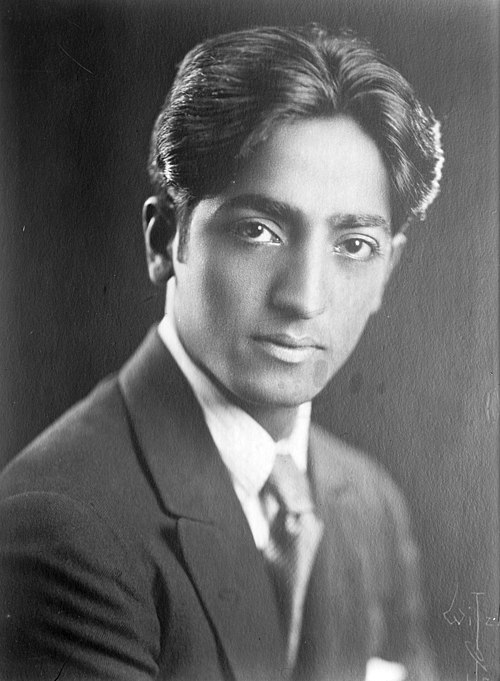
Jiddu Krishnamurti (/ˈdʒɪduː ˌkrɪʃnəˈmʊərti/JID-oo KRISH-nə-MOOR-tee; 11 May 1895 – 17 February 1986) was an Indian spiritual speaker and writer. Adopted by members of the Theosophical tradition as a child because of his aura as perceived by Theosophic leader Charles Leadbetter, “without a particle of selfishness in it,”[1] he was raised to fill the advanced role of World Teacher, but in adulthood he rejected this mantle and distanced himself from the related religious movement. He nevertheless spent the rest of his life speaking to groups and individuals around the world to set mankind free, gaining a wider recognition in the 1950s, after Aldous Huxley had introduced him to his mainstream publisher and the publication of The First and Last Freedom (1954). Many of his talks have been published since, and he also wrote a few books himself, among them Commentaries on Living (1956–60) and Krishnamurti’s Notebook (written 1961-62).
According to Krishnamurti an “immense energy and intelligence went through this body,”[a] a consciousness which he called “the otherness,” and which started to reveal itself with the onset of “the process,”[b] seizure-like painfull episodes which started in 1922.[2][3][c] During his life he tried to share this experience in ‘the teachings’, but a few days before his death he stated that nobody had understood what his body went through, and after his death, this consciousness would be gone, and no other body would support it “for many hundred years.”[a]
Krishnamurti asserted that “truth is a pathless land” and advised against following any doctrine, discipline, teacher, guru, or authority, including himself.[4][5] He dismissed the need for contrived meditation techniques, instead emphasizing the practice of choiceless awareness as the essence of “true meditation”.[6]
His supporters — working through non-profit foundations in India, Britain, and the United States — oversee several independent schools based on his views on education, and continue to distribute his thousands of talks, group and individual discussions, and writings in a variety of media formats and languages.
Biography
Family background and childhood
House in Madanapalle, in which Krishnamurti was bornKrishnamurti in 1910
Born during the late British Raj, the date of birth of Krishnamurti is a matter of dispute. Mary Lutyens determines it to be 11 May 1895,[7] but Christine Williams notes the unreliability of birth registrations in that period and that statements claiming dates ranging from 4 May 1895 to 25 May 1896 exist. She used calculations based on a published horoscope to derive a date of 11 May 1895 but “retains a measure of scepticism” about it.[8]
His birthplace was the small town of Madanapalle in Madras Presidency (modern-day Annamayya District in Andhra Pradesh). He was born in a Telugu-speaking Brahmin family.[9][10] His father, Jiddu Narayanaiah, was employed as an official of the British colonial administration. Krishnamurti was fond of his mother Sanjeevamma, who died when he was ten.[11] His parents had a total of eleven children, of whom six survived childhood.[12]
In 1903 the family settled in Kadapa, where Krishnamurti had contracted malaria during a previous stay. He suffered recurrent bouts of the disease over many years.[13] A sensitive and sickly child, “vague and dreamy”, he was often taken to be intellectually disabled, and was beaten regularly at school by his teachers and at home by his father.[14] In memoirs written when he was eighteen years old Krishnamurti described psychic experiences, such as seeing his sister, who had died in 1904, and his late mother.[15] Even from his childhood he felt a bond with nature which was to stay with him for the rest of his life.[16] Writing in his journal Krishnamurti states “He always had this strange lack of distance between himself and the trees, rivers, mountains. It wasn’t cultivated.”[17]
Krishnamurti’s father retired at the end of 1907. He sought employment at the headquarters of the Theosophical Society at Adyar. Narayanaiah had been a Theosophist since 1882. He was eventually hired by the Society as a clerk, moving there with his family in January 1909.[18] Narayanaiah and his sons were at first assigned to live in a small cottage that was located just outside the society’s compound.[19]
Krishnamurti was a vegetarian from birth and his family were strict vegetarians. He was an opponent of meat eating, based on ethical and spiritual reasons.[20][21] Krishnamurti was also a “teetotaler, nonsmoker and practitioner of yoga.”[22]
Appropriation by the Theosophical Society
In April 1909, Krishnamurti first met Charles Webster Leadbeater, who claimed clairvoyance. Leadbeater had noticed Krishnamurti on the Society’s beach on the Adyar river, and was amazed by the “most wonderful aura he had ever seen, without a particle of selfishness in it.”[d]Ernest Wood, an adjutant of Leadbeater’s at the time, who helped Krishnamurti with his homework, considered him to be “particularly dim-witted.”[23] Leadbeater was convinced that the boy would become a spiritual teacher and a great orator; the likely “vehicle for the Lord Maitreya” in Theosophical doctrine, an advanced spiritual entity periodically appearing on Earth as a World Teacher to guide the evolution of humankind.[23][24] This World teacher “was supposed to “overshadow” Krishnamurti by using his body to communicate with humanity. There was no thought among Theosophists of Krishnamurti himself being the World Teacher; he was merely to be the channel through which the World Teacher would speak.”[24]
In her biography of Krishnamurti, Pupul Jayakar quotes him speaking of that period in his life some 75 years later: “The boy had always said ‘I will do whatever you want.’ There was an element of subservience, obedience. The boy was vague, uncertain, woolly; he didn’t seem to care what was happening. He was like a vessel with a large hole in it, whatever was put in, went through, nothing remained.”[25] Krishnamurti himself described his state of mind as a young boy: “No thought entered his mind. He was watching and listening and nothing else. Thought with its associations never arose. There was no image-making. He often attempted to think but no thought would come.”[26]
Following his discovery by Leadbeater, Krishnamurti was nurtured by the Theosophical Society in Adyar. Leadbeater and a small number of trusted associates undertook the task of educating, protecting, and generally preparing Krishnamurti as the “vehicle” of the expected World Teacher. Krishnamurti (often later called Krishnaji)[27][e] and his younger brother Nityananda (Nitya) were privately tutored at the Theosophical compound in Madras, and later exposed to an opulent life among a segment of European high society as they continued their education abroad. Despite his history of problems with schoolwork and concerns about his capacities and physical condition, the 14-year-old Krishnamurti was able to speak and write competently in English within six months.[28] Lutyens says that later in life Krishnamurti came to view his “discovery” as a life-saving event. When he was asked in later life what he thought would have happened to him if he had not been ‘discovered’ by Leadbeater he unhesitatingly replied “I would have died”.[29]
During this time Krishnamurti had developed a strong bond with Annie Besant and came to view her as a surrogate mother. His father, who had initially assented to Besant’s legal guardianship of Krishnamurti,[30] was pushed into the background by the swirl of attention around his son. In 1912 he sued Besant to annul the guardianship agreement. After a protracted legal battle, Besant took custody of Krishnamurti and Nitya.[31] As a result of this separation from family and home Krishnamurti and his brother (whose relationship had always been very close) became more dependent on each other, and in the following years often travelled together.[32]
In 1911 the Theosophical Society established the Order of the Star in the East (OSE) to prepare the world for the expected appearance of the World Teacher. Krishnamurti was named as its head, with senior Theosophists assigned various other positions. Membership was open to anybody who accepted the doctrine of the Coming of the World Teacher. Controversy soon erupted, both within the Theosophical Society and outside it, in Hindu circles and the Indian press.[f]
Preparation as the World Teacher
Mary Lutyens, a biographer, says that there was a time when Krishnamurti believed that he was to become the World Teacher after correct spiritual and secular guidance and education.[33] Another biographer describes the daily program imposed on him by Leadbeater and his associates, which included rigorous exercise and sports, tutoring in a variety of school subjects, Theosophical and religious lessons, yoga and meditation, as well as instruction in proper hygiene and in the ways of British society and culture.[34] At the same time Leadbeater assumed the role of guide in a parallel mystical instruction of Krishnamurti; the existence and progress of this instruction was at the time known only to a select few.[35]
While he showed a natural aptitude in sports, Krishnamurti always had problems with formal schooling and was not academically inclined. He eventually gave up university education after several attempts at admission. He did take to foreign languages, in time speaking several with some fluency.[36]
His public image, cultivated by the Theosophists, “was to be characterized by a well-polished exterior, a sobriety of purpose, a cosmopolitan outlook and an otherworldly, almost beatific detachment in his demeanor.”[37] Demonstrably, “all of these can be said to have characterized Krishnamurti’s public image to the end of his life.”[37] It was apparently clear early on that he “possessed an innate personal magnetism, not of a warm physical variety, but nonetheless emotive in its austerity, and inclined to inspire veneration.”[38] However, as he was growing up, Krishnamurti showed signs of adolescent rebellion and emotional instability, chafing at the regimen imposed on him, visibly uncomfortable with the publicity surrounding him, and occasionally expressing doubts about the future prescribed for him.[g]
Krishnamurti and Nitya were taken to England in April 1911.[39] During this trip Krishnamurti gave his first public speech to members of the OSE in London.[40] His first writings had also started to appear, published in booklets by the Theosophical Society and in Theosophical and OSE-affiliated magazines.[h] Between 1911 and the start of World War I in 1914, the brothers visited several other European countries, always accompanied by Theosophist chaperones.[41] Meanwhile, Krishnamurti had for the first time acquired a measure of personal financial independence, thanks to a wealthy benefactress, American Mary Melissa Hoadley Dodge, who was domiciled in England.[42]
After the war, Krishnamurti embarked on a series of lectures, meetings and discussions around the world, related to his duties as the Head of the OSE, accompanied by Nitya, by then the Organizing Secretary of the Order.[43] Krishnamurti also continued writing.[i] The content of his talks and writings revolved around the work of the Order and of its members in preparation for the Coming. He was initially described as a halting, hesitant, and repetitive speaker, but his delivery and confidence improved, and he gradually took command of the meetings.[44]
In 1921 Krishnamurti fell in love with Helen Knothe, a 17-year-old American whose family associated with the Theosophists. The experience was tempered by the realisation that his work and expected life-mission precluded what would otherwise be considered normal relationships and by the mid-1920s the two of them had drifted apart.[45] She later said that Krishnamurti’s attitudes were conditioned by privilege, because he had been supported, even pampered, by devoted followers from the time of his “discovery” by the theosophists. She also said that he was at such an “elevated” level that he was incapable of forming “normal personal relationships”.[46]
Taking residence at Ojai, ‘the proces’, and growing expectations
In 1922 Krishnamurti and Nitya travelled from Sydney to California. In California, they stayed at a cottage in the Ojai Valley. It was thought that the area’s climate would be beneficial to Nitya, who had been diagnosed with tuberculosis. Nitya’s failing health became a concern for Krishnamurti.[47][48] At Ojai they met Rosalind Williams, a young American who became close to them both, and who was later to play a significant role in Krishnamurti’s life.[49] For the first time the brothers were without immediate supervision by their Theosophical Society minders.[50] They found the Valley to be very agreeable. Eventually, a trust, formed by supporters, bought a cottage and surrounding property there for them. This became Krishnamurti’s official residence.[51]
‘The process’
At Ojai in August and September 1922, Krishnamurti went through a series of “disturbing physical symptoms that progressed from discomfort to pain,”[52] during which he mistook Rosalind for his mother,[53] interpreted by some of his followers as intense ‘life-changing’ experiences’and signs of his advancement along ‘the Path’.[54][55] The initial events happened in two distinct phases: first a three-day acute pain in the neck accompanied by a mystical experience,[56][57] and two weeks later, a longer-lasting condition that Krishnamurti and those around him referred to as the process. This condition recurred, at frequent intervals and with varying intensity, until his death.[57]
According to Krishnamurti, Nitya, Rosalind, and mr. Warrington, it started on 17 August 1922 when Krishnamurti complained of a sharp pain at the nape of his neck. Over the next two days the symptoms worsened, with increasing pain and sensitivity, loss of appetite, and occasional delirious ramblings. He seemed to lapse into unconsciousness but later recounted that he was very much aware of his surroundings, and that while in that state at 19 august he had “the first most extraordinary experience,” in which he felt “at one with his surroundings.”[58][59][j] The following day the symptoms and the experience intensified, and he had an out-of-body experience, feeling “the vibrations of Lord Buddha,”[60] experiencing peace and a “profound calmness.”[61][60] Krishnamurti also wrote that he had “touched compassion which heals all sorrow and suffering; it is not for myself, but for the world.”[60][k]
Following — and apparently related to — these events[62][63] the condition that came to be known as the process started to affect him, in September and October that year, as a regular, almost nightly occurrence. Later the process resumed intermittently, with varying degrees of pain, physical discomfort, and sensitivity, occasionally a lapse into a childlike state, and sometimes an apparent fading out of consciousness, explained as either his body giving in to pain or his mind “going off”.[l]
‘The Otherness’
These experiences were accompanied or followed by what was interchangeably described as, “the benediction”, “the immensity”, “the sacredness”, “the vastness” and, most often, “the otherness” or “the other”.[64] It was a state related to, but distinct from the process.[65] According to Lutyens it is evident from his notebook that this experience of otherness was “with him almost continuously” during his life, and gave him “a sense of being protected”.[64] Krishnamurti describes it in his notebook as typically following an acute experience of the process, for example, on awakening the next day:
… woke up early with that strong feeling of otherness, of another world that is beyond all thought … there is a heightening of sensitivity. Sensitivity, not only to beauty but also to all other things. The blade of grass was astonishingly green; that one blade of grass contained the whole spectrum of colour; it was intense, dazzling and such a small thing, so easy to destroy …[66]
This experience of the otherness was present with him in daily events:
It is strange how during one or two interviews that strength, that power filled the room. It seemed to be in one’s eyes and breath. It comes into being, suddenly and most unexpectedly, with a force and intensity that is quite overpowering and at other times it’s there, quietly and serenely. But it’s there, whether one wants it or not. There is no possibility of getting used to it for it has never been nor will it ever be …”[66]
Secretiveness and explanations
Lutyens revealed the existence of the process in The Years of Awakening, the first volume of her biography of Krishnamurti (published 1975).[2] The existence and history of these experiences had remained unknown outside of the Theosophical Society leadership and Krishnamurti’s circle of close associates and friends.[67][68][b]
Roland Vernon, another of his biographers, states that previous attempts (by others) at revealing details from his past, including these reputed experiences, were suppressed by Krishnamurti. According to Vernon, Krishnamurti “believed, with good reason, that the sensationalism of his early story would cloud the public’s perception of his [then] current work”.[69] Krishnamurti himself gave the following description of his development to Rom Landau in 1935:
Rom Landau: How did you come to that state of unity with everything? Krishnamurti: People have asked me about that before, and I always feel that they expect to hear the dramatic account of some sudden miracle through which I suddenly became one with the universe. Of course nothing of the sort happened. My inner awareness was always there; though it took me time to feel it more and more clearly; and equally it took time to find words that would at all describe it. It was not a sudden flash, but a slow yet constant clarification of something that was always there. It did not grow, as people often think. Nothing can grow in us that is of spiritual importance. It has to be there in all its fullness, and then the only thing that happens is that we become more and more aware of it. It is our intellectual reaction and nothing else that needs time to become more articulate, more definite.[70]
However Krishnamurti often hinted at otherness-like states in later talks and discussions;[71][72] During Krishnamurti’s later years, the nature and provenance of the continuing process often came up as a subject in private discussions between himself and associates, also stating that the experience of the otherness continued as he was nearing death. These discussions shed some light on the subject but were ultimately inconclusive.[73][m]
Since the initial occurrences of 1922, several explanations have been proposed for these experiences of Krishnamurti’s, including epilepsy.[3][c] Leadbeater and other Theosophists expected the “vehicle” to have certain paranormal experiences but were nevertheless mystified by these developments.[74]
Growing expectations
As news of these experiences spread, rumours concerning the messianic status of Krishnamurti reached fever pitch as the 1925 Theosophical Society Convention was planned, on the 50th anniversary of its founding. There were expectations of significant happenings.[75] Paralleling the increasing adulation was Krishnamurti’s growing discomfort with it. In related developments, prominent Theosophists and their factions within the Society were trying to position themselves favourably relative to the Coming, which was widely rumoured to be approaching. He stated that “Too much of everything is bad”. “Extraordinary” pronouncements of spiritual advancement were made by various parties, disputed by others, and the internal Theosophical politics further alienated Krishnamurti.[76]
Death of Nitya
Nitya’s persistent health problems had periodically resurfaced throughout this time. On 13 November 1925, at age 27, he died in Ojai from complications of influenza and tuberculosis.[77] Despite Nitya’s poor health, his death was unexpected, and it fundamentally shook Krishnamurti’s belief in Theosophy and in the leaders of the Theosophical Society. He had received their assurances regarding Nitya’s health, and had come to believe that “Nitya was essential for [his] life-mission and therefore he would not be allowed to die,” a belief shared by Annie Besant and Krishnamurti’s circle.[78] Jayakar wrote that “his belief in the Masters and the hierarchy had undergone a total revolution.”[79] Moreover, Nitya had been the “last surviving link to his family and childhood. … The only person to whom he could talk openly, his best friend and companion.”[80] According to eyewitness accounts, the news “broke him completely.”[81] but 12 days after Nitya’s death he was “immensely quiet, radiant, and free of all sentiment and emotion”;[79] “there was not a shadow … to show what he had been through.”[82]
Break with the Theosophical Society
Over the next few years, Krishnamurti’s self-awareness and alienation from the Theosophical worldview continued to develop. He lost his faith in ‘The Masters’,[24] and new concepts appeared in his talks, discussions, and correspondence, together with an evolving vocabulary that was progressively free of Theosophical terminology.[83] His new direction reached a climax in 1929, when he rebuffed attempts by Leadbeater and Besant to continue with the Order of the Star.
Krishnamurti dissolved the Order during the annual Star Camp at Ommen, the Netherlands, on 3 August 1929.[84] He stated that he had made his decision after “careful consideration” during the previous two years, and turned against the Theosophical Society’s elaborate worldview of spiritual progress, stating that:
I maintain that truth is a pathless land, and you cannot approach it by any path whatsoever, by any religion, by any sect. That is my point of view, and I adhere to that absolutely and unconditionally. Truth, being limitless, unconditioned, unapproachable by any path whatsoever, cannot be organized; nor should any organization be formed to lead or coerce people along a particular path. … This is no magnificent deed, because I do not want followers, and I mean this. The moment you follow someone you cease to follow Truth. I am not concerned whether you pay attention to what I say or not. I want to do a certain thing in the world and I am going to do it with unwavering concentration. I am concerning myself with only one essential thing: to set man free. I desire to free him from all cages, from all fears, and not to found religions, new sects, nor to establish new theories and new philosophies.[85][86]
Krishnamurti in the early 1920s
Following the dissolution, prominent Theosophists turned against Krishnamurti, including Leadbeater who is said to have stated, “the Coming had gone wrong.”[87] Krishnamurti had denounced all organised belief, the notion of gurus, and the whole teacher-follower relationship, vowing instead to work on setting people “absolutely, unconditionally free.”[85] There is no record of his explicitly denying he was the World Teacher;[88] whenever he was asked to clarify his position he either asserted that the matter was irrelevant,[n] or gave answers that, as he stated, were “purposely vague”.[o]
In hind-sight it can be seen that the ongoing changes in his outlook had begun before the dissolution of the Order of the Star.[89] The subtlety of the new distinctions on the World Teacher issue was lost on many of his admirers, who were already bewildered or distraught because of the changes in Krishnamurti’s outlook, vocabulary and pronouncements–among them Besant and Mary Lutyens’ mother Emily, who had a very close relationship with him.[90][91] He soon disassociated himself from the Theosophical Society and its teachings and practices,[p] yet he remained on cordial terms with some of its members and ex-members throughout his life.[92]
Krishnamurti resigned from the various trusts and other organisations that were affiliated with the defunct Order of the Star, including the Theosophical Society. He returned the money and properties donated to the Order, among them a castle in the Netherlands and 5,000 acres (2,023 ha) of land, to their donors.[93]
Middle years – Arya Vihara and extra-marital affair
From 1930 through 1944 Krishnamurti engaged in speaking tours and in the issue of publications under the auspice of the “Star Publishing Trust” (SPT), which he had founded with Desikacharya Rajagopal, a close associate and friend from the Order of the Star.[q] Ojai was the base of operations for the new enterprise, where Krishnamurti, Rajagopal, and Rosalind Williams (who had married Rajagopal in 1927) resided in the house known as Arya Vihara (meaning Realm of the Aryas, i.e. those noble by righteousness in Sanskrit). The business and organizational aspects of the SPT were administered chiefly by D. Rajagopal, as Krishnamurti devoted his time to speaking and meditation.[94]
The Rajagopals’ marriage was not a happy one, and the two became physically estranged after the 1931 birth of their daughter, Radha.[94] Krishnamurti’s friendship with Rosalind became a love affair. According to Radha Rajagopal Sloss, the affair between Krishnamurti and Rosalind began in 1932 and it endured for about twenty-five years. Radha Sloss, daughter of Rajagopal, wrote about the affair in her book Lives in the Shadow with J. Krishnamurti.[r] According to Radha Rajagopal Sloss, Krishnamurti was dependent on his followers to support his way of life, and needed to uphold his image of a celibate guru to continue this support and way of life.[95][s]
During the 1930s Krishnamurti spoke in Europe, Latin America, India, Australia and the United States. He did not speak publicly for a period of about four years (between 1940 and 1944). During this time he lived and worked at Arya Vihara, which during the war operated as a largely self-sustaining farm, with its surplus goods donated for relief efforts in Europe.[96] Of the years spent in Ojai during the war he later said: “I think it was a period of no challenge, no demand, no outgoing. I think it was a kind of everything held in; and when I left Ojai it all burst.”[97]
English author Aldous Huxley lived nearby; he met Krishnamurti in 1938,[98] and the two men became close friends.[99][100] They held common concerns about the imminent conflict in Europe which they viewed as the outcome of the pernicious influence of nationalism.[101] Krishnamurti’s stance on World War II was often construed as pacifism and even subversion during a time of patriotic fervor in the United States and for a time he came under the surveillance of the FBI.[102]
Huxley encouraged Krishnamurti to write,[103] and also introduced his work to Harper, Huxley’s own publisher. This eventually led to the addition of Krishnamurti in the publisher’s roster of authors; [104] Radha Rajagopal Sloss, daughter of D. Rajagopal, Krishnamurti’s business manager at the time, states that Huxley introduced her father to the publisher. She adds that Krishnamurti had little interest in his manuscripts or other records of his work; this lack of interest by Krishnamurti is also remarked upon by his biographers.[105] Until that time Krishnamurti works were published by small or specialist presses, or in-house by a variety of Krishnamurti-related organizations.[106][107]
Krishnamurti broke the hiatus from public speaking in May 1944 with a series of talks in Ojai. These talks, and subsequent material, were published by “Krishnamurti Writings Inc.” (KWINC), the successor organisation to the “Star Publishing Trust.” This was to be the new central Krishnamurti-related entity worldwide, whose sole purpose was the dissemination of the teaching.[108] He had remained in contact with associates from India, and in the autumn of 1947 embarked on a speaking tour there, attracting a new following of young intellectuals.[t] On this trip he encountered the Mehta sisters, Pupul and Nandini, who became lifelong associates and confidants. The sisters also attended to Krishnamurti throughout a 1948 recurrence of the “process” in Ootacamund.[109] In Poona in 1948, Krishnamurti met Iyengar, who taught him Yoga practices every morning for the next three months, then on and off for twenty years.[110]
Later years – wider recognition, legal battles, and final evaluation
Krishnamurti continued speaking in public lectures, group discussions and with concerned individuals around the world. In 1954 The First and Last Freedom was published, which was instrumental in broadening Krishnamurti’s audience and exposing his ideas. It was one of the first Krishnamurti titles in the world of mainstream, commercial publishing, where its success helped establish him as a viable author. It consists of edited excerpts from his public talks and discussions, and includes examinations of subjects that were, or became, recurrent themes in his exposition: [111] the nature of the self – and of belief, investigations into fear and desire, the relationship between thinker and thought, the concept of choiceless awareness, the function of the mind, etc.
In the early 1960s, he made the acquaintance of physicist David Bohm, whose philosophical and scientific concerns regarding the essence of the physical world, and the psychological and sociological state of mankind, found parallels in Krishnamurti’s philosophy. The two men soon became close friends and started a common inquiry, in the form of personal dialogues–and occasionally in group discussions with other participants–that continued, periodically, over nearly two decades.[u] Several of these discussions were published in the form of books or as parts of books, and introduced a wider audience (among scientists) to Krishnamurti’s ideas. The long friendship with Bohm went through a rocky interval in later years, and although they overcame their differences and remained friends until Krishnamurti’s death, the relationship did not regain its previous intensity.[citation needed][v]
Krishnamurti’s once close relationship with the Rajagopals had deteriorated to the point where he took D. Rajagopal to court to recover donated property and funds as well as publication rights for his works, manuscripts, and personal correspondence, that were in Rajagopal’s possession.[w] The litigation and ensuing cross complaints, which formally began in 1971, continued for many years. Much property and materials were returned to Krishnamurti during his lifetime; the parties to this case finally settled all other matters in 1986, shortly after his death.[x] Krishnamurti’ stance raised doubts in long-time friends and devotees, some of whom got the impression that he was a divided personality unable to live according to his own teachings[112] – raising the question: “If he cannot live it, who can?”[113]
In 1984 and 1985, Krishnamurti spoke to an invited audience at the United Nations in New York, under the auspices of the Pacem in Terris Society chapter at the United Nations.[114][115] In October 1985, he visited India for the last time, holding a number of what came to be known as “farewell” talks and discussions between then and January 1986. These last talks included the fundamental questions he had been asking through the years, as well as newer concerns about advances in science and technology, and their effect on humankind. Krishnamurti had commented to friends that he did not wish to invite death, but was not sure how long his body would last (he had already lost considerable weight), and once he could no longer talk, he would have “no further purpose”. In his final talk, on 4 January 1986, in Madras, he again invited the audience to examine with him the nature of inquiry, the effect of technology, the nature of life and meditation, and the nature of creation.[citation needed]
Krishnamurti was also concerned about his legacy, about being unwittingly turned into some personage whose teachings had been handed down to special individuals, rather than the world at large. He did not want anybody to pose as an interpreter of the teaching.[116] He warned his associates on several occasions that they were not to present themselves as spokesmen on his behalf, or as his successors after his death.[117]
A few days before his death, in a final statement, possibly in response to a question by Mary Cadogan, he stated an ‘immense energy and intelligence went through this body.” Nobody had understood what his body went through, and after his death, this consciousness would be gone, and no other body would support it “for many hundred years.” He further added that “Perhaps they will somewhat if they live the teachings. But nobody has done it. Nobody. And so that’s that.”[a]
The Astrology Podcast Jul 7, 2025 Discussing the transit of Uranus in Gemini, and how astrologers came to associate it with major wars in United States history, with astrologer Chris Brennan of The Astrology Podcast. The first part of the episode discusses how the astrologer Luke Broughton (1828-1899) seems to have been the first astrologer to have observed the correlation between Uranus in Gemini and major wars in US history, and he used this in order to make predictions in the early 1860s about the start of the Civil War. Later I discuss the astrologer Evangeline Adams (1868-1932), who used the Uranus in Gemini transit to predict the start of US involvement in World War II, in a book that she published in 1931. Later I reflect on one of the earliest episodes of The Astrology Podcast, episode 11 titled The Astrology of Uranus and the United States, where I discussed this transit with Nick Dagan Best and the implication that it predicted another major war after Uranus enters Gemini again in 2025. This is also a followup to episode 376, titled The Uranus Return of the United States, which delves more into what Uranus in Gemini has coincided with in the past in US history. This episode was recorded late in the night of July 6, 2025, just hours before Uranus went into Gemini on July 7, and then released shortly after the ingress took place, with early Gemini rising. My goal was to reflect on the history of astrologers studying this transit and using it for predictions, and to mark the occasion as we head into what is clearly shaping up to be another very important turning point in US history. This is episode 496 of The Astrology Podcast: https://theastrologypodcast.com/2025/… Be sure to like and subscribe!
Franz Anton Mesmer (/ˈmɛzmər/MEZ-mər;[1] German: [ˈmɛsmɐ]; 23 May 1734 – 5 March 1815) was a German physician with an interest in astronomy. He theorized the existence of a process of natural energy transference occurring between all animate and inanimate objects; this he called “animal magnetism“, later referred to as mesmerism. Mesmer’s theory attracted a wide following between about 1780 and 1850, and continued to have some influence until the end of the 19th century.[2] In 1843, the Scottish doctor James Braid proposed the term “hypnotism” for a technique derived from animal magnetism; today the word “mesmerism” generally functions as a synonym of “hypnosis”. Mesmer also supported the arts, specifically music; he was on friendly terms with Haydn and Mozart[citation needed].
Early life
Mesmer was born in the village of Iznang (now part of the municipality of Moos), on the shore of Lake Constance in Swabia. He was a son of master forester Anton Mesmer (1701–after 1747) and his wife, Maria Ursula (née Michel; 1701–1770).[3] After studying at the Jesuit universities of Dillingen and Ingolstadt, he took up the study of medicine at the University of Vienna in 1759. In 1766 he published a doctoral dissertation with the Latin title De planetarum influxu in corpus humanum (On the Influence of the Planets on the Human Body), in which he discussed the influence of the moon and the planets on the human body and disease.
Building largely on Isaac Newton‘s theory of the tides, Mesmer expounded on certain tides in the human body that might be accounted for by the movements of the sun and moon.[4] Evidence assembled by Frank A. Pattie suggests that Mesmer plagiarized[5] most of his dissertation from other works,[6][7] including De imperio solis ac lunae in corpora humana et morbius inde oriundis (1704) by Richard Mead, an eminent English physician and Newton’s friend. However, in Mesmer’s day doctoral theses were not expected to be original.[8]
In January 1768, Mesmer married Anna Maria von Posch, a wealthy widow, and established himself as a doctor in Vienna. In the summers he lived on a splendid estate and became a patron of the arts. In 1768, when court intrigue prevented the performance of La finta semplice (K. 51), for which the twelve-year-old Wolfgang Amadeus Mozart had composed 500 pages of music, Mesmer is said to have arranged a performance in his garden of Mozart’s Bastien und Bastienne (K. 50), a one-act opera,[9] although Mozart’s biographer Nissen found no proof that this performance actually took place. Mozart later immortalized his former patron by including a comedic reference to Mesmer in his opera Così fan tutte.[10]
In 1774, Mesmer produced an “artificial tide” in a patient, Francisca Österlin, who suffered from hysteria, by having her swallow a preparation containing iron and then attaching magnets to various parts of her body. She reported feeling streams of a mysterious fluid running through her body and was relieved of her symptoms for several hours. Mesmer did not believe that the magnets had achieved the cure on their own. He felt that he had contributed animal magnetism, which had accumulated in his work, to her. He soon stopped using magnets as a part of his treatment.
In 1775, Mesmer was invited to give his opinion before the Munich Academy of Sciences on the exorcisms carried out by Johann Joseph Gassner (Gaßner), a priest and healer who grew up in Vorarlberg, Austria. Mesmer said that while Gassner was sincere in his beliefs, his cures resulted because he possessed a high degree of animal magnetism. This confrontation between Mesmer’s secular ideas and Gassner’s religious beliefs marked the end of Gassner’s career and, according to Henri Ellenberger, the emergence of dynamic psychiatry.
The scandal that followed Mesmer’s only partial success in curing the blindness of an 18-year-old musician, Maria Theresia Paradis, led him to leave Vienna in 1777. In February 1778, Mesmer moved to Paris, rented an apartment in a part of the city preferred by the wealthy and powerful, and established a medical practice. There he would reunite with Mozart, who often visited him. Paris soon divided into those who thought he was a charlatan who had been forced to flee from Vienna and those who thought he had made a great discovery.
In his first years in Paris, Mesmer tried and failed to get either the Royal Academy of Sciences or the Royal Society of Medicine to provide official approval for his doctrines. He found only one physician of high professional and social standing, Charles d’Eslon, to become a disciple. In 1779, with d’Eslon’s encouragement, Mesmer wrote an 88-page book, Mémoire sur la découverte du magnétisme animal, to which he appended his famous 27 Propositions. These propositions outlined his theory at that time. Some contemporary scholars equate Mesmer’s animal magnetism with the qi (chi) of Traditional Chinese Medicine and mesmerism with medical Qigong practices.[11][12]
According to d’Eslon, Mesmer understood health as the free flow of the process of life through thousands of channels in our bodies. Illness was caused by obstacles to this flow. Overcoming these obstacles and restoring flow produced crises, which restored health. When Nature failed to do this spontaneously, contact with a conductor of animal magnetism was a necessary and sufficient remedy. Mesmer aimed to aid or provoke the efforts of Nature. To cure an insane person, for example, involved causing a fit of madness. The advantage of magnetism involved accelerating such crises without danger.
Procedure
Mesmer treated patients both individually and in groups. With individuals he would sit in front of his patient with his knees touching the patient’s knees, pressing the patient’s thumbs in his hands, looking fixedly into the patient’s eyes. Mesmer made “passes”, moving his hands from the patient’s shoulders down along their arms. He then pressed his fingers on the patient’s hypochondrium (the area below the diaphragm), sometimes holding his hands there for hours. Many patients felt peculiar sensations or had convulsions that were regarded as crises and were supposed to bring about the cure. Mesmer would often conclude his treatments by playing some music on a glass harmonica.[13]
By 1780, Mesmer had more patients than he could treat individually, and he established a collective treatment known as the “baquet.” An English doctor who observed Mesmer described the treatment as follows:
Duration: 3 minutes and 11 seconds.3:11A caricature of Mesmer “baquet” filmed by Georges Méliès, 1905
In the middle of the room is placed a vessel of about a foot and a half high which is called here a “baquet”. It is so large that twenty people can easily sit round it; near the edge of the lid which covers it, there are holes pierced corresponding to the number of persons who are to surround it; into these holes are introduced iron rods, bent at right angles outwards, and of different heights, so as to answer to the part of the body to which they are to be applied. Besides these rods, there is a rope which communicates between the baquet and one of the patients, and from him is carried to another, and so on the whole round. The most sensible effects are produced on the approach of Mesmer, who is said to convey the fluid by certain motions of his hands or eyes, without touching the person. I have talked with several who have witnessed these effects, who have convulsions occasioned and removed by a movement of the hand…[14]
In 1784, without Mesmer having requested it, King Louis XVI appointed four members of the Faculty of Medicine as commissioners to investigate animal magnetism and Mesmerism. At the request of these commissioners, the king appointed Baron de Breteuil, minister of the Department of Paris, to establish investigative commissions. One was composed of individuals from the Royal Academy of Sciences, and the other of individuals from the Academy of Sciences and the Faculty of Medicine. The investigative teams included the chemist Antoine Lavoisier, the doctor Joseph-Ignace Guillotin, the astronomer Jean Sylvain Bailly, and the American ambassador Benjamin Franklin.[15][16]
The commission conducted a series of experiments aimed not just at determining whether Mesmer’s treatment worked, but whether he had discovered a new physical fluid. The commission concluded that there was no evidence for such a fluid. Whatever benefit the treatment produced was attributed to “imagination”. One of the commissioners, the botanist Antoine Laurent de Jussieu took exception to the official reports, authoring a dissenting opinion.[6]
The commission did not examine Mesmer specifically, but instead observed the practice of d’Eslon. They used blind trials, blindfolding the subjects, in their investigation, and found that Mesmerism seemed to work only when the subject was aware of it. Their findings are considered the first observation of the placebo effect.[17] Even d’Eslon himself was convinced by the commission, stating that, “the imagination thus directed to the relief of suffering humanity would be a most valuable means in the hands of the medical profession.”[15]
Mesmer was driven into exile soon after the investigations on animal magnetism. However, his influential student, Amand-Marie-Jacques de Chastenet, Marquis of Puységur (1751–1825), continued to have many followers until his death.[18]
Mesmer continued to practice in Frauenfeld, Switzerland, for a number of years. He died in 1815 in Meersburg, Germany.[19]
The first volume of Secrets of Heaven, Swedenborg’s magnum opus, offers unique insight into the spiritual message of the Bible. Opening with the creation story, Swedenborg describes how each step in the process relates to our growth and development as spiritual people. He traces the inner history of the peoples described in the Bible and connects their story to our own trials and tribulations, showing how the Flood represents the spiritual devastation that urges us to begin our regeneration.
Emanuel Swedenborg (born Emanuel Swedberg; February 8, 1688–March 29, 1772) was a Swedish scientist, philosopher, Christian mystic, and theologian. Swedenborg had a prolific career as an inventor and scientist. At the age of fifty-six he entered into a spiritual phase in which he experienced dreams and visions. This culminated in a spiritual awakening, where he claimed he was appointed by the Lord to write a heavenly doctrine to reform Christianity. He claimed that the Lord had opened his eyes, so that from then on he could freely visit heaven and hell, and talk with angels, demons, and other spirits. For the remaining 28 years of his life, he wrote and published 18 theological works, of which the best known was Heaven and Hell (1758), and several unpublished theological works.
Swedenborg explicitly rejected the common explanation of the Trinity as a Trinity of Persons, which he said was not taught in the early Christian Church. Instead he explained in his theological writings how the Divine Trinity exists in One Person, in One God, the Lord Jesus Christ. Swedenborg also rejected the doctrine of salvation through faith alone, since he considered both faith and charity necessary for salvation, not one without the other. The purpose of faith, according to Swedenborg, is to lead a person to a life according to the truths of faith, which is charity.
Swedenborg’s theological writings have elicited a range of responses. Toward the end of Swedenborg’s life, small reading groups formed in England and Sweden to study the truth they saw in his teachings and several writers were influenced by him, including William Blake (though he ended up renouncing him), Elizabeth Barrett Browning, August Strindberg, Ralph Waldo Emerson, Charles Baudelaire, Balzac, William Butler Yeats, Sheridan Le Fanu, Jorge Luis Borges and Carl Jung. The theologian Henry James Sr. was also a follower of his teachings, as were Johnny Appleseed and Helen Keller.
In contrast, one of the most prominent Swedish authors of Swedenborg’s day, Johan Henrik Kellgren, called Swedenborg “nothing but a fool”. A heresy trial was initiated in Sweden in 1768 against Swedenborg’s writings and two men who promoted these ideas.
In the two centuries since Swedenborg’s death, various interpretations of Swedenborg’s theology have been made (see: Swedenborgian Church), and he has also been scrutinized in biographies and psychological studies.
Amrit Sandhu Jun 22, 2025 Inspired Evolution Podcast Heather Ensworth unravels a profound cosmological and spiritual narrative rooted in the ancient Yuga cycles, astrology, and humanity’s evolution. She reveals how we are at a pivotal karmic choice point between 2025 and 2032 — a critical window for either awakening into higher consciousness or repeating catastrophic cycles of destruction. With passion, she explores telepathy, shape-shifting, and lost indigenous wisdom, urging a return to heart-centered, interconnected living. Ensworth sees planets not just as celestial bodies but as sentient guides in our evolutionary leap. From the myth of Inanna to the binary star system with Sirius, she weaves astrology, myth, science, and spirituality into a call for collective transformation. The Age of Aquarius, she says, is a portal to reclaim sacred balance and cosmic unity. Her personal story of crisis, mystical awakening, and deep transformation echoes the larger metamorphosis now available to all of humanity.
Consciousness, spirituality, biography, sexuality, androgyny, futurism, space, the arts, science, astrology, democracy, humor, books, movies and more


To my mind there is nothing in life so delightful as that feeling of relief, of escape, and absolute freedom which one experiences in a vast solitude, where man has perhaps never been, and has, at any rate, left no trace of his existence.