I invite you to join me on Sunday, July 20, 2025 for The Prosperos Sunday Meeting!
I will share some very deep insights about CONSCIOUSNESS that I found in a very interesting book titled: POWER VS FORCE by Dr. David R. Hawkins, M.D., PhD. His words address the “Nature of Consciousness” in a way that is very similar to Thane’s approach. I’m sure you remember how passionate Thane was in helping us understand that our Innate True Self is Consciousness!
Come! Join me! Let’s explore!
Today we are overloaded with information and why we must wake up to our Innate Higher Consciousness!
Heather C. Williams, H.W.,M. (High Watch Mentor in The Prosperos School of Ontology, and Author of Drawing as a Sacred Activity and retired Art and Special Ed Teacher)
Heather will share insights in the book, Power vs Force, by Dr. David R. Hawkins, M.D., Ph.D.
And hopefully inspire you to understand the Higher Consciousness is within you!
At the end we will open up a 20-minute open discussion with you!
ReligionForBreakfast Jun 19, 2025 Compare news coverage. Spot media bias. Avoid algorithms. Try Ground News today and get 40% off your subscription by going to https://ground.news/religionforbreakfast Check out my earlier video explaining the Dalai Lama!: • The Dalai Lama Explained: The Last Lama? As the Dalai Lama turns 90, a global power struggle looms. Who gets to choose his successor? This video explores the battle over reincarnation, politics, and the future of Tibetan Buddhism.
New Thinking Allowed with Jeffrey Mishlove Jul 4, 2025 This video is a special release from the original Thinking Allowed series that ran on public television from 1986 until 2002. It was recorded in about 1987. It will remain public for only one week. Do UFOs originate as psychic projections from our own minds? Terence McKenna is co-author of The Invisible Landscape and a leading thinker in the area of alternative realities. He suggests that regardless of their origin and material existence, UFOs are a challenge to the authority of science. Their chief function, he says, may be to offset the rationalist imbalance in our contemporary culture. Now you can watch all of the programs from the original Thinking Allowed Video Collection, hosted by Jeffrey Mishlove. Subscribe to the new Streaming Channel (https://thinkingallowed.vhx.tv/) and watch more than 350 programs now, with more, previously unreleased titles added weekly. Free month of the classic Thinking Allowed streaming channel for New Thinking Allowed subscribers only. Use code THINKFREELY.
“Excellent and deeply reported.” —Tim Wu, The New York Times
“Startling and intensely researched . . . an essential account of how OpenAI and ChatGPT came to be and the catastrophic places they will likely take us.” —Vulture
“Hao’s reporting inside OpenAI is exceptional, and she’s persuasive in her argument that the public should focus less on A.I.’s putative ‘sentience’ and more on its implications for labor and the environment.” —Benjamin Wallace-Wells, New Yorker
From a brilliant longtime AI insider with intimate access to the world of Sam Altman’s OpenAI from the beginning, an eye-opening account of arguably the most fateful tech arms race in history, reshaping the planet in real time, from the cockpit of the company that is driving the frenzy
When AI expert and investigative journalist Karen Hao first began covering OpenAI in 2019, she thought they were the good guys. Founded as a nonprofit with safety enshrined as its core mission, the organization was meant, its leader Sam Altman told us, to act as a check against more purely mercantile, and potentially dangerous, forces. What could go wrong?
Over time, Hao began to wrestle ever more deeply with that question. Increasingly, she realized that the core truth of this massively disruptive sector is that its vision of success requires an almost unprecedented amount of the “compute” power of high-end chips and the processing capacity to create massive large language models, the sheer volume of data that needs to be amassed at scale, the humans “cleaning up” that data for sweatshop wages throughout the Global South, and a truly alarming spike in the usage of energy and water underlying it all. The truth is that we have entered a new and ominous age of only a small handful of globally scaled companies can even enter the field of play. At the head of the pack with its ChatGPT breakthrough, how would OpenAI resist such temptations?
Spoiler it didn’t. Armed with Microsoft’s billions, OpenAI is setting a breakneck pace, chased by a small group of the most valuable companies in human history—toward what end, not even they can define. All this time, Hao has maintained her deep sourcing within the company and the industry, and so she was in intimate contact with the story that shocked the entire tech industry—Altman’s sudden firing and triumphant return. The behind-the-scenes story of what happened, told here in full for the first time, is revelatory of who the people controlling this technology really are. But this isn’t just the story of a single company, however fascinating it is. The g forces pressing down on the people of OpenAI are deforming the judgment of everyone else too—as such forces do. Naked power finds the ideology to cloak itself; no one thinks they’re the bad guy. But in the meantime, as Hao shows through intrepid reporting on the ground around the world, the enormous wheels of extraction grind on. By drawing on the viewpoints of Silicon Valley engineers, Kenyan data laborers, and Chilean water activists, Hao presents the fullest picture of AI and its impact we’ve seen to date, alongside a trenchant analysis of where things are headed. An astonishing eyewitness view from both up in the command capsule of the new economy and down where the real suffering happens, Empire of AI pierces the veil of the industry defining our era.
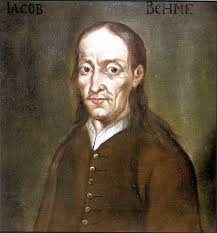
Jacob Boehme was a 17th-century German philosopher, Christian mystic, and theologian, known for his profound influence on Western philosophy and mysticism. He was a cobbler by trade but became a seminal figure in the history of Western esotericism. His writings, particularly Aurora, explored themes of divine revelation, the nature of God, creation, and the origin of evil.
Here’s a more detailed look at Jacob Boehme:
Mystical Experiences and Writings:Boehme’s philosophical system emerged from his mystical experiences, particularly a vision he had in 1600, which he later elaborated on in his writings.
Theosophical Ideas:He developed a unique theosophical system, emphasizing the interconnectedness of all things and the potential for human transformation through spiritual awakening.
Influence:Boehme’s ideas influenced many thinkers, including philosophers like Hegel, Schopenhauer, and Nietzsche, as well as religious movements like the Quakers and German Romantics.
Controversies:His writings, particularly Aurora, initially faced strong opposition from the Lutheran Church, leading to a period of censorship.
Key Concepts:Some of his key concepts include the “Ungrund” (the unground or abyss), the “three principles” (light, darkness, and desire), and the importance of overcoming the “will” to achieve union with God.
“The Supersensual Life”:According to this YouTube video, this concept emphasizes the need to transcend the limitations of the senses and the ego to experience divine reality.
“The Signature of All Things”:This work explores how the divine is reflected in all of creation.
Legacy:Boehme’s work continues to be studied and admired for its depth, complexity, and enduring relevance to spiritual seekers.
Marianne Williamson Jul 4, 2025 Today isn’t an ordinary July 4th. This year, it’s both happy and sad. Our second president, John Adams, hoped that every generation would use the July 4th holiday to revisit our First Principles. We definitely need to do that now.
Marianne Williamson on July 4, 2017
Marianne Williamson Premiered 4 hours agoA classic Marianne Williamson lecture on The Spirit of Democracy. For more talks visit Marianne.com.
“A lion chased me up a tree, and I greatly enjoyed the view from the top.”
― Confucius
Confucius, born Kong Qiu (died 479 B.C), was a Chinese philosopher of the Spring and Autumn period who is traditionally considered the paragon of Chinese sages, as well as the first teacher in China to advocate mass education. Wikipedia
How do you know if that shocking photo in your feed is real, or just another AI fake? Digital forensics expert Hany Farid explains how he helps journalists, courts and governments find structural errors in AI-generated images, offering four practical tips everyday individuals can use when facing the internet’s war on reality.
CHICAGO—Emphasizing the constraints of God’s healing hands, a new study published Thursday in the Journal Of The American Medical Association found that the curative power of prayer was limited exclusively to genital warts. “Our data revealed that while people attempt to cure a host of medical conditions by praying, the only ailment it was shown to be effective against was genital warts,” said lead author Dr. Patrick Mercier, explaining that despite prayer being promoted as a remedy for cancer, drug addiction, and mental illnesses like depression and schizophrenia, such invocations for divine intervention were utterly useless unless the condition somehow involved viral growths located around the groin and anus. “The ability of prayer to treat sicknesses and disorders was so narrow, in fact, that it could not even heal plantar warts found on the soles of feet. That said, entreaties to our Creator were so efficient at addressing genital warts specifically that patients who held their hands over the affected vulvas and penises and pleaded to a higher power for relief often found their HPV breakouts cleared up within 24 hours.” Mercier added that curing genital warts was actually the only thing prayer was capable of achieving across the board.
Consciousness, spirituality, biography, sexuality, androgyny, futurism, space, the arts, science, astrology, democracy, humor, books, movies and more