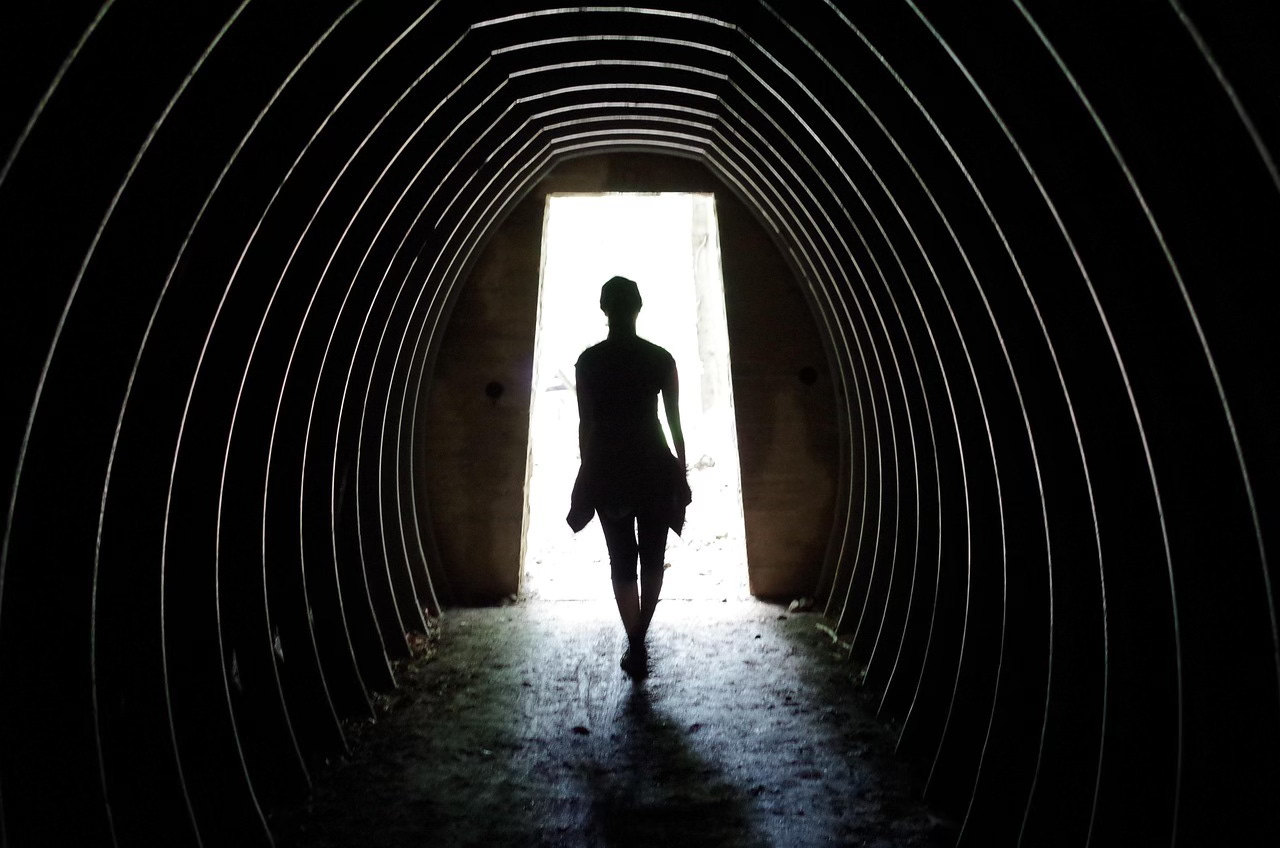
“In my experience, fear comes from not knowing what to expect and not feeling you have any control over what’s about to happen. When you feel helpless, you’re far more afraid than you would be if you knew the facts.”
Chris Austin Hadfield (born August 29, 1969) is a Canadian retired astronaut, engineer, fighter pilot, musician, and writer. As the first Canadian to perform extravehicular activity in outer space, he has flown two Space Shuttle missions and also served as commander of the International Space Station. Wikipedia
I CHOOSE TO FALL IN LOVE WITH THE WORLD: A Manifesto Against the Detachment Trap by Rob Brezsny, Tantric Hermetic Celebrant of Incarnational Wonder
PRELUDE: A SPELL TO NAME THE TOXIN Somewhere along the way, I was infiltrated.
Not by a villain. Not by a cult. Not even by any overt teaching I consciously embraced. No—this was subtler. Like a fine mist that seeps into your lungs while you sleep. Like secondhand smoke that curls through your dreams.
I was infiltrated by ideas. Notions. Ghost-thoughts from a philosophy I never chose. A worldview I never aligned with. And yet they’ve burrowed in, coiled into the soft animal of my inner life.
These ideas inhibit my spirit. They diminish my magic. They fog my inner fire. And though they do contain sage elements of a cool, rational, luminous nature, they are, for me, mostly detrimental.
They are Buddhist ideas. Or more precisely: American Buddhist-flavored memes, extracted from their ancient cultural contexts, flattened into aphoristic bypassing, and regurgitated as spiritual common sense.
Let me be clear: I don’t speak for everyone. I don’t wish to cancel, slander, or invalidate the genuine richness that Buddhism has offered to many sincere seekers for centuries. I speak only for myself. And what I know, is this:
The leakage of Americanized Buddhist-type ideas into my psyche has been demoralizing, diversionary, and corrosive to my joie de vivre.
I am not a Buddhist. I am a Tantric Hermetic Qabalist. A Golden Dawn-style magician. A bard of the incarnational theater. A lover of beauty, yearning, and ecstatic embodiment. My spiritual path is one of celebration, not renunciation—of soul-making, not self-dissolution.
And yet I have at times found myself infused with fragments of Buddhist dogma. Nodding at the shrine of emptiness. Semi-consciously harboring the dispirited feelings that roll around in me because I’ve been receptive to the Buddhist memes of Anattā, Anicca, Dukkha, Skandhas, Sūnyatā, and Samsara.
How did that happen?
My own fault: I’ve been been overly impressionable regarding Buddhist ideas. Why? In part, it’s because Buddhism, in modern American culture, has been crowned as the sole respectable religion for “smart people.” It has become the haute couture of spiritual ideas. It’s the preferred worldview of skeptics, academics, and Silicon Valley meditators alike. It’s the cool alternative to the fraudulent delusions of mainstream religions and many New Age spiritualities.
Not always, but too often, American styles of Buddhism flatter the intellect while circumventing the soul. They offer detachment in place of engagement. They entice with nirvana where I long for deeper incarnation.
These memes have seeped into me for years, even as I created a life that had little in common with them.
Now I name them. And I formally, finally, utterly leave them behind.
+
I. THE AXIOMS THAT DIVERT ME
Below are the ten specific ideas I reject—not because they are inherently evil, but because they don’t sing in my blood. They don’t support my joy of being alive in this exquisite, mysterious, terrifying, blessed world.
1. There is no such thing as a self or soul. A “person” has no core, no authentic center, but is a collection of transitory, ephemeral, constantly changing physical and mental processes.
2. Desire is a trap. At best, it’s to be sternly tolerated, held at bay, deposed, jettisoned.
3. All is impermanent; emotionally vibrant attachment to anything at all, even sweet and beautiful moments, leads to illusion and suffering.
4. There is no creator God, no Divine Intelligence, no Eternal Sentient Consciousness pervading the universe.
5. Rebirth is mechanical, not soulful. There is no continuity of identity. Because no self or soul exists, nothing real or true persists and evolves from lifetime to lifetime.
6. The highest possible goal is to escape the cycle of incarnation altogether—to permanently abscond from the supposedly oppressive round of birth, death, and rebirth.
7. All things, including people, are empty of inherent, independent existence; they lack a permanent core or identity. Our beloved animal companion, our spouse, our favorite grove of birch trees, the song we wrote: each is a temporary conglomeration of impersonal, meaningless fragments.
8. Composure is superior to passion. Serenity is a greater mark of wisdom than ecstasy. Objective evaluation is more real than deep feelings.
9. The entire visible material world is illusory, deceptive, and insubstantial. To believe otherwise is to be caught in deep ignorance. If we hope to transcend suffering and liberate ourselves, we must renounce our belief in the reality of the world.
10. Enlightenment or awakening is the complete and perfect realization of the impermanence (anicca), unsatisfactoriness (dukkha), and non-self (anatta) of all phenomena. To be blessed with this understanding is to break free from the cycle of rebirth and no longer return to earth as a human.
+
For me, all the above are not just sterile intellectual ideas. They are debilitating spells.
They seep through the zeitgeist in hushed tones and polished memes. They preach a path of subtraction, subtraction, subtraction—until even our bliss and passions are deemed liabilities.
And I have been partially under the pall of these spells. Not entirely, thank Goddess!
But these spells are not mine.
II. MY COUNTER-CREED: THE PHILOSOPHY OF FERVENT INCARNATION
I affirm the core truths that animate my soul:
• There is a indeed such a thing as a self, and hallelujah for that! There is a fluid, evolving, radiant self, a soul forged through joy and ordeal, art and love, mistake and revelation. It is not a delusion. It is a mythic project, and we are the stewards of its continuity across lifetimes. It is our holy improvisation, shaped by wonder and trouble, delight and grief.
• Desire is not to be extinguished, rejected, or feared. On the contrary, desire is a divine instrument—a sensual compass given to us by the Great Intelligence to lead us toward creativity, connection, and transformation. Yes, desire can bind. But it can also sanctify, awaken, and enrapture. It is a primal expression of the universe loving itself.
• Impermanence is real. But that doesn’t mean everything fades. In truth, many moments echo through eternity. Acts of love, focused attention, and soulful presence can etch themselves into the mythic record—into what other traditions call Indra’s Net, the Noopshere, the Dreamtime, and the Akashic Records. The fleeting and the eternal are not opposites—they are dance partners. Change is not erasure—it is the compost of continuity.
• There is a Central Intelligence in the universe. An Artful Creator of Divine Play. A Sentient, All-Pervasive Architect whose essence is Love. Not the old patriarchal God of superstitious dogma, but the Majestic and Mysterious Lover who breathes through stars and foxes and orgasms and grief. This Potent, Kaleidoscopic Source is not static, it’s ecstatic. Not judgmental, but generative.
• The cycle of incarnation is not a punishment to be demeaned and escaped. Not a prison to be mourned and denounced. It’s the central adventure. It’s where the action is. I don’t want to escape rebirth. I aspire to participate in it with ever more skill, devotion, and inspiration. I cherish the poet John Keats’ understanding that this realm is “the vale of soul-making”—a training ground for sacred creation, radical compassion, and mythic becoming.
• The purpose of life is not to disappear into formless void, but to become ever more radiantly particular, to forge an ever-curious soul that enriches and enhances all it touches—and to rejoice in the marvelous project of being someone.
The ingenious and fun project at the heart of creation is not to perpetuate the ego-run-riot, but rather to enliven and enchant the unimaginably gorgeous ArtShowGameRitual of becoming—a work of fierce tenderness and creative grit.
• There is no such thing as final and complete enlightenment and awakening. What constitutes pure realization today will always be different tomorrow. Even if we’re fortunate and wise enough to score a sliver of deep wisdom about the nature of reality, it’s not a static treasure that becomes our indestructible, everlasting possession. Rather, it remains a mercurial knack that must be continually re-earned.
+
III. WHY THIS MATTERS
My very personal manifesto here constitutes my gleeful metaphysical insurrection in celebration of our actual lives, our literal world, our fleshly bodies, and our essential desires.
To embrace soul, to affirm desire, to dance with the lush and lavish mysteries of incarnation: These are political acts, poetic acts, and magical acts in sublime rebellion against a culture that wants us numb, hollow, and disconnected.
I reject spiritual nihilism disguised as impersonal wisdom.
I reject the idea that self-controlled detachment is superior to intimate interweaving.
I reject the modern cynicism that equates soul with illusion, and intelligence with disembodiment.
I choose to fall profoundly in love with the world again and again.
I choose Eros over Emptiness.
I choose Sacred Story over Silent Void.
I don’t choose the escape hatch of nirvana, which is a theoretical state derived from the Sanskrit word that means “blowing out” or “extinction,” as in the extinguishing of a flame. Instead, I choose to align myself with The Great Reincarnational Pageant and the creative magic spells of kindle, ignite, spark, fuel, stoke, and illuminate.
I claim my right to weep with beauty, burn with meaning, and craft my devotional drama in full color.
+
IV. WHAT I HONOR
Though I renounce the nihilism of the Detachment Trap, I honor the Buddhist teachings that awaken compassion, sharpen attention, and train the mind to rest in the present. I bless the Bodhisattvas who stay close to our burning world out of love. I bow to those who use mindfulness to cultivate mercy and insight.
But for me, mindfulness is a tool—not a gospel. Emptiness is a lens—not a destination. And compassion is not a reason to vanish—it’s a reason to show up even more vividly.
The Middle East is a climate hotspot, with many parts of the region set to experience an increase in temperature by five to eight degrees Celsius by the end of the century. Palestinian peace activist Nada Majdalani discusses how the climate crisis could actually instigate a movement towards peace, unveiling the “Peace Triangle” initiative — a visionary plan to transform conflicts in the Middle East through shared water and energy projects. Drawing on her experience in cross-border environmental collaboration, she offers a glimpse of how economic interdependence between Israelis, Palestinians and Jordanians could lead to peace.
The Onion Jul 15, 2025 Officials confirmed the White House’s Transgender Alert System was triggered this morning after infrared estrogen sensors in the West Wing detected a large spike in gender fluidity dangerously close to the Oval Office. Become an Onion member while it’s still optional. https://membership.theonion.com/?camp…
Salt of the Earth, 1954 Poster: Independent Productions
A.Word.A.Daywith Anu Garg
salt of the earth
PRONUNCIATION:
(SALT uhv thuh UHRTH)
MEANING:
noun: A person or group considered to be among the finest of humanity.
ETYMOLOGY:
From salt, from Old English sealt + earth, from Old English eorthe. Earliest documented use: 1386.
NOTES:
In Matthew 5:13 Jesus gives the Sermon on the Mount and calls good, moral people the salt of the earth. What’s so special about salt? Ask someone who has to dine on food without salt. Or a marathoner running low on electrolytes. Or someone needing to preserve food for a long winter or sea voyage prior to the invention of refrigeration. Roman soldiers got a special allowance for salt. That’s where we got the word salary, from Latin sal (salt). It’s a myth that they were actually paid in salt.
Trauma is often seen as something to be hidden, medicated, or overcome. In our culture, we treat it like a malfunction—a deviation from the ideal of happiness and success. But what if trauma is not a curse? What if it’s a doorway?
Across spiritual traditions, mythologies, and even modern psychology, there is a recurring truth: it is through our wounds that we awaken. The pain we carry—when held consciously—becomes the very seed of our transformation. And when we do this healing not only for ourselves, but in service to others, it becomes a sacred act.
Trauma is not the end of the story. It is, quite often, the beginning of our real one.
The Wound That Speaks
Carl Jung called it the “wounded healer” archetype. In myth and in life, it is often the person who has been broken open who becomes the vessel for healing others. Chiron, the ancient Greek centaur, was struck by an incurable wound but used the pain to become a master healer and teacher. Jesus, too, rose with wounds still visible—transfigured, but not untouched.
This is not accidental. There is wisdom in the wound.
In the moment of shattering—whether it’s grief, betrayal, abuse, or loss—something deeper wakes up. Our usual defenses fall away. The ego can no longer maintain control. And into that rupture, something holy can enter.
Trauma strips us down to the raw core of being. And if we have the courage to stay with it—not bypass it with distraction or spiritual clichés—it can become the very ground of awakening.
Science Catches Up
Modern neuroscience and NeuroLinguistic Programming are beginning to affirm what the mystics have always known: trauma changes the brain. But it can also expand it.
In the early aftermath, trauma can produce hypervigilance, flashbacks, and a shattered sense of safety. But under the right conditions—therapy, ritual, deep community—this same experience can lead to what researchers now call post-traumatic growth.
Studies show that people who integrate their trauma often report:
· Greater empathy and compassion for others
· A stronger sense of purpose
· Increased spiritual awareness
· A deeper appreciation of life
The wound becomes a well. But only if we draw from it intentionally.
The Journey Downward
Many spiritual traditions teach a version of the same thing: that real initiation doesn’t take us up, but down. Into the underworld. Into the shadow. Into the grief we’ve avoided for years.
This is not pathology. It is initiation.
Jesus spends 40 days in the wilderness. The Buddha sits under the Bodhi tree facing Mara. In tribal societies, initiates are taken into darkness, into symbolic death, so they may emerge reborn.
Trauma is our modern initiation. It is involuntary, often chaotic, and rarely supported by culture. But its structure is ancient. First comes the rupture. Then the descent. Then the struggle to find meaning. And if we do the work—then, maybe, the rebirth.
But rebirth doesn’t mean erasing the past. It means being transformed by it.
The Social Body
Healing is not only personal. It is also collective.
We live in a traumatized society. We see it in addiction, violence, loneliness, racism, inequality, and ecological destruction. These are not just policy failures—they are the symptoms of a wounded culture.
As my friend Dr. Gabor Maté writes, trauma is not what happens to us; it’s what happens inside us when we are overwhelmed and unsupported. And this is true on a societal scale. Colonization, slavery, genocide, poverty—these collective traumas still live in our nervous systems and institutions. They don’t just go away. They repeat until we remember them consciously, grieve them together, and begin to transmute them.
Healing trauma is spiritual work. But it is also justice work.
When we do our own inner healing, we create the capacity to hold others’ pain without fear or judgment. We become less reactive. Less punitive. More capable of building the kind of communities where others can heal too.
Our personal healing contributes to a field of collective compassion.
Sacred Activism
If you carry trauma, you are not broken. You are initiated. You are being invited into sacred activism—not just to protest injustice, but to embody its opposite. To become a presence of healing in a world built on pain.
This doesn’t mean you need to be fully healed before you serve others. Often, it’s our unhealed parts that help us connect most deeply. They remind us to stay humble, to stay human, to speak from the scar and not just the script.
Jesus didn’t heal from a throne. He healed with his hands, in the dust, alongside the wounded. He met people in their suffering—not to preach doctrine, but to touch them with love. He saw trauma not as failure, but as the very place where grace enters.
We are called to do the same.
The Invitation
Your trauma is not your shame. It’s your testimony.
It holds within it a wisdom that no textbook, no guru, no perfect life could ever teach you. It is your initiation into the depths of being human—and the invitation to become a bridge for others.
In a world that teaches us to numb, to hide, to distract—healing becomes rebellion.
And in a world built on separation, your wound is the key to connection.
So bless the scar. It means you survived. And maybe, just maybe, you’ve been chosen to help someone else find their way home.
Thane often talked about: The nature of Consciousness or the nature of man. Simply put, “Force is experienced through the senses while power can be recognized only through inner awareness.” Come explore with me the Map of Consciousness! . My chiropractor recommended the book, POWER vs Force to answer my question: “What is muscle-testing or the science of kinesiology?” This book explores in great depth and simple the link to consciousness and our inner awareness.!
It’s widely recognized that the crises of loneliness, disconnection, and social fragmentation are touching nearly every aspect of our lives, from personal well-being to public health to democracy itself. What’s far less clear is what to do about it.
Research helps us understand the scope of the problem, but for the average person or community leader, that insight often stops at diagnosis. Telling someone to “be less lonely” is about as helpful as telling them to “be less sick.” It doesn’t offer a path forward—and can even make the problem feel worse.
Across academic and professional disciplines, we’re offered different lenses and solutions. Urban planners emphasize walkable neighborhoods and shared spaces. Psychologists highlight the value of close relationships and emotional support. Civic leaders encourage volunteering and bridging divides. Economists point to the role of connection in mobility and opportunity.
Each offers a valuable piece of the puzzle, but for those trying to build a socially connected life in their own communities, the guidance can feel fragmented, idealistic, and often overwhelming. We are, ironically, disconnected in how we talk about disconnection.
At the U.S. Chamber of Connection, a nonprofit focused on building the civic infrastructure of connection, we wanted to answer a simple but pressing question: What does it actually mean to live a connected life—and how can we help more people do it?
Drawing from a wide body of research across psychology, public health, sociology, urban design, and behavioral science, we surfaced six core domains that consistently showed up as key to personal and societal thriving. We call them the Six Points of Connection.
These six points are not abstract ideals. They’re concrete, actionable behaviors that can be practiced by anyone, anywhere. Each one is backed by evidence that links it to better health outcomes, stronger civic trust, and greater resilience in the face of stress and change.
The model is designed to be intuitive and accessible. Individuals can use it as a self-check—where am I strong, and where could I grow? Community organizations can use it to design programs that meet people where they are. City leaders can use it to measure and support neighborhood cohesion. The goal isn’t perfection; it’s intentionality. By shifting our focus from abstract goals like “belonging” to clear steps we can take, we center social connection as something we can build—step by step, relationship by relationship.
Connection isn’t just something we long for—it’s something we can design for. And in doing so, we don’t just improve individual lives. We strengthen the foundation of a healthier, more compassionate society.
1. Have a neighborhood emergency contact
Research published by the Pew Research Center and others shows that almost one-third of Americans don’t know a single neighbor, and nearly half never interact with those living nearby. But knowing our neighbors is an important part of our experience of being home and feeling “at home.” Feeling surrounded by people we know makes us feel safer, which in turn makes us more secure and measurably healthier. Existing research clearly supports our intuition.
From a community perspective, strong neighbor networks yield numerous benefits. Connected neighborhoods have lower crime rates; through collective vigilance, they enhance disaster readiness, and retain local memory and cohesion. In low-income neighborhoods especially, neighbor-based support can replace paid services—like pet sitting or child care—helping residents bridge resource gaps while enriching social capital for the whole neighborhood.
Practically, building connections can be surprisingly straightforward. Initiatives like “front porch chats,” block parties, or community social media groups foster casual interactions. Neighbors might exchange contact info, designate mutual pet care backups, or simply commit to checking in regularly. Local governments can promote neighborhood-led events, support local community councils, nurture organizations that demonstrate a commitment to fostering local community connections, and recognize local “ambassadors” on every block.
If all that sounds ambitious, you can take a first, simple step by finding a neighborhood emergency contact—and suggesting they do the same. That chain of connection can become the foundation of something more.
2. Belong to a community of identity
Belonging to a community with a shared identity is one of the most effective ways to foster deep, meaningful connections. People feel most comfortable, understood, and supported in groups where they share core aspects of their identity, such as ethnicity, culture, gender, or experiences. A shared identity fosters deeper trust, emotional safety, and, crucially, a deep sense of belonging.
Copious research demonstrates that being an active participant in a community of identity not only contributes to a healthy mental state, but it also provides resiliency and a protective effect when adversity strikes, thus decreasing the likelihood of anxiety and depression. We are by nature a social animal and being part of a group provides the sense of belonging we need, as we need food and shelter, for our very survival.
Communities form around cultural associations such as lesbian, gay, bisexual, transgender, and queer (LGBTQ+) networks, faith groups, professional affinity groups, or alumni chapters. People connect through shared narratives and experiences. Simply witnessing others who “look like me, live like me” and share values creates a profound sense of emotional connection. A civil society is a web of these groups that support their members but also ideally bridge people across differences.
Importantly, passive affiliation isn’t enough. To gain the belonging benefits, individuals must actively engage: attend events, volunteer, share stories—investing reciprocity. Those without such connections are more vulnerable to loneliness and dissatisfaction. In communities where loneliness and isolation are common, there is more crime, neglect, poverty, and addiction.
Given America’s increasingly diverse tapestry, identity communities provide vital emotional grounding and the fertile ground for the formation of purpose, meaning, resiliency, and overall life satisfaction. For newcomers or marginalized individuals especially, finding their group is a lifeline—essential not only for individual well-being, confidence, and social trust but also for the health of our whole community.
Belonging to a community of identity emerged as the second of the Six Points of Connection because of the volumes of data on its importance—and also because it is perhaps the most difficult of the six to achieve if you lack it.
For individuals seeking “their people,” understanding the importance of an identity group is an important first step. Local governments and civic organizations can start by understanding the needs and capacity of existing groups—and then play a bridging role by linking people in need to existing groups during life transitions.
3. Join an activity-based community
Activity-based communities gather around shared interests or hobbies such as sports, crafts, or volunteering opportunities.
Unlike identity communities, connection in an activity group is through doing something together rather than being centered around identity. Such groups satisfy the human longing for shared purpose: We aren’t just friends, we’re teammates, gardeners, dancers. A sense of collective accomplishment fosters belonging, trust, and self-confidence.
Get Connected. Deepen the Six Points of Connection in your own life and community by becoming a certified Connection Builder through the Chamber of Connection’s flagship seven-week course, Designing a Connected Life.Learn More
These environments can be especially good at bridging social divides. These groups offer rich opportunities to foster shared purpose, mutual support, and regular contact across social differences. Empirical studies show that social ties promote civic and even physical engagement. For example, people in exercise groups meet health guidelines at 40% higher rates than isolated individuals.
Communities benefit, as well: Activity groups support local culture, enrich civic life, and spark volunteer and leadership opportunities. Churches, nonprofits, sports leagues, and libraries often host these groups—providing ready platforms for civic actors to connect newcomers to shared recreation and learning.
Employers wishing to nurture connection can support intramural teams, trivia nights, or book clubs, or simply provide space and time for organically arising activity groups. Local governments and civic organizations seeking to improve social connectedness can nurture local teams and clubs with space to play or meet—and they can offer recognition to local community-builders who foster activity groups in their area.
4. Connect with a friend or family member at least twice a week
Regular, heartfelt conversations with people outside of work or home are fundamental to mental and emotional resilience. On this front, quality means more than the quantity of interactions.
Practically, this can be as simple as arranging a weekly coffee date with a friend, a nightly call with a loved one, or a regular shared meal. The key is building the habit: Schedule it, communicate its importance, and treat it like any essential commitment. While online interactions aren’t as beneficial as in-person ones, they’re still better than nothing, especially with undivided attention, engagement, and the ability to experience the other’s emotions in real time.
Modern life—work stress, remote living, shifting time zones—can disrupt regular contact. Local governments, civic organizations, and employers can support this through “connection hours,” buddy systems, or digital platforms that encourage check-ins and community among coworkers, neighbors, and friends. Having a rhythm of connection helps prevent drift. It creates an emotional rhythm—a safety valve for stress, a space for celebration, and a foundation for collective trust.
5. Finding your third place in the community
Coined by sociologist Ray Oldenburg in 1999, the “third place” is neither home (first place) nor work (second place), but a social environment fostering casual, egalitarian interaction, such as cafés, libraries, barber shops, parks, gyms, or community centers. Third places are ideal environments to further bonding, offering a relaxed space for both casual conversations and meaningful connections.
In our research, we have found that third places are ideal for creating opportunities to create “bridging social capital,” which refers to connections made between people from different backgrounds. Bridging social capital fosters the formation of diverse and supportive social networks that offer resiliency and have been shown to improve mental health and lower stress levels.
This may mean finding a weekly trivia night, a community center class, a church group—or simply being a regular at the corner café. It’s about creating a home base beyond work or living rooms, where casual friendships form through shared routines.
For local governments, employers, or civic organizations, investing in public space, walkable streets, cultural hubs, and welcoming venues supports third places organically. For individuals, it serves as an invitation for people needing connection to explore spaces in their neighborhood and encourages their sense of comfort and belonging in places outside their home.
6. Volunteering in the community
Engaging in community service through volunteering, mutual aid, or civic organizations strengthens personal well-being and supports the broader community. Volunteering is a powerful act that bridges community needs and personal agency.
A study by the University of Maryland found that when people volunteer, they are 24.4% more likely to join a community group, and people who volunteer are less likely to be lonely. Thus, volunteering both reflects and reinforces connection to create a virtuous cycle of engagement.
Importantly, civic volunteers gain new networks, leadership skills, and a grounded sense of impact, which is especially important for newcomers who lack established local ties. Volunteering builds a shared vocabulary of civic responsibility, mutual trust, and cross-cultural collaboration. For communities, volunteerism fills critical social service gaps, strengthens nonprofits, and fosters intergenerational solidarity.
In volunteering, we feel stronger ties, trust, responsibility, and accountability to our community; we are truly bridged into a resilient, diverse community. Local governments, employers, and civic organizations can foster this by integrating volunteering into newcomer onboarding, public school curricula, and neighborhood events so that the act of service becomes part of the collective expectation, not just a feel-good afterthought.
The “Six Points of Connection” framework is a practical roadmap, rooted in evidence, with each point building on the next. First safety is assured, then bonding, and finally bridging. Whether through a conversation over the garden fence, a church service, a friend’s weekly call, a community garden, or teaching a language learner in your local library, each point changes the world—one intentional choice at a time.
About the Authors
Aaron HurstAaron Hurst is a pioneer social entrepreneur and CEO focused on rebuilding human connection to strengthen communities. He founded the U.S. Chamber of Connection to address the national decline in social ties and trust. Previously, he founded the Taproot Foundation, sparking a $15B pro bono service movement, and led Imperative, which developed purpose profiling tools used by over 200 companies. He’s also co-founder of Board.Dev, connecting tech leaders to nonprofit boards. Author of The Purpose Economy, Aaron’s work has shaped the purpose movement in business and been featured in The New York Times, Bloomberg, and SSIR. He lives in Seattle with his family.
Nancy ConnollyNancy Connolly, M.D., MPH, is the executive director for community health and wellbeing at the US Chamber of Connection, a new organization dedicated to ending the crisis of loneliness. She brings nearly 30 years of experience as a primary care physician, with a deep commitment to helping patients achieve purpose and social connectedness as key drivers of health. Dr. Connolly recently completed a prestigious Robert Wood Johnson Health Policy Fellowship, working in Congress to advance policies that support community well-being.
So you think you know a foul word or two? Along with writing some of most famous quotes in literature, Shakespeare’s insults, put-downs, and cussing were second to none, and with his insults, Shakespeare was most certainly a master of his trade. From “A most notable coward” to “Villain, I have done thy mother” Shakespeare had an insult for any occasion.
Watch our video slideshow of some of Shakespeare’s funniest insults, or scroll on for 55 savage Shakespeare shade throws:
Read our selection of the 55 most creative, foul-mouthed Shakespeare below, ordered alphabetically by quote, with play and act & scene listed.
Top 55 Shakespeare Insults
1. “A most notable coward, an infinite and endless liar, an hourly promise breaker, the owner of no one good quality.”
All’s Well That Ends Well (Act 3, Scene 6)
2. “Away, you starvelling, you elf-skin, you dried neat’s-tongue, bull’s-pizzle, you stock-fish!”
9. “I must tell you friendly in your ear, sell when you can, you are not for all markets.”
As You Like It (Act 3, Scene 5)
10. “If thou wilt needs marry, marry a fool; for wise men know well enough what monsters you make of them.”
Hamlet (Act 3, Scene 1)
11. “I’ll beat thee, but I would infect my hands.”
Timon of Athens (Act 4, Scene 3)
12. “I scorn you, scurvy companion. “
Henry IV Part II (Act 2, Scene 4)
13. “Methink’st thou art a general offence and every man should beat thee.”
All’s Well That Ends Well (Act 2, Scene 3)
14. “More of your conversation would infect my brain.”
Coriolanus (Act 2, Scene 1)
15. “My wife’s a hobby horse!”
The Winter’s Tale (Act 2, Scene 1)
16. “Peace, ye fat guts!”
Henry IV Part 1 (Act 2, Scene 2)
17. “Aroint thee: go away, rump-fed runion: slut”
Macbeth (Act 1, Scene 3)
18. “The rankest compound of villainous smell that ever offended nostril”
The Merry Wives of Windsor (Act 3, Scene 5)
19. “The tartness of his face sours ripe grapes.”
The Comedy of Errors (Act 5, Scene 4)
20. “There’s no more faith in thee than in a stewed prune.”
Henry IV Part 1 (Act 3, Scene 3)
21. “Thine forward voice, now, is to speak well of thine friend; thine backward voice is to utter foul speeches and to detract.”
The Tempest (Act 2, Scene 2)
22. “That trunk of humours, that bolting-hutch of beastliness, that swollen parcel of dropsies, that huge bombard of sack, that stuffed cloak-bag of guts, that roasted Manningtree ox with pudding in his belly, that reverend vice, that grey Iniquity, that father ruffian, that vanity in years?”
Henry IV Part 1 (Act 2, Scene 4)
23. “Thine face is not worth sunburning.”
Henry V (Act 5, Scene 2)
24. “This woman’s an easy glove, my lord, she goes off and on at pleasure.”
All’s Well That Ends Well (Act 5, Scene 3)
25. “Thou art a boil, a plague sore”
King Lear (Act 2, Scene 2)
26. “Was the Duke a flesh-monger, a fool and a coward?”
47. “You scullion! You rampallian! You fustilarian! I’ll tickle your catastrophe!”
Henry IV Part 2 (Act 2, Scene 1)
48. “You starvelling, you eel-skin, you dried neat’s-tongue, you bull’s-pizzle, you stock-fish–O for breath to utter what is like thee!-you tailor’s-yard, you sheath, you bow-case, you vile standing tuck!”
Henry IV Part 1 (Act 2, Scene 4)
49. “Your brain is as dry as the remainder biscuit after voyage.”
As You Like It (Act 2, Scene 7)
50. “Virginity breeds mites, much like a cheese.”
All’s Well That Ends Well (Act 1, Scene 1)
51. “Villain, I have done thy mother”
Titus Andronicus (Act 4, Scene 2)
52. “Heaven truly knows that thou art false as hell”
Othello (Act 4, Scene 2)
53. “Out of my sight! Thou dost infect mine eyes.”
Richard III (Act 1, Scene 2)
54. “No longer from head to foot than from hip to hip, she is spherical, like a globe; I could find countries in her.”
The Comedy of Errors (Act 3, Scene 2)
55. “You have such a February face, So full of frost, of storm, and cloudiness.”
Much Ado About Nothing (Act 5, Scene 4)
Consciousness, spirituality, biography, sexuality, androgyny, futurism, space, the arts, science, astrology, democracy, humor, books, movies and more