The Bright Side: French military pigeons race in tribute to feathered World War heroes

FRANCE

The French army ceased to rely on messenger pigeons back in 1961, following the Algerian war of independence. But carrier pigeons still take part in military ceremonies and races, honouring the memory of their predecessors that served in both World Wars.

Issued on: 14/07/2025 – 07:15Modified: 14/07/2025

By: FRANCE 24

Around 200 pigeons live in Mont Valerien
Around 200 carrier pigeons live at Mont Valérien near Paris. © Bertrand Guay, AFP

These days, French military pigeon number 193-529 is no longer needed to carry tiny messages during war-time communication blackouts.

But the racing bird serves as a reminder of the brave service of its predecessors in World Wars I and II, and the 1870 siege of Paris.

READ MOREParis to build memorial for WWI animal heroes

Inside Europe’s last military pigeon loft, Sergeant Sylvain cradled 193-529, an alert feathered athlete with an iridescent green neck.

“He’s a carrier pigeon, like the ones who served in World Wars I and II,” said Sylvain, withholding his surname for security purposes.

“But today he races,” added the member of the armed forces, whose grandfather was also a pigeon fancier.

Sergeant Sylvain says these days the military's pigeons mostly race
Sergeant Sylvain says these days the military’s pigeons mostly race. © Bertrand Guay, AFP

In Mont Valerien outside Paris, Sylvain flits between dovecotes, tending to some 200 pigeons – cleaning their shelters and making sure they have enough to eat.

These days, they only use their navigating skills when they are released during competitions, military ceremonies, or demonstrations for visitors, he said.

Humans have been using homing pigeons since Antiquity, but the French military started using them as a communication tool during the Franco-Prussian war of 1870 after the Prussians besieged Paris.

In October that year, the interior minister boarded a hot-air balloon to flee the French capital.

Around a month later, the French military had elaborated a messenger pigeon plan to communicate with people still in the city, according to a French government account.

‘Pigeongrams’

Patriotic Parisians donated more than 300 pigeons to the war effort, which were loaded into the wicker baskets of hot-air balloons and transported southwards to the city of Tours.

Upon arrival they were fitted with small tubes containing 3 to 4 cm (1 to 1.5 inch) of microfilm on which minute messages had been inscribed, called “pigeongrams”.

Carrier pigeons served during the First and Second World Wars
Carrier pigeons served during the First and Second World Wars. © Bertrand Guay, AFP

They were then released as close to the capital as possible so they could carry them back inside.

Only around 50 pigeons made it.

Parisians who found the pigeons then placed the microfilm between sheets of glass and, using a magic lantern – an early type of image projector, projected it onto a large screen to read it.

They transcribed the contents and delivered the message to its intended recipient.

During the two world wars, pigeons were used again when “modern means of communication reached their limits”, such as “bombardments ripping down telephone lines”, Sylvain said.

During World War II, a French pigeon helped alert Allies that six German U-boats were undergoing maintenance in the French port of Bordeaux, leading to aerial raids that destroyed four of them, Sylvain said.

The pigeon, nicknamed “Maquisard” like some members of the French Resistance, received an award.

Old training manuals

A British pigeon too made headlines.

Gustav, a homing pigeon in the British Royal Air Force, travelled 240km (150 miles) back across the Channel to break the first news of the D-Day landings in June 1944, according to the Imperial War Museum.

He carried a message from a war correspondent, and was also awarded a medal.

The French military last relied on homing pigeons during the war in Algeria from 1954 to 1962 that led to the North African country’s independence from France.

Pigeons were used during World War II
Pigeons were used during World War II. © Alain Jocard, AFP

In 1961, the French armed forces ended the messenger pigeon programme.

Sylvain said the military continued to train the birds for a while, fearing an electromagnetic attack would bring down communications.

But today there is no longer such a risk, he said, with the military having set up specialised shields to protect its communications from any such attack.

Should the need for messenger pigeons however return, Sylvain says he is ready.

“I have all the training manuals from World War I right up to 1961,” he said.

“It worked a century ago, so I don’t see why it wouldn’t again today.”

(FRANCE 24 with AFP)

The most powerful predictor of team success

Rafael Chiuzi | TEDxMcMasterU

• March 2022

Remember that gut-clenching fear of speaking up in class? Organizational psychologist Rafael Chiuzi reveals how that same feeling shows up in the workplace, limiting productivity and the free exchange of ideas. Backed by decades of research and hands-on consulting, he unpacks the science of psychological safety — and shares three actionable steps to build teams where curiosity thrives and courage replaces fear.

About the speaker

Rafael Chiuzi

Organizational Psychologist

We Will Regret Not Standing Up to This Venomous Cruelty

July 14, 2025 (NYTimes.com)

A photo shows people in military gear behind clear shields.
Credit…Etienne Laurent/Agence France-Presse — Getty Images
Linda Greenhouse

By Linda Greenhouse

Ms. Greenhouse, the recipient of a 1998 Pulitzer Prize, reported on the Supreme Court for The Times from 1978 to 2008.

Fifteen years ago, when Arizona enacted a notorious anti-immigrant “show me your papers” law, I wrote an essay in The Times that began: “I’m glad I’ve already seen the Grand Canyon. Because I’m not going back to Arizona as long as it remains a police state, which is what the appalling anti-immigrant bill that Gov. Jan Brewer signed into law last week has turned it into.”

The essay provoked a variety of reactions, most supportive but some vituperatively negative. One angry reader, noting that the newspaper identified me as teaching at Yale Law School, wrote to the school’s dean to demand that he fire me. The dean and I had a good laugh over that letter. But rather than dismiss it as the product of an eccentric crank, I realize now that I should have understood the letter as a window on the toxic brew of anti-immigrant sentiment that led a state to pass such a law.

The Obama administration challenged Arizona’s law, and after the Supreme Court invalidated most of it in 2012, the harsh anti-immigrant wave subsided. But now my letter writer and like-minded people have a friend in the White House. Or friends, actually — among them, Stephen Miller, the deputy chief of staff, who appears to be giving President Trump his marching orders for the arrests and deportations now shredding the civic fabric of communities across the country.

I have a home in the Los Angeles area, and my recent weeks there encompassed the deployment of the Marines and the federalization of California’s National Guard. I steeled myself every morning to read the granular reporting in The Los Angeles Times of scenes that I could never have imagined just months ago: people snatched up while waiting at a bus stop in peaceful Pasadena; the undocumented father of three Marines taken at his landscaping job, pinned down and punched by masked federal agents before being thrown into detention. People whose quiet presence among us was tolerated for decades as they paid their taxes and raised their American children are now hunted down like animals, so fearful of even going grocery shopping that Los Angeles nonprofits have mobilized to deliver food to their doors.

I was taking an early morning walk in my neighborhood when a black S.U.V. with tinted windows slowed to a stop a half block ahead. I considered: If this is ICE coming to take someone, should I intervene? Start filming? Make sure the victims know their rights? Or just keep walking, secure in the knowledge that no one was coming for me? The car turned out to be an airport limo picking up a passenger, and I was left to ponder how bizarre it was to feel obliged to run through such a mental triage on a summer morning on an American city street.

Something beyond the raw politics of immigration lies behind the venomous cruelty on display, and I think it is this: To everyone involved, from the policymakers in Washington to the masked agents on the street, undocumented individuals are “the other” — people who not only lack legal rights as a formal matter but who stand outside the web of connection that defines human society. Tom Homan, the Trump administration’s border czar, refers to undocumented immigrants as “the gotaways,” the ones we didn’t catch.

In a lecture at Loyola University Chicago in April, Bishop Mark J. Seitz of El Paso observed that the current immigration crisis “is driven by the deeper crisis of public and social life.” He continued: “On a fundamental level, these are signs that we are losing the story of who we are as a country. This is a crisis of narrative. Are we no longer a country of immigrants? Are we no longer a country that values the dignity of the human person, individual liberties and with a healthy regard for checks and balances?”

An adaptation of Bishop Seitz’s powerful lecture was published by the Catholic magazine Commonweal, which is where I read it. (Another bishop, Alberto Rojas of San Bernardino, Calif., 60 miles east of Los Angeles, took the rare step of telling the 1.6 million worshipers in the diocese by letter last week that they were excused from attending Mass if they were afraid of immigration enforcement if they came to church.) The Catholic Church has distinguished itself by the moral clarity of its critique of the president’s deportation obsession.

I wish I saw the same powerful advocacy from major Jewish organizations, which I’d argue have a particular responsibility and interest in addressing this issue. Aren’t antisemitism and anti-immigrant cruelty two sides of the same coin? Both spring from viewing members of a group as “the other.” The focus of these organizations, naturally enough, is antisemitism, and the Trump administration’s exploitation of the real problem of antisemitism for its own purposes seems to have thrown some of them off-kilter.

I’ve been wondering when the moment will come when ICE will go far enough to persuade more people outside Los Angeles that it must be reined in. Maybe it will look something like the military invasion of the city’s MacArthur Park the other day, when soldiers and federal agents on horseback and in armored vehicles swept in for no obvious purpose other than to sow terror. “It’s the way a city looks before a coup,” Mayor Karen Bass, who rushed to the park, said later.

Can New Yorkers envision such a scene in Central Park? Is anywhere safe now for someone who can’t show the right papers?

People of a certain age might remember the songwriter Jimmy Webb’s weirdly compelling “MacArthur Park,” with its refrain that begins: “MacArthur’s Park is melting in the dark.” Growing up in the East, I had never heard of MacArthur Park when the song hit the charts in 1968, and I wasn’t sure it was a real place. All these years later, something real is melting for sure. It is the glue that holds civil society together.

Linda Greenhouse, the recipient of a 1998 Pulitzer Prize, reported on the Supreme Court for The Times from 1978 to 2008.

The Times is committed to publishing a diversity of letters to the editor. We’d like to hear what you think about this or any of our articles. Here are some tips. And here’s our email: letters@nytimes.com.

Follow the New York Times Opinion section on FacebookInstagramTikTokBlueskyWhatsApp and Threads.

(Contributed by Michael Kelly, H.W.)

DOJ Removes All Mentions Of Justice From Website

Online Content Promoting Justice, Impartiality Undergoes Total Purge

An updated seal eliminates mentions in both English and Latin.An updated seal eliminates mentions in both English and Latin.

Published: July 14, 2025 (TheOnion.com)

WASHINGTON—In the latest of a series of escalations in President Donald Trump’s highly publicized war on “woke,” the U.S. Department of Justice reportedly removed all mentions of justice from its website Friday.

The purge follows a directive from the DOJ last week to roll back pro-justice programs and delete thousands of webpages that contained banned words, including “fairness,” “integrity,” “due process,” and “honor.” Citing an executive order from the president, Attorney General Pam Bondi directed her department to comb through all its articles, images, videos, and social media posts to remove any “un-American, leftist propaganda” related to upholding the rule of law, keeping the nation safe, or protecting citizen’s rights.

“Justice is a discriminatory form of woke cultural Marxism that has no place in our Justice Department,” Bondi said during a press conference, adding that pro-justice policies actively divided Americans, spread misinformation, and distracted from the DOJ’s core mission. “Anyone who says that justice is our department’s strength—or that we should promote dangerous ideals that imply Americans will be treated with dignity or compassion in the eyes of the law—is sadly mistaken.”

To ensure compliance, Bondi ordered the deletion of every word in the
phrase “equal justice under the law.”

“Thanks to Donald Trump, justice is dead,” she added. “And this is just the beginning.”

According to a memo issued by Bondi, officials were given one week to search through the vast DOJ archives and purge historical photographs, educational articles, and even training courses that describe, for example, how U.S. attorney’s offices have fought for everyday Americans and upheld their basic rights. They were also instructed to comb through the vast archives of the department’s Antitrust, Civil Rights, Criminal, and Environmental divisions to flag any instance in which the agency wielded its power to hold a powerful person, corporation, or government agency accountable.

The Trump administration praised the Justice Department’s swift and thorough compliance, including its decision to fire hundreds of “morality obsessed” employees who were in any way associated with upholding the Civil Rights Act, the Voting Rights Act, the Americans with Disabilities Act, or the Judiciary Act of 1789.

“Joe Biden held the DOJ hostage with his woke agenda for four years, forcing us to have a functional legal system,” said Sen. Lindsey Graham (R-SC), adding that the department’s website should have never contained blatantly partisan photos of things like federal courts, gavels, or the scales of justice. “This is a government agency, and I don’t think its website should be hijacked by liberals to brainwash people into thinking that all men are created equal, or that they are endowed by their creator with certain unalienable rights.”

“Trump fired anyone who believed in justice,” Graham continued, “and frankly, I hope he throws them all in jail.”

Bondi acknowledged that amid the urgency to remove offending materials, several articles describing the DOJ’s role in acts of injustice, evil, and unbridled terror had been deleted inadvertently. As soon as the mistake was noticed, however, such materials were quickly restored, including those that praise the department for using COINTELPRO to destabilize the Civil Rights Movement, expanding warrantless surveillance under the Patriot Act, and defending Japanese internment camps during World War II. Many pieces of content that had previously highlighted a victim of violence, oppression, or a hate crime overcoming injustice or earning a hard-fought legal victory had also reportedly been changed to show them losing their case, being sentenced to life in prison, and ultimately regretting speaking up or resisting at all.

“Lady Justice is a symbol of the radical woke left and does not in any way represent our values,” said Bondi, adding that citizens were sick and tired of having fair-
mindedness and even-handedness shoved down their throats. “The American people have historically preferred to stand on the sidelines and stay silent in the face of injustice. In these first few months of Donald Trump’s second term, they have proved that again and again.”

Bondi added, “You can rest assured we won’t stop until we eliminate justice across the entire federal government.”

Morning Meditation

May my mind be a touchstone for love today

JUL 15, 2025

Dace Znotina / EyeEm

May my mind be a touchstone for love today

May I be divinely programmed today to think thoughts that are the most creative, positive, insightful, and beneficial. In doing so, I do not give up personal responsibility or turn my power over to something outside myself; rather, I take the highest level of responsibility, asking God to make my mind a literal touchstone for His love.

As I think with love, I co-create with God a space for miraculous breakthroughs. I walk forward in confidence today, having prayed that my mind will be used for holy purposes.

I pray that God’s spirit overshadow my mind today, rearranging all false perceptions and uplifting them to divine right order. May wrong-minded perceptions dissolve in the presence of endless love for myself and others. Amen.

May my mind be a touchstone for love today

*To receive a morning meditation each day, please upgrade to a paid subscription

Book: “Erasing History: How Fascists Rewrite the Past to Control the Future”

Erasing History: How Fascists Rewrite the Past to Control the Future

Jason F. Stanley

From Yale professor and bestselling author of How Fascism Works, a searing confrontation with the authoritarian right’s efforts to annihilate public education, silence teachers, and use taxpayer money to undo a century of work to advance social justice action on race, gender, sexuality, and class.

Combining historical research with an in-depth analysis of our modern political landscape, Erasing History issues a dire warning for America and the the worst fascist movements of humanity’s past began in schools; the same place so many of today’s right-wing political parties have trained their most vicious attacks. Donald Trump, Speaker Mike Johnson, Ron DeSantis, Vivek Ramaswamy, Vladimir Putin, Turkey’s Recip Erdogan, and Argentina’s Javier Milei have all reached the same conclusion: if you want to roll back the clock on civil rights, equity, and inclusion, a great place to start is in our schools. Yale professor Jason Stanley exposes the true danger of the right’s tactics and traces their inspirations and funding back to some of the most dangerous ideas of human history. He shows that hearts and minds are won in our elementary schools, high schools, and universities—and that governments are currently ill-prepared to do the work of uprooting fascist policies being foisted upon our children through school boards, in courtrooms, and in the boardrooms of the companies trusted to train our teachers and create the materials they’ll share with their students. Deeply informed and urgently needed, this book is a vibrant call to action for lovers of democracy worldwide.

About the author

Jason F. Stanley

Jason Stanley is the Jacob Urowsky Professor of Philosophy at Yale University. He is the author of five books, including How Propaganda Works, winner of the Prose Award in Philosophy from the Association of American Publishers, and How Fascism Works: The Politics of Us and Them, about which Citizens author Claudia Rankine says: “No single book is as relevant to the present moment.” Stanley serves on the board of the Prison Policy Initiative and writes frequently about propaganda, free speech, mass incarceration, democracy, and authoritarianism for The New York Times, The Washington Post, Boston Review, The Chronicle of Higher Education, and The Guardian.

(Goodreads.com)

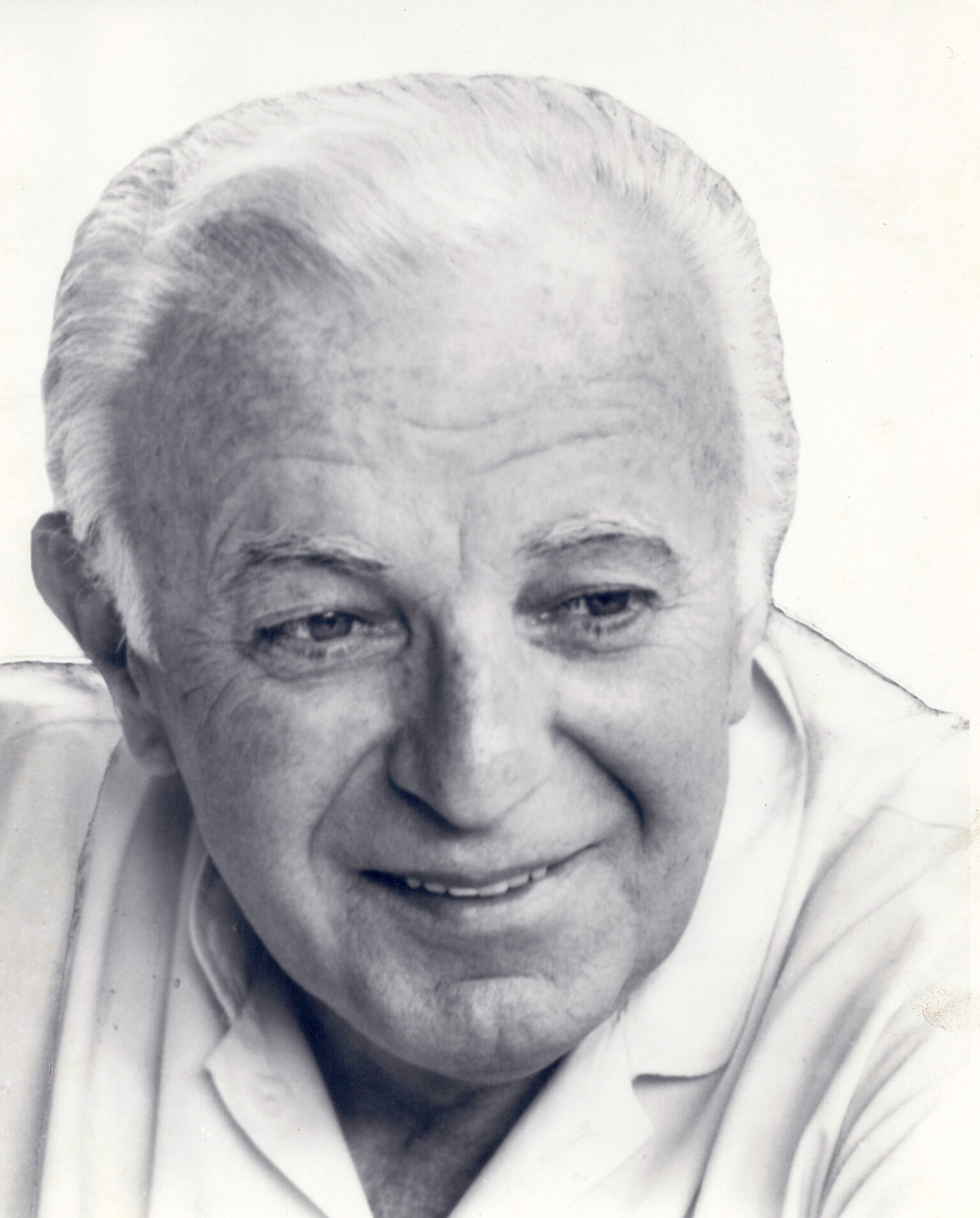
THANE’S BIRTHDAY: JULY 15

Dean and Founder of The Prosperos

(from TheProsperos.org/Thane)

thane_pub.jpg

Thane’s approach to teaching was revolutionary, his method the oldest kind of therapy in the world — agape. Agape is a very special kind of love: the unselfish, unconditional giving of love.

Nowhere in the world today is the idea of agape more clearly demonstrated or espoused than in the teachings of Thane of Hawaii. In his classes, in open lectures, on recorded lessons, and in his writing, Thane demonstrated a unique ability to draw the truest meaning of agape from his students.

Thane was the Founder and first Dean of The Prosperos. He was also a well-known figure in the fields of psychology, philosophy, education, consciousness, religion, and cosmology. His many years of research in such diverse areas as occultism, mysticism and Freudian and Jungian psychology enabled him to be among the first to bridge the gap between old and new, between modern scientific knowledge and ancient spirituality. Throughout more than 60 years of teaching, Thane found exciting new methods for communicating both timeless secrets and current insights from the fields of Mind study and physics to an immensely diverse following.

If one were to ask, “What did Thane teach?”, any answer that included philosophy, spirituality, ontology, thought-power, religion, psychology, or consciousness would be correct, but his aim could not be captured by categorical titles. The Teaching is not confined to intellectuality or what is called “metaphysics.” The goal is to reach each individual at his or her point of confusion and frustration and lead them to insight. The subject matter is not chosen to be charming social talk, or clever intellectual repartee, but rather to be meaningful guidance for those seeking a more wholistic view of themselves and of their world. Thus, Thane taught in either the oral tradition or through constantly up-dated letter-lessons to his students. (Prosperos Mentors continue this tradition of the “ear-whispered word.”)

Of all the topics and perspectives Thane addressed, none gained him more notice than his advanced positions (for the time) on sexuality.

Like Socrates, Thane knew that imparting information is not enough. Each student enters his search for Self at a unique state of mind and affairs. He realized that the task of a true teacher is to draw knowledge out of each student rather than to add information to misconception. Each student must, therefore, be taught as individually as possible.

Every person coming in contact with Thane’s teachings is connecting to a great legacy of knowledge. Thane’s extensive background ranged from some of the most noted thinkers in the fields of psychology to some of the most obscure groups studying metaphysics and occultism. He was a student of Mr. Gurdjieff (the Sufi master from Russia). He studied zen in Japan, yoga in India, occultism in Europe and America. Lillian DeWaters, Emmet Fox, J. Krishnamurti, C.G. Jung, Kurt Lewin , and Lewis Mumford are among the many famous thinkers with whom he associated. As a lecturer he traveled several times around the world, addressing groups ranging from a mere handful to thousands, teaching the common and the famous alike. Ernest Holmes, the founder of Religious Science, titled Thane, “the teacher of teachers.”

In addition, he served with the military during World War II; he was in the “underground” in Germany prior to World War II and spent months in Nuremberg prison. He authored many books (presently published by The Prosperos, by reprint permission are such titles as: I Saw Hitler Make Black Magic, Not So Secret Doctrine, Old Wine in New Bottles, Leap Into Sanity) and articles on a wide array of topics. Thane had an unusual association with the entire panorama of the world of entertainment. He appeared in plays, light opera, and motion pictures and counted many stars from the entertainment field, as well as from academia, among his students, clients and friends.

To some of his students, perhaps the most important factor of all was his sense of humor, coupled with precise timing and his judgment of when humor could be the best therapy of all. This is clear in the recorded classes where he could sometimes move from an atmosphere of thoughtful exploration to complete hilarity and then to profound insight in a matter of minutes.

“What did Thane teach?” . . . any answer that includes philosophy, spirituality, ontology, thought-power, religion, psychology, or consciousness would be correct.

Ultimately, Thane’s work has been for his students. Beyond the background and training which were his tools he brought a compassion for the world that was his alone. He exemplified the principle that the relationship between student and teacher is more than a professional liaison — it is a sacred trust. It was no less than life to him. Whatever the problem, the obstacle, the confusion or the hurt, it was there that he tried to touch and to heal.

Of all the topics and perspectives Thane addressed, none gained him more notice than his advanced positions (for the time) on sexuality. This may seem odd today, but it is nonetheless true. His approach was basic openness and frankness without dogma. In all of his teachings he proved the limitlessness of every person’s individuality and disproved the barriers placed on love — barriers arising from materialistic constructs which generate frustration and contribute to the agonized condition of the world today.

Because his concern was for all people —their hopes, their dreams, their fears — Thane was known as a social innovator. Throughout his life he advocated for every individual’s freedom and personal rights. He was among the first to stand against racial, social, and sexual hypocrisies. Compassion of this sort was unusual for a teacher so well known in fields relating to spirituality or religion. But it follows; Thane was never a man to draw lines but rather was a zealot at erasing them.

Thane’s concepts of the universe and of man are not new; his concepts of teacher and student are ageless, and yet his practice of timeless Truth was distinct. As Thane learned from his teachers, so his students learned from him. Thane went beyond his teachers in his understanding, and his hope was that his students would surpass him.

This is the tradition of Thane. Every class and all training of Mentors incorporates these principles. The ultimate goal is the student’s liberation from hypnagogic enslavement to materialistic theories.

Paul McCartney – Let It Be (Live Aid 1985)

Live Aid Sep 21, 2018 Paul McCartney performing with Alison Moyet, David Bowie, Pete Townshend and Bob Geldof at Live Aid in front of 72,000 people in Wembley Stadium, London on the 13th July, 1985. The event was organised by Sir Bob Geldof and Midge Ure to raise funds for the Ethiopian famine disaster. Broadcast across the world via one of the largest satellite link-ups of all time, the concerts were seen by around 40% of the global population. Remember to subscribe to stay up to date with all new releases in the channel.

(Courtesy of Dan Rather)

Uncoding Creativity in the Age of AI: What Makes a Great Poem, What Makes a Great Storyteller, and What Makes Us Human

By Maria Popova (themarginalian.org)

I once asked ChatGPT to write a poem about a total solar eclipse in the style of Walt Whitman. It returned a dozen couplets of cliches that touched nothing, changed nothing in me. The AI had the whole of the English language at its disposal — a lexicon surely manyfold the poet’s — and yet Whitman could conjure up cosmoses of feeling with a single line, could sculpt from the commonest words an image so dazzlingly original it stops you up short, spins you around, leaves the path of your thought transformed.

An AI may never be able to write a great poem — a truly original poem — because a poem is made not of language but of experience, and the defining aspect of human experience is the constant collision between our wishes and reality, the sharp violation of our expectations, the demolition of our plans.

Illustration by Olivier Tallec from Big Wolf & Little Wolf

We call this suffering.

Suffering is the price we pay for a consciousness capable of love and the loss of love, of hope and the devastation of hope. Because suffering, like consciousness itself, is a full-body phenomenon — glands secreting fear, nerves conducting loneliness, neurotransmitters recoiling with regret — a disembodied pseudo-consciousness is fundamentally incapable of suffering and that transmutation of suffering into meaning we call art: An algorithm will never know anything beyond the execution of its programmed plan; it is fundamentally spared the failure of its aims because failure can never be the successful execution of the command to fail.

We create — poems and paintings, stories and songs — to find a language for the bewilderment of being alive, the failure of it, the fulness of it, and to have lived fully is not to have spared yourself.

Falling Star by Witold Pruszkowski, 1884. (Available as a print.)

In his exquisite reckoning with what makes life worth living, Nobel laureate Elias Canetti captures this in a diary entry from the late spring of 1942. Under the headline “very necessary qualifications for a good Persian storyteller,” he copies out a passage from an unidentified book he is reading:

In addition to having read all the known books on love and heroism, the teller of stories must have suffered greatly for love, have lost his beloved, drunk much good wine, wept with many in their sorrow, have looked often upon death and have learned much about birds and beasts. He must also be able to change himself into a beggar or a caliph in the twinkling of an eye.

A generation before Canetti, the philosopher-poet Rainer Maria Rilke articulated the same essential condition for creativity in his only novel, reflecting on what it takes to compose a great poem, but speaking to what it takes to create anything of beauty and substance, anything drawn from one life to touch another:

For the sake of a few lines one must see many cities, men and things. One must know the animals, one must feel how the birds fly and know the gesture with which the small flowers open in the morning. One must be able to think back to roads in unknown regions, to unexpected meetings and to partings which one has long seen coming; to days of childhood that are still unexplained, to parents that one had to hurt when they brought one some joy and one did not grasp it (it was a joy for someone else); to childhood illness that so strangely began with a number of profound and grave transformations, to days in rooms withdrawn and quiet and to mornings by the sea, to the sea itself, to seas, to nights of travel that rushed along on high and flew with all the stars — and it is not yet enough if one may think of all of this. One must have memories of many nights of love, none of which was like the others, of the screams of women in labor, and of light, white, sleeping women in childbed, closing again. But one must also have been beside the dying, one must have sat beside the dead in the room with the open window and the fitful noises.

Art from An Almanac of Birds: 100 Divinations for Uncertain Days, also available as a stand-alone print and as stationery cards.

Couple with Carl Jung on the relationship between suffering and creativity, then revisit Annie Dillard on creativity and what it takes to be a great writer and Oliver Sacks, writing thirty years before ChatGPT, on consciousness, AI, and our search for meaning.

Walt Whitman on How to Really Own Your Own Life

By Maria Popova (themarginalian.org)

At the bottom of the abyss between us is the hard fact that to be a person, a particular person, is so profoundly different from what any other person can suppose. This is why one of the hardest learnings in life is that you cannot love — or scold, or coax, or palter — anyone out of their personal suffering or into their personal potential, cannot shepherd anyone else’s becoming. We may live our lives in parallel, but at the most fundamental level we experience aliveness alone, in the solitary chamber of the self, our experience a Möbius strip of consciousness folded unto itself, our becoming the most private, most significant work we have.

Walt Whitman (May 31, 1819–March 26, 1892) made public art of this private work, his poetry so eternal and universal precisely because it came from a place so personal. Animated at once by a profound existential loneliness and a deep feeling of connection to every atom, every person, and every blade of grass, he spent his life writing and rewriting Leaves of Grass — the record of his becoming — always addressing the person in the reader, always owning the person in himself.

Walt Whitman circa 1854 (Library of Congress)

While on the other side of the Atlantic Nietzsche was admonishing that “no one can build you the bridge on which you, and only you, must cross the river of life,” Whitman was reckoning with the rapids of responsibility for your life. He writes in one of the poems:

No one can acquire for another — not one,
Not one can grow for another — not one.
The song is to the singer, and comes back most to him,
The teaching is to the teacher, and comes back most to him,
The murder is to the murderer, and comes back most to him,
The theft is to the thief, and comes back most to him,
The love is to the lover, and comes back most to him,
The gift is to the giver, and comes back most to him — it cannot fail.

Echoing Hermann Hesse’s insistence that “no prophet or teacher can relieve you of the need to look within,” Whitman urges us to heed the singular call of our own becoming bellowing beneath the din of the world:

Underneath the lessons of things, spirits, Nature, governments,
ownerships, I swear I perceive other lessons,
Underneath all to me is myself, to you yourself.

Illustration by Margaret C. Cook for a rare 1913 edition of Leaves of Grass. (Available as a print.)

He distills this first and final truth of life in the closing stanzas of “Crossing Brooklyn Ferry” — one of the greatest poems ever written, and one of the most perspectival takes on time. Insisting that you must abide “no master, owner, better, God, beyond what waits intrinsically in yourself,” he observes that at the end of life, we all invariably face…

…the part that still looks back on the actor or actress,
The same old role, the role that is what we make it, as great as we like,
Or as small as we like, or both great and small.

A generation later, another of the world’s most original poets would come to compose the best manifesto I know for the courage to be yourself.

Complement with Virginia Woolf on how to hear your soul and Marion Milner’s superb field guide to self-possession inspired by Woolf, then revisit Whitman on what makes a great person and how to keep criticism from sinking your soul.

Consciousness, spirituality, biography, sexuality, androgyny, futurism, space, the arts, science, astrology, democracy, humor, books, movies and more