Scientists capture interstellar invader comet 3I/ATLAS growing a tail

‘This image is both a scientific milestone and a source of wonder’

News

By Robert Lea published 2 days ago (Space.com)

“We were excited to see the growth of the tail, suggesting a change in the particles from the previous Gemini images.”

When you purchase through links on our site, we may earn an affiliate commission. Here’s how it works.

Click here for more Space.com videos…

Video: https://cdn.jwplayer.com/previews/388I5IFa

https://imasdk.googleapis.com/js/core/bridge3.718.0_en.html#fid=goog_1986262233

Astronomers have captured a stunning image of a tail growing on interstellar invader Comet 3I/ATLAS. The image was captured on Aug. 27, 2025, by a team of scientists and students using the Gemini South telescope located on Cerro Pachón in Chile.

Discovered on July 1 by the ATLAS (Asteroid Terrestrial-impact Last Alert System), 3I/ATLAS is just the third-ever object found drifting through our solar system that is believed to have originated from around another star. The previous two interstellar intruders were the cigar-shaped ‘Oumuamua (officially designated 1I/2017 U1), discovered drifting through the solar system in 2017, and the comet/asteroid hybrid 2I/Borisov discovered two years later in 2019.

All of these objects offer scientists a unique opportunity to study material from another planetary system, and the growing tail of 3I/ATLAS is a tantalizing glimpse at the material that lies within this comet. But this opportunity is limited; as happened with ‘Oumuamua and 2I/Borisov, 3I/ATLAS’ orbit will eventually carry out of the solar system.YOU MAY LIKE

a blurry white smudge on a black background dotted with colorful stars
Observations of Comet 3I/ATLAS taken using the Gemini South Observatory (Image credit: International Gemini Observatory/NOIRLab/NSF/AURA/Shadow the ScientistImage Processing: J. Miller & M. Rodriguez (International Gemini Observatory/NSF NOIRLab), T.A. Rector (University of Alaska Anchorage/NSF NOIRLab), M. Zamani (NSF NOIRLab))

Regardless of whether they originate from the solar system or beyond, when comets like 3I/ATLAS approach the sun, solar radiation heats ices at their hearts. This causes solid ice they carry to change directly into gas, skipping a liquid phase, in a process called “sublimation.” This gas then erupts from the comet, forming its distinctive halo or “coma” and its characteristic tail. As comets get closer to the sun, they express more material and their tails become longer  — a process that these new images from Gemini South show happening for 3I/ATLAS.

“As 3I/ATLAS speeds back in to the depths of interstellar space, this image is both a scientific milestone and a source of wonder,” team leader and University of Hawaii Institute for Astronomy astronomer Karen Meech said in a statement. “It reminds us that our solar system is just one part of a vast and dynamic galaxy — and that even the most fleeting visitors can leave a lasting impact.”

The images of 3I/ATLAS were collected in collaboration with the Shadow the Scientists initiative, which connects researchers with the general public as they perform authentic scientific experiments, like catching an interstellar comet with a world-class telescope like Gemini South and its Gemini Multi-Object Spectrograph (GMOS) instrument.

an animation showing a fuzzy blob of light traveling through a background of stars
3I/ATLAS traveling through a background of stars as seen by the ground-based telescopes of the Las Cumbres Observatory. (Image credit: ESA)

In the image captured by the team, the wide coma of 3I/ATLAS can clearly be seen, as can the interstellar comet’s tail, which stretches out for around 1/120th of a degree in the sky (one degree is about the width of your little finger as viewed with your arm outstretched). As expected, as 3I/ATLAS approaches the sun and becomes more active, these features have grown since the comet was last imaged.

Get the Space.com Newsletter

Breaking space news, the latest updates on rocket launches, skywatching events and more!Contact me with news and offers from other Future brandsReceive email from us on behalf of our trusted partners or sponsorsBy submitting your information you agree to the Terms & Conditions and Privacy Policy and are aged 16 or over.

a blurry white smudge on a black background dotted with colorful stars
Comet 3I/ATLAS streaks across a dense star field in this image captured by the Gemini Multi-Object Spectrograph (GMOS) on Gemini South at Cerro Pachón in Chile. The multicolored streaks are stars in the background of the image. (Image credit: International Gemini Observatory/NOIRLab/NSF/AURA/Shadow the ScientistImage Processing: J. Miller & M. Rodriguez (International Gemini Observatory/NSF NOIRLab), T.A. Rector (University of Alaska Anchorage/NSF NOIRLab), M. Zamani (NSF NOIRLab))

Beyond the aesthetic value of the images, this sighting of 3I/ATLAS allows scientists to observe the wavelengths of light, or spectrum, it emits. This is useful because different chemicals emit and absorb light at their own characteristic wavelengths, which means the chemical contents of 3I/ATLAS leave their “fingerprints” in the spectrum from the comet’s coma and tail.

“The primary objectives of the observations were to look at the colors of the comet, which provide clues to the composition and sizes of the dust particles in the coma, and to take spectra for a direct measure of the chemistry,” Meech said. “We were excited to see the growth of the tail, suggesting a change in the particles from the previous Gemini images, and we got our first glimpse of the chemistry from the spectrum.”

These new observations suggest that the chemical composition of 3I/ATLAS is similar to that of comets that originate in the solar system. Because comets are formed at the same time as the planets and asteroids of a planetary system, this suggests that the processes that formed the planets of the solar system around 4.6 billion years ago are common to other planetary systems around stars other than the sun.

RELATED STORIES:

— James Webb Space Telescope takes 1st look at interstellar comet 3I/ATLAS with unexpected results

— Astronomers say new interstellar visitor 3I/ATLAS is ‘very likely to be the oldest comet we have ever seen’

— Astronauts could mine asteroids for food someday, scientists say

The Gemini South telescope will get another chance to examine 3I/ATLAS when it emerges from the other side of the sun in November 2025, and scientists are already looking forward to this rare opportunity.

“These observations provide both a breathtaking view and critical scientific data,” Bryce Bolin, research scientist from Eureka Scientific, who assisted the team in making these observations, said. “Every interstellar comet is a messenger from another star system, and by studying their light and color, we can begin to understand the diversity of worlds beyond our own.”

Join our Space Forums to keep talking space on the latest missions, night sky and more! And if you have a news tip, correction or comment, let us know at: community@space.com.

Robert Lea

Robert Lea

Senior Writer

Robert Lea is a science journalist in the U.K. whose articles have been published in Physics World, New Scientist, Astronomy Magazine, All About Space, Newsweek and ZME Science. He also writes about science communication for Elsevier and the European Journal of Physics. Rob holds a bachelor of science degree in physics and astronomy from the U.K.’s Open University. Follow him on Twitter @sciencef1rst.

(Contributed by JP Massar)
AI: Is metamorphosis painful to butterflies or to humans?


Google AI Overview

Metamorphosis is not painful for a butterfly because their nervous systems do not have the ability to feel pain; they are not conscious of the physical process. In contrast, the word “metamorphosis” in humans refers to personal growth and transformation, which can be a difficult and emotionally painful experience, but this is a metaphorical use of the term, not a literal biological process.  

For Butterflies

  • No Pain Receptors:Butterflies, like most insects, lack pain receptors in their nervous system. 
  • Unconscious Process:Metamorphosis is a completely unconscious and involuntary biological process for the insect. 
  • Digestion and Rebuilding:During metamorphosis, the caterpillar’s body is broken down and rebuilt into a butterfly using enzymes, hormones, and specialized cells. There is no conscious experience of this. 

For Humans 

  • Metaphorical Transformation:The term “metamorphosis” in relation to humans is a metaphor for significant personal, psychological, or spiritual change and growth.
  • Emotional and Psychological Impact:This kind of transformation can indeed be challenging, difficult, and even painful, as it often involves confronting old habits, beliefs, or aspects of oneself.
  • No Biological Process:There is no literal, physical process of metamorphosis in humans that causes pain.

AI responses may include mistakes. Learn more

The Pain of Becoming Something New

Leave a Comment / Betrayal TraumaI feel stuck / By Trish trishwhite.ca)

Lessons from a Luna Moth

Several months ago I watched a video of a luna moth that was making its rounds on Facebook. This tiny little caterpillar, as small as a pine needle kept growing and changing. Every so often, it would stop and wiggle and jolt and burst its way out of its skin. Then it would eat and eat, and before too long it happened again.

Don’t you think that would hurt? What’s it feel like when the very skin that has housed and protected you becomes too tight and you literally have to crawl out of it.

I get to see glimpses of this transformation every day in my office. People come in unaware that they’ve grown too big for their space. Their ideologies have changed. Their relationships have become stunted. Their jobs provide a pay cheque and very little else. They know something isn’t right and they are in the painful growth process of transformation.

I sometimes think anxiety and depression serve us in this way. They can make us painfully aware that something in our life isn’t working right now. A shift needs to happen.

Pain of Transition

We love the idea of metamorphosis but, being human, I suspect we struggle, more than caterpillars do, with the process. I’m of the belief that part of the problem is our brain. Although it has amazing capabilities, one of its flaws seems to be a tendency to resist change. It would rather you stay safe and small than risk the pain of metamorphosis.

And be sure metamorphosis, we now know, is a painful process. The mystery of what happened inside a cocoon was just that…a complete mystery. Now though, through modern technology, scientists have been able to see what happens in the days and weeks that the caterpillar is holed up in its cocoon.

And it’s gross. It’s not a beautiful rendering of painless growth. It’s not the awe inspiring sprouting and growing of beautiful wings ready to unfurl and lift the caterpillar to new heights.

Nope, that version is not real life.

Science blew the lid off that idyllic picture. Instead our poor little caterpillar, after already undergoing many painful skin shedding episodes, now completely dissolves in its own gastric juices!

There may be Moments You Don’t Recognize Yourself

That’s right. Almost total anhilation of what it was before. If you open the cocoon at the right time (please don’t do this!) you will find our caterpillar friend is nothing but goop. I bet he wouldn’t even recognize himself.

Some of you have been there haven’t you? All of a sudden you no longer recognize what you have become. Where once you enjoyed life, now you feel more like a pointless blob.

To make matters worse, we have audio samples of what it sounds like in the cocoon too! “In a lab at UCLA, scientists use high-tech tactile microscopes to read the vibrations inside the chrysalis. Those vibrations are then transformed to audio…The sounds are like that of an agonizing cry.” (Heuertz, Phileena. Pilgrimage of a Soul. 2010 quoting “The Secret Life of Butterflies,” Studio 360, NPR, KIOS 91.5, Omaha, Nebraska, Dec. 8, 2007).

While we picture a painless, smooth transition, instead our poor little friend is cut off from the world, slowly disintegrating into primordial goop in the dark with no one to reassure him there will be a better day tomorrow.

Now, we all know, it’s only a matter of time before the process completes and the butterfly emerges, unfurls its wings and takes off on a whole new adventure. But, when it was trapped in that painful darkness, did it have a clue what was in store for him or her? Did it know when it felt all alone that there was an entire world eager for its emerging self? Do you know that about yourself?

You Were Created for a Purpose

Scientists also tell us that butterflies have memory of their caterpillar days. Apparently puzzles they learned as a kindergarten caterpillars are able to be solved in their winged state.

I find that fascinating. We too remember the past. We remember what we were. I think perhaps the best gift of the butterfly is a reminder that you really don’t know what you are becoming. Press into it though. Go with what lies ahead. Resist the urge to stop growing. Don’t let your brain or any of your friends convince you to stop changing. Don’t give up because the pain is too much. You are morphing into something new.

Your Wings are in the Making

Have patience. Like the caterpillar, you must shed layer after layer. You may have to spend time in the dark. You may be cut off from previously important people in your life. You may become unrecognizable for a period. Press on. Your wings are in the making, beautiful thing.

Take some time and watch this video as you ponder what is beginning to feel too small in your world. Ask yourself where you are in this process. Remind yourself that your wings are in the making.

Trish White is a counsellor in Kamloops, BC, that has a string of shed skins behind her. Find out more how she can help you shed that skin that isn’t fitting here: https://trelliscounselling.ca

Caesar to Brutus: “The fault, dear Brutus…”

(Image from RSC.org.uk)

“The fault, dear Brutus, is not in our stars, But in ourselves,”

–Julius Caesar, Act 1, Scene 2,

The Tragedy of Julius Caesar, often shortened to Julius Caesar, is a historical tragedy by William Shakespeare, believed to have been written and first performed in 1599. The play portrays the political conspiracy that led to the assassination of the Roman dictator Julius Caesar and Rome’s subsequent civil war. Wikipedia

Originally published: 1599

Author: William Shakespeare

Ms. Rachel’s Plea to Congress To Help Gaza’s Starving Babies (starts at 5:30)


The Majority Report w/ Sam Seder
Sep 2, 2025 The Majority Report w/ Sam Seder A powerful resolution from the International Association of Genocide Scholars has declared Israel’s actions in Gaza as meeting the legal definition of genocide. Sam Seder and Emma Vigeland discuss the significance of this statement from a body of top international scholars and tie it to the growing public pressure on elected officials, exemplified by a poignant video from beloved children’s entertainer Ms. Rachel, who is advocating for aid to be sent to Gaza’s starving children.

Ms Rachel’s letter to Congress: https://www.instagram.com/p/DN4f-nuDD…

View this post on Instagram

A post shared by Ms Rachel (@msrachelforlittles)

Marcus Aurelius on your “sense of injury”

“Reject your sense of injury and the injury itself disappears.”

~ Marcus Aurelius

Interesting. What does he mean by my “sense of injury”? Does that mean that my mind accepts the possibility of being hurt? Or is Aurelius saying that some of us walk around with a chronic experience of ‘hurt’? Once I reject the possibility of being ‘hurt’, what I perceived as ‘pain’ miraculously turns into an opportunity to heal a mistaken belief.

Love,

Diederik

* Diederik is the Founder and Program Director of Choose Again

Marcus Aurelius Antoninus (April 26, 121 – March 17, 180) was Roman emperor from 161 to 180 and a Stoic philosopher. He was a member of the Nerva–Antonine dynasty, the last of the rulers later known as the Five Good Emperors and the …

Source: Wikipedia

Featured Books from New Thinking Allowed

In this book, P.M.H. Atwater explores the possibility of the soul, God, other worlds, heaven and hell, the afterlife, religion, and the purpose of life. It investigates and reports on the power of changed lives, the expansion of normal faculties, and the importance of spirituality. With drawings, cartoons, and sidebars from experts, The Big Book of Near-Death Experiences is also simple and accessible, designed for the busy reader who wants quick little nuggets of wisdom.


Cry the Beloved Mind is, indeed, a compassionate, respectful, self-help book which allows patients, their families, and the general reader to understand what their doctors are doing when using powerful mind-modifying medications such as Prozac, BuSpar and Tegretol. As for Dr. Neppe’s consultations in the book, he has taken a fresh approach, writing in a style that he describes as being “a play within prose.” It is fundamentally a dialogue between the generic “Doctor” and his patients or medical students using the entirely new literary genre of “sciction”-medical science expressed through fictitious composite case histories.


All the World an Icon is the fourth book in an informal “quartet” of works by Tom Cheetham on the spirituality of Henry Corbin, a major twentieth-century scholar of Sufism and colleague of C. G. Jung, whose influence on contemporary religion and the humanities is beginning to become clear. Cheetham’s books have helped spark a renewed interest in the work of this important, creative religious thinker.

Intelligent, Condescending Life Discovered In Distant Galaxy

Published: February 6, 2012 (TheOnion.com)

HOUSTON—Marking a momentous leap forward in humankind’s understanding of the universe, NASA scientists announced today they had received a radio transmission confirming the existence of intelligent, extremely condescending life in a galaxy nearly 13.8 billion light-years away.

According to officials at the Lyndon B. Johnson Space Center, the message arrived several days after researchers sent a signal to the recently discovered URFy-32924369 galaxy. Members of a highly arrogant alien species responded, saying it was “nice to finally hear from [our] quaint planet” and that it “certainly took [humanity] long enough.”

The extraterrestrials explained they had intercepted NASA’s transmission using their “far superior technology,” because they did not want to “wait the intervening billions of years to receive a simple message from a species working within the laughable constraints of the speed of light.”

“We were extremely excited to have made contact with this highly advanced form of life, but it quickly became clear they’re pretty big jerks,” said NASA scientist Raymond Morrison, referring frequently to a 24-page transcript of the interstellar transmission filled with patronizing language and backhanded compliments. “After telling us they hadn’t exactly been holding their breath waiting for us to figure out how to make contact with our ’charmingly simplistic devices,’ they informed us they had studied our planet millennia ago but decided it was ’too hopelessly primitive to be worthwhile.’”

According to NASA, the alien species described Earth’s 78-percent nitrogen atmosphere as a “decent start,” and said mankind had “come a long way in the past century, relatively speaking, considering it took [humans] a full 4 million years to walk upright.”

Scientists have expressed mix feelings about the landmark event, noting that while the thrilling discovery of intelligent alien life signals the dawning of a new age in our ability to answer fundamental questions about the very nature of existence, they had not expected an extraterrestrial species to be so dismissive of virtually every aspect of human life.

“We sent them very peaceful, welcoming messages, and they responded by saying it was ’marvelous’ that the human race had managed to sustain itself for so long without having made any noteworthy advances of any kind,” Morrison said of the aliens, who described the physical appearance of humans with the phrase “interesting-looking, would be the most polite way to put it.” “I mean, they weren’t threatening us in any way, but they didn’t have to be such pricks about everything.”

The contemptuous transmission casually discounts centuries of human achievement, with the aliens saying they could not believe mankind still deals with issues of disease and overpopulation. The message then goes on to openly mock humans’ “pathetically short life spans.”

“When we sent them examples of our very best cultural offerings, they said they ’rather enjoyed the amusing little tinklings’ of Mozart and the ’adorable scribblings’ of Rembrandt,’” said Morrison, adding that his team will no longer transmit samples of music and art for the aliens to belittle. “They then said they could completely understand how our incredibly low intelligence and level of evolutionary development would allow us to enjoy such ’low-caliber’ sensory stimuli.”

“They were absolutely relentless,” Morrison continued. “I personally feel pretty terrible about myself right now.”

The NASA scientists noted, however, that the tone of the discourse changed dramatically after the aliens were sent images of a man jumping from ramps while riding a Kawasaki Jet Ski.

“For some reason, when they saw this footage, we received a barrage of messages saying ’Hold on a second, what is that ?’ and ’Please, tell us everything about this Jet Ski,’” said Morrison, later reading several more excerpts from the transmission, among them, “How fast can the Jet Ski go?” and “Is the man riding the Jet Ski a king on your planet?” “They are evidently completely mesmerized by Jet Skis, and have offered us anything we want in exchange for the technology.”

At press time, NASA had received a transmission from the alien species in which they apologized for their earlier messages, saying they had “greatly underestimated the Keepers of the Jet Ski.”

Reality Checks for Lucid Dreaming

By Rebecca Casale. Explore our free lucid dreaming course.

(world-of-lucid-dreaming.com)

Clocks make good reality checks for lucid dreaming

Reality checks are a powerful lucid dreaming technique that can boost your self-awareness during the day and unlock your dream world at night. When combined with other lucid dream exercises, reality checks can intensify your efforts, or they can lead to spontaneous lucid dreams by ingraining the habit of reality testing.

What Are Reality Checks?

To master lucid dreaming, you must learn to differentiate between dreams and waking reality. In most dreams, the dreamer accepts the dream as real until they wake up, realizing that something was amiss.

By incorporating reality checks into your daily routine, you train yourself to perform them within dreams, triggering your conscious mind to realize, “I’m dreaming!”

What Makes a Good Reality Check?

A reliable reality check for the unpredictable dream world demands careful consideration. The common arguments for being awake, such as sight, touch, awareness, and a general sense of existence, are insufficient since they apply equally to the dream realm. The dreamer’s mind often lacks the clarity and logical thinking of the waking state.

To reliably discern when you are dreaming, you need a test that induces an “Aha!” moment of realization. It must consist of two components: a simple question and an “impossible” pre-determined action or experience.

Reality checks for lucid dreams

How To Do Reality Checks

One effective reality check involves pushing two fingers from your right hand into the palm of your left hand and willing them to pass through. In your waking life, this test consistently offers resistance, while in a dream, you can often pass your fingers through your palm.

Upon this realization, your conscious awareness awakens, providing clarity about the dream environment and your pre-programmed lucid dream goals.

“Once upon a time, I dreamt I was a butterfly, flittering hither and thither, to all intents and purposes a butterfly …suddenly I awoke… Now I do not know whether I was then a man dreaming I was a butterfly, or whether I am now a butterfly dreaming I am a man.”

~ Chuang-tzu

When conducting this technique during the day, ensure that you not only perform the physical action but also ask yourself, “Am I dreaming?” and genuinely mean it. Assess your surroundings, and ponder the solidity of objects, challenging your perception./p>

Repeat your chosen reality check a minimum of a dozen times daily and make each check count. Soon, you’ll find yourself asking the same question within a dream, triggering lucidity.

For instance, when I do a reality check, I might look at a cup on my desk and wonder if it really exists or am I imagining it? Can I definitely pick it up or might my fingers pass through it? If I look away and look back, is it still there?

How about the air? Can I infuse the air around me with new characteristics like warmth, color, or texture? This is how you build self-awareness, questioning your feelings and perceptions in the moment by experimenting with what’s real.

Be sure to come to a well-informed decision each time about whether you’re awake or dreaming. When a reality check occurs in a dream, it will jog your mind into critical thinking mode and you’ll realize you’re dreaming.

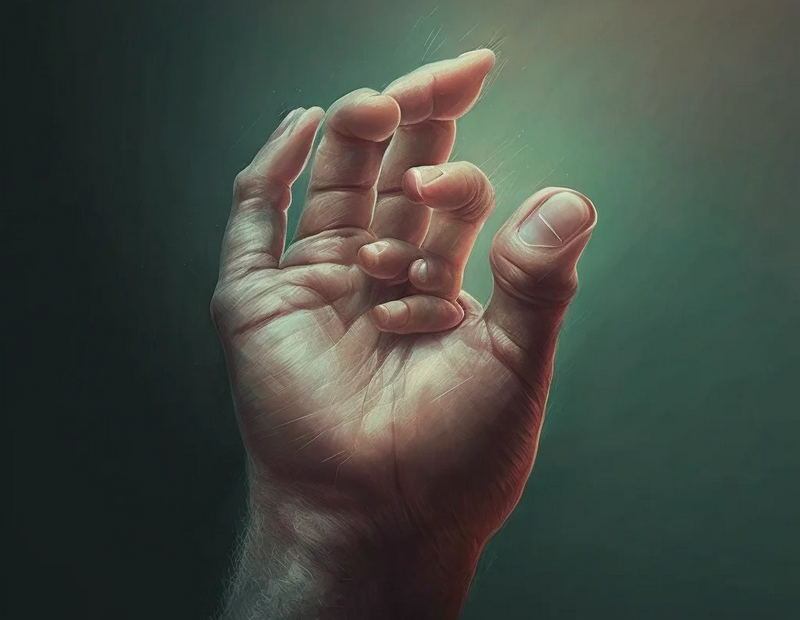
Like AI art, hands can look very weird in dreams

Top 10 Reality Checks for Lucid Dreams

While the finger and palm check is a reliable choice, you can also explore these “impossible” reality tests. You want to image the impossible actually happening, so the expectation effect works in a dream and gives up the illusion:

  1. Breathe – Hold your nose and mouth shut and imagine breathing.
  2. Jump – Imagine jumping across the room in slow motion.
  3. Read – Read a sentence twice and imagine it changing.
  4. Look– Imagine your vision gets clearer or blurrier at will.
  5. Hand– Imagine pushing your hand through a wall.
  6. Time – Look at a clock and watch the numbers morph and drift.
  7. Fly– Imagine flying out the window or hovering above the ground.
  8. Palms– Look at your palms and see your hands morph close-up.
  9. Mirrors – Stare into a mirror in low lighting and see your face change.
  10. Play – Play an instrument and hear extra sounds from nowhere.

For good measure, perform two reality checks each time. If one fails, the other acts as a backup. My go to reality check is trying to push my hand through the desk or wall. It’s such a great feeling when it actually happens in a dream and I become lucid; it feels real no matter how absurd the situation.

Enhancing Your Self-Awareness

The mind constructs patterns based on real-life experiences. For instance, since you’ve had the experience of gravity your whole life, you don’t need to repeatedly question it. You already know that you can’t float or take off at will. Likewise, you know the sky is blue, you can’t control objects with your mind, and walls are too solid to pass through.

However, questioning your basic experiences can promote a new way of thinking, in the waking world and in dreams. Engineers call it thinking from first principles. Psychologists call it bottom-up processing. The rule is: take nothing for granted.

Increasing your self-awareness is a fun and fast learning curve. Pay attention to your surroundings, examine them in detail, and question their nature. This approach establishes a direct path to lucid dreaming.

Play with your reality checks

Troubleshooting Reality Checks

As this is a very popular lucid dreaming technique, I get a lot of questions about how to do reality checks and why they don’t always work in dreams. Here are some of most common questions and answers.

How can I remember to do more reality checks each day?

Set up triggers that remind you to do reality checks, like reminders on your phone, sticky notes around the house, or draw a symbol on the back of your hand. You can also set up mental trigger points, reminding you to do a couple of reality checks every time you walk up stairs, pour a drink, or open a door.

Why aren’t any reality checks appearing in my dreams?

Ensure your process is mindful and meaningful. Since your dreams relay waking experiences, the more impressionable or frequent the experience, the more likely it is to arise in a dream. Combine reality checks with other lucid dreaming techniques for synergistic effects. Keep a dream journal and record a dream every night, practice dream incubation and meditation as you fall asleep.

Why didn’t my dreaming reality check make me lucid?

Ensure your waking reality checks are thoughtful and that you’re not simply going through the motions. It’s an easy trap to fall into when you have this same thought ten times a day. Use multiple phrasings of the question “am I dreaming?” Use your imagination to flick back and forth between what reality is showing you and what a dream could show you.

Occasionally, reality checks fail through no fault of your own. You may be having a very normal life-like dream, or even a false awakening. In fact, since lucid dreamers have many more false awakenings that non-lucid dreamers, it’s a good idea to perform a couple of deep reality checks every time you wake up.

World of Lucid Dreaming Academy Banner

About The Author

About The Author

Rebecca Casale is a lucid dreamer and a science writer with a special interest in biology and the brain. She is the founder of World of Lucid Dreaming and Science Me.

(Courtesy of HughJohn Malanaphy, H.W., M.)

AI: Slaves for rent in the Old South

A woodcut of a slave sale in Charleston (postandcourier.com)

Google AI Overview

In the Old South, “slave rentals” were part of the “hiring out” system, a common and profitable economic practice in which enslavers leased out enslaved people to others for a fixed period

. This system expanded the reach of slavery beyond traditional plantation owners, involving a wide range of white people in the institution. 

The process and economics of hiring out

  • The transaction. Owners would rent out enslaved men, women, and children for a specific fee and period, typically for a year, though shorter terms were also common. The enslaver would receive payment, while the hirer gained temporary control over the enslaved person’s labor.
  • Diverse hirers. People who did not own slaves, including farmers, urban businesses, widows, and artisans, frequently rented enslaved labor. Institutions like colleges and railroad companies also hired enslaved workers to fill positions.
  • Motivations for owners. Renting out enslaved people was a key strategy for enslavers to generate income, especially for those with “excess” hands. The practice was a significant component of the domestic slave trade, particularly as prices for enslaved people fluctuated. In some cases, owners would even rent out pregnant or nursing women at nominal fees to avoid the expense of caring for “unproductive” workers.
  • Advertisements. Hiring out was widely advertised in newspapers alongside notices for slaves for sale or for runaways. These advertisements helped connect owners with those in need of temporary labor. 

Experiences of hired-out enslaved people

  • Increased autonomy (and its limits). For some enslaved people, particularly skilled urban workers, the hiring-out system, especially a variation called “self-hire,” offered a limited form of independence. A self-hired slave might be able to find their own employer and housing, negotiate the terms of their labor, and manage a stipend for their living expenses.
  • New vulnerabilities. Despite potential opportunities, the system placed enslaved people in a precarious position. When hired out, they were separated from their families and communities and had to endure new living and working conditions under a temporary master who had little investment in their long-term health. As a result, hired slaves were at increased risk of abuse and neglect.
  • Expanded networks. Being hired out, particularly in urban settings, allowed enslaved people to develop wider social networks, learn new trades, and gain knowledge of the local landscape. This increased mobility also provided more opportunities for literacy and escape.
  • Resistance. Enslaved workers resisted the hiring system in various ways. Sometimes, resistance was overt, as when enslaved people at South Carolina College went on “strike” to protest a decrease in their labor force. In other cases, they were able to negotiate with owners and hirers to influence the terms of their work. 

Impact on the institution of slavery

  • Reinforced slavery. The hiring-out system made slavery accessible to a wider demographic of white Americans who couldn’t afford to purchase enslaved people outright. By involving more people in the economics of human bondage, the system strengthened the institution’s foothold in Southern society and reduced class differences among white people.
  • The paradox of autonomy. The system’s allowance of limited mobility and negotiation for some enslaved people created a paradox for slaveholders. While they benefited from the revenue, they also feared that the relative autonomy could undermine the strict controls of the system and encourage resistance or escape.
  • Perpetuated after the Civil War. Following the Civil War, many of the exploitative practices of the hiring-out system were mirrored in the convict leasing system, where formerly enslaved and other Black individuals were leased out for labor as a form of punishment for crimes. 

AI responses may include mistakes. Learn more

Consciousness, spirituality, biography, sexuality, androgyny, futurism, space, the arts, science, astrology, democracy, humor, books, movies and more