Dame Edith Louisa Sitwell DBE (September 7, 1887 – December 9, 1964) was a British poet and critic and the eldest of the three literary Sitwells. She reacted badly to her eccentric, unloving parents and lived much of her life with her governess. Wikipedia
“In the early 2000s I set out to reverse engineer longevity,” says Buettner. “Rather than searching for answers in a test tube or a petri dish, I looked for them among populations that have achieved what we want — long, healthy lives, and sharp brains until the end.”
After locating the world’s blue zones areas, Buettner and National Geographic took teams of scientists to each location to pinpoint lifestyle characteristics that might explain the unusual longevity. They found that though the blue zones communities are located in vastly different parts of the world, their residents share nine specific traits that lead to longer, healthier, happier lives. These traits are called the Power 9.
Move Naturally — “The world’s longevity all-stars don’t pump iron, run marathons, or join gyms,” says Buettner. “Instead, they live in environments that constantly nudge them into moving without thinking about it.”
Purpose — “People in the blue zones don’t wake up feeling rudderless. They’re interested in family, keeping their minds engaged. The Nicoyans called it plan de vida and the Okinawans called it Ikigai. For both, it translates to ‘why I wake up in the morning.’”
Downshift — “Even people in the blue zones experience stress. But what the world’s longest-lived people have that we don’t are routines to shed that stress. Ikarians take a nap and Sardinians do happy hour. Costa Ricans have a knack for creating happy moments every day.”
80% Rule — “Eat until you’re 80% full. Unlike most Americans, who keep eating until their stomachs are full, traditional Okinawans stop as soon as they no longer feel hungry.”
Plant Slant — “Until the late 20th century, the diets of every blue zone consisted almost entirely of minimally processed plant-based foods–mostly whole grains, greens, nuts, tubers, and beans.”
Wine @ 5 — People in the blue zones (except Adventists) drink alcohol moderately and regularly. The trick, if you do drink, is to drink one to two glasses per day with friends and food.”
Belong — “Healthy centenarians everywhere have faith. All but a handful of the centenarians we’ve interviewed belonged to a faith-based community. Denomination doesn’t seem to matter.”
Loved Ones First — “Successful centenarians in the blue zones put their families first. This means keeping aging parents and grandparents nearby or in the home.”
Right Tribe — “One of the most profound, measurable, and long-lasting things you can do to adopt a blue zones lifestyle is to build a social circle around yourself that supports healthy eating, activity, and emotional well-being.”
These are all worth exploring. Those that work for you, build into your life. Yet, it is not easy to live with these healthy practices in today’s world.
The Rise of Domination Systems Throughout the World
Social systems scientist Riane Eisler, one of the most original thinkers of our time, first wrote about the two contrasting systems in our world in her book, The Chalice & The Blade: Our History, Our Future:
“The first, which I call the dominator model, is what is popularly termed either patriarchy or matriarchy — the ranking of one half of humanity over the other. The second, in which social relations are primarily based on the principle of linking rather than ranking, may best be described as the partnership model.In this model — beginning with the most fundamental difference in our species, between male and female — diversity is not equated with either inferiority or superiority.”
In her most recent book written with anthropologist Douglas Fry, Nurturing Our Humanity: How Domination and Partnership Shape Our Brains, Lives, and Future, they say that for most of our two-million-year history humans have lived in balance with nature in true partnership. But in the last six thousand years 6,000 years (less than 1% of our history) domination systems have been on the rise.
Planet Aqua: Rethinking Our Home in the Universe
Like Riane Eisler, Jeremy Rifkin is a maverick social scientist who is changing the way we perceive our world. He is the author of 23 books including The Empathic Civilization, The Age of Resilience and most recently Planet Aqua: Rethinking Our Home in the Universe.
Rifkin says that when humans decided to attempt to tame the vast waters of our planet six-thousand years ago, it set in motion a time-bomb of destruction that is causing damage that puts our very existence at risk. Jane Goodall, Founder of the Jane Goodall Institute and UN Messenger of Peace, says,
“Planet Aqua will shock most people. Rifkin points out that instead of living on a land planet, we actually live on a water planet — fresh, salt, and frozen — and this changes all of our long-held beliefs. Now, climate change is rapidly disrupting the hydrosphere, taking us into a foreboding future of floods, droughts, heatwaves, wildfires, and hurricanes, pushing many species to extinction, including our own.”
Nature Bats Last: The Imminent Collapse of Hydraulic Civilization
“Our earliest ancestors were animists and conceived of the world around them as alive, vibrant, and brimming with spirits continually interacting in a boundaryless nature, of which our species’ agency was intimately intertwined,” says Jeremy Rifkin. “Six millennia ago along the Euphrates and Tigris Rivers in what is now Turkey and Iraq and, shortly thereafter, the Nile River in Egypt, the Ghaggar-Hakra and Indus rivers in the Indus Valley, the Yellow River in the Huang He Valley of China and later across the Roman Empire, our forebears began to harness the planetary waters for the exclusive use of our humanity. Now, in the grips of a warming planet, brought on in large part by a fossil fuel-driven water/energy/food nexus, the urban hydraulic civilization is collapsing in real time.”
Anthropologist Joseph Tainter studied numerous civilizations throughout history and recognized patterns of collapse which he described in his book The Collapse of Complex Societies. In The Fate of Empires and the Search for Survival, Sir John Glubb noted a similar pattern, that all “superpowers” from ancient Persia to the Roman and British Empires, collapsed after ten generations or approximately 250 years.
Thomas Berry was a “geologian” and a historian of religions. He spoke eloquently to our connection to the Earth and the consequences of our failure to remember we are one member in the community of life.
“We never knew enough. Nor were we sufficiently intimate with all our cousins in the great family of the earth. Nor could we listen to the various creatures of the earth, each telling its own story. The time has now come, however, when we will listen or we will die.”
Another visionary who has been sounding the alarm about the times in which we live is evolutionary scientist, Rebecca D. Costa. In her book, The Watchman’s Rattle: A Radical New Theory of Collapse, she says,
“The uneven rate of change between the slow evolution human biology and the rapid rate at which societies advance eventually causes progress to come to a standstill.”
She quotes her mentor world-renowned biologist E.O. Wilson, who has been called “the Darwin of the 21st Century.” According to Wilson,
“The real problem of humanity is that we have paleolithic emotions; medieval institutions; and god-like technology.”
“From an evolutionary perspective, social progress moves fast, but our brains — the apparatus that must process all this new information — evolve over millions of years. So, while the world is changing in picoseconds, my brain is struggling to keep up.”
This is the underlying reason, she believes, that all complex civilizations eventually come to an end.
The Truth Can Set You Free: Who Do You Choose to Be?
I wrote about the collapse in numerous articles including, “How You Can Survive and Thrive as the Ship of Civilization Collapses.” In the article I introduced readers to another visionary leader, Margaret J. Wheately, who more than anyone I know tells the truth about what we face and guides us towards a better future.
“This is the Age of Threat,” says Wheatley, “when everything we encounter intensifies fear and anger. In survival mode, we flee from one another, abandon values that held us together, withdraw from ideas and practices that encouraged inclusion and created trust in leaders. And, most harmfully, we stop believing in one another.”
She recognized that what we are seeing in the U.S. today is following the same pattern of collapse after 250 years of domination that were recognized by other experts.
But there is a better way. As Jeremy Rifkin says,
“We must give up our belief that it is our duty to dominate and control nature and reconnect as partners in all life on Earth. We must rethink the waters as a ‘life source’ rather than another ‘resource’ to exploit and learn to adapt to the hydrosphere rather than trying to get the hydrosphere to adapt to us.”
We must find our tribe outside the confines of “civilization.” The captains of “Ship of Civilization” would have us believe that even if the Ship is sinking, we might as well go down with the ship because we are all doomed (except the captains who imagine they will survive and thrive as the rest of us go under). That is the big lie of civilization. As my vision showed me, there are millions of alternatives and more and more lifeboats in the water every day, but you won’t learn about them in the corporate-controlled media. You can learn more here.
Each of us must claim our own path of service. Only by joining with others who have the courage to face the truth and to become “warriors of the human spirit,” as Margaret Wheatly call us, can we work together to create “Islands of sanity.”
We must act now, or we will be swept away by the currents of change. Wheatley says,
“My aspiration is for you to see clearly so that you may act wisely. If we don’t know where we are, if we don’t know what to prepare for, then any path we choose will keep us wandering in the wilderness, increasingly desperate, increasingly lost.”
You can also follow my own work and offerings at MenAlive.com. I look forward to hearing from you. If you have not yet subscribed to my free weekly newsletter you may do so here.
Best Wishes,
Jed Diamond
Founder and VHS (Visionary Healer Scholar) of MenAlive
Explore how the energies of this Full Moon Lunar Eclipse can impact your life. This Eclipse will be seen throughout the world bringing global energies to a halt for approximately 6 minutes; extra long. Stay mindful and expect powerful changes.
Set intentions around release, surrender, and trust in the unknown This New Moon eclipse isn’t about forcing outcomes but about planting seeds in the fertile darkness. Encourage clients to let go of rigid control and invite new pathways to unfold organically.
Focus on spiritual practices such as meditation, prayer, or dream journaling Pisces energy heightens connection to the unseen realms. Suggest they lean into stillness, pay attention to dream messages, or use rituals to strengthen their spiritual alignment.
Allow emotions to flow without judgment; use the eclipse as a cleansing tide Emotions may swell under this influence. Rather than resisting, remind them that tears, release, or even confusion are part of the healing process.
Let go of illusions, addictions, or escapist habits that cloud clarity The eclipse can act like a cosmic reset, shining light on patterns of avoidance. Clients can use this moment to begin breaking cycles that keep them from full presence.
Open to heightened intuition and subtle guidance from within The veil is thinner now. Encourage clients to listen to gut instincts, synchronicities, and subtle nudges — the universe may be whispering through them.
Create space for rest, stillness, and creative inspiration Pisces thrives in imagination. Suggest scheduling downtime, engaging in art, music, or writing, and letting inspiration emerge from quiet moments.
Be mindful of boundaries — Pisces energy can blur them easily Compassion is beautiful, but without boundaries it can lead to overwhelm. Help them recognize where they’re absorbing others’ energy and practice gentle but firm self-protection.
Lean into compassion and forgiveness, starting with the self This eclipse supports deep healing through softness. Clients can reflect on where they’re holding onto guilt or resentment, and use this lunar reset to cultivate acceptance and grace.
Pod Save America Sep 7, 2025 Pod Save America It can feel like all is lost under Trump 2.0, but America has faced extremely dark chapters before and come out on the other side. Heather Cox Richardson—professor, historian and author of the most-read newsletter on Substack, Letters from an American—joins the show to share her long-view approach for this shortsighted era. She walks Dan through the biggest challenges to American democracy throughout history, how she believes we got to this MAGA moment, and what fuels her optimism about the future of the country. CHECK OUT OUR SPONSORS: SIMPLISAFE – http://simplisafe.com/crooked STAMPS – http://stamps.com CODE: CROOKED COOK UNITY – http://cookunity.com/crookedfree CODE: CROOKEDFREE QUINCE – http://quince.com/crooked CHAPTERS 00:00 – Intro to Heather Cox Richardson 01:25 – Finding a Voice (and Audience) on Substack 08:44 – Writing “Letters from an American” 12:24 – Trump and the Myth of the “American Cowboy” 23:43 – Subscribe for Ad-Free Videos 25:00 – Ad Break 1 27:49 – Republicans vs Conservatives vs Radical Extremists 30:37 – Is the Trump Era Actually Unprecedented? 35:09 – Hiding Racism Under an Economic Argument 37:50 – What Drives Political Change? 46:07 – From Barack Obama to Trump and MAGA 50:52 – Ad Break 2 54:06 – Trump’s Deployment of Federal Troops 58:48 – Is Democracy Losing? 01:06:44 – Lessons for Today
Robert Reich Sep 4, 2025 I had the pleasure of joining hundreds of Texans recently at the Houston Progressive Forum. Watch our full conversation about my new book, the gerrymandering wars, and standing up to tyrants. To learn more about my new book (and potentially purchase a copy if you feel inclined), please purchase it from an independent bookseller or from Bookshop: https://bookshop.org/p/books/coming-u… And special thanks to Randall Morton, Progressive Forum executive director.
This one went fast. It feels like yesterday Uranus entered Gemini, turning things upside down in its signature way.
On September 6th, 2025, Uranus stations retrograde at 1° Gemini. It will slip back into Taurus on November 8th, 2025 and stay there until April 26th, 2026.
Uranus will spend almost half a year in Taurus – to complete the Taurus lessons and tie off what still needs grounding before Uranus moves forward in Gemini for good.
When Uranus (and all outer planets) stations – direct or retrograde – its energy is amplified. The week before and after September 6th hums with that fast, zippy Uranian charge.
A station is also an invitation to remember what Uranus is about.
When a planet stations – in a sky where everything else keeps running in its lane – we can’t help but pay attention. It’s like being at a track meet: 8 runners streaming forward, and 1 suddenly stops. Everyone looks.
So what’s this about? Why did the Uranus runner stop? What is it drawing our attention to that we’d normally miss?
We often tag Uranus with words like freedom, rebellion, or innovation. These qualities are useful, but they don’t tell much about how Uranus operates. To really understand Uranus, let’s drop the buzzwords and go back to function – to see how Uranus actually ‘works’.
Uranus – What Happens After Saturn
Astronomically, Uranus follows Saturn, being the first planet invisible to the naked eye.
Uranus (together with Neptune and Pluto) form the realm of outer planets. Unlike planets between the Sun and Saturn – which are all visible, therefore concrete, graspable, accessible to our awareness, – Uranus is invisible.
This means we can’t make sense of it in the same way we’d make sense of Mars, Jupiter or Saturn.
Uranus is a completely different animal – and its primary role can be best understood in the context of the planet that precedes it: Saturn. Uranus, as the planet after Saturn, represents what happens once we’ve fully individuated Saturn and are ready for the next step.
We know Saturn as the architect of the material world – form, duty, accountability, boundaries.
Uranus is what becomes possible once that framework is in place.
It’s the clean break after we’ve done the work, the clarity that lets us step beyond Saturn’s rings – rings that give us structure, but that also draw a line: ‘you can’t cross this’.
Uranus – Freedom?
And it’s in the missing Saturn dynamics that we find why Uranus’ relationship to freedom is so often misunderstood.
We usually associate freedom with revolutions, rebels without a cause, being ‘independent’ – doing whatever we want instead of what’s expected, breaking the rules, and so on.
We tend to equate freedom with revolt – rule-breaking, hot takes, dramatic exits.
However, authentic Uranian freedom is quieter: it understands. From that lucid place it simply unhooks and moves on, without fuss or fanfare.
The purest expression of freedom is a clean departure. Not the broadcasted exit – “I’m mad at this group so I’m leaving!” (followed by the classic reply: “You’re not an airport; no need to announce departures”). The Uranian move is to naturally outgrow the situation.
Understanding that people are in their own process, moving at their own timing. And when our frequency no longer matches a person or a place, we simply go find what does.
Freedom is the deep knowing that true freedom is being true to oneself – not being driven anymore by what Saturn wants us to master: societal recognition, success, approval.
Uranian freedom is the clarity that says: “Yes, all these things are fine, but who’s the real me beyond these roles?”
Uranus often brings change – unexpected change, quick change – because when a situation is outgrown, moving on is the natural next step.
And when change is resisted, it tends to erupt through Uranus’ ‘unexpected’ disruptions – which aren’t really unexpected at all if we look honestly at the signs that were already there.
Uranus is the understanding that no one is forcing us in a situation that does not honor our authentic self, and that we always have a choice – if not in concrete circumstances, then at least in how we respond and how we frame the experience.
Saturn – The Skipped Step
And there is a reason for this which loops back to the astronomy we mentioned. Uranus follows Saturn. When we feel ‘stuck’ and frantically chase “freedom,” it’s often because we’ve skipped a step – we haven’t fully digested Saturn.
Freedom – real freedom – must be earned.
And as counterintuitive as it may sound when we’re talking about Uranus, freedom must be earned the Saturn way – by keeping promises, learning the rules, respecting hierarchies, doing the unglamorous reps, and eating some humble pie.
How many times have we been unhappy with the rules and demands of the world? But these rules and demands are what hold society together – without them, there’d be chaos, and we’d be affected too.
How many times have we been sure we knew better than a parent, teacher, manager, or leader? Guilty, guilty, guilty and guilty.
But there’s a reason why these people have the role they do: it must involve some sort of Saturn ladder climbing, accumulated experience, and doing at least some things right.
And if they don’t do a good job, they will eventually face the consequences – but we don’t know that, and that’s their journey, not ours.
Trying to bypass the Saturn ladder (not showing up on time, doing the opposite of what authority asks) in the name of ‘freedom’ may give us a sugar high – fleeting glimpses of what resembles freedom – but this might just be our ego having an ‘I’m important’ moment.
What happens when Saturn is skipped?
Uranus Retrograde – Freedom Must Be Earned
WhenSaturn is skipped, Uranus ‘freedom’ is not liberating – it’s alienating.
We drown in options. We get overwhelmed with choice. We don’t know what to trust because our psyche is still at the Saturn stage – secretly wanting a parent figure to set the edges.
We can see this collectively in democracy – a Uranian construct, at its core.
Without Saturn’s grounding, democracy can leave people lost and disoriented, and revert back to “tradition” – read Saturn -, or embrace “belief systems” – read Jupiter – to restore a sense of order in the face of the alienating ‘freedom’ that an unearned Uranus brings.
Freedom, if not earned through Saturn’s sweat and tears, it’s not real freedom. It means nothing, and it does more harm than good.
When the Saturn function of our psyche (diligence, delivery, sustained effort) is integrated, when we’ve earned competence or at least solid footing in the material world, we naturally outgrow the old container.
Pay attention to your inner weather at this Uranus station.
Are you excited? Restless? Anxious? Some itch you can’t quite place, but know you need to act on?
What would need to happen – and which Saturn qualities would need shoring up (time, boundaries, skill, accountability) – so that you naturally outgrow what feels too tight?
In our individuation process, we follow the stepwise path: Mars → Jupiter → Saturn → Uranus.
With Uranus retrograde – and its return into resourceful Taurus – the reminder is clear: freedom is not free; it must be earned.
Lindsey Halligan, the White House official leading a review of the Smithsonian Institution, said you “can’t really talk about slavery honestly unless you talk about hope and progress” during a Newsmax appearance on Wednesday.
Newsweek contacted the Smithsonian Institution for comment on Thursday via email outside of regular office hours.
Why It Matters
On August 12 Halligan wrote to Smithsonian Secretary Lonnie Bunch saying the White House would lead “a comprehensive internal review of selected Smithsonian museums and exhibitions.”
On his Truth Social website President Donald Trump described the Smithsonian as “OUT OF CONTROL” and said museums across the United States are “WOKE.”
Critics have accused the White House of “political interference” and pushing a “sanitized” version of history, while supporters claim the Smithsonian fails to achieve political balance.
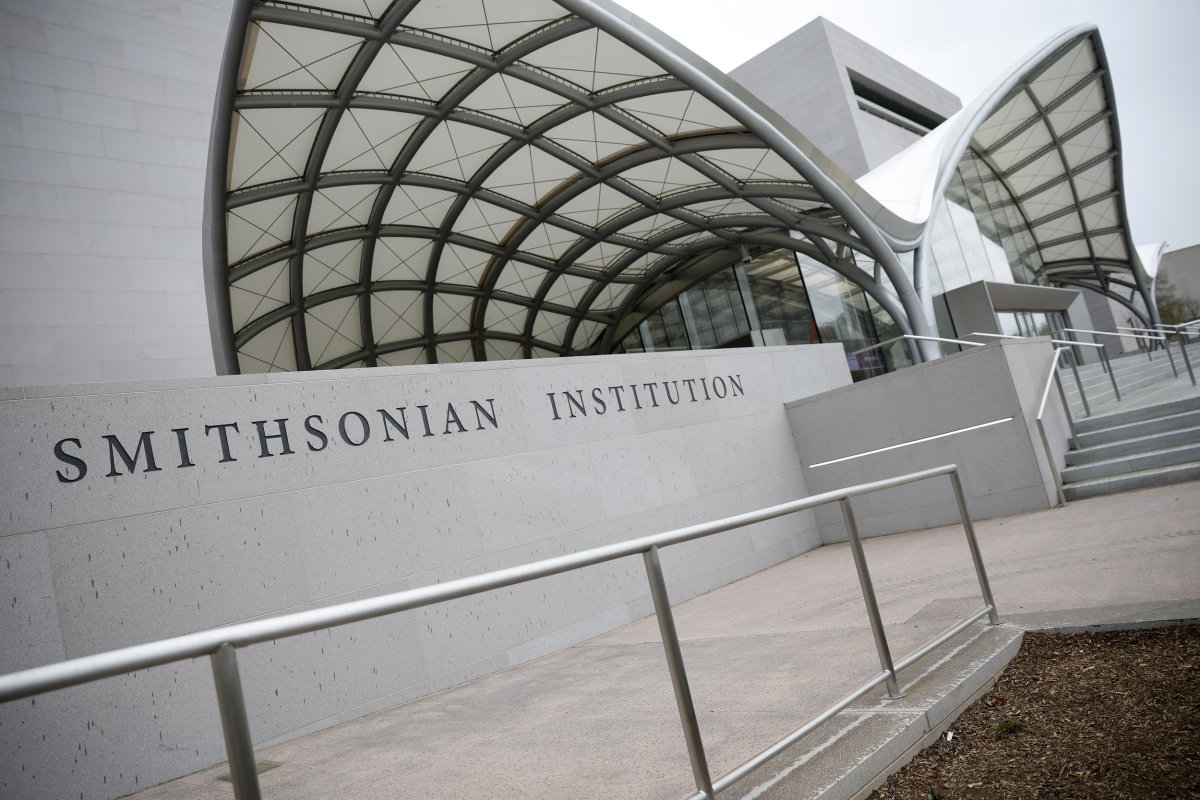
A Smithsonian Institution sign is seen on the National Air and Space Museum on the National Mall in Washington, D.C., on March 28, 2025. KEVIN DIETSCH/GETTY
What To Know
Speaking to Newsmax Halligan said she had written to the Smithsonian asking for details about its exhibits to try and find where the museum group “went wrong,” adding: “Museums that are over 70 percent funded by the federal government shouldn’t be laboratories for political experiments.”
Referring to slavery Halligan added: “It’s not about whitewashing it’s about full context, so while slavery is obviously a horrible aspect of our nation’s history you can’t really talk about slavery honestly unless you also talk about hope and progress and I think we need to be focusing on the progress that we’ve made then and we need to stop focusing so much on the lack of progress.
“We need to keep moving forward as a country. Our 250th anniversary as a country is coming up next July and we’re hoping the Smithsonian and D.C. is beautiful and amazing and a place that all Americans want to come visit during that time.”
Halligan wrote to Smithsonian Secretary Bunch on August 12 saying she would lead a “comprehensive internal review of selected Smithsonian museums and exhibitions.”
According to the letter the first phase of the review will focus on the following museums: National Museum of American History, National Museum of Natural History, National Museum of African American History and Culture, National Museum of the American Indian, National Air and Space Museum, Smithsonian American Art Museum, National Portrait Gallery, and Hirshhorn Museum and Sculpture Garden.
It said additional museums could be included later as part of a second phase of the review.
In a statement sent to Newsweek the Smithsonian said: “The Smithsonian’s work is grounded in a deep commitment to scholarly excellence, rigorous research, and the accurate, factual presentation of history.
“We are reviewing the letter with this commitment in mind and will continue to collaborate constructively with the White House, Congress, and our governing Board of Regents.”
On August 14 Mary Trump, the president’s estranged niece, highlighted his pressure on the Smithsonian Institute as an example of the “unique threat” she believes he poses to the future of the U.S.
The removal of an exhibition covering Trump’s two impeachment bids from the Smithsonian National Museum of American History recently sparked backlash.
What People Are Saying
Lindsey Halligansaid on Newsmax : “Classrooms shouldn’t be stages upon which teachers can preach their various indoctrination masquerading as eternal truths and similarly museums that are over 70 percent funded by the federal government shouldn’t be laboratories for political experiments.
“And what we’re doing is we just sent a letter to the Smithsonian asking for more information regarding their exhibits, their placards, to try get to the bottom of what happened and where the Smithsonian went wrong and try to make the Smithsonian amazing and great and live up to what the president wants the Smithsonian and D.C. to be.”
Sarah Weicksel, the executive director of the American Historical Association, told Newsweek via email: “The Smithsonian has an international reputation for the integrity of its research and scholarship, and it is a trusted resource to which teachers turn for high quality educational content. Partisan political intervention into museum professionals’ work stands to erode public trust. The public must have access to a whole and complex history of the American past, not the sanitized and incomplete version preferred by the current administration.”
What Happens Next?
It remains to be seen what changes the Smithsonian Institution will make in response to criticism from the White House, and what the reaction to these will be from the broader artistic and historical communities.
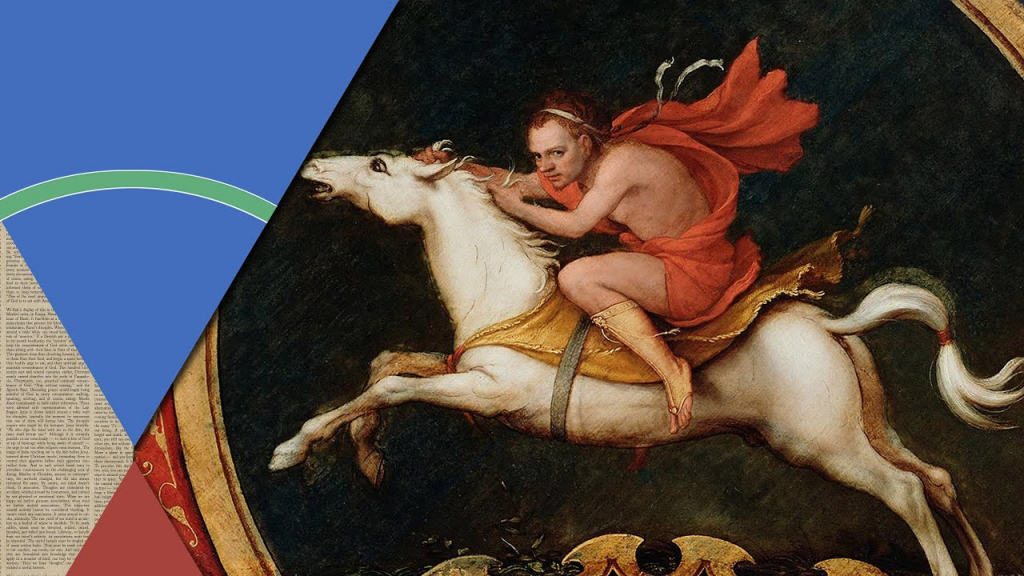
George Gurdjieff said, “Inside us we have a horse; it obeys orders from outside. And our mind is too weak to do anything inside. Even if the mind gives the order to stop, nothing will stop inside… It is easy to decide to change sitting quietly in your room. But as soon as you meet someone, the horse kicks.”
“Accept the things to which fate binds you, and love the people with whom fate brings you together, but do so with all your heart.”
~ Marcus Aurelius
Interesting. What does he mean by my “sense of injury”? Does that mean that my mind accepts the possibility of being hurt? Or is Aurelius saying that some of us walk around with a chronic experience of ‘hurt’? Once I reject the possibility of being ‘hurt’, what I perceived as ‘pain’ miraculously turns into an opportunity to heal a mistaken belief.
Love,
Diederik
* Diederik is the Founder and Program Director of Choose Again
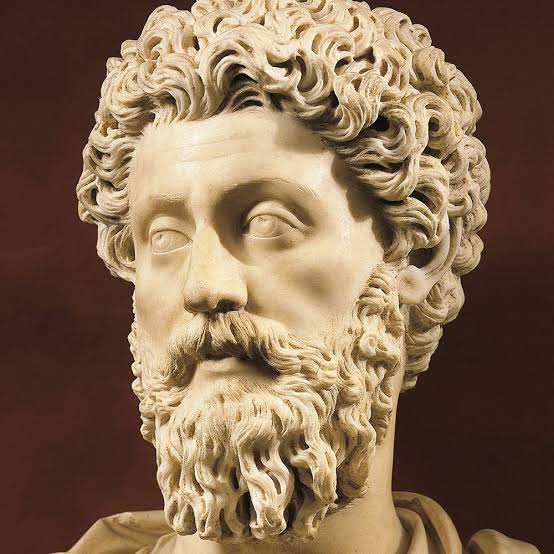
Marcus Aurelius Antoninus (April 26, 121 – March 17, 180) was Roman emperor from 161 to 180 and a Stoic philosopher. He was a member of the Nerva–Antonine dynasty, the last of the rulers later known as the Five Good Emperors and the …