Russell Brand is an English comedian, actor, radio host, author, and activist. Jim Breuer is a stand up comedian, actor, author, singer and host.
The group talks about everything from consciousness to group dynamics.

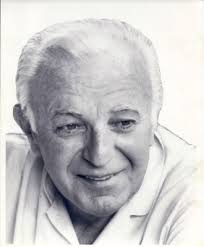
Thane of Hawaii
Got an email from Prosperos docent Brian Wallenstein, who is holding down the fort in Mt. Shasta, California. He mentioned Thane’s 1970ish pamphlet “Old Wine in New Bottles” which I didn’t have in my “library.” So I ordered the last one available on Amazon and read through it. It is a compilation of several letters from Thane to his students posted from various West Coast cities, all dated in the year 1936, twenty years before The Prosperos even began and ten years before I began (in my present form).
In one chapter called “Faith,” Thane exudes about the new Oakland-San Francisco Bay bridge which had just opened in 1936. Thane says: “I have just experienced one of the big thrills I have been looking forward to for years, driving across the new Oakland-San Francisco Bay Bridge. Here is an achievement too big to put into words that imparts something to one that is good for the soul. I have seen some big things in my life, but nothing has ever meant to me just what this bridge means. For instance, seeing the Grand Canyon leaves one breathless and awe-stricken. It gives some idea of the immensity of God’s plan and its depth and grandeur, but still it is God’s handiwork through nature. In driving across the new bridge one has the same feeling concerning man, that he really has dominion over whatever he sets his mind upon.”
In another chapter called “Relaxation,” Thane says: “When we talk to God we should talk in terms of a lover.” And he gives us this prayer as an example: “In God have I put my trust; I will not be afraid what men do unto me; For the Lord God is a sun and shield, the Lord will give grace and glory; no good thing will be withheld from them that walk upright. For He shall give his angels charge over thee, to keep thee in all they ways.”
And finally in his chapter called “He Is Risen,” Thane says this: “The linking of the Christ Immortality to the body is the most Jesus Christ-like move one can make, The scriptures abound with His statements regarding this reality. Any attitude other than immortality of substance in its prime sense is wholly unreconcilable to the truth of the Master’s teachings.”
Good luck finding this book, however.
Qadar (Arabic: قدر, transliterated qadar, meaning “fate”, “divine fore-ordainment”, “predestination”) is the concept of divine destiny in Islam. It is one of Islam’s six articles of faith, along with belief in the Oneness of Allah, the Revealed Books, the Prophets of Islam, the Day of Resurrection andAngels. This concept has also been mentioned in the Quran as Allah’s “Decree”.
In Islam, “predestination” is the usual English language rendering of a belief that Muslims call al-qaḍāʾ wa al-qadr. The phrase means “the divine decree and the predestination”; al-qadr derives from a root that means to measure out.
(Wikipedia.org)
The Tempest hit theaters on December 10th, 2010.
Cast: Helen Mirren, Felicity Jones, Djimon Hounsou, Russell Brand, Alfred Molina, Ben Wishaw, Chris Cooper, Alan Cumming, David Strathairn, Reeve Carney
In her big-screen adaptation of Shakespeare’s mystical thriller “The Tempest,” Academy Award-nominated Julie Taymor (“Across the Universe,” “Frida,” “Titus”) brings an original dynamic to the story by changing the gender of the sorcerer Prospero into the sorceress Prospera, portrayed by Oscar winner Helen Mirren (“The Queen”). Prospera’s journey spirals through vengeance to forgiveness as she reigns over a magical island, cares for her young daughter, Miranda, and unleashes her powers against shipwrecked enemies in this exciting, masterly mix of romance, tragicomedy and the supernatural.
The Tempest trailer courtesy Touchstone Pictures.
 A rendering of the orbit, shown in orange, of 2015 RR2245, the latest likely dwarf planet to be discovered in the solar system’s Kuiper Belt. Its path around the sun takes about 700 years. The blue circles show the orbits of the major planets. CreditAlex Parker/OSSOS
July 14, 2016 (New York Times)
The neighborhood beyond Neptune is becoming ever more crowded, with astronomers announcing this week the discovery of another likely dwarf planet.
A survey at the Canada-France-Hawaii Telescope in Hawaii has been tracking more than 600 bodies in a ring of icy debris known as the Kuiper belt. One of them turned out to be the likely dwarf planet.
“This is a big fish among a whole lot of small ones we’re working with,” said Michele Bannister, a postdoctoral fellow at the University of Victoria in British Columbia who is working on the survey.
In the year since NASA’s New Horizons spacecraft flew past Pluto, planetary astronomers continue to make new discoveries in the Kuiper belt and what it might reveal about the earliest days of the solar system. The study of these objects also offers hints about the formation and migration of the gas giant planets: Jupiter, Saturn, Uranus and Neptune.
Even if the newly found world is a dwarf planet, however, it will probably be years before it might earn official designation — part of the confusion of definitions that followed the International Astronomical Union’s decision in 2006 to demote Pluto and reduce the solar system to eight planets from nine.
More than 100 bodies in the solar system, all but one located along the ring of icy debris beyond Neptune, appear to meet the definition of a dwarf planet, a category that the astronomical union created to describe Pluto as well as Ceres, the largest asteroid, and Eris, a Kuiper belt object slightly smaller than Pluto. (A full-statured planet has an additional requirement: It must have “cleared the neighborhood” of smaller debris.)
If dwarf planets were to be reclassified as planets, as advocates for restoring Pluto to full planethood status hope to do, forget about ever trying to devise a workable mnemonic device.
The new object, designated 2015 RR245, was first spotted in February as the astronomers looked through images taken five months earlier. Further observations a few weeks ago confirmed the object’s 700-year loping path around the sun.
The astronomers cannot directly measure the object’s size. Rather, from its brightness, how far away it is and an assumption of how reflective its surface is — most Kuiper belt objects are roughly the darkness of coal — they estimated the diameter to be 370 to 500 miles wide.
They also cannot directly tell if 2015 RR245 is round — the definition of a dwarf planet requires that the gravity is strong enough to pull the body into the shape of a ball.
Mimas, a 250-mile-wide icy moon of Saturn, is round, and it is likely that the much larger 2015 RR245 is also round.
The astronomical union has been slow to designate new dwarf planets, adding just two since 2006: Haumea and Makemake. But there is a slew of additional Kuiper belt objects larger than Mimas.
If the 435-mile diameter is accurate, 2015 RR245 would rank as just the 19th largest potential dwarf planet. Larger objects include Quaoar, Orcus, Salacia and still-unnamed objects with temporary designations like “2007 OR10” and “2002 MS4.”
“I hate to say any Kuiper belt object is uninteresting, but it’s a typical Kuiper belt object that is in the top 20 biggest ones,” said Michael E. Brown, a professor of planetary astronomy at the California Institute of Technology who discovered Eris and most of the larger Kuiper belt objects through a sky survey a decade ago. “This one is no more or less bizarre than most of them.”
Dr. Brown’s computer keeps track of large Kuiper belt objects, and currently, 96 of them appear to be larger than Mimas and thus most likely to be round dwarf planets. Another 300 are smaller, but possibly could still be large enough to be round. Dwarf planets are “not a rare class of objects in the outer solar system,” Dr. Brown said.
Dr. Brown and a colleague, Konstantin Batygin, further upended the field this year when they proposed the existence of a new planet, somewhere between the size of Earth and Neptune, in an orbit far beyond Pluto. They made their prediction based on the orbits of distant objects that all appeared to be aligned in roughly the same direction, nudged by the gravitational force of the unseen planet, which they are calling Planet Nine.
Dr. Bannister’s dwarf planet is not distant enough to be affected by Planet Nine, but at least one of the 600 objects tracked by the survey is. She declined to give details, but has described it in talks, including one attended by Dr. Brown.
“I know that it’s going to fit in at least with most of the story,” Dr. Brown said. “It’s exactly in the direction it should be for Planet Nine.”
Dr. Brown said Planet Nine, if it exists, could be confirmed in two to three years.
S. Alan Stern, the principal investigator of the New Horizons mission and one of Pluto’s most vocal defenders, said the ninth planet was discovered long ago. “My opinion about Planet Nine, which is Pluto, is just the same,” he said. “It’s a planet.”
He agrees with Dr. Brown’s assertion that many objects as small as 2015 RR245 or smaller are almost certainly dwarf planets, and he thinks they should all be planets.
Dr. Stern has even gone a step further, arguing that round moons like Earth’s moon should also be counted as planets. “There are a lot of little guys,” he said. “We were just wrong to think that there were just a few planets and they were all close and they were all big like Jupiter or big like the Earth.”

The novel is set in South Africa, home to five distinct populations: Bantu (native Black tribes),Coloured (the result of generations of racial mixture between persons of European descent and the indigenous occupants of South Africa along with slaves brought in from Angola, Indonesia, India, Madagascar and the east Coast of Africa), British, Afrikaner, and Indian, Chinese, and other foreign workers. The novel traces the history, interaction, and conflicts between these populations, from prehistoric times up to the 1970s.
Michener writes largely from the point of view of the Afrikaners, descendants of Dutch settlers and French Huguenot immigrants who traveled to South Africa to practice freedom of worship in theCalvinist tradition, and other European groups (such as the Germans), all of whom were absorbed by the Afrikaans-speaking Dutch Reformed Church. The Afrikaners, whose Dutch ancestors first established a trading and refueling stop at Cape Town in the 17th century to service ships moving between Holland and Java, and whose ranks were augmented by Huguenot and other northern European immigrants, considered themselves the “New Israelites“. They found in the Old Testamentverification for their belief that God favored their conquest of the new land. Their strict, fundamentalistinterpretation of the Bible supported them through the Great Trek of the 19th century; battles againstZulu and other Bantu tribes, who also laid claim to lands to the north; the Anglo-Boer War (when after the British won the war on the conventional battlefield and took all the main Boer towns and cities, a few Boer Commandos or guerrilla bands of a few hundred Afrikaner farmers continued to hold out in isolated pockets of the veld till the cessation of hostilities, despite tens of thousands of British regulars combing the countryside in pursuit of them); and their institution of Apartheid in the 20th century, when they insisted on racial purity, separatism, and white supremacy, per the moral expectations of the God of Israel in the Old Testament and their own determination to keep political power in the hands of Whites of European descent.
Michener suggests that the Afrikaner oppression of Blacks was partly due to Dutch animosity towards the English, who assumed political and financial control of southern Africa in 1795 and fought against the traditional way of life, including slavery, pursued by Afrikaner farmers, or Boers. As one Bantu character observes, “no matter whether the English or the Dutch win, the Blacks always lose.”
Both historical and fictional characters appear throughout the novel. The experiences of the fictional van Doorn family illustrate the Dutch andHuguenot heritage of South Africa, and in the 1970s also illustrate the differences between liberal and conservative Afrikaners. The fictional Saltwood family represents the English settlement of the area. The Nxumalo family illustrates the area’s black heritage and culture. African Zululeader Shaka appears in the novel, during the chapter on the Mfecane.
Recommended by Alex Gambeau, H.W.

In “Future Shock,” Alvin Toffler used the term to describe a real psychological malady stemming from too-rapid change. Credit Bettmann
July 6, 2016 (New York Times)
More than 40 years ago, Alvin Toffler, a writer who had fashioned himself into one of the first futurists, warned that the accelerating pace of technological change would soon make us all sick. He called the sickness “future shock,” which he described in his totemic book of the same name, published in 1970.
But even though these and bigger changes are just getting started — here come artificial intelligence, gene editing, drones, better virtual reality and a battery-powered transportation system — futurism has fallen out of favor. Even as the pace of technology keeps increasing, we haven’t developed many good ways, as a society, to think about long-term change.
In many large ways, it’s almost as if we have collectively stopped planning for the future. Instead, we all just sort of bounce along in the present, caught in the headlights of a tomorrow pushed by a few large corporations and shaped by the inescapable logic of hyper-efficiency — a future heading straight for us. It’s not just future shock; we now have future blindness.
It didn’t have to come to this. In the 1950s, 1960s and 1970s, as the American government began to spend huge sums in the Cold War, futurists became the high priests of the coming age. Forecasting became institutionalized; research institutes like RAND, SRI and MITRE worked on long-range projections about technology, global politics and weaponry, and world leaders and businesses took their forecasts as seriously as news of the present day.
But since the 1980s, futurism has fallen from grace. For one thing, it was taken over by marketers.
“‘Futurist’ always sounded like this weird, made-up, science-fiction term,’” Ms. Webb said, even though in its early years, people were doing deep, nuanced research on how various tech and social movements would shape the world.
Futurism’s reputation for hucksterism became self-fulfilling as people who called themselves futurists made and sold predictions about products, and went on the conference circuit to push them. Long-term thinking became associated with the sort of new-agey “thinkfluencers” who hung out at TED and Davos, and who went by names like Shingyand Faith Popcorn. Futurism became a joke, not a science.
Newt Gingrich has long been enamored of science fiction — he wants to build a moon base. But when Mr. Gingrich, a Georgia Republican, became speaker of the House in 1995, he quickly shut down the Office of Technology Assessment. The government no longer had any place for futurists, and every decision about the future was viewed through the unforgiving lens of partisan politics.
Yet without soliciting advice from a class of professionals charged with thinking systematically about the future, we risk rushing into tomorrow headlong, without a plan.
“It is ridiculous that the United States is one of the only nations of our size and scope in the world that no longer has an office that is dedicated to rigorous, nonpartisan research about the future,” Ms. Webb said. “The fact that we don’t do that is insane.”
B.B. King & Friends – A Night of Red Hot Blues (1987)
01. Intro
02. Why I Sing the Blues
03. Please Send Me Someone to Love
04. The Thrill Is Gone
05. I’d Rather Go Blind
06. When Something Is Wrong with My Baby
07. The Sky Is Crying
08. Something’s Got a Hold on Me
09. In the Midnight Hour
10. Ain’t Nobody’s Business
11. Let the Good Times Roll
12. Take My Hand, Precious Lord
Line up :
B.B. King
Eric Clapton
Phil Collinns
Gladys Knight
Albert king
Steve Ray Vaughan
Etta James
Paul Butterfield
Dr. John
Chaka kahn
Billy Ocean
Grabado en directo en el Ebony Showcase Theater de Los Angeles, el 15 Abril 1987.
Contributed by Robert McEwen, H.W., M. who says: “Mercury and Venus both just went into Leo together…hot Passion! Along with the Current Moon in Scorpio is very sizzling HOT on fire. Give it a listen and burn in the groove!”