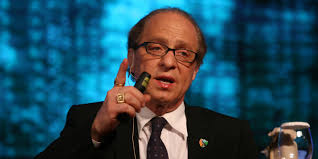
“Kurzweil Claims That the Singularity Will Happen by 2045” by Dom Galeon and Christianna Reedy

October 5, 2017 (Futurism.com)

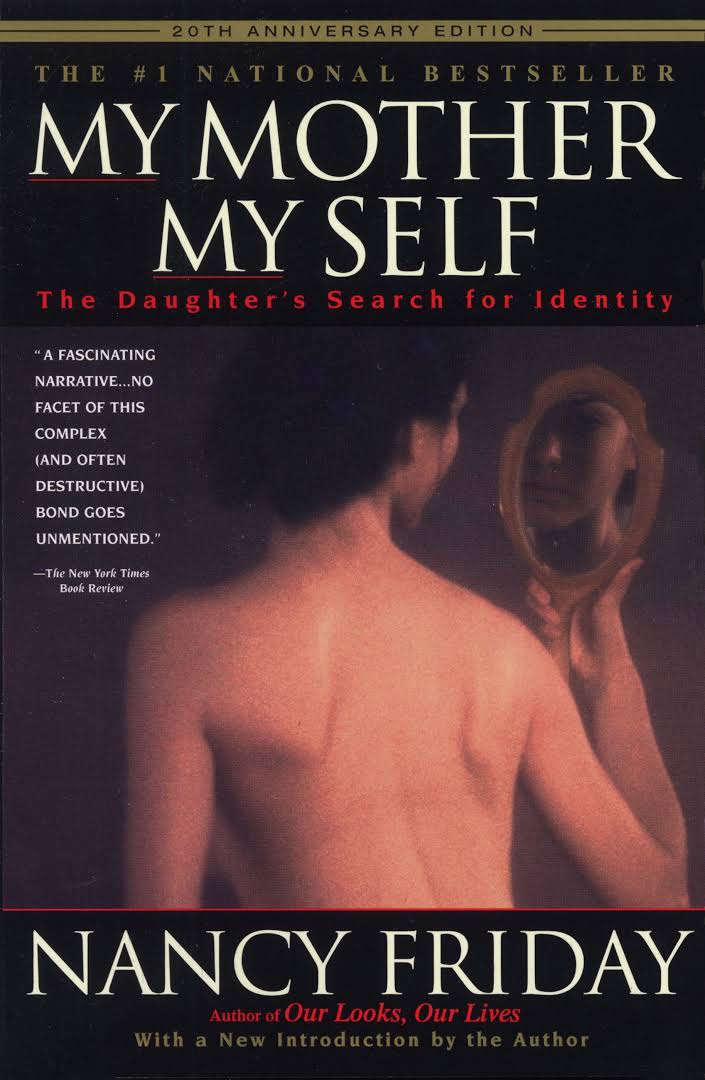
“My Mother Myself: The Daughters search for Identity” by Nancy Friday  

My Mother/My Self: The Daughter’s Search for Identity by Nancy Friday

My Mother/My Self Quotes:
“Our feelings about menstruation are the image of what it is to be a woman in this culture. While menstruation and the fear of revealing evidence of loss of body control bear possibilities of humiliation for women of which men are not aware, it is humiliating too to be that sex whose voice and presence carry less significance. It is humiliating to speak the same words as a man and have his heard, and not yours. It is humiliating to feel invisible when God gave you a body as solid as his. It is humiliating that women are accorded little dignity unless they are married. We twist these humiliations around, of course, and say it is glorious to have a man fight our battles for us, put us on a pedestal, take care of us. It is, if you enjoy being dependent on someone else.”
― Nancy FridayMy Mother/My Self: The Daughter’s Search for Identity
“The primary rule is always that a mother can’t go wrong, ever, by encouraging her child after age one and a half to be as individuated and separated as possible. If she was not as good a mother before as she would like to have been, she must get over her guilty desires to overcompensate, and place herself on the side of the child’s developing”
― Nancy FridayMy Mother/My Self: The Daughter’s Search for Identity
(Submitted by Robert McEwen, H.W., M.)

“When It Comes to Gender, Let Confusion Reign” by Holland Cotter

 “Crossing Object (inside Gnomen),” by Nayland Blake, from the exhibition “Trigger: Gender as a Tool and a Weapon,” at the New Museum. Self-portraiture takes many forms in the show, one of them being trans-species.CreditJake Naughton for The New York Times

September 28, 2017 (NYTimes.com)

The New Museum isn’t new any more. It hit 40 this year, by some reckonings early middle age, though it’s still thinking young, or youngish, and living in the now. One thing that made it feel fresh early on was that it did shows on themes no other museums were tackling, like the 1982 “Extended Sensibilities: Homosexual Presence in Contemporary Art,” the first major American institutional survey of work by gay and lesbian artists. Now comes another such venture, “Trigger: Gender as a Tool and a Weapon,” a look at concepts of “trans” and “queer” as embodied in new art.

“Extended Sensibilities” had problems. With its inclusion of abstraction along with figurative work, it struck some viewers as not explicitly gay enough, as dodging the political issues its title raised. A similar charge of indirection, or indeterminacy — I’d call it healthy disorder — could probably be leveled at “Trigger.”

As an exhibition, its brief is to break down, through art, the binary male-female face-off that gay and lesbian often represented, to stretch the perimeters of gender to the snapping point. The goal is to inject the disruptive power of not-normal back into the discussion of difference at a time when the edge of mainstream gayness has been dulled by the quest for assimilation.

The difficulty is that queer, and to some extent trans, are hard to capture, institutionally. Slipperiness is built into them; they don’t sit still. Trans by definition is the act of changing, going beyond the boundaries of gender (and race, and class). Those boundaries are porous, and crossings in any direction are negotiable. Queer is even more category-aversive. It’s not so much a personal identity as a political impulse, a strategy for thwarting assimilation and sowing constructive chaos at a time when culture wars are again escalating.

The question is whether a cohesive exhibition can be forged from such chaos. The answer in the case of “Trigger” — which includes more than 40 artists and collectives and fills three floors of the museum as well as its lobby – is just barely, to which an important coda must be added: Asking for cohesion in a survey of trans and queer art is probably asking for the wrong thing.
Photo

 “Floor Dance,” “Mane,” and “Loner,” by Tschabalala Self, who stitches figures from patches of fabric on canvas. In the foreground is “Toxic,” an installation by Pauline Boudry and Renate Lorenz.CreditJake Naughton for The New York Times

This is not to say there are no through lines. Grounding the show are historical references that keep the gay-trans-queer links always in sight. We get an encyclopedic dose of that history in a newsprint photo-collage posted in the museum’s main elevator. Produced by the artist Chris E. Vargas, and attributed to the Museum of Transgender History and Art that he founded as an archive in 2013, the picture is a group shot of L.G.B.T.Q.I. (Lesbian, Gay, Bisexual, Transgender, Queer, Intersex) celebrity spanning the centuries.

Photo

“Lost in the Music,” by Reina Gossett and Sasha Wortzel, tells the story of Marsha P. Johnson (1945-1992), who is credited, in some accounts, with triggering the 1969 uprising at the Stonewall bar.CreditJake Naughton for The New York Times

On the second floor, the New York painter Leidy Churchman serves up a hot pink version of a hot Marsden Hartley hunk. And Mariah Garnettprojects images of herself, impersonating the 1970s gay porn star Peter Berlin, on a spinning disco ball. One floor up, two young filmmakers, Reina Gossett and Sasha Wortzel, commemorate a figure who gay visitors to the 1982 New Museum show might have recognized: Marsha P. Johnson (1945-1992), born Malcolm Michaels and self-identified as a drag queen, who is credited, in some accounts, with throwing a mirror-shattering shot glass that triggered the 1969 uprising at the Stonewall bar.

Photo

From left: “We Gunna Spite Our Noses Right Offa Our Faces,” and “Din’t We, Didn’t We, Din’t I Have a Gud Time Now?,” by Christina Quarles, and “Landscape III,” by Sable Elyse Smith. CreditJake Naughton for The New York Times

Johnson was a “drag mother” to young trans women living in the New York City streets, and the tendency to replace hostile birth families with families of choice has long been a hallmark of gay, trans and queer life. The artist and performer Justin Vivian Bond made the switch as a teenager, nominating, from afar, the Estée Lauder model Karen Graham, seen in magazine ads, as a surrogate mother.

Photo

Works from the “My Model | My Self” series, with “These Old Laurel Leaves: Wallpaper,” both by Justin Vivian Bond.CreditJake Naughton for The New York Times

The artist, who identifies as “trans-genre,” uses “Mx.” as an honorific, and prefers to be referred to as “they,” tells this adoption-by-proxy story in an installation called “My Mother | Myself,” which sets drawings of Ms. Graham by a teenage Bond beside recent, superglam Bond self-portraits to illustrate how trans self-fashioning works.

Photo

“The Great Global Ocean Conveyor Belt 2-212,” “B & W Medusa Sun,” “CHIEF POLICE,” “Sea Floor” and “Freud!” by Leidy Churchman. CreditJake Naughton for The New York Times

Self-portraiture takes many forms in the exhibition, one of them being trans-species. During the show’s run, the artist Nayland Blake will periodically don a full-length bear costume and, as a character called Fursona, will stage hug-fests for visitors. More generally, however, images of trans and queer bodies tend toward abstraction. Troy Michie cuts and pastes images from pornographic magazines to create poly-racial erotic figures. (His work is also in “Found: Queer Archaeology; Queer Abstraction” at the Leslie-Lohman Museum in Soho.) Paul Mpagi Sepuyaedits and blends bodies photographically in the studio creating an atmosphere of entrapment and seduction.

Photo

“Cave of Secrets,” an installation by Liz Collins. CreditJake Naughton for The New York Times

Tschabalala Self, who stitches racially and sexually ambiguous figures from patches of fabric on canvas, is one of several artists working with traditionally female-associated media. (Feminism is, of course, deeply folded into the show.) Diamond Stingily, who as a child hung out in her mother’s Chicago hair salon, is another: her sculpture, a single long braid of artificial hair, trails through all three floors of the show and into the lobby. Vaginal Davis, originally from Los Angeles, now in Berlin, adds social class to the mix in small wall reliefs made from Dollar Store beauty supplies: Wet n Wild nail polish, Aqua Net hair spray and perfume by Jean Nate.

Photo

“Community Action Center,” by A.K Burns & A.L Steiner. CreditJake Naughton for The New York Times

Ms. Davis’s sculptures are only subtly figurative. And the show’s organizers — Johanna Burton, director and curator of education and public engagement at the New Museum, working with Natalie Bell and Sara O’Keeffe, assistant curators – have included a substantial amount of entirely abstract work of a kind 1982 audiences perceived as apolitical, though here it is not.

Photo

“Encounters I May Or May Not Have Had With Peter Berlin,” by Mariah Garnett.CreditJake Naughton for The New York Times

Continue reading “When It Comes to Gender, Let Confusion Reign” by Holland Cotter

“Libra Relationship Drama and the Full Moon” by Robert McEwen, H.W., M.

LIBRA SUN IS ALL ABOUT RELATIONSHIPS!
“WOW….’ Drama often comes with Full Moons like we just had!  Also the Mars Venus conjunction now.  I have gotten calls and people are “off the hook” about the relationships in their lives.  I am talking every kind of relationship.  WOMEN, I have notice much more relationship oriented then men.  Men have many other interests it seems.  Women have their primary lover, friends, family, kids, and many others compared to men.  Astrologically Libra wants it all to work out in harmonious ways, and life doesn’t roll that way.  There are many bumps in the road.  Women seem to be more flexible that way, and go with the flow.  Decision making and power roles are set up in similar ways, yet very different.  They are unique in the ones that have processed using their astrology, and women really want to know how their lover is wired and how their lovers planet connect and spark with their partner.  This is for straight and gay men and women both.

…”I have begun a book on it and lots of research I have done over the years having been a counselor for 35 years and gone through my own as well.  I have learned that most all relationships are mirrors for seeing different facets of ourselves.  Be it a glamorous person, or homeless, they are “projections” of our self.  Sometimes our shadow self we have pushed down and denied comes out sideways in inconvenient ways and at the worst possible times!  Its funny really if you step back and watch the play.  We are all actors on the stage of life.”  Everyone has their role, a part in the cosmic play, and for reasons of self realizing.  To come “face to face:  with aspects of ourselves we RESIST!  We attract what we resist.  We often chase something or someone, that is a fantasy to escape our mundane life.  That is what movies are all about…romance, adventure…or, or, or…

So, LIBRA SUN now is RELATIONSHIP focused.  And we just had a FULL MOON In ARIES which expanded the Libra.  Women have called, and a couple gay men to process astrologically their relationships.  The “wiring” is relationship focused in that department.  The brain even lights up relating everything to each other.  Men separate things in a more black and white process.

So, it is an adventure.  If you want your matrix in your relationships please send your birth information and we can begin
your Libra relationship profile and comparisons.  Also your current transits which brings issues to the surface.  Looking into

everything involved:  feelings, communications, sexuality, power and control issues, self esteem and family history wiring you are letting go of.

Relationship Readings:  $75
One Hour:  Text me your birth info:  503 706-0396
Paypal: robbystarman@aol.com

Robert

“The Weapon of Fear” by Suzanne Deakins, H.W., M.

The manipulation continues. It seems each day we are handed either an insinuation or direct hit on fear by those in national power. Since the time immortal, leaders have used fear as a weapon to control and manipulate the general populace. We are continuously being assaulted by the use of fear to get us to act, buy, and vote in a certain way. Parents, schools, and politicians invade us with fear mongering. 

We have been taught to be afraid. The greatest fear of all is that of non-survival. Non-survival encompasses any idea we feel is necessary to continue living. It can include love, identity, acceptance, as well as the use of our basic creativity and thinking abilities.

The latest news is filled with underlying fear innuendos. War with North Korea and nuclear exposure keeps us on edge missing other important signals of things happening within our government. The loss of medical coverage and tax increases all rhetoric positioned to keep us in a fog of fear. The fog is a kind of basic paranoia. As long as we reside in this fog we will buy things we don’t really need. Trying to keep ourselves safe, vote in a way we feel will eliminate and bring about a lifting of the fear fog rather than instilling love and acceptance of all. When I look back on history I see a world based on fear and paranoia rather than one based on love and critical thinking. No wonder we have to fight for our rights to exist, to embrace that which brings us the grace of being, love and peace.  

Some fear has a natural place in our existence. It keeps us from crossing a street against traffic, seeking medical help when we are ill, and it helps us protect our children. This kind of fear is based on real experiences. The fog of fear is based on something sinister and deceiving. It is based on our need to be told what to do, to be dictated about our desires, longings, and need for acceptance and love. The fear of evil, of being called out as deviant in our lifestyle and behaviors is sinister and deadly to our existence as free human beings. When you accept your responsibility as a participant in the manipulation you can find a way out of the fog and the evil it represents to humanity. 

We all remain in a kind of enslavement of servitude. We are not in a place of service to a greater good, a more human existence but rather enslaved by the needs of individuals who have no ability to love and embrace the grace of being, of existence. 

There is no easy way out of the fog of fear. The moment you begin observing your place in this fog, looking beyond and examining the root of your fears you begin loosing the shackles that have kept you bound to the fog. I am not going to kid you. Freeing yourself is painful. Seeing our-self being manipulated by the fear mongers and being too weak in the knees to stand up and say no will probably bring more than a few tears. It is my personal experience that only by being totally honest with our behavior and choices and their roots in our life are we ever free. In my life freedom has come in spurts. It seems as if that each step I took and eliminated the fog a new fear appeared for me to see and conquer. 

The greatest lifting of the fog of fear comes when we are willing to look at how we manipulate others. Seeing how we enslave ourselves and keep our brothers and sisters of color, different races, different sexual and gender appetites, and religions in the fog. This insight is heartbreaking. We do this most often NOT of choice but rather out of dictated and manipulated behavior by our parents and society. Only as we free our-self from the prejudices, abhorrent thinking, and paranoia are we free to love all life, to express our likes and dislikes. As you begin this kind of journey your ego will scream out… No, No, not me not this time. I am not going to change. Be willing to love someone, your self or another enough to move past the ego. Know that each step you take you do it for yourself and generations yet to be born. Place your fear on the altar of tomorrow and watch it be consumed by the fire of life. 

We have always been free, we are the stuff of stars, but in our sleep of fear, we have forgotten this. Once awaken we see beyond our fear-sleep into the nature of reality Love.

  Suzanne Deakins, H.W.M. is a publisher (One Spirit Press and The Q Press) and author. Her books may be found on amazon.com. She teaches seminars on critical thinking and ontology, as well as Radical Forgiveness. She maybe reached at suzannedeak@gmail.com

Aristotle: Logic

Aristotelian logic, after a great and early triumph, consolidated its position of influence to rule over the philosophical world throughout the Middle Ages up until the 19th Century.  All that changed in a hurry when modern logicians embraced a new kind of mathematical logic and pushed out what they regarded as the antiquated and clunky method of syllogisms.  Although Aristotle’s very rich and expansive account of logic differs in key ways from modern approaches, it is more than a historical curiosity.  It provides an alternative way of approaching logic and continues to provide critical insights into contemporary issues and concerns.  The main thrust of this article is to explain Aristotle’s logical system as a whole while correcting some prominent misconceptions that persist in the popular understanding and even in some of the specialized literature.  Before getting down to business, it is important to point out that Aristotle is a synoptic thinker with an over-arching theory that ties together all aspects and fields of philosophy.  He does not view logic as a separate, self-sufficient subject-matter, to be considered in isolation from other aspects of disciplined inquiry.  Although we cannot consider all the details of his encyclopedic approach, we can sketch out the larger picture in a way that illuminates the general thrust of his system.  For the purposes of this entry, let us define logic as that field of inquiry which investigates how we reason correctly (and, by extension, how we reason incorrectly).  Aristotle does not believe that the purpose of logic is to prove that human beings can have knowledge.  (He dismisses excessive scepticism.)  The aim of logic is the elaboration of a coherent system that allows us to investigate, classify, and evaluate good and bad forms of reasoning.

More at:   http://www.iep.utm.edu/aris-log/

(Submitted by Heather Williams, H.W., M.)

Consciousness, spirituality, biography, sexuality, androgyny, futurism, space, the arts, science, astrology, democracy, humor, books, movies and more