Susan Sontag. She was a brand long before most writers knew they needed one. Even if you’ve never read a Sontag book, you can still engage with her seriousness by studying her darkly handsome, scathingly sensible face, as photographed by Richard Avedon or Diane Arbus or Annie Leibovitz. A major 20th-century cultural critic, as well as novelist and filmmaker, Sontag was all about interrogating Western art and literature to discover their embedded morality (or lack thereof): “The wisdom that becomes available over deep, lifelong engagement with the aesthetic,” she wrote, “cannot be duplicated by any other kind of seriousness.”
Decades ago, Susan Sontag meant the world to me. My pals and I were, to use the 1970s label, “lesbian feminists.” We were also insecure, angry, unformed, and uninformed. Then, like a Genius-IQ Wonder Woman, Sontag landed, wielding game-changing books like Notes on Camp,Against Interpretation, Trip to Hanoi, AIDS and Its Metaphors,The Volcano Lover… Some were great; some not; all demanded rethinking lots of your life. The fact that this drop-dead brilliant woman was also beautiful and famous seemed to us 20-somethings like simple moral Justice; we couldn’t have asked for more. Looking back, though, we probably should have.
Recently, Benjamin Moser published Sontag: Her Life and Work, his 800-page biography of Sontag, which is brilliantly comprehensive and, in terms of Sontag’s personal life, possibly the most engaging outlay of Too-Much-Information I’ve ever read. Moser frames Sontag’s conflicted, sexually ambivalent life by studying it through her preoccupation with metaphor: a thing itself in play with its image. “Sontag’s real importance increasingly lay in what she represented,” summarizes Moser. “The metaphor of ‘Susan Sontag’ was a great original creation.”
Moser’s biography is the story of a woman who craved, even as a child, becoming part of the liberal wing of Western culture’s literary establishment. By her early thirties she was securely ensconced in what pundit Norman Podhoretz called “the Family,” a predominantly New York Jewish intellectual lineage, shaped in the 1940s around Partisan Review and extending through The New York Review of Books. Though she grew up, a ferociously intelligent female in the mid-twentieth century and had to fight for every ounce of intellectual independence, Sontag didn’t denounce the Patriarchy; she deeply knew and appreciated its aesthetic power.
Sontag began life in 1933, as Susan Rosenblatt. After her father died when she was five, Susan and her sister were raised in the more culturally stultifying parts of Tucson and Los Angeles by an alcoholic mother who, when Susan was 12, married WWII pilot Nathan Sontag. Other than giving her a more euphonious surname, Nat wasn’t too useful, warning his book-addicted stepdaughter that men don’t marry girls who read all the time. But at the age of 17, Susan, precocious in all things, married her university professor, Philip Rieff, and at 19, gave birth to a son, David. Finding the relationship increasingly suffocating, Sontag spent most of her marriage breaking away and gaining child custody, while her work garnered critical attention.
Nat Sontag, however, may have been on to something. Susan, who kept a diary from childhood, wrote as a teenager, “My desire to write is connected to my homosexuality. I need the identity as a weapon to match the weapon society has against me.” Sontag’s tortured lesbian identity is in fact the central nervous system of Moser’s book. Though her affairs with men were relatively short and less complicated, Sontag pursued, throughout her life, a series of passionate, unhappy, sometimes abusive relationships with women –Irene Fornes, Lucinda Childs, Annie Leibovitz, among others – which were open secrets in the art world.
Reading Sontag’s biography, you’re sadly aware of the paralyzed horror this woman would feel at seeing this rendition of her life. Moser devotes a chapter to the likelihood that Sontag’s closetedness – long after it was remotely necessary – was largely responsible for her signature lack of self-awareness and empathy, her occasional homophobia, her reliance for selfhood on the opinions of others.
Having conducted a phenomenal amount of interviews and research, Moser connects as many psychosexual, interpersonal, and historical dots as he can to present Susan Sontag as an epically accomplished and complicated woman. It’s an authoritative book and, as such, can presume too much, judge too easily, and evade the mystery that lies at the heart of any human being. It can also focus on the personal at the expense of the political.
Politically, the book offers a sort of cooked, National-Public-Radio certitude about history, as if “we of the liberal intelligentsia” already know and agree on what’s happened: the fall of the USSR and the Berlin Wall were good; the Oslo Accords were promising; Cuba’s revolutionary “New Man” evoked Nazi purity. While Moser would never dismiss Sontag’s lesbianism as a phase, he easily does so with her politics.
Sontag’s “radical” phase began in the 1960s, when she developed an interest in revolutionary societies. She spent some time in North Vietnam during the war and, in Partisan Review, famously wrote of the white race as “the cancer of human history.” In “the American Bloomsbury,” Moser observes, where it was cool to debate revolution, Susan Sontag became “that most radical of radicals.” But this phase came to a definitive halt at a 1982 Town Hall smack-down with the New Left, when Sontag – supported by her friend, Joseph Brodsky, a poet expelled from the USSR – decried Communism as fascism, “Successful Fascism, if you will.” This was the moment, according to a friend, that Sontag finally “ceased being “radical” and reverted to being “intelligent.”
Moser includes a dust-up between Sontag and the poet Adrienne Rich – openly feminist and lesbian. Sontag’s essay, “Fascinating Fascism,” had attributed the newfound popularity of the Nazi-friendly work of filmmaker Leni Riefenstahl to feminists. Rich wrote to correct Sontag: it was not feminists; it was the cinephile establishment that promoted Riefenstahl. Deeply affronted, Sontag called Rich an “infantile leftist” whose demagoguery was yet another example of fascism. Rich, herself a distant relative of the Family – and writer, according to Moser (and many others, including me), “of essays in no way inferior to Sontag’s” – was effectively banned from The New York Review of Books, which never published her again.
Adrienne Rich probably didn’t miss the Family for long; she was already heading off to society’s “infantile” margins to write some of her best work examining white women’s role in the history of enslavement and colonialism, exposing compulsory heterosexuality in building Empire. Here, on these “fanatical” margins, Susan Sontag would have ceased to think or exist.
But these margins have also encompassed centuries of art, scholarship, and literature by intellectuals and artists – largely Black, Brown, Indigenous – who knew, usually first-hand, the colonialism, enslavement, and genocide on which the esteemed New York Review aesthetic has been built. While James Fennimore Cooper was writing The Last of the Mohicans, David Walker, son of an enslaved father, wrote his Appeal to the Coloured Citizens of the World; while J.D. Salinger was writing Catcher in the Rye, Aimé Césaire wrote Discourse on Colonialism; while Joseph Brodsky was writing poetry, so were Audre Lorde, Adrienne Rich, June Jordan, Essex Hemphill…
It isn’t that radicals don’t deserve criticism. Sometimes, as Sontag alleged, the left does know less about human rights abuses under “Communism” than Reader’s Digest subscribers. But communism was meant to answer centuries of imperial European atrocities: where was Sontag, intellectually, when she wrote about the cancerous white race? Why did she leave that place? She was never without her white, middle-class privilege; she could come and go as she pleased. Her journey leaves many questions…
Why, after the 9/11 attacks, did Sontag seem to return, at least for a moment, to that empire-questioning place? She was one of very few public voices to criticize U.S. policy – and was thoroughly excoriated for it. Not even her son liked: “Let’s by all means grieve together. But let’s not be stupid together. A few shreds of historical awareness might help us understand what has just happened and what may continue to happen.”
Susan Sontag’s mysteries and metaphor are one reason you’d want to read her biography. I just wish Moser – and Sontag herself, for all her seriousness – could have taken radicalism more seriously.
Susie Day is an NYC freelance writer, Monthly Review Press editor, and author of the recent Haymarket book, The Brother You Choose.
Tom Bilyeu This episode is sponsored by BetterHelp. Go to https://betterhelp.com/impact for 10% off your first month. BetterHelp is an online counseling company with the mission to make professional counseling accessible, affordable, and convenient. What if everything you think you know about yourself is wrong? Most people have the intuition that they have a self separate from their body and brain, and that they can control their experience with conscious will. But what if that isn’t true? Best-selling author Annaka Harris is devoted to challenging our deepest intuitions about the nature of consciousness and the self. On this episode of Impact Theory with Tom Bilyeu, she discusses experiments on the cutting edge of physics and neuroscience, and explains why those experiments matter. The result is a fascinating conversation that will leave you questioning some of your most cherished, comforting intuitions. SHOW NOTES: Consciousness is exactly as mysterious as it seems to be [2:29] Annaka defines what consciousness is [4:54] Tom and Annaka discuss the story of Phineas Gage [6:31] Annaka talks about the difference between consciousness and high level thought [9:14] There is a basic level of consciousness that doesn’t involve awareness of consciousness [11:35] Challenging intuitions is a basic element of the scientific method [14:58] Is there outer evidence of conscious experience? Is consciousness doing anything? [18:46] Upending comfortable intuitions is eventually a freeing experience [20:57] Annaka explains how the brain binds disparate signals to make them seem congruent [22:23] Annaka and Tom discuss how much unconscious brain functioning we take for granted [27:09] Annaka describes the false sense of self and conscious will [29:53] We make decisions before we are aware of them [33:41] Annaka discusses the question of whether or to what extent plants are conscious [35:30] Trees take care of their own kin, and defend their kin [40:48] What if consciousness is a field like gravity? [43:39] Annaka describes the double slit light experiment [46:13] https://www.youtube.com/watch?v=uva6g… https://www.youtube.com/watch?v=A9tKn… https://drive.google.com/open?id=11YD… Measuring an event can change the past [51:41] Annaka discusses problems with the views that consciousness emerges from life [54:25] Annaka shares the impact she wants to have on the world [1:03:06] QUOTES: “There’s something jarring about learning that the things that feel most true to you about reality are possibly not structured that way.” [21:29] “We feel that consciousness is behind our willed actions, when in fact, there is a lot of neuroscience to suggest that it’s actually the reverse. It’s at the end. That all this processing happens, a decision gets made, and we’re kind of the last to know.” [31:54] “We have no evidence that consciousness is due to complexity.” [1:00:24] FOLLOW: WEBSITE: https://annakaharris.com INSTAGRAM: https://bit.ly/392CIl1 FACEBOOK: https://bit.ly/2GTsk36 TWITTER: https://bit.ly/2RUoY63 BOOKS MENTIONED IN THIS EPISODE: “Conscious: A Brief Guide to the Fundamental Mystery of the Mind”, https://amzn.to/2u7OR9H [2:19] IMPACT THEORY MERCHANDISE: Check out Impact Theory’s Merch Shop: http://bit.ly/ImpactTheoryShop
Volume One of The Emotional Plague of Mankind Introduction The Trap The Kingdom of Heaven on Earth The Genital Embrace Seduction into Leadership The Mystification of Christ The Great Gap-Man’s Sitting The March on Jerusalem Judas Iscariot Paul of Tarsus Protecting the Murderers of Christ Mocenigo Toward Golgotha The Disciples Sleep Gethsemane The Scourging ‘You Say It’ The Silent Glow Crucifixion & Resurrection Appendix Bibliography
The Murder of Christ Quotes:
“The longing for the fusion with another organism in the genital embrace is just as strong in the armored organism as it is in the unarmored one. It will most of the time be even stronger, since the full satisfaction is blocked. Where Life simply loves, armored life “fucks.” Where Life functions freely in its love relations as it does in everything else and lets its functions grow slowly from first beginnings to peaks of joyful accomplishment, no matter whether it is the growth of a plant from a tiny seedling to the blossoming and fruit-bearing stage, or the growth of a liberating thought system; so Life also lets its love relationships grow slowly from a first comprehensive glance to the fullest yielding during the quivering embrace. Life does not rush toward the embrace.” ― Wilhelm Reich, The Murder of Christ
“In real man, the “god-given” genital embrace has turned into the pornographic 4-lettering male-female intercourse.” ― Wilhelm Reich, The Murder of Christ
“Then the soldiers of the governor took Jesus into the praetorium, and they gathered the whole battalion before him. And they stripped him and put a scarlet robe upon him, and plaiting a crown of thorns they put it on his head, and put a reed in his right hand. And kneeling before him they mocked him, saying, “Hail, King of the Jews!” And they spat upon him, and took the reed and struck him on the head. And when they had mocked him, they stripped him of the robe, and put his own clothes on him, and led him away to crucify him.” ― Wilhelm Reich, The Murder of Christ
Saturday, January 30, 202111:00 AM Saturday, May 22, 20212:00 PM
This program is full. Click HERE to join the waitlist
“I went to Kim Rosen’s “Death’s Door” last year, and it was undoubtedly the most powerful and profound retreat I’ve ever experienced. Invaluable for anyone dedicated to spiritual development.”
All the wisdom teachings of the world tell us, through one story or another, that the key to life lies in the manner in which we meet death within and around us. This 6 part online series is an opportunity to welcome all that emerges as we turn towards our own death, the deaths of our loved ones, and the losses, changes and “everyday dying” that abound in a life fully lived.
Poetry, ritual, movement, writing and guided inner inquiry will hold, heal, challenge, and reveal us. Within an exquisitely supportive sacred space, we will welcome the fears, losses, blessings and awakenings that come from opening to death and loss as a portal to fullest aliveness.
Kim has innovated unique techniques of working with the Zoom video platform that allows for deep intimacy, authenticity and a lush immersion in music, poetry, movement and connection. Optional homework explorations, readings and videos continue the conversation between gatherings, and the “Temple Wall”, a private social media site, provides a place to share and connect.
A note about what this is not: This is not 2.5 hours entrained to your device. It is an inner journey that will intentionally disrupt your ‘screen time’, because the primary focus is deep listening within.
Dates: Jan 30; Feb 20 ; March 13; April 3; April 24; May 22. Each session is 2-4:30pm EDT, EXCEPT the last session which is 2-5pm EDT. REMEMBER TO CONVERT IF YOU ARE NOT ON EASTERN TIME.
Reich’s work on character contributed to the development of Anna Freud‘s The Ego and the Mechanisms of Defence (1936), and his idea of muscular armour—the expression of the personality in the way the body moves—shaped innovations such as body psychotherapy, Gestalt therapy, bioenergetic analysis and primal therapy.[6] His writing influenced generations of intellectuals; he coined the phrase “the sexual revolution” and according to one historian acted as its midwife.[7] During the 1968 student uprisings in Paris and Berlin, students scrawled his name on walls and threw copies of The Mass Psychology of Fascism at police.[8]
After graduating in medicine from the University of Vienna in 1922, Reich became deputy director of Freud‘s outpatient clinic, the Vienna Ambulatorium.[9] Described by Elizabeth Danto as a large man with a cantankerous style who managed to look scruffy and elegant at the same time, he tried to reconcile psychoanalysis with Marxism, arguing that neurosis is rooted in sexual and socio-economic conditions, and in particular in a lack of what he called “orgastic potency“. He visited patients in their homes to see how they lived, and took to the streets in a mobile clinic, promoting adolescent sexuality and the availability of contraceptives, abortion and divorce, a provocative message in Catholic Austria.[10] He said he wanted to “attack the neurosis by its prevention rather than treatment”.[11]
From the 1930s he became an increasingly controversial figure, and from 1932 until his death in 1957 all his work was self-published.[12] His message of sexual liberation disturbed the psychoanalytic community and his political associates, and his vegetotherapy, in which he massaged his disrobed patients to dissolve their “muscular armour”, violated the key taboos of psychoanalysis.[13] He moved to New York in 1939, in part to escape the Nazis, and shortly after arriving coined the term “orgone“—from “orgasm” and “organism”—for a biological energy he said he had discovered, which he said others called God. In 1940 he started building orgone accumulators, devices that his patients sat inside to harness the reputed health benefits, leading to newspaper stories about sex boxes that cured cancer.[14]
Following two critical articles about him in The New Republic and Harper’s in 1947, the U.S. Food and Drug Administration obtained an injunction against the interstate shipment of orgone accumulators and associated literature, believing they were dealing with a “fraud of the first magnitude”.[15] Charged with contempt in 1956 for having violated the injunction, Reich was sentenced to two years imprisonment, and that summer over six tons of his publications were burned by order of the court.[n 2] He died in prison of heart failure just over a year later, days before he was due to apply for parole.[18]
Early life
Childhood
Reich in 1900
Reich was born the first of two sons to Leon Reich, a farmer, and his wife Cäcilie (née Roniger) in Dobzau, Galicia, then part of Austria-Hungary, now in Ukraine. Wilhelm Reich’s parents were married by Rabbi Schmelkes on June 4, 1895.[19] There was a sister too, born one year after Reich, but she died in infancy. Shortly after his birth the family moved to Jujinetz, a village in Bukovina, where his father ran a cattle farm leased by his mother’s uncle, Josef Blum.[20]
His father was described as a jealous man.[21] Both parents were Jewish, but decided against raising the boys as Jews. Reich and his brother, Robert, were brought up to speak only German, were punished for using Yiddish expressions and forbidden from playing with the local Yiddish-speaking children.[22]
As an adult Reich wrote extensively, in his diary, about his sexual precocity. He maintained that his first sexual experience was at the age of four when he tried to have sex with the family maid (with whom he shared a bed), that he would regularly watch the farm animals have sex, that he used a whip handle sexually on the horses while masturbating, and that he had almost daily sexual intercourse from the age of 11 with another of the servants. He wrote of regular visits to brothels, the first when he was 15, and said he was visiting them daily from the age of around 17. He also developed sexual fantasies about his mother, writing when he was 22 that he masturbated while thinking about her.[23]
It is impossible to judge the truth of these diary entries, but Reich’s second daughter, the psychiatrist Lore Reich Rubin, told Christopher Turner that she believed Reich had been a victim of child sexual abuse, and that this explained his lifelong interest in sex and childhood sexuality.[24]
Death of parents
Reich was taught at home until he was 12, when his mother was discovered having an affair with his live-in tutor. Reich wrote about the affair in 1920 in his first published paper, “Über einen Fall von Durchbruch der Inzestschranke” (“About a Case of Breaching the Incest Taboo”), presented in the third person as though about a patient.[25] He wrote that he would follow his mother when she went to the tutor’s bedroom at night, feeling ashamed and jealous, and wondering if they would kill him if they found out that he knew. He briefly thought of forcing her to have sex with him, on pain of threatening to tell his father. In the end, he did tell his father, and after a protracted period of beatings, his mother committed suicide in 1910, for which Reich blamed himself.[25]
With the tutor ordered out of the house, Reich was sent to an all-male gymnasium in Czernowitz. It was during this period that a skin condition appeared, diagnosed as psoriasis, that plagued him for the rest of his life, leading several commentators to remark on his ruddy complexion. He visited brothels every day and wrote in his diary of his disgust for the women.[26] His father died of tuberculosis in 1914, and because of rampant inflation the father’s insurance was worthless, so no money was forthcoming for the brothers.[27] Reich managed the farm and continued with his studies, graduating in 1915 with Stimmeneinhelligkeit (unanimous approval). The Russians invaded Bukovina that summer and the Reich brothers fled, losing everything. Reich wrote in his diary: “I never saw either my homeland or my possessions again. Of a well-to-do past, nothing was left.”[28]
1919–1930: Vienna
Undergraduate studies
Reich joined the Austro-Hungarian Army during the First World War, serving from 1915 to 1918, for the last two years as a lieutenant at the Italian front with 40 men under his command. When the war ended he headed for Vienna, enrolling in law at the University of Vienna, but found it dull and switched to medicine after the first semester. He arrived with nothing in a city with little to offer; the overthrow of the Austria-Hungarian empire a few weeks earlier had left the newly formed Republic of German-Austria in the grip of famine. Reich lived on soup, oats and dried fruit from the university canteen, and shared an unheated room with his brother and another undergraduate, wearing his coat and gloves indoors to stave off the cold. He fell in love with another medical student, Lia Laszky, with whom he was dissecting a corpse, but it was largely unrequited.[29]
The question, “What is Life?” lay behind everything I learned. … It became clear that the mechanistic concept of life, which dominated our study of medicine at the time, was unsatisfactory … There was no denying the principle of creative power governing life; only it was not satisfactory as long as it was not tangible, as long as it could not be described or practically handled. For, rightly, this was considered the supreme goal of natural science.[30]
Reich first met Sigmund Freud in 1919, when he asked Freud for a reading list for a seminar concerning sexology. It seems they left a strong impression on each other. Freud allowed him to start meeting with analytic patients in September that year, although Reich was just 22 years old and still an undergraduate, which gave him a small income. He was accepted as a guest member of the Vienna Psychoanalytic Association, becoming a regular member in October 1920, and began his own analysis with Isidor Sadger. He lived and worked out of an apartment on Berggasse 7, the street on which Freud lived at no. 19, in the Alsergrund area of Vienna.[31]
One of Reich’s first patients was Lore Kahn, a 19-year-old woman with whom he had an affair. Freud had warned analysts not to involve themselves with their patients, but in the early days of psychoanalysis the warnings went unheeded. According to Reich’s diaries, Kahn became ill in November 1920 and died of sepsis after sleeping in a bitterly cold room she had rented as a place for her and Reich to meet (both his landlady and her parents had forbidden their meetings). Kahn’s mother suspected that her daughter had died after a botched illegal abortion, possibly performed by Reich himself. According to Christopher Turner, she found some of her daughter’s bloodied underwear in a cupboard.[32]
It was a serious allegation to make against a physician. Reich wrote in his diary that the mother had been attracted to him and had made the allegation to damage him. She later committed suicide and Reich blamed himself.[32] If Kahn did have an abortion, Turner wrote, she was the first of four of Reich’s partners to do so: Annie, his first wife, had several, and his long-term partners Elsa Lindenberg and Ilse Ollendorf (his second wife) each had one (supposedly) at Reich’s insistence.[33]
First marriage, graduation
Two months after Kahn’s death, Reich accepted her friend, Annie Pink (1902–1971), as an analysand. Pink was Reich’s fourth female patient, a medical student three months shy of her 19th birthday. He had an affair with her too, and married her in March 1922 at her father’s insistence, with psychoanalysts Otto Fenichel and Edith Buxbaum as witnesses.[34]Annie Reich became a well-known psychoanalyst herself. The marriage produced two daughters, Eva (1924–2008) and Lore (b. 1928), both of whom became physicians; Lore Reich Rubin also became a psychiatrist and psychoanalyst.[35]
Because he was a war veteran, Reich was allowed to complete a combined bachelor’s and M.D. in four years, instead of six, and graduated in July 1922.[36] After graduating, he worked in internal medicine at the city’s University Hospital, and studied neuropsychiatry from 1922 to 1924 at the hospital’s neurological and psychiatric clinic under Professor Julius Wagner von Jauregg, who won the Nobel Prize in Medicine in 1927.[37]
Vienna Ambulatorium
Staff of the Vienna Ambulatorium, 1922. Eduard Hitschmann is seated fourth from the left, Reich fifth, and Annie Reich first on the right.
In 1922 Reich began working in Freud’s psychoanalytic outpatient clinic, known as the Vienna Ambulatorium, which was opened on 22 May that year at Pelikangasse 18 by Eduard Hitschmann. Reich became the assistant director under Hitschmann in 1924 and worked there until his move to Berlin in 1930.[38]
Between 1922 and 1932 the clinic offered free or reduced-cost psychoanalysis to 1,445 men and 800 women, many suffering from shell shock after World War I. It was the second such clinic to open under Freud’s direction; the first was the Poliklinik in Berlin, set up in 1920 by Max Eitingon and Ernst Simmel.[39]
Sharaf writes that working with labourers, farmers and students allowed Reich to move away from treating neurotic symptoms to observing chaotic lifestyles and anti-social personalities.[37] Reich argued that neurotic symptoms such as obsessive–compulsive disorder were an unconscious attempt to gain control of a hostile environment, including poverty or childhood abuse. They were examples of what he called “character armour” (Charakterpanzer), repetitive patterns of behaviour, speech and body posture that served as defence mechanisms. According to Danto, Reich sought out patients at the Ambulatorium who had been diagnosed as psychopaths, believing that psychoanalysis could free them of their rage.[40]
Reich joined the faculty of the Psychoanalytic Institute in Vienna in 1924 and became its director of training.[41] According to Danto, he was well-regarded for the weekly technical seminars he chaired at the Ambulatorium, where he gave papers on his theory of character structure, arguing that psychoanalysis should be based on the examination of unconscious character traits, later known as ego defences.[42] The seminars were attended, from 1927, by Fritz Perls, who went on to develop Gestalt therapy with his wife, Laura Perls.[43] Several commentators remarked on how captivating the seminars were and how eloquently Reich spoke. According to a Danish newspaper in 1934:
The moment he starts to speak, not at the lectern, but walking around it on cat’s paws, he is simply enchanting. In the Middle Ages, this man would have been sent into exile. He is not only eloquent, he also keeps his listeners spellbound by his sparking personality, reflected in his small, dark eyes.[44]
Der triebhafte Charakter
Reich’s first book, Der triebhafte Charakter: eine psychoanalytische Studie zur Pathologie des Ich (“The Impulsive Character: A Psychoanalytic Study of the Pathology of the Self”), was published in 1925.[45] It was a study of the anti-social personalities he had encountered in the Ambulatorium, and argued the need for a systematic theory of character.[46] The book won him professional recognition, including from Freud, who in 1927 arranged for his appointment to the executive committee of the Vienna Psychoanalytic Society.[47] The appointment was made over the objection of Paul Federn, who had been Reich’s second analyst in 1922 and who, according to Sharaf, regarded Reich as a psychopath.[n 3] Reich found the society dull and wrote that he behaved “like a shark in a pond of carps”.[50]
Orgastic potency
Further information: Orgastic potencyReich lived for a time on Berggasse in Vienna (seen here in 2010), where Freud lived at number 19
Beginning in 1924 Reich published a series of papers on the idea of “orgastic potency”, the ability to release the emotions from the muscles and lose the self in an uninhibited orgasm, an idea that Freud came to call Reich’s “Steckenpferd” (hobby horse).[51] Reich argued that psychic health and the ability to love depended on orgastic potency, the full discharge of the libido: “Sexual release in the sex act must correspond to the excitement which leads up to it.”[52] He wrote: “It is not just to fuck … not the embrace in itself, not the intercourse. It is the real emotional experience of the loss of your ego, of your whole spiritual self.”[53] He argued that orgastic potency was the goal of character analysis.[54]
Whereas Reich’s work on character was well received by the psychoanalytic community, Sharaf writes, his work on orgastic potency was unpopular from the start and later ridiculed. He came to be known as the “prophet of the better orgasm” and the “founder of a genital utopia”.[55]
Rest cure in Switzerland
Reich’s brother died of tuberculosis (TB) in 1926, the same disease that had killed their father. Turner writes that a quarter of deaths in Vienna were caused by TB in the 1920s. Reich himself contracted it in 1927 and spent several weeks in the winter of that year in a sanitorium in Davos, Switzerland, where TB patients went for rest cures and fresh air before antibiotics became widely available around 1945. Turner writes that Reich underwent a political and existential crisis in Davos; he returned home in the spring angry and paranoid, according to Annie Reich. Some months later he and Annie were on the streets during the July Revolt of 1927 in Vienna, when 84 workers were shot and killed by police and another 600 were injured. It seems that the experience changed Reich; he wrote that it was his first encounter with human irrationality.[56] He began to doubt everything, and in 1928 joined the Communist Party of Austria:
As if struck by a blow, one suddenly recognizes the scientific futility, the biological senselessness, and the social noxiousness of views and institutions, which until that moment had seemed altogether natural and self-evident. It is a kind of eschatological experience so frequently encountered in a pathological form in schizophrenics. I might even voice the belief that the schizophrenic form of psychic illness is regularly accompanied by illuminating insight into the irrationalism of social and political mores.[57]
Sex-pol movement
Partly in response to the shooting he had witnessed in Vienna, Reich, then 30, opened six free sex-counseling clinics in the city in 1927 for working-class patients. Each clinic was overseen by a physician, with three obstetricians and a lawyer on call, and offered what Reich called Sex-Pol counseling. Sex-Pol stood for the German Society of Proletarian Sexual Politics. Reich offered a mixture of “psychoanalytic counseling, Marxist advice and contraceptives”, Danto writes, and argued for a sexual permissiveness, including for young people and the unmarried, that unsettled other psychoanalysts and the political left. The clinics were immediately overcrowded by people seeking help.[58]
He also took to the streets in a mobile clinic, driving to parks and out to the suburbs with other psychoanalysts and physicians. Reich would talk to the teenagers and men, while a gynaecologist fitted the women with contraceptive devices, and Lia Laszky, the woman Reich fell in love with at medical school, spoke to the children. They also distributed sex-education pamphlets door to door.[59]
Reich published Die Funktion des Orgasmus (“The Function of the Orgasm”) in 1927, dedicating it to Freud. He had presented a copy of the manuscript to Freud on the latter’s 70th birthday on 6 May 1926.[60] Freud had not appeared impressed. He replied, “That thick?” when Reich handed it to him, and took two months to write a brief but positive letter in response, which Reich interpreted as a rejection.[61][n 4] Freud’s view was that the matter was more complicated than Reich suggested, and that there was no single cause of neurosis.[62] He wrote in 1928 to another psychoanalyst, Dr. Lou Andreas-Salomé:
We have here a Dr. Reich, a worthy but impetuous young man, passionately devoted to his hobby-horse, who now salutes in the genital orgasm the antidote to every neurosis. Perhaps he might learn from your analysis of K. to feel some respect for the complicated nature of the psyche.[63]
Visit to Soviet Union
In 1929 Reich and his wife visited the Soviet Union on a lecture tour, leaving the two children in the care of the psychoanalyst Berta Bornstein. Sharaf writes that he returned even more convinced of the link between sexual and economic oppression, and of the need to integrate Marx and Freud.[64] In 1929 his article “Dialectical Materialism and Psychoanalysis” was published in Unter dem Banner des Marxismus, the German Communist Party journal. The article explored whether psychoanalysis was compatible with historical materialism, class struggle and proletarian revolution. Reich concluded that they were compatible if dialectical materialism was applied to psychology.[65] This was one of the central theoretical statements of his Marxist period, which included The Imposition of Sexual Morality (1932), The Sexual Struggle of Youth (1932), The Mass Psychology of Fascism (1933), “What is Class Consciousness?” (1934) and The Sexual Revolution (1936).
1930–1934: Germany, Denmark, Sweden
Verlag für Sexualpolitik
Plaque on Schlangenbader Straße 87, Berlin-Wilmersdorf, the house in which Reich lived, 1931–1933.
Reich and his wife moved to Berlin in November 1930, where he set up clinics in working-class areas, taught sex education and published pamphlets. He joined the Communist Party of Germany, but grew impatient over their delay in publishing one of his pamphlets, Der Sexuelle Kampf der Jugend (1932), published in English as The Sexual Struggle of Youth (1972). He set up his own publishing house, Verlag für Sexualpolitik, and published the pamphlet himself.[66]
His subsequent involvement in a conference promoting adolescent sexuality caused the party to announce that it would no longer publish his material. On March 24, 1933 Freud told him that his contract with the International Psychoanalytic Publishers to publish Character Analysis had been cancelled. Sharaf writes that this was almost certainly because of Reich’s stance on teenage sex.[66]
Reich published what Robert Corrington called his masterpiece, Charakteranalyse: Technik und Grundlagen für studierende und praktizierende Analytiker, in 1933. It was revised and published in English in 1946 and 1949 as Character Analysis. The book sought to move psychoanalysis toward a reconfiguration of character structure.[67]
For Reich, character structure was the result of social processes, in particular a reflection of castration and Oedipal anxieties playing themselves out within the nuclear family.[67]Les Greenberg and Jeremy Safran write that Reich proposed a functional identity between the character, emotional blocks, and tension in the body, or what he called character (or muscular/body) armour (Charakterpanzer).[68]
Reich proposed that muscular armour was a defence that contained the history of the patient’s traumas.[69] For example, he blamed Freud’s jaw cancer on his muscular armour, rather than his smoking: Freud’s Judaism meant he was “biting down” impulses, rather than expressing them.[70] Dissolving the armour would bring back the memory of the childhood repression that had caused the blockage in the first place.[68]
End of first marriage
Reich had several affairs during his marriage to Annie Reich, which ended in 1933 after he began a serious relationship in May 1932 with Elsa Lindenberg, a dancer and pupil of Elsa Gindler.[71] He was living with Lindenberg in Germany when Hitler became Chancellor in January 1933. On March 2 that year the Nazi newspaper Völkischer Beobachter published an attack on Der Sexuelle Kampf der Jugend.[72] Reich and Lindenberg left for Vienna the next day. They moved from there to Denmark, where Reich was excluded from the Danish Communist Party in November 1933 (without ever having joined it) because of his promotion of teenage sex and the publication that year of The Mass Psychology of Fascism, which they regarded as “counterrevolutionary”. There were multiple complaints about his promotion of abortion, sex education, and the attempted suicide of a teenage patient. According to Turner, when Reich’s visa expired, it was not renewed.[73]
He tried to find support among psychoanalysts in the UK so that he could settle there, and was interviewed in London by Ernest Jones, Melanie Klein, Joan Riviere and James Strachey. They decided that he had been “insufficiently analysed” and had an unresolved hostility toward Freud.[74]Anna Freud, Freud’s daughter—whom Jones had contacted about Reich’s desire to relocate to England—wrote in 1938: “There is a wall somewhere where he stops to understand the other person’s point of view and flies off into a world of his own … He is an unhappy person … and I am afraid this will end in sickness.”[75]
Reich and Lindenberg moved instead to Malmö in Sweden, which Reich described as “better than a concentration camp”, but he was placed under surveillance when police suspected that the hourly visits of patients to his hotel room meant he was running a brothel, with Lindenberg as the prostitute.[76] The government declined to extend his visa, and the couple had to move briefly back to Denmark, Reich under an assumed name.[77]
From 1930 onwards, Reich began to treat patients outside the limits of psychoanalysis’s restrictions. He would sit opposite them, rather than behind them as they lay on a couch (the traditional psychoanalyst’s position), and begin talking to them and answering their questions, instead of offering the stock, “Why do you ask?” analyst’s response. He had noticed that after a successful course of psychoanalysis his patients would hold their bodies differently, so he began to try to communicate with the body using touch. He asked his male patients to undress down to their shorts, and sometimes entirely, and his female patients down to their underclothes, and began to massage them to loosen their body armour. He would also ask them to simulate physically the effects of certain emotions in the hope of triggering them.[78]
He first presented the principles of what he called character-analytic vegetotherapy in August 1934, in a paper entitled “Psychischer Kontakt und vegetative Strömung” (“Psychological Contact and Vegetative Current”) at the 13th International Congress of Psychoanalysis at Lucerne, Switzerland.[79] His second wife, Ilse Ollendorf, said vegetotherapy replaced the psychoanalytic method of never touching a patient with “a physical attack by the therapist”.[80]
The method eliminated the psychoanalytic doctrine of neutrality. Reich argued that the psychoanalytic taboos reinforced the neurotic taboos of the patient, and that he wanted his patients to see him as human.[79] He would press his thumb or the palm of his hand hard (and painfully) on their jaws, necks, chests, backs, or thighs, aiming to dissolve their muscular, and thereby characterological, rigidity.[81] He wrote that the purpose of the massage was to retrieve the repressed memory of the childhood situation that had caused the repression. If the session worked, he would see waves of pleasure move through their bodies, which he called the “orgasm reflex”. According to Sharaf, the twin goals of Reichian therapy were the attainment of this orgasm reflex during sessions and orgastic potency during intercourse. Reich briefly considered calling it “orgasmotherapy”, but thought better of it.[82]
Just before the crucial August 1934 Lucerne conference (13th International Congress of Psycho-analysis), Reich was (perhaps naively) ignorant of the ground-swell of opinion against him. At the meeting, he was asked to resign from the International Psychoanalytical Association, where Anna Freud was the “acknowledged leader” at the time, for prioritizing his revolutionary political-social (Communist) agenda over Freud’s psychoanalytic ideas. Besides the theoretical differences, there was also, by that time, a significant level of “appeasement” to the increasing power of National Socialism. Reich had protested to Anna Freud (Secretary of the International Association) about the omission of his name from the list of German members of the Association, apparently on the spurious grounds that he was going to join the Scandinavian branch. Ernest Jones was the President of the International Association and he had also turned against Reich, combined with Paul Federn and Max Eitingon, who had all levelled personal attacks against Reich.[83]
According to Lore Reich Rubin, Reich’s daughter, Anna Freud was responsible for destroying her father’s career: “She got rid of him”.[84][85] However, there is also some evidence that she later regretted this. He arrived at the conference, relatively unconscious about his future treatment. He presented a significant paper and was then informed that he was to be excluded. Turner writes that he cemented his reputation as a madman, camping in a tent outside the conference hall and reportedly carrying a large knife in his belt.[86] According to the psychiatrist Grete L. Bibring, Paul Federn declared, “Either Reich goes or I go.”[87]
In October 1934 Reich and Lindenberg moved to Oslo, Norway, where Harald K. Schjelderup, professor of psychology at the University of Oslo, had invited Reich to lecture on character analysis and vegetotherapy. They ended up staying for five years.[88] During his time in Norway, Reich attempted to ground his orgasm theory in biology, exploring whether Freud’s metaphor of the libido was in fact electricity or a chemical substance, an argument Freud had proposed in the 1890s but had abandoned.[89] Reich argued that conceiving of the orgasm as nothing but mechanical tension and relaxation could not explain why some experience pleasure and others do not. He wanted to know what additional element had to be present for pleasure to be felt.[90]
Reich was influenced by the work of the Austrian internist Friedrich Kraus, who argued in his paper Allgemeine und Spezielle Pathologie der Person (1926) that the biosystem was a relay-like switch mechanism of electrical charge and discharge. Reich wrote in an essay, “Der Orgasmus als Elektro-physiologische Entladung” (“The Orgasm as an Electrophysiological Discharge”, 1934), that the orgasm is just such a bioelectrical discharge and proposed his “orgasm formula”: mechanical tension (filling of the organs with fluid; tumescence) → bioelectrical charge → bioelectrical discharge → mechanical relaxation (detumescence).[91]
In 1935 Reich bought an oscillograph and attached it to friends and students, who volunteered to touch and kiss each other while Reich read the tracings. One of the volunteers was a young Willy Brandt, the future chancellor of Germany. At the time, he was married to Reich’s secretary, Gertrude Gaasland, and was living in Norway to organize protests against the Nazis. Reich also took measurements from the patients of a psychiatric hospital near Oslo, including catatonic patients, with the permission of the hospital’s director.[92] Reich described the oscillograph experiments in 1937 in Experimentelle Ergebnisse über die elektrische Funktion von Sexualität und Angst (The Bioelectrical Investigation of Sexuality and Anxiety).[93]
From 1934 to 1939 Reich conducted what he called the bion experiments, which he published as Die Bione: zur Entstehung des vegetativen Lebens in Oslo in February 1938 (published in English in 1979 and later called The Bion Experiments on the Origin of Life).[95] He examined protozoa and grew cultured vesicles using grass, sand, iron and animal tissue, boiling them and adding potassium and gelatin. Having heated the materials to incandescence with a heat-torch, he wrote that he had seen bright, glowing, blue vesicles. His photographs and films of his experiments were taken by Kari Berggrav. He called them “bions” and believed they were a rudimentary form of life, halfway between life and non-life. He wrote that when he poured the cooled mixture onto growth media, bacteria were born, dismissing the idea that the bacteria were already present in the air or on other materials.[96]
In what Sharaf writes was the origins of the orgone theory, Reich said he could see two kinds of bions, the blue vesicles and smaller red ones shaped like lancets. He called the former PA-bions and the latter T-bacilli, the T standing for Tod, German for death.[97] He wrote in his book The Cancer Biopathy (1948) that he had found T-bacilli in rotting cancerous tissue obtained from a local hospital, and when injected into mice they caused inflammation and cancer. He concluded that, when orgone energy diminishes in cells through aging or injury, the cells undergo “bionous degeneration”. At some point the deadly T-bacilli start to form in the cells. Death from cancer, he believed, was caused by an overwhelming growth of the T-bacilli.[98]
Scientists in Oslo reacted strongly to Reich’s work on bions, deriding it as nonsense. Tidens Tegn, a leading liberal newspaper, launched a campaign against him in 1937, supported by scientists and other newspapers.[100] Between March and December 1938, more than 165 articles or letters appeared in 13 Norwegian newspapers denouncing him.[101][102]
In 1937 the Norwegian pathologist Leiv Kreyberg was allowed to examine one of Reich’s bion preparations under a microscope. Kreyberg wrote that the broth Reich had used as his culture medium was indeed sterile, but that the bacteria were ordinary staphylococci. He concluded that Reich’s control measures to prevent infection from airborne bacteria were not as foolproof as Reich believed. Kreyberg accused Reich of being ignorant of basic bacteriological and anatomical facts, while Reich accused Kreyberg of having failed to recognize living cancer cells under magnification.[103]
Reich sent a sample of the bacteria to a Norwegian biologist, Theodor Thjøtta of the Oslo Bacteriological Institute, who also blamed airborne infection. Kreyberg and Thjøtta’s views were published in the country’s largest newspaper, Aftenposten, on 19 and 21 April 1938. Kreyberg alleged that “Mr. Reich” knew less about bacteria and anatomy than a first-year medical student. When Reich requested a detailed control study, Kreyberg responded that his work did not merit it.[103]
By February 1938 Reich’s visa had expired. Several Norwegian scientists argued against an extension, Kreyberg saying, “If it is a question of handing Dr. Reich over to the Gestapo, then I will fight that, but if one could get rid of him in a decent manner, that would be the best.”[104] The writer Sigurd Hoel asked: “When did it become a reason for deportation that one looked in a microscope when one was not a trained biologist?” Reich received support from overseas, first from the anthropologist Bronisław Malinowski, who in March wrote to the press in Norway that Reich’s sociological works were “a distinct and valuable contribution toward science”, and from A. S. Neill, founder of Summerhill, a progressive school in England, who argued that “the campaign against Reich seems largely ignorant and uncivilized, more like fascism than democracy”.[99]
Norway was proud of its intellectual tolerance, so the “Reich affair”, especially following the country’s 1936 expulsion of Leon Trotsky, put Nygaardsvold’s government on the spot. A compromise was found. Reich was given his visa, but a royal decree was issued stipulating that anyone wanting to practice psychoanalysis needed a licence, and it was understood that Reich would not be given one. Throughout the affair Reich issued just one public statement, when he asked for a commission to replicate his bion experiments. Sharaf writes that the opposition to his work affected his personality and relationships. He was left humiliated, no longer comfortable in public, and seething with bitterness against the researchers who had denounced him.[105]
Personal life
Reich’s home in Frogner, Oslo. A blue plaque, in Norwegian, reads: “The physician and psychoanalyst WILHELM REICH (1897–1957) lived and worked here 1935–39. Developed character analysis and the body-oriented therapy.”
According to Sharaf, 1934–1937 was the happiest period of Reich’s personal life, despite the professional problems. His relationship with Elsa Lindenberg was good and he considered marrying her. When she became pregnant in 1935, they were initially overjoyed, buying clothes and furniture for the child, but doubts developed for Reich, who saw the future as too unsettled. To Lindenberg’s great distress, Sharaf writes, Reich insisted on an abortion, at that time illegal. They went to Berlin, where the psychoanalyst Edith Jacobson helped to arrange it.[106]
In 1937 Reich began an affair with a female patient, an actress who had been married to a colleague of his. According to Sigurd Hoel, the analysis would stop because of the relationship, then the relationship would end and the analysis would start up again. The patient eventually threatened to go to the press, but was persuaded that it would harm her as much as it would Reich. Around the same time, Reich also had an affair with Gerd Bergersen, a 25-year-old Norwegian textile designer.[107]
Despite the affairs, Sharaf writes that, as the newspaper campaign against Reich gained pace, he developed an intense jealousy toward Lindenberg, demanding that she not have a separate life of any kind. He even physically assaulted a composer with whom she was working. Lindenberg considered calling the police but decided Reich could not afford another scandal. His behaviour took its toll on their relationship, and when Reich asked her to accompany him to the United States, she said no.[107]
1939–1957: United States
Teaching, second marriage
When Hitler annexed Austria in March 1938, Reich’s ex-wife and daughters had already left for the United States. Later that year, Theodore P. Wolfe, a professor of psychiatry at Columbia University, traveled to Norway to study under Reich. Wolfe offered to help Reich settle in the States, and managed to arrange an invitation from The New School in New York for Reich to teach a course on “Biological Aspects of Character Formation”. Wolfe and Walter Briehl, a former student of Reich’s, put up $5,000 to guarantee his visa.[108] Wolfe also pulled strings with Adolph Berle, an official in the State Department.[109] Reich wrote in his diary in May 1939:
I am sitting in a completely empty apartment waiting for my American visa. I have misgivings as to how it will go. … I am utterly and horribly alone!
It will be quite an undertaking to carry on all the work in America. Essentially, I am a great man, a rarity, as it were. I can’t quite believe it myself, however, and that is why I struggle against playing the role of a great man.[110]
He received the visa in August 1939 and sailed out of Norway on 19 August on the SS Stavangerfjord, the last ship to leave for the United States before the war began on 3 September.[109] He began teaching at The New School, where he remained until May 1941, living first at 7502 Kessel Street, Forest Hills, Queens, where he conducted experiments on mice with cancer, injecting them with bions. He built a small Faraday cage to examine the vapors and lights he said the bions were producing.[111] In October 1939 his secretary Gertrud Gaasland introduced him to Ilse Ollendorf, 29 years old at the time. Reich was still in love with Lindenberg, but Ollendorf started organizing his life for him, becoming his bookkeeper and laboratory assistant.[112] They began living together in the Kessel Street house on Christmas Day 1939. She was eight weeks pregnant, but according to Turner he insisted that she have an abortion.[111] Five years later, in 1944, they had a son, Peter, and were married in 1946.[112]
Sharaf writes that Reich’s personality changed after his experience in Oslo.[102] He became socially isolated and kept his distance even from old friends and his ex-wife. His students in the United States came to know him as a man that no colleague, no matter how close, called by his first name. In January 1940 he wrote to Lindenberg to end their relationship once and for all, telling her that he was in despair and that he believed he would end up dying like a dog.[113]
Ellen Winner is professor of psychology at Boston College and senior research associate at Project Zero at the Harvard Graduate School of Education. Her most recent book is How Art Works: A Psychological Exploration(2018).
Scenario 1: suppose you’ve been gazing intensely at Rembrandt’s Self-Portrait (1659), which hangs in the National Gallery of Art in Washington, DC, and later you’re told that this was actually a painting made by a deep-learning machine that had internalised Rembrandt’s style through exposure to his paintings. You immediately feel that something’s lost. The museum would certainly take the work off its walls. What’s the thing that’s lost?
Self-Portrait (detail, 1659) by Rembrandt van Rijn. Courtesy the National Gallery of Art, Washington.
Scenario 2: recently, thousands of paintings covering almost eight miles were found on remote cliffs in the Amazonian rainforest; estimated age: 12,500 years. The Amazonian cliff art depicts humans dancing and holding hands, and now extinct mastodons, Ice Age horses with wild faces (some so detailed that the horse’s hair was shown) and giant sloths – like the weird creatures in a Hieronymus Bosch painting. This made headlines. Standing face-to-face with these actual images on the rocks would be exciting. If the paintings turned out to be a hoax, we’d no longer feel the thrill of imagining the prehistoric humans perhaps so like us painting these images.
For me, as a psychologist with a special interest and expertise in the arts, our fascination with art raises two long-standing and fundamental questions, ones that have engaged philosophers, psychologists and art lovers. First, why are we so drawn to works of art? For their beauty, of course, but that can’t be all, as the thought-experiments above show us. Second, what kinds of demonstrable beneficial effects, if any, can engagement in the arts have on us?
As for the first question – why do we care so much? – I argue that we’re drawn to works of art because they connect us quite directly to the imagined mind of the artist. We believe that artists mean something by what they produce, even if it’s sometimes difficult to discern just what meanings were intended. And thus, whenever we take something to be art, rather than accident or functional artefact, we automatically read into it intentionality and meaning.
When we look at a Rembrandt, we feel like we’re reading a message sent to us today by this long-ago genius. The brushstrokes are clues to how his arm was moving as he painted, and how his arm moved can be read as an expression of his state of mind as he created this image. His self-portraits suggest a certain kind of self-scrutiny. We feel that we can see Rembrandt’s awareness of how he’s coming across, and understand his penetrative self-analysis in the series of self-portraits made over time as he aged. We have analogous reactions when we look at the Amazonian rock paintings. We try to imagine what these prehistoric artists with minds like ours were thinking, feeling and intending by their actions in painting these images.
It’s well-established that people dislike forgeries. Two recent documentaries, Driven to Abstraction (2019) and Made You Look: A True Story About Fake Art (2020), explore the biggest and most successful forgery-art scandal in memory. For more than 10 years beginning in 1994, a woman who said she represented a rich collector who wished to remain anonymous brought at least 40 paintings to the prestigious Knoedler gallery in New York. The paintings were by the most famous 20th-century artists – Mark Rothko, Jackson Pollock, Robert Motherwell, Franz Kline, Clyfford Still, among others. The gallery owner reported that she’d been overwhelmed by the beauty of these works. She bought them all for very low prices, having been told that the anonymous collector who was selling them didn’t care about money, and then Knoedler turned them around at auction for many millions.
The gallery had either overlooked or covered up the fact that these paintings didn’t come with any evidence of how they came to be owned by the anonymous collector. Though some art experts said the works looked authentic, others disagreed. Nonetheless, the paintings were sold at auction for a total of about $70 million. Much of the high-end art world had been duped. Little by little, the truth came out, ending with the confession in court of the woman who’d brought the paintings to the gallery. She admitted that the paintings were fakes made by Pei-Shen Qian, a painter from China who was living in Queens, New York. In China, making fakes is traditionally not frowned upon – it is a specialty of some artists – and one of the documentaries takes us to one of the studios in China where fakes are churned out.
The collectors who’d been fooled were outraged. But if they’d found the paintings so thrillingly beautiful in the first place, why should they care? One reason is obviously the paintings’ loss of value: what would have been worth millions as an original is worth next to nothing when outed as a forgery. There’s also the possibility that a beautiful painting ceases to look so beautiful when we look at it knowing it’s a forgery – as if the negative tinge of fraudulence and immorality spills over into the painting’s aesthetic appeal. Then there’s the question of snobbery, as Arthur Koestler argued in 1964, noting how, when a friend of his learned that she had a genuine drawing rather than a mass-produced print, she hung it conspicuously on her wall, even though it hadn’t changed physically. But we don’t only dislike forgeries that we’ve bought – we also dislike discovering them on the walls of a museum, and certainly snobbery can’t be involved when there’s no ownership.
On what basis could an assistant’s perfect copy be worse than the artist’s perfect copy?
There’s another, deeper, reason for our dislike of forgeries. If artworks are in fact intimately connected with what we imagine to be the mind that actually made them, then reproductions and forgeries of paintings, no matter how high-quality, don’t have that same power over us. Copies made by someone other than Rembrandt don’t allow us to feel that we’re communing directly with the mind of a Rembrandt.
My research group conducted an experiment to rule out explanations based on monetary value and immorality. First, we had to figure out how to strip a forgery of its loss of monetary value and its immorality. We decided that a perfect copy by an artist’s assistant, signed by the actual artist, and worth the same on the art market as the original, would be illuminating. To avoid the immorality stigma, we told participants that having assistants produce work for famous artists is commonplace in the artworld, and also had them rate the morality of the copiers so we could make sure participants believed us. Thus, like a forgery, this would be a copy but it wouldn’t be immoral, and it would be worth as much as the original. Participants were also shown the exact-same image and told that it was a copy of the original by the artist. The key question was whether the copy by the assistant was devalued relative to the copy by the artist.
Participants rated the duplicate by the artist as more creative, original and influential than the duplicate by the assistant. This preference had to have been independent of monetary value (since the two copies were worth the same amount of money), and also proved independent of moral evaluation after we controlled statistically for any lower ratings of the morality of the assistant’s action. Neither was an original: both were copies. On what basis, then, could an assistant’s perfect copy be worse than the artist’s perfect copy?
The explanation that we’re left with is that people believe, if irrationally, that artists imbue their works with their essence at the moment of creation – even if these works are copies by the artist of the original. The psychologist Paul Bloom has written about this kind of irrational belief in relation to what he calls essentialism. Essentialism explains our preference for objects with particular histories because of a kind of magical thinking based on a causal story of contact. The belief that certain objects have inner essences explains our preference for objects with sentimental value: if I lose my wedding ring, I’m not fully satisfied by an exact replacement; if a child loses her worn teddy bear, she’s not mollified by a gift of a new one. In the case of an artwork, the belief in the artist’s essence is what allows us to feel we’re connecting to the mind of the artist. Our reverence for originals takes an absurdly extreme form in the recent craze for NFTs (non-fungible tokens), where collectors and traders spend huge sums of money on unique ‘ownership’ of a digital artwork that anyone can download for free. Since there’s no such thing as the original of a digital file, the artist can now certify the file as the one and only ‘original copy’, and make a fortune. Time will tell whether this is a transient fad or a new way of establishing the feeling of a relationship to the mind of the digital artist.
But our reverence for originals isn’t universal. Treating the original as special and sacred is a Western attitude. In China and Japan, for example, it’s acceptable to create exact replicas, and these are valued as much as the original – especially because an ancient original might degrade over time, but a new replica will show us how the work looked originally. And, as mentioned, there are studios in China where artists are employed to create fakes. Perhaps our culture teaches us to respond to artworks by inferring the mind behind the art.
Turning to the second question – what are the potential beneficial effects of art? – it feels intuitively plausible to say that art has a positive effect on our mental health and wellbeing, and that it makes us more compassionate and empathetic human beings. It turns out that there’s some evidence for the wellbeing claim, but that evidence for the empathy claim is still wanting.
Many people would agree that, while art is not a biological necessity like eating and sleeping, making and responding to art are activities important for human flourishing. But how might art have such an effect on us, and do we have any evidence that this is so? I offer evidence here for two seemingly opposite ways in which art can improve our wellbeing – by allowing us to escape, and by allowing us to confront and understand negative emotions.
First, consider the idea of art as an escape. Aristotle believed that dramatic tragedies work on us via catharsis – they provoke pity and fear, which then wash away at the end of the play, leaving us relieved. Art therapists use artmaking to help people work through trauma. But there’s a diametrically opposite way in which art can work on us, and that’s via escape. We might think of escape as a cop-out, but it plays an important role in wellbeing. When art allows us to escape, it takes us out of our day-to-day world to another reality. This is why so many of us can’t go to sleep without entering a fictional world – whether in a novel or a television series.
The beneficial emotional effects of escape through visual artmaking have been shown in the work of the psychologist Jennifer Drake, formerly my doctoral student and now an associate professor at Brooklyn College. When adults as well as children are asked to think about a very sad and upsetting personal experience, and then to make a drawing either about the sad memory, or about something completely different, they report a positive mood change (their mood is measured by self-report both before and after the drawing experience). What’s most interesting, however, is that mood is elevated significantly more not when people use art to focus on their sadness but instead when artmaking helps them to escape from thinking about their sadness – when they can think of something different from their sad memory. This finding, which has been replicated, shows that artmaking causes us to feel better when we’re distressed by spiriting us away from those unsettling feelings, rather than by allowing us to focus on and process these feelings.
Second, consider the idea of art as allowing understanding of negative emotions. Philosophers have wondered why we seek out art that confronts us with images and stories of suffering, at the same time as we try to avoid such witnessing or feelings of suffering in our actual lives. Why do we love Rembrandt’s 1659 self-portrait as a pensive, sad and worried-looking old man? Do we enjoy the sadness that this work makes us feel? Thalia Goldstein, another former student of mine and now assistant professor at George Mason University in Virginia, tried to ferret out the differences between the experience of personal sadness and the experience of sadness from art. She asked people to rate their feelings of sadness and anxiety as they thought about a very sad personal memory and as they viewed tragic film clips. Respondents felt equally sad from both the films and the autobiographical memories. What differentiated the autobiographical memory response was that it also triggered anxiety. The sadness from the films, as people projected themselves into the worlds of others, resulted in pure sadness, untinged with the aversive feeling of anxiety.
Does looking at Rembrandt’s self-portraits as an old man make us more compassionate towards the aged?
The psychologist Winfried Menninghaus has offered us the ‘distancing-embracing’ model to explain why we’re drawn to art that so often induces negative emotions. Negative emotions have been shown to compel our attention, increase our emotional involvement, and make the art more memorable and more moving (and feeling moved is pleasurable). Because we know we’re experiencing art, which is a form of make-believe, we distance ourselves from these emotions and remain in control of them. Art invites us in to embrace negative emotions because these occur in a safe space – with no practical consequences for our own lives. We know that they’re make-believe. The psychologist Paul Rozin referred to this as ‘benign masochism’ in a safe context. And by embracing negative emotions, we savour them and come to better understand them.
While art might be good for our wellbeing, can it also make us behave more empathically? If art connects us with the mind of the creator, isn’t that a form of empathy? The problem with the art-creates-empathy-claim is that it means more than connecting with the mind of the artist. It also means behaving more compassionately (or endorsing more compassionate policies) as a result of connecting to others’ mental states.
The art/empathy claim is plausible only when we confront art about suffering and injustice. The British artist Luke Jerram created a sculpture of a person sleeping under a plastic sheet (made out of glass) on top of a piece of cardboard, and left this on a street in Bristol. Presumably, he meant to raise awareness about homelessness – and perhaps move people to act. Pablo Picasso’s oil painting Guernica (1937) depicts the devastation wrought on a town in Spain by German bombs; Goya’s painting The Third of May 1808 (1814) depicts Spanish soldiers being executed by Napoleon’s occupying army. Do these works turn us into pacifists? Does looking at Rembrandt’s self-portraits as an old man make us more compassionate towards the aged?
A visitor contemplates Pablo Picasso’s Guernica (1937) at the Museo Nacional Centro de Arte Reina Sofía, Madrid. Photo by Denis Doyle/GettyThe Third of May 1808: The Execution of the Defenders of Madrid (1814), by Francisco de Goya. Courtesy the Prado Museum, Madrid
Though the art/empathy claim is made broadly about the arts, it’s most often made about the narrative arts – fiction, film, theatre. As heard in this interview, the philosopher Martha Nussbaum believes strongly that, because literature trains our ability to stand in others’ shoes, it makes us more empathetic. And, inscribed on a plaque at San Francisco Playhouse, we read:
Our theater is an empathy gym where we come to practice our powers of compassion … And as we walk through these doors we take with us greater powers of understanding to make our community a better place.
In a radio interview, the neuroscientist Jamil Zaki, an empathy researcher at Stanford University in California, says that he thinks ‘of lots of different forms of art as empathy boot camp’, and that ‘if you see a painting of someone being whipped, or they’re weeping profusely, then you take on that state.’
The general claim is that reading literature and watching films and theatre productions cause us to practise empathy: we put ourselves into the shoes of another – often of others very different from ourselves – and this transport humanises the other. The philosopher Richard Rorty concurs. In Contingency, Irony, and Solidarity (1989), he points to books about injustice – Harriet Beecher Stowe’s Uncle Tom’s Cabin (1852) and Victor Hugo’s Les Misérables (1862) – and suggests that, by learning about the destructive effects of cruelty, readers will become less cruel in their own behaviour. It is said that when Beecher Stowe met President Abraham Lincoln in 1862, he said to her: ‘So you’re the little woman who wrote the book that made this great war.’ Whether or not this story is actually true, and it’s disputed, it nicely captures the belief that literature can change minds and change behaviours.
The belief that reading fiction makes us better, more empathetic human beings sounds right. We all know from personal experience that we often empathise very strongly with fictional characters. The question is whether art can change our attitudes and behaviours once we’ve closed the pages on the novel or left the theatre, making us behave more empathetically and compassionately towards others. When we leave the fictional world, do we feel we’ve paid our empathy dues?
Working with Ruoyan Zeng, an undergraduate honours student at Boston College, I recently completed a study (unpublished) that provides some support for the claim that narratives about suffering can increase rather than deplete empathy. We had 114 college students sign up with us for ‘a study on the effect of reading’. In one condition, participants read Dear America: Notes of an Undocumented Citizen (2018) by Jose Antonio Vargas. This memoir recounts how the author was a child in the Philippines when he was sent to live with relatives in the United States in hopes of finding a better life, and the identity crisis he experienced after finding out that he was an undocumented immigrant. In the other condition, participants read only factual information about the plight of undocumented immigrants in the US.
Before reading, everyone completed an eight-item survey probing their attitudes about undocumented immigrants, asking, for example, how strongly they agreed (on a sliding five-point scale) with statements such as:
Young adults brought over as children without papers should go back to their home country and wait in line to come here legally, no matter the conditions at home, and no matter how long this takes.
Families who bring their children to the US without recognised status often have no choice because they’re fleeing from extreme violence, terror and hunger.
Answers to these questions generated an attitude score for each individual. Participants completed this same survey immediately after reading, and again one month later.
Many of the most heinous Nazis loved art, literature and music
Before reading, there was no difference in attitudes between the two groups. However, immediately after reading, the memoir group showed a statistically significant gain in endorsing empathetic and compassionate policies towards undocumented immigrants, while the fact group’s attitudes remained unchanged. One month later, we documented some backsliding: the attitudes of the memoir group started to shift back to where they were at the beginning, making the difference between the two groups no longer significant.
Such a decline after one month, with an intervention involving only one reading, isn’t terribly surprising. It’s exceedingly difficult to change people’s attitudes, and it would be naive to think that one reading could effect a permanent change. Clearly, many readings (and perhaps also discussions of the readings) would be more likely to lead to lasting change. And there’s another issue: almost all of our participants started out with positive attitudes about undocumented immigrants. Those in the memoir group grew more positive. But could we have changed the attitudes of people who, prior to reading, had very negative attitudes? This remains to be seen – and we’re now initiating that study – but surely this will be much harder to demonstrate.
Empathy might well work to make us behave more compassionately. But it could also do the opposite. Bloom cautions that knowing what someone else is feeling also makes some people better at knowing how to make them suffer. And, of course, we’re often reminded of the fact that many of the most heinous Nazis loved art, literature and music. And so, while engaging with art might increase our empathy and compassionate behaviour, there’s no guarantee that it will do so. We ought to resist wishful thinking about the arts unless we have the evidence needed to support rosy claims.
We’re drawn to art for many reasons, but one particularly powerful reason is to experience the feeling that we’re engaging with the mind of a great artist. Take away this possibility by telling us that the work was created by an assistant, a forger or a deep-learning machine, and we’re disappointed, even angered. As far as the effects of engaging with art, artmaking has positive effects on our mood, and viewing art allows us to engage with negative emotions in a way that’s protective and leads to the pleasurable experience of feeling moved. But whether or not the empathy we feel for the artist – say, for Rembrandt as an old man, or that which we feel for the characters in a narrative – actually changes our behaviour once we leave the world of the museum or the novel or film or play, those are as-yet unanswered questions.
To read more on art and wellbeing, visit Psyche, a digital magazine from Aeon that illuminates the human condition through psychology, philosophical understanding and the arts.
Back in the 1880s, the mathematician and theologian Edwin Abbott tried to help us better understand our world by describing a very different one he called Flatland.
Imagine a world that is not a sphere moving through space like our own planet, but more like a vast sheet of paper inhabited by conscious, flat geometric shapes. These shape-people can move forwards and backwards, and they can turn left and right. But they have no sense of up or down. The very idea of a tree, or a well, or a mountain makes no sense to them because they lack the concepts and experiences of height and depth. They cannot imagine, let alone describe, objects familiar to us.
In this two-dimensional world, the closest scientists can come to comprehending a third dimension are the baffling gaps in measurements that register on their most sophisticated equipment. They sense the shadows cast by a larger universe outside Flatland. The best brains infer that there must be more to the universe than can be observed but they have no way of knowing what it is they don’t know.
This sense of the the unknowable, the ineffable has been with humans since our earliest ancestors became self-conscious. They inhabited a world of immediate, cataclysmic events – storms, droughts, volcanoes and earthquakes – caused by forces they could not explain. But they also lived with a larger, permanent wonder at the mysteries of nature itself: the change from day to night, and the cycle of the seasons; the pin-pricks of light in the night sky, and their continual movement; the rising and falling of the seas; and the inevitability of life and death.
Perhaps not surprisingly, our ancestors tended to attribute common cause to these mysterious events, whether of the catastrophic or the cyclical variety, whether of chaos or order. They ascribed them to another world or dimension – to the spiritual realm, to the divine.
Paradox and mystery
Science has sought to shrink the realm of the inexplicable. We now understand – at least approximately – the laws of nature that govern the weather and catastrophic events like an earthquake. Telescopes and rocket-ships have also allowed us to probe deeper into the heavens to make a little more sense of the universe outside our tiny corner of it.
But the more we investigate the universe the more rigid appear the limits to our knowledge. Like the shape-people of Flatland, our ability to understand is constrained by the dimensions we can observe and experience: in our case, the three dimensions of space and the additional one of time. Influential “string theory” posits another six dimensions, though we would be unlikely to ever sense them in any more detail than the shadows almost-detected by the scientists of Flatland.
The deeper we peer into the big universe of the night sky and our cosmic past, and the deeper we peer into the small universe inside the atom and our personal past, the greater the sense of mystery and wonder.
At the sub-atomic level, the normal laws of physics break down. Quantum mechanics is a best-guess attempt to explain the mysteries of movement of the tiniest particles we can observe, which appear to be operating, at least in part, in a dimension we cannot observe directly.
And most cosmologists, looking outwards rather inwards, have long known that there are questions we are unlikely ever to answer: not least what exists outside our universe – or expressed another way, what existed before the Big Bang. For some time, dark matter and black holes have baffled the best minds. This month scientists conceded to the New York Times that there are forms of matter and energy unknown to science but which can be inferred because they disrupt the known laws of physics.
Inside and outside the atom, our world is full of paradox and mystery.
Conceit and humility
Despite our science-venerating culture, we have arrived at a similar moment to our forebears, who gazed at the night sky in awe. We have been forced to acknowledge the boundaries of knowledge.
There is a difference, however. Our ancestors feared the unknowable, and therefore preferred to show caution and humility in the face of what could not be understood. They treated the ineffable with respect and reverence. Our culture encourages precisely the opposite approach. We show only conceit and arrogance. We seek to defeat, ignore or trivialise that which we cannot explain or understand.
The greatest scientists do not make this mistake. As an avid viewer of science programmes like the BBC’s Horizon, I am always struck by the number of cosmologists who openly speak of their religious belief. Carl Sagan, the most famous cosmologist, never lost his sense of awestruck wonder as he examined the universe. Outside the lab, his was not the language of hard, cold, calculating science. He described the universe in the language of poetry. He understood the necessary limits of science. Rather than being threatened by the universe’s mysteries and paradoxes, he celebrated them.
When in 1990, for example, space probe Voyager 1 showed us for the first time our planet from 6 billion km away, Sagan did not mistake himself or his fellow NASA scientists for gods. He saw “a pale blue dot” and marvelled at a planet reduced to a “mote of dust suspended in a sunbeam”. Humility was his response to the vast scale of the universe, our fleeting place within it, and our struggle to grapple with “the great enveloping cosmic dark”.
Mind and matter
Sadly, Sagan’s approach is not the one that dominates the western tradition. All too often, we behave as if we are gods. Foolishly, we have made a religion of science. We have forgotten that in a world of unknowables, the application of science is necessarily tentative and ideological. It is a tool, one of many that we can use to understand our place in the universe, and one that is easily appropriated by the corrupt, by the vain, by those who seek power over others, by those who worship money.
Until relatively recently, science, philosophy and theology sought to investigate the same mysteries and answer the same existential questions. Through much of history, they were seen as complementary, not in competition. Abbott, remember, was a mathematician and theologian, and Flatland was his attempt to explain the nature of faith. Similarly, the man who has perhaps most shaped the paradigm within which much western science still operates was a French philosopher using the scientific methods of the time to prove the existence of God.
Today, Rene Descartes is best remembered for his famous – if rarely understood – dictum: “I think, therefore I am.” Four hundred years ago, he believed he could prove God’s existence through his argument that mind and matter are separate. Just as human bodies were distinct from souls, so God was separate and distinct from humans. Descartes believed knowledge was innate, and therefore our idea of a perfect being, of God, could only derive from something that was perfect and objectively real outside us.
Weak and self-serving as many of his arguments sound today, Descartes’ lasting ideological influence on western science was profound. Not least so-called Cartesian dualism – the treatment of mind and matter as separate realms – has encouraged and perpetuated a mechanistic view of the world around us.
We can briefly grasp how strong the continuing grip of his thinking is on us when we are confronted with more ancient cultures that have resisted the west’s extreme rationalist discourse – in part, we should note, because they were exposed to it in hostile, oppressive ways that served only to alienate them from the western canon.
Hearing a Native American or an Australian Aboriginal speak of the sacred significance of a river or a rock – or about their ancestors – is to become suddenly aware of how alien their thinking sounds to our “modern” ears. It is the moment when we are likely to respond in one of two ways: either to smirk internally at their childish ignorance, or to gulp at a wisdom that seems to fill a yawning emptiness in our own lives.
Science and power
Descartes’ legacy – a dualism that assumes separation between soul and body, mind and matter – has in many ways proved a poisonous one for western societies. An impoverished, mechanistic worldview treats both the planet and our bodies primarily as material objects: one a plaything for our greed, the other a canvas for our insecurities.
The British scientist James Lovelock who helped model conditions on Mars for NASA so it would have a better idea how to build the first probes to land there, is still ridiculed for the Gaia hypothesis he developed in the 1970s. He understood that our planet was best not viewed as a very large lump of rock with life-forms living on it, though distinct from it. Rather Earth was as a complete, endlessly complex, delicately balanced living entity. Over billions of years, life had grown more sophisticated, but each species, from the most primitive to the most advanced, was vital to the whole, maintaining a harmony that sustained the diversity.
Few listened to Lovelock. Our god-complex got the better of us. And now, as the bees and other insects disappear, everything he warned of decades ago seems far more urgent. Through our arrogance, we are destroying the conditions for advanced life. If we don’t stop soon, the planet will dispose of us and return to an earlier stage of its evolution. It will begin again, without us, as simple flora and microbes once again begin recreating gradually – measured in aeons – the conditions favourable to higher life forms.
But the abusive, mechanistic relationship we have with our planet is mirrored by the one we have with our bodies and our health. Dualism has encouraged us to think of our bodies as fleshy vehicles, which like the metal ones need regular outside intervention, from a service to a respray or an upgrade. The pandemic has only served to underscore these unwholesome tendencies.
In part, the medical establishment, like all establishments, has been corrupted by the desire for power and enrichment. Science is not some pristine discipline, free from real-world pressures. Scientists need funding for research, they have mortgages to pay, and they crave status and career advancement like everyone else.
Kamran Abbasi, executive editor of the British Medical Journal, wrote an editorial last November warning of British state corruption that had been unleashed on a grand scale by covid-19. But it was not just politicians responsible. Scientists and health experts had been implicated too: “The pandemic has revealed how the medical-political complex can be manipulated in an emergency.”
He added: “The UK’s pandemic response relies too heavily on scientists and other government appointees with worrying competing interests, including shareholdings in companies that manufacture covid-19 diagnostic tests, treatments, and vaccines.”
Doctors and clerics
But in some ways Abbasi is too generous. Scientists haven’t only corrupted science by prioritising their personal, political and commercial interests. Science itself is shaped and swayed by the ideological assumptions of scientists and the wider societies to which they belong. For centuries, Descartes’ dualism has provided the lens through which scientists have often developed and justified medical treatments and procedures. Medicine has its fashions too, even if they tend to be longer-lived – and more dangerous – than the ones of the clothing industry.
In fact, there were self-interested reasons why Descartes’s dualism was so appealing to the scientific and medical community four centuries ago. His mind-matter division carved out a space for science free from clerical interference. Doctors could now claim an authority over our bodies separate from that claimed by the Church over our souls.
But the mechanistic view of health has been hard to shake off, even as scientific understanding – and exposure to non-western medical traditions – should have made it seem ever less credible. Cartesian dualism reigns to this day, seen in the supposedly strict separation of physical and mental health. To treat the mind and body as indivisible, as two sides of the same coin, is to risk being accused of quackery. “Holistic” medicine still struggles to be taken seriously.
Faced with a fear-inducing pandemic, the medical establishment has inevitably reverted even more strongly to type. The virus has been viewed through a single lens: as an invader seeking to overwhelm our defences, while we are seen as vulnerable patients in desperate need of an extra battalion of soldiers who can help us to fight it off. With this as the dominant framework, it has fallen to Big Pharma – the medical corporations with the greatest firepower – to ride to our rescue.
Vaccines are part of an emergency solution, of course. They will help save lives among the most vulnerable. But the reliance on vaccines, to the exclusion of everything else, is a sign that once again we are being lured back to viewing our bodies as machines. We are being told by the medical establishment we can ride out this war with some armour-plating from Pfizer, Moderna and AstraZeneca. We can all be Robocop in the battle against Covid-19.
But there are others ways to view health than as an expensive, resource-depleting technological battle against virus-warriors. Where is the focus on improving the ever-more nutrient-deficient, processed, pesticide-laden, and sugar and chemical-rich diets most of us consume? How do we address the plague of stress and anxiety we all endure in a competitive, digitally connected, no-rest world stripped of all spiritual meaning? What do we do about the cosseted lifestyles we prefer, where exertion is a lifestyle choice renamed as exercise rather than integral to our working day, and where regular exposure to sunshine, outside of a beach vacation, is all but impossible in our office-bound schedules?
Fear and quick-fixes
For much of human history, our chief concern was the fight for survival – against animals and other humans, against the elements, against natural disasters. Technological developments proved invaluable in making our lives safer and easier, whether it was flint axes and domesticated animals, wheels and combustion engines, medicines and mass communications. Our brains now seem hardwired to look to technological innovation to address even the smallest inconvenience, to allay even our wildest fears.
So, of course, we have invested our hopes, and sacrificed our economies, in finding a technological fix to the pandemic. But does this exclusive fixation on technology to solve the current health crisis not have a parallel with the similar, quick-fix technological remedies we keep seeking for the many ecological crises we have created?
Global warming? We can create an even whiter paint to reflect back the sun’s heat. Plastics in every corner of our oceans? We can build giant vacuum-cleaners that will suck it all out. Vanishing bee populations? We can invent pollinator drones to take their place. A dying planet? Jeff Bezos and Elon Musk will fly millions of us to space colonies.
Were we not so technology obsessed, were we not so greedy, were we not so terrified of insecurity and death, if we did not see our bodies and minds as separate, and humans as separate from everything else, we might pause to ponder whether our approach is not a little misguided.
Science and technology can be wonderful things. They can advance our knowledge of ourselves and the world we inhabit. But they need to be conducted with a sense of humility we increasingly seem incapable of. We are not conquerors of our bodies, or the planet, or the universe – and if we imagine we are, we will soon find out that the battle we are waging is one we can never hope to win.


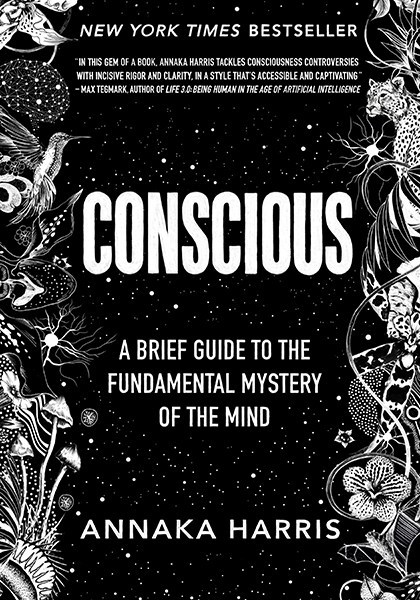

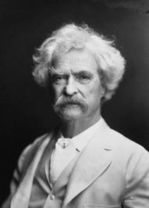




.jpg)

.jpg)
_Wilhelm_Reich.jpg)


