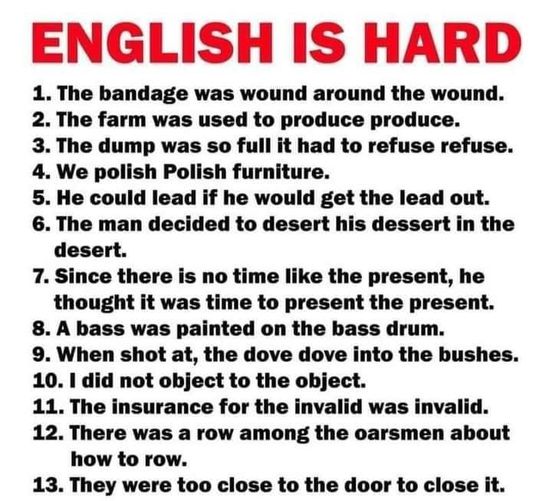
(Contributed by Steve Hines)


THE PREMONITION
A Pandemic Story
By Michael Lewis
We are almost halfway through “The Premonition,” Michael Lewis’s maddening account of America’s bungled response to the Covid pandemic, when an unsung health official in California, making her birthday resolutions, scrawls a foreboding note to herself: “It Has Started.” The official is Charity Dean, who sounds a little like the half-crazed scientist in a science fiction movie, suddenly realizing that the aliens are about to land.
It is December 2019. Dean, who will spend the next months trying and failing to prevent a national catastrophe, does not yet know what, exactly, has started. But we do. The coronavirus will spread from China to California, where Dean was then the state’s No. 2 public health official, and soon enough to everywhere else. As I write, Covid has killed more than three million people worldwide, including over half a million Americans, and is now burning ferociously anew through India.
We do not yet know how the movie ends. But Lewis, whose book is among the first wave of narrative accounts of the pandemic, is more interested in how it began. Believed to be the rich country best prepared for a pandemic, we ended up with almost a fifth of the world’s Covid deaths. Popular blame has centered, not undeservedly, on former President Donald Trump, who ignored his advisers’ warnings, publicly downplayed Covid’s dangers in the hopes of preserving his re-election chances and left states to fend for themselves. But Lewis has a different thesis. As one character puts it, “Trump was a comorbidity.” The rot ran deep through the American system of public health, and in particular the Centers for Disease Control and Prevention, once considered a crown jewel of American government.

We learn this in a looping, indirect way, through the intertwined back stories of Lewis’s half-dozen or so central characters. When Dean was a young county public health officer in Santa Barbara, her efforts to contain a 2013 meningitis outbreak taught her that the C.D.C. could be useless in a crisis — part of a system “designed to foist political risk” onto an institution that “had no social power.”
We meet Carter Mecher, a doctor and an autodidact working at the Department of Veterans Affairs who has a knack for seeing how systems fail. Drafted by the George W. Bush administration to help develop the United States’ first real pandemic response plan, Mecher learns that, as the C.D.C. saw things, there was little the country could do in a pandemic but isolate the sick and wait for a vaccine. There is Joe DeRisi, a genius biochemist in California whose hand-built gene analyzer helps identify the first SARS virus, but who is met “with boredom and blank stares” when he presents his technology to the C.D.C. As always, Lewis likes brilliant odd ducks — people who don’t have the usual credentials or the “right” ideas, but who turn out to be right. His subjects here are Cassandras: Blessed with uncanny foresight, doomed to be disbelieved.
In “The Premonition,” Lewis makes the most of his conceit, flashing backward and forward through the decades to show us how and when the warning signs flashed. The central lesson of his book is that beating a pandemic means acting before the danger is clear — a mind-set that politicians and bureaucracies are terrible at embracing. It is Mecher and his colleagues on the Bush task force who rediscover the idea of social distancing and, after studying the 1918 flu pandemic, draft a plan to shut down schools and encourage Americans to work from home in the case of a pandemic.ImageMichael LewisCredit…Tabitha Soren
The C.D.C. at first resists such drastic measures, but in Lewis’s cinematic telling, Mecher and his co-conspirators essentially fool the bureaucrats into thinking that the new interventions were their idea. (At one point, Mecher sneaks into the office of a C.D.C. official and borrows a computer there to type out what would become the C.D.C.’s social-distancing policy.) Yet when the new protocol meets its first test, during the 2009 swine flu outbreak, politics overrides planning. Amid intense uncertainty about the new flu’s deadliness, President Obama decides against setting the pandemic plan in motion. When the virus proves less lethal than it first appeared, and the outbreak dissipates without widespread death, government learns the wrong lesson: that Obama was right not to overreact.
One big problem with pandemics, Lewis observes, is that human brains — and, by extension, human bureaucracies — are simply not wired to grasp exponential growth. If you take a penny and double it every day for 30 days, you’d end up with $5 million. “The same mental glitch that leads people to not realize the power of compound interest,” Lewis writes, “blinds them to the importance of intervening before a pathogen explodes.”
When the first Covid cases emerge in Wuhan, Mecher begins trading emails with his old comrades (nicknamed the Wolverines, after the scrappy American teenagers fighting off a Soviet invasion in the ’80s flick “Red Dawn”). Using back-of-the-envelope math — “redneck epidemiology,” Mecher calls it — the Wolverines realize that there are thousands more cases in China than acknowledged. Yet when the first American case is confirmed, Trump dismisses the danger, saying “It’s one person” and “We have it under control.” By then, the Wolverine email list includes people from all around the government who are supposed to be executing the United States’ pandemic response. But in those critical early weeks, C.D.C. officials repeatedly downplayed Covid. They wanted more data. They didn’t want to act until the danger was clear.
Some of this story has been told before, including in this newspaper. But Lewis brings a welcome gimlet eye to the Trump era, when government officials abused by Trump were instinctively deified by liberal Twitter and cable TV. When a C.D.C. official named Nancy Messonnier defied Trump and announced, last February, that the spread of the disease was inevitable, “people were soon saying how brave Messonnier had been to say that the virus could not be stopped.” The reality, Lewis argues, is that the C.D.C. did not even try.
But the lessons of the “The Premonition” apply to more than just the C.D.C. — they tell us why government bureaucracies fail. The problem wasn’t just in Washington, or with Trump. The bureaucratic disease of under-reaction, Lewis argues, runs deep in America’s fragmented, underfunded health system. After Charity Dean scrawled her prophecy in December 2019, the Covid virus broke out in Wuhan. Scanning Twitter and Chinese websites, Dean formed a picture of impending doom. She brought her urgent concerns to her new boss at California’s Department of Public Health, Sonia Angell, a former C.D.C. official who had little experience in infectious disease but a glittering résumé “righting racial injustice in health care,” as Lewis puts it.
According to Dean, Angell choked. She banned Dean from using the word “pandemic,” cut her out of meetings and yelled at her when Dean deliberately left a paper trail about the coming disaster. Angell insisted on deferring to the paralyzed C.D.C., where officials had by then flipped from claiming the virus was no big risk to insisting nothing could be done to stop it. (Angell would resign months later, her departure publicly attributed to a Covid-testing data screw-up.) Only with the help of a couple of Silicon Valley executives — who almost instantly realized Dean was right — did Dean persuade California’s governor, Gavin Newsom, to issue a stay-at-home order.
Not quickly enough. The aliens had landed. The virus was already among us. By the time it was politically convenient to act, the pandemic was already too late to stop.
(Contributed by Michael Kelly, H.W.)
Tuesday, May 11th, 2021 (NYTimes.com)
By Ezra Klein
I’m Ezra Klein, and this is “The Ezra Klein Show.”
All right. Before we get into it today, a job announcement. We’re looking for a senior editor for the show. Someone who really understands the show, and the space it occupies, and the kinds of ideas and people that it focuses on. Someone who is really good, loves shaping and editing episodes. This is an editor role. And who will work with me to manage a team and to chart the future of the show. This is, as the title suggests, a senior role — a senior editor. So you need seven years at least of editing experience. It doesn’t all need to be in audio, but some of it should be. And at least two years of management experience. I’ll put the link to the job listing in the show description or you can find it by going to nyt.co.com/careers. But to the episode today — I have to tell you I struggled with Michael Lewis’s new book “The Premonition.” Not the reading it, of course. It’s a joy to read, like everything Michael Lewis does. But I did struggle with its central argument. This book is asking exactly the right question and one we we’re not asking enough in America. How could we have stopped coronavirus from becoming a pandemic here in the first place? Because once you have a pandemic, everything you might do to stop it is either going to be draconian or it’s going to be not enough. So you need to do is not let it become a pandemic in the first place. And there were people who had that plan. Michael Lewis’ book — he’s following characters who saw this coming early and were trying to raise the alarms on it. Carter Mecher, a pandemic expert from the George W. Bush administration, who helped design the government’s pandemic playbook. And he saw really clearly, really early, and was trying to tell others what this was going to be. Charity Dean, a public health official in California, who was fighting her own bureaucracy, her own state, to get them to take this as seriously as the world-shaking event it would later prove to be. And there are villains in this book. And I would say one in particular. It’s the Centers for Disease Control and Prevention. And I don’t want there to be any doubt on my position on this or simply the reality of this. They screwed up in a profound way. First and foremost, by insisting on making their own test and then failing to make a useful test, costing us unbelievably crucial time and information right at the beginning of the pandemic. There is blood on their hands. And yet, for that, I am not sure that the kind of pandemic response Lewis is lionizing here was possible in America ever, because to do this, to have the kind of aggressive public health lock-downs he’s talking about, or his characters are talking about, it wouldn’t just be for this pandemic. We’d be locking down every few years, because every few years we see diseases that could become the next pandemic. And we never know which one it will be. So what would happen if regulators tried to lock us down each time? Would people listen to that? You look around at the way this country has fought shutting down, has fought school closures, fought masks, even when thousands of people were dying each day. You look at how many people won’t take a vaccine even now. And you ask, could we have really done what Lewis’ characters are saying we could have. What are the actual constraints of the public — the constraints the public imposes on public health. So the question then it’s not just what the right playbook would have said we should have done, but realistic, what could we do? And what’s the optimal strategy given what we’ve learned about people and politics in this pandemic? And then maybe what are the new strategies that have emerged now that people understand how bad a pandemic could be? So that’s what this conversation is about. I think it’s one of the most important policy questions we need to answer. As always, my email is ezrakleinshow@nytimes.com.
Here’s Michael Lewis.
This is a book that is centered around the failures of the CDC and why they happened. But before we get into the why, tell me the what. What were the CDC’s key failures in your view?
Michael Lewis
Key failure number one, not facing up to the severity of what was going on in Wuhan as early as you could have done it. I would say January 20, when my characters have a real bead on what the transmissibility and the lethality of it is. And they had connections within the CDC. They’re talking. They’re trying to get them to pay attention. The “head-in-the-sandness,” kind of, of it. Two, being proprietary about COVID testing so that they created in our government a single point of failure. So that when their test didn’t work, we had no test. And that’s not just the CDC. That’s the FDA, because the FDA was insisting that people use the CDC’s test. We have more microbiology labs than any other country on Earth. They could all have whipped up COVID tests and some of them did. We could have done it a completely different way. Not just that the tests failed, but instead of responding to the failure by saying, this isn’t working, we got to find a different way, clinging to the authority to create a test. That would be two. Three, in the midst of all this, not being able to stand up to Donald Trump and say, what you’re saying about this is false. You’d lose your job maybe. But there was a public information role that they failed repeatedly with. And they failed in both directions. It’s interesting. Saying that masks didn’t do anything, because they didn’t have masks. But also, remember early on there was an obsession with fomites. You can get this thing off of surfaces. And you were cleaning your newspaper before you got it off your front porch if you got
Ezra Klein
Yeah, people were Lysoling their groceries.
Michael Lewis
All that. Think about the expense that the whole society has gone to because the CDC only like last week said, actually, that’s not that big a deal. They could have said that last May. So the guidance has been bizarre.
Ezra Klein
You root a lot of these failures in a risk-averse culture at the CDC. So let’s ground this conversation in history there. Tell me about the 1976 flu outbreak and the fallout to the CDC’s response.
Michael Lewis
Yeah, because that’s the moment where the CDC starts to change. Fort Dix, New Jersey, end of the flu season in ‘76. Some soldiers become ill. One dies. Scientists isolate a new strain of the swine flu. To the best of everybody’s knowledge, they’d never seen a new strain of a flu that was so transmissible and lethal that didn’t result eventually in a pandemic. And so instantly there’s a crisis. The CDC gathers all relevant experts to talk about what to do. It’s presided over by the — and career public servant, David Sencer, who’s the head of the CDC. And there’s a consensus that they should go as fast as possible to vaccinate the American population against this thing, because in the fall it’s coming kind of thing. Sencer, who’s presiding over the meeting, drafts a memo with just his name on it to the then Ford administration saying that this is what we think you should do. And the Ford administration feels, I think, backed into a corner. But also, this is what the experts are saying, so they go and do it. Flash forward to the fall and the vaccine is administered to — I don’t know, I can’t remember — but many millions of Americans. And first, some people get sick. The illness is actually unrelated to the vaccine. Random chance alone some people are going to get sick after they get the vaccine. But the vaccine is blamed on the evening news. Walter Cronkite actually apologizes for that report. And then after that, people actually get sick because of the vaccine. So some people die because of the vaccine. And the swine flu doesn’t come. So overnight, David Sencer goes from trusted leader of the Centers for Disease Control to scapegoat. And the Carter administration has arrived. And they fire him and then commission a book. It demonizes Sencer. And it actually ignores the whole process that led to the decision, which was actually a good process. It was decision-making with a lot of ambiguity and conditions of uncertainty. No one has ever seen a highly transmissible and lethal new strain of the virus not result in a pandemic. The American people had no immunity to it. Everybody basically agreed that’s what you should do is vaccinate them. And if you don’t vaccinate and it happens, you’re going to have a lot of death on your hands. It’s the first step in what then happens over the next six to seven years in the CDC of the politicization of the CDC. Flash forward a few years later and the Reagan administration is starting to insist the CDC do things that are alien to them. I mean, shut down research programs because it angers aspirin manufacturers. That kind of thing. And the Reagan administration decides to change the job of running the CDC. It’s no longer a career civil servant who is basically bubbled up with the approval of his peers. It’s going to be a presidential appointee. That’s a moment where the culture changed. And you can see why, because it goes from being a place that’s run by someone who might run for 10 or 15 years, and who is not beholden to any particular president or White House, and who’s been selected largely because his field finds him highly competent, to someone who’s selected from a smaller pool of possibly very competent people, but who happen to please politically who happens — whoever happens to be in the White House. And that director is going to serve for on average a couple of years. And so it’s like giving a house to a renter instead of a homeowner. They’re just going to behave differently. Their concerns are going to be different. The decision-making is going to be on a shorter political leash. So this is at the end of the book, not the beginning. But it was my attempt to figure out how this institution, the Centers for Disease Control, had acquired this illustrious reputation for controlling disease and why it was so different from that reputation.
Ezra Klein
But I start with it, because it seems to me to frame the question of the book really well. Which is, how much do regulators and public authorities — public health authorities — have to worry about the public? And how much can they do things that the public may not want them to do? So I want to do one more historical story before we get into this pandemic, which is H1N1. Talk a bit about what almost happened during H1N1, which is a more modern precursor to coronavirus.
Michael Lewis
Right. That’s 2009. That’s an actual pandemic.
Ezra Klein
Actual pandemic.
Michael Lewis
An incredible number of Americans were infected with that strain of swine flu. The problem early on — and again, in the beginning of a pandemic, it’s very hard to tell what’s going on, which seems strange. You would think, oh, it’s easy to tell what’s going on. But waves of death inside an ICU in Mexico, gruesome reports coming out of Argentina. It looks like it’s really lethal and you just don’t know. And in the Obama White House sat one of my main characters, Carter Mecher, who had been a holdover from the Bush White House and who had essentially created the U.S. pandemic response. The Bush administration had invented the idea of pandemic strategy. Crafted one in the form of a booklet inside the CDC. And then left it to the Obama administration. And he was just supposed to be there for six months. And then when he trained up his successors, he would leave. But he’s there and he happens to be a pandemic savant. But he knew that he didn’t know what was going on. But he thought in an abundance of caution, we need to treat this thing like it’s lethal. And the CDC actually disagreed. The CDC — its advice was don’t rush to vaccinate. We want to wait and see and gather more data. That’s kind of the thing.
Ezra Klein
And he wants to close schools, right? He wants to do the whole thing.
Michael Lewis
In the very beginning, yes, until they know what they’re dealing with. And the problem generally with waiting to have more data is that by that time you have data, it’s over. The war is over. When you’re looking at disease in the society, you’re looking at star light, as Carter would say, or you’re driving by looking in the rear-view mirror. A death today is an infection from five or six weeks ago with a virus that’s multiplying exponentially. And so if you’ve got one death, you’ve got thousands of cases, kind of thing. And so he was trying to explain to the Obama White House that, yeah, there’s no evidence here that it’s lethal yet, but we don’t know. So Obama decided, rightly as it turned out, not to listen to him. The CDC’s advice to wait until they had certainty ended up being the smart advice. However, one of my other main characters, Richard Hatchett, another doctor who was in the Bush White House, was brought back in to help Carter Mecher manage this thing. He kept a journal through that time. And Hatchett, in the course of the journal, you see him realizing that, yeah, they created this pandemic plan, but had the swine flu actually been lethal, it would have been catastrophic given the response. And he tells Obama, it’s not that we dodged a bullet, it’s that nature shot us with a BB gun and we got lucky. And to his credit, the Obama White House learns a lesson from this. And the lesson is actually you’re not going to manage a pandemic out of the CDC. You’re going to get a particular point of view out of the CDC that is going to be afraid to stick its neck out, insisting on certainty. Whereas, if you wait until you have certainty, it’s too late. And so the Obama administration actually from then on elects to manage pandemics out of the White House. They put a pandemic manager onto the National Security Council, who is directly talking to the president and coordinating the various federal agencies. It’s a position Trump ends up getting rid of. But they learn all over again what the Bush administration learned on its own, which was that the Centers for Disease Control is not really equipped to control disease.
Ezra Klein
So I’m going to try to take the side of the CDC for some of this conversation, because this is a very critical of the CDC book. And I agree with a lot of the criticisms. I’ll be clear on this. But the weakness of them, I think, is that I am not sure an agency could do what these characters — your renegade epidemiologists — want to do. And that’s the part of this I want to push on. So we’ve watched during this pandemic that even when the virus is out there killing your friends and neighbors, there are people who will not mask. There are people who will not take a vaccine. There are people who will not socially distance. Kids will go to parties on colleges. The key argument made by a lot of your players — and it’s completely true. I mean, on the facts it is completely true. It is that when you do not know how bad this can be, that is the time to stop it. Lock things down.
Michael Lewis
You could contain it.
Ezra Klein
You can contain it. You can actually beat the virus. You don’t —
Michael Lewis
Australia did this.
Ezra Klein
Yeah, you don’t have to wait till the fire is raging out of control.
Michael Lewis
Right.
Ezra Klein
At the same time, a lot of these come up. I mean, H1N1 being another example. SARS was a possibility. We could have done a lot more here about Ebola and some people were arguing for that. A lot of things come up that you might implement the hard core pandemic playbook to stop and then they fizzle. And if you do that five or six times, the worry of the politicians, of the CDC is that you can’t take the public out of public health. And that there’s going to be a backlash. You’ll lose your seat. You’ll lose the government. The CDC will get neutered the way it was in the ‘80s under Reagan. And so they are not free to take this advice. And so this is my question for you, having talked to these people, do you think it would have been possible to do what they had wanted to do when they had wanted to do it? Do you think a different agency, a different presidential administration could have gotten Americans to go into that kind of lockdown before we knew how bad this was, when there was just a cruise ship docked, I think not that many miles from where we are now.
Michael Lewis
You mean, would we have to be a different society in order to pull this off?
Ezra Klein
Yes.
Michael Lewis
How different are we from Australia? You would have to pull it off for a matter of a couple of months before everybody saw the wisdom of what you’ve done, because you’d be looking at other countries where there was raging disease.
Ezra Klein
But that’s this time.
Michael Lewis
Yeah.
Ezra Klein
If you had done this three or four times —
Michael Lewis
I thought we were talking about this time.
Ezra Klein
But I’m talking about all of them, because you would have — in a world where we listen to these folks who would have done it for H1N1, we might have done it for Ebola.
Michael Lewis
I think you’re imagining a response that even they’re not imagining. They’re not thinking shut down the society. Closing schools is a particular thing. One of the things that Carter Mecher and the inventors of pandemic response figure out is just how central schools are to disease transmission. So that’s a peculiar thing. And it’s not shutting schools for months. It’s shutting them for a couple of weeks. I could imagine a world where we build in as a society a kind of rapid response to a virus that is minimal. It’s like the least you have to do that doesn’t involve closing businesses, for example. That may involve some hesitation about mass gatherings in schools. So this is a matter of public education. I mean, I don’t think that you can be fatalistic about this. And I mean the leadership we had made it impossible. And it wasn’t just the leadership. Even if we had taken the action that these people would have liked to have taken, it has no purpose if you don’t have COVID testing. And we wouldn’t have had testing. But as a society, could we create a mechanism to respond more intelligently than we have in the past? Yes, totally. But you can’t just do it. You have to explain it. You have to say, look, this is going to happen again. It’s like a hurricane. Think about hurricane response. When I was growing up in New Orleans, nobody evacuated. And if you told people they would have to evacuate, they’d say, no, you could never pull that off. You’re not going to get everybody to leave New Orleans. Katrina happens. The meteorologists say it’s time to get in your car. People get in their car. So you can change the culture on these subjects. And when they’ve now had this experience, I think going forward it’s probably easier to change the culture.
Ezra Klein
Yeah, that I think it’s possible now in the same way that I think you see remarkable responses in South Korea and Taiwan and some of the countries that dealt with SARS and MERS at different points. But let’s go back. Let’s imagine a better political equilibrium. So let’s say that in 2012 the election had gone differently and Mitt Romney was in his second term. A lot of your main characters are Bush holdovers. They come back. What should we have done? What would the plan have looked like? And when would it have gone into place?
Michael Lewis
First, what they would have done is they would not have had this single point of failure at the CDC. So you would have had testing. You would have had it run out of the White House in a much more aggressive way. So let’s assume we have testing like everybody else. Very early on everybody coming into the country is tested for COVID. Everybody quarantines for 14 days. That’s the first thing. There would have been severe travel restrictions I think right up front. They would have closed schools.
Ezra Klein
When would they have closed schools?
Michael Lewis
January 20. There’s a constraint here that they may not have had if they— in a different world. They might have had better relations with the Chinese, so they would have had better data out of China. But even with the data that Carter Mecher is able to get off Chinese websites and from Chinese morgues, and the way he was trying to figure out what the transmissibility and the lethality of it was, he had a bead on the thing on January 20.
Ezra Klein
Do you think people would have accepted the school closure in January of 2020?
Michael Lewis
If you explain it badly, no. Do I think you could sell it with some pictures from Wuhan? Maybe. And if not January 20, February 20. I mean, but it’s event — maybe you need the pictures from Italy. I don’t know what you need. But you’re not necessarily closing the schools for good. You’re closing the schools to see where the virus is. And you wouldn’t have been in the position Carter Mecher was in trying to find all kinds of bizarre ways to find the virus, like testing people who have flu-like symptoms everywhere in America when they wander into clinics for COVID. So when you ask me those hypotheticals — would people have accepted — I always think what people accept depends on how they are led. Do I think that a leader could have led them there? Yeah, I think it’s possible. You lay out what you think might be happening. You scare the hell out of everybody. We’re not doing this permanently. We’re doing this until we know what this thing is. And then what we hope to do is contain it so we can have our economy back. So you’re asking me would we have taken a shot at containment? Could you have led people to have a shot at containment? I think it’s possible.
Ezra Klein
I’m pushing on this because I think it’s the core question. What I like so much about the book is you’re having the right debate in it. I think so far debates in this country about pandemic response are what happens once the fire is out of control, which I think you’ve got a great — I think it’s Carter who says, you can stop a grease fire with a fire extinguisher. You can’t stop a house on fire with a fire extinguisher. But the difficulty with starting when it’s a grease fire is you got to move people to a place, which maybe you can do in the future because we’ve lived through this unbelievable catastrophe as a collective. But I think it would have been very hard then. And you’re mentioning Australia, which I do think has certain unusual qualities as being as separated and an island as it is. But Europe, for the most part, didn’t. Europe doesn’t have the particular CDC history we do or they didn’t have Trump. And some of them did better for a while. Germany did better than we did for quite some time. But a lot of them didn’t. South Korea is the most interesting to me, because it did take off there and then they stamped it back out. And they’ve had I think something like 2,000 deaths in a society of tens of millions of people.
Michael Lewis
But we aren’t just like Europe. The Lancet did the math that back when there were — I don’t know — 480,000 American deaths. The Lancet calculated that if we’d done only as well as the average of the G7 countries, there’d be 170,000 Americans still alive. So there is the second question about how will you handle the house on fire.
Ezra Klein
Yes, absolutely.
Michael Lewis
And we didn’t handle that well. But it’s a fair point to say that maybe it was not culturally possible to sell containment. It would have been hard to do. The fact we didn’t even try is damning. We didn’t even try. The CDC doesn’t pivot and go from saying this poses little risk to American life to it’s now here and we can’t do much about it.
Ezra Klein
Yeah, can you talk about that pivot from downplaying to fatalism? That’s a really interesting thing you pinpoint in the book.
Michael Lewis
It’s February whatever — 23rd, 24th — when Nancy Messonnier at the CDC gets up and says that we’ve had domestic transmission and basically we don’t know where it is. It’s here and it’s moving. That’s the day the stock market collapsed and Trump called for her head and all that. What was interesting to me about it was that from the lay point of view, it looked very brave for the CDC to get up and do this. From the point of view of Charity Dean, public health officer, or Carter Mecher, who’s pandemic strategist — people who are really in on it — it was unbelievably cowardly to wait till then, because you could have done that on January the 20th. The CDC played the part of lulling the American people to sleep for a stretch. The public health authority, in order to do their job, they need cover from politicians. But they also provide cover for politicians. They are the experts. And they do what David Sencer did. We think this is dangerous. We think we’ve got to take precautions. We’ve got to do various things. And it enables the politicians to take action. And instead they do the opposite. They gave cover for complacency.
Ezra Klein
So there’s an interesting discontinuity in this book, which is — so I read and I loved your book, “The Fifth Risk,” which is about the government as a manager of risk for society, and how Trump and the Trump administration were coming in and basically taking a wrecking ball to that.
Michael Lewis
Yep.
Ezra Klein
And one might imagine opening this book, that it’s like “The Fifth Risk,” part two. It all came true. Exactly what we thought would happen happened. And you note that when the CDC does eventually come up, even as late as they do, Trump basically sidelines them. That’s been, I think, the dominant story of CDC and Trump up until now. But Trump for a long time, as the head of government, is fighting the parts of the government that are going to come out and say, this is a big deal. He is trying to get people to downplay this, because he doesn’t want the testing. So one might imagine, having read “The Fifth Risk,” this book is going to be about, see, everybody, I was right. [LAUGHS] Michael Lewis was right. But you actually say Trump, obviously not a help, but not the core issue. That this might have been different, but it wouldn’t have been fixed by not having him. Tell me why.
Michael Lewis
I go where my characters take me. They took me on that journey. I would have loved to have been able to just write this as the sequel to “The Fifth Risk.” It was just messier than that. And even in “The Fifth Risk,” it was clear that, yeah, Trump is taking a wrecking ball to this machine that we have to deal with existential risks. But it’s like the one tool we have to deal with lots of problems. But that tool, that machine has been allowed to rust for generations. So it was easier to destroy than it should have been. And one form of the rust is like what happened inside the CDC. When I have a character who’s a local public health officer in Santa Barbara County — Charity Dean — this is the main character in the book who is fighting very bravely crazy outbreaks of disease in her county. It’s not COVID. It’s tuberculosis, or it’s HIV, or hep C, or measles in schools. And has little microcosms of the same experience we’ve seen writ large with COVID. Controversies, upsetting people to save lives. And she has — when she takes this job — this sense that there is this federal enterprise that’s there to help her called the Centers for Disease Control. She’s supposed to lean on them for academic help, but also to have her back in cases. And she realizes that they don’t have her back. That, in fact, just the opposite. Any kind of controversy that she causes, they run away from. It’s a premonition of what’s coming. If you had asked Charity Dean in 2015, before Trump is in the air, what’s going to happen if there’s a pandemic, she’d have told you there’s nobody to run it. The supposed institution on top is actually not engaging with the problems in a serious way and the system isn’t a system. It’s just 3,000 of me around the country unconnected, on our own, with no one coming to save us. So it’s a little hard to blame Trump for it all when you have someone telling you that. That it wasn’t working before. Now, there’s no question that Trump made it worse. I mean, there’s a body count you can just blame him for. But would we have gotten out in front of it with someone else? I think probably not. Probably not.
Ezra Klein
So “Fifth Risk,” the implicit view of folks in government is that they’re really competent and doing a great job. It’s a very pro-government book. This book I would say actually frames the opposite. Has your view of government changed in doing the two books?
Michael Lewis
Not too much. Both stories, if you back away far enough, are about good people and bad systems. There’s no malice in what’s coming out of the CDC. It’s screwed up incentives and the incentives were imposed on them. It’s changing an institution from having a really organic felt relationship with disease on the ground in America and a healthy appetite for taking risks to fight it into a kind of academic institution that is rewarded for writing papers. And we punish them horribly when they make mistakes. So my attitude has not changed at all. It’s true I shifted the light. I had the spotlight — in the first book was on these people who in spite of the systems they are in are doing these extraordinary things. In this case, we had gross system failure. And it wasn’t just at the federal level. I mean, the states are in a funky position, because the states would have assumed that this was going to be managed like a war on a federal level. They weren’t expecting to be told that the Russians are invading, figure out how to defend California. So it’s a little more forgivable at the state level. But it’s hard to write a story of government competence when you have this, which is a failure of systems. But the other thing the books have in common is that the heroes of this book are still government employees. [LAUGHS] They’re just people in a screwed up system trying to make it work and realizing eventually that it won’t, but behaving pretty heroically and doing their best in spite of it. What those guys did in the Bush administration, especially Carter Mecher and Richard Hatchett, two doctors who had hands on patients for much of their careers, in thinking about what we should do in the event of a new pathogen sweeping across our society, I mean that is a story of government triumph. It is the government working. So it’s not all dark. But you’re right, it is different. And it is not — if you’d asked me the last time we spoke what the next book after “The Fifth Risk” was going to look like, I would not have guessed it would look like this.
Ezra Klein
So the tone of the book is your characters banging their head on the wall of these failures, trying to get the CDC to move. I’m sure you talked to some people at the CDC who were on the other side of this. What was the most persuasive argument they gave you of why they acted the way they did?
Michael Lewis
All my interviews with people at the CDC are guerrilla interviews. And the people I interviewed felt ashamed. I did not get arguments back. What I did hear is don’t be too hard on us, because there are great people here and we’re not all like that. That was the defense. It was people feeling alienated from their own institution. It wasn’t, oh, yes, it was smart to have a test that didn’t work. It was smart to be proprietary about the test. Here’s another failure — and kind of incredible failure — we repatriate Americans from Wuhan. They are in National Guard barracks being quarantined outside of Omaha. There is a facility in Omaha that is a medical facility that was designed just for this, to send people with mysterious or scary illnesses, to treat them and also understand the illness. The guy who runs that facility, James Lawler, calls the CDC and says, we got to test these people who just came back from Wuhan. And it goes all the way up to Redfield. And Redfield says, you’re not allowed to test them, because to test them would be performing experiments on captive people — medical experiments on captive people. All the people in the barracks want to be tested. So they never get tested and they get released into the wild. How do you excuse that? I mean, you can explain it. That they don’t have a test. They’re embarrassed their test might not work. Whatever it is. But the behavior is just quixotic. [MUSIC PLAYING]Ezra Klein
My version of some of this reporting — I’ve done a lot more reporting on the FDA through this period —
Michael Lewis
Oh.
Ezra Klein
— which I think has often been very far behind on some important things. But the answer I always get from the FDA on why it took so long to, say, clear rapid, cheap, repeatable at-home testing, or why do we still not have clearance on AstraZeneca despite the fact that it’s been used all over Europe and it certainly seems to be working out reasonably well is that they are so afraid of a mistake that they make — a sin of commission, as you like to put it, rather than omission. And what will happen then if the entire structure of public confidence in the regulatory decisions collapses, that they are working with a risk profile that seems completely different than the one I look at from the outside or that some of the people I talk to look at from the outside. And it infuriates some of the public health officials, and the health economists, and epidemiologists I know. But that their general view is that it’s all well and good to lob stones at us from the sidelines. But if we get it wrong, we can never get it right again. And I don’t really buy that, but it is how they see it.
Michael Lewis
No, that’s true. No, no, no, it’s absolutely true. The characters in the book make the argument that they have come to regard sins of commission as completely different from sins of omission. But when you’re dealing with a pandemic virus, a sin of omission is a kind of commission. That if you’re not looking for the virus, you don’t stop the virus. People die. So they ended up getting what they most feared. Inaction led to disgrace. And your attitude towards the fear — and maybe mine a little bit — is kind of forgiving. It’s like they’re that way because we’ve made them that way, because we punish them mercilessly when they commit a sin of commission. Charity’s attitude was this is life and death and I find it unforgivable.
Continue reading Michael Lewis Is Asking the Right QuestionKhalil Ramadi|TED Fellows: Shape Your Future (ted.com)
Could a small jolt of electricity to your gut help treat chronic diseases? Medical hacker and TED Fellow Khalil Ramadi is developing a new, noninvasive therapy that could treat diseases like diabetes, obesity, Parkinson’s and Alzheimer’s with an electronic pill. More targeted than a traditional pill and less invasive than surgery, these micro-devices contain electronics that deliver “bionudges” — bursts of electrical or chemical stimuli — to the gut, potentially helping control appetite, aid digestion, regulate hormones — and even stimulate happiness in the brain.
This talk was presented at an official TED conference, and was featured by our editors on the home page.
ABOUT THE SPEAKER

Sagittarius Lunar Eclipse
The Sagittarius lunar eclipse is the first of two total eclipses in Sagittarius this year, but the second, in mid December, will be a solar eclipse. This lunar eclipse makes the point that, whilst we may have strong urges towards freedom, we might not easily access it in the ways we desire. Though we may have become accustomed to setting our sights lower in certain regards, this may still feel frustrating to anyone who believes there is more out there for them. Reaching for new heights is not completely impossible, just that the way is a little harder than ideal, according to the Moon’s separating square from Jupiter in Pisces. The separation suggests letting go of part or all of a dream or plan — for now. Not all situations of letting go are negative, though. For some, releasing and moving on can bring a sense of relief. In fact, being willing to let go of one scenario could even help another plan come into stronger focus.
The Moon applies to sextile Saturn, which, despite its nature to restrict, actually can ensure that a matter becomes definite. As Saturn is retrograde, there may well be a return to a storyline only partly fulfilled before, perhaps stalled at a crucial juncture in the plot. This thread could be picked up soon as matters start moving ahead again — albeit more gingerly. With Saturn in Aquarius things need to be done in a “proper” way, to succeed fully. This can include employing new protocols or adhering to older traditions; the key issue is management that gets official approval as Saturn insists on proper grounding and, in a win–win sign like Aquarius, will be aiming to keep a lot of people happy. Retrograde Saturn may have an added role to play, acting like a guardian with a situation requiring constant care or monitoring. A need for patience is emphasized, playing the long game to reach a specific result.
Despite restricted freedoms or individuals feeling controlled by rules and regulations, the sense of being within an ocean of possibilities remains, since Jupiter has recently entered Pisces. This “early degree” focus points towards a vast vista coming into view. The full horizon may not be visible yet, but we sense greater opportunities ahead!
Since the Sun eclipses the Moon, though, it is fair to say that more everyday and local options are likely to remain on the agenda for a while. Elaborate schemes may relate more to memories than thoughts about the future. This is not all bad. It may present the perfect chance for consolidating past progress through, for example, noting it down in a journal, finally creating a scrapbook, organizing a photo album, or putting together a collage that marks an event or relationship well.
Occasionally, around a major eclipse, something that, or someone who, should have had their moment gets overlooked. It’s a case of “pick yourself up” and go forward to the next thing! Or be willing to wait in the wings/stand in the shadows, until a better time to enter the spotlight. A project that has had an initial investment may not reach its full fruition until later on — in time, a full flowering will be possible.
Finally, the Moon applies to trine Chiron in Aries, offering an opportunity to heal a wound caused through innocence as the source of an early mistake. The Aries way of prompt action can mean hurtling into situations without sufficient research, ending up with burnt fingers. Revisiting the situation could offer sudden healing and a chance to regain lost courage, giving a boost towards a sought-after goal.
This article is from the Mountain Astrologer, written by Diana Collis.
JBS Author of “When Bad Things Happen to Good People,” Rabbi Harold Kushner offers his perspective on coping with personal tragedies in discussing his latest book, “Overcoming Life’s Disappointments,” based on the life of Moses in the Torah.
Sunday Advantage Available now: The Happy Positive DVD/Digital Download Here: http://www.shopliftfilms.com/store.html Become a member today: https://www.patreon.com/Happypositive FULL PLAYLIST: http://full.sc/2jZ09Sh Follow us on Instagram: @sundayadvantage Products used to make this video possible: [Camera:] Sony a7rii: https://amzn.to/2jPRPdF Sony ax100: https://amzn.to/2jMByWR Sony pj340: https://amzn.to/2jLrrkY Lenses: Canon 50mm: https://amzn.to/2lfpbmz Canon 24mm-105mm: https://amzn.to/2lhEdIz Loawa:10mm-18mm: https://amzn.to/2lhHibB [Mics:] Sennheiser Mic: https://amzn.to/2lecet6 Handheld Mic: https://amzn.to/2lgfILH Rode Mic: https://amzn.to/2lbdEEG Sony Mic: https://amzn.to/2SbHci0 [Lights:] https://amzn.to/2lfUwpg

Friday 2:35PM (theonion.com)
MINNETONKA, MN—Calling the armed forces of today a “far cry” from the honorable soldiers he recalled from his upbringing, local conservative resident Phil Hayes told reporters Friday he longed for a bygone era when the U.S. Army was 2 inches tall, green, and plastic. “When I was young, every man in the Army respected the chain of command and knew how to follow orders, whether they were deployed on the ground in hostile backyard terrain or striving to take an enemy anthill,” said the 45-year-old, adding that modern troops did not have the commitment to duty required to face a torture-by-melting in the microwave or to jump out of a tree equipped with nothing more than a makeshift parachute fashioned from notebook paper and twine. “I mean, Jesus Christ, what happened? Back then, men were heroes who would hold their position no matter what, never letting their guard down as they stood in place with a grenade, rifle, flamethrower, mortar, or bazooka. This new crop is just a bunch of snowflakes who could never complete a deadly mission under the bed or fight off insurgent Barbies until the LEGO reinforcements could arrive.” Hayes went on to say that above all, he missed the days when everyone in the military was one color, one gender, and couldn’t open their fused, plastic mouths to talk back.

Some of you remember my Fall 2020 zoom drawing class: Drawing as a Sacred Activity! Yes, we had 20 people in the class from all over the globe including two young ones, ages 8 and 12. Everyone got curious, had lots of fun and created amazing drawings! Drawing opens up a new way of seeing for all of us. It is also a great way to center yourself and to explore your Higher Potential. Every single person has access to Higher Potential. Some people enjoy a little guidance – which is what I offer in my upcoming drawing classes.
What are you doing this summer of 2021? Consider one of my two drawing classes. See below.
LEARN MORE and REGISTER: Heather’s website
IMAGINATION DRAWING
Ten Mondays – beginning June 7 and ending August 16, 2021
TIME: 9:00 am Pacific/10:00 am Mtn/11:00 am Central/Noon Eastern
FEE: Contribution
This one hour zoom class will meet every Monday for ten weeks beginning June 7. You will use your Non-Dominant hand to play with your imagination. We are all blessed with feelings and thoughts. Instead of stuffing them down inside, we will honor our relationship with our thoughts and feelings in a safe, meaningful and playful way. You will grow by being curious, listening to others, suspending judgement and allowing a line to be drawn from your heart to a piece of paper. You will share only what you feel comfortable sharing and I think you will be amazed with what you will discover.
OBSERVATIONAL DRAWING
Ten Wednesdays – beginning June 9 and ending August 11, 2021
TIME: 9:00 am Pacific/10:00 am Mtn/11:00 am Central/Noon Eastern
FEE: Contribution
This one hour zoom class will meet every Wednesday for ten weeks beginning June 9. We each will OBSERVE the world around us from our own unique Point of View (trees, doorways, chairs, mirrors, windows). How remarkably helpful and personally enriching it is to learn more about YOUR unique POV and guess what? DRAWING is perhaps the best way to do this. PLUS, in this drawing class, you will learn the 5 KEYS to Observational Drawing that I learned during my 5-year Art Apprenticeship with Norwegian Master Artist, Jan Valentin Saether. This is where I learned to draw upon the abstract ESSENCE of what I am observing. Everyone will gain something wonderful and valuable.
I am looking forward to sharing these classes with you!
Aloha Love,
Heather C. Williams, H.W.,M.
High Watch Mentor (The Prosperos School of Ontological Studies)(Ontology = The science of Being)
Author, Drawing as a Sacred Activity
Website: www.drawingtogether.com