“The most beautiful people we have known are those who have known defeat, known suffering, known struggle, known loss, and have found their way out of the depths. These persons have an appreciation, a sensitivity, and an understanding of life that fills them with compassion, gentleness, and a deep loving concern.
“BEAUTIFUL PEOPLE DO NOT JUST HAPPEN.”
~Elisabeth Kübler-Ross
Elisabeth Kübler-Ross (July 8, 1926 – August 24, 2004) was a Swiss-American psychiatrist, a pioneer in near-death studies, and author of the internationally best-selling book, On Death and Dying, where she first discussed her theory of the five stages of grief, also known as the “Kübler-Ross model”. Wikipedia
“This work is not about healing others. We can’t heal another person. We can only heal ourselves until our presence is healing.”
–Irene Smith
Irene began her journey as a massage therapist in 1974, certified from the Los Angeles School of Massage. She is a member of the Associated Bodywork and Massage Professionals ABMP, Hospice Volunteer Association, the San Francisco Bay Area End of Life Coalition and serves as a member of the Advisory Council for the Elisabeth Kubler Ross Foundation.
In 2001, Irene founded and currently directs Everflowing, an educational outreach program dedicated to teaching mindful touching, as an integral component to end of life care. Having introduced massage into hospice care on the West coast in 1982, Irene has worked with hundreds of persons in hospital, home, hospice, and skilled nursing environments.
As Director of the internationally acclaimed non-profit organization Service Through Touch (1982-1999), Irene established massage projects for persons with HIV/AIDS worldwide.
A respected author and educator, Irene teaches health care providers, and body workers tactile support skills for caring for ill and dying persons and creates resource materials utilized by institutions worldwide.
Her written contributions include Providing Massage in Hospice Care, Touch Awareness® In Caregiving, The Emotional Impact Of Working With The Dying, chapter four in Psycho Immunity and the Healing Process by Jason Serinus and chapter nine in Aids The Ultimate Challenge by Elisabeth Kübler-Ross MD.
Irene’s work has been honored by the somatic and health care communities as an outstanding contribution to community wellbeing. Irene’s awards for community service include For Those Who Care by KRON TV; Eight Who Matter awarded by the Associated Bodywork and Massage Professionals; two Cable Car awards for providing massage volunteers to hospitals for persons with Aids; the first National AIDS Memorial Grove’s inductee for AIDS service, and 2014 World Massage Festival lifetime achievement award recipient.
Irene continues to teach Providing Massage in Hospice Care in various locations in the US, teach Touch Awareness for several San Francisco Bay Area hospice organizations, and consults in the development and implementation of hospice massage programs.
As a West Coast assistant for over 10 years to her teacher, the late pioneering thanatologist, Elisabeth Kübler-Ross, MD, Irene brings remarkable depth, wisdom, and therapeutic presence to her work.
ARIES (March 21-April 19): “Open your mouth only if what you are going to say is more beautiful than silence,” declares an Arab proverb. That’s a high standard to aspire to. Even at our very best, when we’re soaring with articulate vitality, it’s hard to be more beautiful than silence for more than, say, 50 percent of the time. But here’s a nice surprise: You could exceed that benchmark during the next three weeks. You’re primed to be extra expressive and interesting. When you speak, you could be more beautiful than silence as much as 80 percent of the time.
TAURUS (April 20-May 20): Here’s the definition of an emotional support animal: “a companion animal that provides therapeutic benefit to a person with a mental or psychiatric disability.” I don’t mean to be flippant, but I think every one of us has at least one mental or psychiatric disability that would benefit from the company of an emotional support animal. If you were ever going to acquire such an ally, the coming weeks would be prime time to do so. I encourage you to also seek out other kinds of help and guidance and stimulation that you’d benefit from having. It’s the resource-gathering phase of your cycle. (PS: Cesar Chavez said: “You are never strong enough that you don’t need help.”)
GEMINI (May 21-June 20): A blogger named Valentine Cassius reports, “A tiny old woman came into the deli where I work and ordered a ‘wonderful turkey sandwich.’ When asked what she wanted on the sandwich other than turkey, she said ‘all of your most wonderful toppings.’” Here’s my response to that: The tiny old woman’s approach usually isn’t very effective. It’s almost always preferable to be very specific in knowing what you want and asking for it. But given the current astrological omens, I’ll make an exception for you in the next three weeks. I think you should be like the tiny old woman: Ask life, fate, people, spirits and gods to bring you all of their most wonderful toppings.
CANCER (June 21-July 22): “I am tired of trying to hold things together that cannot be held,” testifies Cancerian novelist Erin Morgenstern. “Tired of trying to control what cannot be controlled.” Here’s good news for her and all Cancerians. You have cosmic permission to surrender—to no longer try to hold things together that can’t be held or try to control what can’t be controlled. Maybe in a few weeks you will have gained so much relaxed new wisdom that you’ll be inspired to make fresh attempts at holding together and controlling. But that’s not for you to worry and wonder about right now. Your assignment is to nurture your psychological and spiritual health by letting go.
LEO (July 23-Aug. 22): Philosopher Georges Bataille wrote, “The lesson of ‘Wuthering Heights’ of Greek tragedy and, ultimately, of all religions, is that there is an instinctive tendency towards divine intoxication which the rational world of calculation cannot bear. This tendency is the opposite of Good. Good is based on common interest, which entails consideration of the future.” I’m going to dissent from Bataille’s view. I agree that we all have an instinctive longing for divine intoxication, but I believe that the rational world needs us to periodically fulfill our longing for divine intoxication. In fact, the rational world grows stale and begins to decay without these interludes. So the truth is that divine intoxication is crucial for the common good. I’m telling you this, Leo, because I think the coming weeks will be a favorable time for you to claim a healthy dose of divine intoxication.
VIRGO (Aug. 23-Sept. 22): Virgo actor Ingrid Bergman (1915–1982) won the most prestigious awards possible for her work in films, TV and theater: Oscars, Emmys, and a Tony. She was intelligent, talented and beautiful. Life was a challenge when she was growing up, though. She testified, “I was the shyest human ever invented, but I had a lion inside me that wouldn’t shut up.” If you have a sleeping lion inside you, Virgo, I expect it to wake up soon. And if your inner lion is already wide awake and you have a decent relationship with it, I suspect it may soon begin to come into its fuller glory.
LIBRA (Sept. 23-Oct. 22): Libran author Antonio Tabucchi described the frame of mind I recommend for you in the coming days. I hope you’ll be eager to embrace his far-reaching empathy. Like him, I trust you will expand your capacity to regard the whole world as your home. Here’s Tabucchi’s declaration: “Like a blazing comet, I’ve traversed infinite nights, interstellar spaces of the imagination, voluptuousness and fear. I’ve been a man, a woman, an old person, a little girl, I’ve been the crowds on the grand boulevards of the capital cities of the West, I’ve been the serene Buddha of the East. I’ve been the sun and the moon.”
SCORPIO (Oct. 23-Nov. 21): Author James Frey writes, “I used to think I was tough, but then I realized I wasn’t. I was fragile and I wore thick armor. And I hurt people so they couldn’t hurt me. And I thought that was what being tough was, but it isn’t.” I agree with Frey. The behavior he describes has nothing to do with being tough. So what does? That’s important for you to think about, because the coming weeks will be an excellent time to be tough in the best senses of the word. Here are my definitions: Being tough means never letting people disrespect you or abuse you, even as you cultivate empathy for how wounded everyone is. Being tough means loving yourself with such unconditional grace that you never act unkind out of a neurotic need to over-defend yourself. Being tough means being a compassionate truth-teller.
SAGITTARIUS (Nov. 22-Dec. 21): Fragile intensity or intense fragility? Ferocious gentleness or gentle ferocity? Vulnerable strength or strong vulnerability? I suspect these will be some of the paradoxical themes with which you’ll be delicately wrestling in the coming days. Other possibilities: sensitive audacity or audacious sensitivity; fluidic fire or fiery fluidity; crazy wisdom or wise craziness; penetrating softness or soft penetration; shaky poise or poised shakiness. My advice is to regard rich complexities like these as blessings, not confusions or inconveniences.
CAPRICORN (Dec. 22-Jan. 19): Birds that live in cities have come up with an ingenious adaptation. They use humans’ abandoned cigarette butts to build their nests. Somehow they discovered that nicotine is an insectide that dispels pests like fleas, lice and mites. Given your current astrological aspects, I’m guessing you could make metaphorically comparable adjustments in your own life. Are there ways you could use scraps and discards to your benefit?
AQUARIUS (Jan. 20-Feb. 18): A blogger named Raven testifies, “My heart is a toddler throwing a tantrum in a store and my brain is the parent who continues to shop.” I’m pleased to inform you, Aquarius, that your heart will NOT act like that toddler in the coming weeks. In fact, I believe your heart will be like a sage elder with growing wisdom in the arts intimacy and tenderness. In my vision of your life, your heart will guide you better than maybe it ever has. Now here’s a message to your brain: Listen to your heart!
PISCES (Feb. 19-March 20): The Voyager 1 space probe, launched by NASA in 1977, is now more than 14 billion miles from Earth. In contrast, the farthest humans have ever penetrated into the ground is 7.62 miles. It’s the Kola Superdeep Borehole in northwest Russia. Metaphorically speaking, these facts provide an evocative metaphor for the following truth: Most humans feel more confident and expansive about exploring the outer world than their inner realms. But I hope that in the coming weeks you will buck that trend, as you break all previous records for curious and luxurious exploration into your deepest psychic depths.
Homework: What image or symbol represents the fulfillment of your noble desires? FreeWillAstrology.com.
Humans often appear to react irrationally in the face of disease, as the COVID-19 pandemic has shown. Many cling to religion or become superstitious. Others become fatalistic. In times of plague and trauma, we moderns seek to protect ourselves with prayers, charms, sigils and spells as much as any medieval peasant. That a surgical mask is hygienic doesn’t make it any less of a magical symbol.
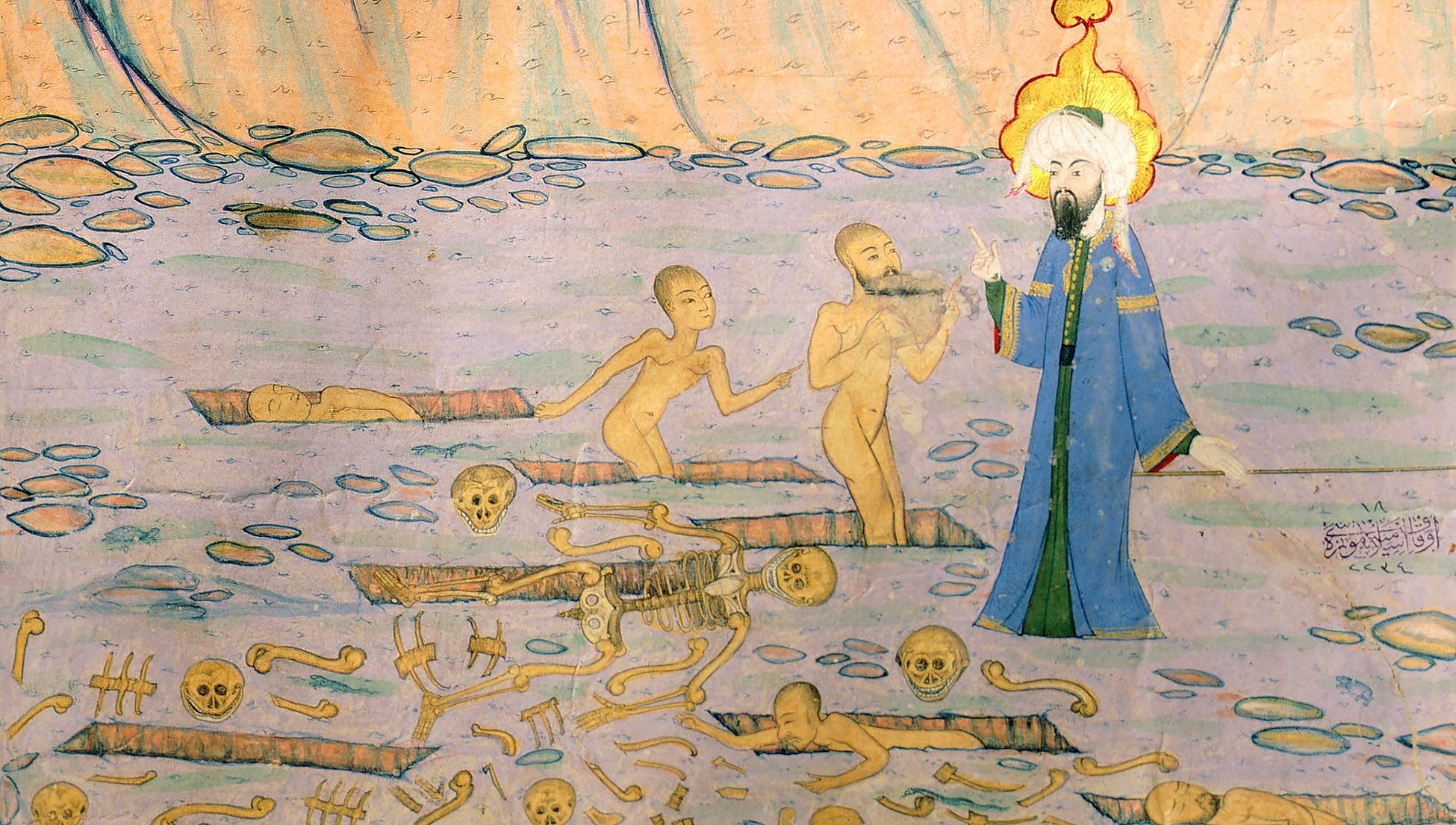
But perhaps magic – particularly plague magic – isn’t so irrational. Have humans always pursued the occult arts because they actually work, at least sometimes?
Despite the often blood-soaked history of the use of the term ‘magic’, we must remember that Western history is filled with thinkers who have defended its honour as good natural science – a tried-and-true technology for harnessing interactions between minds and bodies, human and otherwise. And their empirical claims were never tested more than during the centuries of plague.
During the previous millennium, the biggest boom in the practice of magic coincided with the Black Death in the mid-14th century. It was the deadliest pandemic in human history, killing as much as half the population of Asia, Africa and Europe – around 200 million souls. It caused major social and political transformations in the process: slaves, raiders and mystics became kings, and new empires were founded on predictions of the end of time. Plague isn’t merely a medieval curse, either; the bacterium responsible, Yersinia pestis, is very much still with us, genetically unchanged.
The Islamic world, my own area of focus as a historian of science and empire, was hit particularly hard by the plague – termed ta‘un in Arabic, meaning ‘smiter’. There, it helped give rise to what I call the ‘occult-scientific revolution’, where various occult sciences – astrology, alchemy, kabbalah, geomancy, dream interpretation – became an important basis for empire more than ever before. The ability to predict the future with divination, then change it with magic, was of obvious political, military and economic interest, and associated with Alexander the Great in particular. Western Europe saw a parallel upsurge of occultism – much of it from Arabic sources – which we now call the Renaissance. The scientific revolution that followed continued the same trend: historians now admit that saints of science such as Johannes Kepler, Francis Bacon, Robert Boyle and Isaac Newton were likewise raving occultists.
Medicine, too, was often classified and practised as an occult science among premodern Muslim, Jewish and Christian physicians. Many considered it alchemy’s sister, both sciences being predicated on the harnessing of cosmic correspondences and natural sympathies to restore elemental equilibrium in the human body – the definition of health. Techniques for life-extension were also central to the alchemical quest. The sweeping physical and sociopolitical imbalances wrought by plague were accordingly answered by an upsurge in medicine, occult and otherwise.
The Ottoman empire is a prime example of just such a sociobiological transformation. It controlled increasingly large areas of Asia, Europe and North Africa between the 14th and 20th centuries, and plague persisted there for its entire duration. In the name of public health, the Ottoman state sought to purge cities of both physical and moral contaminants, including prostitutes, beggars, illegal immigrants, criminals, bachelors and bachelorettes. While we haven’t gone so far as to outlaw bachelorhood, the effect of our own pandemic is comparable: 2020 and 2021 saw a ramping up of state control, too. Not unlike their modern counterparts in epidemiology and public health, the authors of the most important Ottoman plague treatises were leading scholars striving to combat this existential threat to state and society. They presented plague as a social problem, a disease of the body politic, just as much as an environmental problem. Unlike those of today’s experts, however, their manuals were often emphatically magical.
Wherever the pandemic hit hardest and longest, the occult arts boomed – as a scientific response
The most sophisticated and extensive of these manuals was the Treatise on Healing Epidemic Diseases by Taşköprizade Ahmed (1495-1561). As an imperial judge in Bursa and then Istanbul, as well as a famed encyclopaedist, historian and astronomer, Taşköprizade’s approach to this topic was very much cutting edge. His Arabic masterwork deals with the full range of legal, ethical, religious and especially medical responses to plague current by the 16th century, with an emphasis on experimentally proven methods.
Taşköprizade first offers a strong argument in favour of rational responses to plague: obviously, one should avoid or flee plague-stricken areas if possible. Here, he counters earlier Arabic plague treatises that denied the contagiousness of the disease and contested the legal permissibility of fleeing it. He also condemns the fatalistic attitude of some of his contemporaries, singling out mystics for derision. The correct procedure is to have faith in God – then protect yourself and others, preferably medically. Taşköprizade then categorises plague medicine as being either physical or spiritual. The first type includes standard pharmaceuticals derived from plants, animals or minerals; the second includes Quranic prayers and invocations of divine names, planets, angels or jinn by means of mathematical talismans.
Taşköprizade’s anti-plague talisman featuring a magic square based on the divine name ‘The Perduring’ (al-Baqi), Istanbul, Süleymaniye Library, MS Aşir Efendi 275/1, f 53a. Supplied by the author
As Taşköprizade asserts, however, spiritual medicine is more potent than physical medicine, though the two should always be combined to ensure the best health outcome. Likewise, to him, mental hygiene is at least as important as bodily hygiene for surviving a pandemic. He devotes a full third of this work to detailing a range of occult technologies as the most rigorously empirical means by which one can defend against or cure plague, giving many historical and contemporary examples of their success, some of which he witnessed himself. He ends by citing Plato and the Delian problem – which involves the creation of a cube double the volume of the first – as ultimate proof of the effectiveness of Pythagorean mathematical magic in averting the disease.
Taşköprizade is not unusual in the Western medical tradition in his emphasis on magic as simply good science. Contemporary Latin Christian authors of plague treatises did the same, though they focused more on alchemy than talismanry. But regardless of religious affiliation, wherever the pandemic hit hardest and longest, the occult arts boomed – as a rational, scientific response.
A similar sociobiological transformation took place in the 19th century, when two new pandemics joined plague to ravage much of the Islamic world: cholera and colonialism. The scholarly response was much the same: potions and prayer must be combined to combat them both. Some scholars went further, and declared European invasion to be cholera’s cause and twin, and likewise best resisted by magic
Under the Qajar dynasty, which ruled Iran from 1785 to 1925, most cities boasted gold anti-plague talismans that were buried at the city limits. The manufacture of such devices was an important service rendered to the state by many early modern philosophers. However, conniving princes reportedly sold some of these devices to English diplomats, after which cholera struck those cities. And both Iranian and Afghan rulers recruited astrologers and talismanists to help drive out Russian invaders. In Morocco to the far west, Mawlay al-Hasan I (who reigned 1873-94) took up the study of alchemy himself in a bid to transform the French into fish and cast them out to sea.
As these examples suggest, it’s normal for humans to turn to magic in times of trauma. So war, like plague, is also good for the occult business. Embattled Muslim philosophers sometimes acted as assassins-at-a-distance as part of their standard imperial repertoire. Similarly, the English occultist Dion Fortune led a Magical Battle of Britain against Nazi German invasion during the Second World War. And during the Cold War, both the Soviet and US militaries invested in psychical research and ufology. Reports of paranormal battlefield experiences are common, too.
By any premodern definition, the placebo effect is simply a form of magic
Why did, and do, most practitioners of spiritual medicine see it as a perfectly rational response? Why do premodern physicians often report its experimental success? Leaving aside the possible agency of spirits and other nonhuman entities, one factor is certain: the placebo effect. The term acquired its current English meaning in the 18th century thanks to Benjamin Franklin, who took part in a Parisian experiment designed to disprove mesmerism (the therapeutic magnetisation of water and metal). It refers to the clinical effectiveness of inert substitutes in healing disease, as long as the patient believes them to be a real drug. Animals and even plants respond similarly in laboratory experiments.
Despite the often dismissive use of the term, the placebo effect remains one of the most powerful effects in modern medicine. Its twin, the nocebo effect, can be equally powerful: if a patient has been advised to expect a negative side-effect, she could well go on to experience it. As for overall outcomes, even some of the most potent drugs have at most a 60 per cent efficacy, while placebos sit at 35-40 per cent. It’s also not clear to what extent the greater effectiveness of certain modern drugs is due to their marketing.
Under conditions of mass trauma, combined with sincere belief and mental focus, the effectiveness of the placebo often goes up sharply. Individual focus can be equally potent: research has shown that patients under hypnosis can endure surgery without anaesthesia and perform other physiological feats, such as stopping blood loss. Those suffering from dissociative identity disorder – likely a form of self-hypnosis in response to childhood trauma – are likewise able to change their physiology at will, whereby allergic reactions, musculature, body shape, handedness and vision often differ between personalities.
As it happens, creating extreme psychophysical conditions is also a prerequisite to the practice of many occult arts: fasting, prayer, isolation, a vegetarian diet, ritual cleanliness and constant vigil, for weeks, months or even years on end. Psychedelics might also be involved, which similarly produce an altered, hypnotic state of consciousness. The intense mental and physical engagement required by magical ritual can be thought of as artificial trauma: sensory deprivations create medicines that often work. On the other hand, failure to believe or to perform a ritual with technical precision normally results in the failure of the operation.
By any premodern definition, then, the placebo effect is simply a form of magic. Which term we use is unimportant for practical purposes: either way, the fact is that mind can affect matter under the right circumstances. The point is to harness these mind-matter interactions to achieve positive health outcomes.
This powerful, magical effect was recognised and routinely utilised – on the authority of Plato himself – by premodern Muslim, Jewish and Christian physicians. Our triumphalist narrative of scientific progress notwithstanding, and the antibiotic revolution aside, in many cases premodern treatments work roughly as well as modern medicine. Whether you believe in the authority of celestial spirits or of doctors in white lab coats, the effect is similar: astonishing reversals (or inducements) of disease can sometimes be achieved through the power of belief alone – especially when ritually, traumatically harnessed.
The witch doctor and the medical doctor have more in common than they might suppose. As such, perhaps we should take a page from our premodern predecessors and recognise that physical and mental hygiene are two sides of the same sociobiological coin. Pandemic diseases, once established in local biomes, can almost never be eradicated, only controlled and lived with, as human societies have done for millennia. But fear and paranoia are equally contagious, and can become pandemics in their own right. In a time of global traumas, it seems only rational to use the power of belief as part of our basic hygiene, too.
THE HEAVENS—Calling it a historic victory for all who have been victims of the Lord’s negligence, lawyers representing the planet’s estimated 20 quintillion animal inhabitants announced Tuesday that a class-action lawsuit against God would pay out an extra 45 seconds of life to each creature. “While no amount of extra time on this Earth can compensate for the many grave indignities He has inflicted upon His creation, we are nonetheless thankful that our clients will finally see some justice,” said lead attorney Landon Burke, who announced that anyone who believed they were owed restitution by God could reply to the notice they received in the mail or sign up online to receive their supplemental 45 seconds of life. “Less than a minute may not seem like much, but when you add it up, you are talking about a payout of almost 30 trillion years, a record judgment in a case of this kind. This is a huge win for humans, birds, fish, and insects—especially the mayfly, which unjustly received from its Creator an adulthood lasting less than a day. We hope, with this precedent, to establish once and for all that while He may be the Almighty, God is not above the law.” Pressed for comment by reporters, Burke confirmed that in exchange for their services, each member of his legal team would receive an additional 700 billion years of life.
“Grief, when it comes, is nothing like we expect it to be,” Joan Didion observed in her classic meditation on loss. Abraham Lincoln, in his moving letter of consolation to a grief-stricken young woman, wrote of how time transmutes grief into “a sad sweet feeling in your heart.” But what, exactly, is the mechanism of that transmutation and how do we master it before it masters us when grief descends in one of its unforeseeable guises?
Long before Didion, before Lincoln, another titan of thought — the great Roman philosopher Lucius Annaeus Seneca — addressed this in what might be the crowning achievement in the canon of consolation letters, folding into his missive an elegant summation of Stoicism’s core tenets of resilience.
In the year 41, Seneca was sentenced to exile on the Mediterranean island of Corsica for an alleged affair with the emperor’s sister. Sometime in the next eighteen months, he penned one of his most extraordinary works — a letter of consolation to his mother, Helvia.
Helvia was a woman whose life had been marked by unimaginable loss — her own mother had died while giving birth to her, and she outlived her husband, her beloved uncle, and three of her grandchildren. Twenty days after one the grandchildren — Seneca’s own son — died in her arms, Helvia received news that Seneca had been taken away to Corsica, doomed to life in exile. This final misfortune, Seneca suggests, sent the lifelong tower of losses toppling over and crushing the old woman with grief, prompting him in turn to write Consolation to Helvia, included in his Dialogues and Letters (public library).
Although the piece belongs in the ancient genre of consolatio dating back to the fifth century B.C. — a literary tradition of essay-like letters written to comfort bereaved loved ones — what makes Seneca’s missive unusual is the very paradox that lends it its power: The person whose misfortune is being grieved is also the consoler of the griever.
Seneca
Seneca writes:
Dearest mother,
I have often had the urge to console you and often restrained it. Many things have encouraged me to venture to do so. First, I thought I would be laying aside all my troubles when I had at least wiped away your tears, even if I could not stop them coming. Then, I did not doubt that I would have more power to raise you up if I had first risen myself… Staunching my own cut with my hand I was doing my best to crawl forward to bind up your wounds.
But what kept Seneca from intervening in his mother’s grief was, above all, the awareness that grief should be grieved rather than immediately treated as a problem to be solved and done away with. He writes:
I realized that your grief should not be intruded upon while it was fresh and agonizing, in case the consolations themselves should rouse and inflame it: for an illness too nothing is more harmful than premature treatment. So I was waiting until your grief of itself should lose its force and, being softened by time to endure remedies, it would allow itself to be touched and handled.
[…]
[Now] I shall offer to the mind all its sorrows, all its mourning garments: this will not be a gentle prescription for healing, but cautery and the knife.
Art by Charlotte Pardi from Cry, Heart, But Never Break by Glenn Ringtved, a remarkable Danish illustrated meditation on love and loss
Let those people go on weeping and wailing whose self-indulgent minds have been weakened by long prosperity, let them collapse at the threat of the most trivial injuries; but let those who have spent all their years suffering disasters endure the worst afflictions with a brave and resolute staunchness. Everlasting misfortune does have one blessing, that it ends up by toughening those whom it constantly afflicts.
In a sentiment of uncompromising Stoicism, he adds:
All your sorrows have been wasted on you if you have not yet learned how to be wretched.
Observing the particular difficulty of his situation — being both his mother’s consoler and the subject of her grief — Seneca finds amplified the general difficulty of finding adequate words in the face of loss:
A man lifting his head from the very funeral pyre must need some novel vocabulary not drawn from ordinary everyday condolence to comfort his own dear ones. But every great and overpowering grief must take away the capacity to choose words, since it often stifles the voice itself.
Instead of mere words, Seneca proceeds to produce a rhetorical masterpiece, bringing the essence of Stoic philosophy to life with equal parts logic and literary flair. He writes:
I decided to conquer your grief not to cheat it. But I shall do this, I think, first of all if I show that I am suffering nothing for which I could be called wretched, let alone make my relations wretched; then if I turn to you and show that your fortune, which is wholly dependent on mine, is also not painful.
First I shall deal with the fact, which your love is longing to hear, that I am suffering no affliction. I shall make it clear, if I can, that those very circumstances which you think are crushing me can be borne; but if you cannot believe that, at least I shall be more pleased with myself for being happy in conditions which normally make men wretched. There is no need to believe others about me: I am telling you firmly that I am not wretched, so that you won’t be agitated by uncertainty. To reassure you further, I shall add that I cannot even be made wretched.
We are born under circumstances that would be favourable if we did not abandon them. It was nature’s intention that there should be no need of great equipment for a good life: every individual can make himself happy. External goods are of trivial importance and without much influence in either direction: prosperity does not elevate the sage and adversity does not depress him. For he has always made the effort to rely as much as possible on himself and to derive all delight from himself.
Fortune … falls heavily on those to whom she is unexpected; the man who is always expecting her easily withstands her. For an enemy’s arrival too scatters those whom it catches off guard; but those who have prepared in advance for the coming conflict, being properly drawn up and equipped, easily withstand the first onslaught, which is the most violent. Never have I trusted Fortune, even when she seemed to offer peace. All those blessings which she kindly bestowed on me — money, public office, influence — I relegated to a place whence she could claim them back without bothering me. I kept a wide gap between them and me, with the result that she has taken them away, not torn them away.
Seneca makes a sobering case for the most powerful self-protective mechanism in life — the discipline of not taking anything for granted:
No man has been shattered by the blows of Fortune unless he was first deceived by her favours. Those who loved her gifts as if they were their own for ever, who wanted to be admired on account of them, are laid low and grieve when the false and transient pleasures desert their vain and childish minds, ignorant of every stable pleasure. But the man who is not puffed up in good times does not collapse either when they change. His fortitude is already tested and he maintains a mind unconquered in the face of either condition: for in the midst of prosperity he has tried his own strength against adversity.
For this reason, Seneca points out, he has always regarded with skepticism the common goals after which people lust in life — money, fame, public favor — goals he has found to be “empty and daubed with showy and deceptive colours, with nothing inside to match their appearance.” But the converse, he argues, is equally true — the things people most commonly dread are as unworthy of dread to the wise person as the things they most desire are of wise desire. The very concept of exile, he assures his mother, seems so terrifying only because it has been filtered through the dread-lens of popular opinion.
With the logic of Stoicism, he goes on to comfort his mother by lifting this veil of common delusion. Urging her to “[put] aside this judgement of the majority who are carried away by the surface appearance of things,” he dismantles the alleged misfortune of all the elements of exile — displacement, poverty, public disgrace — to reveal that a person with interior stability of spirit and discipline of mind can remain happy under even the direst of circumstances. (Nearly two millennia later, Bruce Lee would incorporate this concept into his famous water metaphor for resilience and Viktor Frankl would echo it in his timeless assertion that “everything can be taken from a man but one thing: the last of the human freedoms — to choose one’s attitude in any given set of circumstances.”)
Seneca then comes full-circle to his opening argument that grief is better confronted than resisted:
It is better to conquer our grief than to deceive it. For if it has withdrawn, being merely beguiled by pleasures and preoccupations, it starts up again and from its very respite gains force to savage us. But the grief that has been conquered by reason is calmed for ever. I am not therefore going to prescribe for you those remedies which I know many people have used, that you divert or cheer yourself by a long or pleasant journey abroad, or spend a lot of time carefully going through your accounts and administering your estate, or constantly be involved in some new activity. All those things help only for a short time; they do not cure grief but hinder it. But I would rather end it than distract it.
Art from Duck, Death and the Tulip by Wolf Erlbruch, an uncommonly tender illustrated meditation on life and death
Seneca points unwaveringly to philosophy and the liberal arts as the most powerful tools of consolation in facing the universal human experience of loss — tools just as mighty today as they were in his day. Commending his mother for having already reaped the rewards of liberal studies despite the meager educational opportunities for women at the time, he writes:
I am leading you to that resource which must be the refuge of all who are flying from Fortune, liberal studies. They will heal your wound, they will withdraw all your melancholy. Even if you had never been familiar with them you would have need of them now. But, so far as the old-fashioned strictness of my father allowed, you have had some acquaintance with the liberal arts, even if you have not mastered them. If only my father, best of men, had been less devoted to ancestral tradition and had been willing that you be steeped in the teaching of philosophy and not just gain a smattering of it: you would not now have to acquire your defence against Fortune but just bring it forth. He was less inclined to let you pursue your studies because of those women who use books not to acquire wisdom but as the furniture of luxury. Yet thanks to your vigorously inquiring mind you absorbed a lot considering the time you had available: the foundations of all formal studies have been laid. Return now to these studies and they will keep you safe. They will comfort you, they will delight you; and if they genuinely penetrate your mind, never again will grief enter there, or anxiety, or the distress caused by futile and pointless suffering. Your heart will have room for none of these, for to all other failings it has long been closed. Those studies are your most dependable protection, and they alone can snatch you from Fortune’s grip.
He concludes by addressing the inevitability of his mother’s sorrowful thoughts returning to his own exile, deliberately reframeing his misfortune for her:
This is how you must think of me — happy and cheerful as if in the best of circumstances. For they are best, since my mind, without any preoccupation, is free for its own tasks, now delighting in more trivial studies, now in its eagerness for the truth rising up to ponder its own nature and that of the universe. It seeks to know first about lands and their location, then the nature of the encompassing sea and its tidal ebb and flow. Then it studies all the awesome expanse which lies between heaven and earth — this nearer space turbulent with thunder, lightning, gales of wind, and falling rain, snow and hail. Finally, having scoured the lower areas it bursts through to the heights and enjoys the noblest sight of divine things and, mindful of its own immortality, it ranges over all that has been and will be throughout all ages.
Imagine a community of great possibilities and prosperity built by Black people for Black people. Places to work. Places to live. Places to learn and shop and play. Places to worship.
Now imagine it being ravaged by flames.
In May 1921, the Tulsa, Okla., neighborhood of Greenwood was a fully realized antidote to the racial oppression of the time. Built in the early part of the century in a northern pocket of the city, it was a thriving community of commerce and family life to its roughly 10,000 residents.
Brick and wood-frame homes dotted the landscape, along with blocks lined with grocery stores, hotels, nightclubs, billiard halls, theaters, doctor’s offices and churches.
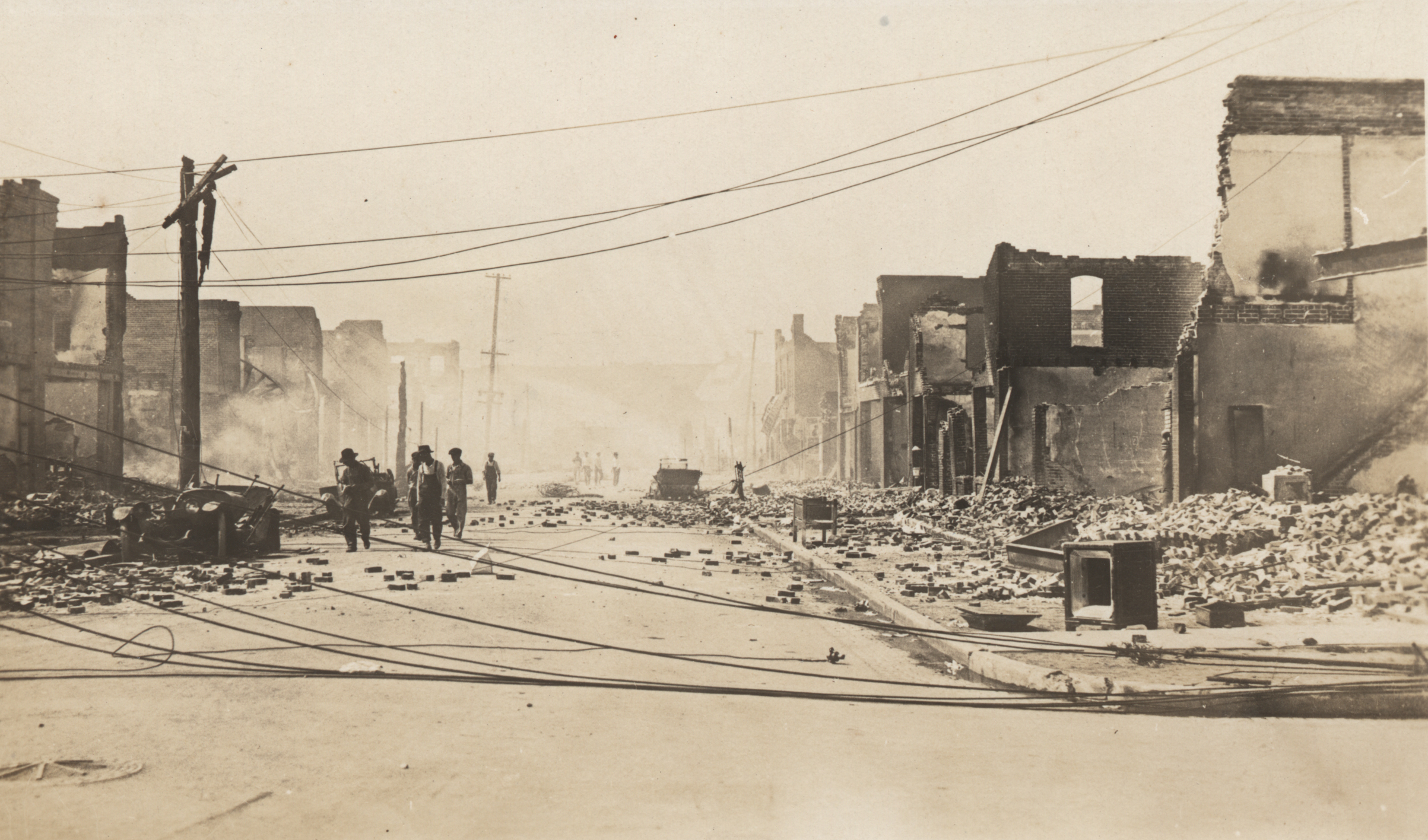
Greenwood was so promising, so vibrant that it became home to what was known as America’s Black Wall Street. But what took years to build was erased in less than 24 hours by racial violence — sending the dead into mass graves and forever altering family trees.
Hundreds of Greenwood residents were brutally killed, their homes and businesses wiped out. They were casualties of a furious and heavily armed white mob of looters and arsonists. One factor that drove the violence: resentment toward the Black prosperity found in block after block of Greenwood.
The financial toll of the massacre is evident in the $1.8 million in property loss claims — $27 million in today’s dollars — detailed in a 2001 state commission report. For two decades, the report has been one of the most comprehensive accounts to reveal the horrific details of the massacre — among the worst racial terror attacks in the nation’s history — as well as the government’s culpability.
Greenwood Avenue, for years a thriving hub, was destroyed by racial violence in less than 24 hours.Department of Special Collections and University Archives, McFarlin Library at The University of Tulsa
The destruction of property is only one piece of the financial devastation that the massacre wrought. Much bigger is a sobering kind of inheritance: the incalculable and enduring loss of what could have been, and the generational wealth that might have shaped and secured the fortunes of Black children and grandchildren.
“What if we had been allowed to maintain our family business?” asked Brenda Nails-Alford, who is in her early 60s. The Greenwood Avenue shoe shop of her grandfather and his brother was destroyed. “If they had been allowed to carry on that legacy,” she said, “there’s no telling where we could be now.”
For decades, what happened in Greenwood was willfully buriedin history. Piecing together archival maps and photographs, with guidance from historians, The New York Times constructed a 3-D model of the Greenwood neighborhood as it was before the destruction. The Times also analyzed census data, city directories, newspaper articles, and survivor tapes and testimonies from that time to show the types of people who made up the neighborhood and contributed to its vibrancy.
THE MARQUEE BLOCK
Perhaps no other collection of businesses tells the story of Greenwood and Black entrepreneurship better than the 100 block of Greenwood Avenue, rising near the southern tip of the neighborhood. This marquee block was the pulse of the Black business community.
WILLIAMS CONFECTIONERYJ.J. MCKEEVER, DENTIST
EARL REAL ESTATE CO.THE OKLAHOMA SUNTHE EXCHANGE INSURANCE ASSOCIATIONBYARS & ANDERSON, THE TAILORSLITTLE ROSE BEAUTY SALONTHE MARY JONES PARRISH SCHOOL OF NATURAL EDUCATIONR.T. BRIDGEWATER, PHYSICIANWESLEY JONES, PHYSICIANJ.M. KEY, PHYSICIANTHOMAS R. GENTRY, REAL ESTATE
ECONOMY DRUG CO.ROOMING HOUSEC.L. NETHERLAND, BARBERW.J. TATE, ELECTRICIAN
PALACE BARBER SHOPSAFETY FIRST LOAN CO.CARL WHITAKER, ROOMS FOR RENT
RED WING DRUG STORERED WING CAFERED WING TAILORING CO.RED WING HOTELRED WING BARBER SHOPC.E. SMITH, PHYSICIAN
STRADFORD HOTELFERGUSON’S DRUG STORETULSA WAFFLE HOUSE
More than 70 businesses operated in mostly one-, two- and three-story red brick buildings clustered along the block. All but a couple were owned by Black entrepreneurs.
In this stretch alone, there were four hotels, two newspapers, eight doctors, seven barbers, nine restaurants and a half-dozen professional offices of real estate agents, dentists and lawyers. A cabaret and a cigar shop were on the block, too.
You could shop for groceries, play pool, take in a theater show, eat dinner or get your hair styled — without ever leaving the block.
“My grandfather often talked about how you could enjoy a full life in Greenwood, that everything you needed or wanted was in Greenwood. You never had to go anywhere,” said Star Williams, 40, the granddaughter of Otis Grandville Clark, who was 18 during the massacre. “He talked about seeing Black success and how his sense of identity and pride came from Greenwood.”
The businesses on Greenwood Avenue were owned by people who were among Tulsa’s most prominent Black citizens.
Loula and John Williams came to embody the entrepreneurial spirit of Greenwood. They owned a confectionery at 102 Greenwood Avenue, and the East End Garage around the corner on Archer Street.
The Tulsa Star
The couple also owned the 750-seat Williams Dreamland Theatre, at 129 Greenwood Avenue, the first movie house for Black people in the city. It offered both silent films and live shows, and was also a community gathering spot.
Dr. R.T. Bridgewater was a physician with a practice in the Woods Building, at 101-105 Greenwood Avenue. He owned 17 houses and was also a community leader. The Tulsa Star, a Black-owned newspaper, called his home on the affluent North Detroit Street “palatial.”
Several women set up shop as entrepreneurs in the same building. Mary E. Jones Parrish, left, was a teacher and journalist who operated a typing school. Mabel B. Little ran the Little Rose Beauty Salon.
Susie Bell ran an upscale restaurant called Bell and Little Cafe with her brother, Presley Little, Ms. Little’s husband. It offered six-course meals that were written about in The Tulsa Star.
Buck Colbert Franklin, a lawyer, had an office inside a building owned by O.W. Gurley, one of Greenwood’s founders. After the massacre, Mr. Franklin provided legal services from a tent.
James Nails, shown here, and his brother Henry ran a shoe shop in the Gist Building at 121 Greenwood Avenue. The shop carried Black Swan records, and the family also owned a dance pavilion and skating rink in the community.
A. J. Smitherman, a journalist and civil rights activist, founded The Tulsa Star, which was headquartered at 126 Greenwood Avenue. The paper reported on stories of racial violence and advocated for the rights of African-Americans.
Laurel Stradford, Stradford family historian
J.B. Stradford, shown with his wife, opened the posh 54-room Stradford Hotel at 301 Greenwood Avenue in 1918. It was considered among the nation’s best hotels for African-Americans at the time.
A CITY WITHIN A CITY
Mr. Stradford and Mr. Gurley — who purchased large tracts of land in the early 1900s — were among the founders of Greenwood. They began building on the northern side of Tulsa beyond the railroad tracks, forming the bones of the city’s predominantly Black neighborhood that was separate from the white side of town.
Greenwood was one of the few places in the country offering Black citizens — less than six decades out of enslavement — a three-dimensional life.
GREENWOOD
TULSA
GREENWOOD BUSINESS DISTRICT
RESTAURANTS AND BILLIARD HALLS
MIDWAY HOTEL
ZULU LOUNGE
REV. J.H. HOOKER, PHOTOGRAPHER
RESTAURANTS AND CONFECTIONERIES
LITTLE PULLMAN HOTEL
WRIGHT & DAWSON, RESTAURANT
UNION BAPTIST CHURCH
MOUNT ZION BAPTIST CHURCH
ROOMS FOR RENT
COLORED M.E. CHURCH
MASONIC HALL
FRISSELL MEMORIAL HOSPITAL
EAST END FEED STORE
BOOKER T. WASHINGTON SCHOOL
HARDY & HARDY, RESTAURANT
MARIE JOHNSON, ROOMS FOR RENT
WESLEY CHAPEL, A.M.E. CHURCH
BETHEL SEVENTH-DAY CHURCH
ROOMS FOR RENT BY A.F. SMITH; LORETTA WILLIAMS
NEELEY & VADEN, BILLIARD HALL
DORA WELLS, DRESSMAKER
WILLIAM CLINTON & SON, GROCER
L.R. HARRIS, GROCER
GREENWOOD
P.J. ELDRIDGE, RESTAURANT
POST OFFICE SUBSTATION
NEWMAN & HOWARD, RESTAURANT
ALEXANDER HOTEL
STRADFORD HOTEL
DUNBAR SCHOOL
A.M.E. CHURCH
By 1921, Greenwood had grown into a 35-block neighborhood with a bustling retail scene, as well as two schools, two newspapers and a hospital. Here, some of the community’s key places are shown in orange.
Booker T. Washington School, which opened in 1913 with 14 students, had moved into its three-story brick building in 1920. It would serve as a hospital and relief center after the massacre.
Mount Zion Baptist Church was among some half-dozen churches that burned. It was the city’s largest Black church.
There was also a small juke joint called Zulu Lounge owned by Isaac Evitt, who worked by day on a farm, but after dark, flung open the doors of Zulu.
In the evenings, residents had their choice of entertainment. Survivor accounts that were relayed to relatives recall neighbors getting “gussied up” to gather in Greenwood, with Thursdays being big because of “Maids’ Night Out.” Black domestics, many of them live-in workers who cleaned the homes of white residents across town, were off that day.
Many African-Americans migrated to Tulsa after the Civil War, carrying dreams of new chapters and the kind of freedom found in owning businesses. Others made a living working as maids, waiters, chauffeurs, shoe shiners and cooks for Tulsa’s new oil class.
In Greenwood, residents held more than 200 different types of jobs. About 40 percent of the community’s residents were professionals or skilled craftspeople, like doctors, pharmacists, carpenters and hairdressers, according to a Times analysis of the 1920 census. While a vast majority of the neighborhood rented, many residents owned their homes.






 Dearest mother,