
Sarcasm in Japanese: Here’s How It Works

Sarcasm in Japanese: Here’s How It Works

(linguaholic.com)

Japanese people have a reputation for being unfailingly polite, pragmatic, honorable, and so on.

That reputation is partially based in Japan’s guest culture. However, it also has to do with racist stereotypes of Japan and Japanese people that have been given free reign in newspapers, movies and other cultural institutions in Europe and America for decades.

Because of these preconceptions, it might be hard to imagine Japanese people being sarcastic or mean-spirited.

Indeed, people on the Internet can commonly be found saying things like “Japanese people are too polite to understand sarcasm. It just doesn’t exist in their culture.”

You might also see people ask “Why don’t Japanese people understand sarcasm?” or “Why doesn’t sarcasm exist in Japan?”

Let’s bust those myths right now. Sarcasm is definitely a thing in Japan, and being on the receiving end of it can really hurt.

Does sarcasm exist in Japanese?

Yes, sarcasm exists in Japan. Japanese has two words for sarcasm: 皮肉 (hiniku) and 嫌味 (iyami). That alone should show it exists. In Japanese, like in English, sarcasm can be expressed by a mean tone of voice to show that a compliment is actually insincere.

However, Japanese people also use sarcasm by using inappropriate honorifics or being overly polite in an apparently sincere manner. Should you use Japanese-style sarcasm yourself? Probably not. Unless you’re really sure it will go over well, it can be incredibly rude and get you in serious trouble.

皮肉 (hiniku) and 嫌味 (iyami): two Japanese words for sarcasm

There are two words in Japanese which can be used to mean sarcasm.

The first, 皮肉 (hiniku), uses the kanji for “skin” and the kanji for “meat.” All the same, the meaning of the word is “sarcasm” or, in some cases, “satire” or “irony.”

Interestingly, the English word “sarcasm” also has its root in a word meaning “flesh.”

The word comes to us from the Greek “sark,” meaning flesh, and more directly from the Greek word “sarkazein,” meaning “to tear flesh.”

For 皮肉, it helps to realize that another meaning is “surface level.”

Because sarcasm operates in Japanese chiefly by the surface-level meaning of a word differing from your actual meaning, this word makes total sense as “sarcasm.”

The second word, 嫌味 (iyami), is the kanji for “hate” and the kanji for “flavor.”

This one is more straightforward. If the flavor of your words is “hate,” then they are pretty sarcastic.

Aptly, 嫌味 is also used for other types of hateful words, like when someone is being snide or just generally nasty.

皮肉 (hiniku) and sarcasm

皮肉 is used for run-of-the-mill sarcasm, and can also be used to refer to irony and general cynicism, as well as satirical literature.

There is a long tradition of sarcasm in Japanese culture, dating at least as far back as Sho Shonagon’s Pillow Book, a book about the foibles of the imperial court around the year 1000 CE.

Even during the Edo period, which is often described as a time of static social movement and reverence for the samurai classes, immensely popular comedic books like Tōkaidōchū Hizakurige (called “Shank’s Mare” in English) ruthlessly tears apart the self-important nature of just about everyone in a very sarcastic way.

There is also a whole class of poetry which is essentially sarcastic haiku, called senryu after their creator Karai Senryu.

Here’s one of Senryu’s own poems:

泥棒を
捕えてみれば
我が子なり

the thief
finally apprehended…
it’s my own son

How’s that for sarcasm?

As noted above, this word can also mean that something is only on the surface.

嫌味 (iyami): cuttingly sarcastic

Unlike 皮肉, the word 嫌味 refers to truly brutal takedowns delivered in a sarcastic manner.

If you were to ask a teacher about a math question you didn’t understand, and he replies with “I can see why you don’t understand it, since we covered it three times in class already,” that would be a great use of 嫌味.

In short, while 皮肉 can be used for irony, and is the generally agreed-upon translation for “sarcasm,” 嫌味 represents a harsher, more cruel type of sarcasm.

Some other phrases you might use in English to describe 嫌味 include “cutting remarks,” “snide comments,” “mean-spirited” or even “put-down.”

We’ll take a look at some examples of both types of sarcasm, but first let’s take a little digression.

The differences in American-style and Japanese-style sarcasm

A common sentiment expressed by Americans who have tried using sarcasm with Japanese people is that it just doesn’t work.

This is the most likely culprit of questions like “Why don’t Japanese people understand sarcasm?” and “Why don’t they have sarcasm in Japan?”

The reason American-style sarcasm misses the mark in Japanese is not because sarcasm doesn’t exist in Japanese. Rather, it’s because sarcasm in Japanese culture is used for a different purpose.

For example, a consulting firm which deals with Japanese to English interpreting mentions a case where an American man called his Japanese co-worker a troublemaker in a joking tone and the Japanese man was deeply insulted.

A post on Bored Panda, likewise, shows how people’s sarcastic responses to a Japanese artist posting their work on Twitter led that artist to delete their account and start a new one.

Even though the sarcasm was meant in a way to mean something similar to “this is so good!”, that didn’t come through at all.

As those posts say, the reason has more to do with cultural differences than the lack of sarcasm in Japan.

In American culture, sarcasm (and its close cousin irony) can be used to give people a compliment without seeming overly sincere. It can also be used to try and lighten the mood by saying things like “Well, this will be fun” in bad situations.

American sarcasm (and English sarcasm too) serve to build a connection between two people.

Neither of those uses of sarcasm is standard in Japanese, where sarcasm is accomplished in almost the opposite manner: to insult people and show them you think little of them, you shower them with praise in the most formal, polite way imaginable or you use very formal language to sarcastically place them higher than you on the social ladder when the opposite might be true.

These two key differences are a double-whammy when it comes to trying out American-style sarcasm on Japanese people.

Because the cultural experience they have with sarcasm is that it is always used as an insult, they don’t think to look for any meaning other than the surface-level meaning.

Since on the surface the words are insulting or negative, a person only used to Japanese culture is going to assume they are actually intended to convey insult or hostility.

Just to reiterate, though, Japanese people and Japan definitely use sarcasm. Let’s look at some examples.

False praise and sarcasm

The most common way sarcasm is used in Japanese is by giving surface-level praise that is actually insulting.

This is very similar to how sarcasm is used by some women in the southern United States, where “Well, bless your heart,” “Aren’t you just the sweetest?” and other similar apparent praise, delivered in a seemingly polite way, actually means something closer to “I am embarrassed on your behalf that you thought this was a good idea and you are an idiot” or “What is wrong with you?”

In Japanese, you might seem to praise someone by calling them smart (偉い人, erai hito) when you think they are a ridiculous fool, or you might say something is amazing (凄い, sugoi) when you really think it is anything but.

This kind of sarcasm can be delivered in a way that makes it obviously sarcastic by changing your tone of voice, just as in English.

Alternatively, it can be delivered deadpan, especially if you are trying to really show your disdain of someone in a group setting or want plausible deniability.

You will often see this kind of sarcasm used in anime, especially when a character’s thoughts about someone are being used to show a contrast with what they are saying out loud.

Examples

「夫はぱくり屋だって。」

「まあ、偉い人ですね。」

“She said her husband is a con artist.”

“Wow, he must be smart.”

「こんなバカなことを見に行った信じられない。」

「素晴らしいですよね。」

“I can’t believe we came here to see something this stupid.”

“Isn’t it wonderful?”

In these examples, it’s pretty clear that the responses are sarcastic, and not sincere.

These are pretty low-stakes, but it’s easy to imagine a case where the sarcasm might be used to seriously hurt someone’s feelings or otherwise make fun of them. In a formal setting, sarcasm might even have a serious effect on someone’s livelihood.

「あの、先生、すみませんですが実験に5点を持ってきたけど。。。」

「そうですね、田中君。じゃあ、一生懸命頑張ったから0点はどう?」

“Um, teacher, excuse me. You only gave me five points on this test…”

“You’re right, Tanaka. Since you worked so hard, how about I give you a zero instead?”

Unlike the other examples, which might be termed 皮肉, this is probably 嫌味 instead. Ouch!
 

Sarcasm and honorifics

Another way to indicate sarcasm is to add humble or formal keigo in situations that don’t warrant it.

For example, calling someone 先生 (“teacher,” sensei) or 様 (sama) in a mocking tone might suggest you think they’re full of themselves.

Breaking out the super-formal 「申し訳ございません。」 (moushiwake gozaimasen) instead of 「ごめん。」 (gomen) when apologizing can do the trick.

In fact, you can also refer to yourself in a sarcastically polite way if you someone makes fun of something without realizing you’re the one responsible for it.

Examples

「うわあ!この絵の画家はまずいよ!」

「はい、私様です。。。」

“Woah! The artist for this painting is awful!”

“Yes, that would be me…”

「何だよ先輩、この質問を間違った。」

「じゃあ、正しい仕方を教えて、先生。」

“What the… Upper-classman, you got this question wrong.”

“Oh? Then show me how to do it properly, teacher.”

Sarcasm used this way doesn’t have to be insulting. In the second example, it might be light-hearted banter between friends.

But be careful and don’t do this unless you’re really close with someone and know they will expect and appreciate it.

Wait, so is this sarcasm or…?

So how can you tell if someone is trying to be sarcastic?

Just like in English, it’s sometimes hard. Also just like English, there are a couple of hints.

First, check someone’s tone of voice. Studies have shown that people use a lower pitch when they’re being sarcastic and may use other cues like elongated vowels or sighing.

Facial expressions are another good indicator that someone is being sarcastic.

When you get right down to it, though, part of the point of sarcasm can sometimes be that it provides a safe way for people to hide what they really think beneath a veneer of politeness.

If that’s the case, you may never know if someone was being sarcastic or sincere when they said “Good job!”

Why you shouldn’t try to be sarcastic in Japan

To recap, sarcasm in Japanese can be funny, especially in literary contexts like a book or manga.

More often, though, sarcasm is used to put people in their place.

This is why you shouldn’t try to use Japanese-style sarcasm when speaking to people in Japan unless you’re really sure it will be appreciated. Likewise, American-style sarcasm is almost guaranteed to fail.

Think of it like this: In an English conversation with a coworker you don’t know, would you jokingly call them a thief for using the company’s coffee maker twice in one day?

Probably not. That could lead to a huge misunderstanding and even get you in trouble.

Among close friends who all have a shared style of humor, though, it might be interpreted in a humorous way (although it’s still pretty messed up, to be honest).

Sarcasm in Japanese is a lot like that. Unless you really want to signal that you think your coworker is an absolute idiot who you can’t stand, you wouldn’t want to (for example) use extremely polite language while giving them an insincere compliment.

Of course, just like with English uses of mean-spirited phrases, it might be that you have a group of Japanese friends who appreciate this kind of humor.

Unless you know that for sure, though, it’s best to err on the side of caution and show your good humor in other, more culturally acceptable ways.

Confidence tricks

Become a Friend of Aeon to save articles and enjoy other exclusive benefitsMake a donation

7 August 2020 (aeon.co)

The ignorant pundit is absolutely certain; the true expert understands their own limits and how to ask the right questions

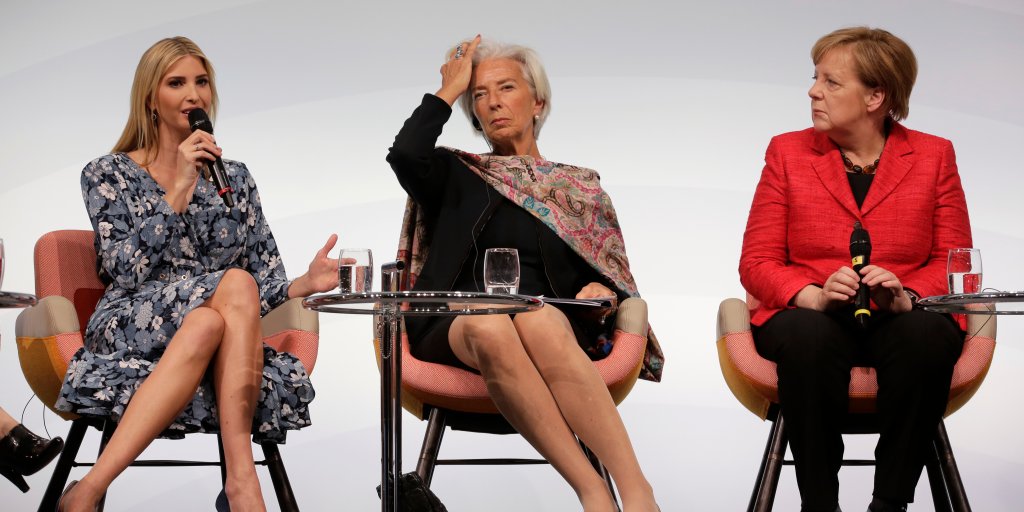
Ivanka Trump, daughter and adviser of U.S. President Donald Trump, International Monetary Fund Managing Director Christine Lagarde and German Chancellor Angela Merkel, from left, attend a panel at the W20 Summit in Berlin Tuesday, April 25, 2017. The conference aims at building support for investment in women’s economic empowerment programs. (AP Photo/Markus Schreiber)

Andrew Little is an assistant professor in the Department of Political Science at the University of California, Berkeley.

Matthew Backus is the Philip H Geier Jr Associate Professor at the Graduate Business School of Columbia University in New York City. His work has appeared in Bloomberg NewsSlate and The Wall Street Journal, among others. Listen here

Brought to you by Curio, an Aeon partner

Edited by Sam Haselby

Aeon for Friends

Find out more

Does imposing the death penalty lower rates of violent crime? What economic policies will lead to broad prosperity? Which medical treatments should we allow and encourage to treat novel diseases? These questions have a few things in common. They bear important consequences for us all, and so policymakers and the public would like to know the answers – if good answers even exist. Fortunately, there are entire communities of experts who produce closely regulated scientific literatures dedicated to answering them. Unfortunately, they are also difficult questions, which require causal knowledge that’s not easy to come by.

The rise of social media means that experts willing to share their hard-won knowledge have never been more accessible to the public. So, one might think that communication between experts and decision-makers should be as good as, or better than, ever. But this is not the case. As anyone who has spent time on Twitter or watching cable news can attest, these outlets are also flooded with self-appointed ‘experts’ whose lack of actual expertise doesn’t stop them from sharing their views widely.

There is nothing new about ersatz experts, or even outright charlatans, and they aren’t limited to questions of policy. In every domain where decision-makers need the specialised knowledge of experts, those who don’t have the relevant knowledge – whether they realise it or not – will compete with actual experts for money and attention. Pundits want airtime, scholars want to draw attention to their work, and consultants want future business. Often, these experts are rightly confident in their claims. In the private market for expertise, the opposite can be more common. Daryl Morey, the general manager of the Houston Rockets basketball team, described his time as a consultant as largely about trying to feign complete certainty about uncertain things; a kind of theatre of expertise. In The Undoing Project (2016) by Michael Lewis, Morey elaborates by describing a job interview with the management consultancy McKinsey, where he was chided for admitting uncertainty. ‘I said it was because I wasn’t certain. And they said, “We’re billing clients 500 grand a year, so you have to be sure of what you are saying.”’

With genuine expertise at a premium, the presence of experts who overstate their conclusions adds noise to the information environment, making it harder for decision-makers to know what to do. The challenge is to filter the signal from the noise.

When considering important questions in challenging domains such as economic forecasting and public health crises, there are many times that experts don’t have the answers. Less often, they admit it.

Must we accept that any expert assessment could be hot air or, at best, a competent expert stretching beyond his or her competence? Or can we do better?

To better understand the problem of communicating scientific knowledge to the policymakers and the public, it helps to divide the difficulty of questions into three levels. Level-one questions are those that anyone with even modest expertise or access to a search engine can answer. Some political economy questions in this category include, for example, ‘Will price controls cause shortages?’ or ‘Are incumbent governments likely to do better in elections when the economy is performing well?’

Level-two questions are those where only the most qualified experts have something to say. Some political and economic questions that we believe fall into this category are ‘Can we design algorithms to assign medical residents to programmes in an effective way?’ (yes) and ‘Do term limits improve governing performance?’ (no). These are questions for which substantial peer-reviewed scientific literature provides answers, and they can be addressed by what the American philosopher Thomas Kuhn in 1962 called ‘normal science’: that is, within existing paradigms of scholarly knowledge.

Level-three questions are those where even the best experts don’t know the answers, such as whether the death penalty lowers violent crime, or what interest rates will be in two years. Such questions are either not answerable given current research paradigms, or just more fundamentally unanswerable. Much of the scientific enterprise itself consists of distinguishing between when further research or information will make questions answerable or not. Importantly, for the purposes of policymaking, it doesn’t necessarily matter why we can’t know the answer. So, for communicating about science with the public, the distinction between level two (questions that require true knowledge) and level three (ones that truly aren’t, at least at present, answerable) is most important.

Politicians and executives are rarely experts in the domains in which they make decisions

If you’re unsure whether our classification of these questions into level two vs level three is correct, in a sense that’s the point. Knowing which questions fall into which category requires expertise. (Which, to be clear, we ourselves lack for some of the questions referenced, but we consulted with recent reviews of the literature from top experts.) In fact, the experts themselves might sometimes get this distinction wrong. Sovietologists thought that ‘Is the USSR a stable country with minimal risk of collapsing?’ was a well-answered question (incorrectly believing ‘yes’), and many experts thought that there was no way such a divisive political outsider as Donald Trump could win the Republican Party nomination, let alone the presidency (incorrectly believing ‘no’).

Still, experts are certainly more likely to know which questions are answerable than the relevant decision-maker. Politicians and executives might be experts in the domain of decision-making, but they are rarely experts in the domains in which they make decisions.

We need not concern ourselves much with the level-one questions. Of course, some people might be too lazy to Google, and can mouth off about easily settled science. We don’t mean to dismiss the potential danger of experts (or politicians) themselves making obviously false claims, but this danger shouldn’t pose a consistent problem to a decision-maker with an honest interest in the truth.

Things become tricky when distinguishing between the second and third levels, the questions that can be answered now and those that cannot. The key difference between these kinds of questions is ‘Would a competent expert well-versed in the relevant scientific literature be reasonably confident in the answer?’ Note that the question is about both the competence of the expert and the answerability of the question.

This means that, when making decisions that require expert perspective, it might be a mark of a true expert to admit that he or she doesn’t know, at least not yet. And, if we aren’t sure what questions are answerable, we are vulnerable to uninformed experts convincing us they have the answers. Even worse, good experts, when posed an unanswerable question, might do the same. From the expert perspective, they know that admitting uncertainty can harm their reputation, because bad experts are more likely to be uninformed than good ones. More concretely, saying ‘I don’t know’ makes for bad punditry, and unenviable terrain for ambitious analysts or consultants hoping to justify their hourly rate.

When experts and pundits can’t or won’t say ‘I don’t know’, the consequences can be dire. In the short term, bad advice leads to bad decisions. In the context of admitting uncertainty about challenging questions, there are two ways this can happen. These are particularly clear and salient in the context of the COVID-19 pandemic.

First, when faced with a level-two problem, the advice of qualified experts can get lost in the noise, or decision-makers might just ask the wrong experts. Among a general audience, it took a long time for many to get the message that increased handwashing would save lives, that social distancing was necessary, and that large gatherings should be cancelled.

Probably more common for major policy choices, decision-makers can be persuaded to take risky actions or find justifications for actions they would take no matter what, based on false confidence projected by experts. This can happen when other, more qualified experts are giving the advice. For example, a pair of articles in mid- to late-March 2020 by the American legal scholar Richard Epstein that downplayed the threat from COVID-19 were said to have been influential among some in the Trump administration. To put it gently, Epstein’s arguments were not sound.

If we don’t know what questions are unanswered, we won’t know where to best direct our efforts

Bad policy can also come about when the research frontier doesn’t offer definitive answers, or gives the wrong answers. The history of medicine is littered with examples of treatments that we now know did more harm than good, such as bloodletting, tobacco and opium. All of these techniques had ‘evidence’ that they were in fact healthy, from vague theories about ‘humours’ (bloodletting) to real evidence that they reduced pain, but without sufficient consideration of side effects (opium). Many lives would have been saved if doctors realised that they didn’t know whether these treatments worked well enough to outweigh the side-effects, and were able to admit this.

While it’s hard to turn away from the short-term costs in a time of crisis, there are important long-term consequences if we fail to properly consider and address uncertainty. Grappling with uncertainty is central to the scientific enterprise, and there ought to be a place for acknowledging that. If we don’t know what important questions are unanswered, we won’t know where to best direct our efforts. Having a false confidence in understanding important questions will delay the discovery of actual improvements. As the American theoretical physicist Richard Feynman put it in a lecture in 1963:

It is in the admission of ignorance and the admission of uncertainty that there is a hope for the continuous motion of human beings in some direction that doesn’t get confined, permanently blocked, as it has so many times before in various periods in the history of man.

Too much trust in the false or exaggerated precision of experts discourages investing in resources for methodical attempts to tackle hard questions. On the other side, there is at least as much risk in discounting expert advice altogether.

Understanding the market for experts, and when experts are more or less willing to admit uncertainty, is a challenge worthy of our time. To get a bit of a grasp on these questions, we developed a simple mathematical model (published in the American Political Science Review) to study when experts are willing to admit uncertainty. As models do, it makes some simplifying assumptions and abstracts away from important features of reality. For example, a simulation of disease contagion by the graphics reporter Harry Stevens in The Washington Post on 14 March 2020 treated people as balls floating around, bouncing off each other, and quarantine as a physical wall separating them. On the plus side, this graphic simplicity clearly illustrated how quarantines and other policies such as social distancing can ‘flatten the curve’ of infections. Of course, people’s lives are more complex than to be truly represented by bouncing balls but so many people found this model insightful that it became the most viewed article in the history of the newspaper’s website.

Models are meant to simplify (and we simplify further here; see the paper for more detail); in our model of the market, for experts there is a single expert (‘he’) and a single decision-maker (‘she’). To build on our opening example, suppose the policy in question is whether or not to allow the use of a new drug to treat a disease. We consider a ‘one-shot’ interaction where the decision-maker is faced with this choice, and asks a medical expert for advice. In the terminology introduced above, the question is either a level-two or a level-three question, but the decision-maker is not sure which. That is, there might or might not be solid evidence about whether the drug will work.

The expert might be competent, in which case he will know if the evidence collected so far indicates that the drug is safe and effective (a level-two question, but not if there isn’t good-enough evidence to confidently state whether the drug is safe and effective, which is a level-three question). If the expert is incompetent, or the question is outside of the domain of his expertise, he won’t have useful advice to give, regardless of what the medical literature says. (Of course, ‘incompetent expert’ might seem like an oxymoron; think of this as a generally qualified person asked a question outside of the domain of his real expertise.)

If the drug is effective, the policymaker will want to allow use, and if the drug is not effective she will want to ban use. If the evidence is not yet strong in either direction, let’s suppose for simplicity that the optimal choice for the policymaker is to pick an ‘intermediate’ policy, perhaps allowing use for severe cases or allowing limited pilot studies. A key (and realistic) implication is that the policymaker will be able to make the best possible choice given the available evidence only if the expert communicates honestly, including in the cases where he is uncertain. Of course, the policymaker certainly wants to know when the drug is effective or not. And when the evidence is weak, she also wants to know this, as taking the more decisive action is worse than the hedging choice. Optimal decision-making requires experts to admit it when they don’t know the answers.

Alas, the punishment for guessing wrong never seems to be that high

But will the expert ever say ‘I don’t know’? If he cares only about good policy being made, yes. However, the way in which experts care about their reputation for competence can create problems. Even though some good experts will be uncertain about the truth when faced with a level-three problem, incompetent experts will be uncertain no matter what. Policymakers probably do not know how hard the problem is. As a result, competence and knowledge are correlated, and so admitting uncertainty will make an expert look less competent even if he is qualified but facing a question genuinely at or beyond the borders of the knowledge in the field. Experts who care about their reputation more than the truth have an incentive to ‘guess’ when and if the drug is safe or not.

When the expert is uninformed, the policymaker can end up allowing or banning a drug when the opposite choice would be better. Also, since she knows the expert will sometimes guess, she can never be absolutely certain if the drug is safe or not.

What can we do about this problem? A seemingly obvious solution would be to check whether expert claims are correct. If experts who make strong claims that are then refuted are chastised and not hired in the future, this might deter them from overclaiming. Alas, the punishment for guessing wrong never seems to be that high: the architects of the Iraq War and those responsible for decisions that led to the 2008 financial crises are generally doing quite well, professionally. And our model gives a theoretical justification for why. Just as some experts who don’t have a good answer to questions really are competent but face an unanswerable question, those who guess and end up being incorrect might be competent too. In fact, if all uninformed experts guess at the truth, then guessing and being wrong is no worse than just admitting uncertainty outright. So the uninformed might as well roll the dice and guess: if they are right, they look competent; if not, they look no worse than if they had been honest about their uncertainty.

This state of affairs is particularly frustrating for the competent experts faced with a tough question: precisely because they are competent, they know that they are faced with a tough question, and are no more likely to guess at the correct policy than a charlatan. Where they do always know more than the charlatan is in realising whether they are faced with an unanswerable question. True expertise requires knowing the limits of one’s knowledge.

Recognising where real experts have a definitive advantage also suggests how institutions can be designed to encourage them to admit uncertainty: rather than validating whether their predictions are correct, the key is to verify whether the question was answerable in the first place. This way, good experts will be willing to say: ‘I don’t know because this is an unanswerable question,’ confident that the latter part will be validated. And once the competent experts are saying ‘I don’t know,’ incompetent experts might do so as well, if guessing that the problem is impossible is more likely to work out for them than guessing any particular solution.

The core lesson of the model is that, while the fact-checking of experts is useful for some purposes, it isn’t effective for getting experts to admit uncertainty. On the other hand, ‘difficulty validation’, or finding a way to check whether the question was answerable in the first place, can motivate good experts to say ‘I don’t know’ – and sometimes bad experts, too.

Moreover, we think that there are real-world institutions that are already taking this approach.

For example, scholarly publishing relies on peer review, where other experts read drafts of papers and provide critical input about whether the findings are credible and interesting enough for publication. Importantly, peer reviewers are not typically checking whether the claims in a paper are correct, but whether the authors have come up with a method to render the paper’s question answerable.

Some practical ideas for how to improve expert communication in other settings follow.

First, it is not only useful to ask different experts, but to ask different experts different things (and little differences in the questions asked can make big differences in the answer). Rather than asking experts: ‘Will the drug work?’, ask some of them: ‘Is there good evidence about whether the drug will work?’ Qualified experts won’t always know the answer to the first question, but they will always know the answer to the second.

Even real experts might have an incentive to bluff when posed with unanswerable questions

Second, don’t just broadcast the most extreme and confident views. The most confident out there might be the most informed, or the most susceptible to the Dunning-Kruger effect: not knowledgeable enough to realise they shouldn’t be confident. In our experience, when grappling with really important and challenging questions, the latter might be more common.

Third, listen to conversations among experts. Since experts know that hammed-up claims won’t fly with their peers, they might be more honest about their level of confidence in this context than when speaking on TV. This might be the real benefit of social media: conversations among experts no longer just happen at lab meetings or conferences. They often occur in the open where anyone can hear them.

In one of our favourite bits on the Jimmy Kimmel TV show – ‘Lie Witness News’ – interviewers troll the streets of New York asking impossible questions such as ‘Is it time to bring US troops home from Wakanda?’ Interviewees inevitably rise to the challenge, answering confidently and in (imaginary) detail. Our work suggests that, in the presence of reputational incentives, the market for expert advice might not be much better and that, still worse, even real experts might have an incentive to bluff when posed with unanswerable questions.

So, how do we foster trust and integrity in discourse on science? A small but real part of the problem is that reputational incentives to appear qualified and knowledgeable drive experts to overstate their certainty. One way to counter this tendency is to ask better questions, and that usually means questions about the nature of the evidence and what it allows. We can also change the way that we relate to experts, not just listening to the loudest and most confident voices, but to those with a track record of only claiming as far as the evidence will take them, and a willingness to say ‘I don’t know.’

Politics and governmentInformation and communicationKnowledge

I Corinthians 13:1-3

13 If I speak with the tongues of men and of angels, but have not love, I am become sounding brass, or a clanging cymbal. And if I have the gift of prophecy, and know all mysteries and all knowledge; and if I have all faith, so as to remove mountains, but have not love, I am nothing. And if I bestow all my goods to feed the poor, and if I give my body [a]to be burned, but have not love, it profiteth me nothing. 

–American Standard Version (ASV)

BB Blog: Psyche, Heal Thyself!

Last Monday, I was walking backwards on Market Street, checking out this interesting-looking guy and I tripped on the curb and fell on my right hand. For a day or two it was painful to write or do anything with it. Being right-handed didn’t help. But in a few days, all was back to normal. The body did whatever it knew how to do to heal my hand and get it back to normal functioning.

Now why doesn’t this happen with the psyche? If we have a psychic wound, the tendency is to keep repeating the behavior over and over again, expecting a better result.

As Einstein is reputed to have said, “The definition of insanity is doing the same thing over and over again and expecting different results.”

But the psyche is not insane. The psyche knows that it is whole. Just like the body, wholeness is the default. If a healing is needed, if a psychic wound has taken place, then it is up to the psyche to heal itself, just like the body heals itself.

So the psyche will seek out situations and conditions and relationships to do just that. The idea is not to re-enact the trauma over and over again so that it becomes our new reality. The idea is to re-enact the trauma over and over again in our lives until we can add insight and perspective and context that was not present in the initial trauma.

Or we can just do this in our minds. In The Prosperos, we call this Releasing the Hidden Splendour or RHS. Also called the Joseph Technique. “You meant this for evil,” Joseph tells his brothers in Genesis, “But God [Consciousness] meant it for good.”

So that I might have a greater psyche and thereby nourish the consciousness of others and “save much people alive.”

–Mike Zonta, BB editor

Huge new ‘Oracle’ greets Rockefeller Center visitors in New York

The seated figure is part of the Harlem-based artist’s Chimera series of sculptures that combine African masks and European figures to explore mythologies of those cultures

By: Reuters | New York |
May 8, 2021 4:20:09 pm (indianexpress.com)Sanford Biggers, Sanford Biggers Oracle statue, Sanford Biggers Rockefeller Center, Rockefeller Center Oracle statueSanford Biggers poses for a photo in front of his statue ‘Oracle’ at Rockefeller Center in the Manhattan borough of New York City, New York, U.S. (Photo: REUTERS/Carlo Allegri)

A massive new bronze sculpture welcomes visitors to Rockefeller Center in the New York landmark’s first campus-wide show by a single artist.

The 25-foot (7.6 m) tall black “Oracle” with a huge head joins murals, flags and videos at the venue, all created by Sanford Biggers, whose artwork also includes music and performance.

The seated figure is part of the Harlem-based artist’s Chimera series of sculptures that combine African masks and European figures to explore mythologies of those cultures.

“I’ve always been intrigued by Rockefeller Center for its architectural history and mythological references,” Biggers said in a statement, calling the Art Deco-styled venue “an ideal context for myth creation.”

The show by Rockefeller Center and Art Production Fund was slated to open in September, but was delayed by the coronavirus pandemic.

The works will be on view until 29 June, with plans to take the centerpiece sculpture on tour later.

This Centuries-Old Trick Will Unlock Your Productivity

LETTER OF RECOMMENDATION

Using self-mesmerism I felt overtaken on a cellular level by a serene form of concentration. I began to accumulate pages and finish my projects.

Credit…Illustration by Lossapardo

By Ingrid Rojas Contreras

Published May 26, 2021 Updated May 27, 2021 (NYTimes.com)

One thing I knew as an aspiring writer was that I was supposed to sit in front of a page for more than 10 minutes. I could not. I had grown up in Colombia during a violent time in the country’s history; my family and I had fled, but I suffered from PTSD. Fear had worked its way under my skin. I wrote a sentence, then questioned whether my surroundings were safe. I got up to check the locks, turn every available light on. The writing came a sentence at a time, but I could hardly finish anything. Even so, I loved writing and longed to do it in spite of personal distress.

First, I tried imagining myself as a cranky office manager. I monitored data. I clocked in and out with timecards. I created pie charts to track my time and the time it took to track my time. I drew elaborate graphs where Y measured the rise and fall of quality pages and X stood for possible culprits — starches, desk locations, prying eyes, news consumption, anxiety.

The data did not bring me closer to the state of mind I had identified as the most conducive for writing: a floating between presence and absence, a sense of stillness, awareness and listening.

Reflecting on that ideal mental state, I thought of mesmerism, the precursor to hypnosis, conceived in the 1770s by the German physician Franz Anton Mesmer. One school of his followers favored the somnambulistic trance, instigated by a choreography of visuals and touch. I began to wonder whether such trances could be of use to me, whether they would induce that floating sensation I needed in order to quiet the disturbances of trauma and dedicate myself to writing. And so I began to develop a ritual — a way of hypnotizing myself.

This love of ritual has metastasized into a way of life. There is an order to the cups I pull from the kitchen cupboard, a sameness to how I daily prepare what I ingest, five steps to my morning skin-care routine, four steps at night. Once, upon finishing the work of knitting a six-foot blanket, I immediately unspooled it, then reknit the thing.

It began with a color, a muted ultramarine blue that is warmer than navy and bright like royal blue. I found it while scanning the racks for a slip in a hue I did not much wear, one I intended to wear exclusively for writing. Each day, in preparation for my work, I put on the slip and actively imagined for 10 minutes that the color was a place in which intrusive thoughts might not enter. Then I forced myself to sit and write. When I wore the slip, I felt overtaken on a cellular level by a serene form of concentration. Under the spell of chromatic conditioning, I began to accumulate pages and finish my projects.

It began with a color, a muted ultramarine blue that is warmer than navy and bright like royal blue.

Over the 13 years I’ve dedicated myself to the somnambulistic trance, I’ve collected a number of outfits — silk slips, slinky tops, linen shorts, acrylic sweaters — all in muted ultramarine. At this point, I can no more resist wearing the color and sitting down to write than I can keep myself from taking a breath after an exhale. This mesmerism quiets my mind via an onslaught of repetition. The longer the repetition goes on, the stronger its mesmeric force.

My ritual for self-mesmerism has grown more elaborate over the years. On my designated writing days, I plod to the closet and pick out something in that muted ultramarine, after which I pick a song to play on repeat. It will loop for the next hour (or sometimes the rest of the day). There is always an initial moment of claustrophobia, but the looping music encourages a trance. The operational chatter of my mind grows quiet before it grinds to a halt. I transition into the territory of concentration. I don’t have to think about what I will do next: After doing it thousands of times, I’ve turned writing into muscle memory.

The best music for self-mesmerism is the kind that embraces repeating and minimally evolving phrases — Kali Malone, Caterina Barbieri, Ben Vida and William Basinski are artists I turn to with frequency. They are demanding, beautiful, blisteringly austere. Past the initial weariness of sonic repetition, I experience self-dissolution. I stop hearing the song. It becomes a series of staticky sonic impressions.

At a glance, repetition may look like invariability. But repeated listenings of a song are never identical: Differences emerge out of the drone of a routinized task. A glass may slip, the water I splash myself with may be colder or hotter than I expect. I knit the stitches of my blanket tightly, then loose. The sameness of repetition is never the point. It is a daily door I step through, on the other side of which I am emptied and am filled with something better. I leave the familiar behind to embrace what is unfamiliar and mysterious. No matter what is happening in my life, choosing repetition lets me deliver myself to the moment at hand.

Before self-mesmerism, trauma was something that exiled me from the present, causing me to revisit horrific events. It eroded my perception, until I came to believe that long-gone dangers were extant in the middle of my peaceful everyday. Repetition is how I shed skins of anxiety. The highest abundance I know comes from stripping myself to the minimum. There, I am boundless, timeless and surprising, a magnificent condensation of life.


Ingrid Rojas Contreras is the author of ‘‘Fruit of the Drunken Tree’’ (Doubleday, 2018). ‘‘The Man Who Could Move Clouds,’’ a family memoir, is forthcoming from Doubleday.

(Contributed by Michael Kelly, H.W.)

Why you shouldn’t worry about pooping once a day

May 2021 (Ted.com)

You may have heard that you should be pooping once a day — but that’s a load of crap, says Dr. Jen Gunter. From the enzymes in your mouth to the nutrient-absorbing power of your large intestine, she journeys through the digestive tract to explain why it’s okay to poop at your own pace — and shares the many regulating benefits of a fiber-rich diet. For more on how your body works, tune in weekly to her podcast Body Stuff with Dr. Jen Gunter, from the TED Audio Collective.

ABOUT THE SPEAKER

Jen Gunter · OB/GYN, pain medicine physicianJen Gunter is on a mission to correct the misinformation and disinformation that infects online medical resources.

The Evolution of Consciousness Through Disruption | Eckhart Tolle Teachings

Eckhart Tolle In this video, Eckhart explains the relationship between disruptions and the evolution of consciousness. Subscribe to find greater fulfillment in life: http://bit.ly/EckhartYT Want to watch and hear more of Eckhart’s Teachings? Become a member today and join our growing YouTube community! http://bit.ly/ETmembership Interested in diving deeper into Eckhart Tolle’s work? Enjoy a FREE 10-DAY TRIAL to Eckhart Tolle Now: http://bit.ly/ET10Day

Consciousness, spirituality, biography, sexuality, androgyny, futurism, space, the arts, science, astrology, democracy, humor, books, movies and more