WASHINGTON—Calling the method a convenient way to air negative emotions without embarrassing consequences, the American Psychiatric Association recommended Friday that serial killers try getting out their feelings by writing taunting letters to investigators without ever sending them. “Whenever a serial killer feels frustration about the incompetence of a detective, they can simply put down their feelings in writing—maybe in their own blood or bodily fluid—and then stow it safely away in a desk drawer,” said APA psychologist Dr. Maria Schlesinger, describing how cathartic it can be for deranged and psychotic murderers to spend a few minutes cutting out words from newspapers to form elliptical clues leading to the site of their grisly murder without tipping off the authorities. “This method lets criminally insane individuals vent their annoyance towards the police, but it won’t get them into nearly as much hot water as sending an actual letter to the local newspaper. In fact, once they get their feelings down on the page, many serial killers feel so much relief that they actually cackle maniacally for hours.” Schlesinger also encouraged serial killers to include flourishes in the letter like a victim’s severed thumb or penis if it helps to honestly express their feelings.
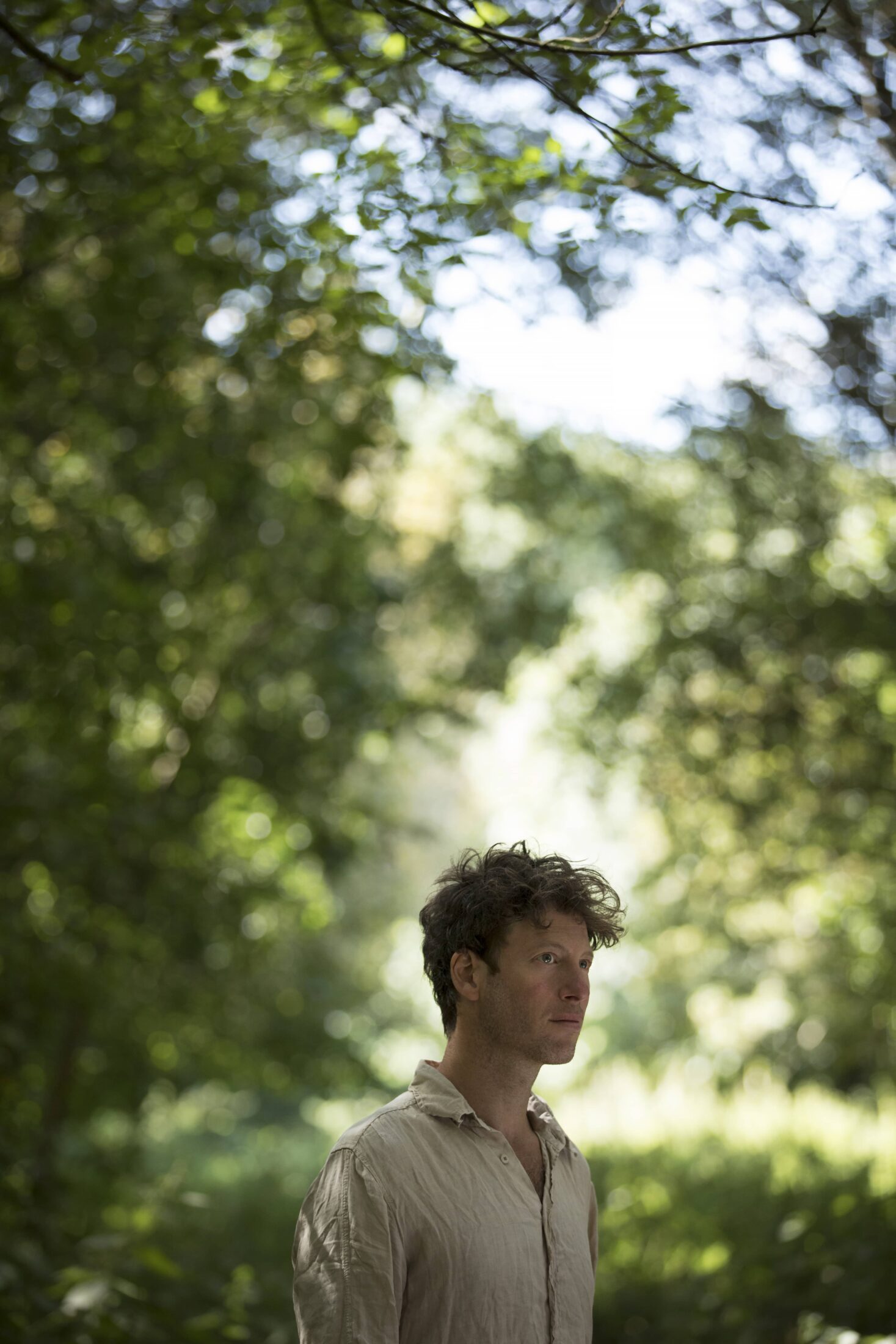
Sam Lee: Living in England with a very strange secularity within our folk repertoire has allowed me to explore what a sacred spiritual form of practice might be with these birds and how they might enable a re-enchantment. I feel like nature is my spiritual leader in this respect and the nightingale is my imam at the top of that tower calling the prayer out.
Photo by Dominick Tyler
An Interview with Sam Lee
CONTRIBUTOR BIOS June 7, 2021 (emergencemagazine.org)
In this interview, which weaves conversation, song, and the music of nightingales, folk singer Sam Lee speaks about the transformative experience of collaborating with nightingales, the stories of ancestors passed through folk music, and the space for communion that is opened with silence.
Sam will be joining us as our special musical guest at our upcoming in person August retreat in Kent, England. You can learn more about the retreat and register here.
Transcript
Emergence MagazineSam, really lovely to join you today. Thanks so much for being here with us.
Sam Lee Thank you, Emmanuel, for having me.
EM So I spent, you know, the last week or so kind of immersed in your work, reading your new book, The Nightingale, listening to your albums and some of the remarkable recordings you’ve done singing with nightingales. And I was really struck by the relationship and parallels between folk music and birdsong, both in your work but also more broadly in the deep connection to place and landscapes they both embody. And this is something you write about. So I was curious to start our conversation today by asking how you first came to experience this relationship between folk music and birdsong, one that ultimately led you into such a unique relationship with the nightingale.
SL I come from a nature study background, growing up at a wonderful [camp], similar to one of the summer camps that you’d have out in the States, a very alternative, left-wing radical organization called Forest School Camps that enabled a unique way for children, and then me as an adult, as a staff member, to grow up in a playful, a very community-orientated but also ecologically minded relationship with nature; that allowed me to grow a confidence in my being there, but also a confidence in myself. And it went hand in hand with song, because the campfire singing tradition there was prolific like nowhere else I’ve ever come across. Hundreds of songs, many folk songs, many of the American classic folk songs, but a large proportion of traditional repertoire that spoke from that point of view of our elders, our ancestors, in the way that folk songs do so beautifully, which is to speak quite open heartedly about adoration of nature. And that recitation and the repetition of melody over and over again, verse after verse, allowed me as a child and growing up to see the natural world through many eyes and many stories, and story being the most important part of our being in this world and in nature. So it was sort of distilled in me from an early age. And in those songs, birds seem to appear everywhere, almost more prolifically than maybe one would have been aware just listening out to the sound world around. I befriended them, maybe before I’d even heard them. The nightingale I’d heard through folk song long before I got the opportunity to hear one. And, and the same with trees and what those trees and what those birds meant to those characters in those songs and giving a sense of an older wisdom that maybe I had an inclination towards.
EM You said that, you know, after your first encounter with a nightingale, you were reduced child-like, and I’m quoting you here, “to a state of wonderment, grinning inanely and transported through deep time, deep song, and deep earth.” That sounds like quite a transformative experience. Could you share your first encounter with a nightingale, what that was like for you?
SL There is a beautiful story around it. I was taken down with friends of mine and a pregnant, full-term mother. We heard the bird sing, and yes, I went through this kind of giddy … like, like my first kiss. <laughs> I think of it like that sense of: Wow, I want this again. And the story of the mother—she went into labor that night and gave birth to her second child, Tristan. And then she and her daughter were both killed in an accident in Kenya, which was their home, although we met in England. They were killed only six months later. And instantly, that moment of exquisiteness of this bird, this new love affair, was coated in a tragic veil. And never again have I heard the nightingale and not thought of Polly and Sita, mother and daughter. But at the same time, what it revealed to me was that, all the while I’ve been singing these folk songs—with a nightingale here and a nightingale there, or a lark here or a turtledove there—what I was doing by hearing that bird—really, in such a ceremonial way that it was a marked journey to go and meet the bird and be in his presence—what I was experiencing was the voice that every one of the folk singers, who for hundreds of years had sung that song and whose shoulders I stand on—I was experiencing that quality of excitement that they had felt when they heard their nightingale sing, you know, three hundred years ago, a thousand years ago—however old these songs are, and some of them go back a very long time. And I was suddenly able to inhabit the place of those ancestral singers in a way that I hadn’t. And I realized that the more I stepped into those stories in nature, the more I understood the songs; and the more I understood the songs, the more I understood what my human relationship with nature was, that they were my vocabulary and they were my entry point into the natural world in a way that made sense to me—as a part of the natural world, but also as a human teller of story and of nature’s song.
EM I mean, hearing you describe that sounds somewhat spiritual in a certain way, I guess. It really captured you on multiple levels. And that’s something I really felt when you were describing some of these experiences in your book. And there’s a wonderful line that’s stayed with me and described the nightingale in this way and its influence on you: “This tiny bird led me across a threshold and introduced me to a way of being in nature that I had never reckoned with. The experience was both a meditation on stillness yet also a provocation to dance with abandon.” That’s very beautiful.
SL <laughs> I think maybe some context is really important here, because the bird doesn’t exist in America. There are birds called nightingales, but it’s very much a European and Eurasian bird. And he sings his courtship song—it’s a night song, you know, as the nachtigallen, “the night wind,” “the night voice.” And he’ll sing in that silence all night from 11 p.m. through till dawn at 4 or 5 o’clock in the morning, unrelenting. It’s a persistent, extraordinary, improvised, constantly new but constantly taking from his 1500 different sounds and 250 repertoire of phrases, but always cycling a new combination. And within that musicality and ecstaticness and energetic explosions, often in the coldness of the night and in the stillness of the night, I recognized another artist, who dared into this space in a way that the loneliness of an unaccompanied folk singer—or as I was before I did music, as a dancer—I was so energized and, like, I had permission to be an expressive person. Because if a nightingale could do it out of a pure innate call, the call of nature, for that nightingale to sing, it called in me the opportunity to express. <laughter>
EM Your, I guess, project, this ongoing project that you have of singing with nightingales, as far as I understand it, it started by your desire to honor an encounter with a cellist and a nightingale earlier on in the history of recorded music and radio, in 1924, with this very famous British cellist, Beatrice Harrison. I wonder if you could share that story and talk a little bit about Beatrice and what she did.
SL Mmm, absolutely. She’s a very incredible woman. I should kind of contextualize that by saying she was around in the 1920s, which is relatively modern in the history of where music and nightingales have existed. There’s a long international legacy of that, but she is our British kind of apocryphal tale of where the nightingale came into popular consciousness. And it happened because as a darling society character, she was the muse of Elgar. She played the premier of Elgar’s Cello Concerto. She was friends with royalty. She was real out there on the scene and a real pioneer of women’s rights as well. And she convinced the BBC much against their judgment to try out some new broadcasting equipment that would allow microphones to be small enough to take outside of the studio. And so on the 19th of May, 1924, the BBC—brand new at that point and internationally broadcasting—broke into one of their concerts and stopped to say, “We have a broadcast from the thicket of her back garden down south of London,” where a mile of cable linking up to the telephone exchange brought the song of the nightingale singing that night with her on her cello improvising and playing some pieces. And it was a viral sensation. You know, it was the ultimate first in that kind of, yeah, media experience that traveled around the world. Millions of people listened to it; fifty thousand people wrote letters in to the BBC to say, “Please, can we have more?” And she became this figure—this lady of the nightingales—and every year she did this broadcast, and she sold millions of records. And she traveled the world and would play the Carnegie Hall several times a year and invite all the Americans to come to her home in Oxted and have tea with her and listen to her nightingale, which they did in the thousands. Literally, you know, tankers of humans came over across the sea to hear her nightingale. She really brought that kind of popular appreciation and did a lot in terms of the preservation of birds and, you know, the popularization of the Royal Society for the Protection of Birds, our big charity. So she’s a—she’s a formidable figure but what she did was bring art and the nightingale together.
EM And is that what inspired you, just kind of the confluence of your love of birds and nature and then hearing somebody who had found a way to be in relationship with them as a musician?
SL I wish it was as obvious as that. No, not at all. I’d been listening to nightingales every year as a kind of pilgrimage to hear them. I got this lucky commission, because the BBC had completely missed their ninetieth anniversary of this seminal event. And I wrote an email to the man at the BBC as you do, going, “Uh … can I uh … can I make a little documentary about this?” And they were like, “Heck, yeah.” I had forty hours’ notice to go and make it. It was the fastest turnaround in BBC history, I think. And I did; I made this little documentary. And it was going out there to sing a song with the birds in homage to her that I discovered that actually the birds sang back. And that was the big threshold for me. Really, the most important one, which was not just the discovery but realizing the birds and me and other musicians could collaborate, that the birds changed their key and their frequencies and their decoration to adapt to your music. And that blew me, because I’d only ever been a silent participant, you know—a listener. Never would I sing with the great master, you know, interrupt. But lo and behold, he invited me in. That led to this kind of, “well, if I can do this on my own, maybe I could get an audience to come and experience this too.” This is nature connection, elixir. I call it the kind of shot up the arm. The adrenaline hit of hearing musicians and birds in collaboration is a sensation like no others, and it’s quite a transformative experience. So I’ve created this sort of concert, but I think of it or as a ceremony for the birds that allows people to have an experience with nature that we in England don’t often have the permission to have because of the country we live in and the laws and the way we are and our relationship to land. It opens up all those boundaries and other people’s thresholds and comfort zones in a very powerful way.
In June of 1952, the United States Fish & Wildlife Service received a letter of resignation from its most famous marine biologist. On the line requesting the reason for resignation, she had stated plainly: “To devote my time to writing.” But she was also leaving for the freedom to use her public voice as an instrument of change, awakening the world’s ecological conscience with her bold open letters holding the government accountable for its exploitation of nature.
Fifteen years earlier, at age twenty-nine, Rachel Carson (May 27, 1907–April 14, 1964) had gotten her start at the lowest rungs of the government agency as a field aide hired at $6.50 an hour. Wading through tide pools and annual marine census reports as a junior aquatic biologist, she had found her voice as a writer with an uncommon gift for walking the teeming shoreline between the scientific and the poetic. In an unexampled essay that eventually bloomed into The Sea Around Us, which won her the National Book Award, she had invited the human imagination undersea, into a world then more mysterious than the Moon. Now, forty-five and finally free from the day-job by which she had been supporting her mother, her sister, and the young nephew she adopted and raised as her son after her sister’s death, Carson set out to fulfill her childhood dream of living by the ocean.
Rachel Carson
After searching along the New England coast, she fell in love with West Southport — a picturesque island in Maine, nestled among evergreens and oaks in the estuary of the Sheepscot River, where seals frequented the beach and whales billowed by as though torn from the pages of her beloved Melville. With her book royalties, she bought a plot of land on which to build a cottage. In a touching testament to her orientation to the natural world, she felt deeply uncomfortable thinking of herself as its “owner” — a “strange and inappropriate word” — of this “perfectly magnificent piece of Maine shoreline.” There, she would soon meet her soul mate, whose love would bolster Carson’s moral courage in catalyzing the environmental movement; there, she would compose her next book, dedicating it to her beloved Dorothy for having gone down with her “into the low-tide world” and “felt its beauty and its mystery.”
The Edge of the Sea was an ambitious guide to the seashore — the place where Carson found “a sense of the unhurried deliberation of earth processes that move with infinite leisure, with all eternity at their disposal”; the strange and wondrous boundary the ocean-loving Whitman had once extolled as “that suggesting, dividing line, contact, junction… blending the real and ideal, and each made portion of the other.”
The book was also an admonition against what we stand to lose — writing in the early 1950s, Carson noted the systematically documented and “well recognized” fact of global climate change. But was primarily a celebration, for that is always the most effective instrument of admonition — a celebration of what we have and what we are, an ode to “how that marvelous, tough, vital, and adaptable something we know as LIFE has come to occupy one part of the sea world and how it has adjusted itself and survived despite the immense, blind forces acting upon it from every side.”
Inevitably, in telling the story of life, the book takes on an existential undertone, rendered symphonic under Carson’s poetic pen. Watching the fog engulf the rocks beneath her study window as the night tide rolls in, she considers the totality of being, which the world’s oceans contour and connect:
Hearing the rising tide, I think how it is pressing also against other shores I know — rising on a southern beach where there is no fog, but a moon edging all the waves with silver and touching the wet sands with lambent sheen, and on a still more distant shore sending its streaming currents against the moonlit pinnacles and the dark caves of the coral rock.
Then in my thoughts these shores, so different in their nature and in the inhabitants they support, are made one by the unifying touch of the sea. For the differences I sense in this particular instant of time that is mine are but the differences of a moment, determined by our place in the stream of time and in the long rhythms of the sea. Once this rocky coast beneath me was a plain of sand; then the sea rose and found a new shore line. And again in some shadowy future the surf will have ground these rocks to sand and will have returned the coast to its earlier state. And so in my mind’s eye these coastal forms merge and blend in a shifting, kaleidoscopic pattern in which there is no finality, no ultimate and fixed reality — earth becoming fluid as the sea itself.
The Great Wave off Kanagawa by Japanese artist Hokusai, 1831. (Available as a print and as a face mask, benefitting The Nature Conservancy.)
On all these shores there are echoes of past and future: of the flow of time, obliterating yet containing all that has gone before; of the sea’s eternal rhythms — the tides, the beat of surf, the pressing rivers of the currents — shaping, changing, dominating; of the stream of life, flowing as inexorably as any ocean current, from past to unknown future.
[…]
Contemplating the teeming life of the shore, we have an uneasy sense of the communication of some universal truth that lies just beyond our grasp. What is the message signaled by the hordes of diatoms, flashing their microscopic lights in the night sea? What truth is expressed by the legions of the barnacles, whitening the rocks with their habitations, each small creature within finding the necessities of its existence in the sweep of the surf? And what is the meaning of so tiny a being as the transparent wisp of protoplasm that is a sea lace, existing for some reason inscrutable to us — a reason that demands its presence by the trillion amid the rocks and weeds of the shore? The meaning haunts and ever eludes us, and in its very pursuit we approach the ultimate mystery of Life itself.
Art from Geographical Portfolio — Comprising Physical, Political, Geological, and Astronomical Geography by Levi Walter Yaggy, 1887. (Available as a print, benefitting The Nature Conservancy.)
As The Edge of the Sea alighted in the world, critical praise and honors came cascading, trailed by invitations for lectures and acceptance speeches. Always uncomfortable with attention and public appearances, Carson became even more selective, prioritizing women’s associations and nonprofit cultural institutions over glamorous commercial stages. When she did speak, her words became almost a consecration, as in a speech she delivered before a convocation of librarians:
When we go down to the lowest of the low tide lines and look down into the shallow waters, there’s all the excitement of discovering a new world. Once you have entered such a world, its fascination grows and somehow you find your mind has gained a new dimension, a new perspective — and always thereafter you find yourself remember[ing] the beauty and strangeness and wonder of that world — a world that is as real, as much a part of the universe, as our own.
You never know what might happen when you go to Lord Byron’s house. Or, to be more precise, when you go to the Swiss mansion that Byron has rented for the summer of 1816 to get away from all those pesky scandals swarming around him in England. But actually, it’s more than likely that Percy Bysse Shelley and his future wife, then still called Mary Godwin, who were renting another house nearby that season, knew exactly what they were getting into when they befriended Byron.
“At first we spent our pleasant hours on the lake, or wandering on its shores,” Mary Shelley later wrote in an introduction to Frankenstein; it was only Byron who was getting any writing done. “But it proved a wet, ungenial summer,” she wrote, “and incessant rain often confined us for days to the house.” (In fact, 1816 would later become known as the Year Without a Summer, because of the effects of the eruption of the Indonesian volcano Mount Tambora the previous year—it would have been bizarrely cold and a little frightening.) One day in this un-June-like June, Percy, Mary, Lord Byron, and the writer John Polidori were holed up in Byron’s Villa Diodati, reading ghost stories to each other (in translation, natch), when Byron, inspired, challenged each of them to write their own dark tale. Over the next three days, storms raging outside, they each attempted to rise to Byron’s demand.
“I busied myself to think of a story,” Mary wrote.
—a story to rival those which had excited us to this task. One which would speak to the mysterious fears of our nature, and awaken thrilling horror—one to make the reader dread to look round, to curdle the blood, and quicken the beatings of the heart. If I did not accomplish these things, my ghost story would be unworthy of its name. I thought and pondered—vainly. I felt that blank incapability of invention which is the greatest misery of authorship, when dull Nothing replies to our anxious invocations. Have you thought of a story? I was asked each morning, and each morning I was forced to reply with a mortifying negative.
But then, as she slept one night, it came to her: “My imagination, unbidden, possessed and guided me, gifting the successive images that arose in my mind with a vividness far beyond the usual bounds of reverie,” she wrote. “I saw—with shut eyes, but acute mental vision,—I saw the pale student of unhallowed arts kneeling beside the thing he had put together. I saw the hideous phantasm of a man stretched out, and then, on the working of some powerful engine, show signs of life, and stir with an uneasy, half vital motion.” (The exact hour of this vision has been pinpointed by astronomers: it was between 2 am and 3 am on the morning of June 16. Which seems like exactly the time you’d expect a good idea for a horror story to come to a writer, especially such a goth one.)
Aoccdrnig to rscheearch at Cmabrigde Uinervtisy, it deosn’t mttaer in waht oredr the ltteers in a word are, the olny iprmoetnt tihng is taht the frist and lsat ltteer be at the rghit pclae. The rset can be a toatl mses and you can sitll raed it wouthit porbelm. Tihs is bcuseae the huamn mnid deos not raed erveylteter by istlef, but the wrod as a wlohe.
Dr Gabor Maté Presentation by Dr. Gabor Maté for the Howard Centre, Burlington Vermont. January, 2017. Dr. Gabor Maté is a renowned speaker, and bestselling author and is highly sought after for his expertise on a range of topics including addiction, stress and childhood development.
SME, Horus Music (on behalf of Vintage Records); ARESA, BMI – Broadcast Music Inc., LatinAutor – Warner Chappell, UNIAO BRASILEIRA DE EDITORAS DE MUSICA – UBEM, PEDL, Harry Fox Agency (Publishing), Kobalt Music Publishing, LatinAutor – PeerMusic, UMPG Publishing, CMRRA, Warner Chappell, ASCAP, LatinAutorPerf, and 14 Music Rights Societies
Mitákuye Oyás’iŋ (All Are Related) is a phrase from the Lakota language. It reflects the world view of interconnectedness held by the Lakota people of North America.[1] This concept and phrase is expressed in many Yankton Sioux prayers,[2] as well as by ceremonial people in other Lakota communities.[3][4]
The phrase translates in English as “all my relatives,” “we are all related,” or “all my relations.” It is a prayer of oneness and harmony with all forms of life: other people, animals, birds, insects, trees and plants, and even rocks, rivers, mountains and valleys.[2]
From work in the 1940s, American scholar Joseph Epes Brown wrote a study of Mitákuye Oyás’iŋ and its relevance in the Sioux ideology of “underlying connection” and “oneness.” He noted how the phrase has been misappropriated and misused as a slogan and salutation by peoples from outside the Lakota cultures.[4]
Francis White Bird asserts that only Lakota can use this phrase because it applies only to Lakota culture.[5]
Discover your soul’s purpose by following the shamanic path of the heart
• Explains how to engage your heart’s navigational guidance system to access your spiritual core directly and find your life purpose and spiritual identity
• Includes shamanic practices to meet your power animals, consult with spirit guides, embark on journeys in the spirit world, slay your inner dragons of self-sabotage and fear, clear emotional wounding patterns, and find your personal spirit song
• Offers case studies and troubleshooting help for common pitfalls and obstacles on the heart-centered shamanic path
• Includes access to 4 guided audio journeys narrated by the author
Each of us has a vision for our lives, our soul’s purpose awaiting release in our hearts. The most important task we have is to learn what that purpose is and then bring it into the world. In our world of endless busyness and “hurry sickness,” many people are experiencing soul loss as they live out dreams of endless motion, empty tasks, anxiety, and negative thoughts. But you can change your world and discover the shamanic heart path that activates your wildness, your power, and your soul’s purpose.
Blending earth-honoring shamanic practices and modern depth psychology, Jeff Nixa explains how to practice the lost art of heart navigation to help you find your life purpose and spiritual identity, conquer the fear, doubt and criticism that stand in the way of that vision, and become a shamanic shapeshifter of your life. Providing heart-opening exercises to slow your mental racing and detect your heart’s navigational guidance system, he shows how to awaken your wild and free heart, access your spiritual core directly, deactivate trauma-based emotional patterns, retrieve vital energy, work with your dreams, and become an artist of the soul. You will learn how to meet your power animals and consult with spirit guides, embark on shamanic journeys in the spirit world for help and information, slay your inner dragons of self-sabotage, find your personal spirit song, and create the joyful life that your heart is attuned to seek out.
Offering case studies and troubleshooting help for common pitfalls and obstacles on the heart-centered path, this shamanic manual provides hands-on practices and ceremonies–including access to 4 guided audio journeys narrated by the author–as well as wisdom from the author’s own journey and the powerful teachers he has worked with, including Sandra Ingerman, Mikkal, spiritual elders of the Oglala Lakota people, and plant-spirit medicine shamans of the Amazon jungle. Allowing you to understand the precise contours of your authentic self and your visionary heart, this book offers a map to a vibrant new life aligned with your soul and deepest calling.
“A magnificent achievement. In its power to touch the heart, to awaken consciousness, [The Tibetan Book of Living and Dying] is an inestimable gift.” —San Francisco Chronicle
A newly revised and updated edition of the internationally bestselling spiritual classic, The Tibetan Book of Living and Dying, written by Sogyal Rinpoche, is the ultimate introduction to Tibetan Buddhist wisdom. An enlightening, inspiring, and comforting manual for life and death that the New York Times calls, “The Tibetan equivalent of [Dante’s] The Divine Comedy,” this is the essential work that moved Huston Smith, author of The World’s Religions, to proclaim, “I have encountered no book on the interplay of life and death that is more comprehensive, practical, and wise.”
“Written in words so intimate, calm, kind, and immediate, this extraordinary book feels like a message from our very own heart….Thich Nhat Hanh is one of the most important voices of our time, and we have never needed to listen to him more than now.” —Sogyal Rinpoche
Fear is destructive, a pervasive problem we all face. Vietnamese Buddhist Zen Master, poet, scholar, peace activist, and one of the foremost spiritual leaders in the world—a gifted teacher who was once nominated for the Nobel Peace Prize by Martin Luther King Jr.—Thich Nhat Hanh has written a powerful and practical strategic guide to overcoming our debilitating uncertainties and personal terrors. The New York Times said Hanh, “ranks second only to the Dalai Lama” as the Buddhist leader with the most influence in the West. In Fear: Essential Wisdom for Getting through the Storm, Hanh explores the origins of our fears, illuminating a path to finding peace and freedom from anxiety and offering powerful tools to help us eradicate it from our lives
(Goodreads.com)
Consciousness, spirituality, biography, sexuality, androgyny, futurism, space, the arts, science, astrology, democracy, humor, books, movies and more




 Hearing the rising tide, I think how it is pressing also against other shores I know — rising on a southern beach where there is no fog, but a moon edging all the waves with silver and touching the wet sands with lambent sheen, and on a still more distant shore sending its streaming currents against the moonlit pinnacles and the dark caves of the coral rock.


