

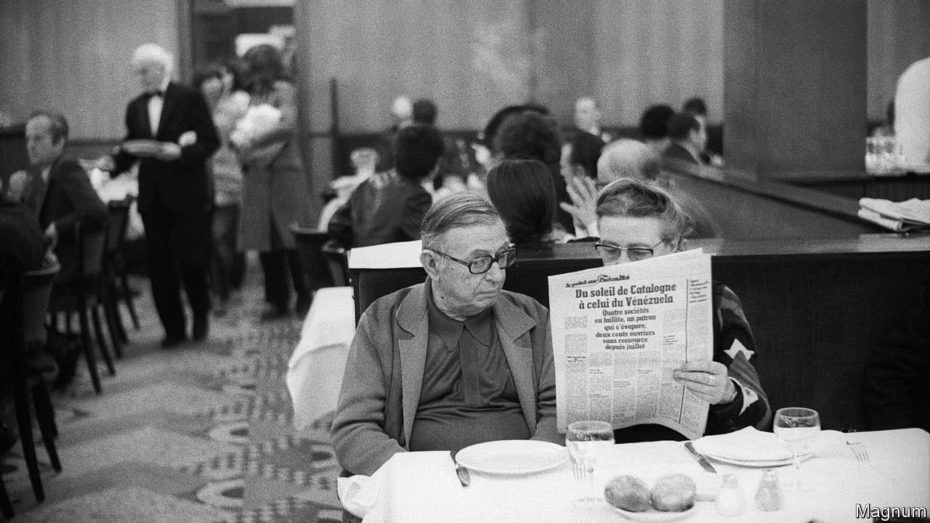
Photo by Christopher Anderson/Magnum
Rachel Gennis a neuroscientist, artist and writer who works between the Manchester Writing School and the School of Digital Arts, both at Manchester Metropolitan University. She has written two novels – The Cure (2011) and What You Could Have Won (2020) – and is now working on Hurtling, a hybrid collection of essays about the neuroscience, art and experience of artistic reverie, as well as Blessed which explores fighting and addiction to regret. She lives in Sheffield.
Edited by Marina Benjamin
13 JANUARY 2021 (psyche.co)
1. As well as to dream and to wander, an ancient root of the word ‘reverie’ is the Middle French desver – to lose meaning. By letting meaning loose, allowing it to graze, we can put play in the tether that commonsense usually keeps tight. In Move Closer (2000), the philosopher John Armstrong sees creative reverie as a state of letting something happen: when we find ourselves absorbed in a process or practice, we surrender to a flow of associations by quietening the self. In this state, we’re able to apprehend something novel that leaves us surprised. But what is the stuff of reverie? If we wish to cultivate it, we must ask what we lose by describing it in purely computational terms.
2. In The Soul of the White Ant (1925), Eugène Marais, the Afrikaner poet and naturalist, prostrates himself in devotion to the termite, scrutinising the potent ‘invisible influence [that] streams from the organism of the queen’ to her soldier and worker ants – this influence ‘is a power beyond our senses; it can penetrate all material barriers, even such as thin steel or iron plates.’ Marais’s empirical scrutiny never denies the sacred. As a result, his thinking is sublime. His is a book I wish I’d written. Perhaps reverie is related to revere.
3. As a species of strenuous relaxation, reverie allows our private selves to mesh with forces in the outside world. While the emergent ‘insight’ suggests answers found inside ourselves, ‘spread mind’ theory – a kind of modern-day pantheism elaborated by the Italian philosopher Riccardo Manzotti, which supposes consciousness to inhere within physical entities – points to origins of creativity in the dynamic interplay between our mind and the world. As Manzotti puts it: ‘[M]ind is the point of the universe where knowledge and being are the same.’ Or, as the Canadian poet Karen Solie has it: ‘Objects of my attention made more of me.’ In reverie, we are propped open while the world has a sniff around.
4. One route to creativity is quickly solving problems inside a given conceptual space (symbolic). Another involves peering beyond the problem space’s current limitations to new meanings (semantic), and expanding meaning into something potentially contrary to everything achieved so far. So while flow states are pleasurable, reverie and the insights it apprehends might not be.
Reverie, like dreams, provides a bridge between unconscious and conscious thinking, and doesn’t require an object
5. If we are to understand reverie, we need to differentiate it from flow. The psychologist Mihaly Csikszentmihalyi describes the flow state as the subjective experience of engaging in just-manageable challenges by tackling a series of clear proximal goals. But first comes a preparation period whereby we immerse ourselves into a group of problematic themes that stir up our interest and curiosity. Does the difference between talent and genius, certainty and uncertainty, embodiment and ecstasy reside in differences between flow and reverie? That reverie is simply intense flow is questionable, since reverie can be a sudden illumination and feel perilous. Indeed, the Norwegian psychoanalyst Eystein Våpenstad, quoting Steven Cooper, refers to ‘rougherie’.
6. Because reverie is indistinct, flow is better studied, and getting in among the material seems key to its initial stages. On hearing that ‘marble changes colour under different people’s hands’, the sculptor Barbara Hepworth realised that it was ‘not dominance which one had to attain over material, but an understanding, almost a kind of persuasion, and above all greater co-ordination between head and hand.’ Absorbed in playing or making, we process feedback on our progress, and adjust our actions accordingly. This holds whether playing Fortnite (ludic) or making pinch pots (aesthetic). Brain-imaging studies have begun to map the interconnected brain areas that contribute to flow states. But the well of suppressed experience and imagery, drawn upon in reverie in combination with the flickering fragility of the state itself, is not so amenable to study.
7. A conscious experience requires an intentional object. Whereas reverie, like dreams, provides a bridge or a dialogue between unconscious and conscious thinking, and doesn’t require an object, or trigger. Reverie states can be akin to the psychologist William James’s concept of the fringe – what Manzotti and his fellow philosopher Andrea Lavazza call ‘the intermediate zone between the mind and what is not yet mental’, while flow is a containment inside eager attentiveness. To transition from an embodied certainty to attending to ‘nothing’ takes guts. But this is a live nothing, not a vacuum. I scribble: Flow is to knowledge as Reverie is to wisdom? The g-force tests before we get into orbit?
8. After ‘immersion’, Csikszentmihalyi outlines an ‘incubation’ phase of the flow process in which ideas are tossed around beneath the threshold of consciousness – calling ‘to each other on their own without our leading them down a straight and narrow path’ and, here, unexpected combinations can come into being. An ‘incubation’ period doesn’t create novel insight, rather it’s a phase in which the cognitive system constructs the tools with which to see something. James’s fringe, in offering a working model of the shift from an unconscious to a conscious domain, would presumably allow for such a construction.
A lack of effort helps the reverie to form: not effortlessness, rather an active suppression of effort
9. The visual anthropologist Amanda Ravetz points out that reverie states are not produced on command, through an act of will; or, rather, they are a product of intention, but where no urgency is involved. The psychoanalyst Marion Milner, in On Not Being Able to Paint (1950), links reverie to ‘a certain kind of absent-mindedness which is not easy to achieve unless one is given a certain type of protection and permission from the environment’. Only then might we open up our receptors and move from what the artist Jenny Eden calls an inner to an outer space, where the self disappears along with self-conscious rumination. Evaluative feedback, if negative – such as anticipated regret – might degrade our relationship with reverie. By ruminating on what might go wrong, we scupper the momentum needed to reach the escape velocity that reverie can demand.
10. Diary entry: There is no writing but in the face of doubt, it is restraint that provokes a lift-off into orbit – held at speed, I’m objectively vulnerable but subjectively safe. The Italian psychoanalyst Roberto Speziale-Bagliacca points to metaphors used by patients that imply that a lack of effort helps the reverie to form: not effortlessness, rather an active suppression of effort. But how far can one bear the impotence required, refusing the possibility of discovery while seeking novelty? These are questions that inhere in the poet Rachael Boast’s lines in ‘The Script of Sleep’ (2016):
The right words formed in my mind
backlit by the hum of their origin
yet even as they brightened into line
I fell asleep inside them
too tired to begin. If accident
has design, then here it is …
11. I Tweet: Laying still is hard when you are trying to discover something, a crass reinterpretation of John Keats’s more succinct thesis that if we can suppress our obsessive seeking after incessant facts and endure long periods of strenuous not-knowing – his ‘negative capability’ – then we can replicate what the psychoanalyst Wilfred Bion saw as his profession’s ideal receptive state of mind. Reverie of both types, then, although imaginative, is work not holiday. Only when the poet Alice Oswald lost her translation notebook and was forced to work without notes did she find that ‘not just the poem but the brightness beneath it was visible’.
12. Attention is involved then, but it doesn’t like the limelight. In a sense, Montaigne’s definition in 1580 of reverie as psychic activity not subject to attention presaged the discovery of the brain’s default mode network (DMN), which functional imaging reveals is activated during resting states. The DMN oversees tasks involving internally focused, self-referential cognition (or rumination) and also mind-wandering. It’s an important component of the neural basis of the ego and, when modulated (say, by LSD), it temporarily creates a more unified and interconnected brain where the self no longer feels ‘separate’ and ego is dissolved. In a 2002 paper for the journal Common Knowledge, the poet Anne Carson remarks how, in a similar bid to put her ‘self’ to one side, the heretic Marguerite Porete (burned at the stake in 1310) tested her ability ‘to clear her own heart and her own will off the path that leads to God’. At the moment of its annihilation, Carson says: ‘God practises upon the soul an amazing act of ravishing.’
In reverie we are rendered vulnerable, sub-contracted into having the best brought out in us
13. Despite the unpredictability and low probability of naturally occurring mystical-type experiences in writing, I am always attracted to the idea of surrendering my responsibility for what goes on the page. Like the painter Celia Paul, who writes in her memoir Self-Portrait (2019): ‘You need to give yourself completely, while at the same time seeing things from a distance.’
14. Functioning as what Porete calls ‘le Loingprés’ or ‘the FarNear’, God opens ‘an aperture, like a spark, which quickly closes, in which one cannot long remain … ’ It might be that increased brain interconnectivity provides what might be called a ‘window of opportunity’ before the brain goes back to a more fixed state again. Such transition (a word that also describes the late phase of childbirth where, to the mother, death feels imminent) might show reverie as an intense interplay between the abstract and the perceptual, wherein annihilation and ecstasy are equally possible. Every important creative act, says Paul, ‘has this duality: of giving everything and then of letting go, so that the created work can have a life of its own.’ Oswald seems to capture precisely this straddling in her poem ‘Swan’ (2016):
A rotted swan
is hurrying away from the plane-crash mess of her wings
one here
one there
getting panicky up out of her clothes and mid-splash
looking down again at what a horrible plastic
mould of herself split-second
climbing out of her own cockpit …
15. The phase of interplay between perceptual and abstract inputs contributes to the creative semantic space such that the mind is a web. ‘The unity into which the Thought – as I shall for a time proceed to call … the present mental state – binds the individual past facts with each other and with itself, does not exist until the Thought is there,’ wrote James in 1890. Reverie affords this unity, and the thought is caught; art is found not made. The laws of physics do not change to make aeroplanes fly.
16. The rawness of exiting reverie helps us understand its nature. Someone has spoiled our game. Being yanked from reverie causes a definite rupture, provoking petulance, and requiring mending if one is to reinstate it. In reverie we are rendered vulnerable, sub-contracted into having the best brought out in us. In our new porous (pious?) state, our essence is drawn forth by forces beyond the centrifuge – and maybe even by the dynamic power of the FarNear – so that we can unify and connect with something more; receiving and transmitting at once.
17. Sightless, and willing to be guided without question, we are permitted to seek. Marais saw termites at ceaseless work as ‘mere automata, governed by the psychological power of the queen. For the same reason, they lost their sight, and other senses which are the accompaniment of an individual psyche.’ Does taking leave of our senses render us more or less receptive than these ‘guided’ termite automata? Only by testing the boundaries of flow and reverie might we discover whether reverie deepens our connectedness by removing our individual targets or by making us blind to them, or both.


 There are situations, moments in life, in which, unawares, the human being confesses great portions of his ultimate personality, of his true nature. One of these situations is love. In their choice


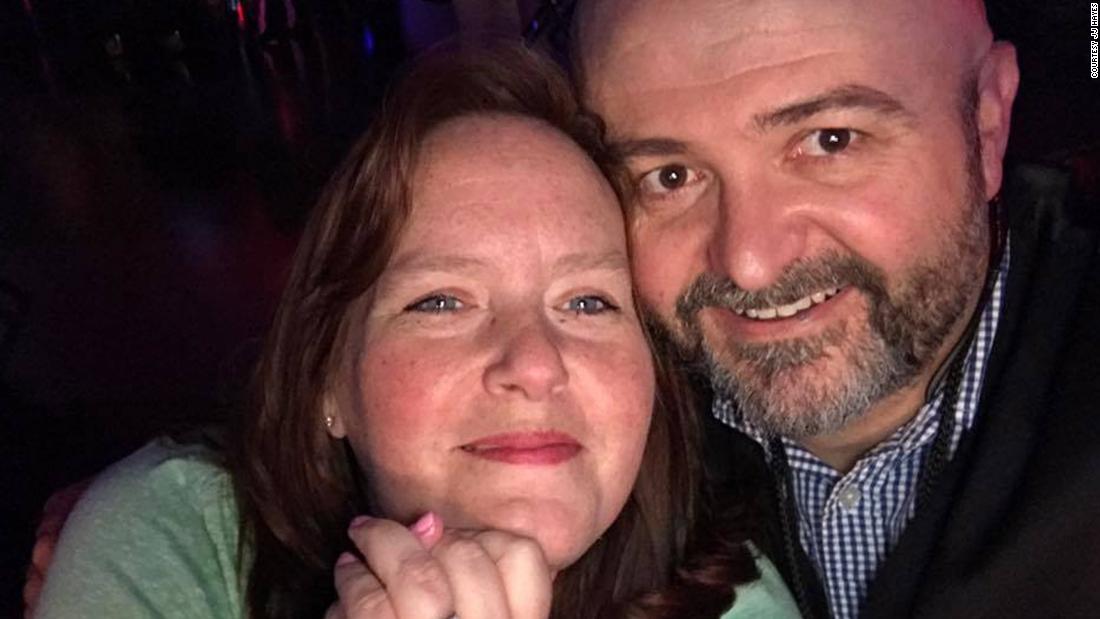 Michelle and Ian Horne. The couple were married almost 10 years.Horne took it as a sign.Enter your email to subscribe to the Results Are In Newsletter with Dr. Sanjay Gupta.
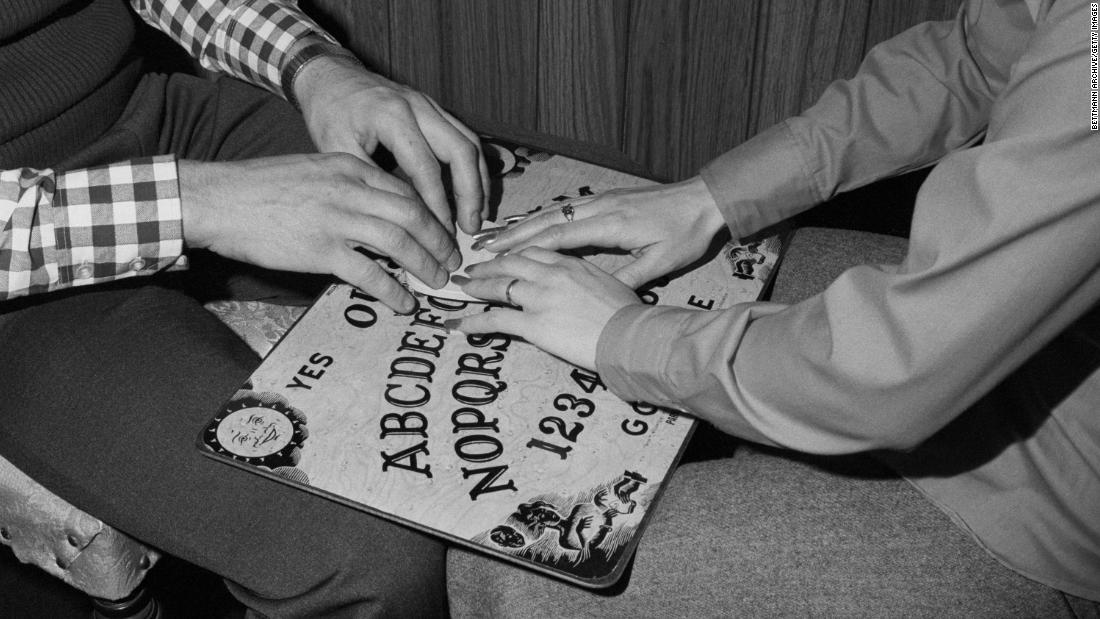 After mass tragedies such as wars many Americans have turned to Ouija boards in an attempt to contact departed loved ones.The 1918 influenza epidemic sparked a
 Gloves worn by pallbearers are draped on the casket of retired officer Charles Jackson Jr., who died from Covid-19 in April 2020 in Los Angeles. Covid restrictions prevented many people from saying goodbye to dying loved ones in person.Seven months later, though, Jackson says she heard from her aunt again.It was December, and Jackson was putting up Christmas decorations in the house while Bing Crosby sang holiday carols. Christmas was one of her aunt’s favorite holidays, and she loved decorating. Jackson’s bin was filled with the same decorations that once belonged to her aunt.Jackson says she left the bin in her hallway to get something and when she returned, she saw a translucent figure peering into it. It was the figure of a petite woman, with the same haircut, color of hair and white blouse and blue slacks that her aunt used to wear.Jackson froze. Her hearted started pounding. She fled to her dining room and started crying. When she returned, the figure was gone. She says it was her aunt.”It was overwhelming,” Jackson says. “It’s hard to put into words. I felt touched by that. It’s obvious that she’s around and she’s visiting me.”
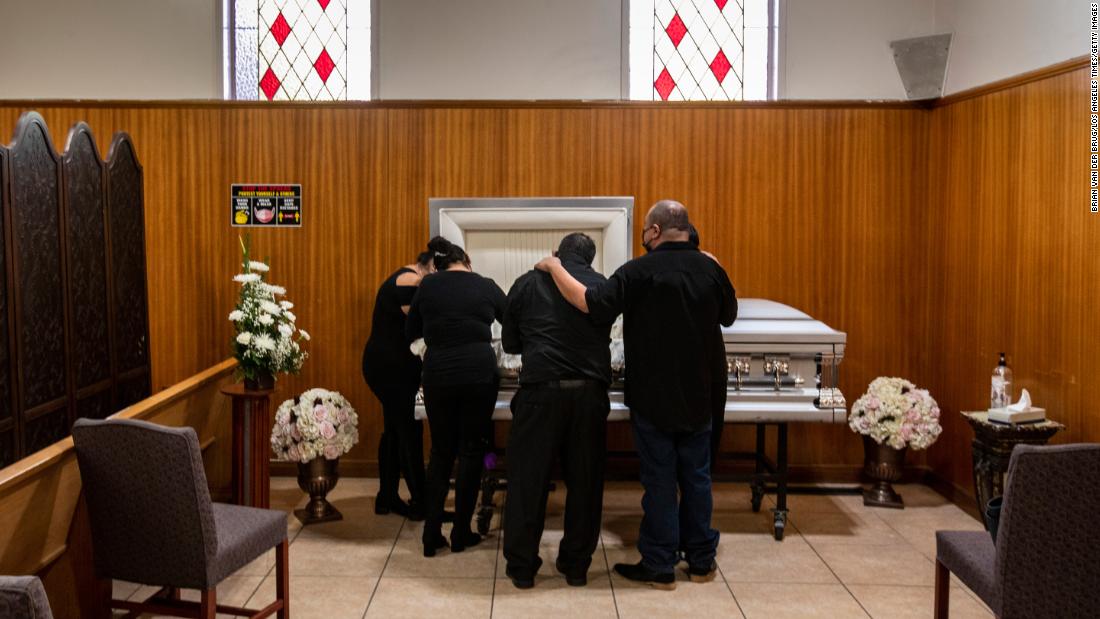 Family members gather to mourn a lost relative at the Continental Funeral Home on December 20, 2020 in East Los Angeles.One day not long after that morning, Pina reported another classic characteristic of an ADC. She was making spinach soup, one of her mom’s favorites, when she suddenly smelled the fragrance associated with her mother — a combination of White Diamond perfume and her mom’s Chi hairspray.”The scent was overpowering,” Pina says. “My husband and I stood in the kitchen awestruck as I stirred the soup. We both could smell it. It lasted for approximately five minutes before evaporating.”Talk to people who have these experiences, and many will acknowledge that maybe their minds created the episode. Others insist the visitations were too real to deny.Jackson, who lost her aunt, says it’s almost irrelevant if they’re real or not. Their impact is real, she says. They made her feel better.”If I needed to see it and it made me feel better and that’s all it was, I’m okay with that,” she says. “I tell people if they don’t want to believe me, that’s fine. I don’t need to explain to other people.”
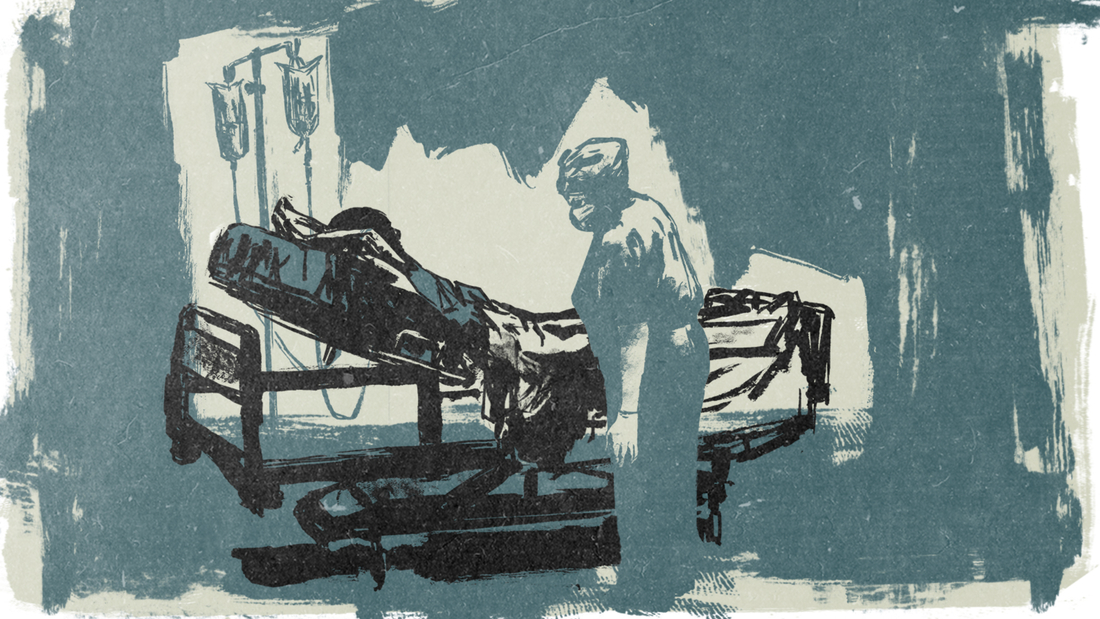 Many victims of coronavirus died alone in hospitals, depriving family members of closure.Haunting ADCs also are common during wartime. War memoirs are filled with stories of combat veterans reporting creepy, after-death visitations from fallen comrades or even enemy soldiers they’ve killed. In the classic memoir, “
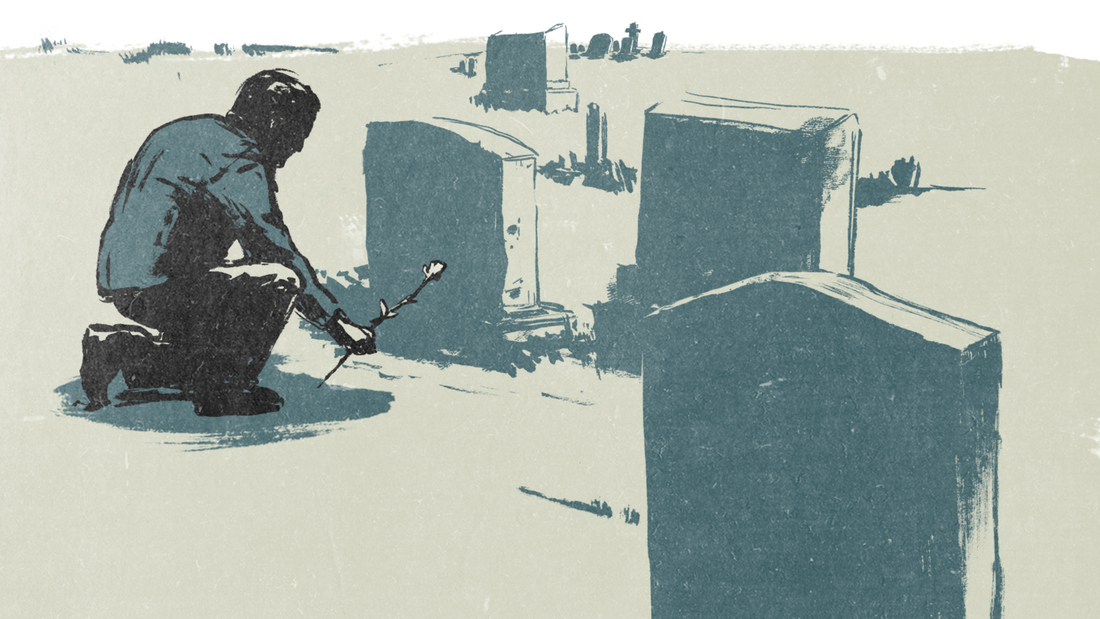 Perceived messages from deceased loved ones can be comforting but also unsettling.Both signs are comforting to him in part because Horne remembers how Michelle fought so hard to live. He says her immune system was weakened after she received a kidney transplant several years ago. When the pandemic hit, they both dreaded what would happen if she got the virus.After their worst fears proved true, Horne says it seemed at first as if Michelle would survive. She endured a lengthy hospital stay, which included being put on a ventilator, but was released last October. She worked hard to get better, but there were times when Michelle’s natural optimism wavered.Horne says she once told him, “I’m such a burden to you. You don’t deserve this. You should just leave.”He kept encouraging her in physical therapy.”I was in it for the long haul, for better or for worse,” he says.Michelle’s body, though, didn’t have the strength for the long haul. She died from a heart attack
 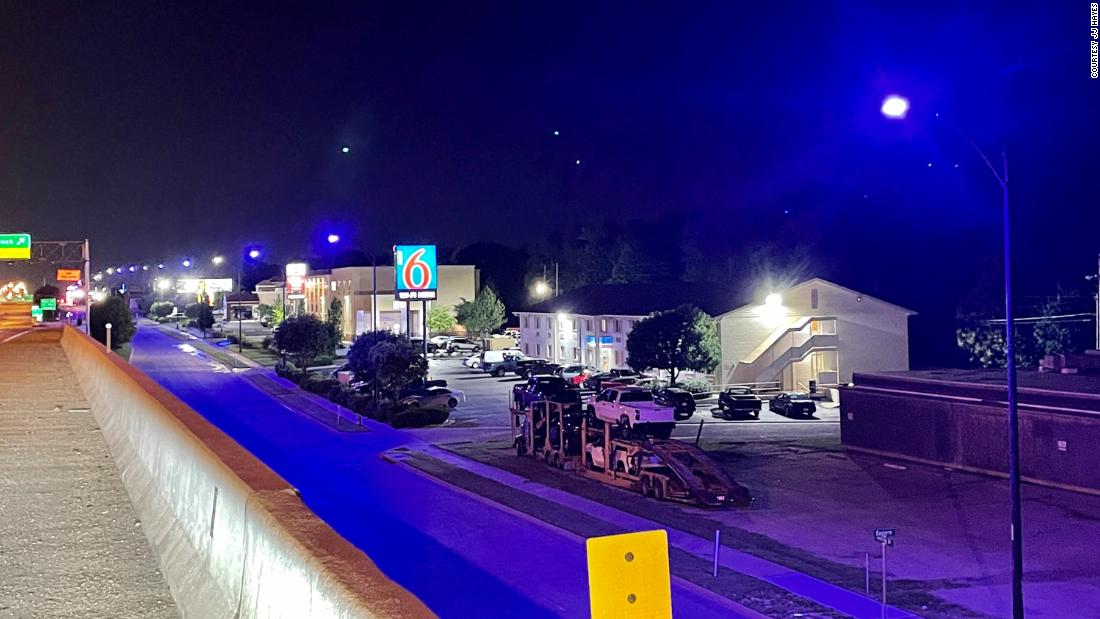 Purple streetlights in Wichita, Kansas, which Ian Horne thinks are a signal from his late wife.Yet in an odd way, Michelle may be still talking to Horne, even after he first saw those purple streetlights.When they were married, Horne developed a ritual with Michelle. She worried about his safety driving to work in the dark each morning. After he arrived, he would reassure Michelle by texting: “I’m here. I love you.”The purple lights in Wichita are still shining. Horne keeps seeing them on his morning commute. It’s as if Michelle is responding with a similar message.He’s not sure how long the purple lights will remain. He called the city of Wichita and they attributed the faulty lights to a defective batch. They told him they were going to replace the lights. He’s in no rush for that to happen.”I’m kind of honestly hoping that they don’t,” Horne says. “I will always believe that Michelle turned them purple. Whether she actually did or not, that’s up to a reader or viewer to decide. They can explain it away … I believe it was a way for Michelle to be with me on my ride to work.
