
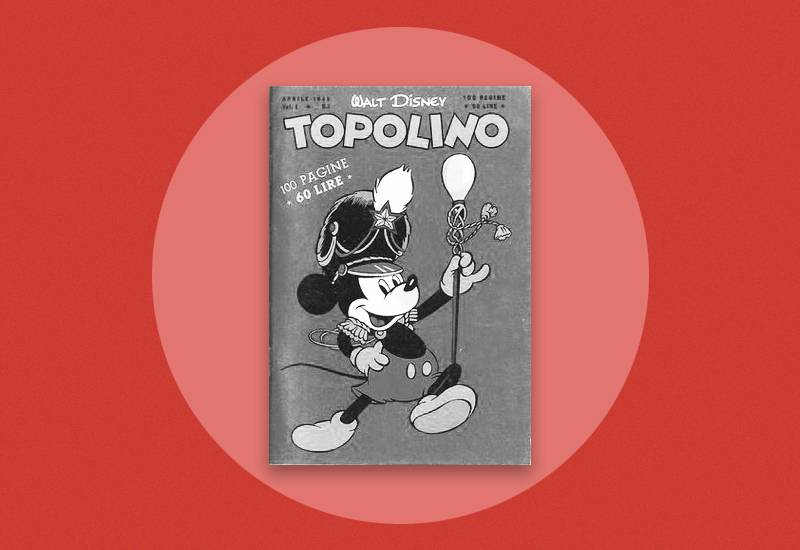
| On July 23, 1929, less than seven years after seizing power, Mussolini’s fascist government officially banned the use of foreign words in Italy. This was ostensibly to maintain and promote the purity of the Italian culture—boilerplate censorship wrapped in the banner of nationalism, but made more ridiculous by the fact that, when Mussolini came to power in 1922, only 12% of Italians spoke “pure” Italian—the majority of the citizens spoke a variety of regional languages and dialects, which (despite the real targets being French, English, and other frightening foreign languages) were naturally forbidden, along with Italian words of foreign origin, loanwords, and even some proper names. The policy effectively banned the five letters that do not exist in the Italian alphabet: J, K, W, X, and Y. Banned words were replaced by new, invented Italian terms, and a new industry sprang up to dub foreign films into Italian. As a result, dubbing is still the norm in Italy, and has grown into a major industry—there’s even an “International Grand Prize of Dubbing,” otherwise known as “Italy’s Dubbing Oscars” awarded in Rome every year. Other artifacts remain too—during Mussolini’s reign, Mickey Mouse was re-named Topolino, while Donald Duck became Paperino (“Lil’ Mouse” and “Lil’ Duck” respectively), and Italians still use those names today. On the other hand, despite Mussolini’s efforts, Italy is still full of dialects and regional loyalties. Italian only became the country’s official language in 2007, and even then, the change had its detractors, including Franco Russo, a member of the Italian Communist Party, who argued that Italy’s post-war constitution purposefully omitted any mention of a national language, to thwart Mussolini’s intentions. At least these days, official languages are only symbolic. |
(LitHub.com)