
Most people generally agree that the language quirk originated for one reason
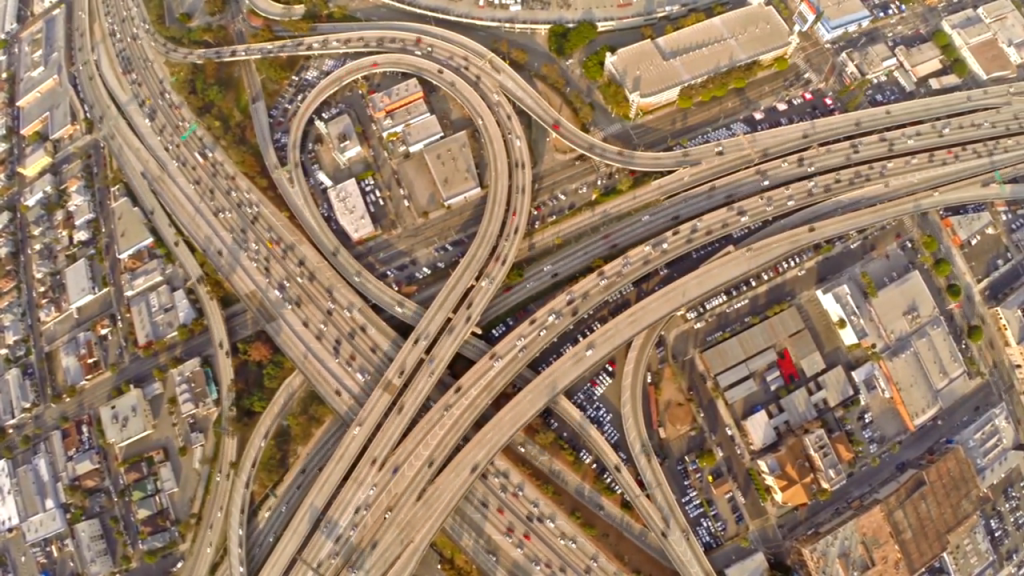
An aerial vew of freeways in Los Angeles.Getty Images
By Tessa McLean,California Editor Dec 26, 2024 (SFGate.com)
We’ve all been there. Sitting in a snarl of California freeway traffic, staring up at the green directional signs in despair, watching brake lights blink on and off. Known for its car culture, California is a place where people spend a lot of time on the road — but they may talk about the experience differently depending on where they live in the state.
If you take the 101 to the 134 to the 5 and get off at Stadium Way, you’ve made it to Dodger Stadium for a baseball game. But you are also obviously in Southern California. Adding “the” before a numbered freeway is one of those linguistic oddities that separates Northern and Southern California. It’s led to endless internet arguments about its origins and even prominence in a beloved recurring “Saturday Night Live” sketch. More than one theory exists on why Southern Californians insert the additional definite article, but most people generally agree that the language quirk originated for one reason.
Southern California built some of America’s first freeways, paving the way quite literally for the culture that would come along with it. Those first freeways didn’t have standardized route numbers, though, and instead had names that told the driver about the route itself. If you took the Hollywood Freeway, you traveled to and from Hollywood. If it was the Arroyo Secco Parkway, often cited as the first LA freeway, the drive was along the river with the same name. Early maps of the city used these names over numbers (though some did have numbers, too, and often more than one set of numbers, making things more confusing). Soon, that regional system became engrained in the local lexicon.
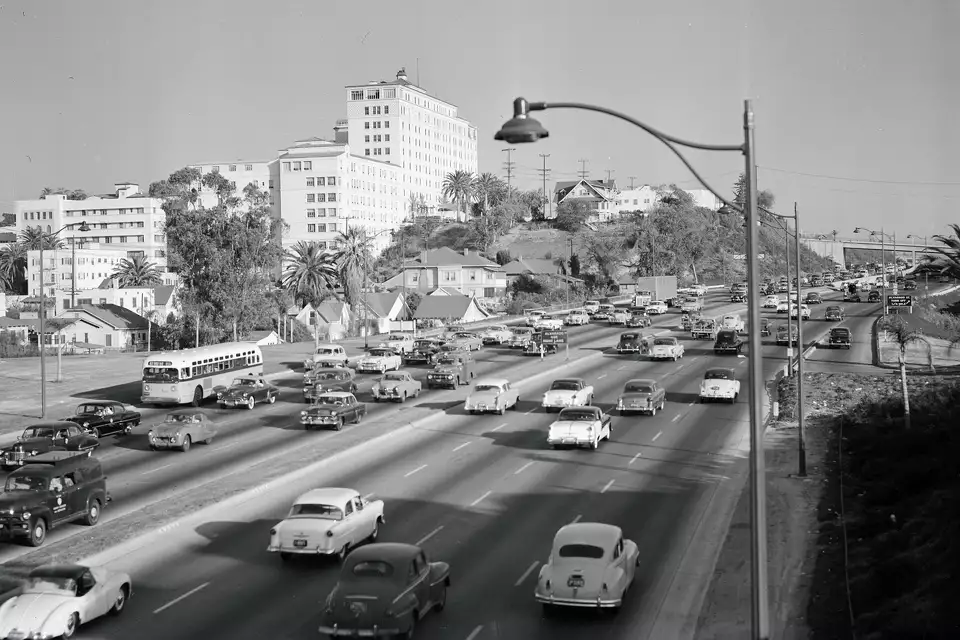
FILE: Traffic on the Hollywood Freeway, 1954.Bettmann Archive
Dating back to the 1930s, these roadways weren’t yet part of the standardized U.S. freeway system, which didn’t come about until President Dwight D. Eisenhower signed the Federal-Aid Highway Act in 1956.
“It was not unusual even in the 1930s for people to drive long distances within what was at that time America’s most spread-out metropolis,” wrote linguist Grant Geyer in his article “‘The’ Freeway in Southern California,” which discussed the linguistic habit in the journal American Speech in 2001.
When the roads finally switched over to the standardized numbering system, it was a turning point, finally simplifying a dizzying list of names to systematic numbering. But the “the” simply stuck.
“Locals generally preferred the old, time-honored street or road names instead of numbers in conversation,” Geyer wrote.
It took decades for all the signs to switch over to the new numbering system, so it’s not surprising that it took until the 1970s for Californians to start more commonly adopting the numbers over the names. Traffic reporters continued to include “the” and use both names, further implanting the terminology into local speech, particularly as Southern Californians became increasingly car-dependent.
Meanwhile, the Northern California freeway system wasn’t as extensive and developed later, so the language wasn’t as deep-rooted. Alternative modes of transportation were frequently used, as well — like the Bay Area’s BART system — and so, a Bay Area resident typically just takes 80 east to Oakland, for example.
“Since language is often used to show group belonging, even small quirks can become powerful indicators of social identity,” Daria Bahtina, a linguistics professor at UCLA, told SFGATE in an email. “… Over time, this split [between Northern and Southern California] has become a kind of shibboleth — a linguistic marker that signals which group someone belongs to, in this case, geographically.”
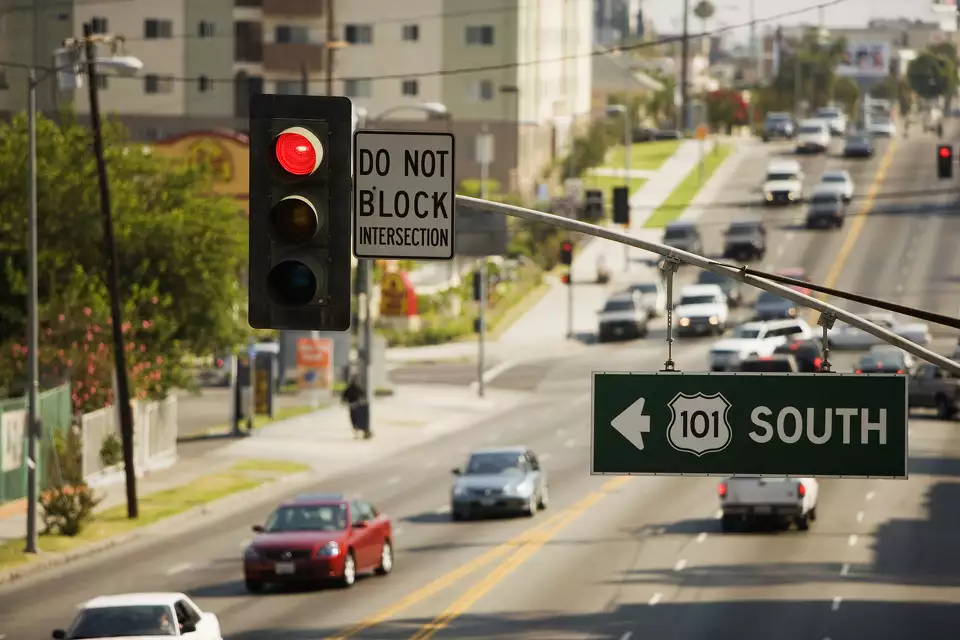
A street sign points to the entrance of the 101 freeway in Los Angeles. Getty Images/Glowimages RF
This habit is both a point of cultural identity for Angelenos and a source of linguistic curiosity for outsiders. Bahtina even supervised a student project in 2021 that analyzed this language divide in California. Examining Reddit posts mentioning US-101, which runs through both LA and the Bay Area, the UCLA students found “members of the Los Angeles subreddit did, in fact, use the determiner ‘the’ more often when referring to U.S. 101. In r/LosAngeles, 16 out of the 23 posts collected referred to U.S. 101 as ‘the 101’, whereas in r/BayArea, only 3 posts did so in the same sample size.”
Author Colleen Dunn Bates grew up in Los Angeles and remembers that when she got her driver’s license in 1974, most people still referred to freeways by names rather than numbers. She said she emulated how her parents, native Californians, spoke about the roadway. They had grown up using the names, not the numbers.
Now, she’s switched over to using the numbers like everyone else, she said, but using “the” before a freeway name is an important identifier to a true Southern Californian. Dunn Bates even included a page dedicated to the phenomenon in her book “Talk Like a Californian: A Hella Fresh Guide to Golden State Speak.”
There are other theories about the origin of this language quirk. One Redditor suggests that adding “the” before freeway numbers helps to alleviate the chaos that can arise from LA’s extensive reliance on numerous freeways. This hypothesis seems plausible, as saying “take the 110 to the 10 to the 2” sounds clearer than naming the numbers alone.
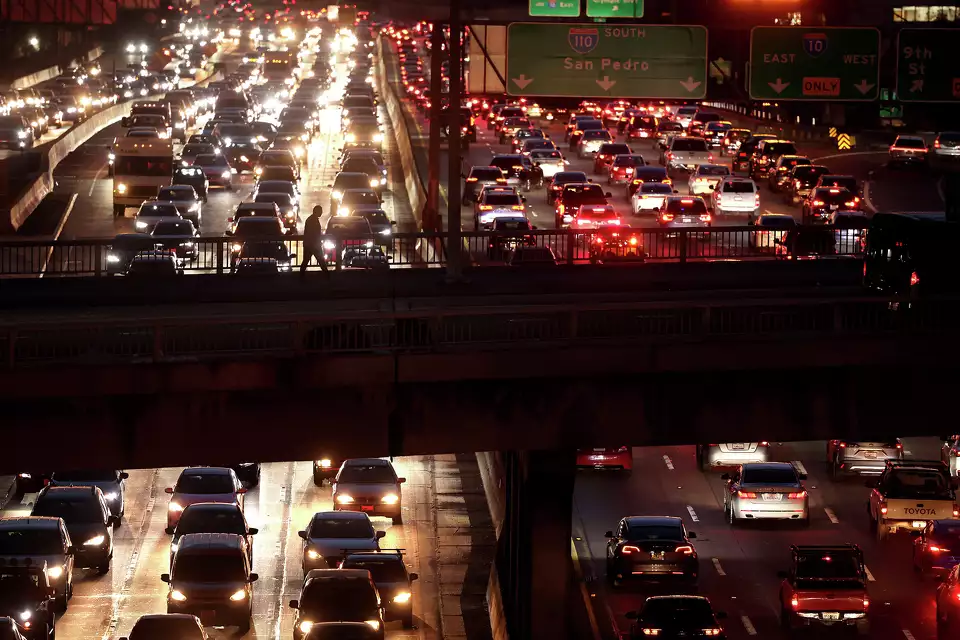
FILE: Holiday traffic clogs the 110 freeway as commuters leave before the Thanksgiving weekend in downtown Los Angeles. Wally Skalij/LAT via Getty Images
Another Redditor suggested that “the” is important because there are so many freeways in LA that they have distinct personalities. I can’t say I disagree, though that’s hardly the likely reason for this linguistic quirk.
Saul Rubin, a journalist and author of several books on the Golden State, including “You Know You’re in California When …”, moved to California in the 1980s and also remembers using the freeway names just as much as the numbers, even through the ’90s. He’s lived in Southern California for 30 years and said now if he tries to say a freeway number without “the,” it “doesn’t sound right. It just doesn’t sound grammatically correct.”
“People might think it’s strange because you usually reserve ‘the’ for something that’s really culturally significant, like the Mona Lisa or the Statue of Liberty,” Rubin continued. “Maybe it sounds pretentious but, for better or for worse, we’re dependent on freeways. And it’s such a key part of our life here that maybe we do have this reverence for the freeway that people from outside of the area don’t have.”
Dec 26, 2024
CALIFORNIA EDITOR
Tessa McLean is the California editor for SFGATE. She joined the team in 2019, spending four years helming the local section. She now writes features with a statewide lens, telling stories about the issues, trends and news that matter in the Golden State. To submit tips, comments or messages about why you love California, please reach out to her at tessa.mclean@sfgate.com.