

Chris Hedges (Creative Commons)
Paul Tillich wrote that all institutions, including the church, are inherently demonic. Reinhold Niebuhr asserted that no institution could ever achieve the morality of the individual. Institutions, he warned, to extend their lives when confronted with collapse, will swiftly betray the stances that ostensibly define them. Only individual men and women have the strength to hold fast to virtue when faced with the threat of death. And decaying institutions, including the church, when consumed by fear, swiftly push those endowed with this moral courage and radicalism from their ranks, rendering themselves obsolete.
Christopher Lynn Hedges (born September 18, 1956) is an American journalist, author, commentator and Presbyterian minister. In his early career, Hedges worked as a freelance war correspondent in Central America for The Christian Science Monitor, NPR, and Dallas Morning News. Wikipedia
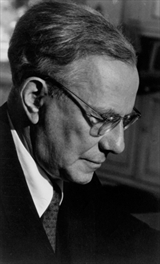
Paul Tillich (Goodreads.com)
Paul Johannes Tillich (August 20, 1886 – October 22, 1965) was a German-American Christian existentialist philosopher, religious socialist, and Lutheran theologian who was one of the most influential theologians of the twentieth century. Wikipedia

Alfred Eisenstaedt / Getty Images
Karl Paul Reinhold Niebuhr (June 21, 1892 – June1, 1971) was an American Reformed theologian, ethicist, commentator on politics and public affairs, and professor at Union Theological Seminary for more than 30 years. Wikipedia

Moral Man and Immoral Society: Study in Ethics and Politics
Reinhold Niebuhr, Langdon Gilkey (Introduction)
Moral Man and Immoral Society is Reinhold Niebuhr’s important early study in ethics and politics. Forthright and realistic, it discusses the inevitability of social conflict, the brutal behavior of human collectives of every sort, the inability of rationalists and social scientists to even imagine the realities of collective power, and, ultimately, how individual morality can overcome social immorality.
The Library of Theological Ethics series focuses on what it means to think theologically and ethically. It presents a selection of important and otherwise unavailable texts in easily accessible form. Volumes in this series will enable sustained dialogue with predecessors though reflection on classic works in the field.
About the author

Reinhold Niebuhr
U.S. theologian. The son of an evangelical minister, he studied at Eden Theological Seminary and Yale Divinity School. He was ordained in the Evangelical Synod of North America in 1915 and served as pastor of Bethel Evangelical Church in Detroit, Mich., until 1928. His years in that industrial city made him a critic of capitalism and an advocate of socialism. From 1928 to 1960 he taught at New York’s Union Theological Seminary. His influential writings, which forcefully criticized liberal Protestant thought and emphasized the persistence of evil in human nature and social institutions, include Moral Man and Immoral Society (1932), The Nature and Destiny of Man, 2 vol. (1941 – 43), and The Self and the Dramas of History (1955).
from The Britannica Concise Encyclopedia