
All posts by Mike Zonta

Featured Books from New Thinking Allowed
More than just symbols, all twenty-two letters of the Hebrew alphabet overflow with meanings and personalities of their own. Rabbi Kushner draws from ancient Judaic sources, weaving Talmudic commentary, Hasidic folktales and Kabbalistic mysteries around the letters.

Straddling the two lands of Upper and Lower Egypt, Hermopolis–the City of Hermes–marks the ancient and future capital of Middle Egypt. In this book, Dr. Nasser presents a much-needed introduction to the history and territory of Hermopolis, as well as the values that emanated from this cosmic city to shape our thinking throughout the ages. In particular, Nasser traces the Hermetic concepts of humanism, idealism, utopianism, and fraternity, and argues that these ideals inspire our dreams for a better world.

Leslie Kean, a veteran investigative reporter who has spent the past ten years studying the still-unexplained UFO phenomenon, reviewed hundreds of government documents, aviation reports, radar data, and case studies with corroborating physical evidence. She interviewed dozens of high-level officials and aviation witnesses from around the world.

Featured Image from New Thinking Allowed

Flight-ready launch vehicles from Mercury to Apollo stand here in deliberate stillness in the Rocket Garden at the Kennedy Space Center. Designed for ascent, never launched, they embody an era when equations, materials, and courage aligned toward a single question: how to leave the ground without leaving reason behind.
Charles Klosterman on art and love

“Art and love are the same thing: It’s the process of seeing yourself in things that are not you.”
~ Klosterman
Charles John Klosterman is an American author and essayist whose work focuses on American popular culture. He has been a columnist for Esquire and ESPN.com and wrote “The Ethicist” column for The New York Times Magazine.
Source: Wikipedia
Born: Jun 5, 1972
Martin Buber on being confirmed by another person
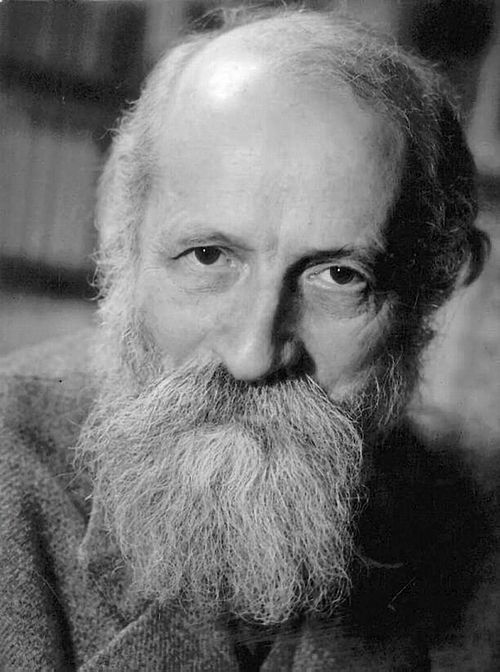
(Image from Wikipedia.org)
“Man wishes to be confirmed in his being by man, and wishes to have a presence in the being of the other…. Secretly and bashfully he watches for a YES which allows him to be and which can come to him only from one human person to another.”
~ Martin Buber
Martin Buber was an Austrian-Israeli philosopher best known for his philosophy of dialogue, a form of existentialism centered on the distinction between the I–Thou relationship and the I–It relationship. Wikipedia
Born: February 8, 1878, Vienna, Austria
Died: June 13, 1965
Pam Rodolph, H.W., M., on Sunday, March 1
Join us for this stimulating exploration of a personal Journey of Pam Rodolph, High Watch and Mentor Pam shares with us a Journey from Childhood to the Prosperos and the Search for Mature Innocence.
Pam is a long-time student and Mentor who you’ll love to hear her insights.
This presentation introduced by Patricia Lambert.
Begins Sunday, March 1, at 11:00 a.m. Pacific ! Goes for about an hour.
All times refer to USA Pacific Time.
Sunday Meeting Link – https://us02web.zoom.us/j/85882863391
Natalie Goldberg on being present

‘Black and Jewish America’ compiles an illuminating history of intersection


By Robert Lloyd
Television Critic Follow
Feb. 3, 2026 (LATimes.com)
You may have read recently how minions of the Trump administration removed an exhibit about slavery from the President’s House in Philadelphia (where George Washington lived, with slaves) as part of its ongoing sop to MAGA sensitivities and campaign to erase history in favor of a fairy tale in which the worst thing Washington ever did was chop down a cherry tree.
The study of history is by nature messy, replete with conflicting interpretations and incomplete puzzles, but it’s what you need to know in order not to repeat it. PBS, lately defunded by conservatives but not disassembled, is among the institutions working to bring it to the people — indeed, the only television outlet seriously devoted to it. (History Channel is just a name.) Premiering Tuesday and continuing weekly is the four-part series “Black and Jewish America: An Interwoven History,” presented by Henry Louis Gates Jr., at the start of what happens to be Black History Month.
Gates, who also hosts the PBS genealogy series “Finding Your Roots,” has presented such documentaries as “Africa’s Great Civilizations” and “Great Migrations: A People on the Move,” has made cameo appearances in HBO’s “Watchmen” series and “The Simpsons.” He teaches at Harvard and is a well-known public figure — a history communicator, scholar and storyteller and a minor TV star the world also knows as “Skip.” Even-tempered and even-handed, he’s a good guide through the minefields of racial history — he keeps you from blowing up. You might find yourself angry at the material, but not with Gates.
“Under the floorboards of Western culture run two streams, continuously,” he says. “One is antisemitism, one is anti-Black racism,” whose purpose here is to explore “the areas of overlap.” They aren’t the only victims of bigotry in American history and modern America; Italians and Irish immigrants had their turn, too. White supremacy, which is very much alive in the land — turn on the news — disdains every people of color. But as people who shared the experience of being “mocked and feared, blamed and banished, envied and imitated,” often allied, sometimes antagonists, theirs is a special case.
Gates has assembled a stimulating, illuminating, maddening, saddening, but often inspiring, story of their relations with the world and one another. (Here and there he reaches a little outside his theme.) At 75, he’s lived through a good slice of the history illuminated here, including “our brief golden age” of the 1960s Civil Rights Movement, and though he structures his series as a pendulum swinging between worse and better news, he scrupulously bookends it in a hopeful mood, with a Seder to start and a discussion with students to end. His insistence that no one is safe until everyone is safe, can seem to portend a future in which no one will ever be safe, though as a teacher I assume he’s more sanguine. His manner, at least, is encouraging.
The Seder, which begins with a singing of “Go Down Moses (Let My People Go),” gathers a tableful of Black, white and biracial Jews — each distinguished enough to have their own Wikipedia pages — in a roundtable discussion. Participants include New Yorker editor David Remnick, author Jamaica Kincaid, journalist Esther Fein, rabbi Shais Rishon, Angela Buchdahl (the first East Asian American to be ordained as a rabbi); and culinary historian Michael Twitty, who provides the doubly meal — kosher salt collard greens, West African brisket and potato kugel with sweet and white potatoes and Creole spice.
Though both Jews and Black people faced (and face) discrimination, their American journeys were launched, says Gates, “on different trajectories,” one group chased from nominally Christian countries, the subject of durable medieval superstitions, the other dragged from their homes. Though the mass of Jewish migration, escaping Russian pogroms and Nazi Germany in succeeding waves, occurred in the late 19th and early 20th centuries, some arrived before the revolution; but the Constitution, which enshrined religious freedom, granted them legal rights. (This presumably did not help the Jews of African descent Gates says were present here early on.) Black people, kidnapped and enslaved, had none, and as freedom was gained, new laws were written to hold them in place.
Gates posits a sympathy between immigrant and first- and second-generation Jewish Americans in the 20th century and disadvantaged Black people, based on a common experience of oppression; Jewish newspapers used the word “pogrom” to describe violence against Black people in the South. And Jews, many raised with a sense of social justice, were disproportionately represented among white activists in the Civil Rights Movement. This would change: Where Martin Luther King Jr. declared “I’m more convinced than ever before that our destiny is tied up with the destiny of our Jewish brothers and vice versa, and we must work together,” later Black activists, like Stokely Carmichael preferred to go it alone, promoting self-determination and even separation.
For the record:
12:16 p.m. Feb. 4, 2026 An earlier version of this article stated that Abraham Heschel marched with Martin Luther King Jr. in 1964, and that he brought 15 other rabbis with him. Heschel marched with King in 1965 in Selma, Ala., and it was Israel Dresner who brought 15 rabbis to St. Augustine, Fla., in 1964 to march with King.
Still, many of the stories here are based on Black and Jewish friendships. We learn of W. E. B. Du Bois and Joel Spingarn, who sat together on the board of the NAACP and to whom Du Bois dedicated his 1940 autobiography “Dusk of Dawn.” Of Tuskegee Institute founder Booker T. Washington and philanthropist Julius Rosenwald, a president of Sears, Roebuck and Co., who built schools — more than 5,000 nationally, eventually — for systemically disadvantaged Black students. (Graduates included Maya Angelou and John Lewis.) Of Rabbi Abraham Heschel, who marched with King in Selma, Ala., in 1965, and rabbi Israel Dresner, bringing 15 other white rabbis down to St. Augustine, Fla., in 1964 at the request of King, where their arrest made headlines.
In music, we meet Louis Armstrong, who as a boy worked and stayed with a Jewish family, and wore a Star of David, and his manager Joe Glaser. We’re told the story of Billie Holiday‘s lynching ballad “Strange Fruit,” written by Abel Meeropol (under his pseudonym Lewis Allan), recorded by Milt Gabler for his Commodore label and performed regularly by Holiday at Barney Josephson’s Cafe Society, New York’s first truly integrated nightclub. And we hear Paul Robeson, daring to sing in Yiddish in a concert in Moscow, in support of Itzik Feffer, a Jewish poet imprisoned (and later murdered) by the Soviets.
As a social and political history covering two intersecting storylines for more than the length of the nation, it’s packed with incident and facts — the Klan resurgent after World War I (six million members, it says here); the 1936 Berlin Olympics, where Jesse Owens triumphed and the U.S. committee pulled two Jewish sprinters from competition; racist Nazi policies, borrowed from American Jim Crow, and the Holocaust. Also the domestic destabilizing effects of wars in the Middle East. Jews and Black people will find themselves on the opposite sides of some questions.
Even at four hours, it’s a survey course, streamlined but not simplistic, and as such it will fly through some points and elide others; there are whole volumes dedicated elsewhere to what constitutes a single sentence here, and libraries dedicated to some of these figures. (Why not read some?) The view is not singular, and as such, there’ll be something for everyone to question, especially as Jews and Black people are often described as a community, when neither is heterogeneous. (Jews don’t even agree on what makes a Jew.)
But whatever goes back and forth between then, the world has its own ideas. “People who hate Jews,” says Gates, “uncannily hate Black people too. Because when the stuff hits the fan, they’re coming after both of us.”
Robert Lloyd has been a Los Angeles Times television critic since 2003.
(Contributed by Michael Kelly, H.W.)
Universal Convergence/Creation
My Friend, Richard
Feb 20, 2026 (gwyllmllwydd.substack.com)
Hey there, hope all is well with you and yours. Excited about this post and my new print “Universal Convergence/Creation”. Through the generosity of a friend, Terry We were able to print these up on incredible paper at an art house printer. Hopefully printing more along this line. A lot of work went into this piece! Check out the details below!
Been on a bit of a bouncy path… Health is a bit wonky, but we are getting there thankfully. Working on new art finding joy in simple pencil work. It concentrates one’s thoughts.
In the process of getting ready to move to smaller digs due to health and other issues. If you can help, that would be great! GoFundMe Looking to move this next month when our health picks up.
On The Menu: Links – Universal Convergence/Creation – My Friend, Richard – Time – Lenore Kandel Poetry
Links: World Wide Political / Design Problem / The Man Who Taught MLK / Words Are Magic
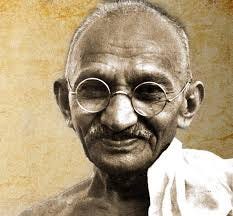
To give pleasure to a single heart by a single act is better than a thousand heads bowing in prayer. – Mahatma Gandhi
___
Universal Convergence/Creation
I present you with 10 months of Pointillism work. All hand drawn/dotted by yours truly. It looks like madness, and it is.
I worked on this for so many evenings. I drove my family crazy with pulling it out when we were sitting around talking, and there I was off in another world concentrated with my pens, pencils, and art paper.
My thoughts around art comes in shapes/patterns/forms/ with concepts often coming to me in dreams. At times I see the finished piece in my head, but I don’t know how to reach it. Sometimes it evolves past what I was working on or doesn’t come up to the conceptualization… At times it is a blind leap into the project, and it unfolds as I work.
I have a passion for this form of art and have had so for 56 some years. I have been stepping away from my collage work to pursue one of my earlier passions. I can trace my work back to early 1968 (I found a piece from then in my files!)
Thank you for visiting!
I want to thank my dear friend Terry for making this possible!


Print(s) can be signed 2 ways. Please indicate which you prefer. The Default is the Vertical.
3 ways to support my art:
Universal Convergence/Creation Print 1st Option 100.00usd & 20.00 Shipping/Handling
Universal Convergence/Creation Print 2nd Option with Blotter Print 125.00 & 20.00Shipping/Handling
Printed on Cold Press Fine Art Textured Paper, extremely limited edition. Basis Weight: 300 gsm
Thickness: 19.5 mil Paper Size: 18.5x24inches Print 17×22 inches
20 prints, 6 artist proof prints.
Price Includes Shipping/Handling USA. All others, please inquire.
My Friend, Richard:
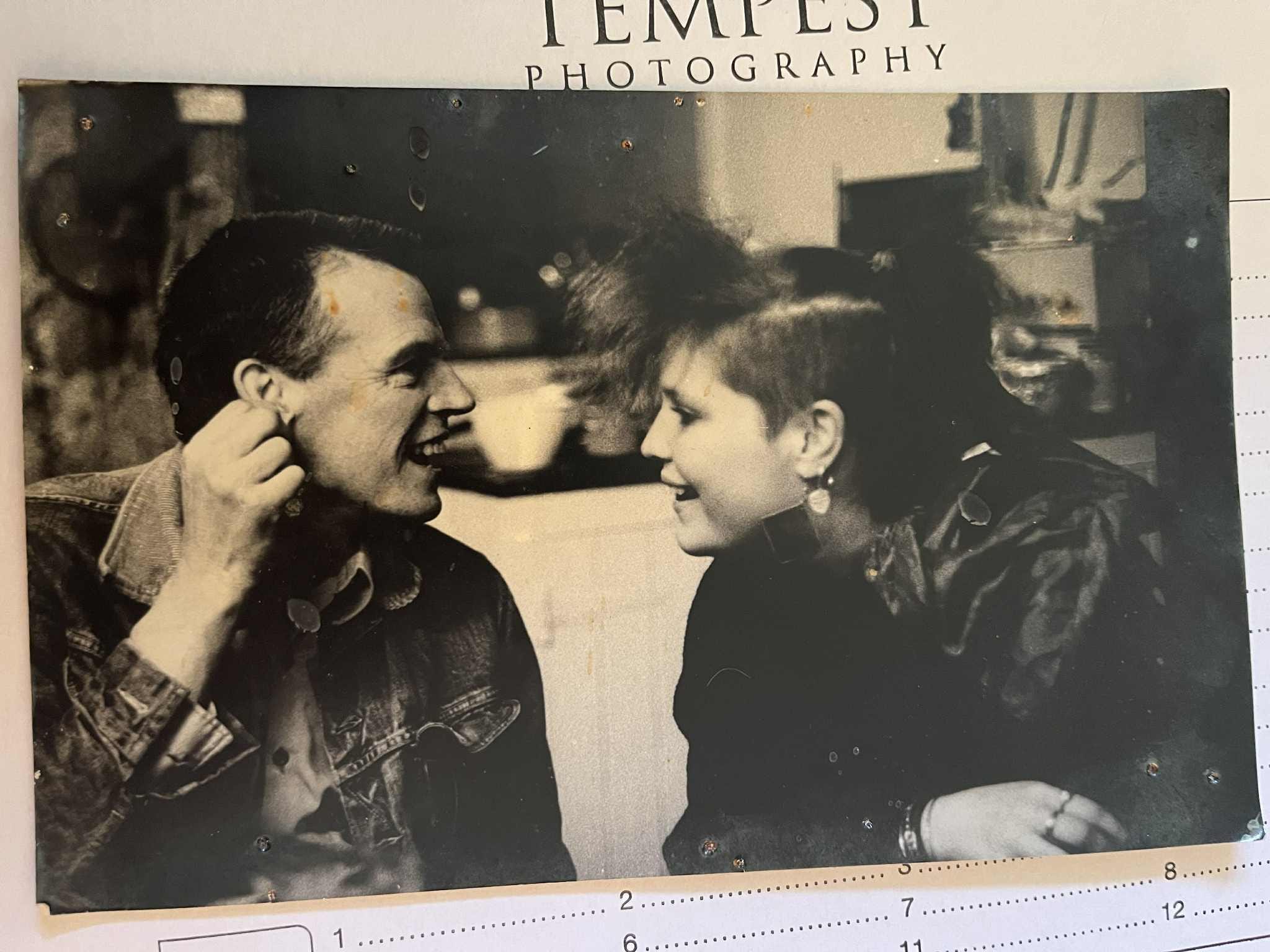
So many folks departing lately to the Western Lands…
I have been meaning to finish up a posting about the Flying Anglia, when I received news that the main character in that tale, Richard Knowles had passed. His daughter Tara contacted me, along with my dear friend Lizbeth who facilitated us meeting Richard back in 1984/5.
Richard was old school bohemian in so many ways. Loved Jazz, particularly New Orleans old style. He had a lovely story about his first time in New Orleans back in either 1961 or 1962… He met a young man who was headed to the cemetery to sweep and clean a blues singer’s grave (sorry, I can’t remember the name of the singer now). They went and did the deed, and a few years later, Richard realized it had been Bob Dylan. He loved telling that story.
His roommate in Art College was a young man named Eric Clap. Eric left art college to play with a band called The Yardbirds. You may have heard of them. I asked about Eric, “What was he like?” Richard answered “Oh, he was a great roommate. Left in a hurry though, leaving his art notebooks behind”. “Do you still have them???” I asked. “Oh no I tossed them. I had no idea he would go on to do what he has done!” Richard replied.
Richard’s best friend at art college was a young guitarist, Keith Richards. When I found this out my mind was blown. “Oh, he was a great chap, but after the Richmond gigs dropped all of his friends at the college. I attended those first shows. Electrifying!”
I met Richard through his nephew John Fuller. In turn, I met John through Lizbeth (she is such a nexus point!) a dear friend that I have known for over 50 years who by the way introduced Mary and I in Clapham Common back in 1977.
Lizbeth and John were an item. John has been in the band “The Pack”, One of the seminal punk bands in the UK. John washed up on our shores and became a bouncer at Blackie’s in West L.A. in his up and down relationship with Lizabeth John dossed out in our living room in West LA off and on.
This all leads up to us meeting Richard. Mary and I moved back to the UK in 1984. On August 24th, 1985, along with John Fuller we met Richard at the Crystal Palace Park performance of Spear of Destiny. Kirk Brandon, ex bandmate of John’s put on the hell of a show. This is where we met Richard who was there with John. Richard was a huge fan of Kirk. We ended up going back to our flat in Upper Norwood and hanging out. It was glorious evening.
Richard invited us to come visit his family farm out on Dartmoor. It was located close to North Bovey. Beautiful part of the world. We got to know his then wife Susan (raised pygmy goats!) their wonderful daughter Tara, and flocks of sheep & a small herd of cattle. Visiting Bowden farm was always a joy.

(Bowden Farm as it is today. Gentrified, no longer a working farm, but a B&B. The farm was listed in the Doomsday Book, of William the Conquer & William Rufus his son. The barn was built with standing stones from the surrounding hills. It was much more hurley burley back then!)
We visited frequently. I spent time with Richard tending the sheep and cattle. It was a relief for me, in that I was submerged in Corporate Computing at that point, being an IT tech. The days and nights up on the moor were magical. Our times at the pub and around the table at the house, were very special.
Later on, when we moved back to the States, Richard came and stayed with us a few times before we left L.A. He loved it there. His enthusiasm for the arts and for L.A. was boundless.
We lost touch after we moved, only reconnecting sporadically over the years. He did publish a book in 1996 about his great love musically:
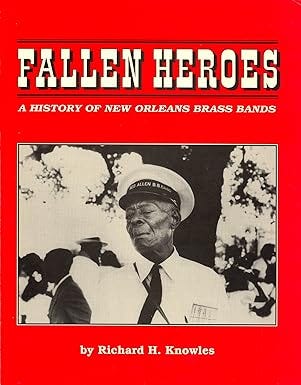
He and Susan split during the time of his visits, and he and his lovely Brigit, became a couple, even visiting us in L.A. together. They were married for some 40 years. I will fill out the tale more on a later date. Good stories, good times. Richard, you are missed.
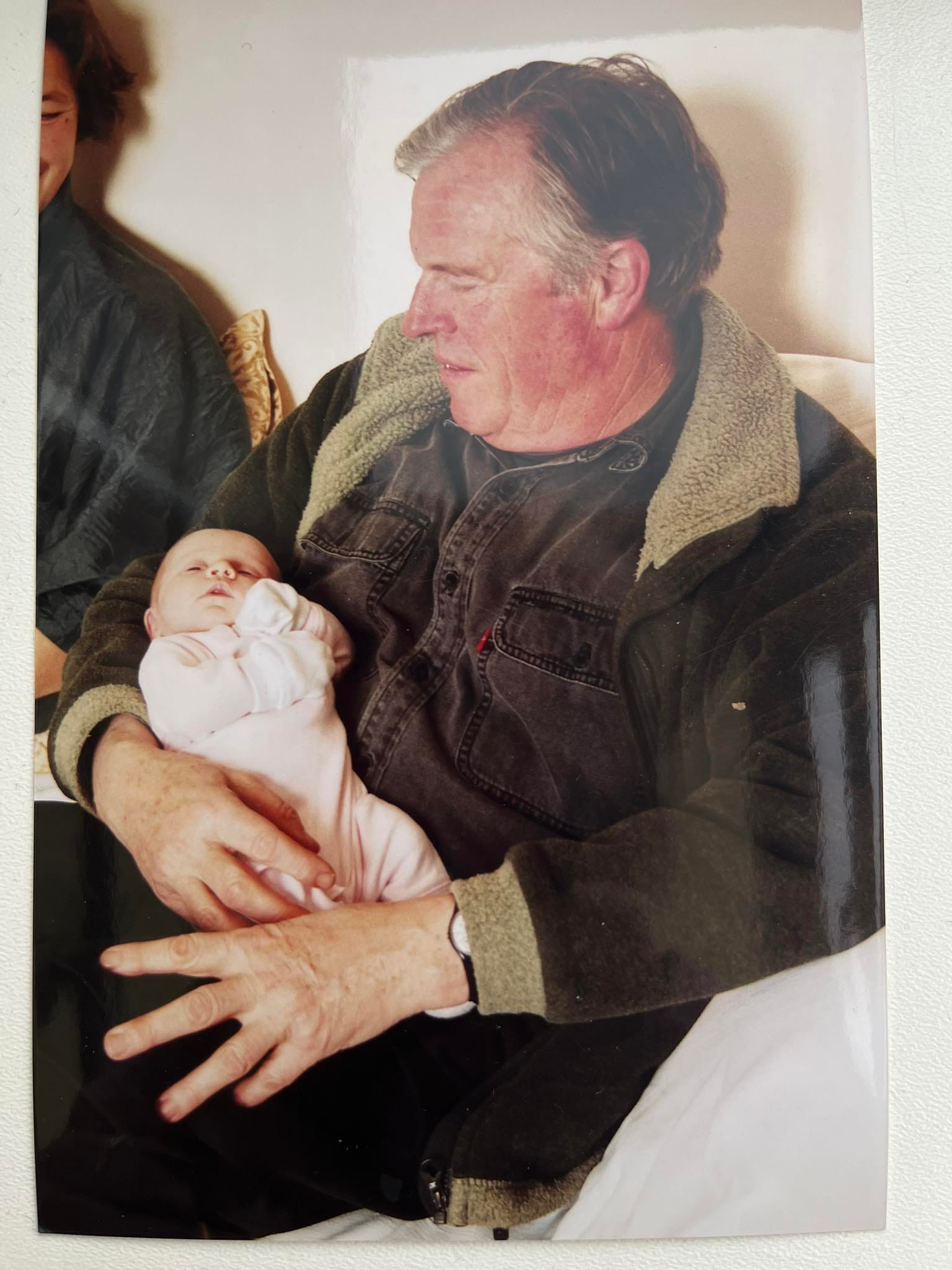
Richard & Hattie, his granddaughter Many years ago…
______
Lenore Kandel:
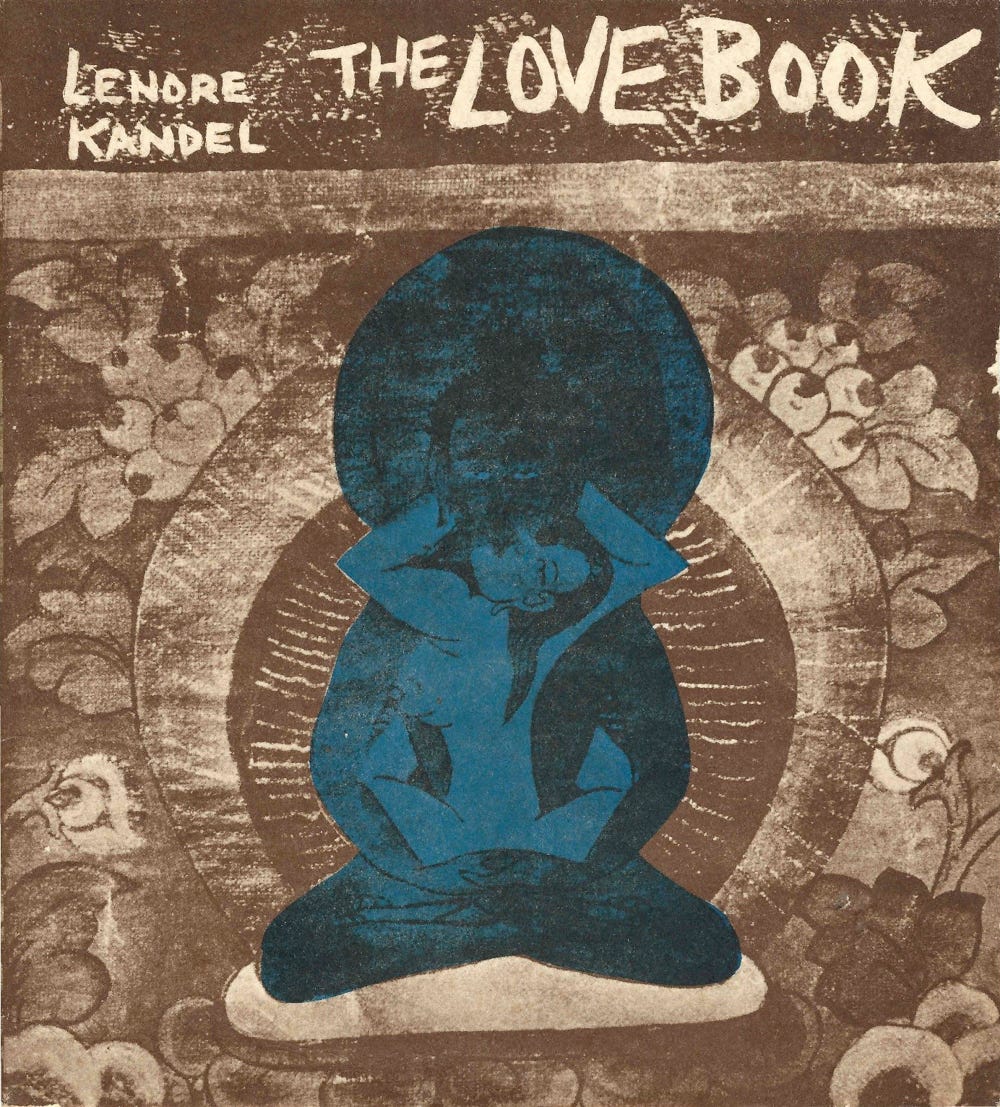
Phoenix Song
then I shall never grow up
not if child means a sense of wonder
and my head in the wind rain rain
I will not wither in the blaze of time
but prove myself a phoenix
(ashes like powdered stars)
born again and again and again
__
Open Channel –
the dream is as true as the dreamer
all fragments of the self are true
and dreams are one more form of sight
are real and not-real
as they move the flesh
and shape the currents of the mind
fears unexorcised and fantasies unsearched
become lame ghosts
visions unreached for
distill a toxin
aging the spirit
dimming the flesh
the dream is as true as the dreamer
that which exists within the mind is you
that which contains the mind is you
open your dreams
release your visions and your fantasies and fears
that which is real and not-real
is up to you
__
Invocation for Maitreya –
to invoke the divinity in man with the mutual gift of love
with love as animate and bright as death
the alchemical transfiguration of two separate entities
into one efflorescent deity made manifest in radiant human flesh
our bodies whirling through cosmos, the kiss of heartbeats
the subtle cognizance of hand for hand, and tongue for tongue
the warm moist fabric of the body opening into start-shot rose
flowers
the dewy cock effulgent as it burst the star
sweet cunt-mouth of world serpent Ouroboros girding the
universe
as it takes its own eternal cock, and cock and cunt united
join the circle
moving through realms of flesh made fantasy and fantasy made
flesh
love as a force that melts the skin so that our bodies join
one cell at a time
until there is nothing left but the radiant universe
the meteors of light flaming through wordless skies
until there is nothing left but the smell of love
but the taste of love, but the fact of love
until love lies dreaming in the crotch of god. . .
__
Thank you for visiting, more coming!
Bright Blessings,
Gwyllm
Weekly Invitational Translation: So much can go wrong [with my surgery]
Translation is a 5-step process of “straight thinking in the abstract” comparing and contrasting what seems to be truth with what you can syllogistically, axiomatically and mathematically (using word equations) prove is the truth. It is not an effort to change, alter or heal anything other than our consciousness.
The claims in a Translation should be outrageous and mind-blowing, but they are always (or should always be) based on self-evident syllogistic reasoning. Here is one Translation from this week.
I didn’t do a written Translation this week, but I did a mental one as I was waiting for cataract surgery on my second eye. My sense testimony was “So much can go wrong [with my surgery]. My argument: Truth being all that is means that being true is all that is, being correct is all that is, being right is all that is. My conclusion: Since being right is all that is, therefore Everything always goes right.” And it did.
For information about Translation or other Prosperos classes go to: https://www.theprosperos.org/teaching.
Weekly Invitational Translation Group invites your participation. If you would like to submit a Translation on any subject, feel free to send your weekly Translation to zonta1111@aol.com and we will anonymously post it on the Bathtub Bulletin on Friday.