
All posts by Mike Zonta

TURKEY’S MARGINALIZED ‘DEEPLY AFRAID’ AS ERDOĞAN WINS PRESIDENTIAL RUNOFF
“Erdoğan’s victory will consolidate one-man rule and pave the way for horrible practices, bringing completely dark days for all parts of society,” warned one Kurdish opposition leader.
BY BRETT WILKINS MAY 31, 2023 (CommonDreams.org)

President Recep Tayyip Erdogan acknowledges supporters at the presidential palace after winning reelection in a runoff on May 29, 2023 in Ankara, Turkey. Photo by Chris McGrath/Getty Images

This story originally appeared in Common Dreams on May 29, 2023. It is shared here under a Creative Commons (CC BY-NC-ND 3.0) license.
As supporters of Turkish President Recep Tayyip Erdoğan at home and abroad celebrated his win of Sunday’s runoff election, human rights defenders and marginalized people including Kurds and LGBTQ+ activists voiced deep fears about how their lives will be adversely affected during the increasingly authoritarian leader’s third term.
Turkey’s Supreme Election Council confirmed Erdoğan’s victory over Kemal Kılıçdaroğlu on Sunday evening. Erdoğan, the 69-year-old leader of the right-wing Justice and Development Party who has ruled the nation of 85 million people since 2014 and dominated its politics for two decades, won 52.18% of the vote. Kılıçdaroğlu, a 74-year-old social democrat who leads the left-of-center Republican People’s Party, received 47.82%.
Erdoğan—who was seen handing out cash to supporters at a polling station in an apparent violation of Turkish election law—mocked his opponent’s loss outside the president’s home in Istanbul, saying, “Bye, bye, bye, Kemal” as the winner’s supporters booed, according to Al Jazeera.
Instead of congratulating Erdogan, EU leaders should ask about the backsliding democratic and human rights.
— Guy Verhofstadt (@guyverhofstadt) May 29, 2023
Turkey is already 103rd of 167 countries on democracy index, and we know Erdogan wants to take it further down… https://t.co/AMSgP19YBG
“The only winner today is Turkey,” Erdoğan declared as he prepared for a third term in which his country faces severe economic woes—inflation has soared and the lira is at a record low against the U.S. dollar—and is struggling to recover from multiple devastating earthquakes earlier this year.
However, in Turkish Kurdistan—whose voters, along with a majority of people in most of Turkey’s largest cities favored Kılıçdaroğlu—people expressed fears that the government will intensify a crackdown it has been waging for several years.
Ardelan Mese, a 26-year-old cafe owner in Diyarbakir, the country’s largest Kurdish-majority city, called Sunday’s election “a matter of life and death now.”
“I can’t imagine what he will be capable of after declaring victory,” Mese said of Erdoğan in an interview with Reuters.
After initially courting the Kurds by expanding their political and cultural rights, Erdoğan returned to the repression that has long characterized Turkey’s treatment of a people who make up one-fifth of the nation’s population, while intensifying a war against the Kurdistan Workers’ Party (PKK), a far-left separatist group that Turkey, the United States, and other nations consider a terrorist organization.
Kurds fear that an Erdogan victory "could reinforce a crackdown the state has been waging against them for years, alarmed by a surge in nationalist rhetoric ahead of Sunday's vote." https://t.co/aAhHVqjmf4
— Kenneth Roth (@KenRoth) May 25, 2023
“Erdogan’s victory will consolidate one-man rule and pave the way for horrible practices, bringing completely dark days for all parts of society,” Tayip Temel, the deputy co-chair of Turkey’s second-largest opposition party, the center-left and pro-Kurdish Peoples’ Democratic Party (HDP)—which backed Kılıçdaroğlu—told Reuters.
Human rights defenders—many of whom have chosen or been forced into exile—also sounded the alarm over the prospect of a third Erdoğan term.
“If the opposition wins there will be space, even possibly limited, for discussions for a common future. With Erdoğan, there is no civic or political space for democracy and human rights,” Murat Çelikkan, a journalist who founded human rights groups including Amnesty International Turkey, said in an interview with Civil Rights Defenders just before Sunday’s runoff.
Çelikkan called Erdoğan a “very authoritarian, religious, pro-expansionist conservative.”
“Turkey, according to judicial statistics, has the largest number of terrorists in the world, because the prosecutors and judges have an inclination to use anti-terror laws arbitrarily and lavishly,” he continued. “There are tens of thousands of people who are being trialed or convicted by anti-terror laws. Thousands of people insulting the president.”
Today #Turkey is holding a presidential election runoff. But what is at stake?
— Civil Rights Defenders (@crdefenders) May 28, 2023
Read the interview with Murat Çelikkan, human rights defender from Turkey, about possible impact of the election outcome on #HumanRights:https://t.co/7a8HTEELUp pic.twitter.com/HKzv3gyHIU
“Nowhere in Turkey you can make a peaceful demonstration and protest,” Çelikkan added. “The security forces directly attack and detain you. The minister of interior targets and criminalizes LGBTI+ people on a daily basis.”
LGBTQ+ Turks voiced fears for their future following a campaign in which Erdoğan centered homophobia in his appeals to an overwhelmingly Muslim electorate and repeatedly accused Kılıçdaroğlu and other opposition figures of being gay. During his victory speech Sunday evening, Erdoğan again lashed out at the LGBTQ+ community while excoriating Kılıçdaroğlu for his campaign pledge to “respect everyone’s beliefs, lifestyles, and identities.”
Erdoğan vowed in his speech that gays would not “infiltrate” Turkey and that “we will not let the LGBT forces win.” At one point during his address, an Al Jazeera interpreter stopped translating a 45-second portion when the president called members of the opposition gay.
During his victory speech President Erdoğan repeated: “We will not let the LGBT forces win!”.
— • (@Alhamdhulillaah) May 28, 2023
He then emphasised “LGBT cannot infiltrate among us. We will be reborn. The family is sacred for us. The violence against women is forbidden and haram for us, no one can resort to this… pic.twitter.com/nQz5SPfAHq
Ilker Erdoğan, a 20-year-old university student and LGBTQ+ activist, told Agence France-Presse that “I feel deeply afraid.”
“Feeling so afraid is affecting my psychology terribly. I couldn’t breathe before, and now they will try to strangle my throat,” he added. “From the moment I was born, I felt that discrimination, homophobia, and hatred in my bones.”
Ameda Murat Karaguzu, a project assistant at an unnamed pro-LGBTQ+ group, told AFP that she has been “subjected to more hate speech and acts of hate than I have experienced in a long time.”
Karaguzu blamed Erdoğan’s government for the increasing hostility toward LGBTQ+ Turks, adding that bigots are keenly “aware that there will be no consequences for killing or harming us.”
Ilker Erdoğan struck a defiant tone, telling AFP that “I am also part of this nation, my identity card says Turkish citizen.”
“You cannot erase my existence,” he added, “no matter how hard you try.”
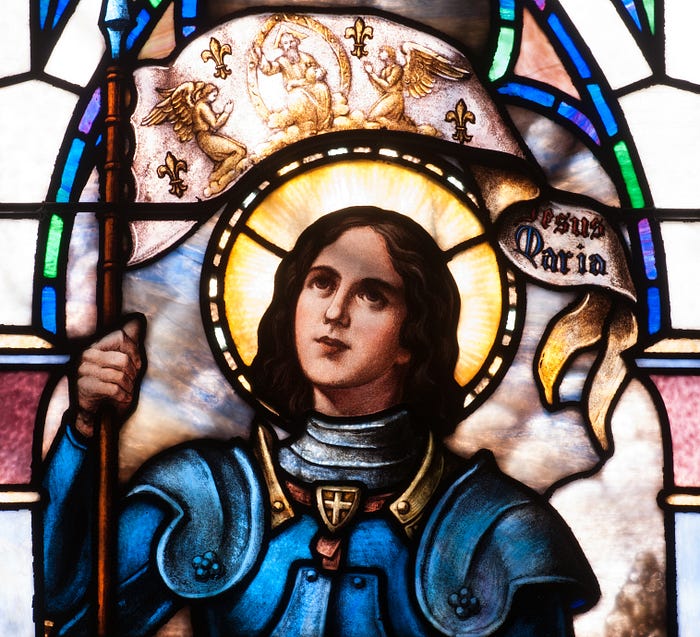
Joan of Arc, Pauli Murray, and the surprisingly long history of transmasculine saints
Patron Saints

Jan 10, 2023 (judedoyle.medium.com)
Last year, I realized that if I want to keep learning, I’ve got to treat myself like I’m in school. I am obsessive by nature; my inclination is to keep gnawing away at one or two questions until I’ve either perfected a solution or ground the material to dust. If I want diverse interests, I have to force them. So, every month, I choose something I want to learn. I take the most relevant books from my bookshelves; if I don’t have any relevant books, I buy them. I make a little stack, my syllabus, and I work my way through it. At the end of the month, the books I haven’t finished get put away to make room for the next stack.
Recently, I’ve been studying saints. Monks, specifically; transgender monks, even more specifically, and there were more of those than you’d think. There is a long and barely hidden tradition of transmasculine sainthood within the Catholic Church, lurking just to the side of acknowledged history.
Some of this history is widely known. Lots of people know, for example, that Joan of Arc was executed for wearing men’s clothing. Leslie Feinberg loved Joan of Arc. I love Joan, too; at confirmation, Catholics have to choose a “patron saint,” someone to watch over their souls and provide spiritual guidance, and Joan was the one I chose. Long before I knew about trans readings, or trans people, I felt that Joan and I were on the same team.
Joan of Arc also entered history in the way many Catholics and queer people do: She (????) got murdered. Burned at the stake, in fact. She was a martyr, to God or gender or both, which gives her story a moving element of tragedy, but which also safely confines her to the margins. The lessons of her life and death are familiar: Conform or die.
The straight world likes queer people with tragic endings, because they reassure us that the house always wins. This might be why we hear so much about Joan, and so little about her contemporaries — who actually did transition, who lived as men, and who died of old age after long and happy lives, many of them spent in positions of authority within the Church.
There are so many of these stories that the Calendar of Lesbian, Gay, Bisexual and Transgender Saints is forced to give them their own category, referring to:
The large number of saints who were famous for their holy cross-dressing. All of these were women, and the stories, largely but not exclusively fictional, generally have them escaping marriage or some other dreaded end by dressing as monks. This is no short term ploy, however. The women then live their lives as men (in direct contradiction to the Levitical Law which calls cross-dressing an “abomination”), some of them becoming abbots of monasteries. In such positions it is hard to imagine that they would not perform roles such as confessor. Their biological sex is only discovered after they die. It is sometimes argued that these transvestite saints did not cross-dress because they wanted to but because they had to, and so calling them “transvestites” is wrong. It is true that we know nothing of the psychology of these women, but when they dressed as man [sic] for 20 years and became abbots of monasteries, it is hard to know in what way they were being “forced” to cross-dress.
This was written in 1997, and it reads like it was written in 1997, but the point stands. At least one man, Benjamin de la Cartuja, came out to his curate before his death; the curate told him that he could not stay in the monastery, but they would keep providing for him if he agreed to live in a nearby cave and tend their sheep. This he did, for the rest of his life, wearing a monk’s habit and going by “Benjamin” all the while.
Even alone, on a mountain full of sheep, Benjamin was Benjamin, and — as was evidently custom — it was only during funeral preparations that the curate disclosed his assigned sex to his brothers. It’s fun to dissect individual stories and their increasingly preposterous rationalizations (one of my favorites, Joseph of Schonau, has an innocent 12-year-old donning boys’ clothes to evade “bandits” and then just never taking them off for the next fifty years) but when you take into account the sheer number of stories like this, and how similar they all are, this begins to look less like trivia and more like a way of life.
Even in a society that steadfastly denied trans people existed, or that they could be anything but “abominations,” there was a place for trans men to go, if they were desperate or brave enough. That place was beloved by God.
Itshould not be surprising that there were trans monks in the medieval Church, in the same way that it’s not surprising so many monks throughout history have slept together. (One trans saint, Smaragdos, was so handsome he had to be placed in his own cell, lest he rile up the other monks; some monasteries had specific rules about “beardless men,” who were known to inspire these situations.) Monasteries and nunneries were places where you could remain unmarried, and where you would live exclusively with your own gender; that arrangement was bound to appeal to queer people, especially in a time where there were few other options. For trans monks, the promise of abandoning one’s worldly identity and living in relative privacy must have been nice.
Escaping into the church was a privilege, and a gendered privilege at that; we know of dozens of transmasculine monks, but there are no transfeminine nuns on record. Trans girls who ran away from home, fleeing “bandits” or marriage or parents, did not have this option.
I do know a lot of trans women who talk about being priestesses, drawing on ancient transfeminine orders like the Galli, devoted to Cybele, or the servants of Inanna (a goddess who “could turn a man into a woman, or a woman into a man”) or the Scythian shamans who supposedly took estrogen via mare urine (though this last one is debated). When you’ve been reviled your whole life, it is useful to know that you were once holy; that you are still holy, though not in a way everybody can understand.
This is not quite how I feel when contemplating the trans monks. I feel relief and affirmation from knowing that trans people have existed throughout history; I feel a sense of ancestry and connection to the past, knowing that my fervent childhood desire to be a saint, or at least a priest, is something people like me have done before. I admit to occasional fantasies about the monastic life: To spend all day in silence, gnawing obsessively away at that one question, how to serve God, with breaks for baking and maybe managing a microbrewery; if I didn’t have a kid to raise, I’d sign up.
Yet Jesus is a more complicated deity than Inanna or Cybele. He has more to answer for, in terms of the present-day political situation. The Catholic Church does not merely enforce archaic gender roles; the Catholic Church substantially created the gender binary as we know it, and exported it around the world, violently suppressing gender diversity in the cultures it colonized. The belief that there are only two genders, and that one is inherently superior to the other, was not “natural,” let alone universal; it was learned at the point of a sword, and the Catholics were holding it.
There was a home for transmasculine people, in medieval Europe, but it was within the very institution that was busy making trans life impossible outside the confines of the monastery. White trans men baked bread and brewed beer and tended sheep on the mountainside, and transfeminine people, Black and brown trans people, indigenous trans people, were killed.
The monastic life was not an escape from the world. It was not freedom. It was a compromise, and a compromise offered only to the privileged. You can call that kind of thing devout, but you can’t call it holy — not even when it’s the only chance at holiness you have.
The history of transmasculine sainthood did not end in the medieval period. At least one saint was alive within my lifetime — Pauli Murray, the Black civil rights activist, feminist, and priest, who died in 1985 and was canonized (by the Episcopal church, not the Catholic one) in 2012.
Murray’s pronouns are a vexed question. We know that Murray was assigned female at birth, and that he insisted, from childhood on, that he was a man. He repeatedly asked doctors for testosterone, publicly declared that he would “gladly change his sex,” and asked for exploratory surgery in the hopes doctors would discover that he was intersex, or that some “metabolic imbalance” explained why his body didn’t look masculine. He went in and out of psychiatric wards as his failures to procure testosterone produced crises of despair; he was once threatened with a schizophrenia diagnosis due to his “delusion” that he was male. At the time, that diagnosis carried a potential for lifelong institutionalization. Pauli Murray learned that calling himself female was the price of freedom.
In his younger years, Murray intermittently passed as a cis man — intentionally, and sometimes unintentionally. He took part in one of the first bus boycotts with his then-girlfriend; in a testament to the timelessness of certain transmasculine problems, witnesses reported that a Black woman had given a wonderful speech, but they were puzzled as to why she’d brought a teenage boy with her, and why he had insisted on speaking too. The arrest booking for that incident gives Pauli’s name as “Oliver.” Maybe the officers misheard “Pauli,” or maybe that was his name.
Yet even though he lived through Stonewall, Pauli Murray was never public about his relationships with women. Even though he lived through the very public transition of Reed Erickson, amongst others, he stopped trying for a testosterone prescription by midlife. Maybe he changed his mind. Maybe his gender was more complicated than he could easily describe. Or maybe, as his biographer Rosalind Rosenberg writes, the most obvious answer is the saddest one — by the time HRT was a real option, Pauli Murray had become a nationally recognized figure in the civil rights and feminist movements, and he did not want to damage those movements with the “scandal” of his transition.
So I use “he” for Murray, following Naomi Simmons-Thorne, because it reflects the reality he knew throughout his life, and because that reality was violently denied to him. Not all people, not even all trans people, feel the same way.
Murray’s late-in-life turn to the priesthood baffled many who knew him. He had always been religious. On his first date with Renee Barlow, the woman he spent his life with, he recognized her quoting the Episcopalian Book of Common Prayer; their subsequent courtship consisted mostly of Pauli escorting Renee to mass. (One of the many reasons I am fond of Murray, as a historical figure, is that he was a total dork.) Yet, by the time he decided he was called to the priesthood, he had a tenured job as a law professor; he had fought, hard, to get tenure. He himself admitted that no-one was going to hire a sixty-three-year-old priest, and that he was likely to experience financial hardship. There was no clear reason for him to walk away.
The reason was Renee. She had died, after a long and ugly struggle with cancer, and Pauli was the only person in the room with her when it happened; he was forced to administer last rites as a layperson. The same thing had happened at the death of his Aunt Pauline, who raised him. Renee’s death had been particularly wrenching, because he essentially had to watch his wife die without asking for support — “because of the confidentiality of the situation, I could not share my anxieties over her illness with anyone,” Murray wrote, in his memoir, the legal tic of “confidentiality” papering over a lifetime — and, upon realizing that he had ministered to the two most important people in his life during their last moments, Murray began to wonder if God had appointed him to serve that function.
There was the matter of his assigned sex to contend with, but Murray had already been fighting that battle — or, really, Renee had. The ordination of women had been a particular cause of hers, and Murray had co-attended a whole lot of church meetings and debates on the subject. Murray’s own feelings were passionate; “the church was losing its authority as a Christian body and [it] was no longer speaking with an authentic voice if women were treated as outcasts when they sought to answer God’s call to priesthood,” he wrote. In the memoir, he tells the story of a day when “in the middle of a celebration of the Holy Eucharist an uncontrollable anger exploded inside me, filling me with such rage I had to get up and leave.” He wandered the streets “full of blasphemous thought, feeling alienated from God.”
“I had been taught all my life to revere the church and its teachings; now I could only condemn the church as sinful when it denied me the right to participate as fully and freely in the worship of God as my brethren,” he wrote. “If the present church customs were justified, then I did not belong in the church.”
I have had that explosion of rage while the voices around me praised Jesus; I have walked that walk, stewing in blasphemy, knowing I don’t belong. I did not know any saints had done likewise, until I read Pauli Murray.
Still, it was Renee’s memory that ultimately pushed Pauli into service: “You and your friend Renee were engaged in a Christian ministry,” her pastor told him. “Now that she is gone, you can carry it on for both.” No longer joined to Renee, Pauli joined her cause; they became one person, as Christian spouses are supposed to do.
Pauli Murray was the first Black person assigned female to be ordained to the Episcopalian priesthood. Coincidentally, this happened around the same time that the Church ordained its first openly gay minister. The headline announcing the news read “EPISCOPALS TO ORDAIN BLACK WOMAN, LESBIAN.” In one of many stories from Murray’s life that would be funny if it were not so sad, Murray panicked and called the paper to clarify that the “Black woman” and the “lesbian” were not the same person. Of course, neither one was him, but he had stopped telling people that.
Iwas at the barbershop when it finally happened: The guy cutting my hair, a kindly man in his sixties at least, tilted my skull to look into my face and squinted.
“Have I cut your hair before?” he asked.
He had, last year, and he’d spent the entire time politely informing me that “this is usually for guys.” The whole thing had been so embarrassing that I’d gone through a year of horrific home haircuts before I let a stranger touch my hair again. I shrugged at him, having decided that using my voice was going to open up a can of worms.
“I have,” he said, leaning down to examine me while I fidgeted. “You’re the new pastor, right?”
There’s a new pastor at the church down the street. Evidently he and I wear the same glasses. I’d never been read as a cis guy, at least not at close range, and apparently, when you read me that way, the vibe is “clergy.” It is true that a whole lot of priests, throughout history, have looked somewhat like me. It is not the strangest guess you could make, all things considered.
It may have helped that I was wearing a cross around my neck. I got it for $15 at the state fair, and every time I wear it around my mother, I can feel her tensing up, hoping against hope that I’m being brought back into the fold. I’m not. The ugly parts of being a trans saint are still too much on my mind. Being conditionally accepted by an organization that is working to eliminate everybody else like you, praising a God that kills what he can’t absorb: Who wants that?
No: I am not a churchgoer. I had the cross that night because I was scared, and I wear it when I want to remember Pauli Murray.
Even now, some part of me cannot conceive of life without a patron saint: Someone better than me, and deader than me, who nonetheless agrees to take an interest in my education. Of all the historical trans lives I’ve studied, Pauli Murray is the one I feel closest to; Lou Sullivan is more fun than I am, and Leslie Feinberg is much, much tougher, but Pauli, awkward and earnest and upright, seems like he might make time to answer some of my questions.
“It is easier to rationalize and dismiss Jesus than [Saint] Francis,” writes Murray Bodo, a Franciscan monk who has spent his life studying his order’s founding saint. “Jesus, after all, is divine and so far above us. But Francis is only human like us. What he is, we can become.”
This is the function of a saint: To prove that holiness is not only desirable, it is possible, and that people like us have achieved it already. This is what the trans saints show me: My own possibility, including the possibility of being good.
“I hear that you have been making ‘tut’ ‘tut’ remarks about my sexuality,” Pauli Murray wrote to his bishop shortly before his death:
If you go around putting such words about fellow clergy in the ‘street,’ you are going to fall flat on your face. So let me raise a question with you: 1. What do you really know about sexuality — heterosexuality, bi-sexuality, homosexuality, transsexuality, unisexuality? 2. What do you know about metabolic imbalance? The varieties of approach to mental health? When you become an expert in these matters, you can speak with authority. Otherwise, please keep your mouth shut!
The letter, for understandable reasons, remained unsent. But at the end, struck out by Murray’s own hand, is the final question: “God made me as I am,” Pauli Murray wrote. “Are you, Bishop of the Church, questioning God’s handiwork?”
This is what I can tell you about trans sainthood: To the end of his life, Pauli Murray knew that he was a man, and maybe even that he was “transsexual.” But, by the end of his life, he understood that God knew it, too.
Written by Jude Ellison S. Doyle
Author of “Trainwreck” (Melville House, ‘16) and “Dead Blondes and Bad Mothers” (Melville House, ‘19). Columns published far and wide across the Internet.
Holistic Biology with Elizabet Sahtouris
New Thinking Allowed with Jeffrey Mishlove Jun 2, 2023 This video is a special release from the original Thinking Allowed series that ran on public television from 1986 until 2002. It was recorded in about 2000. Elisabet Sahtouris, Ph.D. is coauthor of A Walk Through Time: From Stardust to Us and coauthor, with the late Willis Harman, of Biology Revisioned. Consciousness may be thought of as the beginning point of evolution and of creation, rather than as a recent by-product of the evolutionary process. To support this view, Elisabet Sahtouris cites developments in quantum physics. She notes that a guiding intelligence can be observed in evolution, and that even the DNA molecules themselves show extraordinary properties of intelligence. Now you can watch all of the programs from the original Thinking Allowed Video Collection, hosted by Jeffrey Mishlove. Subscribe to the new Streaming Channel (https://thinkingallowed.vhx.tv/) and watch more than 350 programs now, with more, previously unreleased titles added weekly. New!! Free month of the classic Thinking Allowed streaming channel for New Thinking Allowed subscribers only. Use code THINKFREELY. For a short video on How to Get the Most From New Thinking Allowed, go to • InPresence 0253: … Check out our new website for the New Thinking Allowed Foundation at http://www.newthinkingallowed.org. There you will find our incredible, searchable database as well as our new, FREE QUARTERLY MAGAZINE. Also, opportunities to shop and to support our video productions. There, you can also subscribe to our FREE, WEEKLY NEWSLETTER!
Book: “The Book: On the Taboo Against Knowing Who You Are”

The Book: On the Taboo Against Knowing Who You Are
Alan W. Watts
At the root of human conflict is our fundamental misunderstanding of who we are. The illusion that we are isolated beings, unconnected to the rest of the universe, has led us to view the “outside” world with hostility, and has fueled our misuse of technology and our violent and hostile subjugation of the natural world. To help us understand that the self is in fact the root and ground of the universe, Watts has crafted a revelatory primer on what it means to be human—and a mind-opening manual of initiation into the central mystery of existence.
In The Book, Alan Watts provides us with a much-needed answer to the problem of personal identity, distilling and adapting the Hindu philosophy of Vedanta.
A revelatory primer on what it means to be human, from “the perfect guide for a course correction in life” (Deepak Chopra)—and a mind-opening manual of initiation into the central mystery of existence.
(Goodreads.com)
Deinococcus radiodurans
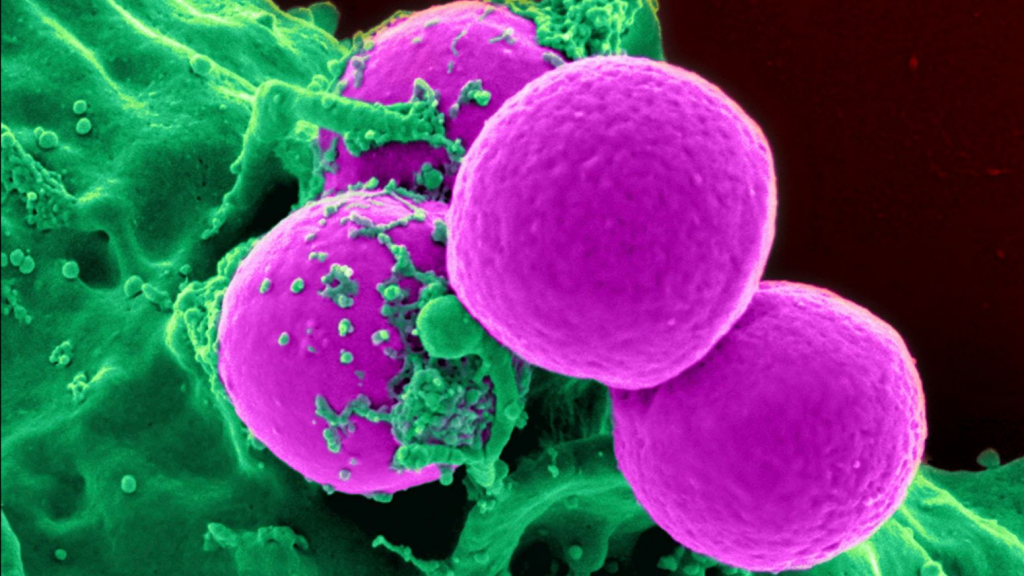
This image is a microphotograph of the bacteria Deinococcus radiodurans, which is known as an extremophile. It can survive in outer space for up to three years, according to studies conducted at the International Space Station, and even survive inside of nuclear reactors where the radiation would be instantly fatal to humans.
Jeffrey Mishlove and the New Thinking Allowed Foundation jmishlove@newthinkingallowed.com
Book: “How the Leopard Changed Its Spots: The Evolution of Complexity”
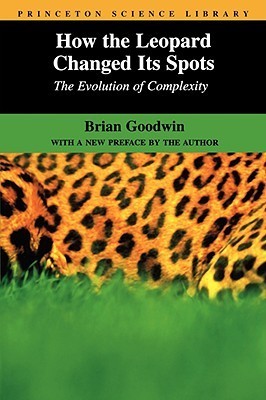
How the Leopard Changed Its Spots: The Evolution of Complexity
Brian Goodwin
Do genes explain life? Can advances in evolutionary and molecular biology account for what we look like, how we behave, and why we die? In this powerful intervention into current biological thinking, Brian Goodwin argues that such genetic reductionism has important limits.
Drawing on the sciences of complexity, the author shows how an understanding of the self-organizing patterns of networks is necessary for making sense of nature. Genes are important, but only as part of a process constrained by environment, physical laws, and the universal tendencies of complex adaptive systems. In a new preface for this edition, Goodwin reflects on the advances in both genetics and the sciences of complexity since the book’s original publication.
(Goodreads.com)
Prosperos Sunday Meeting on June 4
 |
 Understanding and releasing ourselves from cognitive bias will help in all areas of our lives and work using The Prosperos techniques. Become more aware and expand your known reality. Gravitate with truth, reduce personal stress, increase your intuition and avoid unneeded problems. Please join us on Sunday to boost your understanding of our cognitive biases and how to release it. Understanding and releasing ourselves from cognitive bias will help in all areas of our lives and work using The Prosperos techniques. Become more aware and expand your known reality. Gravitate with truth, reduce personal stress, increase your intuition and avoid unneeded problems. Please join us on Sunday to boost your understanding of our cognitive biases and how to release it.  ______________________ SUNDAY MEETING 6/4/23 11:00 am Pacific JOIN the Meeting Everyone is welcome! By Contribution _______________________ |
| Copyright © 2023 The Prosperos, All rights reserved. |
7 Mistakes To Avoid When Learning Aspects
 | Astro Butterfly Jun 2, 2023 |
Aspects are perhaps the most difficult astrology pillar, because aspects weave together all the other astrology archetypes: planets, signs, and houses. Aspects are very complex!
When learning something as complex as Aspects, it’s only natural that we make mistakes along the way.

Mistakes are a normal part of learning – and nothing to feel bad about.
The good news is that learning about these mistakes can help us make big progress in a short period of time. It’s not that all your learning was in vain – the information is still there – it’s just a matter of reframing it and looking at it from different perspectives.
Here are the most common mistakes most people make with Aspects, from our experience of working with astrology students of all levels:
Mistake #1 – Jumping straight to planetary aspects
We are all guilty of this one. We’ve all started our journey to aspects by reading books or googling what “Venus square Neptune” means, before having a clear understanding of what the square means.
Of course, aspects only exist between planets. However, when we try to learn aspects this way as beginners, the amount of information can be overwhelming.
Unknowingly, we settle for ‘good enough’ half-grasping of aspects and then we carry forward this approach as our astrology knowledge expands, leaving conceptual ‘holes’. We don’t even know what we don’t know!
Mistake #2 – Categorizing aspects as “hard” or “soft” or mixing up squares with oppositions, or sextiles with trines
When we make these broad brush categorizations, we’re missing very important interpretation nuances. Each aspect serves a unique purpose.
Oppositions are not the same as squares. The goal of an opposition is to help us understand ourselves better by role-playing the unintegrated parts of our psyche through 1-on-1 relationships. Squares instead help us integrate into our environment, by teaching us to respond to outside challenges.
Squares and oppositions work very differently and serve very different purposes. Oppositions are about “us”, squares are about “the world”. Very different playing grounds.
An aspect is not only ‘challenging’ or ‘harmonious’ – each aspect has a unique modus operandi and a very specific area of influence.
Mistake #3 – Giving all the aspects the same importance
Astrology software is designed to link all the geometrical aspects planets make in the natal chart.
When we look at the chart, we see a line between Sun and Neptune, and another line between Neptune and Pluto, and we are prompted to address them as if they had the same importance.
They do not.
Aspects with at least one personal planet are much more relevant than aspects between slow-moving planets, which are generational and don’t influence us at a personal level.
The orb of the aspect matters too. Tight aspects take precedence over loose aspects. This may seem complicated but there are some basic rules which, if followed, can help us narrow down and focus on what’s really important in the chart.
Mistake #4 – Endlessly looking for the ‘right’ aspect interpretation
You have a Venus-Pluto opposition and you’ve read everything about it on the internet. The more you read/watch videos, the more the descriptions sound the same.
The reality is there is no cookbook description aspect you will resonate with 100% because your chart is unique.
If astrologers would write books about all the possible Venus-Pluto aspect combinations in the 12 signs and 12 houses we would have a Lord Of The Rings-like trilogy for each aspect!
That’s not how we learn aspects. We learn aspects by actually learning about all the building components of the aspect, and slowly coming up with our own interpretations. There’s a method to the madness, and once we understand how aspects are delineated from a theoretical perspective, we will find it much easier to apply it in practice.
Once the meaning of the aspect lands with you, then you won’t need to read about it, or learn about it. You will just know what it means.
Mistake #5 – Missing the “big picture” of the aspect
How come that that nice Venus trine you have doesn’t necessarily translate into good relationships?
That’s because Venus doesn’t only make a trine, but also squares, oppositions, or quincunxes with other planets. The Venus square and opposition will further shape the expression of your natal Venus placement.
While isolating individual aspects is a necessary first step when we’re starting out, if we want to come up with meaningful interpretations, we want to look at the “full story”, i.e. at all the aspects a planet makes.
The sign and house placement of a planet adds further details about how an aspect is expressed.
The same Mars-Neptune opposition manifests very differently when it’s on the Taurus-Scorpio axis vs. the Gemini-Sagittarius axis. The same Mars-Neptune opposition will influence completely different areas of your life, depending on the individual’s Mars and Neptune house placement.
Mistake #6 – Believing you have to “learn more” – or going for breadth instead of depth
You know all about squares and trines. So you move on to minor aspects, aspect patterns, progression to eclipse points, or other complex techniques.
The “keep searching for answers in different places” syndrome is many times sourced into an insufficient understanding of the basics.
When we fully understand our Sun conjunction, or our Nodal oppositions, when we get the full scope of these very basic aspects, we usually find our answers. We could write a book about the Nodal opposition only!
Of course, if you’re interested in minor aspects, this doesn’t necessarily mean you don’t master the basics. There are indeed professional astrologers with tons of chart reading experience who are totally fluent in aspects and are ready for more niche types of topics.
However, in our experience, 99% of students, including students with lots of astrology exposure, would benefit from an actual deep-dive into the core aspects.
Chart reading is not about “knowing more” – more aspects, more asteroids, more predictive techniques, but about truly mastering the basics.
Mistake #7 – Not “owning” the aspect
We might look at our Pluto conjunction or Saturn square as bad luck “why was I born with this?”, or at best, as an aspect we have to contend with.
However, the only way to overcome the challenging expression of our aspects is to own them.
When we realize that we are the architects of our natal chart and our life journey, this acceptance allows us to look at each natal aspect for what it is.
Our soul purposefully chose these lessons. We chose these aspects for a reason. We need both trines and squares. Life is a beautiful journey of growth and transformation.
Deciphering Aspects In the Natal Chart
The “Deciphering Aspects In the Natal Chart” course is designed to help you learn aspects in a systematic way so that you build on the correct learning pillars, one step at a time.
In the course, we follow a 4-step approach that caters to all learning styles and it’s proven to work:
- Learn – to assimilate theoretical concepts
- Reflect – by completing assignments
- Clarify – ask questions or learn from examples
- Practice – practice aspect interpretation and get feedback
Interested in joining but fear you don’t have time for all activities?
Join anyway – you will have lifetime access to the course materials and call recordings, and even if you can’t attend the calls, you will still benefit from the live momentum of the course.
The 30+ theoretical lessons of the course are pre-recorded and dripped weekly on Mondays. You get access to transcripts, visuals, and exercises to which you can come back again and again, whenever time allows.
When you follow the “Deciphering Aspects In the Natal Chart” approach, you will no longer:
- Google or “read more” about aspects → You will learn how to come up with your own interpretations
- Feel overwhelmed → The Aspect Reading Formula will outline the exact steps you need to follow to analyze an aspect
- Wonder how to reconcile complexity → The “Aspect Hierarchy” approach and the multiple aspects exercises will help you bring together the different details of the aspect into a meaningful synthesis
- Get stuck when you try to read a natal chart → Aspects bring the chart to life! Reading a natal chart comes naturally when you master aspects; aspects help you connect the dots of the chart, see patterns, and focus on specific areas of interest
- Feel anxious about the so-called “difficult” aspects → You will embrace the beauty and unique lessons and opportunities of each aspect
Learn more about Deciphering Aspects In the Natal Chart and register here:
Jupiter Conjunct North Node – The Call To Adventure
| Astro Butterfly Jun 1, 2023 |
On June 1st, 2023 Jupiter is conjunct the North Node at 3° Taurus, opening new doors of opportunities for us. This is a unique chance to embark on a new journey!
With Jupiter conjunct the North Node of purpose, there’s a strong pull to walk the path of our purpose. The North Node will draw us in, pulling us into the unknown.
We want to experience something deeper, something more meaningful.
Jupiter and the North Node have quite a bit in common. They are both growth-oriented, forward looking energies. Jupiter wants to find a higher meaning, and the North Node is our actual purpose in life. When Jupiter and North Node meet, opportunity meets readiness.
The North Node energy can be elusive – the North Node is a mathematical point, not an actual planet.
The North Node is our inner compass. It’s that inexplicable drive and longing that pulls us in and makes us do things that don’t make sense to others and even to ourselves. We don’t know why we are attracted to something, we don’t know why we feel drawn in, but the pull and longing are difficult to ignore.
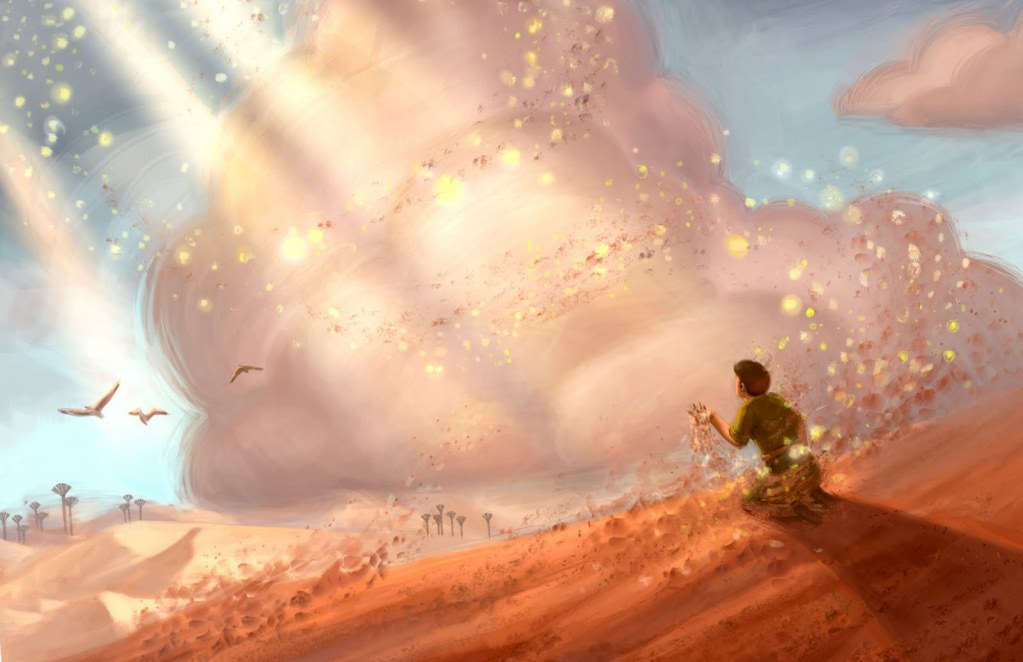
The danger with North Node transits is that we can miss the boat, because we don’t trust that longing, or that inner calling enough. We may feel the pull to do something, but then we ignore it, because it doesn’t check in with our ‘reality’.
But the North Node IS the unknown, the North Node IS a place we’ve never been before. Is not supposed to ‘check in’ with our status quo. That would be the South Node.
North Node, South Node And The Opposition Aspect
The very interesting thing about the North Node and the South Node is that they are the quintessence of the opposition aspect.
Not everyone has a conjunction, or a square, or a trine in their chart. But all of us have at least an opposition, because all of us have a North and a South Node, which by design, are always opposite each other.
Understanding the North and the South Node, and how they work together, can give us clues about how all the other oppositions in our chart ‘work’.
Oppositions are probably the most difficult aspects – not because they are inherently difficult, but because, by their nature, are difficult to figure out. In most cases, we identify with one of the planets in the opposition, and we project the 2nd onto others.
In the North Node-South Node pair, we usually identify with the South Node, because that’s the ‘familiar’.
We apply the same principle to all planetary oppositions. If you have a Venus-Saturn opposition for example, you will likely identify with Venus, and project “Saturn” onto others, by repeatedly attracting Saturn-like partners who may be serious, responsible, or older than you.
Relationships will eventually run in the same type of issues “my partner is so critical”, “I can’t do anything right”, “they are no fun to be around”, “we always fight about money” – but the root cause of these issues is not the partner (it’s us who unconsciously attracted them in the first place) but our failure to understand how the opposition aspect ‘works’ – i.e. through projection.
That’s why the North and South Nodes are so difficult to figure out. That’s why it sometimes takes a lifetime to reconcile and integrate the two.
Aspects don’t work independently. In most cases, our North and South Nodes are also engaged in other aspects with other planets that write a more detailed story about our path to Nodal integration.
Jupiter Conjunct North Node Sextile Saturn
Coming back to our Jupiter-North Node transit conjunction.
We know that the North Node is an elusive energy we tend to project onto others – therefore, it’s more difficult for us to recognize and own it.
Thankfully, Jupiter and the North Node also receive the helpful assistance of Saturn. Saturn, now at 7° Pisces, makes a harmonious sextile with Jupiter.
Just like Coelho’s Alchemist, we feel the call to adventure. And thanks to Saturn’s assistance, we are not alone. We have Saturn’s structure to guide us.
With Jupiter conjunct North Node and sextile Saturn, opportunities will abound – but we have to recognize and OWN the North Node, and actually say YES to the call.
Jupiter Conjunct North Node – The Call To Adventure
Paolo Coelho was born with the North Node in Taurus, and Jupiter conjunct South Node in Scorpio. His bestseller, “The Alchemist” is a great metaphor for the dynamic of the North and South Node.
The only reason the hero, Santiago, found the treasure (South Node) is that he believed in it in the first place. He was intentional about it. He attracted it (North Node).
Similarly, if we want to find our ‘treasure’ we first need to answer the call of the North Node – even if we’re not clear about what we’re embarking on, and even if this goes against (it will) the way we’ve been living our lives.
The reward will come. But we have to actually go on a journey. And every journey begins with answering the call to adventure.
Deciphering Aspects In The Natal Chart
The Jupiter conjunct North Node transit is a great time to enroll in Astro Butterfly School’s new offering “Deciphering Aspects In the Natal Chart”.
We always time the release of our courses with the actual transits, so students can make the best out of the astrological backdrop.
Jupiter (learning), North Node (new) in Taurus (concrete foundations) and sextile Saturn (support from teachers) – and we have all the ingredients for an auspicious time to learn something new.
What’s the reward of enrolling in an Aspects course? The reward will come, and in ways you may not envision it yet.
You may have big a-has about your chart and yourself – insights that will help you re-frame limiting beliefs, release old stories that no longer serve you, or become aware of gifts and opportunities. All these stories are encrypted in your natal chart, and Aspects is how you decipher your natal chart.
Other people may fall in love with astrology so much that they will decide to incorporate it into their careers.
If you love astrology, it’s absolutely crucial that you master Aspects, because Aspects are the very base of all astrological techniques, from natal chart interpretation, to transits, synastry and more.
When you master Aspects, all the other techniques will automatically ‘click’.
If you feel the call to adventure, join us before Monday, June 5th: