All posts by Mike Zonta

It’s time for a government reset — and the ideas are flourishing

CREDIT: PETER HORVATH

It started with thinking about sustainability. But after the many traumas of 2020, a lot of people are determined to make some fundamental changes in the machinery of governance.

By M. Mitchell Waldrop 05.21.2021 (KnowableMagazine.org)


If the cascading upheavals of the past year have done nothing else, they’ve spurred widespread calls for reform and renewal in just about every institution we have.

A mishandled public-health response to the Covid-19 pandemic, an economic crisis, a racial reckoning, an uncommonly long string of hurricanes, wildfires and other climate-enhanced disasters — almost everything that’s happened in these tumultuous months grew out of problems that had been swept under the rug for decades, says Anita Chandra, who directs the social and economic well-being program at the RAND Corporation. “The issues around police-related violence and systemic racism were brewing,” she says. “The issues around sustainability were brewing. The widening income inequality gap was not just brewing, it was full throttle.”

The good news is that the new US administration has been trying to address these issues in a systematic way — although with results that remain to be seen, given the partisan gridlock that still prevails in Washington and elsewhere. But perhaps more heartening are the many new tools and approaches that reformers have to work with. Since at least the mid-1990s, scholars and policy makers around the world have been exploring a series of innovations that amount to a radical rethinking of the machinery of government.

It would be too much to claim that their work amounts to an organized movement. A partial list of their proposed solutions would include terms like public valuethe enabling statethe well-being economyco-governing, or — because many of the innovations are being explored at the local level — the new urban governance. But their efforts do tend to share a number of broad goals.

One goal is to foster long-term, integrated thinking across agencies, regions and different levels of government — and hopefully help officials get out in front of brewing problems before they become crises. Another is to help governments become much more responsive and evidence-driven when it comes to meeting people’s real-world needs. And still another is to make governments far more participatory and inclusive than most have been in the past. 

These experiments are still works in progress. But here are some examples that give us a glimpse of what the post-pandemic world could look like.

Long-term, integrated thinking: Urban sustainability plans

After a year like the one we’ve all just been through, one conclusion seems obvious: Governments at every level need to get much, much better at practicing the policy equivalent of preventative medicine, by grappling with problems while they’re still manageable instead of waiting until they require a societal 911.

Several of the innovations try to help. One is agent-based modeling, an advanced simulation technique that researchers can use to create, monitor and experiment upon entire artificial societies running inside a computer. When calibrated with real-world data, these models can serve as an effective early warning system for festering problems. They can also find use as a test bed for potential solutions and a guide for sidestepping unintended consequences — all of which is why the models are increasingly being used for transportation planning, pandemic preparedness and economic forecasts.

But on the low-tech side, mayors around the world have also been getting a surprising amount of leverage from their local sustainability plans — wide-ranging policy blueprints that have now been adopted in hundreds, if not thousands, of cities worldwide.

The very act of creating these plans puts people into a strategic mindset, explains Mark Gold, an environmental scientist who headed the Sustainable LA Grand Challenge at the University of California, Los Angeles until 2019, and who is now the state’s deputy secretary for Oceans and Coastal Policy. “You can ensure that different programs and policies are integrated across the board,” he says, “and that the glaring gaps that a typical city would not be able to deal with get filled in, because you’re looking at a holistic perspective.”

And the reason this works is that the concept of sustainability is much broader that most people realize. When they hear the word “sustainability,” says Alicia Harley, a sustainability scholar at Harvard’s Kennedy School of Government, “oftentimes people think, ‘OK, that means “environment,”’ so they must just be talking about climate change, and maybe saving the ocean.”

But as she and the Kennedy School’s William Clark pointed out in the 2020 Annual Review of Environment and Resources, sustainability actually encompasses every aspect of human well-being and equity. Or as Clark puts it, sustainability is about living well today, “but in ways that don’t undermine your neighbor’s ability to improve their well-being because you’re dumping garbage in their backyard, or future generations’ ability because you’re stealing all their resources.”

This expansive definition of sustainability came to the fore in the late 1980s, notably in the landmark United Nations’ 1987 report on environment and development, Our Common Future. The report explicitly tied economic prosperity and human well-being to environmental health — a “triple bottom line” that’s often summarized as “people, planet, profit.” The three can’t be separated, the report emphasized: “A world in which poverty and inequity are endemic will always be prone to ecological and other crises.”
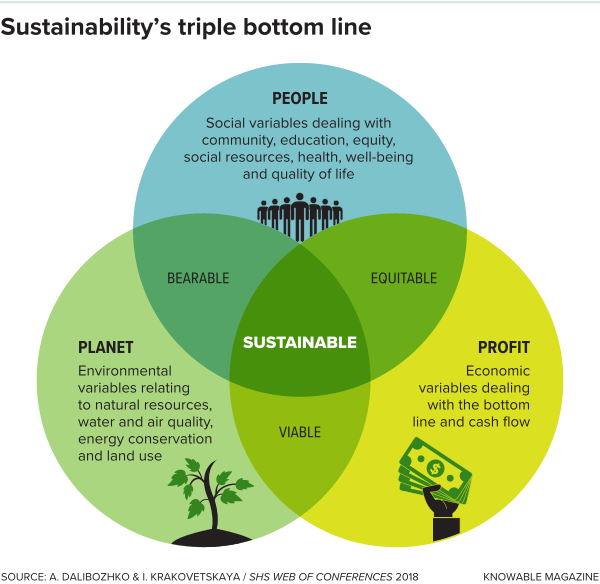
A graphic shows a Venn diagram of societal concerns, including social variables, environmental issues and economic prosperity. The three overlap in the concept of sustainability, which includes what's bearable, equitable and viable.
The modern concept of sustainability gives human well-being and economic prosperity equal weight to the environment.

This kind of comprehensive, triple–bottom-line sensibility eventually found a receptive audience in city halls around the world — especially in the 2000s, as climate change became harder and harder to ignore.

Whatever a mayor’s personal politics on the subject, “the effects of climate change are coming home to roost for cities — they’re dealing with drought, wildfire, flooding basements,” says Alaina Harkness, who deals with water issues as executive director of the Chicago-based nonprofit Current. “Cities just have the pragmatic reality on their front door step every single day.”

Worse, these climate-enhanced disasters were coming as cities continued to struggle with all-too-familiar issues like crumbling infrastructure, manufacturing plant closures and the human costs of inequality, racism, poverty and pollution — systemic problems that simply cannot be solved one by one. So, what Gold calls “the overarching umbrella of a sustainable city plan” proved to be a handy way for mayors to tackle all these problems at once. 

“A world in which poverty and inequity are endemic will always be prone to ecological and other crises.”OUR COMMON FUTURE, UN REPORT

Many of them already had environmental plans to build upon. As early as 1989, for example, Irvine, California, had reacted to the slow pace of international ozone-layer protections by passing a law to restrict chlorofluorocarbon emissions in the city. And in September 1990, some 350 local officials from 43 nations had formed a mutual support group known as the International Council for Local Environmental Initiatives (ICLEI). “Global problems” they declared, “require local solutions.”

By the 2000s and 2010s, these initiatives had begun to morph into comprehensive sustainability plans — some of which, in large cities such as New York, London and Copenhagen, became very ambitious indeed. 

In 2019, for example, Los Angeles updated its four-year-old Sustainable City pLAn based on feasibility studies carried out by Gold’s UCLA team and others. Pointedly called “L.A.’s Green New Deal,” the new plan committed the city to recycling 100 percent of its wastewater by 2035, working toward 100 percent renewable electricity by 2045, making every home, store and office carbon-emissions–free by 2050 and creating 300,000 clean new jobs by 2035.

But just as often, the plans have incorporated comparatively simple, inexpensive measures that serve many goals simultaneously. While at Columbia University in New York, for example, civil engineer Patricia Culligan worked closely with the city to analyze its plan for “green infrastructure”: a network of leafy enclaves that range in size from portions of huge parks down to tiny rain gardens notched into public sidewalks.

These green spaces help absorb stormwater runoff before it swamps treatment plants and washes raw sewage into surrounding lakes and rivers, says Culligan, now at the University of Notre Dame. But they also provide shade to reduce summer temperatures and energy use,  habitat for birds and other wildlife and an enhanced sense of well-being for people in the neighborhood. “These include places where people can sit, relax and walk their dogs,” she says.
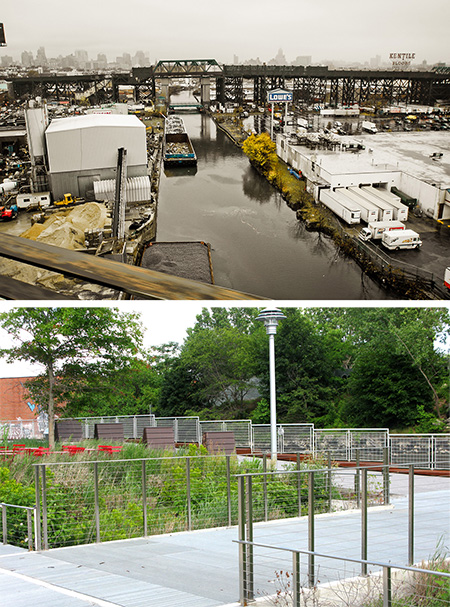
Photos show Gowanus Canal in New York before and after a restoration project added green infrastructure to the site. The canal is in an industrial area with trucks and warehouses. The park adds greenery and usable public space.
A “Sponge park” (bottom) was added along the Gowanus Canal (top, before park was built) in Brooklyn, New York. Such green infrastructure can serve many sustainability goals at once, whether it’s providing a home for wildlife, enhancing visitors’ sense of well-being or absorbing stormwater before it washes sewage into the bay.  CREDIT: DLANDSTUDIO PLLC

Of course, that still leaves a lot of cities that are not addressing climate change, which is why national and international agreements remain necessary.

“There is this massive hope being placed onto cities that they’re going to save the world,” says Nuno F. da Cruz, who studies urban governance at the London School of Economics, “but they have not been given the power, the autonomy or the budget to do this.”

But that’s precisely why cities have spent the last decade and a half organizing to give themselves a global voice. A prime example is the C40 Cities Climate Leadership Group, which was founded in 2005 to coordinate climate activism among the world’s “megacities.” Today it comprises 97 large cities that collectively represent one in every 12 people in the planet and 25 percent of the globe’s economic output.

C40 was soon joined by a host of organizations pursuing similar goals — most of which are emblazoned in their names. The list includes Local Governments for Sustainability (the current name for ICLEI, now with more than 2,500 members worldwide), the Global Covenant of Mayors for Climate and Energy (10,709 members), the Climate Mayors network (more than 470 US mayors), the Urban Sustainability Directors Network (more than 200 communities in North America), and the Carbon Neutral Cities Alliance (22 cities worldwide).

With numbers like that, politicians are inclined to listen, says da Cruz. Witness the 2015 negotiations that led to the United Nations’ Paris Agreement on climate change — a promise from virtually every nation in the world to aggressively cut their greenhouse gas emissions. Mayors didn’t have a formal seat at the talks, since the United Nations has always been set up to work through member states. So instead, says Sheila Foster, who studies urban law and governance at Georgetown University, “mayors would meet right in the same city and put pressure on the nation-states to reach an agreement.”

Some 400 of them gathered in Paris as the pact was being finalized, in what was essentially a public declaration that global problems were no longer above cities’ pay grade — a sentiment underscored by the fact that the fraction of the human race living in cities passed 50 percent in 2007 and is headed beyond two-thirds by 2050. Secretary-General Ban Ki-moon was supportive; once the deal was done he announced that in future UN negotiations, cities most definitely would have a seat at the table.
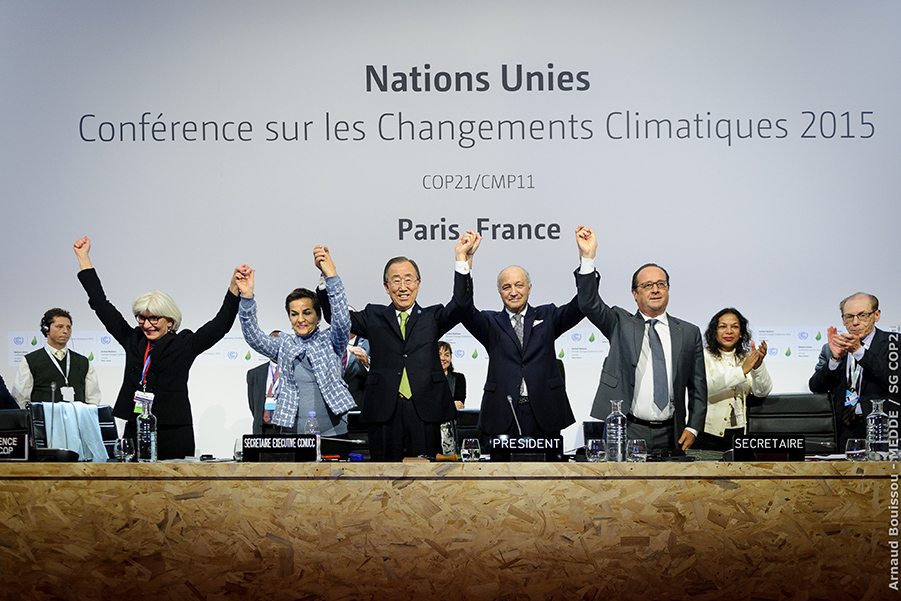
Photo shows UN leaders and others with hands grasped in celebration below a sign, in French, for the global meeting on climate change.
United Nations officials celebrating the adoption of the Paris Climate Accords in 2015. Cities from around the world organized themselves to have a say in the outcome.CREDIT: ARNAUD BOUISSOU, COP PARIS / FLICKR

Responsive, evidence-driven action: Measuring what matters

“What gets measured, gets managed,” goes the old saying — or, as it’s sometimes expressed, “We measure what we value, and value what we measure.”

Either way, this thought captures the many concerns people have about that ubiquitous metric known as GDP, the gross domestic product. GDP is a fine measure of a country’s economic activity: It’s just the nation’s total output of goods and services over a given time period. As such, it’s been a fixture in policy-making circles since 1934, when its ancestor, the “national income,” was developed as a way for Congress to track the US economy’s recovery from the Great Depression. Today the GDP is used by the White House and Congress in preparing the federal budget (and seeking to score political points), by the Federal Reserve in setting monetary policy, by Wall Street, by businesses, by the World Bank — on and on.

Along the way, though, GDP has also become a widely used proxy for public well-being, health and a host of other noneconomic factors. And that’s the concern. Yes, a country’s GDP per capita does have a strong correlation with quality-of-life issues such as education levels, life expectancy and infant mortality. But, as critics have been pointing out since at least the 1970s, using GDP as the only measure of well-being can seriously distort the choice of what gets measured and managed.

GDP ignores anything that doesn’t generate money, like leisure time or relationships. It assigns a value of zero to the environment, while assigning a positive value to the billions of dollars spent on cleaning up, say, an oil spill. It celebrates economic growth in the here and now, while downplaying threats to future growth like climate change. And it reinforces the illusion that everyone is doing well when the GDP numbers are good — no matter what kinds of degradation or injustice people face on the ground.

The obvious solution is to supplement the economic numbers with good metrics for well-being, environmental health and all the rest. And plenty of people have tried. But as late as 1999, “our efforts to get alternative metrics were a total train wreck,” says Harvard’s Clark, who cochaired a report on sustainability science that year for the National Research Council. Not only was there no agreement at the time, he says, but also “everyone’s preferred set of metrics was completely ad hoc. It was just the five things they cared a lot about, while ignoring the 10 things they didn’t happen to care much about.”

Happily, says Clark, these efforts began to get much more comprehensive and rigorous in the 2000s. And then, he says, one of the big pushes was a blue-ribbon panel of 25 economists and behavioral scientists that then-French President Nicolas Sarkozy commissioned in February 2008, when the world’s financial system was already collapsing toward the Great Recession. Sarkozy’s basic message to the group was that the world had walked itself into a trap by following GDP. Could they find a better way?

More from Reset — An ongoing series exploring how the world is navigating the coronavirus pandemic, its consequences and the way forward.

They could. Led by a trio of eminent economists that included two Nobel laureates, Joseph Stiglitz of Columbia and Amartya Sen of Harvard, as well as France’s Jean-Paul Fitoussi, the commissioners spent the next year and a half poring through decades of research on the metrics. And they came to two broad conclusions.

The first was that yes, it was time to start measuring human well-being directly. This was admittedly tricky, given that well-being is a complex, multifaceted, know-it-when-you-see-it quality that’s impossible to capture in a single number. But a growing body of research had greatly clarified the issue. For example, many studies showed that well-being is not just the subjective experience of happiness or satisfaction, although that is clearly a part of it.

Well-being also arises from the connections people feel with their families, friends and communities. And it is deeply intertwined with their sense of purpose, agency and opportunity — their pursuit of happiness, so to speak. “Just making sure people are fed and clothed and have a house is insufficient,” says Harvard’s Harley. In addition, she says, “people need the capacity to pursue their own vision of the good life.”

The commission was partially influenced by the capability approach that Sen had pioneered in the 1980s, and that had then been elaborated by philosopher Martha Nussbaum at the University of Chicago. The idea is that the right to vote, say, means little if people don’t have the relevant capabilities, like being able to register and get to the polls. Likewise for nutrition, which requires the capability to access quality foods; for health, which requires the capability to access medical care; for education; and for a long list of others. Poverty and oppression, in this view, are tantamount to capability deprivation.

In the end, the commissioners used the research literature to identify at least eight dimensions of well-being: material living standards, health, education, work and personal activities, political voice, social connections, environment, and physical and economic security (or the lack of it). They also emphasized that each dimension has to be measured separately, using both objective and subjective data.

“Just making sure people are fed and clothed and have a house is insufficient. People need the capacity to pursue their own vision of the good life.”ALICIA HARLEY

But the commission’s second major conclusion added an important caveat: We shouldn’t confuse measures of current well-being with measures of sustainability, which (in their definition) is our ability to maintain today’s levels of well-being into the future. For the latter task, said the commissioners, the right metrics are found in the “inclusive wealth” framework that had gained traction with the larger community only in the 2000s.

What inclusive wealth does, says Clark, is to take the classic economic concept of capital “and remorselessly expand that to include all the stocks of resources that you and I could call on to build our well-being.” Not everyone defines these stocks in the same way, but it’s common to list four: manufactured capital (money, infrastructure, buildings and machinery), human capital (experience, education and know-how), social capital (the institutions and relationships that keep society functioning) and natural capital (resources like oil or timber, plus ecosystem services such as flood control or pollination). The payoff is that the ebb and flow in each of these forms of capital can be quantified with hard data, allowing officials to monitor whether a given sector is moving in a sustainable direction or not.

When the commission released its final report in September 2009, its stellar authorship alone drew widespread attention. Besides, whatever Sarkozy’s later legal troubles — a French court convicted him of corruption in March 2021 — he was hardly alone in his disillusionment with GDP. If nothing else, having better metrics might give officials a little more warning before societal problems become crises — not to mention helping citizens hold their governments accountable for solutions.

In Paris, for example, the intergovernmental Organization for Economic Co-operation and Development (OECD) began using a slightly expanded version of the commission’s framework in 2011 to measure human well-being and progress in nations around the world. Both the World Bank and the United Nations are now gauging the sustainability of nations via the inclusive wealth approach. In March 2021, in fact, the UN Statistical Commission strongly endorsed the natural-capital measures of inclusive wealth as a way to quantify environmental issues.
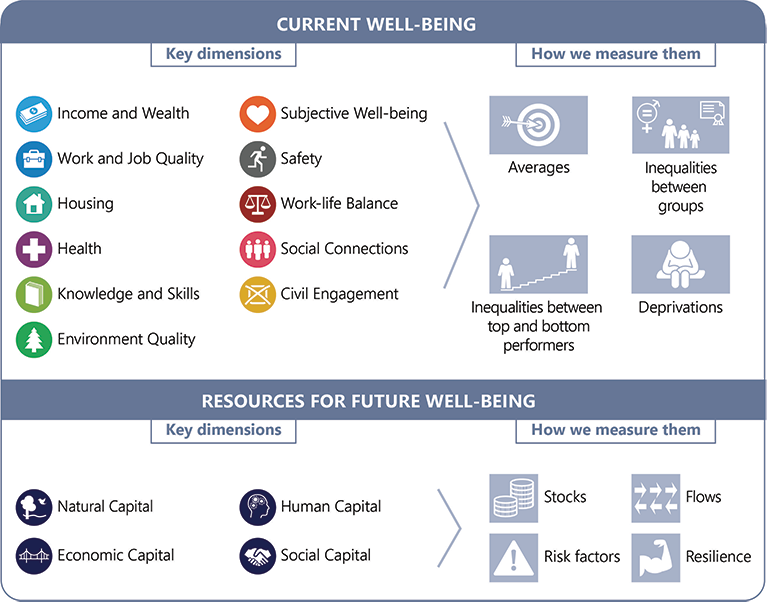
Graphic outlines various metrics used to measure well-being, including current ones (housing, health, wealth, social connections, more); and resources for future well-being (various types of capital).
The Organization for Economic Co-operation and Development (OECD) is using a slightly expanded version of the Sarkozy commission’s metrics to measure well-being and sustainable development in nations around the world.CREDIT: OECD (2020), “THE OECD WELL-BEING FRAMEWORK”, IN HOW’S LIFE? 2020: MEASURING WELL-BEING, OECD PUBLISHING, PARIS.

In 2018, meanwhile, Scotland, Iceland and New Zealand (later joined by Wales and Finland) formed Wellbeing Economy Governments, a coalition of national and regional authorities that pledge to recenter their economies around well-being. And a long list of other countries have begun to incorporate at least some consideration of well-being into their policy making.

But of course, says Stephen Polasky, an economist at the University of Minnesota who wrote about the inclusive wealth approach in the Annual Review of Environment and Resources, these measures by themselves are only the first step. “Being able to measure and count doesn’t mean that you’ve actually done anything on incentive” — getting those numbers into day-to-day decision making, he says.

At least some cities have started taking the lead, by adapting these national-scale metrics into urban-scale frameworks that can map out problems and inequities all the way down to the neighborhood level. One closely watched example: Santa Monica’s well-being project, which was launched in 2014 using well-being metrics developed in collaboration with Chandra’s group at RAND and the New Economics Foundation in London, and informed in part by the OECD framework.
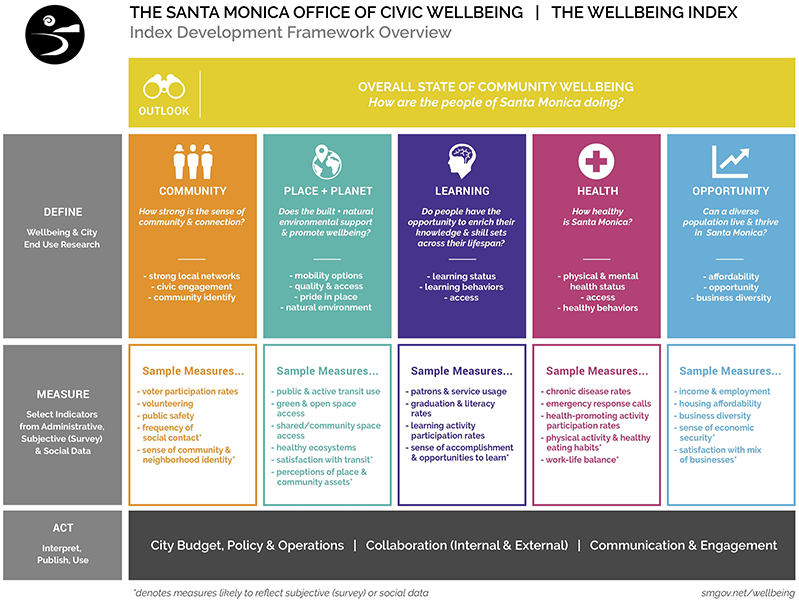
Graphic outlines the city of Santa Monica's effort to measure well-being of its citizens. It looks a measures of community, place and planet, learning, health and opportunity.
Cities such as Santa Monica, California, have begun to go beyond conventional economic measures of success, and are instead using multiple quantitative and subjective metrics to get a more complete picture of their citizens’ well-being.CREDIT: santamonicawellbeing.org

“Our index uses data from three sources,” says Julie Rusk, who spearheaded the project as head of Santa Monica’s office of civic well-being. The first source is traditional, comprising hard-number data on population, unemployment, crime rates, graduation rates, tree canopy, voter rates and so on — the kind of administrative statistics that most cities collect as a matter of routine. The second is new to this project: a researcher-designed survey that tries to gauge respondents’ life satisfaction, sense of purpose and subjective well-being. And the third is experimental, including sentiment analysis, geographic location and other insights mined from social media. “It’s what the private sector does all the time for marketing,” says Rusk. “We’re using it for the public good.”

The index organizes these data around six dimensions of well-being: outlook (how people feel about their lives), community (how connected they are), place and planet (their environment), learning, health, and economic opportunity. And the findings, in turn, have informed priorities for budgets and policies in every city agency, with a special emphasis on racial equity. “Santa Monica really took it to the next level in terms of government use,” says Chandra.

Indeed, the metrics have continued to play that role even in the depths of the Covid-19 crisis, which forced the city to close Rusk’s well-being office last year in the face of massive budget shortfalls. She quickly reconstituted her group as a nonprofit, Civic Wellbeing Partners, that has continued to promote the office’s well-being framework, index findings and equity work while also helping other cities do what Santa Monica did.

“It’s clear to me that this work is going to continue,” says Rusk. “It is continuing in other places. We’re just figuring out exactly what form it will take once we get through this transition.”

Participatory, inclusive government: Citizens’ assemblies

US politics has been polarized and gridlocked for so long that for many people it’s come to seem like the natural order of things.

But then, Ireland seemed to be headed in that same direction a decade ago, when the Irish economy was still reeling from the Great Recession, the Irish public was feeling deeply mistrustful of its government, and the country’s 1937 constitution was in dire need of an update to the 21st century. The difference is that in 2012, the legislature in Dublin decided that it should try something that wasn’t just business as usual. It called a Convention on the Constitution to evaluate eight areas that were ripe for change — including the hot-button issue of same-sex marriage — but didn’t just fill the convention with the same old politicians. Two-thirds of the 100-member group would consist of ordinary citizens selected at random.

Ireland’s inspiration for this move was the citizens’ assembly, a structure that British Columbia pioneered in 2004 when voters in the Canadian province demanded electoral reform. (The assembly ended up recommending a variant on ranked-choice voting that narrowly missed being approved by referendum in 2005.) But British Columbia’s idea was itself inspired by earlier experiments in participatory democracy. Among its many antecedents were consensus conferences, first used in the 1960s to give citizens a chance to publicly question experts on biomedical technologies; citizens’ juries, developed in the 1970s to allow nonpoliticians to weigh in on policy issues; and Deliberative Polling, the trademarked name for a technique developed in the 1980s to foster informed, engaged policy debate among hundreds of citizens at a time. 

These deliberative-democracy mechanisms and their relatives vary considerably in terms of size, cost and time frame, says Simone Chambers, a political scientist at the University of California, Irvine, who surveyed this movement for the 2003 Annual Review of Political Science. But what they share is a goal — giving the public a voice that goes beyond voting every few years — and an approach.
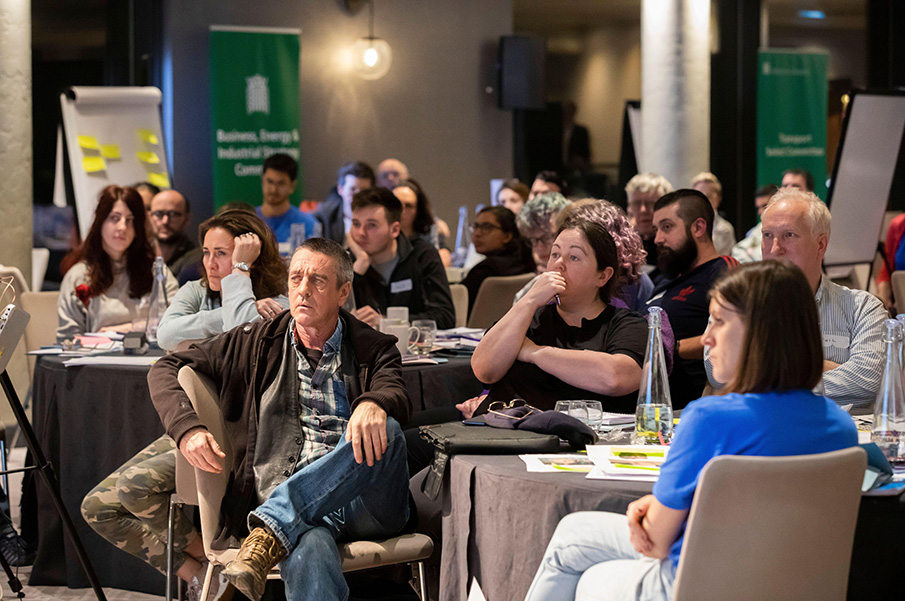
Photo shows a gathering of men and women of different ages sitting at round tables and listening intently to a speaker in a large room.
Citizens’ assemblies, like this one in Birmingham, England, held in January 2020, ask ordinary people to grapple with controversial issues such as climate change.CREDIT: PA IMAGES / ALAMY STOCK PHOTO

First, says Chambers, “a defining characteristic is that citizens are chosen by lot.” Typically, in fact, they’re chosen with a statistical distribution of gender, ethnicity, political affiliation and so on that matches the populace at large. If the group is large enough, this can ensure that the discussions represent the entire range of public opinion — and, not incidentally, can keep the debate from being taken over by officials who are pushing their own agenda, or the kind of self-selected activists who dominate conventional politics.

Next, however, the citizen-participants aren’t just asked to give opinions on topics they’ve barely thought about, which is what tends to happen in standard polls. Instead, they are allowed plenty of time to educate themselves — complete with data, explanatory readings and Q&A sessions with experts in the field.

And finally, the participants break out into small face-to-face groups that try to reach mutual understanding and at least some agreement on ways to move forward. It’s deliberation, not a debate, says John Dryzek, a political scientist at the University of Canberra who has written extensively about deliberative democracy (including in the 2012 Annual Review of Political Science). “In a debate, you’re trying to score points off the other side,” he says. “In a deliberation, it’s much more oriented to mutual understanding, communicating in ways that can reach people who might be from a different ideology, a different religious background, a different nationality — who do not have the same starting point as you do.”
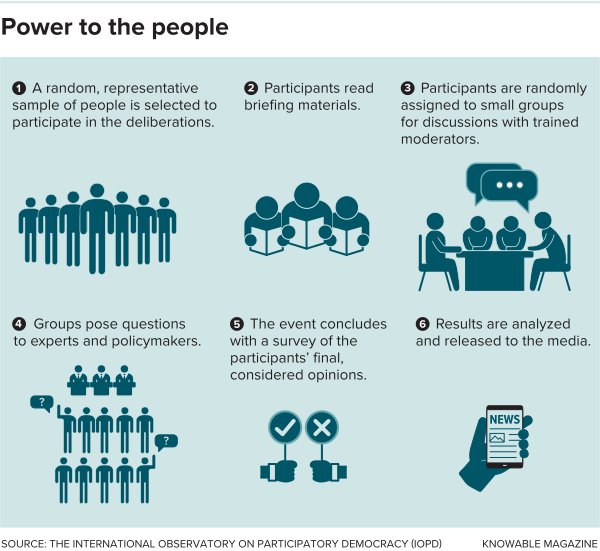
Graphic outlines the main steps in the process of engaging citizens in policy making.
Although there are many variations on deliberative democracy, the basic idea is the same: Choose a representative sample of citizens, ask them to tackle a knotty public issue like abortion or same-sex marriage, give them time to deliberate among themselves and query experts, and then ask them to produce an informed opinion.

Having observed lots of these events, adds Dryzek, he finds it striking that the citizen-participants are actually quite good at this kind of reach-across-the-divide deliberation — and at seeing right through BS. “They know when they’re being fooled” by advocates on one side or another, he says, “and they can make good judgments about what sorts of arguments stand up, and what sorts of arguments don’t.”

“We have good empirical evidence that citizens do a really amazing job when they’re given enough time and information,” agrees Chambers. Furthermore, she says, there is evidence that the public at large tends to trust the conclusions of a citizens’ assembly much more than the information they get from partisans on either side.

Certainly that was the case in Ireland. The Convention on the Constitution met on 10 weekends spaced out from December 2012 through March 2014, earning high marks for its transparency. Its meetings were live-streamed, and garnered news coverage that sparked national debate. The convention ended up sending evaluations to the legislature on each of the eight proposed amendments — including a strong recommendation by 79 percent of participants to allow same-sex marriage. The legislature accordingly put the amendment to a national referendum; it passed in May 2015. 

The participants also recommended unanimously that there be a second convention. The Irish Citizens’ Assembly duly met over 12 weekends between 2016 and 2018 (this time without politician-members) and tackled several other contested issues — of which by far the most sensitive in that heavily Catholic country was the move to repeal amendment eight, which effectively banned abortion. As with same-sex marriage, says Dryzek, the Church was strongly opposed to reform. “These had been regarded as issues that government shouldn’t touch,” he says. But the citizens’ assembly recommended repeal, which seemed to have a strong effect on public opinion. The government put the repeal to a referendum — which resoundingly passed in May 2018.

The success of that process was an amazing result all by itself, says Chambers. “The outcomes of the citizen assembly produced this national conversation that wasn’t all that polarized,” she says, “even though the questions on the ballots were gay marriage and abortion.”

But more than that, says Dryzek, the convention and assembly process improved the quality of deliberation throughout the political system. “It was a way of ensuring that good arguments are sorted from the bad ones,” he says, “and that the good arguments then prevailed in government more broadly.” Indeed, he adds, citizens’ assemblies have become a part of the accepted political landscape in Ireland. In 2019, the country decided to examine issues of gender equity with a new assembly, which delivered its recommendations in April 2021.

Stay in the Know
Sign up for the Knowable Magazine newsletter today

So — do Ireland’s constitutional convention and citizens’ assembly provide an example for others to follow as we recover from the tumult of 2020?

Maybe. Although the Irish experience is often cited as the most successful example of participatory democracy to date, it also showed why these events can be tough to pull off. One challenge is retention: Ireland asked participants to serve multiple weekends without pay, or — in the case of the Constitutional Convention — without even childcare costs. Just 61 out of the 99 original participants in Ireland’s citizens’ assembly remained after all 12 meetings. The obvious solution is to pay the participants, but that gets expensive.

Another challenge is to ensure that the selection of participants is really random. The citizens’ assembly had to dismiss seven replacement members in early 2018 after it was discovered that one of the recruiters had simply been calling up friends. Still another is to keep the powers that be from manipulating the results by, say, providing the assembly with a slanted group of experts. That wasn’t a problem in Ireland, says Dryzek, but it is why some assemblies are given the power to call any experts they want.

And finally, of course, there is the eternal challenge of getting governments to listen. Although the same-sex marriage and abortion amendments were put to a vote in Ireland, many of the groups’ other recommendations went nowhere.

Yet none of these challenges have stopped people from trying, says Dryzek. The movement for deliberative innovations has exploded, especially over the last decade or so. In 2019, for example, Scotland convened a citizens’ assembly to discuss issues such as Brexit and, starting last year, the region’s response to Covid-19. The German-speaking region of Belgium has created a citizens’ assembly to be a permanent part of its government. Oregon has taken to convening a 24-member Citizens’ Initiative Review to evaluate proposed ballot measures; prior to the election, the state then includes the panel’s report in each voter’s information packet. The Latinno project has compiled a comprehensive database of hundreds of participatory projects across 18 countries in Latin America. The OECD has synthesized best practices for these efforts.

The numbers are growing so fast that it’s hard to keep count, says Dryzek: “I’m continually surprised to find that something has happened in a country that I knew nothing about.” 

Of course, it could easily be a decade or more before we know whether any of the fixes described here can really make a difference. But if nothing else, they remind us that there are other ways to do things. That we’re not doomed to endlessly keep slamming our heads against the same proverbial stone walls. That fundamental resets are possible — and that maybe, just maybe, the shock of the pandemic year will goad us into trying.

This article is part of Reset: The Science of Crisis & Recovery, an ongoing Knowable Magazine series exploring how the world is navigating the coronavirus pandemic, its consequences and the way forward. Reset is supported by a grant from the Alfred P. Sloan Foundation.

10.1146/knowable-052021-4

M. Mitchell Waldrop is a freelance writer based in Washington, DC.

A deliberate fix for democracy

CREDIT: COURTESY OF HEALTHY DEMOCRACY

Take a group of random citizens, give them the facts and let thoughtful discussion unfold

By Chris Woolston 02.05.2019 (knowablemagazine.org)


As hard as it may be to believe — especially in times of government shutdowns and partisan paralysis — people of different backgrounds and beliefs really can get together to discuss tricky issues and reach a consensus. Productive political discourse isn’t just a utopian fantasy. Recent history has shown that rigorous, thoughtful debate can change minds and shape policies, but harnessing this power isn’t simple.

Partly spurred on by the dysfunction of the times, researchers are taking a close look at the conversations in legislatures and city halls with the ultimate goal of building new systems that produce better results with less acrimony. One particularly promising approach is “democratic deliberation,” a type of discourse where a group of people analyze a problem, gather facts and suggest potential solutions. Jury deliberations are the classic example, and governments and researchers are now experimenting with approaches that essentially take such jury-type discussion out of the courthouse and into the world at large.

Portrait of Political scientist John Gastil of Penn State University

CREDIT: JAMES PROVOST (CC BY-ND)

Political scientist John Gastil

Penn State University

People have much to the say when given the chance, says John Gastil, a scholar of political discourse at Penn State University. In the right circumstances, he adds, a group of citizens chosen at random may have more insights into policy than a group of elected politicians. Gastil explored recent and ongoing experiments in democratic deliberation in the Annual Review of Law and Social Science. If understood and deployed correctly, he writes, careful deliberation just might help save democracy from itself.

Knowable spoke with Gastil about the failures (and occasional successes) of discourse in the US Congress, real-life examples of deliberation that offer room for optimism, and the future of political dialogues. This conversation has been edited for length and clarity.

So what exactly is democratic deliberation?

Deliberation involves a group of people — maybe a jury, a group of citizens or a legislature — engaging in a robust, fact-driven conversation about an important issue. It becomes a democratic process when it involves an inclusive group where each member has an equal opportunity to participate without any one person dominating the process. The group can be large or small, elected or randomly selected.

Put those two concepts of democracy and deliberation together, and you get the whole beauty of the approach. When you’re open to those sorts of discussions, you learn about each other and you also become more informed about the issue.

How did you get interested in democratic deliberation?

My parents were Quakers, so I went to a lot of Quaker meetings as a child. Those meetings were heavy on empathy and thoughtful analysis, all of the things that sometimes help Quakers make good decisions. Both of my parents ran unsuccessfully for Congress. The back-and-forth political arguments sometimes made the dinner table a dangerous place. I did debate in high school and college, and I realized you could apply those same skills in a more productive way. Instead of just scoring debate points against an opponent, people could have conversations that mattered.

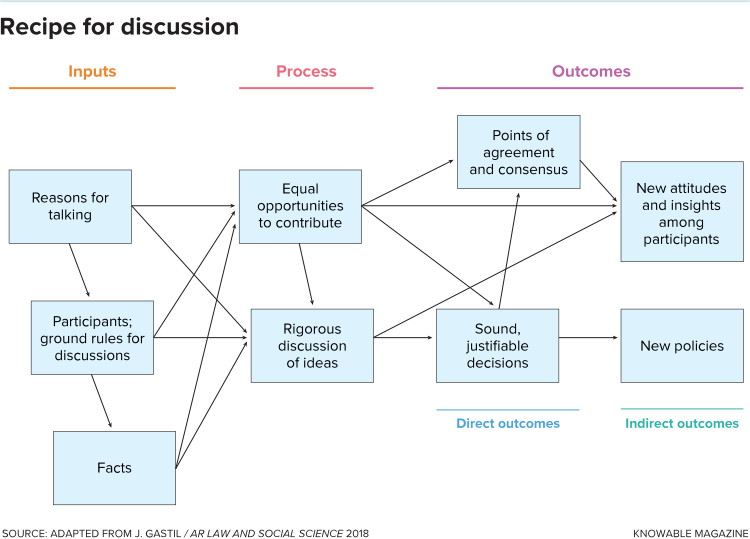
A chart depicting all the pieces needed for successful democratic deliberation, including inputs (such as facts, participants and ground rules), the process (such as rigorous discussion and democratic participation) and outcomes (such as new attitudes, points of consensus and sound decisions).
Though the precise process of democratic deliberation may differ from one example to another, here — in broad brushstrokes — are the basic inputs, processes and outcomes.

Are people really able or willing to deliberate anymore?

People are actually very interested in participating in democratic deliberation if the conditions are right. First and foremost, they have to feel like their participation matters. Nobody wants to waste their time, so they don’t want to show up if the agenda has been preset and the conclusions are precooked. Also, deliberation can break down if there’s too much conflict between participants or if just a few people dominate the conversation.

How are you and other researchers studying deliberation?

Deliberation is a vibrant field of study, but there are challenges. Randomized trials are difficult to conduct. A 2015 study in Social Science and Medicine made a valiant effort. The study split nearly 1,000 participants into 76 separate groups across the US to discuss health-care issues. When tested later, the groups that participated in democratic deliberation showed a greater understanding of the role of medical evidence in health-care policy decisions. The results were modest, but the study did show that a group of diverse people really can dive into important issues in a controlled setting.

Europeans have been aggressive in studying deliberation. Various experiments and projects have brought citizens together to discuss issues, including contentious topics such as climate change and immigration. Among other things, participants in the discussions showed a greater willingness to make small personal sacrifices for the public good and became more likely to identify themselves as Europeans and not just citizens of their country. The projects showed that diverse groups from different countries can find common ground.

The curious case of acrylamide: California’s Prop. 65 explained

But there has been some blowback lately. Some participants were complaining that the deliberation didn’t immediately lead to new laws or policies. But what were they thinking was going to happen? These are just demonstration projects. They can’t magically compel people to action.

What’s an example of deliberation in action?

Probably the best example is jury duty. It’s a reminder that deliberation is not some alien thing, and it’s not foreign to the American experience. It’s actually embedded in our legal system, and we have a lot of reasons to be confident in the results.

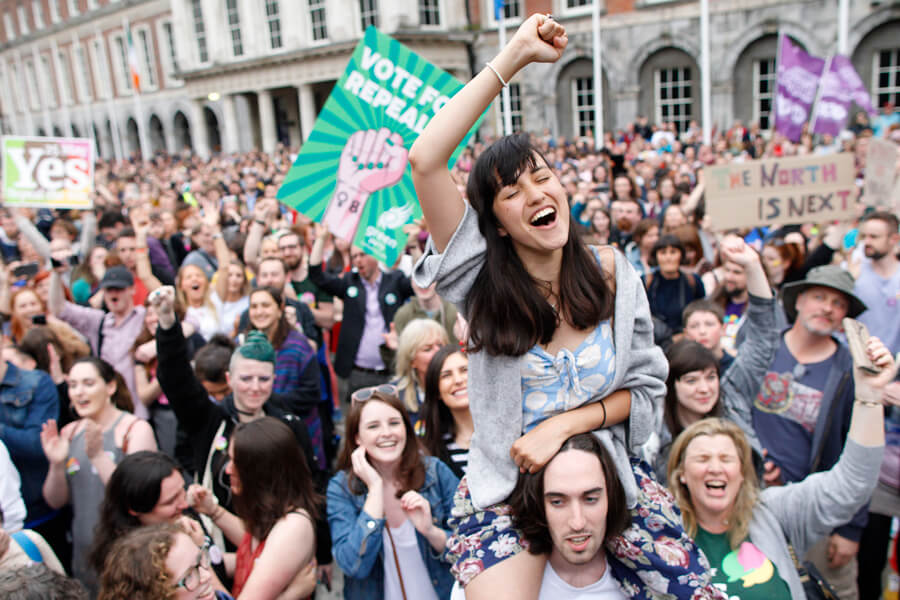
Deliberation can render verdicts, but it can also shape policy. One famous example is the Irish referendum of 2018 that effectively legalized abortion in that country. Many people felt that the constitution was somewhat out of date, but members of parliament were reluctant to tackle the issue head on. They created a deliberative body that was two-thirds randomly selected citizens and one-third members of parliament. That body considered the constitution and came up with a whole bunch of recommended changes, which gave the parliament the opportunity to put referendums in front of the general public without taking any responsibility or blame. They were simply giving the public what they asked for. The referendum passed easily by a roughly 2–1 margin, but it might not have happened without the deliberation.

Photograph of Irish citizens celebrating on May 26th, 2018, after passage of a referendum to repeal a broad abortion ban enshrined in the country’s Constitution. Democratic deliberation played a key part in the genesis of the referendum to overturn this constitutional rule. The Irish Parliament went on to legalize abortion during the first 12 weeks of pregnancy, and later if the mother’s health is at risk.
Irish citizens celebrate on May 26, 2018, after the passage of a referendum to repeal a broad abortion ban that was enshrined in the Irish Constitution. Democratic deliberation played a key part in the genesis of the referendum. The Irish parliament went on to legalize abortion during the first 12 weeks of pregnancy, and later if the mother’s health is at risk.CREDIT: AP PHOTO / PETER MORRISON

Why involve randomly selected people? Isn’t it the job of politicians to shape policy?

Choosing people at random makes a deliberation more legitimate. You need to have diverse experiences and viewpoints. For a counterexample, just look at the US legislature. Historically, the lack of diversity there has been remarkable. The last election added a little more racial and gender diversity, but there’s still at least one big difference: Members of Congress tend to be far wealthier than average members of the general public.

But selecting people completely at random isn’t the only or necessarily even the best approach. You can screen potential applicants to make sure that the group represents the public demographically, including by age, race, gender and socioeconomic status. That process is called “sortition.” In 2004, British Columbia created the Assembly to study a proposed new voting system. Instead of picking names at random out of a phonebook to include on the Assembly, organizers actively recruited some indigenous people to make sure they were heard from. They may make up a relatively small percentage of the population, but their voices carry great importance.

Whether they’re selected entirely randomly or screened to ensure diversity, the resulting group is known as a “minipublic,” literally a miniature version of the public at large. The power of the minipublic is that it takes the simple concept of jury deliberation and moves it out to a macro level. That’s the biggest, hottest trend in democratic deliberation research: understanding how minipublics work and figuring out new ways to harness them.

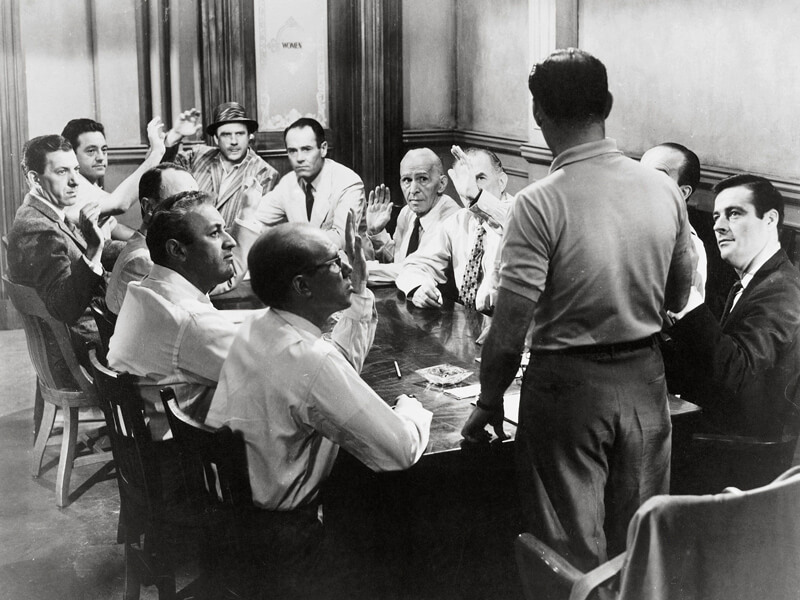
A screenshot from the classic 1957 courtroom movie, 12 Angry Men. Juries are a prime example of democratic deliberation in action. Governments and researchers would like to expand the approach to broader settings.
Jurors at work in the classic 1957 movie, 12 Angry Men. Juries are a prime example of democratic deliberation in action; governments and researchers would like to expand the approach to broader settings.CREDIT: ALBUM / ALAMY STOCK PHOTO

It’s tempting to think about minipublics at the highest level of politics. I cowrote a book (with Erik Olin Wright), coming out later this year, called Legislature by Lot. It proposes a cool but as-yet-untested idea: a government where half of the body is elected and half is selected at random with appropriate sorting. Some are willing to take the idea even further. What would happen if we completely replaced politicians with randomly selected people who truly represent the nation as a whole? That thought experiment is the topic of a widely viewed TEDx Talk by Brett Hennig, founder of the Sortition Institute. 

Can randomly selected people make good decisions?

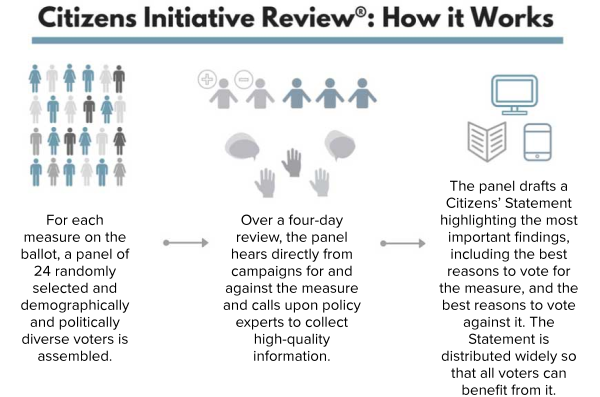
Definitely, especially when they have access to the facts and everyone has a chance to contribute. In 2011, Oregon established the Citizen’s Initiative Review, a panel of 24 randomly selected citizens who study proposed initiatives and write up a one-page summary that all voters can consult before casting a ballot. One of the first topics they tackled was Measure 85, a proposal to divert some corporate taxes to public schools. Most panel members supported the measure, and their work seemed to increase awareness of the proposal, which voters approved in 2012. Massachusetts is now considering a similar approach. Since 2010, California has used a minipublic — created through a combination of screening and random draws — to help redraw boundaries of legislative districts. I think these sorts of initiatives will become more common in coming years. It’s a way to keep the public informed and engaged.

Why do members of the US government seem to have so much trouble talking to each other?

President Trump is uniquely averse to the deliberative approach. That’s not a partisan thing to say. He’s just not a believer in it. His entire administration is the absolute polar opposite of the conditions you need for high-quality deliberation. Take, for example, the border wall. He announced ahead of time what the answer was going to be before he invited any discussion. But the problem is a lot larger than Trump. Right now, both political parties view any gain by the other side as their loss. They aren’t looking at facts and carefully weighing options, and they aren’t weighing everyone’s opinion evenly. It’s pure power politics.

That said, there’s still room for real deliberation and real results. Look at the sweeping criminal justice reform bill that the president signed into law after it passed the House and Senate with bipartisan support in December 2018. A lot of people are scratching their heads over that one. How did it happen? It was a slow and quiet process of deliberation between members of Congress who cared about the issue. It also had the backing of Trump advisor and son-in-law Jared Kushner, whose father had spent time in prison. As much as we are doomed by the incredible low quality of deliberation at the federal level of the US, we can’t help ourselves. We sometimes do good things.

A chart describes the basic process for Oregon's Citizens’ Initiative Review, which deliberates on ballot measures.
Here is the basic process for Oregon’s Citizens’ Initiative Review, which deliberates on ballot measures. You can read more about the effort here.COURTESY OF HEALTHY DEMOCRACY

The civil rights movement is another encouraging example. Across a period of decades there was a national dialogue going on about race and equality. Those conversations helped our whole society move forward on the issue.

What do you see for the future?

Minipublics are going to seep into society. The success of the Irish referendum process and various citizen assemblies around the world is going to spark a movement. More groups will be put together for more purposes, including experiments and new attempts to shape and inform policy. I want to be there when it happens and study the heck out of it because it’s going to be fascinating. How will it affect public attitudes and the quality of deliberation?

The other big thing is that deliberation is inevitably going online. I sometimes call the Internet the Democracy Machine, because it really does connect people and let them express their views. But we all know how some people behave on the Internet. If we want people to have productive deliberations, we have to set up a system that rewards good behavior. The reason Uber drivers and their passengers are so polite is that they know they are rating each other. Video games have found ways to manage their online chat functions. It’s quite doable, it’s just a matter of time and investment.

10.1146/knowable-020519-1

Chris Woolston is a freelance science writer living in Billings, Montana. He can be reached at cdwoolston@gmail.com.

New views of a cough: From TB and chronic cough to hope for Parkinson’s

Scientists are revealing new secrets of the reflex that protects our lungs, spreads disease and irritates us all

By Alice Callahan 06.28.2023 (knowablemagazine.org)


Michael Shiloh had been studying tuberculosis for about two decades when he started wondering about a seemingly basic question: What makes people with TB cough? This is the disease’s hallmark symptom and a main mode of transmission, but despite training as an infectious disease physician and many years of probing the pathogen as a researcher, Shiloh realized that he didn’t know. A quick search of the literature suggested that “essentially nothing had been studied about it, at least not at the molecular level,” he says.

To understand airborne transmission of disease, follow the flow

Elucidating the role of cough in illness means first appreciating its role in health. “Cough is one of these critical defensive processes that we have to clear the respiratory system,” says Stuart Mazzone, a neuroscientist at the University of Melbourne. But it also contributes to disease spread, as research by Shiloh, now at the University of Texas Southwestern Medical Center, and others has described. And dysfunctional control of coughing — resulting in too much coughing or not enough — can cause serious health problems.

Here’s a look at how and why we cough, and some of the ways that coughing can go wrong.

What is the cough reflex, and how does it work?

On a recent morning, researcher Karen Hegland literally inhaled part of her breakfast. “I aspirated my coffee, coughed like crazy, but was able to clear my lungs,” says Hegland, a speech-language pathologist who studies coughing and swallowing function at the University of Florida. A common experience, such coughing is a potent reminder of the importance of the reflex Hegland studies. Without her thinking about it, that reflex sprang into action, potentially preventing airway inflammation and infection that can result from breathing in food or drink.

The cough reflex can also be triggered by a range of chemicals, like those contained in cigarette or wildfire smoke, as well as toxic gases and the stomach juice that can sometimes backtrack into the respiratory tract during an episode of acid reflux. When you cough, “your airway, because it’s so important to you, is protecting itself against the damage associated with aspiration of oral gastric contents or noxious materials,” says Shiloh.

Receptors on one of several types of neurons that snake through the lining of the respiratory tract trigger the cough reflex. Some neurons detect chemical stimuli and others are mechanosensory, detecting pressure from something like a bit of food, another foreign object or a liquid like Hegland’s coffee.

When activated, the neurons send signals to the base of the brain — the brainstem — to initiate a cough, which briefly rejiggers normal breathing activity into three quick, coordinated phases. First, a sharp inhale. Then, closing of the space between the vocal cords, called the glottis, and contraction of abdominal and ribcage muscles to build pressure in the chest. Finally, opening of the glottis to release a sudden burst of compressed air.

Diagram shows three phases of a cough. Step 1 is the inspiratory phase in which air is breathed into the lungs. Step 2 is the compressive phase, which builds up pressure in the lungs by closing the glottis in the throat. Step 3 is the expiratory phase, in which the glottis opens and air is propelled out of the lungs. The burst of air also carries particles or excess mucus out of the airways.
A cough, whether initiated reflexively by sensory neurons in the airway or volitionally, requires three steps. It begins with a quick inhale. That’s immediately followed by closing the glottis at the back of the throat, which allows pressure to build in the lungs. Finally, the glottis opens and releases a high-speed burst of air, along with any particles caught up in the action.

In addition to this reflexive activity between neurons in the airway and the brainstem, higher-order brain processes add more complexity to the control of coughing; they allow us to cough on purpose, for example, or to sense an urge to cough and at least temporarily suppress it, avoiding an untimely outburst during a key moment in a movie theater.

Does coughing when you’re sick serve a purpose?

During a respiratory infection, coughing helps to clear accumulating mucus and other secretions, which can prolong infection and, if long-lasting, increase the odds of airway damage. “Cough is a protective thing in those circumstances,” says Anne Chang, a pediatric pulmonologist at Queensland University of Technology in Brisbane, Australia.

But beyond the physical removal of respiratory secretions, it’s still unclear whether coughing helps us fight an infection, and thus whether cough-suppressant medications might slow recovery. It hasn’t been well studied, Shiloh says. Certainly, suppressing the cough might block transmission to other people in your midst and also help you sleep, he says. But, he adds, “maybe you’re keeping the infectious material and inflammatory material in your lung and it’s creating a breeding ground for more organisms. No one knows.”

Whether it’s a good idea to take cough suppressant medications likely depends on whether you have a wet or dry cough. “Blocking a highly productive cough is probably not a wise thing,” says Mazzone. But “a dry, hacking cough is not really serving the purpose of clearance.” Suppressing this type of cough does not seem to be harmful, he says. (Because of the risk of serious side effects, over-the-counter cough suppressants and other cold medicines are not recommended for children under 4, though.)

How do pathogens trigger a cough?

When Shiloh started pondering the root cause of the cough that accompanies a TB infection, he had an inkling that the bacterium that causes it, Mycobacterium tuberculosis, might make molecules that trigger cough sensory neurons. Together with a determined research assistant and other collaborators, he set to work searching for candidates.

After a few dead ends, they identified a molecule called sulfolipid-1, found in the outer membrane and cell wall of the bacterium. When they exposed healthy guinea pigs to aerosolized sulfolipid-1, the animals coughed. But when they were infected with a strain of M. tuberculosis lacking sulfolipid-1, the guinea pigs hardly coughed at all, the team reported in the journal Cell in 2020.

Making sulfolipid-1 may be a strategy on the part of M. tuberculosis to enhance its own transmission to new hosts by airborne spread, Shiloh says. To look at this, he and his colleagues are now testing how easily M. tuberculosis strains with and without sulfolipid-1 are transmitted from infected guinea pigs to healthy ones. Understanding these pathways could pave the way to the development of targeted cough medicines that could help to prevent the spread of TB, he says.

Coughing is a symptom of many other contagious bacterial and viral infections, and how they may directly or indirectly stimulate cough probably varies to some extent, Shiloh says. Other members of the Mycobacterium genus, which can cause chronic cough in people with conditions such as HIV or cystic fibrosis, don’t make sulfolipid-1, so Shiloh is interested in finding out if these bacteria make their own, unique cough-triggering molecules. Research on Bordetella pertussis, which causes whooping cough, has begun to reveal a complex mechanism involving several molecules that work cooperatively to cause cough, but pathways for many other bacterial pathogens remain unclear.

A graphic shows various types of pathogens around the end of sensory neuron involved in the cough reflex. Two types of bacteria make molecules scientists have shown will activate the neuron. Likewise, evidence shows that several viruses encourage coughing by interacting with receptors on the neuron. Whether other microbes, including fungi, bacteria and viruses, also directly trigger coughing and what mechanisms they might use is still unknown.
Researchers are just beginning to investigate how disease-causing microbes might directly cause a cough. Mycobacterium tuberculosis, the bacterium that causes tuberculosis, produces a molecule called sulfolipid-1 that activates cough-triggering neurons. Bordetella pertussis, the pathogen responsible for whooping cough, seems to make several molecules that work together to bring on a cough. Whether other bacteria and fungi also make cough-triggering molecules is unknown. Several respiratory viruses have been shown to increase the production of receptors that activate coughing and up animals’ sensitivity to cough stimuli.

Compared with bacteria, viruses have a very pared down genome, so they’re less likely to have the capacity to make specific molecules to cause cough and probably use other strategies, Shiloh says. Several respiratory viruses have been shown in animals and cell culture experiments to increase the production of receptors that trigger the cough reflex and boost infected animals’ sensitivity to cough stimuli.

Not all the signals to cough come directly from invaders. The body’s immune cells respond to respiratory infections — whether viral, bacterial or fungal — by secreting inflammatory molecules such as cytokines, prostaglandins and leukotrienes. These can cause cough by tweaking the receptors on airway sensory neurons, says Shiloh, who with Mazzone and coauthor Kubra Naqvi summarized the current understanding of how respiratory infections cause cough in the 2023 Annual Review of Physiology.

Why does a cough sometimes stick around for so long?

Even after viral infections are cleared from the airways, a cough can sometimes linger for weeks or even months, long after other symptoms have resolved. That’s likely in part because of residual low-grade inflammation in the respiratory system, Mazzone says.

But there’s also growing evidence from animal studies that viral infections, particularly when they’re more severe, can cause inflammation not just in the lungs but also in the long vagus nerve that runs between vital organs and the brain, carrying bundles of nerve fibers that regulate many basic functions, including the cough reflex. “That is thought to be a contributing factor to why some people have this persistent neuro-hypersensitivity that lasts much longer than the viral infection itself. It’s because those nerves remain inflamed, and that takes time to clear,” Mazzone says.

And that can keep a cough hanging around, often with heightened sensitivity, so that a smaller than normal stimulus — a whiff of perfume, a tiny amount of dust or smoke, even talking or laughing — triggers a cough.

Graphic shows an airway sensory neuron presenting a number of different molecular receptors. Immune cells involved in fending off pathogens produce a variety of molecules that cause inflammation in the body. They also bind to receptors and trigger cough. Viruses may induce cough-producing inflammation from within the neuron cell, by interfering with the cell’s protein-making machinery.
Airway inflammation can also fire up the cough reflex. In response to respiratory infections, the body’s immune cells secrete inflammatory molecules (including peptide and lipid mediators and cytokines), which then cause cough via various receptors on airway sensory neurons. Some viruses, including influenza, have also been shown to directly infect sensory neurons and cause inflammation within the nervous system, which may contribute to a cough that lingers long after the infection has cleared.

What happens if the cough reflex doesn’t function properly?

Just as an overactive cough reflex can be problematic, so can an underactive one. The reflex is immature in young children — and that, combined with their propensity to put small objects in their mouths, puts them at greater risk of choking and aspirating things into their lungs, says pediatric pulmonologist Chang.

Foreign bodies can sometimes sit undetected in kids’ lungs for years, causing obstruction, inflammation and, incidentally, a chronic cough. Chang has removed nuts, beads and bits of sticky tape from children’s airways, and one time extracted a seashell that had been stuck in a teenager’s lungs for 14 years, causing a mysterious cough and airway damage. This is one reason it’s important not to ignore chronic cough, particularly in children, she says.

At the other end of the lifespan, the cough reflex can weaken in older adults, especially those with neurologic conditions like Parkinson’s disease. “They tend to have both a blunted sensation of the need to cough, and then also sort of discoordinated and weak cough air flows,” says Hegland, the speech-language pathologist. The dysfunctional cough reflex can contribute to the development of aspiration pneumonia, which is the leading cause of death in people with Parkinson’s.

So far, therapy for a weakened coughing function has focused on strengthening the muscles that contract to build air pressure and produce the forceful expiration of a cough, and this training has been shown to be helpful to an extent. But Hegland and collaborator Michelle Troche at Columbia University have also developed and tested a therapy that targets patients’ sensing of and response to a cough stimulus, with the goal of improving the cough reflex.

Stay in the Know
Sign up for the Knowable Magazine newsletter today

In a recent randomized controlled trial, Parkinson’s patients used either expiratory muscle training or the new sensorimotor therapy. Sensorimotor participants breathed through a face mask, through which they were given small amounts of aerosolized capsaicin, the same chemical that makes hot peppers spicy. Capsaicin also stimulates cough sensory neurons, and at the low doses used in the trial, causes a tickle at the back of the throat.

Upon feeling that tickle, participants were asked to produce a cough strong enough to reach a target airflow shown on a computer screen. The therapy allowed patients to practice noticing and responding appropriately to the sensory signals pinging from neurons in the respiratory tract.

In a 2022 study published in the journal Movement Disorders, Hegland, Troche and colleagues reported that both types of training improved Parkinson’s patients’ coughing abilities, but the sensorimotor training resulted in a greater urge to cough in response to the capsaicin stimulus and a stronger cough reflex. Hegland hopes that the therapy can help Parkinson’s patients keep their airways safe and find the Goldilocks of cough function: not too much, not too little — just right.

10.1146/knowable-062823-2

Alice Callahan is a freelance science writer living in Eugene, Oregon. She enjoys writing about how our bodies work — and how they can betray us. Read more of her work on her website.

Homosexuality of Jesus explored by 18th-century philosopher Jeremy Bentham

by Kittredge Cherry | Jun 6, 2023 (qspirit.net)

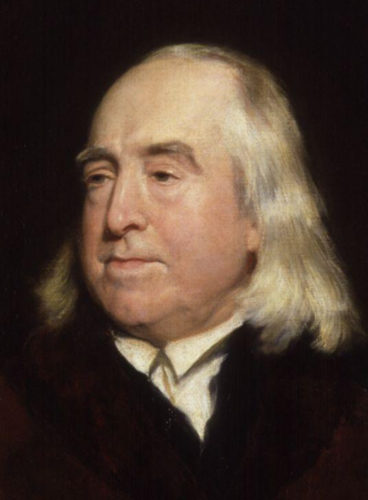
Jeremy Bentham portrait by Henry William Pickersgill

Biblical arguments for LGBTQ rights and a queer Jesus may seem like new ideas, but they were pioneered about 200 years ago by an influential British philosopher — in writings that were published only in recent years.

Philosopher Jeremy Bentham (1748 – 1832) presented Biblical evidence for Jesus’ homosexuality as part of his theological defense for same-sex love in “Not Paul, but Jesus Vol. III.” It was published for the first time in 2013 and is freely available to download or view online. He died on June 6, 1832.

Bentham didn’t dare publish it during his lifetime because he feared being labeled a “sodomite” himself. At the time “buggery” was punished with death by hanging in England.

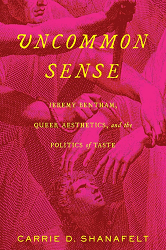
book Uncommon Sense

Bentham’s arguments for tolerance of sexual nonconformity are explored in the 2022 book “Uncommon Sense: Jeremy Bentham, Queer Aesthetics, and the Politics of Taste” by scholar Carrie D. Shanafelt, published by University of Virginia Press. A whole chapter is devoted to “Bentham’s Queer Christ.”

This champion of sexual freedom was far, far ahead of his time. “Not Paul, but Jesus” lays out many of the same arguments that are still used today by LGBTQ Christians and our allies: debunking the scriptures typically used to condemn LGBTQ people and pointing out that Jesus never said anything about homosexuality. Bentham goes on to present an idea that many still consider blasphemous. He suggests that Jesus had male-male sexual relationships.

Bentham wrote the book so long ago that the word “homosexuality” had not been invented yet. Instead he has a chapter titled “The eccentric pleasures of the bed, whether partaken of by Jesus?” His language may sound quaint, but his ideas are right on target for today. Bentham himself struggled with words for what we call homosexuality, deliberately creating new vocabulary so he could avoid the negative connotations associated with the terminology of his day (sodomy, buggery, perversion, etc.).

Bentham is best known as the founder of Utilitarianism, a philosophy that advocates “the greatest happiness of the greatest number of people” A respected thinker during his lifetime, Bentham was also far advanced on a wide range of other legal, economic and political issues. He coined the word “international.” He was one of the first proponents of animal rights. He supported women’s equality and opposed slavery and capital punishment. He corresponded with various world leaders, including US presidents Jefferson and Madison. Several South and Central American nations sought his advice in creating their constitutions and legal codes. Born and raised in a devout Anglican family in London, he became an agnostic who believed that religion was an instrument of oppression. His solution was separation of church and state.

Bentham sheds light on “clobber passages”

In the third volume of “Not Paul, but Jesus Vol. III,” Bentham corrects false interpretations of what would later come to be called the “clobber passages.” He identifies the sin of Sodom as gang-rape. He puts the sexual prohibitions of the Hebrew scriptures into historical context, pointing out that many of the other taboos are no longer enforced.

Bentham dismisses Paul’s condemnations of homosexuality as an asceticism not shared by Jesus himself. He sees romantic love between Old Testament heroes Jonathan and David — and possibly between Jesus and his beloved disciple John, noting that the Bible reports their loving touch without condemnation.

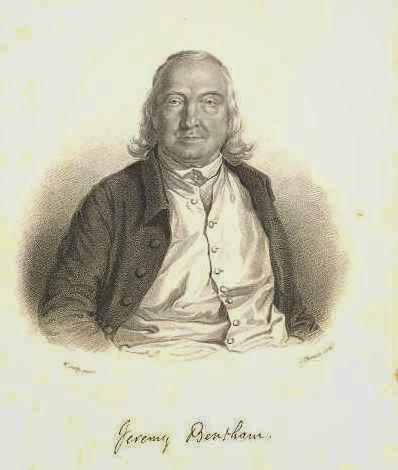
Jeremy Bentham engraving by J. Thomson, from a painting by W. Derby (courtesy of the Bentham Project)

Bentham goes on to analyze the account in Mark’s gospel of “the stripling in the loose attire” at the arrest of Jesus — a passage that continues to fuel 21st-century speculations in the LGBTQ community. Now this mysterious figure is often called “the naked young man” and associated with Lazarus or Mark himself. He urges readers to consider the most “probable interpretation” for the nakedness. (In a different manuscript he made it clear that the youth was probably a male prostitute loyal to Jesus.) Bentham even hints that Jesus was killed for homosexuality, asking readers to consider what interaction with a naked man could be “so awful” that it leads to cruel execution.

Pro-LGBTQ Christians today often note that Jesus never said anything against homosexuality. Bentham makes the same point in his own elaborate way, with sentences such as: “In the acts or discourses of Jesus, had any such marks of reprobation towards the mode of sexuality in question been to be found as may be seen in such abundance in the epistles of Paul—in a word, had any one decided mark of reprobation been so to be found as pronounced upon it by Jesus, in the eyes [of] no believer in Jesus could any such body of evidence as hath here been seen [to] present itself be considered as worth regarding.”

Indeed Bentham’s main purpose in all three volumes of “Not Paul, but Jesus” is to show the error in following the ascetic Paul instead of the true Christianity of the more tolerant Jesus, who accepted the human pursuit of pleasure. This concept is introduced in the first volume of “Not Paul, but Jesus” was published in 1823. Fearing hostile reactions, Bentham used the pseudonym Gamaliel Smith. The second volume, which deals with the early church, and the third volume, which focuses on sexual morality, remained unpublished.

Bentham wrote a lot about homosexuality

Bentham wrote more than 500 pages explaining his liberal views on homosexuality during the last 50 years of his life.  Some of these documents may have circulated among his followers, but none of it was published during his lifetime.

The first Bentham writings on homosexuality to be published were primarily secular. His 1785 essay “Offences Against One’s Self: Paederasty” is considered the first document arguing for decriminalization of homosexuality in England. He reasoned that consensual sex between same-sex partners should not be punished because it does not harm anyone. The essay was not published until 1931, when a fragment first appeared in print. The full essay was finally published in 1978.

Only now are Bentham’s writings on Jesus and homosexuality coming to light. The third volume of “Not Paul, but Jesus” was not published in any form until 2013. It was released last year by the Bentham Project at University College London, which counts him as its spiritual father.

In January 2014 Bentham’s own overview of the “Not Paul, but Jesus, Volume 3” appeared as a chapter in a book published by Oxford University Press: “Of Sexual Irregularities, and Other Writings on Sexual Morality” by Jeremy Bentham. (More info at: http://ukcatalogue.oup.com/product/9780199685189.do)

A section on “Jesus’s Sexuality” is also included in the 2012 article “Jeremy Bentham: Prophet of Secularism” by Philip Schofield, director of the Bentham Project. He draws on the “Not Paul” book and another set of manuscripts to draw powerful conclusions such as this:

Bentham claimed that, unlike Paul, Jesus did not, according to any account that appeared in the four Gospels, condemn either the pleasures of the table or the pleasures of the bed. On the contrary, Jesus’s opposition to asceticism was shown in his condemnation of the Mosaic law in Matthew 9: 9–17…. Bentham pointed out that Paul’s most forceful condemnation was directed towards homosexuality. Bentham responded that not only had Jesus never condemned homosexuality, but that he had probably engaged in it. There were, moreover, many females in Jesus’s immediate circle, and again Bentham saw no reason why Jesus might not have engaged in heterosexual activity as well.

Bentham’s mysterious life and lasting impact

Although Bentham doggedly defended consensual sexual activity between same-sex couples for half a century, his own love life remains a mystery. The son of a wealthy lawyer, he was a child prodigy who grew up to be a brilliant and eccentric recluse, living alone in London in what he called “a state of perpetual and unruffled gaiety.” He referred to his home as his “hermitage.” He lived there with a “sacred teapot” called Dicky, a favorite walking stick named Dapple, and a beloved tom cat addressed as the Reverend Doctor John Langborn. He declared, “I love everything that has four legs,” and allowed a colony of mice to share his office. One study concludes he had Asperger Syndrome, a high-functioning form of autism. Check this link for an 1827 description of Bentham’s eccentricities.

The philosopher’s influence continued to grow after his death as his supporters spread his ideas. Most of what is now known as liberalism is rooted in Bentham’s philosophy. His diverse followers included economist John Stuart Mill and feminist firebrand Frances “Fanny” Wright, who once exclaimed in a poem, “Oh had I but the Lesbyan’s lyre, / Blue-eyed Sappho’s fervid strain, / Then might I hope thy blood to fire…”.

Contemporary queer theologians such as Robert Shore-Goss have recognized him too. Shore-Goss writes a section about Bentham in the chapter on “Christian Homodevotion to Jesus” in his book “Queering Christ: Beyond Jesus Acted Up.”

During his 84 years Bentham wrote manuscripts totaling more than 5 million words, and many remain unstudied and unpublished. The Bentham Project is busy recruiting volunteers worldwide to transcribe them. More words of wisdom are likely to emerge from this prophet of LGBTQ rights who once summed up his approach to life by saying: “Create all the happiness you are able to create: remove all the misery you are able to remove.”

Not Paul, but Jesus Vol. III by Jeremy Bentham, edited by Philip Schofield, Michael Quinn and Catherine Pease-Watkin, is now freely available to download or view online at:
http://blogs.ucl.ac.uk/bentham-project/2013/04/30/not-paul-but-jesus-vol-iii/

___
Top image credit:
Jeremy Bentham portrait by Henry William Pickersgill (Wikimedia Commons)

___
Related links:

To read this article in Russian, go to:
Гомосексуальность Иисуса в трудах философа XVIII века (nuntiare.org)

To read this article in Italian, go to:
Il Gesù omosessuale del filosofo Jeremy Bentham (gionata.org)

____
This post is part of the LGBTQ Saints series by Kittredge Cherry. Traditional and alternative saints, people in the Bible, LGBTQ martyrs, authors, theologians, religious leaders, artists, deities and other figures of special interest to lesbian, gay, bisexual and transgender and queer (LGBTQ) people and our allies are covered. It is also part of the Queer Christ series by Kittredge Cherry at the Jesus in Love Blog. The series gathers together visions of the queer Christ as presented by artists, writers, theologians and others.

This article was first published on Q Spirit in June 2017, was expanded with new material over time, and was most recently updated on June 5, 2023.

Copyright © Kittredge Cherry. All rights reserved.
http://www.jesusinlove.blogspot.com/
Jesus in Love Blog on LGBT spirituality and the arts

https://ws-na.amazon-adsystem.com/widgets/q?ServiceVersion=20070822&OneJS=1&Operation=GetAdHtml&MarketPlace=US&source=ss&ref=as_ss_li_til&ad_type=product_link&tracking_id=jesusinloveor-20&language=en_US&marketplace=amazon&region=US&placement=0813946875&asins=0813946875&linkId=568c71afe3ef98dd9b7d42f54edd561c&show_border=true&link_opens_in_new_window=truehttps://ws-na.amazon-adsystem.com/widgets/q?ServiceVersion=20070822&OneJS=1&Operation=GetAdHtml&MarketPlace=US&source=ss&ref=as_ss_li_til&ad_type=product_link&tracking_id=jesusinloveor-20&marketplace=amazon&region=US&placement=0199685185&asins=0199685185&linkId=ac612b00992d8a3648ba8acbec52d1a0&show_border=true&link_opens_in_new_window=true https://ws-na.amazon-adsystem.com/widgets/q?ServiceVersion=20070822&OneJS=1&Operation=GetAdHtml&MarketPlace=US&source=ss&ref=as_ss_li_til&ad_type=product_link&tracking_id=jesusinloveor-20&marketplace=amazon&region=US&placement=0486454525&asins=0486454525&linkId=5e872121b3552e2cfc347bf9ad0851c4&show_border=true&link_opens_in_new_window=true

Kittredge Cherry

Kittredge Cherry

Founder at Q Spirit

Kittredge Cherry is a lesbian Christian author who writes regularly about LGBTQ spirituality.She holds degrees in religion, journalism and art history.She was ordained by Metropolitan Community Churches and served as its national ecumenical officer, advocating for LGBTQ rights at the National Council of Churches and World Council of Churches.

Tarot Card for July 3: The Hierophant

The Hierophant

The Hierophant (or Pope, High Priest) is numbered five and is concerned with matters of faith, religion, belief and morality. This is the wise teacher, full of esoteric and occult knowledge. He can help us to understand the mysteries around and within us.

The Hierophant is a holy man, but is in essence both male and female. He has a healthy connection with life and living – someone who has experienced life in full and now has the experience and wisdom needed in order to teach others.

He is usually seen holding his index and middle finger extended, as though pointing at something. This symbolism is important, because the human Will is considered to be directed by these two fingers. The Hierophant is an archetype which represents the culmination of human development.

His abilities reside like seeds within every one of us. We all have the ability to travel where he has already explored. He holds the keys to transformation.

The Hierophant

(via angelpahts.com and Alan Blackman)

Evolution of Consciousness (2005) with Jeffrey Mishlove

New Thinking Allowed with Jeffrey Mishlove Jul 2, 2023 This is a special presentation of an interview by Leanne Whitney of Jeffrey Mishlove, never before shown publicly, recorded at Jeffrey’s Las Vegas, NV, residence in 2005. Leanne Whitney, PhD, is author of Consciousness in Jung and Patanjali. She is a transformational coach and also teaches yoga philosophy to yoga teachers. Her website is https://leannewhitney.com/. New Thinking Allowed host, Jeffrey Mishlove, PhD, is author of The Roots of Consciousness, Psi Development Systems, and The PK Man. Between 1986 and 2002 he hosted and co-produced the original Thinking Allowed public television series. He is the recipient of the only doctoral diploma in “parapsychology” ever awarded by an accredited university (University of California, Berkeley, 1980). He is also the Grand Prize winner of the 2021 Bigelow Institute essay competition regarding the best evidence for survival of human consciousness after permanent bodily death. Las Vegas crew: Camera: Jason Neff Assistant Camera and Sound: Megumi Nishikura Editor: Greg Yung The 2005 portion of this presentation is copyrighted © 2023 by Leanne Whitney.

30 Signs You Are Living in an Information Crap-pocalypse

The Honest Broker

The Age of Information has come to a brutal end—here’s how it happened

TED GIOIA

JUN 29, 2023 (honest-broker.com)

People keep telling me that we’re living on an Information Superhighway. But that’s not true.

The flow of information today is more like a river. A very polluted river.

Folks have been dumping their crap into our information flows for a long, long time. Big corporations and institutions are the worst offenders—they actually get rich by polluting our data streams. But individuals are adding to the raw sewage too.

Some of them do it just for kicks.

It’s gotten worse lately. A whole lot worse. Just look at the polluted streams of information in your own life, and try to find a single safe space where the data stream is fresh and clean.

Some of us have stopped even trying. 


This is how the Information Age ends, and it’s happening right now.

In the last 12 months, the garbage infows into our culture have increased exponentially. As a result, nothing is harder to find now than actual information—which I define as “knowledge based on demonstrable or reliable facts.”

The result is a crisis of trust unlike anything seen before in modern history.

We are bypassing the Web 3.0 we were promised—which was supposed to deliver trust-based systems and validation tools. Instead we’ve gone straight to Web 4.0, which is like the worst kind of Wild West Web. Outlaws and desperados contol all the data highways and byways. Trust and reliability are scarcer than gold nuggets.

Do you think I’m exaggerating?

Let me ask you a question. If your job was to destroy access to reliable information in our society, how would you do it?

You would start with the 30 steps outlined below.


30 Signs You Are Living in an Information Crap-pocalypse

If you wanted to destroy the value of information you would:

  1. Create a society that rewards influencers more than truth-tellers—and turn every digital platform, large or small, into a boosting pad for these influencers.
  2. Make plagiarism, cheating, and deception totally acceptable, so nobody gets fired from a media job, even for the most egregious violations of journalistic ethics.
  3. Downsize all mainstream sources of information, compressing everything into a few seconds of video or a few sentences—with no context, no nuance, no alternative views allowed, or even possible.
  4. Destroy the economics of local and regional news—transferring their ad revenues to the dominant global technocrats—so that almost every small city newspaper goes broke and grass roots reporting disappears.
  5. Force the large respected media outlets to downsize and fire their most seasoned and knowledgeable journalists—replacing them (if at all) with poorly paid and poorly informed interns and freelancers.
  6. Eliminate or marginalize anything in society that resembles a counterculture—and might possibly challenge dominant narratives and power bases.
  7. Unleash a torrent of crappy AI-written articles filled with errors on every subject, with no quality control or adequate fact-checking.
  8. Flood the book market with nonsensical AI-written books.
  9. Remove quality controls from AI training (see here and here), so that bad information is literally built into the system.
  10. Get Hollywood to invest billions in CGI technology, so that fake videos look just as convincing—or even more convincing—than real film footage.
  11. Make deepfake audio tools widely available, so anybody can use them for fraud or deception.
  12. Invest billions in creating bogus metaverses and alternative reality platforms, where absolutely nothing is real—even human bodies are turned into simulacrums.
  13. Put almost every influential publishing house in the world under the control of 4 or 5 global corporations run by people with identical elite backgrounds.
  14. Destroy scholarship by charging exorbitant subscription fees that prevent people from accessing scientific research.
  15. Meanwhile, fill up academic journals with studies that can’t be replicated, because they were written to advance careers and please grant-givers, not promote the truth.
  16. Force everybody to go to a tiny number of digital or media platforms to get information—and then put each of those platforms in the control of a billionaire with an agenda.
  17. Remove the validation checks on the most influential sites—so that they no longer validate anything or anybody, but can be bought and misused by malicious parties.
  18. Replace printed reference books with constantly updated digital platforms—so everything from encyclopedia entries to dictionary definitions can be replaced instantaneously.
  19. Make sure that even classic literary works from the past are updated, so that nobody is quite sure what any author really said.
  20. Discourage people from using physical books, which have unalterable records of the past—even to the extent of elminating millions of books from libraries.
  21. Fill up search results with paid placement ads instead of reliable information, and make it hard for users to tell the difference.
  22. Evaluate and remunerate everything on clicks, upvotes, likes, etc.—so that quantity always has more cultural impact and visibility than quality.
  23. Put a record number of journalists in prison—simply because they covered stories that upset powerful people.
  24. Get every partisan group and political movement on the entire spectrum from left to right involved in campaigns of book banning, book burning, book boycotting, and book author harassment of various sorts. Try to create an environment so hostile that writers even pull their own books off the market to prevent the inevitable backlash.
  25. Turn colleges into inefficient bureaucracies with bloated cost structures, where credentialing and admin layering are more important than teaching. Then raise tuition at five times the inflation rate over a period of decades—so that millions of potential students decide to walk away from higher education.Source
  26. Turn media outlets into cheerleaders, who can only make money by telling their targeted audience exactly what it wants to hear. 
  27. Reward sophistry—and make it the safest career path in any information-driven vocation.
  28. Allow scandal-ridden billionaires to buy favorable coverage by giving hundreds of millions to newspapers—who desparately need the cash and can’t afford to say no.
  29. Block all attempts to require transparency—so the audience never knows if something is real or fake or churned out by a bot or paid for by a corporation or interest group. 
  30. Promote a larger intellectual ethos in which knowledge is equated with power—and make this a guiding framework throughout the humanities and social sciences. Teach two generations of professors and experts that truth doesn’t exist, so that pursuit of power is the only legitimate activity. 

Consider this as a checklist to determine the health of your own information sources.

How many of these signs of data pollution can you identify in our current culture? How many of them are getting worse, not better?

Hah—they are ALL getting worse. Every last one of them. That’s because there’s so much money made from dumping this garbage into our information flows. Truth wears rags while deception travels on a private jet.


Of course, this can’t go on forever. Eventually people abandon those polluted streams. That’s what will happen after the Age of Information crashes.

The gold standard is trust, not information. A single trustworthy voice is worth more than ten thousand bot-written articles.

Our society as a whole hasn’t figured this out yet. But nothing prevents you from taking prudent steps on your own. Find those trusted voices—nurture them, support them, and spread the word.

They are our cleansing agents They are the pure streams in a polluted ecosystem. They are our emerging counterculture—still fragile now but gathering momentum. Soon enough, others will join us. In the meantime, don’t swim in those dirty waters.

(Contributed by Gwyllm Llwydd)

Oxford Physicist Proves We Live in a Cosmic Hologram with Jude Currivan Ph.D

Next Level Soul Podcast May 30, 2023 Next Level Soul Podcast Want to watch a FREE Masterclass to take your Mind, Body, & Spirit to the next level? ? https://nextlevelsoul.com/free/ All links to today’s guest’s books and official site – click below: ? http://www.nextlevelsoul.com/258 Read Dr. Jude Currivan books ? https://amzn.to/42GRitJ ——————— ——————– ——————– ——————– ——————– ————— Dr. Jude Currivan is a cosmologist, planetary healer, futurist, author and co-founder of WholeWorld-View. She was previously one of the most senior business women in the UK, has a Master’s degree in Physics from Oxford University specializing in quantum physics and cosmology, and a PhD in Anthropological Archaeology from the University of Reading researching ancient cosmologies. She has traveled to nearly 80 countries and worked with wisdom keepers from many traditions and her extensive experience and knowledge of world events, systems and trends, has led her to speak on transformational reforms in the UK, US, Europe, Japan, South Korea and Australasia. She is a life-long researcher into the scientific and experiential understanding of the nature of reality, integrating leading edge science, research into consciousness and universal wisdom teachings into a wholistic worldview. She is the author of seven books, latterly the best selling and Nautilus award-winning The Cosmic Hologram: In-formation at the Center of Creation (2017, Inner Traditions) and forthcoming The Story of Gaia: The Big Breath and the Evolutionary Journey of our Conscious Planet (October 2022, Inner Traditions) and is a member of the Evolutionary Leaders circle. In 2017 she co-founded WholeWorld-View to communicate the emerging paradigm of unified reality and to serve the understanding, experiencing and embodying of unity awareness to empower conscious evolution. In 2022 she was awarded Integral City’s Meshworker of the Year. Please enjoy my conversation with Jude Currivan PH.D Timecodes: 0:00 – Episode Teaser 1:09 – Journey to spirituality and science 4:24 – What it means to be “weird” in science. 10:54 – Connection of Spirituality and Science 15:54 – Definition of consciousness 22:30 – Quantum entanglement and quantum non-locality 25:26 – What is the cosmic hologram? 35:19 – How are we physical? 37:29 – What is the definition of universal time? 49:54 – Is the expansion of the universe going faster than expected? 55:16 – What is sacred geometry? 59:34 – Who created the Great Pyramid of Giza? 1:04:44 – What is the future of dogmatic programming? 1:09:10 – Living a fulfilled life 1:09:57 – Definition of God 1:09:59 – Advice to younger Jude 1:10:13 – Ultimate purpose of life 1:10:35 – Dr. Jude’s work 1:11:10 – Final Message