All posts by Mike Zonta

Book: “The Ancient Tradition of Angels: The Power and Influence of Sacred Messengers”

The Ancient Tradition of Angels

The Ancient Tradition of Angels: The Power and Influence of Sacred Messengers

By Normandi Ellis

Foreword by Jean Houston and Lynn Andrews

About The Book

An in-depth study into the mystery and purpose of angels

• Explains that angels are beings of light consciousness, here to help our individual and planetary cosmic evolution

• Explores angels from Judeo-Christian and Islamic faiths, Hinduism and Buddhism, the beliefs of ancient Egypt, Yezidism, and Zoroastrianism as well as what Theosophists, Kabbalists, Sufi masters, Eastern gurus, and modern mystics like Edgar Cayce have recounted about angels

• Examines contemporary angelic encounters, including the author’s own interactions with angels, and also looks at the purpose of dark angels and fallen angels

From the divine messengers of Western traditions to the devas of Eastern traditions to the meleks and spirit beings found along the Silk Road, angels are one of the unifying themes of theology worldwide. But what is an angel, and why do they contact us, believers and nonbelievers alike?

In this in-depth study into the mystery and purpose of angels, Normandi Ellis looks at the angelic dimensions of spiritual traditions around the world—from the ancient past to present day. She explores well-known angels from Judeo-Christian and Islamic faiths, the Hindu devata and Buddhist spirit beings, the spirit beings of ancient Egypt, the Peacock Angel of Yezidism, and the yazatas of Zoroastrianism. She compares angelic visions from medieval Christians like Thomas Aquinas and John of Damascus with what Theosophists, kabbalists, Sufi masters, Eastern gurus, and modern mystics like Edgar Cayce have recounted about angels. She looks at dark and fallen angels and their role in the grand cosmological plan. Quoting from sacred traditions, narrative myth, and contemporary angelic encounters, including her own personal interactions with angels, the author clarifies the divergent aspects of angelic beliefs but also reveals the common points shared by all traditions.

Ellis shows how, in whatever guise they appear, angels are messengers. She explains that angels are beings of light consciousness, part of the universal life force that connects all beings. And not only are angels actively helping in our planet’s cosmic evolution, they also help us see our own place in the cosmic plan.

They Are Lying To Us | Ash Sarkar meets Paris Marx

Novara Media Premiered Sep 11, 2022 Downstream We are constantly told that we are witnessing unprecedented innovation in Tech. We are told our problems will be solved by apps, electric cars or space exploration. Is this innovation truly liberating? Or does it serve to outsource labour and further consolidate power and money in the hands of the few? Ash Sarkar talks to Paris Marx about Public Transit, Elon Musk vs. Twitter and New Zealand’s ‘Hobbit’ law. You can buy Paris’ book here: https://www.versobooks.com/books/3995…

Climate action is on the cusp of exponential growth

275,510 views | Simon Stiell • TED Countdown Summit

Climate action is speeding up — and we each have the power to push that transformation forward. As the head of the UNFCCC, the UN’s entity supporting the global response to climate change, Simon Stiell points to clear social and technological signals that show we’re at the tipping points of a green revolution — and invites us all to apply our unique skills to defending the planet against the catastrophic impacts of the climate crisis.

About the speaker

Simon Stiell

Executive Secretary, United Nations Framework Convention on Climate ChangeSee speaker profile

Simon Stiell is the executive secretary of UN Climate Change, whose aim is to address the climate crisis by supporting countries to move towards climate resilience and low-emissions strategies.

Conscious Evolution with Barbara Marx Hubbard (1929 – 2019)

New Thinking Aug 4, 2023 This video is a special release from the original Thinking Allowed series that ran on public television from 1986 until 2002. It was recorded in about 1993.  A leading visionary thinker, Barbara Marx Hubbard suggests that we are in a unique evolutionary phase in which the universe is coming to understand itself through the vehicle of human consciousness. She argues that the spiritual attainments of the great religious founders and avatars are now becoming available to masses of people.  Barbara Marx Hubbard is a co-founder of the World Future Society and is President of the Foundation for Conscious Evolution. She is author of The Hunger of Eve, The Revelation, The Evolutionary Journey and Conscious Evolution. Her name was placed in nomination for the vice-presidency of the United States on the Democratic ticket in 1984, and at which convention she gave a speech upon being nominated. She was the first woman to be nominated for the Vice Presidency of the United States on the Democratic ticket. Now you can watch all of the programs from the original Thinking Allowed Video Collection, hosted by Jeffrey Mishlove. Subscribe to the new Streaming Channel (https://thinkingallowed.vhx.tv/) and watch more than 350 programs now, with more, previously unreleased titles added weekly. Free month of the classic Thinking Allowed streaming channel for New Thinking Allowed subscribers only. Use code THINKFREELY.

Bio: Amedeo Modigliani

From Wikipedia, the free encyclopedia

Amedeo Modigliani
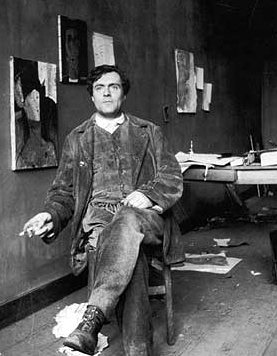
Modigliani c. 1918
Born12 July 1884
Livorno, Italy
Died24 January 1920 (aged 35)
Paris, France
EducationAccademia di Belle ArtiFlorence
Known forPaintingsculpture
Notable workRedheaded Girl in Evening DressMadame PompadourJeanne Hébuterne in Red Shawl
PartnerJeanne Hébuterne (1917–1920, his death)
Children4, including Jeanne Modigliani
Signature

Amedeo Clemente Modigliani (US/ˌmoʊdiːlˈjɑːni/Italian: [ameˈdɛːo modiʎˈʎaːni]; 12 July 1884 – 24 January 1920) was an Italian painter and sculptor who worked mainly in France. He is known for portraits and nudes in a modern style characterized by a surreal elongation of faces, necks, and figures that were not received well during his lifetime, but later became much sought-after. Modigliani spent his youth in Italy, where he studied the art of antiquity and the Renaissance. In 1906, he moved to Paris, where he came into contact with such artists as Pablo Picasso and Constantin Brâncuși. By 1912, Modigliani was exhibiting highly stylized sculptures with Cubists of the Section d’Or group at the Salon d’Automne.

Modigliani’s oeuvre includes paintings and drawings. From 1909 to 1914, he devoted himself mainly to sculpture. His main subject was portraits and full figures, both in the images and in the sculptures. Modigliani had little success while alive, but after his death achieved great popularity. He died of tubercular meningitis, at the age of 35, in Paris.

Family and early life

Modigliani’s birthplace in Livorno

Modigliani was born into a Sephardic Jewish family in Livorno, Italy.[1] A port city, Livorno had long served as a refuge for those persecuted for their religion, and was home to a large Jewish community. His maternal great-great-grandfather, Solomon Garsin, had immigrated to Livorno in the 18th century as a refugee.[2]

Modigliani’s mother, Eugénie Garsin, born and raised in Marseille, was descended from an intellectual, scholarly family of Sephardic ancestry that for generations had lived along the Mediterranean coastline. Fluent in many languages, her ancestors were authorities on sacred Jewish texts and had founded a school of Talmudic studies. Family legend traced the family lineage to the 17th-century Dutch philosopher Baruch Spinoza. The family business was money lending, with branches in Livorno, Marseille, Tunis, and London, though their fortunes ebbed and flowed.[3][4]

Modigliani’s father, Flaminio, was a member of an Italian Jewish family of successful businessmen and entrepreneurs. While not as culturally sophisticated as the Garsins, they knew how to invest in and develop thriving business endeavors. When the Garsin and Modigliani families announced the engagement of their children, Flaminio was a wealthy young mining engineer. He managed the mine in Sardinia and also managed the almost 30,000 acres (12,141 ha) of timberland the family owned.[5]

A reversal in fortune occurred to this prosperous family in 1883. An economic downturn in the price of metal plunged the Modiglianis into bankruptcy. Ever resourceful, Modigliani’s mother used her social contacts to establish a school and, along with her two sisters, made the school into a successful enterprise.[6]

Amedeo Modigliani was the fourth child, whose birth coincided with the disastrous financial collapse of his father’s business interests. Amedeo’s birth saved the family from ruin; according to an ancient law, creditors could not seize the bed of a pregnant woman or a mother with a newborn child. The bailiffs entered the family’s home just as Eugénie went into labour; the family protected their most valuable assets by piling them on top of her.

Modigliani had a close relationship with his mother, who taught him at home until he was 10. Beset with health problems after an attack of pleurisy when he was about 11, a few years later he developed a case of typhoid fever. When he was 16 he was taken ill again and contracted the tuberculosis which would later claim his life. After Modigliani recovered from the second bout of pleurisy, his mother took him on a tour of southern Italy: NaplesCapriRome and Amalfi, then north to Florence and Venice.[7][8][9]

His mother was, in many ways, instrumental in his ability to pursue art as a vocation. When he was 11 years of age, she had noted in her diary: “The child’s character is still so unformed that I cannot say what I think of it. He behaves like a spoiled child, but he does not lack intelligence. We shall have to wait and see what is inside this chrysalis. Perhaps an artist?”[10]

Art student years

Modigliani is known to have drawn and painted from a very early age, and thought himself “already a painter”, his mother wrote,[11] even before beginning formal studies. Despite her misgivings that launching him on a course of studying art would impinge upon his other studies, his mother indulged the young Modigliani’s passion for the subject.

At the age of fourteen, while sick with typhoid fever, he raved in his delirium that he wanted, above all else, to see the paintings in the Palazzo Pitti and the Uffizi in Florence. As Livorno’s local museum housed only a sparse few paintings by the Italian Renaissance masters, the tales he had heard about the great works held in Florence intrigued him, and it was a source of considerable despair to him, in his sickened state, that he might never get the chance to view them in person. His mother promised that she would take him to Florence herself, the moment he was recovered. Not only did she fulfil this promise, but she also undertook to enroll him with the best painting master in Livorno, Guglielmo Micheli.

Micheli and the Macchiaioli

Portrait of Pablo Picasso, 1915, private collection
His home in Venice.

Modigliani worked in Micheli’s Art School from 1898 to 1900. Among his colleagues in that studio would have been Llewelyn LloydGiulio Cesare VinzioManlio MartinelliGino RomitiRenato Natali, and Oscar Ghiglia. Here his earliest formal artistic instruction took place in an atmosphere steeped in a study of the styles and themes of 19th-century Italian art. In his earliest Parisian work, traces of this influence, and that of his studies of Renaissance art, can still be seen. His nascent work was influenced by such Parisian artists as Giovanni Boldini and Toulouse-Lautrec.

Modigliani showed great promise while with Micheli, and ceased his studies only when he was forced to, by the onset of tuberculosis.

In 1901, whilst in Rome, Modigliani admired the work of Domenico Morelli, a painter of dramatic religious and literary scenes. Morelli had served as an inspiration for a group of iconoclasts who were known by the title “the Macchiaioli” (from macchia —”dash of colour”, or, more derogatively, “stain”), and Modigliani had already been exposed to the influences of the Macchiaioli. This localized landscape movement reacted against the bourgeois stylings of the academic genre painters. While sympathetically connected to (and actually pre-dating) the French Impressionists, the Macchiaioli did not make the same impact upon international art culture as did the contemporaries and followers of Monet, and are today largely forgotten outside Italy.

Modigliani’s connection with the movement was through Guglielmo Micheli, his first art teacher. Micheli was not only a Macchiaiolo himself, but had been a pupil of the famous Giovanni Fattori, a founder of the movement. Micheli’s work, however, was so fashionable and the genre so commonplace that the young Modigliani reacted against it, preferring to ignore the obsession with landscape that, as with French Impressionism, characterized the movement. Micheli also tried to encourage his pupils to paint en plein air, but Modigliani never really got a taste for this style of working, sketching in cafés, but preferring to paint indoors, and especially in his own studio. Even when compelled to paint landscapes (three are known to exist),[12] Modigliani chose a proto-Cubist palette more akin to Cézanne than to the Macchiaioli.

While with Micheli, Modigliani studied not only landscape, but also portraiture, still life, and the nude. His fellow students recall that the last was where he displayed his greatest talent, and apparently this was not an entirely academic pursuit for the teenager: when not painting nudes, he was occupied with seducing the household maid.[11]

Despite his rejection of the Macchiaioli approach, Modigliani nonetheless found favour with his teacher, who referred to him as “Superman”, a pet name reflecting the fact that Modigliani was not only quite adept at his art, but also that he regularly quoted from Nietzsche’s Thus Spoke Zarathustra. Fattori himself would often visit the studio, and approved of the young artist’s innovations.[13]

In 1902, Modigliani continued what was to be a lifelong infatuation with life drawing, enrolling in the Scuola Libera di Nudo, or “Free School of Nude Studies”, of the Accademia di Belle Arti in Florence. A year later, while still suffering from tuberculosis, he moved to Venice, where he registered to study at the Regia Accademia ed Istituto di Belle Arti. It is in Venice that he first smoked hashish and, rather than studying, began to spend time frequenting disreputable parts of the city. The impact of these lifestyle choices upon his developing artistic style is open to conjecture, although these choices do seem to be more than simple teenage rebellion, or the clichéd hedonism and bohemianism that was almost expected of artists of the time; his pursuit of the seedier side of life appears to have roots in his appreciation of radical philosophies, including those of Nietzsche.

Portrait of Chaïm Soutine, 1916

Early literary influences

Having been exposed to erudite philosophical literature as a young boy under the tutelage of Isaco Garsin, his maternal grandfather, he continued to read and be influenced through his art studies by the writings of Nietzsche, BaudelaireCarducciComte de Lautréamont, and others, and developed the belief that the only route to true creativity was through defiance and disorder.

Letters that he wrote from his ‘sabbatical’ in Capri in 1901 clearly indicate that he is being more and more influenced by the thinking of Nietzsche. In these letters, he advised friend Oscar Ghiglia;

(hold sacred all) which can exalt and excite your intelligence… (and) … seek to provoke … and to perpetuate … these fertile stimuli, because they can push the intelligence to its maximum creative power.[14]

The work of Lautréamont was equally influential at this time. This doomed poet’s Les Chants de Maldoror became the seminal work for the Parisian Surrealists of Modigliani’s generation, and the book became Modigliani’s favourite to the extent that he learnt it by heart.[13] The poetry of Lautréamont is characterized by the juxtaposition of fantastical elements, and by sadistic imagery; the fact that Modigliani was so taken by this text in his early teens gives a good indication of his developing tastes. Baudelaire and D’Annunzio similarly appealed to the young artist, with their interest in corrupted beauty, and the expression of that insight through Symbolist imagery.

Modigliani wrote to Ghiglia extensively from Capri, where his mother had taken him to assist in his recovery from tuberculosis. These letters are a sounding board for the developing ideas brewing in Modigliani’s mind. Ghiglia was seven years Modigliani’s senior, and it is likely that it was he who showed the young man the limits of his horizons in Livorno. Like all precocious teenagers, Modigliani preferred the company of older companions, and Ghiglia’s role in his adolescence was to be a sympathetic ear as he worked himself out, principally in the convoluted letters that he regularly sent, and which survive today.[15]

Dear friend, I write to pour myself out to you and to affirm myself to myself. I am the prey of great powers that surge forth and then disintegrate … A bourgeois told me today–insulted me–that I or at least my brain was lazy. It did me good. I should like such a warning every morning upon awakening: but they cannot understand us nor can they understand life…[16]

Paris

Arrival

Portrait of Juan Gris, 1915

In 1906, Modigliani moved to Paris, then the focal point of the avant-garde. In fact, his arrival at the centre of artistic experimentation coincided with the arrival of two other foreigners who were also to leave their marks upon the art world: Gino Severini and Juan Gris.

He later befriended Jacob Epstein, with whom he aimed to set up a studio or Temple of Beauty to be enjoyed by all. Modigliani himself intended to create the drawings and paintings of the stone caryatids for ‘The Pillars of Tenderness’ which would support the imagined temple.[17]

Le Bateau-Lavoir in 1910

Modigliani squatted in the Bateau-Lavoir,[18] a commune for penniless artists in Montmartre, renting himself a studio in Rue Caulaincourt. Even though this artists’ quarter of Montmartre was characterized by generalized poverty, Modigliani himself presented—initially, at least—as one would expect the son of a family trying to maintain the appearances of its lost financial standing to present: his wardrobe was dapper without ostentation, and the studio he rented was appointed in a style appropriate to someone with a finely attuned taste in plush drapery and Renaissance reproductions. He soon made efforts to assume the guise of the bohemian artist, but, even in his brown corduroys, scarlet scarf and large black hat, he continued to appear as if he were slumming it, having fallen upon harder times.[14]

When he first arrived in Paris, he wrote home regularly to his mother, sketched his nudes at the Académie Colarossi, and drank wine in moderation. At that time, he was considered, by those who knew him, to be a bit reserved, verging on the asocial,[14] and is noted to have commented, upon meeting Picasso, who at the time was wearing his trademark workmen’s clothes, that even though the man was a genius, that did not excuse his uncouth appearance.[14]

Transformation

Within a year of arriving in Paris, however, his demeanour and reputation had changed dramatically. He transformed himself from a dapper academician artist into a sort of prince of vagabonds.

The poet and journalist Louis Latourette, upon visiting the artist’s previously well-appointed studio after his transformation, discovered the place in upheaval, the Renaissance reproductions discarded from the walls, the plush drapes in disarray. Modigliani was already an alcoholic and a drug addict by this time, and his studio reflected this. Modigliani’s behaviour at this time sheds some light upon his developing style as an artist, in that the studio had become almost a sacrificial effigy for all that he resented about the academic art that had marked his life and his training up to that point.

Not only did he remove all the trappings of his bourgeois heritage from his studio, but he also set about destroying practically all of his own early work, which he described as “Childish baubles, done when I was a dirty bourgeois”.[19]

The motivation for this violent rejection of his earlier self is the subject of considerable speculation. From the time of his arrival in Paris, Modigliani consciously crafted a charade persona for himself and cultivated his reputation as a hopeless drunk and voracious drug user. His escalating intake of drugs and alcohol may have been a means by which Modigliani masked his tuberculosis from his acquaintances, few of whom knew of his condition.[20] Tuberculosis—the leading cause of death in France by 1900[21]—was highly communicable, there was no cure, and those who had it were feared, ostracized, and pitied. Modigliani thrived on camaraderie and would not let himself be isolated as an invalid; he used drink and drugs as palliatives to ease his physical pain, helping him to maintain a façade of vitality and allowing him to continue to create his art.[22]

Modigliani’s use of drink and drugs intensified from about 1914 onward. After years of remission and recurrence, this was the period during which the symptoms of his tuberculosis worsened, signaling that the disease had reached an advanced stage.[23]

Nu Couché au coussin Bleu, one of the finest examples of reclining nudes by Modigliani, 1916[24]

He sought the company of artists such as Utrillo and Soutine, seeking acceptance and validation for his work from his colleagues.[19] Modigliani’s behavior stood out even in these Bohemian surroundings: he carried on frequent affairs, drank heavily, and used absinthe and hashish. While drunk, he would sometimes strip himself naked at social gatherings.[25] He died in Paris, aged 35. He became the epitome of the tragic artist, creating a posthumous legend almost as well known as that of Vincent van Gogh.

During the 1920s, in the wake of Modigliani’s career and spurred on by comments by André Salmon crediting hashish and absinthe with the genesis of Modigliani’s style, many hopefuls tried to emulate his “success” by embarking on a path of substance abuse and bohemian excess. Salmon claimed that whereas Modigliani was a totally pedestrian artist when sober, “…from the day that he abandoned himself to certain forms of debauchery, an unexpected light came upon him, transforming his art. From that day on, he became one who must be counted among the masters of living art.”[26]

Some art historians suggest[26] that it is entirely possible that Modigliani would have achieved even greater artistic heights had he not been immured in, and destroyed by, his own self-indulgences.

Output

During his early years in Paris, Modigliani worked at a furious pace. He was constantly sketching, making as many as a hundred drawings a day. However, many of his works were lost—destroyed by him as inferior, left behind in his frequent changes of address, or given to girlfriends who did not keep them.[25]

He was first influenced by Henri de Toulouse-Lautrec, but around 1907 he became fascinated with the work of Paul Cézanne. Eventually he developed his own unique style, one that cannot be adequately categorized with those of other artists.

He met the first serious love of his life, Russian poet Anna Akhmatova, in 1910, when he was 26. They had studios in the same building, and although 21-year-old Anna had recently married, they began an affair.[27] Anna was tall with dark hair, pale skin and grey-green eyes: she embodied Modigliani’s aesthetic ideal and the pair became engrossed in each other. After a year, however, Anna returned to her husband.[28]

Gallery of works

More at: https://en.wikipedia.org/wiki/Amedeo_Modigliani

The Science of Biological Sex

What does the science actually say about biological sex?

Steven Novella on July 13, 2022 (sciencebasedmedicine.org)

The debate over how best to approach people who identify as transgender or non-binary is many-layered and can be complex. Medical questions about the evidence for the safety and efficacy of specific interventions, and the ethics of treating minors, deserve thoughtful and open discussion. The optimal way to incorporate transgender athletes into competition also could benefit from a good faith debate.

Unfortunately, discussion around transgender issues suffers from at least two sources. First, it has been coopted as part of a politically-motivated culture war. This reality is exactly the opposite of thoughtful good-faith discussion. Second, for most people wrapping their head around a reality that may not conform to traditional notions of strictly binary sex and gender takes a lot or processing. Misconceptions about the basic science are rampant, and are, in fact, encouraged by the culture warriors.

Many of those who are pushing back against trans healthcare and broader acceptance are explicitly premising their position on the claim that biological sex is strictly and obviously binary. They portray themselves as taking the scientific high ground, and anyone who questions this obvious biological fact are the ones engaged in pseudoscience.

For example, in a recent article by James Lyons-Weiler (“Biology is the biology is the biology“) he begins:

Most of us are born male or female. This is not our “assigned gender”: it’s our biological sex. An individuals’s sex is determined in animals (and plants) via the chromosomes one is born with.

Wrong, right out of the gate (as I will detail below). He goes on:

For most of us, we ARE male, or we ARE female. Unfortunately, early scientific articles conflated “gender” and “sex”, and much of society conflate them this as well. Depending on context, someone might need to know your sex (karyotype).

He is saying that sex is strictly binary, it is entirely determined by karyotype, and it is completely distinct from gender. While these views are common, especially among those who are critical of the trans identity, they are also demonstrably scientifically wrong.

Biological sex is not binary

The notion that sex is not strictly binary is not even scientifically controversial. Among experts it is a given, an unavoidable conclusion derived from actually understanding the biology of sex. It is more accurate to describe biological sex in humans as bimodal, but not strictly binary. Bimodal means that there are essentially two dimensions to the continuum of biological sex. In order for sex to be binary there would need to be two non-overlapping and unambiguous ends to that continuum, but there clearly isn’t. There is every conceivable type of overlap in the middle – hence bimodal, but not binary.

This matters, and in fact it is the overlapping middle that is the very point of the discussion. Denying a trans identity is denying that overlapping middle. Let’s review the biology of sex to see what I mean.

It is absolutely true that humans display sexual dimorphism, with a typical male and typical female set of traits. There is no third sex, or pole, or sexual archetype. This can be distinguished, for example, from body type which is understood as trimodal – ectomorphic, endomorphic, and mesomorphic – forming a triangle with individuals falling somewhere between the three poles. Biological sex has only two poles, with one axis of variation between them. (See the main image for a good visual representation of binary vs bimodal.)

It is also true that most people tend to cluster around one of the two poles of biological sex. At first glance, looking superficially at the human population, it may seem binary. This is because binary and bimodal can look very similar if you don’t dig down into the details – so let’s do that.

First we need to consider all the traits relevant to sex that vary along this bimodal distribution. The language and concepts for these traits have been evolving too, but here is a current generally accepted scheme for organizing these traits:

  • Genetic sex
  • Morphological sex, which includes reproductive organs, external genitalia, gametes and secondary morphological sexual characteristics (sometimes these and genetic sex are referred to collectively as biological sex, but this is problematic for reasons I will go over)
  • Sexual orientation (sexual attraction)
  • Gender identity (how one understands and feels about their own gender)
  • Gender expression (how one expresses their gender to the world)

Let’s start with genetic sex. This may seem like a home run for binary sex, with females being XX and males XY, but on closer inspection this is not true. Again, yes, most people fall into one of these two chromosomal patterns, but we also see other patterns, such as XXY, XYY, XXX, etc. Further, some people can be mosaics, with some cells having XX and others XY.

But I think even more important than these chromosomal states is the fact that chromosomes alone do not fully tell the story of the genetics of sexual dimorphism. There are a number of genes involved in sexual characteristics (not all located on the sex chromosomes), and they can vary dramatically within chromosomal sex types, and even among the cells in an individual person, and throughout one’s life. John Achermann, who studies sex development and endocrinology at University College London’s Institute of Child Health, characterizes the situation this way:

I think there’s much greater diversity within male or female, and there is certainly an area of overlap where some people can’t easily define themselves within the binary structure.

Another layer of genetic complexity is gene copy number. For example, XY individuals with extra copies of the WNT4 gene can develop atypical genitals and gonads, and a rudimentary uterus and Fallopian tubes.

Further still, genes alone are not the whole picture of biological sex. There are a host of epigenetic factors at play, including hormone levels at different stages of development, hormone receptor sensitivity, and metabolic factors. All of these influence the development of sexual characteristics, which can vary along a spectrum. For example, there are XY females who are chromosomal males but develop mostly or entirely female because of androgen insensitivity. There are, essentially, women walking around who have no idea they have XY chromosomes.

Let’s move on to the primary sexual characteristics, which are essentially the internal reproductive organs and external genitalia; for females that is ovaries, uterus, and vagina, for males it is testes, prostate and penis. Do these characteristics vary in a strictly binary or bimodal way? When it comes to gametes, these are strictly binary – egg or sperm. However, even here there are intersex individuals with “ovotestes”, some of which can make both eggs and sperm. It is fair to say when it comes to reproduction the system is binary, but sex is about more than reproduction.

This is another concept that many people get caught up on, thinking in evolutionarily simplistic ways. The argument often goes that “sex is only about reproduction”, and since gametes are binary, sex in total is binary. This is incredibly reductionist, and misses the fact that traits often simultaneously serve multiple evolutionary ends. Sex, for example, is also about bonding, social relationships, power, and dominance. Think about this – what percentage of the time that humans have sex is the express purpose reproduction? How many people have no desire to ever have children, but still have an active sex life? Can there be romance without sex? Why are there so many aspects of sex that are not strictly reproductive?

Beyond gametes, other primary sexual characteristics are clearly bimodal but not strictly binary. Developmentally, the penis is the male correlate of the female clitoris. Both vary significantly in size, in rare cases meeting in the middle in what is called “ambiguous genitalia”. Some labia may partially fuse into a scrotum. There is also no sharp demarcation for how large a clitoris has to be or how small a penis has to be in order to be considered “ambiguous”. Such conditions are also not uncommon. A 2000 review found:

We surveyed the medical literature from 1955 to the present for studies of the frequency of deviation from the ideal male or female. We conclude that this frequency may be as high as 2% of live births. The frequency of individuals receiving “corrective” genital surgery, however, probably runs between 1 and 2 per 1,000 live births (0.1-0.2%).

A 2015 review puts the estimate at 1.7%. Still, some may argue, this is all not relevant to the question of, for example, gender identity. However, it establishes the complexity of sexual development, which results from not only chromosomes but a host of genetic and epigenetic factors, hormone levels, hormone receptor sensitivity, and metabolic factors. There is no one measure that by itself determines biological sex. And, most importantly, even within the subpopulation who have unambiguously male or female chromosomes, gametes, and genitals, there is considerable variation in their secondary sexual characteristics, which also vary in a bimodal and not strictly binary pattern.

Some secondary sexual characteristics are present from a young age while others emerge during puberty, and include bone structure, fat distribution, shape of the pelvis, muscular development, height, pitch of voice, and degree and pattern of hairiness. For all of these characteristics there are clusters of typically male or typically female, but these are statistical with great variation within groups. For example, if the only thing you knew about someone was how tall they were, or how hairy they were, you would likely not be able to determine their sex. Men are statistically taller and stronger than women, but many men are shorter than or weaker than many women. I have less body hair than many women I know.

If what I have discussed up to this point were all there were to sex, I honestly don’t think the topic would be that controversial. All biological traits vary in a complex and messy way, and sexual characteristics are no exception (why would they be?). Most of the controversy surrounds sexual dimorphism and the brain. Again, here we see that there are statistical differences only, with greater variation within the sexes than between them.

One brain feature that gets a lot of attention, however, is sexual orientation. I know I am framing this with a conclusion that some people contest, that sexual orientation is essentially determined by brain development, but that is the current consensus of scientific evidence and opinion. People are generally born with their sexual orientation, even if it is not fully realized until they go through puberty. In fact, I would consider sexual orientation to be part of biological sex (which is why I divided up sexuality as I did above).

Especially before the science dealing with this issue was more mature, this was a controversial question. Those who opposed gay rights claimed (and some still claim) that homosexuality is a choice, or a product of social influences, perhaps even a mental disorder or pathology. Years of research has lead to the conclusion that sexual orientation among humans is simply more fluid than old-school strictly binary concepts. People are heterosexual, homosexual, bisexual, pansexual (romantic feelings are blind to sex or gender), asexual, and everything in between. I don’t think that anyone can reasonable defend today the position that sexual orientation is strictly binary, and any deviation is pathological.

If, then (as seems clear), sexual orientation is a brain function largely determined by genes, hormones, receptor sensitivity, and other epigenetic factors all affecting brain development and physiology, then it’s reasonable to consider sexual orientation an aspect of biological sex also. In a 2018 commentary published in PNAS, neurobiologist Dick F. Swaab begins:

Current evidence indicates that sexual differentiation of the human brain occurs during fetal and neonatal development and programs our gender identity—our feeling of being male or female and our sexual orientation as hetero-, homo-, or bisexual.

What does this mean for our binary vs bimodal sex question? I think it makes it pretty clear that biological sex is not strictly binary, because we can see any combination of morphological sexual characteristics and sexual orientation – you can’t know someone’s sexual orientation by looking at their genitals.

This is where communicating these ideas gets tricky, because some experts might express this reality by saying that there are more than two sexes. I think this may be counterproductive conceptually. I prefer the “bimodal but not binary” approach. But understand the real point – a strictly binary definition of biological sex cannot possibly capture all of the actual variation, which includes many possible states of sexual orientation. You can also see, on the other side, that claiming there are only two sexes because “gametes” is hopelessly reductionist and poorly informed.

And now gender

The situation gets more complex when we turn to gender identity. All the old arguments that were marshalled against homosexuality (that it is deviant, pathological, a choice, a social contagion) are now being applied to those with a non-traditional gender identity, and with just as little scientific basis. The scientific research is not as well developed as it is for sexual orientation, but what we have so far strongly suggests (just as it did in previous decades for orientation) that people are essentially born with their gender identity. Many people who identify as trans knew their gender identity from a very young age, similar to sexual orientation. The principle of parsimony would suggest gender identity is also a brain phenomenon, and therefore just another aspect of biological sex.

What researchers find when they simply describe gender in the population are people who display pretty much every combination of morphological sex, gender identity, expression, and sexual orientation. Gender identity does not appear to be binary at all, and does not even fall into categories as cleanly as sexual orientation. What we know is that a small percentage of the population does not identify with the sex that they were assigned at birth. Why would I say it that way? This too has become an issue of controversy, as if sex is an opinion. However, given everything I reviewed above, what is the alternative? “Biological sex” doesn’t work, because it probably includes gender identity, so that becomes self-contradictory. Sex is assigned at birth based entirely (in most cases – unless for some reason there was a genetic test) on examination of the external genitalia. Sure, because we are a bimodal species, this is a reasonable marker for biological sex for many people. But of course it does not capture all of the biological aspects of sex we reviewed (such as genetics and hormone levels), does not capture sexual characteristics that do not emerge until puberty, and does not capture anything to do with brain development and function.

To take the position that the gender assigned at birth is completely objective and unambiguous, the beginning and ending of biological sex, is to also believe that external genitalia as manifested at birth are 100% determinative of every other aspect of biological sex. But we know this not to be true. It’s definitely not true for secondary sexual characteristics, which can vary significantly, it’s not true for sexual orientation, and it’s not true for gender identity.

In practice, therefore, someone who is trans (or gender non-binary or gender queer) does not have a gender identity that traditionally aligns with their external genitalia (as it is apparent shortly after birth). This is no different than people who have a sexual orientation that does not traditionally align with their external genitalia. This is not at all surprising once we understand the complex messiness of sexual development. In my opinion, a reasonably thorough and objective review of the current scientific understanding of biological sex results in the unavoidable conclusion that human sex is bimodal but not strictly binary.

Denying difference out of existence

Some people, however, may accept the specific arguments but reject the conclusion with what I consider to be dubious logic. One approach is to say – what is the practical difference between bimodal and binary? Why should sexuality in any way be defined by the 2% (to use a representative round figure) rather than the 98%? But this misses the actual issue, which is how we think about the 2% – are they part of biological diversity or can we define them out of existence?

The point of promoting the fiction of strictly binary sex is that it eliminates the middle ground. There are two sexes and nothing in between. Anyone who does, in some way, fall in between is clearly an “aberration”. Further (and this is often the point) they claim that any conflict between genitals and sexuality must be a mental disorder. Given all the biological evidence, however, it seems unavoidable to conclude that human sexuality is bimodal, with lots of variation in the middle. From this perspective trans individuals are just one more manifestation of the full and demonstrably biological diversity that is human sexuality.

The other related approach is to pathologize the trans identity. Just as with homosexuality in decades past, this view holds that a trans identity must be pathological, because there are only two “correct” gender identities, the ones that traditionally align with one’s external genitalia. This position ultimately rests on either circular reasoning or a flawed appeal to nature (again, “because gametes”).

With homosexuality, the question of “nature” is easier to answer. Homosexuality exists pretty much in every animal species we examine and to similar levels. Some (like bonobos) have extremely high rates of homosexual and/or bisexual behavior. So it’s hard to argue that homosexuality is “unnatural”. There is no equivalent to gender among non-human animals, however. Because gender expression is so cultural, it is hard to scientifically examine what an animal’s gender identity might be. Attempts to infer from sexual behavior would be confounded with sexual orientation. (There is some interest in researching this question among primates, however.)

It is also possible to argue that sexual orientation, which is pretty clearly biological, may be phenomenologically different in nature from gender identity – that while sexual orientation is biological, gender identity is not. This is not impossible, and we do need further research to have a confident answer. But given what we do know the simplest answer is that gender identity is a brain function as much as sexual orientation is. Gender identity awareness is usually established by age 2-3, which itself is strong evidence it is biological. Further, the position that “gender identity is all psychocultural” should not be treated as the default answer, and it is not reasonable to place the burden of proof entirely on the biological side of the question.

We could also approach this question scientifically by looking at the brains of cis vs trans individuals to see if there is a difference. This research is preliminary, with mixed findings, but is trending in the direction of showing some differences between cis and trans brains. Overall studies do find differences in some measured features, with trans brains looking more like the identified gender than the apparent biological sex (even prior to any medical interventions). A 2015 review found:

A difference in brain phenotype of people with GI compared to natal sex controls in various brain measures suggests a sex-atypical development of the brain. However, it remains unclear whether these changes originate from prenatal organization alone. Knowledge of the development of the brain during adolescence (Giedd et al., 2012), and the importance of puberty in the clinical presentation of GI (Steensma et al., 2013), suggest that this period is pivotal in understanding the development of GI. Recent work that found subtle deviations in GM volume (Hoekzema et al., 2015), and brain activation during executive functioning from their natal sex (Staphorsius et al., 2015), as well as a response to a pheromone-like substance that was similar to their experienced gender in transgender adolescents (Burke et al., 2014), underscores the need to determine the timing and nature of sex-atypical organization.

A 2018 study found:

These results on brain structure are thus partially in line with a sex-atypical differentiation of the brain during early development in individuals with GD (gender dysphoria), but might also suggest that other mechanisms are involved. Indeed, using resting state MRI, we observed GD-specific functional connectivity in the visual network in adolescent girls with GD. The latter is in support of a more recent hypothesis on alterations in brain networks important for own body perception and self-referential processing in individuals with GD.

Overall it’s too early to form a confident conclusion, but the data is trending in the exact same direction as similar research into sexual orientation – the brains of trans individuals appear to be different than their cis counterparts.

All things considered, I think an objective look at the science of biological sex indicates that humans are sexually dimorphic and bimodal, but that biological sex is much more complicated than it may at first appear and is not strictly binary. While we still need to do a lot more research to fully understand the trans / gender non-binary phenomenon, it seems that variations in gender identity are just one more manifestation of biological sexual variability. There is also no one system to categorize all of biological sex (do we use chromosomes, genes, hormone levels, genitalia, gametes?), and certainly humanity cannot be placed entirely into two categories. The binary system breaks down in the middle.

Author

  • Steven NovellaFounder and currently Executive Editor of Science-Based Medicine Steven Novella, MD is an academic clinical neurologist at the Yale University School of Medicine. He is also the host and producer of the popular weekly science podcast, The Skeptics’ Guide to the Universe, and the author of the NeuroLogicaBlog, a daily blog that covers news and issues in neuroscience, but also general science, scientific skepticism, philosophy of science, critical thinking, and the intersection of science with the media and society. Dr. Novella also has produced two courses with The Great Courses, and published a book on critical thinking – also called The Skeptics Guide to the Universe.

Weekly Invitational Translation Group

Translation is a 5-step process of “straight thinking in the abstract.” The first step is an ontological statement of being beginning with the syllogism: “Truth is that which is so. That which is not truth is not so. Therefore Truth is all there is.” The second step is the sense testimony (what the senses tell us about anything). The third step is the argument between the absolute abstract nature of truth from the first step and the relative specific truth of experience from the second step. The fourth step is filtering out the conclusions you have arrived at in the third step. The fifth step is your overall conclusion.

The claims in a Translation may seem outrageous, but they are always (or should always) be based on self-evident syllogistic reasoning. Here is one Translation from this week.

1)    Truth is that which is so.  That which is not truth is not so.  Therefore Truth is all that is.  Truth being all is therefore total, therefore whole, therefore infinite, therefore complete, therefore otherless, therefore one, therefore united, therefore harmonious, therefore lovely, therefore loving. I think therefore I am.  Since I am and since Truth is all that is, therefore I am Truth.  Since I, being, am Truth, therefore I, being, am everything that Truth is.  Therefore I, being, am total, whole, complete, otherless, one, united, harmonious, lovely, loving.  Since I am Truth and since I am mind, therefore Truth is Mind (Consciousness).

2)    I come from God so I must take myself more seriously than others.

Word-tracking:
I:  ego, ego-centric, confined viewpoint
God:  Supreme Being, supernatural being, deity, divine
serious:  weighty, grave, important, that which is imported

3)    Truth being all that is, nothing can be brought in from outside of all, therefore there is nothing important (imported) in Truth OR All is domestic.  Since nothing in Truth is important, nothing is grave (life or death) or weighty in Truth, therefore Truth is weightless, immortal.  Truth being one cannot be divided up between supreme and regular being, therefore there is no God OR All is God.  Truth being Mind/Consciousness and Truth being all, therefore Truth is limitless Mind, Infinite Mind and Infinite Mind cannot have a limited, finite perspective, therefore there is no egocentricity in Truth, there is no blind spot in Truth.  

4)    There is nothing important (imported) in Truth
        All is domestic.
        Truth is weightless, immortal. 
        There is no God OR All is God.
        There is no egocentricity in Truth.  
        There is no blind spot in Truth.

5)    Truth is the domestic perspective of weightless, all-seeing, immortal Mind.

For information about Translation or other Prosperos classes go to: https://www.theprosperos.org/teaching

How a Bay Area startup plans to build and sell the world’s first flying car

Ricardo Cano

Aug. 3, 2023 (SFChronicle.com)

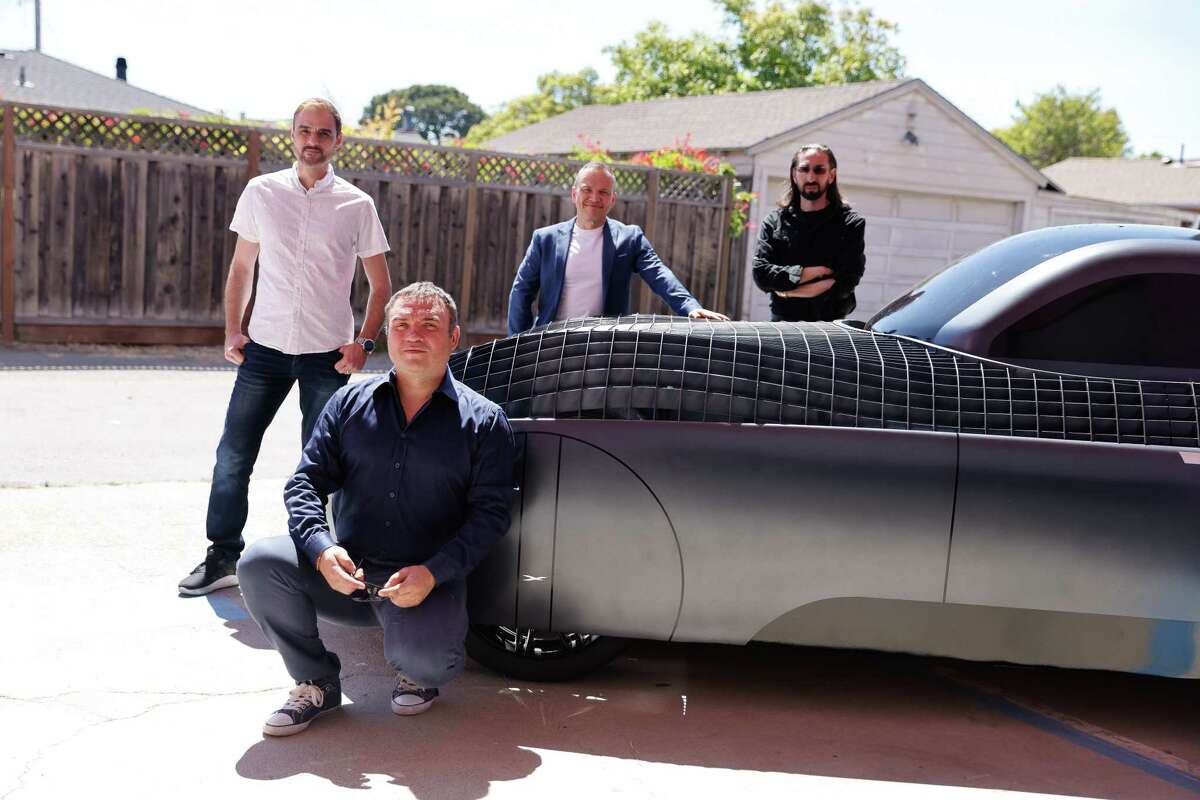
The display model of the Alef flying car provides a glimpse of the company’s plans, to deliver flying cars like this to its customers.
1of3The display model of the Alef flying car provides a glimpse of the company’s plans, to deliver flying cars like this to its customers.Lea Suzuki/The Chronicle
Constantine Kisly, kneeling, VP of Engineering; Pavel Markin, standing left to right, VP of Electronics; Oleg Petrov, VP of R&D and Jim Dukhovny, CEO; stand for a portrait with the display model of their Alef flying car.
Alef’s Model A flying car, as shown in a rendering, is designed to be able to drive or fly.

Alef Aeronautics’ attempt to build and sell the world’s first flying car began in 2015 as many things do in Silicon Valley — inside a boutique coffee shop in Palo Alto.

At a Coupa Cafe, Alef CEO Jim Dukhovny sat at a table with his three future co-founders — Constantine Kisly, Oleg Petrov and Pavel Markin — as he drew his concept of a flying car on a napkin.

How long, Dukhovny asked them, would it take to successfully build such a technology?  

“They told me it was going to take about six months,” Dukhovny told The Chronicle. “Here we are eight years later. We’re still building.”

It’s taken longer than envisioned, but the possibility of flying cars hovering above congested roadways like the fantastical vehicles seen in “The Jetsons” or “Blade Runner” has since moved closer to reality. In late June, Alef received permission from federal regulators to test its electric car’s flight capabilities in limited locations.

The all-black, futuristic-looking car unveiled in San Mateo last October features a central cabin that can fit two people and is surrounded by a mesh automobile frame. Instead of a conventional engine, the flying car is designed with four motors — one inside each wheel — and comes equipped with eight propellers.

The company says the electric car will have a flying range of 110 miles and a road range of 200 miles. Alef plans to sell its Model A car for $300,000 each, starting in 2025.

Dukhovny said the company has successfully “transitioned” prototypes from the grounded horizontal position that normal cars drive in to its “biplane mode” that allows for full flight capabilities. The Model A car will also feature a third “rotorcraft mode” in which the car can briefly take flight from a horizontal position.

The Model A car takes flight in a vertical position, with the left and right side of its mesh body acting as wings, Dukhovny said. The vehicle’s cabin stays parallel to the ground during the transition and throughout biplane mode, he said.

The San Mateo-based company claimed in a press release its flying car was the first to be granted what’s known as a special airworthiness certificate from the Federal Aviation Administration. The certificate designates Alef’s flying car as a “low-speed vehicle,” meaning it can’t drive on paved roads faster than 25 miles per hour.

Alef and its nascent technology are backed by venture capitalist Tim Draper and Elon Musk’s SpaceX. The startup has privately demonstrated its electric car’s flight transition to investors, and plans to use the FAA’s certificate for testing ahead of a public demonstration by the end of the year, Dukhovny said.

Alef first achieved the flight transition in 2018 with a “small-scale prototype” before flying a full-sized prototype in 2019, Dukhovny said.

A year since the Model A car’s public unveiling, and after seven years “working in stealth mode,” Dukhovny said the public will soon get to see what left him and Alef’s co-founders in awe back in 2018.

“It was amazing,” Dukhovny said of the inaugural flight transition. “We expected it to fall, and it didn’t fall.”

It’s unclear how much the flying car will weigh, exactly, though it will be light enough to be equipped with a ballistic parachute for emergency landings.

Even as Alef says it’s close to making one of the most fanciful conceptions of science fiction a commercial reality, many more questions remain.

It’s unclear, for example, whether the flying cars will require certification beyond a regular driver’s license to operate, as well as how federal, state and local governments will regulate the technology.

Also unknown is the scale in which flying cars will be used, how they will impact cities, where they’ll be allowed to deploy and what the rules of commuting by sky will be. Dukhovny envisions it will take years, if not longer, for the technology to become mainstream.

“It’s not like you’re going to see even one or two (flying cars) tomorrow in San Francisco,” Dukhovny said. “It’s going to be very incremental. People will adapt.”

Some people have already placed $1,500 deposits for their own flying cars. Last week, Alef announced that it has, so far, sold more than $750 million worth of flying cars through pre-orders.

Reach Ricardo Cano: ricardo.cano@sfchronicle.com; Twitter: @ByRicardoCano

Written By Ricardo Cano

Ricardo Cano covers transportation for The San Francisco Chronicle. Before joining The Chronicle in 2021, he covered K-12 education at CalMatters based in Sacramento and at The Arizona Republic in Phoenix as the newspaper’s education reporter. He received his bachelor’s degree in journalism at Fresno State.

San Francisco Chronicle Homepage - Site Logo

HEARST newspapers logo©2023 Hearst Communications, Inc.

Man Reaches Deep Within To Find The Courage To Run From All His Problems

Published Yesterday (TheOnion.com)

Image for article titled Man Reaches Deep Within To Find The Courage To Run From All His Problems

NEW YORK—Drawing from reserves he never even knew he had until this moment, local man Kevin Nachtman reportedly reached deep within himself Thursday to find the courage to run from all his problems. “You never know how strong you are until it’s time to cut your losses and get the fuck out,” said Nachtman, who used every ounce of both his physical and mental strength to avoid confronting the root of his professional, financial, relationship, and familial problems. “Whoever said ‘You can’t outrun your problems’ has clearly never met me. It’s tough to bury your head in the sand, but someone has to do it. And next time I have to run from my problems, it will be even easier since I’ve done it before.” Reached for comment, Nachtman’s children conceded that it was very brave of him to abandon them.

UCSF study finds childhood trauma has lasting effects into old age

UCSF Mission Bay (copy)
A UCSF study released Wednesday has discoverd links between adverse childhood experiences and other health complications persisting into old age.Examiner FILE

A new UCSF study shows how childhood trauma can impact people later in life — but the data also creates a roadmap for how to care for victims as they get older.

The study, published Wednesday in the Journal of General Internal Medicine, looked at how “adverse childhood experiences” — such as physical violence or abuse, severe illness, family financial stress, or being separated from parents — affected children.

Those who experienced these events — particularly violence — were more likely to have both physical and cognitive issues in life, persisting even until old age, the study showed.

For example, people who dealt with violence at a young age were 40% more likely to have some sort of mobility impairment, such as trouble walking; 80% were more likely to have difficulty with daily activities later in life; and those who came from unhappy families were 40% more likely to have at last mild cognitive impairment.

While there is interest in how someone’s childhood can influence health later on in life, there is still more that could be done, said Dr. Alison Huang, one of the lead authors of the study. Huang is a UCSF professor of medicine and director of research in general internal medicine at UCSF Health.

The study’s authors said they hope the information they gleaned from study participants will improve geriatric care as more and more of the U.S. population gets older.

“Thinking about it, not only on the individual level of what we can do in our clinical care, but also on a broader societal level of how we can intervene on these upstream determinants of health,” said Dr. Anita Hargrave, one of the study’s authors and an assistant professor of medicine at UCSF.

Challenging policymakers and the larger community to acknowledge this part of people’s health will be an important step in addressing some of the societal structures that cause these types of traumas, Hargrave said.

“People who identify with having historically marginalized identities, racial and ethnic identities, particularly African American and Latinx folks, have a higher burden of ACEs,” she said, referring to “adverse childhood experiences.”

“Studies have shown that they experience four or more ACEs more frequently than people who identify with other racial and ethnic identities,” she said. “So thinking about how these societal structures, discrimination, racism, structural violence, all influence not only the experience of adverse childhood events or trauma, but also how it can be perpetuated over time.”

For the study, more than 3,300 Americans between ages 50 and 97 underwent physical performance testing that evaluated their balance and walking ability, along with their cognitive and memory functions.

Nationally, the Centers for Disease Control and Prevention says 60% of adults have experienced childhood trauma, which can lead to physical issues like cardiovascular disease and diabetes to mental health problems, like depression.

“This research is just another way of looking at how early childhood experiences can impact not only the expression of genes and your mental health, but also potentially the way that you think, the way that you walk, the different ways that you can have a quality of life throughout your lifetime,” Hargrave said.

“I think most clinicians caring for older adults are just focusing on what’s happening to them now in older age, and not thinking about how what’s happening with older age could potentially have had its origin when patients were really young,” Huang said.

The findings also indicate the importance of these events to the patients themselves.

“We’re seeing in this study is that people really remember these experiences that happened to them over 50 years ago,” said Hargrave. “And that is really something that they hold in their memory and may impact their health currently.”

Huang, Hargrave and the study’s other authors hope to continue building off its results. Huang said it could even lead to changes in healthcare.

“It’s certainly something that I would like to continue to explore,” said Huang. “I think that an exciting part of this field is, is the next step, which is what do we do about this information?”

While the study was just released recently, Huang said she is already considering the possibilities.

“We can identify best practices in taking care of people who have experienced trauma,” she said. “And that’s where the field really is growing now, and that’s what makes it such an exciting time to be doing violence prevention and addressing violence, through understanding its mechanisms to impact health.”