All posts by Mike Zonta

A.H. Almaas on losing your essence

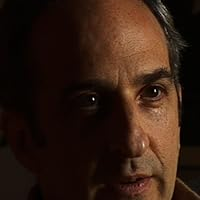
(Image from deeptransformation.io)

“The fundamental thing that happened, and the greatest calamity, is not that there was no love or support. The
greater calamity, which is caused by the first calamity is that you lost the connection to your essence. That is
much more important than whether your mother or father loved you or not.”

–A.H. Almaas

A. H. Almaas is the pen name of A. Hameed Ali, an American writer and spiritual teacher who writes about and teaches an approach to spiritual development informed by modern psychology and therapy which he calls the Diamond Approach. “Almaas” is the Arabic word for “diamond”. Almaas is originally from Kuwait. Wikipedia

Born 1944 (age 82 years), Kuwait

Living a Psychic Life with Marla Frees

New Thinking Allowed with Jeffrey Mishlove Mar 16, 2026 Marla Frees has spent 25 years as a successful television and stage actress. For the past 18 years, she has been working as a professional psychic. She is author of American Psychic: A Spiritual Journey from the Heartland to Hollywood, Heaven, and Beyond. Her website is https://www.americanpsychicbook.com/. Here she describes her challenges as the child of an alcoholic father and an abusive mother as well as the challenges of working as a psychic professional. She enumerates the various individuals who were of help to her along the way. She notes that her experiences as an actress helped her to explore life from the perspective of other people. She explains how intuitive impressions arise in her awareness. New Thinking Allowed host, Jeffrey Mishlove, PhD, is author of The Roots of Consciousness, Psi Development Systems, and The PK Man. Between 1986 and 2002 he hosted and co-produced the original Thinking Allowed public television series. He is the recipient of the only doctoral diploma in “parapsychology” ever awarded by an accredited university (University of California, Berkeley, 1980). He is also the Grand Prize winner of the 2021 Bigelow Institute essay competition regarding the best evidence for survival of human consciousness after permanent bodily death. He is Co-Director of Parapsychology Education at the California Institute for Human Science. (Recorded on September 6, 2020)

Book: “Reality”

Reality

Peter Kingsley

Reality introduces us to the extraordinary mystical tradition that lies right at the roots of western culture. This is the true story of Parmenides, Empedocles, and those like them: spiritual guides and experts in other states of consciousness, healers and interpreters of dreams, prophets and magicians who laid the foundation for the world we now live in. Reality documents the excruciating process that led to their work and teaching being distorted, covered over, forgotten. And most importantly, it presents these original teachings in all their immediacy and power—revealing their ability, just as vibrant now as at the dawn of the western world, to awaken us to what reality truly is.

About the author

Peter Kingsley

Classical scholar and spiritual teacher Peter Kingsley was born in the UK. He received his BA from the University of Lancaster, his Master of Letters from King’s College, Cambridge University, and his PhD from the University of London. He is a former Fellow of the Warburg Institute in London and has held honorary professorships or fellowships at universities in Canada, the United Kingdom and the United States.

Kingsley’s early writings are traditionally academic, and culminate in the 1995 Ancient Philosophy, Mystery, and Magic: Empedocles and Pythagorean Tradition. His more recent works emphasize the lived experience and daily application of the ancient mystical tradition that helped give rise to the western world.

He continues to write and teach, working to make the spirituality and meditative disciplines of Empedocles, Parmenides, and those like them available to people today. His most recent book, Catafalque: Carl Jung and the End of Humanity, is due to be published in November 2018 and for the first time it shifts the focus of his work directly onto our modern world.

(Goodreads.com)

Esoteric Ceremonial Magic with Ike Baker

New Thinking Allowed with Jeffrey Mishlove Mar 15, 2026 Ike Baker is an author, lecturer, and independent scholar specializing in Western esoteric traditions. He is the host of the Arcanvm YouTube channel and podcast, where he produces documentary-style presentations exploring the history and practice of magic, mysticism, and occult philosophy. Baker is also a senior adept and temple chief within the Hermetic Order of the Golden Dawn and an initiate of several related initiatory traditions. His books include AEtheric Magic: A Complete System of Elemental, Celestial & Alchemical Magic, Esoteric Mythology: The Generative and Transformative Power of Imagination, and A Formless Fire: Rediscovering the Magical Traditions of the West. Ike discusses the history, philosophy, and practice of esoteric ceremonial magic within the Western tradition. He traces its roots from ancient shamanic practices, Greek philosophy, and Egyptian religion through Renaissance occultism and into modern initiatory orders such as the Hermetic Order of the Golden Dawn. Baker explains how ceremonial magic functions as a disciplined exploration of consciousness and metaphysical causality aimed at spiritual transformation and the awakening of the soul. 00:00:00 Introduction defining ceremonial magic and consciousness 00:01:50 Origins of ritual practice in shamanic and ancient cultures 00:06:15 Neoplatonism and the philosophical foundations of magic 00:13:30 Transmission of magical traditions through late antiquity 00:19:00 Egyptian, Vedic and cross cultural influences on magic 00:26:10 Defining magic as metaphysical causality and consciousness 00:31:20 The Golden Dawn and modern ceremonial practice 00:38:40 Theurgy versus thaumaturgy in magical work 00:47:10 Poetry, myth and cultural revival in magical traditions 00:58:39 Conclusion enchantment and the reawakening of the sacred New Thinking Allowed host, Jeffrey Mishlove, PhD, is author of The Roots of Consciousness, Psi Development Systems, and The PK Man. Between 1986 and 2002 he hosted and co-produced the original Thinking Allowed public television series. He is the recipient of the only doctoral diploma in “parapsychology” ever awarded by an accredited university (University of California, Berkeley, 1980). He is also the Grand Prize winner of the 2021 Bigelow Institute essay competition regarding the best evidence for survival of human consciousness after permanent bodily death. He is Co-Director of Parapsychology Education at the California Institute for Human Science. (Recorded on March 3, 2026)

New Moon In Pisces – All Roads Lead To This Moment

(Astrobutterfly.com)

All roads lead to Rome” originates from the extensive Roman road network that once connected the capital to the far reaches of the empire.

The phrase suggests that no matter what path you take, you’ll eventually end up in the same place, because whatever is central and foundational will ultimately be reached.

This metaphor suggests that every network of roads – read meanings, projects, empires – has a center: an originating point from which everything begins and to which everything eventually returns.

new moon in pisces

And this reminds us of Pisces, the last sign of the zodiac.

The Piscean ocean is both an ending of a cycle – everything in nature eventually flows into the sea – and the beginning of a new one, since life itself emerges from the ocean.

In this sense, Pisces brings us back to a deeper, forgotten origin. Once remembered, the scattered threads reveal the story they were always part of.

New Moon In Pisces Conjunct Neptune 

The New Moon on March 19th, 2026 is at 28° Pisces and it’s conjunct its ruler, Neptune. The New Moon-Neptune is at the apex of a triangle with Pluto in Aquarius and Uranus in Taurus.

With the New Moon activated by all outer planets, there is a sense that multiple processes funnel into one moment of realization or culmination. 

All roads lead to this New Moon!

28° Pisces is at the very end of the zodiac wheel. We’re still in the water.

But we’re also very, very close to the shore. 

We can see the land ahead, we can hear sounds, and we sense that we are about to arrive somewhere.

From Pisces to Aries

Neptune, Pisces’ ruler, is already in Aries. Astrologically, we are already in the new Aries era

Yet the New Moon at the end of Pisces comes to reveal something fundamental about where we’re coming from.

When we enter this world at 0° Aries, the slate is wiped clean – and we forget our prebirth memories, previous lives, and the larger story of the soul.

Yet at the threshold of Aries, we are still very close to Pisces – and sometimes, echoes of that deeper memory come to us through dreams and other symbolic messages.

Like a whisper from the intelligence of the universe, these subtle messages remind us who we really are, where we’ve come from, and guide us in the new life we’ve chosen for ourselves.

New Moon In Pisces – The Light Passing Through A Prism

The Sabian symbol of the New Moon is “The light passing through a prism”.

A prism is a device used to separate light into all colors of the rainbow.

As a metaphor, the prism speaks to our ability to take something that appears undifferentiated or vague and recognize its underlying structure.

The prism does not create the colors – it simply reveals what was already contained within the light.

This Piscean New Moon may bring a similar revelation. Something that has been projected onto us or perceived as a single story may now separate into its different components, allowing us to see the message for what it truly is.

If we’ve been ‘sensing’ something but haven’t clearly understood it, if we’ve felt that we are part of a story that is not yet fully clear, 

… the New Moon in Pisces may bring us back to Rome, bringing the missing insight that helps us make sense of it all

Once the prism is used, once the spectrum is revealed, everything falls into place. Of course, all roads lead to Rome!

Or… fill in the blanks – whatever the central origin or truth happens to be.

New Moon In Pisces – All Roads Lead To This Moment 

The New Moon in Pisces helps us understand the deeper story behind recent events.

This might show up like:

  • Becoming aware of the deeper motivations and underlying dynamics shaping the narrative
  • Understanding the root cause of the recent developments emerging from behind the scenes
  • A new “Rome” or “Atlantis” rising up – read trade routes, geopolitical hubs, commercial epicenters

At a personal level, the New Moon in Pisces will help us make sense of something that has been puzzling us for a very, very long time.

This is a New Moon in the last degrees of the zodiac – yet conjunct Neptune at 1° Aries – helping us tap into an existing resource or overlooked insight to create a new story for ourselves.

The Aries era is already here – but the “what” and “how” will only become clear at, and after this New Moon. 

→ On March 19th, we have the New Moon in Pisces. On March 20th, the Sun enters Aries, activating the zodiac origin degree. Soon after, Mercury turns direct.

The astrology of the coming weeks screams revelation, new developments, and turning points.

And when the deeper pattern eventually reveals itself, we will understand why all roads had to lead to this moment.

Aspects And The Hero’s Journey Webinar

On March 22nd, 2026, Caro from Astro Butterfly’s Age Of Aquarius Community will host a live webinar, “Aspects and The Hero’s Journey”, where she explores planetary aspects through the lens of the Hero’s Journey.

In the Hero’s Journey, the conjunction – the same alignment that creates the New Moon – symbolizes the “Call to adventure”: the moment when something shifts and we are invited to step out of the “Ordinary world” and embark on a new path.

The “Call to adventure” or the “New Moon” phase of the cycle is the first step in Joseph Campbell’s 12-step Hero’s Journey – a journey that maps surprisingly well onto the structure of the natal chart.

If you want to go beyond common definitions and see how aspects actually come together to tell a coherent story in the natal chart – much like the kind of insight that can emerge at moments like this New Moon …

You can learn more about the webinar and RSVP at this link:

[WEBINAR] Aspects And The Hero’s Journey – March 22nd, 2026

Subscribe To Future Updates

If you want to keep up with the future transits, make sure you subscribe to Astro Butterfly’s weekly newsletter

Join 49.000+ Astro Butterflies around the world!

Click here to subscribe

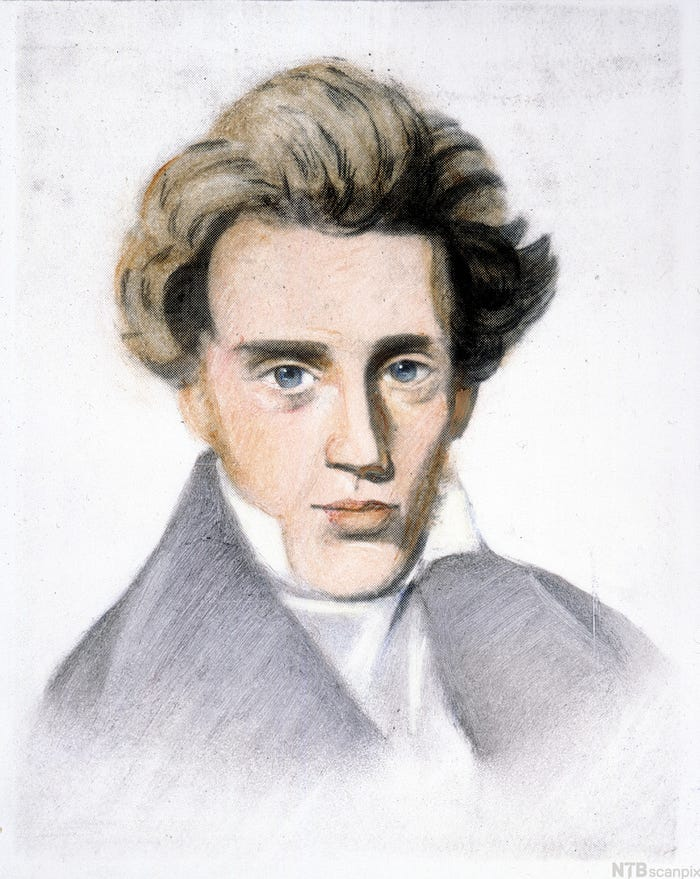
Kierkegaard on despair

“The most common form of despair is not being who you are.”

~ Kierkegaard

Søren Aabye Kierkegaard was a Danish philosopher, theologian, and writer who is widely considered the father of existentialism. His prolific writing career, spanning 1843–1850, explored themes of faith, existence, and truth. Kierkegaard’s work crossed the boundaries of philosophy, theology, psychology, and literature, and his ideas have had a lasting impact on these fields.  Wikipedia.org

Born May 5, 1813, Copenhagen, Denmark

Died November 11, 1855 (age 42 years), Copenhagen, Denmark

How to Feel Whole in a Broken World: An Astronaut’s Antidote to Despair

By Maria Popova (themarginalian.org)

Once our basic physical needs for sustenance and shelter are met, most of our psychological suffering is a problem of selfing — contracting the scope of reality to the pinhole of the self and using that to explain, always painfully, the actions and motives of others, the course and causality of events. As this cognitive corkscrew of rumination burrows deeper and deeper into the inner world, the outer — the world of clouds and crocuses and flickering spring light — recedes further and further past the horizon of our awareness, isolating us from all that is beautiful and true and full of wonder. Despair is nothing more than the pinch of the pinhole, reducing the immense vista of reality to a particular interpretation of a particular moment.

The more we unself by widening the aperture to let the world in, the less we suffer. This is why seeing with an astronaut’s eyes may be the most powerful, most salutary lens-clearing, for astronauts alone can widen the aperture enough to see the whole world, rising and setting against the black austerity of spacetime as a single blue marble, all of our sorrows and worries swirling there remote as the Cambrian.

View from inside the ISS. (Image: NASA)

While orbiting a war-torn world aboard the International Space Station, astronaut Chris Hadfield took questions from earthlings in a Reddit AMA. Asked for his advice to anyone on the brink of giving up and his own approach to those moments of darkest despair, he offers:

I remind myself that each sunrise is a harbinger of another chance, and to take quiet, unrecognised pride in the accomplishments I get done each day. Each evening my intended list is unfinished, but I celebrate what I’ve done, and resolve to do better tomorrow. Also, nothing is ever as good or as bad as it first seems. Keep at it with optimism — it is your life to tinker with, learn from, live and love.

This ongoingness of creation — the fact that this world is unfinished and our story unwritten — is nowhere more visible, life’s ceaseless insistence on itself nowhere more palpable, than when seen on the scale of the entire planet. Hadfield captures this elemental calibration of perspective:

It’s endlessly surprising how continually beautiful our changing, ancient, gorgeous Earth is. Every one of my 1,650 orbits, I saw something new. And I was up long enough to watch the seasons swap ends on the planet, like Mother Earth taking one breath out of 4.5 billion breaths.

A single gasp of elemental beauty is enough to reanimate the deflated lung of life, to undermine the narratives of despair. “They should have sent a poet,” gasps Jodie Foster’s astronaut character in the film based on Carl Sagan’s novel Contact, and it is with a poet’s sensibility that Hadfield describes one such living antidote to despair — the Bahamas, seen from space in all their “huge visual onslaught of coral reefs and shallows, pierced by the deep tongue of the ocean that gives it a butterfly-like iridescence of every blue that exists.”

The Bahamas seen from the ISS. (Image: NASA)

Before we lifted off from Earth toward the farthest reachable reaches of the cosmic unknown, those last unexplored frontiers of the unknown were the extremes of Earth itself — the poles. Polar explorers were the astronauts of the nineteenth century.

Many died to know the unknown.

Many sank into “soul-despairing depression” during the six-month polar nights, black and edgeless as spacetime.

Over and over, they were saved by wonder.

Northern Lights by Harald Moltke, 1900.

In the first year of the twentieth century — that liminal epoch between the age of polar exploration and the age of space exploration — the twenty-nine-year-old Danish artist Harald Moltke was invited to join two young physicists on a polar expedition to study the aurora borealis — that elemental conversation between our planet and its star as fluctuations of the Sun’s corona send gusts of solar wind across the cosmos to ripple our Earth’s magnetosphere, exciting its electrons into magic.

Northern Lights by Harald Moltke, 1900.

Harald Moltke (left) with his companions.

Setting out to capture the ineffable majesty and mystery of Earth’s most otherworldly phenomenon, Moltke made a mobile studio of his reindeer sledge and loaded it with his elaborate painting equipment. (“I realized that it had to be oil paint,” he wrote, “that could most closely reproduce these fantastic phenomena.”) He had read about the northern lights, but nothing had prepared him for the embodied encounter.

Not a religious man, he found himself having a profoundly spiritual experience when faced with these “huge, luminous beams with folds… now shining brightly, now fading away to arise elsewhere… like keys on which invisible hands begin to play, back and forth, back and forth.” He writes in his memoir:

The northern lights are like nothing else on our planet. They are breathtaking! They surpass all human imagination to such an extent that one cannot help but reach for notions like “supernatural,” “divine,” “miraculous.” I, who had been so bold as to dare to portray these seemingly unreal visions, sank to my knees spiritually the first time I saw them. I need not be ashamed of that… I had imagined the northern lights as clearings in the sky, luminous domes and twilights. And then they were independent phenomena with their own light, their own movement, their own emergence, development and movement, its own resurrection, development and ending and resurrection again, its own mysterious unfolding.

Northern Lights by Harald Moltke, 1901.

It is not unimportant that the word “holy” shares its Latin root with “whole” and has its Indo-European origins in the notion of the interleaving of all things — the only perspective, available in every act of unselfing with wonder right here on Earth, that hallows a broken world whole.

How to Feel Whole in a Broken World: An Astronaut’s Antidote to Despair

Once our basic physical needs for sustenance and shelter are met, most of our psychological suffering is a problem of selfing — contracting the scope of reality to the pinhole of the self and using that to explain, always painfully, the actions and motives of others, the course and causality of events. As this cognitive corkscrew of rumination burrows deeper and deeper into the inner world, the outer — the world of clouds and crocuses and flickering spring light — recedes further and further past the horizon of our awareness, isolating us from all that is beautiful and true and full of wonder. Despair is nothing more than the pinch of the pinhole, reducing the immense vista of reality to a particular interpretation of a particular moment.

The more we unself by widening the aperture to let the world in, the less we suffer. This is why seeing with an astronaut’s eyes may be the most powerful, most salutary lens-clearing, for astronauts alone can widen the aperture enough to see the whole world, rising and setting against the black austerity of spacetime as a single blue marble, all of our sorrows and worries swirling there remote as the Cambrian.

View from inside the ISS. (Image: NASA)

While orbiting a war-torn world aboard the International Space Station, astronaut Chris Hadfield took questions from earthlings in a Reddit AMA. Asked for his advice to anyone on the brink of giving up and his own approach to those moments of darkest despair, he offers:

I remind myself that each sunrise is a harbinger of another chance, and to take quiet, unrecognised pride in the accomplishments I get done each day. Each evening my intended list is unfinished, but I celebrate what I’ve done, and resolve to do better tomorrow. Also, nothing is ever as good or as bad as it first seems. Keep at it with optimism — it is your life to tinker with, learn from, live and love.

This ongoingness of creation — the fact that this world is unfinished and our story unwritten — is nowhere more visible, life’s ceaseless insistence on itself nowhere more palpable, than when seen on the scale of the entire planet. Hadfield captures this elemental calibration of perspective:

It’s endlessly surprising how continually beautiful our changing, ancient, gorgeous Earth is. Every one of my 1,650 orbits, I saw something new. And I was up long enough to watch the seasons swap ends on the planet, like Mother Earth taking one breath out of 4.5 billion breaths.

A single gasp of elemental beauty is enough to reanimate the deflated lung of life, to undermine the narratives of despair. “They should have sent a poet,” gasps Jodie Foster’s astronaut character in the film based on Carl Sagan’s novel Contact, and it is with a poet’s sensibility that Hadfield describes one such living antidote to despair — the Bahamas, seen from space in all their “huge visual onslaught of coral reefs and shallows, pierced by the deep tongue of the ocean that gives it a butterfly-like iridescence of every blue that exists.”

The Bahamas seen from the ISS. (Image: NASA)

Before we lifted off from Earth toward the farthest reachable reaches of the cosmic unknown, those last unexplored frontiers of the unknown were the extremes of Earth itself — the poles. Polar explorers were the astronauts of the nineteenth century.

Many died to know the unknown.

Many sank into “soul-despairing depression” during the six-month polar nights, black and edgeless as spacetime.

Over and over, they were saved by wonder.

Northern Lights by Harald Moltke, 1900.

In the first year of the twentieth century — that liminal epoch between the age of polar exploration and the age of space exploration — the twenty-nine-year-old Danish artist Harald Moltke was invited to join two young physicists on a polar expedition to study the aurora borealis — that elemental conversation between our planet and its star as fluctuations of the Sun’s corona send gusts of solar wind across the cosmos to ripple our Earth’s magnetosphere, exciting its electrons into magic.

Northern Lights by Harald Moltke, 1900.

Harald Moltke (left) with his companions.

Setting out to capture the ineffable majesty and mystery of Earth’s most otherworldly phenomenon, Moltke made a mobile studio of his reindeer sledge and loaded it with his elaborate painting equipment. (“I realized that it had to be oil paint,” he wrote, “that could most closely reproduce these fantastic phenomena.”) He had read about the northern lights, but nothing had prepared him for the embodied encounter.

Not a religious man, he found himself having a profoundly spiritual experience when faced with these “huge, luminous beams with folds… now shining brightly, now fading away to arise elsewhere… like keys on which invisible hands begin to play, back and forth, back and forth.” He writes in his memoir:

The northern lights are like nothing else on our planet. They are breathtaking! They surpass all human imagination to such an extent that one cannot help but reach for notions like “supernatural,” “divine,” “miraculous.” I, who had been so bold as to dare to portray these seemingly unreal visions, sank to my knees spiritually the first time I saw them. I need not be ashamed of that… I had imagined the northern lights as clearings in the sky, luminous domes and twilights. And then they were independent phenomena with their own light, their own movement, their own emergence, development and movement, its own resurrection, development and ending and resurrection again, its own mysterious unfolding.

Northern Lights by Harald Moltke, 1901.

It is not unimportant that the word “holy” shares its Latin root with “whole” and has its Indo-European origins in the notion of the interleaving of all things — the only perspective, available in every act of unselfing with wonder right here on Earth, that hallows a broken world whole.

How Patterns Change

By Maria Popova (themarginalian.org)

“There is no description of a life without an account of the changes that are possible within it,” Adam Philips wrote in his superb meditation on our ambivalent desire for change — ambivalence brilliantly rendered in the Vampire Problem thought experiment, illustrating the paradoxical psychology of why we have such a hard time changing, breaking the patterned ways of being by which we hedge against the fear of not knowing who we are, what we want, and how to be safe.

Our paradox is that we are the pattern-seeking animal — a kind of superpower conferred upon us by our complex consciousness, which came with a high price. Like the hero of the Greek myths eternally bedeviled by his tragic flaw, we pay for our power with our vulnerability. The patterns we discover — fractalsthe harmonic scalethe laws of planetary motion — give us a firmer foothold on reality, set us free to contact the world as it really is, place in our open palm precious pebbles of knowledge chipped from the fearsome monolith of the unknown. But the patterns we invent — in our habits, in our relationships, in our myths and power structures and organizing principles of civilization — cage us, stiffen us with certainty until we grow too ossified to change.

Art from An Almanac of Birds: 100 Divinations for Uncertain Days, also available as a stand-alone print.

In a world doing its best to make us mistake being sure for being safe, living with the courage of uncertainty — the courage to break the pattern of the familiar in order to release the possible — is a radical act, an act not only of resistance but of redemption. The building blocks and practice of that courage, as an antipode to the reflex of fear, are what therapist, teacher, and organizer Prentis Hemphill reflects on in the inaugural episode of trauma therapist Mariah Rooney’s wonderful MOVD podcast:

The fear is absolutely there, and the fear is often the driver toward isolation, toward my old patterning, toward the thing I think will keep me comfortable and alleviate the fear. But what changes our patterns, ultimately, is the courage to feel that fear and do something different anyway. You step into the unknown and you don’t know what is going to happen — that is the act of courage.

This reorientation is not merely a cerebral decision but an embodied action — something that renders the courage to change, or simply the courage to get real, all the more difficult and all the more urgent in a neo-Cartesian culture that keep driving us further and further away from the lush life of the body as disembodied artificial intelligences make more and more decisions for us and the real world — the world of fireflies and owls and lichen, trembling with aliveness — takes up less and less space in our mental model of reality. Hemphill celebrates this necessary reclamation of the body as the instrument of transformation:

Everything that we do towards recovering aspects of ourselves that we have disowned or parts of our body that we have vacated, every act that we take where we work through and with the fear rather than succumb to the isolation that fear recommends — those are the moments where we start to change our patterning.

Art by Charlie Mackesy from The Boy, the Mole, the Fox and the Horse

In What It Takes to Heal: How Transforming Ourselves Can Change the World (public library), Hemphill considers the psychophysiology that makes fear such a powerful default:

When what we face overwhelms our ability to respond and/or to escape unscathed, or when we are given the message to suppress the body’s reactions, our nervous systems don’t know that the traumatic experience has ended, and our survival response continues to exist in our bodies. We live then in a near-constant state of reaction, either scanning for an indication that the threat has returned or reproducing aspects of the experience in our relationships and lives in what many understand to be an attempt to complete the threat we feel. It is alive in our tissues, our muscles, our thoughts, and our moods. It lives on in our behavioral patterns, our habits, what we do and don’t do, what we say and what we are afraid to say… You can have a region of your body living out of time, out of step, with the rest of you… A physiological memory from ten or twenty years earlier can be lodged in the structure of your fasciae, and therefore in your actions and relationships… Trauma stays… lingers long past its welcome in our bodies.

Against this backdrop, courage may just be the refusal to partition ourselves, to vacate our embodiment or cede it to our ideas about what life should look like, ideas programmed by our unexamined and uncontested defaults. Insisting that “every inch of progress, every ounce of love, every truly meaningful action from here on out will happen through courage, not comfort,” Hemphill writes:

Courage changes things and courage changes us. It’s how we become. I have found that there is a “right-sized” fear inside any vision for change, and in taking courageous action we develop a part of ourselves that can talk back to and hold the fear without letting it lead… The courage we need is the courage to fail and stay… The courage to exit the safety of our dying delusions… The courage to surrender… The courage to love and be loved.

Complement with George Saunders on the courage of uncertainty and how to unbreak our hearts by breaking our patterns, then revisit Charlie Mackesy’s wondrous watercolor meditation on how to bear your fear and what it means to love.

Finding Sanity in Sprezzatura: The Lost 16th-century Italian Art of Living with Fluency, Serenity, and Openness to Wonder

By Maria Popova (themarginalian.org)

Language is a container for thought and feeling that shapes the contents. The great danger is that we come to mistake the shape for the substance, reducing concepts and experiences we cannot name or contain to the words tasked with holding the spill of the ineffable. (This is what makes The Dictionary of Obscure Sorrows so miraculous.) The more complex and tessellated the concept, the emotion, the experience, the more deficient the word for it and the more urgent the yearning to speak it with the tongue of the mind, to give it shape in sound and meaning in metaphor.

Over and over, we have struggled to name that quality of being, that state of mind, that orientation of the spirit which “the good life” asks of us. Edith Wharton called its rudiment “an unassailable serenity.” Bertrand Russell called it “a largeness of contemplation.” Iris Murdoch termed it, simply and perfectly, “unselfing.”

In one of the marvelous essays in her posthumous collection The Unforgivable (public library), Italian writer Cristina Campo (April 29, 1923–January 10, 1977) offers the 16th-century Italian term sprezzatura for that ineffable quality of being upon which our deepest emotional, intellectual, moral, and aesthetic longings tremble.

Art by Margaret C. Cook

With an eye to the various definitions of the word, “all very beautiful and very imprecise” — among them “frankness, fluency, the opposite of mannerism or affectation,” “service to beauty,” and “a casual manner of speech or action… typical of a self-assured master” — Campo considers the reductionism of a descriptive definition:

Sprezzatura is in reality a whole moral attitude that, like the word itself, requires a context that is almost gone from the contemporary world, and, like the word itself, is at risk of disappearing. Or rather, since nothing that’s real ever disappears, it is at risk of languishing in those oubliettes where, in savage and more honest times, they used to chain up princes who’d provoked the ire of the people until their very names were forgotten.

[…]

Sprezzatura is a moral rhythm, it is the music of an interior grace; it is the tempo, I would like to say, in which the perfect freedom of any given destiny is made manifest, although it is always delineated by a secret ascesis. Two lines hide it, like a ring in a case: “With a light heart, with light hands, / to take life, to leave life.”

Illustration by Italian artist Mimmo Paladino

We might find sprezzatura, Campo observes, in the lives of the Trappist monks, in the “ferocious geometry behind the Dance of the Dragonflies,” in “the études of Frédéric Chopin, by which tenderness and turbulence, rubati and turbati, ecstasy itself and piercing premonition were mercilessly measured,” and in fairy tales, of course. Across its different manifestations, she considers its defining orientation of the spirit:

Above all else, sprezzatura is in fact an alert and amiable imperviousness to the violence and baseness of others, an impassive acceptance — which to unperceiving eyes may look like callousness — of unchangeable situations that it tranquilly “decrees nonexistent” (and in so doing ineffably modifies). But beware. Sprezzatura is not kept alive or passed on for very long if it isn’t founded, like religious vows, on an almost total detachment from earthly goods, a constant readiness to give them up if one happens to possess them, an evident indifference to death, a profound reverence for what is higher than oneself and for the impalpable, courageous, inexpressibly precious forms that are its emblems here below. Beauty (interior before becoming visible) above all, the generosity of spirit at its root, and a joyful way of being in the world. This means, among other things, the ability to fly in the face of criticism with smiling good grace and a dignified eloquence born of total forgetfulness of self… an immense, unceasing invitation to the interior liberation that is utter forgetfulness of self — of the ego magnetized by the sideways mirrors of psychology and the social — stripping off what hinders and deceives the spirit in order to acquire the light step and radiant rhythm that disburses the happiness of the saints… “With a light heart, with light hands…” A pure life is given its rhythm by this light and vehement music, composed entirely of forgetfulness and solicitude.

This “ineffable rhythm,” she writes, is found in “the elegance of the living flame,” in “the crash of interstellar silences,” in encounters with “supernatural beauty,” “where living and leaving are an ecstasy, one and the same.”

Couple with Campo on fairy tales as a lens on the paradox of knowing who you are and what you want, then revisit Marie Howe’s poem “The Maples,” which offers its own spare, splendid answer to the abiding question of how we should live our lives.

New documentary focuses on AI’s racist roots

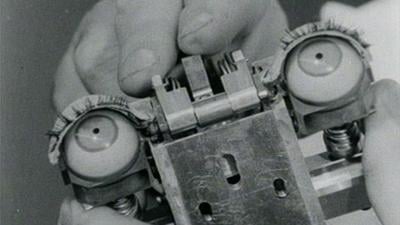
Ghost in the Machine still
A still image from “Ghost in the Machine,” a new documentary from filmmaker Valerie Veatch that takes a critical look at the artificial-intelligence industry and the origins of the technology. Courtesy of Valerie Veatch

The negative effects of artificial intelligence — environmental degradation, its use in war — are an inevitable result of its creators’ guiding philosophy, according to a new documentary. 

In her new film, “Ghost in the Machine,” documentarian Valerie Veatch makes the case that such downsides are a natural consequence of the ideology that’s driven the technology’s development and how its developers have viewed the world, one of white supremacy and dehumanization.

In the work, which debuted at the Sundance Film Festival in January, she advances the proposition that the idea of general intelligence and the statistical tools used to attempt to measure it — which are foundational both to the idea of creating a “human-level” artificial general intelligence and the statistical models underlying the technology — came out of eugenics.

And she asserts that many of the key figures in the history of AI’s development — including William Shockley, who essentially founded Silicon Valley, and John McCarthy, who coined the term “artificial intelligence” — were either directly tied to eugenicists or openly expressed racist or misogynistic ideas.

Documentarian Valerie Veatch said seeing OpenAI’s Sora video-generation system “whitewash” depictions of people of color and sexualize images of women prompted her to dig into the origins of artificial-intelligence technology and why it produces such outputs.Courtesy of Valerie Veatch

Veatch, whose previous works looked critically at social media, said she didn’t set out to make a negative film about AI. Instead, she said, she followed her research, which included digging into archives and interviewing dozens of experts — many of whom have written critically of the technology.

In advance of the film’s online screening March 27, on AI Literacy Day, The Examiner spoke with Veatch about the work, her views on AI, and her choice to intersperse real and AI-generated footage within the film. The following conversation has been edited for length and clarity.

Why make a film about AI and its dangers? October 2024, my friend signed me up for the Sora early access program for OpenAI, where we were testing this top-secret technology that was meant to revolutionize the film industry. Playing around with [it, it created] highly sexist and racist videos [unbidden]. I was like, “Wow, what is this crazy technology?” As a female filmmaker and a feminist, all of my critical-theory bells started ringing.

The kind of feedback I got was very much like, “Oh, it’s kind of cringe to be asking these questions,” or, “There’s really nothing that we can do. All AI functions on bias, and you’re being silly talking about this.”

And so I just started researching and looking around. One of the first papers I came across was Abeba Birhane’s paper on how misogyny makes its way into datasets.

I started cold emailing various folks who’d written papers that I thought were really interesting. I ended up talking to like 40 of the most amazing, wonderful academics and philosophers and linguists and sociologists. By the end of it, I was so amazed to see that a film had formed out of these conversations, and that everybody is telling the story altogether, like a chorus.

It sounds like you went into it with a somewhat critical eye, especially after your Sora experience. To what extent do you think that influenced who you talked to and the perspectives that are told in the film? It’s interesting that you say that, because I really wanted this technology to be this liberatory, emergent vessel for all of human knowledge. All of the rhetoric around LLMs was something I really wanted to be true. I didn’t want it to be the story it ended up being. 

From where I’m sitting, there isn’t a way that you can look at this technology and walk away being like, “Well, there’s actually another side to this,” or like, “Let’s take a more balanced view,” because this is a technology that is rotten from the core. It is extractive. It is [exploitative]. It relies on colonial logics and the logics of eugenics and race science. 

One of the interesting visual choices you made was to go back and forth between AI-generated imagery and real imagery. You have these consistent labels of “AI” and “Not AI” you use in the film. What was your thinking with that? Well, it was a provocation. I initially was like, obviously, don’t want to touch the stuff. AI is terrible. It looks awful. It gives you this ick feeling watching it. And especially after my experience with OpenAI, I was like, “Gross!” But there’s a tradition in feminist video art of turning the aesthetic of the oppressor upon itself.  

I kept this footage in the film — some of it is made with Sora, and some of it is generated with Adobe’s Firefly — because I really wanted somebody to be like, “Hey, you can’t actually do this,” because it just feels confrontational in a way that makes me happy.

In the cut of “Ghost in the Machine” shown at the Sundance Film Festival, Veatch intersperses AI-generated imagery, like that of this pitcher on stage at a conference, with authentic videos and images. Courtesy of Valerie Veatch

Sure enough, with PBS, because they actually have standards and practices, they’re like, you can’t broadcast Sora footage, which I’m so relieved to hear. So I’m doing a reedit of the film, and one of the things is just taking out all of that Sora footage. I’m happy to do it.

There’s this immense effort on the part of big tech companies to make generative-AI technologies feel like they’re the next step in a natural progression of digital storytelling. Like, we had non-linear editing, and we had digital color correcting, and now we have [this]. But this is a fundamentally different technology that is the theft of authorship on a fundamental level.

One of the places I thought that worked well, flipping back and forth between AI and not AI, was this clip I had never seen before where Mark Zuckerberg is in an Elvis outfit and dancing on a piano. I had to actually look to see whether that was AI or not. I know. As the main characters of the film become increasingly untethered from the reality of the technologies they’re unleashing on the world and their behavior becomes more absurd, the things they’re saying become more absurd, your eye begins to search for, like, “Surely, this is AI.” And “Not AI” exists as a confirmation that, yes, this dystopia is real. It’s happening.

In the film you go into many of the downsides of AI technology. What do you see as the technology’s biggest or fundamental flaw? The dehumanization that occurs because of the rhetoric of AI. Like when my six year old comes home and she says her classmate said that he doesn’t need to learn anything because AI is just going to do it — it’s that lie of super intelligence and the way that it seeps into the psyche of our children and our communities that dehumanizes us, disconnects us from the truth of living.

There’s a clip I’m adding into the film, now that I’m re-editing it, of Sam Altman talking about how everyone loves to complain about the environmental crisis and the environmental cost of these systems, but [they should] look at how much resources it’s taken a human to get to the age of 20 and be as smart as they are or how many resources humanity has taken up to evolve to being this high in our IQ level now.

So where does that go, Sam? Do you say, OK, are five median IQ folks worth eight gallons of water? On what matrix of resource allocation are you entering this information? Why are you even framing it like this? And it’s that framing that is the problem.

Do you use any AI tools? No, I do not use AI at all for anything. I send long, passionate emails to my children’s school if I even hear the word AI mentioned. I am like, “Correct your framing. Let’s talk about ‘algorithmic systems processing data’ or nothing at all.”

I would actually want everyone to stop using the phrase “artificial intelligence.” As we see in the film, it’s just an invented term for some guy’s weird side project to create human-level intelligence. And [his] whole idea of what that would look like was a computer system playing chess, a bounded set of rules. AI is not a real thing, and I’m exhausted by how it feels like a losing battle every day.

Do you see any positive uses for AI? No. There are technologies that would be called AI, but back in the day, we just called it spell check. Referencing a bounded set of data points that are in the dictionary and comparing them to the word you’ve written? Sure, that’s great.

Or, the weather, right? That’s a kind of interesting use of algorithmic processing of data points — “typically it is 70 degrees nine out of 10 days of this year.” Those are grounded datasets you can process algorithmically.

But when we get into the framing of chatbot products as if they are these bastions of neutral knowledge, that’s where it starts to fall apart. So I think there are no good uses of AI, because AI is a problematic concept, and it’s an idea that dehumanizes us.

If you have a tip about tech, startups or the venture industry, contact Troy Wolverton at twolverton@sfexaminer.com or via text or Signal at (415) 515-5594.