
New Thinking Allowed with Jeffrey Mishlove Mar 30, 2026 Psychology and Psychotherapy Richard Reichbart, JD, PhD, is a training and supervising psychoanalyst. For thirty five years, he has maintained a private practice for the treatment of adults, adolescents and children in Northern New Jersey. In addition, he is a short story writer, a parapsychologist, and a poet. He is author of The Paranormal Surrounds Us: Psychic Phenomena in Literature, Culture, and Psychoanalysis. Prior to his career in psychology, he worked as an attorney focusing on civil rights and Native American issues. Here he describes how he was introduced to parapsychology as a result of becoming a psychoanalytic patient of Jule Eisenbud. He describes how Eisenbud became a persona non grata within the psychoanalytic community as a result of his research in “thoughtography” with Ted Serios. He also describes Freud’s ambivalent attitude toward the paranormal. He points out, however, that telepathic experiences are rather common within the intimacy of psychoanalytic sessions. New Thinking Allowed host, Jeffrey Mishlove, PhD, is author of The Roots of Consciousness, Psi Development Systems, and The PK Man. Between 1986 and 2002 he hosted and co-produced the original Thinking Allowed public television series. He is the recipient of the only doctoral diploma in “parapsychology” ever awarded by an accredited university (University of California, Berkeley, 1980). He is also the Grand Prize winner of the 2021 Bigelow Institute essay competition regarding the best evidence for survival of human consciousness after permanent bodily death. He is Co-Director of Parapsychology Education at the California Institute for Human Science. (Recorded on November 7, 2020)
All posts by Mike Zonta
The Wisdom School: What it Means to be Human
The Loneliest Civilization in History
The WHO says loneliness kills 871,000 people a year—but the real cause isn’t smartphones or social media. It’s a 10,000-year experiment that dismantled the tribe.
Apr 01, 2026 (wisdomschool.com)
The World Health Organization released a report last June that deserves far more attention than it got. One in six people on the planet, they found, is now affected by loneliness. It kills an estimated 871,000 people every year, more than 100 every hour, every hour of every day.
The Commission that produced the report called social disconnection “a defining challenge of our time” and drew a roadmap for governments and communities to respond. The usual proposals followed: more parks, better public transit, tech companies designing for connection rather than engagement, a minister of loneliness here, a national strategy there.
These are not bad ideas. But they’re solutions to a problem that’s being described incorrectly, and when you describe a problem incorrectly, your solutions tend to work at the edges rather than at the root.
The framing we keep reaching for treats loneliness as a malfunction, something that has gone wrong in an otherwise healthy social system. But what if loneliness at this scale is not a malfunction at all?
What if it’s the entirely predictable result of an experiment in how to organize human life that we’ve been running for about ten thousand years, and the results are now coming in?
I spent time in South Sudan in 2008, near the Darfur border, in a refugee settlement of 45,000 people who’d fled bombardment, rape, mass murder, and forced displacement. The conditions were severe by any measure: one hand-pumped well, no sanitation, no shelter beyond what people had gathered from the landscape, temperatures that dropped into the nineties at night.
Disease was everywhere. Food was scarce. And yet every single evening, in different corners of the settlement, someone brought out drums. The music would start, and then the singing, and then people were dancing and talking and the children were playing and the old men were telling stories to anyone who would listen. There was not a moment of the kind of blank, sealed-off isolation that I see on the faces of people riding the subway in any American city.
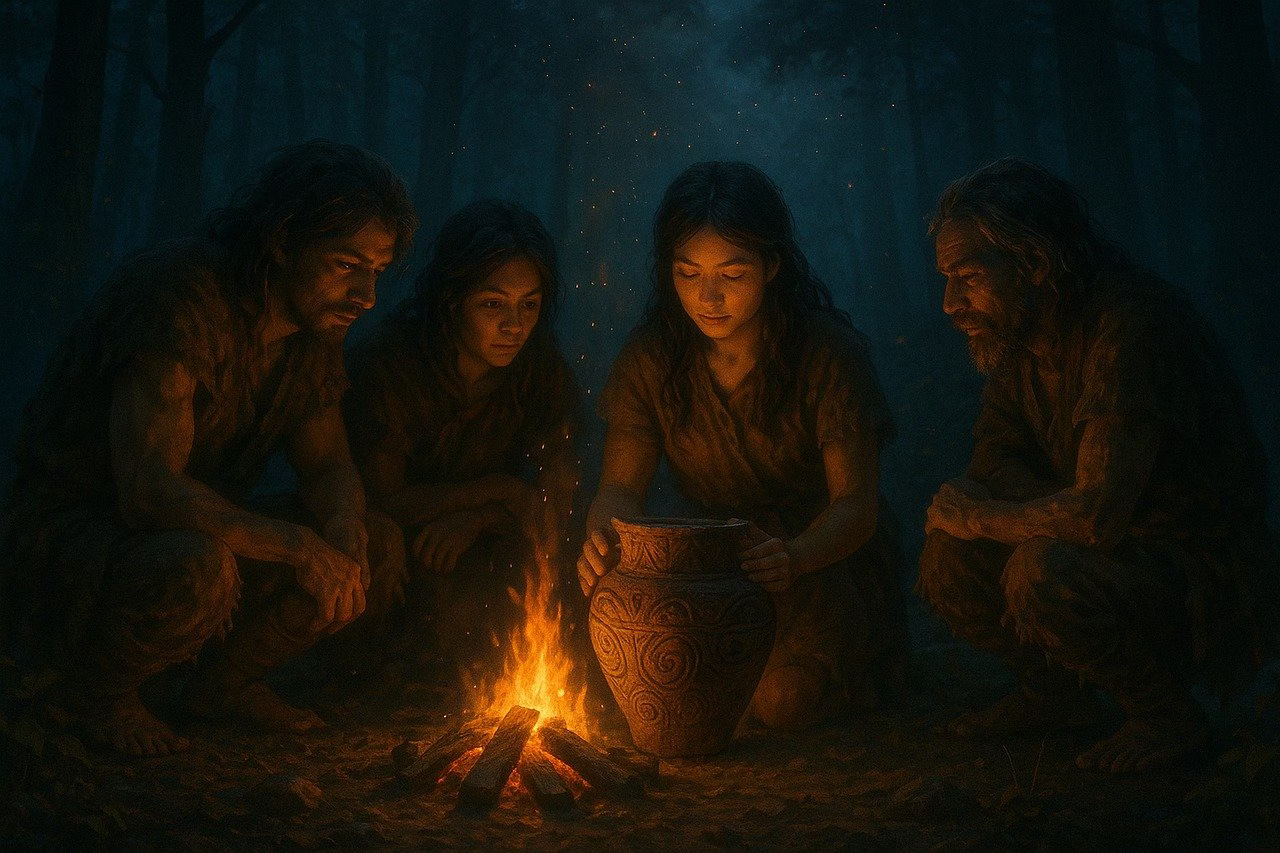
These were people who’d lost nearly everything. What they hadn’t lost, because it had not yet been taken from them, was each other. Not each other in the thin modern sense of being in proximity. Each other in the full sense: known, embedded, accountable, necessary to one another’s daily survival and daily joy. This is what a tribe is. This is what human beings lived inside of for the vast majority of the time we’ve existed as a species.
The Australian Aborigines have a phrase, “The Great Forgetting,” for what happened to European peoples over roughly the last two millennia as the old tribal structures were systematically dismantled by the British empire and then by the Catholic Church.
The sacred sites destroyed. The rituals banned. The languages absorbed into Latin and then into English and the national languages of nation-states. The commons enclosed. The grandmothers and grandfathers who carried the deep knowledge of how to live in a particular landscape, and how to live with one another, silenced or killed.
What was left, they know, was the outward form of a culture without its roots, people in tremendous numbers living side by side without any architecture for genuine belonging.
We don’t often tell this story when we talk about loneliness. We prefer to blame social media, or the pandemic, or smartphones, or the death of the third place. These things matter, but they’re just the symptoms.
The WHO report notes that loneliness kills as surely as smoking fifteen cigarettes a day. What it doesn’t ask is how it came to be that the default condition for hundreds of millions of people is a kind of low-grade starvation of genuine human contact, and whether that condition might have structural roots that run deeper than any app or urban planning initiative can reach.
The answer, if you look honestly at the anthropological record, is that we built a civilization optimized for productivity and consumption, and we did it by dismantling, piece by piece, everything that made human beings feel genuinely held.
The village. The extended family under one roof. The practice of sitting together in the evening rather than each retreating to a separate screen. The shared ritual that marked time and gave life its shape. The elder who knew your name and your history and could place you in a story larger than your own anxiety. None of these things went away because they were bad ideas; they went away because they interfered with the efficient production of workers and consumers.
I worked for years as a psychotherapist running a residential program for severely abused children, kids who’d been failed by every institution designed to protect them. What I saw, over and over again, was that the damage was not only what had been done to them; it was also what had never been provided.
Safety, yes. Food and shelter, yes. But beneath all of it, the absence of the sustained, unconditional, witnessed belonging that is the birthright of every child and that no therapeutic technique, however skilled, can entirely substitute for. You can heal a great deal. You can’t, however, manufacture a tribe after the fact and expect it to do what a tribe does when it’s the water a child has swum in from the beginning of her life.
This is not a counsel of despair. The drumming happened in the refugee settlement because the impulse toward community is not destroyed so easily. It’s biological. It’s written into us at a level that predates language or culture.
Researchers studying the neuroscience of loneliness find that it activates the same threat-detection circuitry as physical pain. This is not a coincidence: for most of human history, being separated from your group meant death.
The pain of loneliness is the nervous system’s alarm. We just built a world where the alarm goes off constantly and there is nowhere particular to run.
What this means practically is that the solutions worth trying are not the ones that make isolation more comfortable. They are, instead, the ones that re-create, in whatever scaled-down modern form we can manage, the conditions that the nervous system is actually asking for.
Not more social media followers, but more people who know when you’re sick and show up anyway. Not a longer list of connections on LinkedIn, but a smaller circle of people with whom you share actual obligations, actual history, actual meals.
The research consistently points toward exactly what every tribal culture already knew: that meaning and belonging are not separate things, that you can’t have one without the other, and that neither of them can be delivered through a screen or legislated into existence by a government commission.
The WHO is right that this is a public health crisis. But public health crises have causes, and the cause of this one is not a virus or a toxin. It’s a story we’ve been telling ourselves for ten thousand years about what civilization is for.
The good news is that stories can change. The drums are still in us, waiting.
NASA’s Artemis II goes to the moon
By Anna FitzGerald Guth
April 1, 2026 (SFGate.com)

NASA footage showed its rocket successfully taking off from the Kennedy Space Center in Florida on Wednesday afternoon, carrying four astronauts out of view of the crowd that had gathered below to watch the historic launch.
Among the crew — three Americans and one Canadian — is California-raised Victor Glover, the mission’s pilot, and Christina Koch, the first woman to head to the moon. Glover will also become the first Black man to circumnavigate it.

The 10-day mission will take astronauts farther from Earth than humans have ever traveled. While no landing is planned, it’s a key step toward future moon missions — and eventually, missions to Mars.
The 32-story rocket lifted off at 3:35 p.m. Pacific. It marks the first crewed journey to the moon since 1972.
“We still call amazing things that humans do moonshots, and now our generation is going to get to have one of our own,” said Glover, who was born in Pomona and studied engineering at Cal Poly San Luis Obispo.
More:
The Light in the Abyss Between Us
By Maria Popova (themarginalian.org)
Bless consciousness, for making blue different to me than it is to you.
I remember the moment a friend’s son came home from school to recount with something between shock and exhilaration how he realized while talking to a classmate that the notion of a mental image is not merely a metaphor, that other people can conjure up in their minds things not before their eyes. And the moment another friend discovered that the inner stream of language with which most of us narrate our lives courses through neither his mother’s nor his sister’s mind. And always the moment I waded into the winter ocean with someone with whom I thought I shared uncommon understanding, and I exclaimed “Those needles!” as the icy water stabbed at my flesh, and she stared at me blankly, and when I asked what her sensation was, she took a long pause, then said: “Pressure.” Two bodies so seemingly similar, sharing 99.9% of their genome and 100% of their trust, immersed in the exact same environment, governed by consciousnesses so invisibly different as to render the contact between self and world sharp for one and blunt for the other.
Art by Giuliano Cucco from Before I Grew Up — a lyrical picture-book about the artist within
Moments like these jolt us awake from the dream of perfect understanding, stagger us with the realization that no one ever really knows what it is like to be somebody else, that between one consciousness and another there always gapes an abyss black as the inside of a skull, and though we may try to reach each other with love and reason, they twine but a tenuous footbridge across it. The best we can do is hold on to the ropes and hope that they will not fray before we reach the rim of understanding, the outer edge of the other, which is all we can ever touch — and still it is enough, this sliver of salvation from the loneliness of being ourselves, this outstretched hand across the icy blue.
Anne Enright faces this abyss in her lyrical novel The Wren, the Wren (public library), drawing from it not a point of despair but portal of possibility.
She writes:

Looking back on viewing empathy “like it’s the solution (and it is! it is!) to pretty much everything,” the protagonist reflects:
And yet, she comes to see, we struggle to do this, for it is at bottom a profoundly complicated thing. But perhaps we struggle because we have the wrong goal in mind — merging, in the end, is not the measure of closeness, of understanding, of the proximity between consciousnesses in the icy waters of being. Enright writes:
Given the co-evolution of vision and consciousness, this gap in how we perceive the world is reflected in our actual sight — we each see the same photons differently due to variations in how our eyes and brains process light. While science is not there to furnish us with metaphors — its task is truth — we are creatures of meaning who cannot help but turn to metaphor as our best footbridge between truth and meaning. Enright’s protagonist reflects:
Perhaps, in the end, the measure of understanding — which is “love’s other name” — is not seeing the same light but seeing the light in each other, the shy light shimmering over the ocean of our singularity.
Card from An Almanac of Birds: 100 Divinations for Uncertain Days, also available as a stand-alone print and as stationery cards.
Edgar Degas: Two Ironing Women (1884-1886)

Prosperos Easter Sunday Meeting
 EASTER SUNDAY MEETING – APRIL 5 |
 William Fennie, Dean New Life or Zombie? Finding Resurrection at Easter How do we find stablity and security when amidst a world in turmoil ? In this talk, recorded at Easter last year, William will explore opportunities for transcendence during this time of crisis in the USA and around the world. A big part of welcoming a fresh start is to say goodbye to ways of being that have become stale, predictable, or uninspiring. This presentation will investigate the challenges and rewards of taking a fresh view — not forgetting the power of genuine resurrection. William Fennie currently serves as Dean of The Prosperos. Click here for further information: https://www.theprosperos.org/prosperos-events/sunday-meeting-31-03-2024-j6kd5 EASTER SUNDAY MEETING — April 5 11:00 am Pacific / Noon Mountain / 1:00 pm Central / 2:00 pm Eastern Join Sunday Meeting By contribution. Please click here to contribute: Contribute! Call In Information:One tap mobile +16699006833,,85882863391# US (San Jose) +16694449171,,85882863391# US Meeting ID: 858 8286 3391 Find your local number: https://us02web.zoom.us/u/kdTAYZq0XQ |
| Copyright © 2026 The Prosperos, All rights reserved. |
Free Will Astrology: Week of April 2, 2026
by Rob Brezsny | March 31, 2026 (NewCity.com)


ARIES (March 21-April 19): Now is an excellent time to decide your favorite color is amaranth (a vivid red-violet), or sinopia (earthy red-orange), or viridian (cool blue-green, darker than jade). You might also conclude that your favorite aroma is agarwood (deep, smoky, resin-soaked wood) or heliotrope (cherry-almond vanilla) or petrichor (wet soil after a rain). I’m trying to tell you, Aries, that you’re primed to deeply enhance your detailed delight in smells, colors, tastes, feelings, physical sensations, types of wind, tones of voice, qualities of light—and everything else. Indulge in sensory and sensual pleasures!
TAURUS (April 20-May 20): My Taurus friend Elena keeps a “gratitude garden” in her backyard. When she feels grateful for a specific joy in her life, she writes it on biodegradable paper and buries it among her flowers, herbs and vegetables. “I feed the earth with appreciation,” she says. “Returning the gift.” She feels this practice ensures that her garden and her life flourish. Her devoted attention to recognizing blessings attracts even more blessings. Her cultivated appreciation for beauty and abundance leads her to discover more beauty and abundance. Elena’s approach is pure Taurean genius. I invite you to create your own rituals for expressing your thankful love. Not just paying dutiful homage in your thoughts, but giving your appreciation weight, texture and presence in the actual world.
GEMINI (May 21-June 20): Many of us periodically slip into the daydream that everything would finally feel right if only our lives were somehow different. If we’re single, maybe we imagine we ought to be partnered; if we’re partnered, we wish our beloved would change, or we secretly wonder about someone else entirely. That’s the snag. The blessing is this: In the days ahead, you’re likely to discover a surprising ease with your life exactly as it is, and feel a genuine, grounded peace. Congratulations in advance!
CANCER (June 21-July 22): A cautious voice in your head murmurs: “Proceed carefully. Don’t be overly impressed with your own beauty. Stick with dependable methods. Live up to expectations and avoid explorations into the unknown.” Your bold genius interrupts: “Tell that fussy, boring voice to shut up. The truth is that you have earned the right to be an inquisitive wanderer, an ingenious lover, a fanciful storyteller, and a laughing experimenter.”
LEO (July 23-Aug. 22): In medieval European gardens, there was a tradition of creating “pleasure labyrinths.” They were walking meditations that spiraled inward to a center, then back out again. There were no decisions and no wrong turns, just the relaxing, meditative journey itself. I think you need and deserve a metaphorical pleasure labyrinth right now, Leo. You’ve been treating every choice as a high-stakes dilemma and every path as potentially problematic. But what if the current phase isn’t about making the perfect decision? Maybe it’s about trusting that the path you’re on will take you where you need to go, even if it meanders. By cosmic decree, you are excused from second-guessing every turn.
VIRGO (Aug. 23-Sept. 22): Your eye for imperfection is a gift until it becomes the lens through which you see everything. The critical faculty that drives you to refine and enhance may also shunt you into a dead end of never-being-good-enough, where impossible standards immobilize you. In the coming weeks, dear Virgo, I beg you to use your vaunted discernment primarily in the service of growth and pleasure rather than constraint. Be excited by buoyant analysis that empowers constructive change. Homework: For every flaw you identify, identify two things that are working well. You won’t ignore what needs attention, but instead will compensate for the excessive criticism that sometimes grips your inner critic.
LIBRA (Sept. 23-Oct. 22): You Libras shouldn’t expend excessive effort trying to force the external world to be more tranquil. That’s mostly a futile task that distracts from your more essential work. The secret to your happiness is to cultivate serenity within. How do you do that? One reliable way to shed tension is to continually place yourself in the presence of beauty. Nothing makes you relax better than being surrounded by elegance, grace and loveliness. Now is a good time to recommit yourself to this key practice.
SCORPIO (Oct. 23-Nov. 21): In computer science, there’s a concept called “graceful degradation.” When a system encounters an error, it doesn’t crash completely. It loses some functionality but keeps running with what remains. According to my reading of the astrological omens, Scorpio, you’d be wise to acknowledge a graceful degradation like that. Something isn’t working as you had hoped and planned. A relationship? Project? Adventure? In classic Scorpio fashion, you’re tempted to burn it all down. But I encourage you to practice graceful degradation instead. Keep what still works and release only what’s actually broken. Not everything has to be all-or-nothing. You can lose some functionality and still run. You can be partially out of whack and still be valuable. PS: The awkwardness is temporary.
SAGITTARIUS (Nov. 22-Dec. 21): At your best and brightest, you are a hunter—though not the kind who stalks prey with weapons and trophies in mind. Your hunt is noble: the fervent pursuit of adventures that nourish your curiosity and the brave forays you make into unfamiliar territories where intriguing new truths shimmer. And now, as the world drifts deeper into chaos, you are called to respond with even more exploratory audacity. I invite you to further refine your hunter’s craft. Lift it up to an even higher, more luminous form of seeking.
CAPRICORN (Dec. 22-Jan. 19): Capricorn meditation teacher Wes Nisker guided his students to relax the relentless mental static that muddled their awareness. But he also understood that excessive striving can sabotage the peace we’re seeking. I invoke his influence now to help you release some of the jittery goal-obsession you’ve been gripped by. Nisker and I offer you permission to temporarily suspend the potentially exhausting drive to constantly be better and more accomplished. Instead, just for now, simply be your authentic self. Loosen your high-strung grip on self-improvement and allow yourself the radical luxury of purposelessness.
AQUARIUS (Jan. 20-Feb. 18): Here’s a danger you Aquarians are sometimes prey to: spending so much energy fixing the big picture that you neglect what’s up close and personal. You may get so involved in rearranging systems that immediate concerns get less than your best attention. I hope you won’t do that in the coming weeks. Your aptitude for overarching objectivity is a gift because it enables you to recognize patterns others can’t detect. But it may also divert you from the messy, intricate intimacy that gritty transformation requires. Your assignment: Eagerly attend to the details, which I bet will be more interesting than you imagine.
PISCES (Feb. 19-March 20): In horticulture, “hardening off” is the process of gradually exposing seedlings started indoors to outdoor conditions before transplanting them. Too much exposure too fast will shock them; no exposure at all will leave them unprepared. Let’s invoke this as a useful metaphor for you. I believe you are being hardened off, Pisces. Life is making small, increasing demands on your tender self. Though this may sometimes feel uncomfortable, I assure you that it’s preparation, not cruelty. You’re being readied for a shift from protected space to open ground. My advice is twofold: 1. Don’t retreat back into the ultra-safe greenhouse. 2. Don’t let yourself be thrown into full exposure all at once.
Homework: My book “Astrology is Real” is available at online bookstores. Read free excerpts here: tinyurl.com/BraveBliss
Free Will Astrology: Week of April 2, 2026
by Rob Brezsny | March 31, 2026
ARIES (March 21-April 19): Now is an excellent time to decide your favorite color is amaranth (a vivid red-violet), or sinopia (earthy red-orange), or viridian (cool blue-green, darker than jade). You might also conclude that your favorite aroma is agarwood (deep, smoky, resin-soaked wood) or heliotrope (cherry-almond vanilla) or petrichor (wet soil after a rain). I’m trying to tell you, Aries, that you’re primed to deeply enhance your detailed delight in smells, colors, tastes, feelings, physical sensations, types of wind, tones of voice, qualities of light—and everything else. Indulge in sensory and sensual pleasures!
TAURUS (April 20-May 20): My Taurus friend Elena keeps a “gratitude garden” in her backyard. When she feels grateful for a specific joy in her life, she writes it on biodegradable paper and buries it among her flowers, herbs and vegetables. “I feed the earth with appreciation,” she says. “Returning the gift.” She feels this practice ensures that her garden and her life flourish. Her devoted attention to recognizing blessings attracts even more blessings. Her cultivated appreciation for beauty and abundance leads her to discover more beauty and abundance. Elena’s approach is pure Taurean genius. I invite you to create your own rituals for expressing your thankful love. Not just paying dutiful homage in your thoughts, but giving your appreciation weight, texture and presence in the actual world.
GEMINI (May 21-June 20): Many of us periodically slip into the daydream that everything would finally feel right if only our lives were somehow different. If we’re single, maybe we imagine we ought to be partnered; if we’re partnered, we wish our beloved would change, or we secretly wonder about someone else entirely. That’s the snag. The blessing is this: In the days ahead, you’re likely to discover a surprising ease with your life exactly as it is, and feel a genuine, grounded peace. Congratulations in advance!
CANCER (June 21-July 22): A cautious voice in your head murmurs: “Proceed carefully. Don’t be overly impressed with your own beauty. Stick with dependable methods. Live up to expectations and avoid explorations into the unknown.” Your bold genius interrupts: “Tell that fussy, boring voice to shut up. The truth is that you have earned the right to be an inquisitive wanderer, an ingenious lover, a fanciful storyteller, and a laughing experimenter.”
LEO (July 23-Aug. 22): In medieval European gardens, there was a tradition of creating “pleasure labyrinths.” They were walking meditations that spiraled inward to a center, then back out again. There were no decisions and no wrong turns, just the relaxing, meditative journey itself. I think you need and deserve a metaphorical pleasure labyrinth right now, Leo. You’ve been treating every choice as a high-stakes dilemma and every path as potentially problematic. But what if the current phase isn’t about making the perfect decision? Maybe it’s about trusting that the path you’re on will take you where you need to go, even if it meanders. By cosmic decree, you are excused from second-guessing every turn.
VIRGO (Aug. 23-Sept. 22): Your eye for imperfection is a gift until it becomes the lens through which you see everything. The critical faculty that drives you to refine and enhance may also shunt you into a dead end of never-being-good-enough, where impossible standards immobilize you. In the coming weeks, dear Virgo, I beg you to use your vaunted discernment primarily in the service of growth and pleasure rather than constraint. Be excited by buoyant analysis that empowers constructive change. Homework: For every flaw you identify, identify two things that are working well. You won’t ignore what needs attention, but instead will compensate for the excessive criticism that sometimes grips your inner critic.
LIBRA (Sept. 23-Oct. 22): You Libras shouldn’t expend excessive effort trying to force the external world to be more tranquil. That’s mostly a futile task that distracts from your more essential work. The secret to your happiness is to cultivate serenity within. How do you do that? One reliable way to shed tension is to continually place yourself in the presence of beauty. Nothing makes you relax better than being surrounded by elegance, grace and loveliness. Now is a good time to recommit yourself to this key practice.
SCORPIO (Oct. 23-Nov. 21): In computer science, there’s a concept called “graceful degradation.” When a system encounters an error, it doesn’t crash completely. It loses some functionality but keeps running with what remains. According to my reading of the astrological omens, Scorpio, you’d be wise to acknowledge a graceful degradation like that. Something isn’t working as you had hoped and planned. A relationship? Project? Adventure? In classic Scorpio fashion, you’re tempted to burn it all down. But I encourage you to practice graceful degradation instead. Keep what still works and release only what’s actually broken. Not everything has to be all-or-nothing. You can lose some functionality and still run. You can be partially out of whack and still be valuable. PS: The awkwardness is temporary.
SAGITTARIUS (Nov. 22-Dec. 21): At your best and brightest, you are a hunter—though not the kind who stalks prey with weapons and trophies in mind. Your hunt is noble: the fervent pursuit of adventures that nourish your curiosity and the brave forays you make into unfamiliar territories where intriguing new truths shimmer. And now, as the world drifts deeper into chaos, you are called to respond with even more exploratory audacity. I invite you to further refine your hunter’s craft. Lift it up to an even higher, more luminous form of seeking.
CAPRICORN (Dec. 22-Jan. 19): Capricorn meditation teacher Wes Nisker guided his students to relax the relentless mental static that muddled their awareness. But he also understood that excessive striving can sabotage the peace we’re seeking. I invoke his influence now to help you release some of the jittery goal-obsession you’ve been gripped by. Nisker and I offer you permission to temporarily suspend the potentially exhausting drive to constantly be better and more accomplished. Instead, just for now, simply be your authentic self. Loosen your high-strung grip on self-improvement and allow yourself the radical luxury of purposelessness.
AQUARIUS (Jan. 20-Feb. 18): Here’s a danger you Aquarians are sometimes prey to: spending so much energy fixing the big picture that you neglect what’s up close and personal. You may get so involved in rearranging systems that immediate concerns get less than your best attention. I hope you won’t do that in the coming weeks. Your aptitude for overarching objectivity is a gift because it enables you to recognize patterns others can’t detect. But it may also divert you from the messy, intricate intimacy that gritty transformation requires. Your assignment: Eagerly attend to the details, which I bet will be more interesting than you imagine.
PISCES (Feb. 19-March 20): In horticulture, “hardening off” is the process of gradually exposing seedlings started indoors to outdoor conditions before transplanting them. Too much exposure too fast will shock them; no exposure at all will leave them unprepared. Let’s invoke this as a useful metaphor for you. I believe you are being hardened off, Pisces. Life is making small, increasing demands on your tender self. Though this may sometimes feel uncomfortable, I assure you that it’s preparation, not cruelty. You’re being readied for a shift from protected space to open ground. My advice is twofold: 1. Don’t retreat back into the ultra-safe greenhouse. 2. Don’t let yourself be thrown into full exposure all at once.
Homework: My book “Astrology is Real” is available at online bookstores. Read free excerpts here: tinyurl.com/BraveBliss
What If Your Addiction Is Your Ally?
Listening for Its Revelations
| Rob Brezsny Mar 31, 2026 |

The Sacred Pedagogy of Your Addiction
Your addiction is obstructing you from your destiny, and yet it’s also your ally.
What?! How can both be true?
On the downside, your addiction diverts your energy from a deeper desire that it superficially resembles. For instance, if you’re an alcoholic, your urge to get loaded may be an inferior substitute for and a poor imitation of your buried longing to commune with spirit.
On the upside, your addiction is your ally in this sense: It dares you to get strong and smart enough to wrestle free of its grip; it pushes you to summon the uncanny willpower necessary to defeat the darkness within you that saps your ability to follow the path with heart.
(P.S. Don’t tell me you have no addictions. Each of us is addicted to some sensation, feeling, thought, or action, if not to an actual substance.)
So here’s one possibility: Extol your sublime, painful addiction. Celebrate it to death. Ride it, spank it, kiss it, whip it.
+
The Addiction Map: What Are You Really Hungry For?
Every addiction is a treasure map written in the language of counterfeit satisfaction. The X that marks the spot isn’t where you’re digging. It’s in the opposite direction, in the place you’re afraid to look.
Let’s decode some common addictions to reveal the authentic hunger beneath:
If you’re addicted to alcohol or drugs: You’re likely craving unmediated access to the numinous, to states of consciousness that dissolve the prison of consensus materialism. You want gnosis, ecstasy, and communion with what some call the Spirit World, Dreamtime, or Anima Mundi, and what I call The Other Real World.
But instead of developing the disciplined technologies to get there sustainably, you’re using a sledgehammer that works for a few hours and leaves you further from the goal than when you started.
+
If you’re addicted to perfectionism: You’re hungering to create something so beautiful, true, and necessary that it justifies your existence. You want to offer a gift so pure that no one can question your right to take up space on this planet.
But perfectionism keeps you from ever finishing and ever risking the vulnerability of being seen. It’s a defense against the revelation you’re seeking.
+
If you’re addicted to chaos, drama, or crisis: You’re craving intensity, aliveness, and the feeling of being fully awake and engaged. You want the chronic ecstasy of fervent incarnation.
But instead of finding it through creativity, passion, or purpose, you’re manufacturing emergencies that give you the adrenaline of being alive without the vulnerability of choosing a life you really love..
+
If you’re addicted to people-pleasing or approval: You’re longing for the experience of being loved for who you truly are, seen in your full depth and complexity, and celebrated for your authentic self.
But instead of risking that visibility, you’re performing a carefully curated version of yourself and mistaking the applause for love.
+
If you’re addicted to busyness or productivity: You’re hungry for significance and proof that you’re worthy.
But instead of asking what truly matters to you, you’re filling up time with motion so you never have to face the terrifying question: “What if I stopped and discovered I haven’t been doing what’s right to fulfill my soul’s code?”
+
If you’re addicted to outrage or doomscrolling: You may be craving a sense of being on the right side and participating in an energy larger than yourself. That’s noble! You want to be part of the great work of healing the world.
But instead of doing the difficult local work of transformation, you’re consuming endless content about problems you feel powerless to solve, mistaking awareness for action and anxiety for engagement.
+
If you’re addicted to romantic intrigue or sexual conquest: You’re longing for the experience of being utterly transfixed by another human being. It’s not a mediocre yearning: wanting to be lost in the dissolving boundaries of erotic communion and experiencing yourself as desirable.
But instead of cultivating the deep intimacy that sustains vivid, sustained aliveness, you’re chasing the initial spark over and over, mistaking novelty for depth.
+
If you’re addicted to suffering, martyrdom, or victimhood: You’re hungry for your pain to count for something and your struggles to be acknowledged. You want the world to recognize how hard you’ve tried and endured.
But instead of transforming your suffering into wisdom or art or service, you’re collecting it as evidence of your worthiness, mistaking endurance for enlightenment.
+
If you’re addicted to comfort, safety, or risk-avoidance: You’re craving the feeling of not having to be afraid anymore and finally being able to rest. You want respite from the existential terror of being alive in a body on a planet in crisis.
But instead of finding the spiritual security that comes from facing your fears, you’re building elaborate defenses that make your world smaller.
+
If you’re addicted to shopping, acquiring, or accumulating: You’re longing for the feeling of having enough and being filled. You want the existential emptiness at your core to finally be satisfied.
But instead of addressing the spiritual hunger directly, you’re trying to stuff the void with objects, mistaking possession for completion.
+
The Counterfeit and the Authentic
Here’s the kicker: Your addiction may know what you need better than your conscious mind does.
That’s why it has such power over you. It’s not random or arbitrary, not a moral failing or a character flaw. Your addiction is a brilliant, misguided messenger from your soul, trying desperately to get your attention about what you’re ignoring.
The alcoholic who drinks to feel spiritual connection is correctly diagnosing their need for the numinous. They’re just using the wrong technology. Workaholics who can’t stop producing are correctly diagnosing their hunger for meaning, but are looking for it in the wrong place.
Your addiction is a homeopathic remedy gone wrong. It’s using a tiny dose of the right medicine but in such a diluted, distorted form that it becomes poison.

Why Your Addiction May Be Your Ally
Here’s the upside.
Your addiction is a ruthless spiritual teacher. It won’t let you lie to yourself. It keeps showing up no matter how many times you try to meditate it away or pretend you’ve evolved beyond it.
Your addiction dares you to get strong. It says: “You think you’re committed to your path? Prove it. You think you want enlightenment? Show me you want it more than you want this moment of escape or this familiar pattern of self-soothing.”
Your addiction reveals your true priorities. Whatever you’re addicted to, that’s what you’re actually devoted to, regardless of what you tell yourself or others. Your addiction is a mirror that shows you where you’re still choosing the counterfeit over the authentic or the comfortable over the transformative.
Your addiction teaches you about power. Specifically, it teaches you about the parts of yourself that are more powerful than your conscious will, like your unconscious drives and the ancestral patterns running in your nervous system. It forces you to develop a relationship with the parts of yourself that won’t be controlled by good intentions or positive thinking.
Your addiction humbles you, keeping you honest about your limitations and vulnerabilities. It prevents you from becoming one of those insufferable spiritual people who’ve “transcended” all earthly struggles and now float above the fray dispensing wisdom to the still-struggling masses. Your addiction keeps you human.
Your addiction is potentially your initiation. This is the hero’s journey: wrestling with it, failing, trying again, understanding it more deeply, finding the real hunger beneath it, slowly redirecting your energy toward the authentic source. This is the descent into the underworld that precedes the return with the elixir.
+
How to Work With Your Addiction as Ally
Here’s where most addiction advice goes wrong: It treats the addiction as pure pathology and problem. It says: “Eliminate it. Overcome it. Rise above it. Be stronger than it.”
But that approach misses the intelligence of the addiction. The truth is that your addiction is trying to tell you crucial truth about yourself.
Here’s a different approach:
1. Thank your addiction for its service.
Seriously. Your addiction has been trying to meet a real need, even if clumsily. It has been attempting to get you into states of consciousness, feelings, or experiences that matter to you. Before you can release it, you need to honor what it has been trying to do.
“Thank you, perfectionism, for trying to ensure I create something worthy. Thank you for caring so much about excellence. I see you. I honor your intention.”
“Thank you, workaholism, for trying to make my life significant. Thank you for pushing me toward achievement. I recognize your devotion.”
+
2. Ask your addiction what it’s really hungry for.
Have an actual conversation with it. Use active imagination. Dialogue with it in your journal. Get past the surface craving to the deeper longing.
“Hey, you, addiction to drama and chaos, what are you really trying to give me?”
And listen. The answer might surprise you.
+
3. Identify the authentic source of the hunger.
Once you know what you’re really craving, ask: “Where can I get the real version of this? Not the counterfeit, but the authentic experience my soul is seeking?”
If you’re using alcohol to reach altered states: What are the sustainable spiritual technologies that could give you access to the numinous? Meditation? Breathwork? Psychedelics used ceremonially? Ecstatic dance? Deep nature immersion?
If you’re addicted to approval: What would it take to develop such a strong relationship with yourself that external validation becomes optional rather than necessary?
+
4. Negotiate with your addiction.
This is the “ride it, spank it, kiss it, whip it” part. Don’t just white-knuckle resist it or pretend it doesn’t exist. Play with it.
“Okay, perfectionism, I see you’re scared this piece isn’t good enough yet. I appreciate your concern. Here’s what we’re going to do: I’m going to work on it for two more hours with full attention and craft, and then I’m shipping it, ready or not. You can come along for the ride, but you don’t get to drive.”
+
5. Redirect the energy.
This is crucial. You’re not trying to eliminate the energy of the addiction. You’re trying to redirect it toward its authentic target.
Take all that intensity you put into your addiction and aim it at the real goal. If you’re addicted to chaos, channel that appetite for intensity into creative work that’s genuinely challenging. If you’re addicted to a substance, redirect that craving for altered states into serious spiritual practice.
+
6. Celebrate your sublime, painful addiction.
This is the paradox: By fully acknowledging and honoring your addiction, by recognizing it as a sacred teacher rather than a shameful secret, you begin to release its grip.
Make art or tell stories about your addiction. Turn it into material for your work. Bring it out of the shadows where it has power and into the open where it becomes just another part of your perfectly imperfect human experience.
+
The Dance of the Addict-Mystic
I’ll tell you what I’ve learned from my own addictions. (And yes, I have them: addictions to work, to intensity, to certain kinds of magical thinking, to the high of creative breakthrough.)
The goal isn’t to have no addictions. The goal is to have a primary addiction to the authentic source rather than the counterfeit.
Get addicted to the real thing:
– Get addicted to the feeling of creating something true
– Get addicted to moments of genuine communion with the world of night dreams
– Get addicted to the aliveness that comes from taking necessary risks
– Get addicted to the satisfaction of keeping your word to yourself
– Get addicted to the chronic ecstasy of fervent incarnation—being fully, deeply human
When you’re genuinely addicted to the authentic experience, the counterfeit loses its appeal. Not because you’ve overcome it through willpower, but because you’ve tasted gratification so much better that the substitutes become obviously unsatisfying.
+
Possible Assignments
1. Name your addiction. Be honest. What are you really addicted to? Don’t say “nothing.” Everyone’s addicted to something.
2. Write a love letter to your addiction. Thank it. Acknowledge what it has been trying to do for you.
3. Ask it what it’s really hungry for. Have a conversation. Write both sides of the dialogue.
4. Identify the authentic source. Where can you get the real version of what you’ve been seeking?
5. Make a plan to redirect the energy. Not to eliminate it, but to aim it in the right direction.
6. Create something that celebrates your addiction: a poem, song, ritual, piece of art. Make it visible and sacred.
And then notice what happens when you stop fighting your addiction and start learning from it. Stop treating it as your enemy and start treating it as your initiator. Honor its intelligence while refusing its dominion.
This is the path of the addict-mystic who transforms compulsion into devotion and craving into quest.
+
P.S. If you’re thinking “this doesn’t apply to serious addictions,” you’re wrong. The most serious addictions carry the most powerful messages. They’re your soul using a sledgehammer to get your attention because you wouldn’t listen to the whispers.
The question isn’t whether this applies to you. The question is whether you’re brave enough to listen.
• • • • • • • • • • • • • • • • • • • • • • • • • • • • • • • • • • • • • • • • • • • • • • • • •

Hospital Decides Cancer-Sniffing Leopard More Trouble Than It’s Worth

Published: March 31, 2026 (TheOnion.com)
CLEVELAND—Saying the costs had begun to outweigh the benefits, administrators at the Cleveland Clinic confirmed Tuesday that they had decided to discontinue their use of a cancer-sniffing leopard in clinical settings. “Our ability to rapidly and accurately identify the disease has improved remarkably since we began using our detection leopard Fang in cancer screenings, but we have ultimately opted to phase out his services,” said hospital CEO Tomislav Mihaljevic, adding that “extensive” complaints from patients and families had forced the clinic’s doctors to return to more traditional methods of testing for cancer. “Fang, while unparalleled in his ability to root out malignant tumors, often resorted to deeply invasive maulings and eviscerations as part of his diagnostic process. His recent disembowelment of a 9-year-old leukemia patient was one of many incidents that led us rethink our procedures, even if in that case the resulting exposure of the patient’s organs did allow us to verify that her cancer had spread to her liver.” Mihaljevic went on to report that the hospital was similarly reconsidering its therapy piranha program.
A Startup Has Been Quietly Pitching Cloned Human Bodies to Transfer Your Brain Into
It’s as outrageous as it sounds.
Published Mar 31, 2026 (Futurism.com)
Sign up to see the future, today
Can’t-miss innovations from the bleeding edge of science and techEmail addressSign Up
Since the mid-1990s, scientists have been obsessed with cloning animals. Dolly the sheep famously became the first mammal to be cloned from a cell taken from an adult mammary gland almost 30 years ago, in 1996.
Transitioning from cloning animal embryos to human ones has proven far more controversial, and not only because of the litany of risks involved. So far, scientists have only gone as far as to generate human embryo models grown stem cells and clone primates from fetal cells — rather than adult cells, like Dolly.
That hasn’t stopped some from exploring the idea as part of a secretive effort to realize an alternative to anti-aging tech that sounds like it was ripped straight out of a dystopian science fiction novel. A billionaire-backed stealth startup, called R3 Bio, recently announced that it was raising money to develop non-sentient monkey “organ sacks,” as Wired reported last week, an eyebrow-raising alternative to animal testing. Such structures would contain all typical organs excluding the brain, ultimately serving as a source for donor organs and tissues.

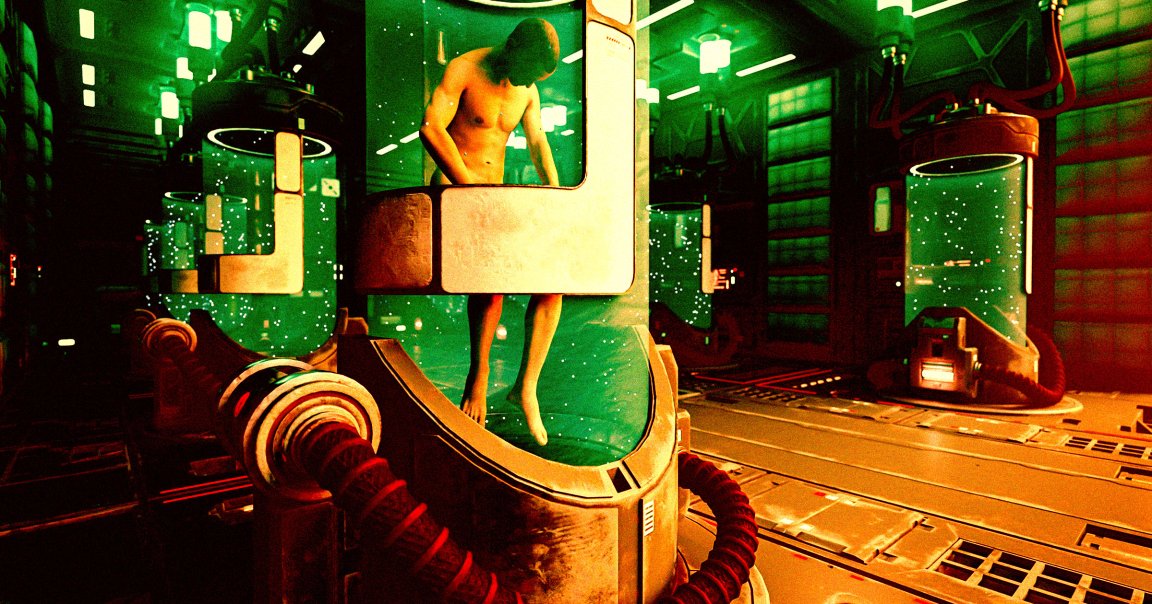
But according to a sprawling followup investigation by MIT Technology Review, R3 Bio’s founders secretly have a far more ambitious goal in mind: creating entire “brainless clones” of the human body that aging or ill individuals could one day transplant their brain into. One advantage of not developing the brain in the donor bodies, albeit a ghoulish one: such a brain-free clone would neatly circumvent certain moral conundrums over the concept.
Still, to call the idea ethically fraught would be a vast understatement. Despite an insider likening a pitch they heard from R3’s founder, John Schloendorn, to a “close encounter of the third kind” with “Dr. Strangelove” in an interview with Tech Review, the company has since distanced itself from the idea of brainless human clones.
The company said its founder “never made any statement regarding hypothetical ‘non-sentient human clones’ [that] would be carried by surrogates” in a statement to Tech Review, and insisted that “any allegations of intent or conspiracy to create human clones or humans with brain damage are categorically false.”
Strikingly, though, cofounder Alice Gilman told the publication that the “team reserves the right to hold hypothetical futuristic discussions” about brainless clones involving humans.
Beyond the ethical implications, experts also threw cold water on the biological feasibility of full body replacement.
“There are so many barriers,” Michigan State University researcher Jose Cibelli, who was among the first to try to clone human embryos by obtaining matched stem cells in the early 2000s, told Tech Review, from illegality and safety issues to the fact that an artificial womb remains science fiction.
“You’d have to convince a woman to carry a fetus that is going to be abnormal,” he said.
The considerable “yuck factor,” per Cibelli, seemingly has R3’s founders undeterred. Schloendorn has been investigating the idea of human replacements for years now, Tech Review reports, regularly giving seminars behind the scenes about the idea and pitching investors on it.
“We will try to do it in a way that produces defined societal benefits early on, and we need to be prepared to take no for an answer, if it turns out that this cannot be done safely,” he wrote in a 2024 LinkedIn message to Tech Review.
He declined an interview with the magazine, arguing that he wanted to show that the benefits are “reasonably grounded in reality” before taking R3 out of stealth mode.
More on cloning: Jeffrey Epstein Had a Bizarre Obsession With “Improving” Human DNA, and He Was Emailing With Top Scientists About It
Victor Tangermann
Senior Editor
I’m a senior editor at Futurism, where I edit and write about NASA and the private space sector, as well as topics ranging from SETI and artificial intelligence to tech and medical policy.